Linezolid Tablet
Product Images NDC 85766-075

View Photos of Packaging, Regulatory Labels, and Product Appearance

Product Visual Gallery

This gallery contains 19 technical images submitted to the FDA as part of the official labeling for Linezolid (NDC 85766-075). Unlike standard consumer photos, these assets often include clinical data figures, molecular chemical structures, and official manufacturer packaging layouts.

As provided by Sportpharm Llc, these visuals offer a comprehensive scientific overview of the product's physical and chemical identity, aiding pharmacists and researchers in product verification and study.

FDA Label Image

Label (Label)

Label (Label)
This is a product label for Linezolid Tablets, USP 600 mg, with information such as the NDC codes, quantity, manufacturer details, lot numbers, and drug status. The tablets are described as yellow, oval-shaped, and embossed with "RSB". The label indicates that these tablets are intended for prescription use.*
FDA Label Image

Linezolid Tab-2.jpg (Linezolid Tab 2)

Linezolid Tab-2.jpg (Linezolid Tab 2)
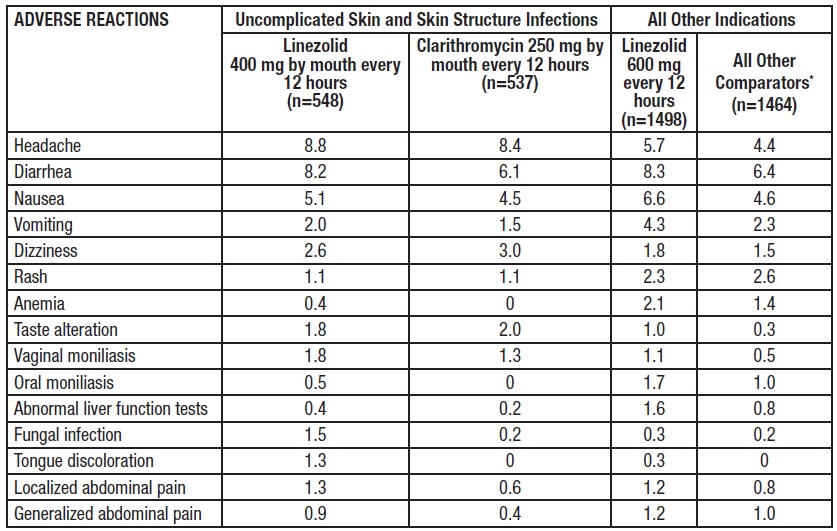
This is a comparison of adverse reactions between Linezolid and Clarithromycin, two antibiotics used for uncomplicated skin and skin structure infections and other indications. The table shows the percentage of patients experiencing various side effects such as headache, diarrhea, nausea, vomiting, dizziness, rash, anemia, taste alteration, fungal infections, and others. The data is based on different dosages and frequency of administration.*
FDA Label Image

Linezolid-graph.jpg (Linezolid Graph)

Linezolid-graph.jpg (Linezolid Graph)
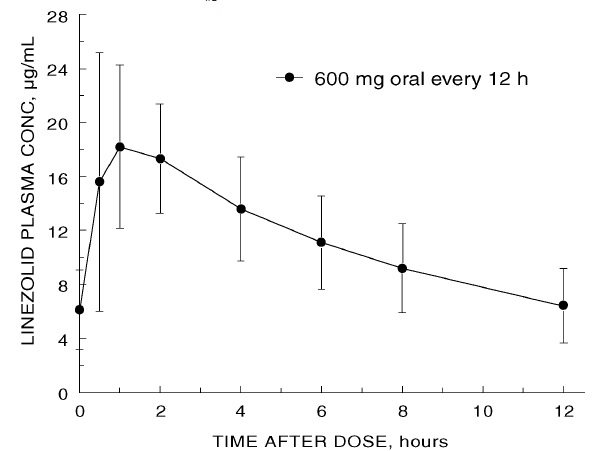
This is a chart showing Linezolid plasma concentrations in picograms per milliliter over a 12-hour period after a dose of 600 mg taken orally every 12 hours. The concentrations are measured at 0, 2, 4, 6, 8, 10, and 12 hours after the dose.*
FDA Label Image

Linezolid-structure.jpg (Linezolid Structure)

FDA Label Image

Linezolid-tab-10.jpg (Linezolid Tab 10)

Linezolid-tab-10.jpg (Linezolid Tab 10)
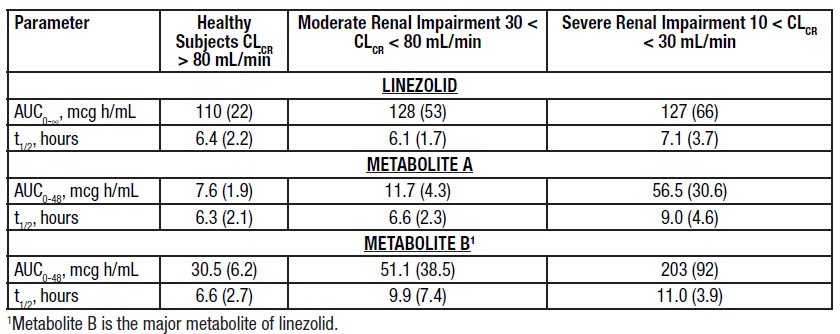
This text provides pharmacokinetic parameters for Linezolid and its metabolites in subjects with different degrees of renal impairment, including healthy subjects, those with moderate renal impairment, and those with severe renal impairment. It includes information on the area under the curve (AUC) and the time to reach maximum concentration (Tmax) for Linezolid, Metabolite A, and Metabolite B. It also notes that Metabolite B is the primary metabolite of Linezolid.*
FDA Label Image

Linezolid-tab-11.jpg (Linezolid Tab 11)

Linezolid-tab-11.jpg (Linezolid Tab 11)
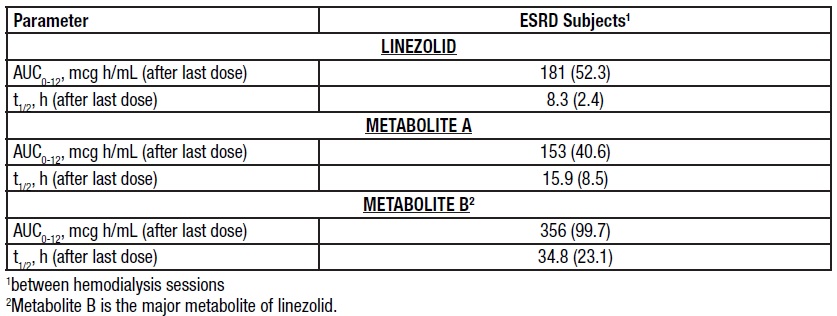
This text provides pharmacokinetic information on Linezolid and its metabolites (Metabolite A and Metabolite B2) in subjects with End-Stage Renal Disease (ESRD). The data includes the area under the curve (AUC) and time values (t) after the last dose. Metabolite B2 is identified as the primary metabolite of Linezolid. The study also mentions that these measurements were taken between hemodialysis sessions.*
FDA Label Image

Linezolid-tab-12.jpg (Linezolid Tab 12)

Linezolid-tab-12.jpg (Linezolid Tab 12)
This data compares the effectiveness of Linezolid and Vancomycin in treating various pathogens. It shows the percentage of cured cases for different bacteria strains, such as Staphylococcus aureus (including Methicillin-resistant S. aureus) and Streptococcus pneumoniae, when treated with Linezolid and Vancomycin.*
FDA Label Image

Linezolid-tab-13.jpg (Linezolid Tab 13)

Linezolid-tab-13.jpg (Linezolid Tab 13)
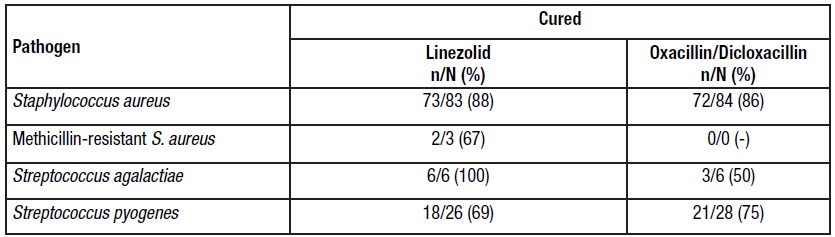
This is a comparison table showing the effectiveness of two antibiotics (oxacillin/dicloxacillin and linezolid) in curing different pathogens like Staphylococcus aureus, Methicillin-resistant S. aureus, Streptococcus agalactiae, and Streptococcus pyogenes. The table provides the cured and total number of cases for each pathogen for both antibiotics, represented as percentages. The results indicate the efficacy of each antibiotic in treating the specified pathogens.*
FDA Label Image

Linezolid-tab-14.jpg (Linezolid Tab 14)

Linezolid-tab-14.jpg (Linezolid Tab 14)
This text provides data on the efficacy of Linezolid compared to a Comparator in treating various pathogens. The percentage of cured cases for each pathogen is listed for both Linezolid and the Comparator. For Staphylococcus aureus, Linezolid had a cure rate of 78% compared to 69% for the Comparator. Methicillin-resistant S. aureus showed a cure rate of 71% for Linezolid and 67% for the Comparator. For Streptococcus agalactiae, Linezolid had a notably higher cure rate of 86% compared to 56% for the Comparator.*
FDA Label Image

Linezolid-tab-15.jpg (Linezolid Tab 15)

Linezolid-tab-15.jpg (Linezolid Tab 15)
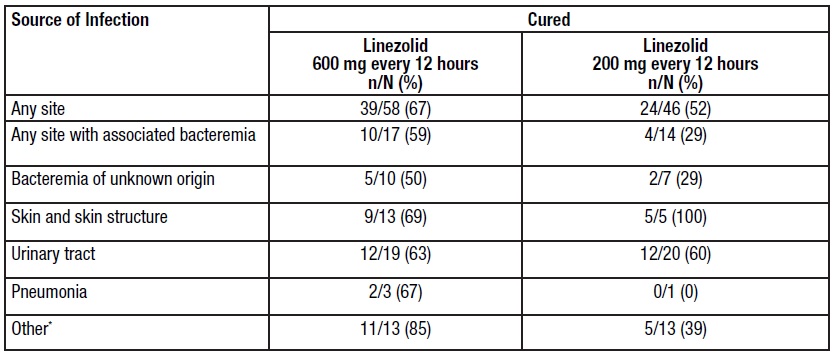
This data shows the effectiveness of Linezolid in curing different sources of infection. The table compares the results of administering 600 mg and 200 mg of Linezolid every 12 hours. The percentage of successful treatment for various infection sites, including skin, urinary tract, and bacteremia, is provided for each dosage. The results indicate the higher dose had better overall efficacy in curing infections.*
FDA Label Image

Linezolid-tab-16.jpg (Linezolid Tab 16)

Linezolid-tab-16.jpg (Linezolid Tab 16)
This text provides information on the clinically evaluable population for the treatment of complicated skin and skin structure infections as well as nosocomial pneumonia with linezolid and vancomycin. It includes data on the number and percentage of patients in different categories. The text also mentions the MITT population and specifies that it consists of ITT patients with an isolated Gram-positive pathogen at baseline.*
FDA Label Image

Linezolid-tab-17.jpg (Linezolid Tab 17)

Linezolid-tab-17.jpg (Linezolid Tab 17)
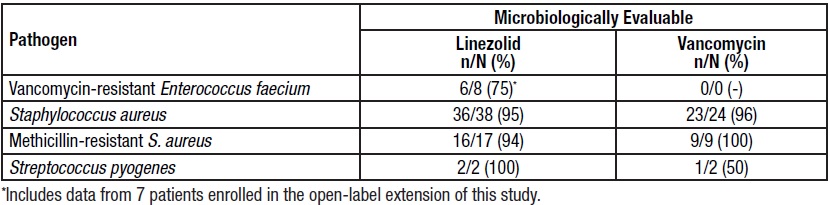
This is a table showing the effectiveness of Linezolid and Vancomycin against different pathogens. The table includes data on the susceptibility of various pathogens such as Vancomycin-resistant Enterococcus faecium, Staphylococcus aureus, Methicillin-resistant S. aureus, and Streptococcus pyogenes to Linezolid and Vancomycin. The percentage of susceptibility for each pathogen to each antibiotic is presented in the table. Additionally, it mentions that the data includes information from patients enrolled in an open-label extension of the study.*
FDA Label Image

Linezolid-tab-3.jpg (Linezolid Tab 3)

Linezolid-tab-3.jpg (Linezolid Tab 3)
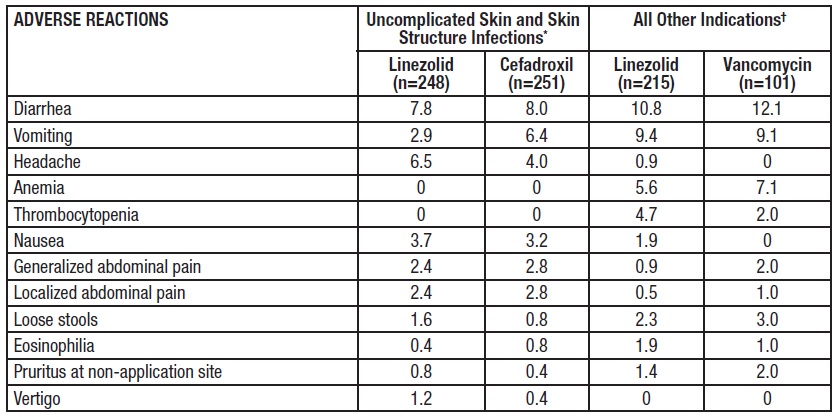
This is a comparison of adverse reactions experienced by patients taking Linezolid, Cefadroxil, Linezolid, and Vancomycin for uncomplicated skin and skin structure infections or other indications. The table shows the frequency of common side effects such as diarrhea, vomiting, headache, anemia, thrombocytopenia, nausea, abdominal pain, loose stools, eosinophilia, pruritus, and vertigo among the different groups.*
FDA Label Image

Linezolid-tab-4.jpg (Linezolid Tab 4)

Linezolid-tab-4.jpg (Linezolid Tab 4)
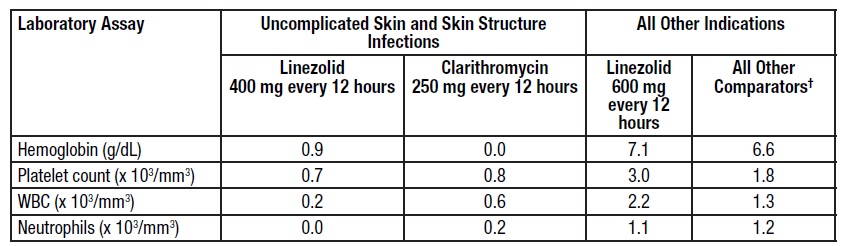
This is a comparison of laboratory assay results for uncomplicated skin and skin structure infections with other indications. It includes data on hemoglobin levels, platelet count, white blood cell count, and neutrophil count for patients treated with Linezolid, Clarithromycin, and other comparators at varying dosages. These results can be used to evaluate the effectiveness of different treatments for various types of infections.*
FDA Label Image

Linezolid-tab-5.jpg (Linezolid Tab 5)

Linezolid-tab-5.jpg (Linezolid Tab 5)
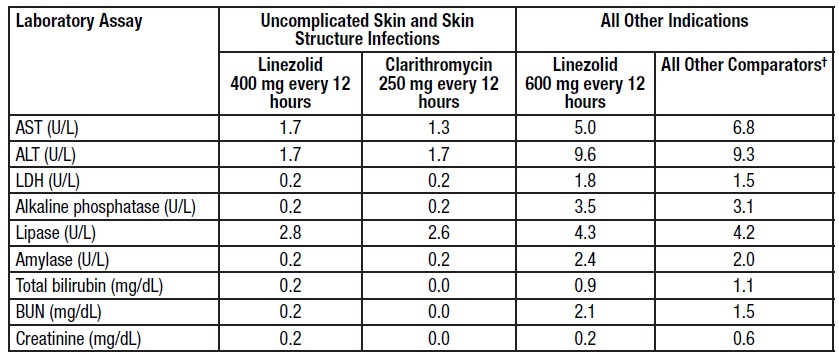
This document provides a comparison of laboratory assay results for Linezolid and Clarithromycin in the treatment of uncomplicated skin and skin structure infections, among other indications. It includes data on levels of AST, ALT, LDH, Alkaline phosphatase, Lipase, Amylase, Total bilirubin, BUN, and Creatinine for different dosages of Linezolid and Clarithromycin. The information can be valuable in evaluating the safety and efficacy of these antibiotics in clinical settings.*
FDA Label Image

Linezolid-tab-6.jpg (Linezolid Tab 6)

Linezolid-tab-6.jpg (Linezolid Tab 6)
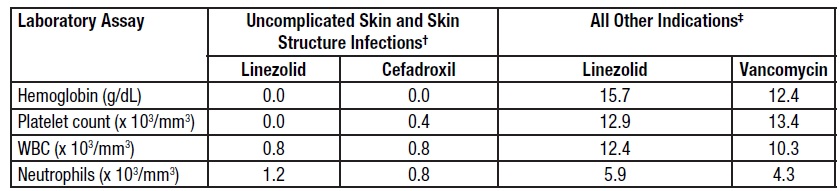
This is a comparison of laboratory assay results for Hemoglobin, Platelet count, WBC (white blood cell count), and Neutrophils levels for different medications (Linezolid, Cefadroxil, Vancomycin) used in uncomplicated skin and skin structure infections as well as other indications. The values indicate the effectiveness of each medication in treating the infections based on the impact on these blood parameters.*
FDA Label Image

Linezolid-tab-7.jpg (Linezolid Tab 7)

Linezolid-tab-7.jpg (Linezolid Tab 7)
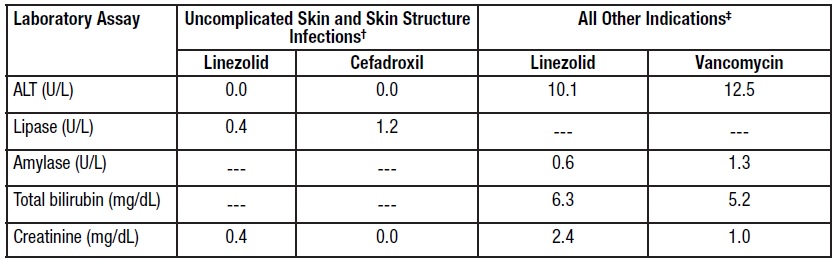
This text appears to be a laboratory assay result for different medications used to treat skin and skin structure infections and other indications. It includes measurements such as ALT (Alanine Aminotransferase), Lipase, Amylase, Total bilirubin, and Creatinine levels for Linezolid, Cefadroxil, Vancomycin, and their corresponding values.*
FDA Label Image

Linezolid-tab-8.jpg (Linezolid Tab 8)

FDA Label Image

Linezolid-tab-9.jpg (Linezolid Tab 9)

Linezolid-tab-9.jpg (Linezolid Tab 9)
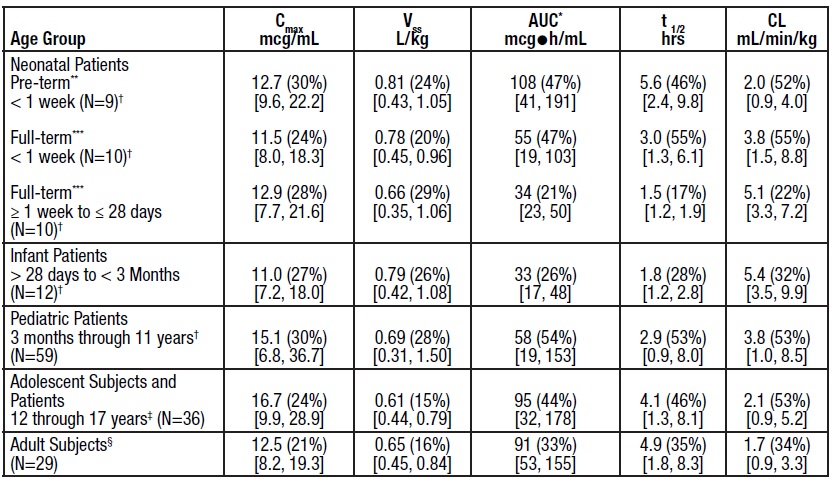
This information provides data on various age groups regarding laboratory parameters in neonatal patients, infant patients, pediatric patients, and adolescent subjects/patients. It includes values such as glucose levels, weight, creatinine levels, hours, and renal function, displayed as percentages and ranges within different age categories. The data seems to be segmented by age for medical analysis and comparison.*

* These product label images have been analyzed using experimental machine learning. Please verify findings with the primary label text.