Bm Vitagene Forte Drops Liquid
Product Images NDC 85816-6007

View Photos of Packaging, Regulatory Labels, and Product Appearance

Product Visual Gallery

This gallery contains 2 technical images submitted to the FDA as part of the official labeling for Bm Vitagene Forte Drops (NDC 85816-6007). Unlike standard consumer photos, these assets often include clinical data figures, molecular chemical structures, and official manufacturer packaging layouts.

As provided by Bm Private Limited, these visuals offer a comprehensive scientific overview of the product's physical and chemical identity, aiding pharmacists and researchers in product verification and study.

FDA Label Image

Vitagene Forte 2 (Vitagene Forte 2)
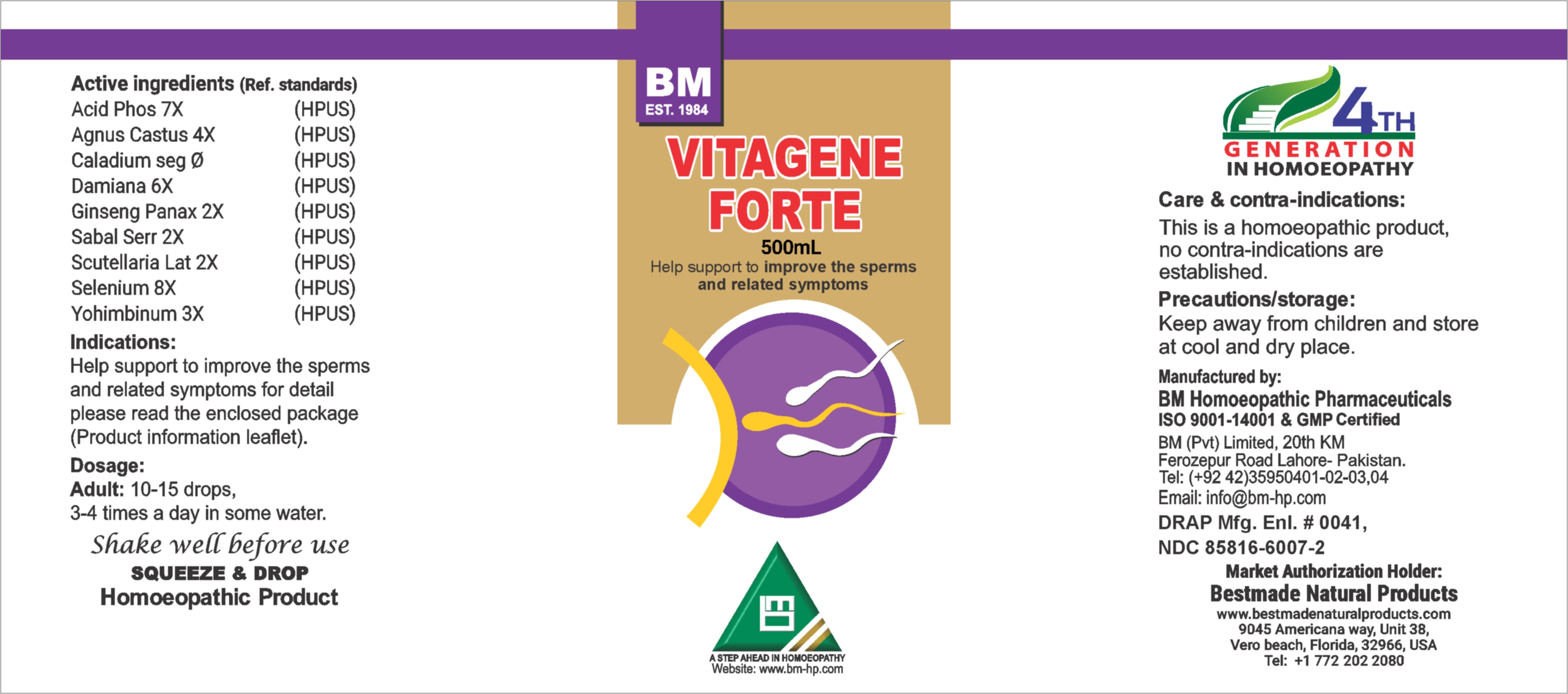
Vitagene Forte 2 (Vitagene Forte 2)
This text provides information about a homeopathic product designed to support sperm health and related symptoms. The product contains various active ingredients such as Acid Phos, Agnus Castus, and Ginseng Panax. The recommended dosage for adults is 10-15 drops, 3-4 times a day. The product must be shaken well before use and stored in a cool, dry place away from children. The manufacturer is BM Homoeopathic Pharmaceuticals in Pakistan, certified ISO 9001-14001 & GMP. The contact details for the market authorization holder, Bestmade Natural Products, are also provided. For more detailed information, the enclosed package leaflet should be consulted.*
FDA Label Image

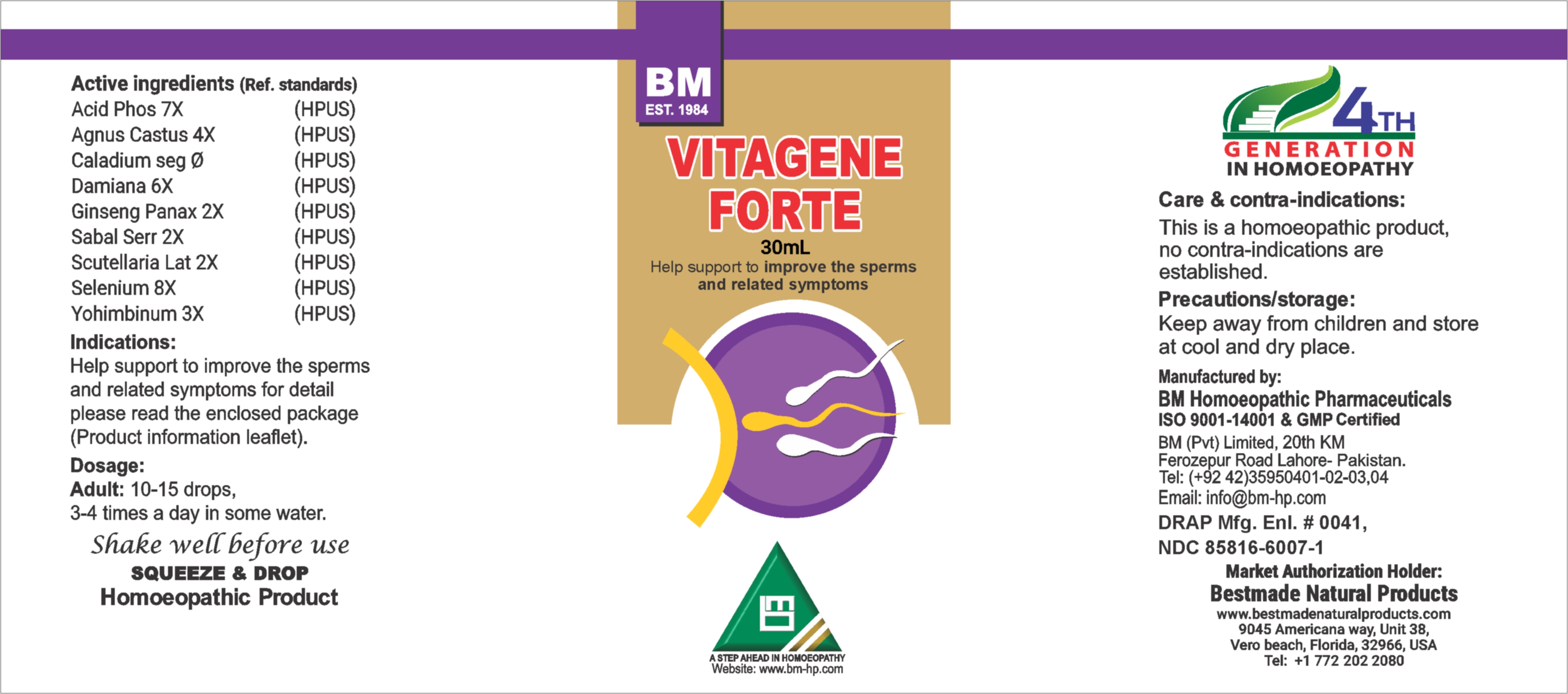
Vitagene Forte (Vitagene Forte)

Vitagene Forte (Vitagene Forte)
This is a homeopathic product containing various active ingredients such as Acid Phos, Agnus Castus, Damiana, and Ginseng Panax. It is indicated to support and improve sperm quality and related symptoms. The recommended dosage is 10-15 drops, 3-4 times a day. There are no established contraindications, and it should be stored in a cool, dry place away from children. Manufactured by the BM Homoeopathic Pharmaceuticals, it is ISO 9001-14001 & GMP Certified. For more details, please refer to the enclosed package leaflet.*

* These product label images have been analyzed using experimental machine learning. Please verify findings with the primary label text.