Waskyra Injection
FDA Label NDC 87233-0100

Full FDA labeling including Indications, Dosage, Usage, and Precautions

Structured Product Label

The following Structured Product Label (SPL) was submitted to the FDA by Fondazione Telethon Ets for the product Waskyra (NDC 87233-0100). This document serves as the official prescribing information, containing essential scientific data and clinical materials required for healthcare providers and patients.

This specific version of the label includes detailed information regarding 1 indications and usage, 2 dosage and administration, 2.1 recommended dose, 2.2 patient preparation before waskyra® infusion, 2.3 administration, 3 dosage forms and strengths, 4 contraindications, 5.1 hypersensitivity and infusion related reactions, and other regulatory disclosures. Use the navigation below to review specific sections of the FDA submission.

1 Indications And Usage

WASKYRA® is indicated for the treatment of pediatric patients aged 6 months and older and adults with Wiskott-Aldrich Syndrome (WAS) who have a mutation in the WAS gene and for whom hematopoietic stem cell transplantation (HSCT) is appropriate and no suitable human leukocyte antigen (HLA)-matched related stem cell donor is available.

2 Dosage And Administration

For autologous use only. For single-dose intravenous use only.

2.1 Recommended Dose

The minimum recommended dose of WASKYRA® is 7 × 10⁶ CD34+ cells/kg based on patient’s body weight at the time of infusion.

The maximum volume of WASKYRA® to be administered should remain < 20% of the patient’s estimated plasma volume.

2.2 Patient Preparation Before Waskyra® Infusion

Mobilization and apheresis

  • Mobilize hematopoietic stem and progenitor cells (HSPC) using G-CSF with plerixafor according to established protocols.
  • Perform apheresis to collect CD34+ cells required for WASKYRA® manufacturing following the mobilization procedure.
  • Collect and cryopreserve a back-up supply of CD34+ stem cells containing at least 3 x 10⁶ CD34+ cells/kg from the patient. Complete this collection before initiating reduced intensity conditioning and WASKYRA® infusion.
  • Store the back-up collection for potential rescue treatment in the following scenarios: WASKYRA® compromise after reduced intensity conditioning initiation but before scheduled infusion, primary engraftment failure, or prolonged bone marrow aplasia following WASKYRA® treatment.
  • Pre-treatment and conditioning

    • Administer rituximab (anti-CD20 monoclonal antibody) approximately 22 days before WASKYRA® administration to deplete autoreactive B-cells and provide pre-emptive treatment for potential lymphoproliferative disorder due to Epstein Barr Virus infection which is a risk factor in WAS patients.
    • Administer busulfan and fludarabine for reduced intensity conditioning before infusion of WASKYRA® to promote engraftment of the genetically modified autologous CD34+ cells.
    • Do not begin conditioning until the complete set of infusion bag(s) constituting the dose of WASKYRA® has been received and stored at the administration site. Confirm availability of the back-up collection.
    • Premedication

      Administer intravenous chlorpheniramine (0.2 mg/kg, max. dose 10 mg), or an equivalent 15-30 minutes before the infusion of WASKYRA® to reduce the possibility of an allergic reaction to the infusion.

2.3 Administration

Receipt

WASKYRA® is shipped in the vapor phase of liquid nitrogen (<-130°C; -202°F) from the manufacturing site to the qualified treatment center for the infusion. The Lot Information Sheet and the Chain of Custody documentation travels with the cryoshipper.

Upon arrival check the temperature on the display of the cryoshipper, open it using the proper DPI, and confirm the patient code, batch number and number of bags against product label(s).

Transfer WASKYRA® from the vapor phase of liquid nitrogen at less than -130°C (-202°F) to the treatment center vapor phase of liquid nitrogen storage (<-130°C; -202°F) until ready for thaw and administration.

In the event of issues, contact Fondazione Telethon ETS at: 1-888-212-6928.

Preparation for infusion

WASKYRA contains human blood cells that are genetically modified with a replication-incompetent, self-inactivating lentiviral vector (LVV). Follow universal precautions and local biosafety guidelines for handling and disposal of WASKYRA® to avoid potential transmission of infectious diseases.

Checking prior to thawing

  • Do not remove the metal cassette from cryogenic storage or thaw WASKYRA® until the patient is ready to be infused. Coordinate the timing of WASKYRA thaw and infusion. Confirm the infusion time in advance and adjust the start time for thaw so that the treatment is available for infusion when the patient is ready.
  • Ensure the correct number of infusion bags are present. When more than one bag of WASKYRA® is provided, thaw one bag of WASKYRA® at a time. If more than one infusion bag is provided, thaw and administer each infusion bag completely before proceeding to thaw the next infusion bag.
  • Open the metal cassette and inspect the overwrap bag and infusion bag for any breaches of integrity before thawing. If an infusion bag is compromised, follow the local guidelines for handling of waste of human-derived material and contact Marketing Authorization Holder immediately.
  • Prior to thawing WASKYRA®, it must be verified that the patient identity matches the unique patient information reported on the packaging labels and Lot Information Sheet (LIS). WASKYRA® is solely for autologous use. Do not thaw or infuse WASKYRA® if the information on the patient-specific label on the infusion bag does not match the intended patient.
  • Confirm that the infusion bag is within the expiration date.
  • Thawing

    • After carefully removing from the metal cassette, thaw the infusion bag in its sealed overwrap bag at 37°C (98.6°F) in a controlled thawing device until there is no visible ice in the infusion bag.
    • Once thawing is complete, the bag should be removed immediately from the thawing device.
    • The overwrap bag should be carefully opened to remove the infusion bag which should be kept at room temperature (20°C – 25°C; 68°F – 77°F) until infusion. Gently massage the infusion bag to resuspend the cells. The content of the infusion bag should be inspected for any remaining visible cellular aggregates. Small clumps of cellular material should disperse with gentle manual mixing. Do not shake the bag.
    • To maintain product viability, as soon as possible after thawing is complete, it is recommended that WASKYRA® is administered immediately.
    • Note: Do not sample, alter, irradiate or refreeze WASKYRA®.

      Administration

      Prior to WASKYRA® infusion, confirm that the patient’s identity matches the essential unique patient information on the infusion bag(s) labels.

      Administer WASKYRA® as an intravenous infusion using a central venous catheter, per the qualified treatment site’s standard procedures for cell therapy products.

      When more than one bag of WASKYRA® is needed, prior to infusion ensure that the volume of WASKYRA® to be infused is compatible with the recommended limit of dimethyl sulfoxide (DMSO), i.e., the total volume of DMSO administered should remain < 1% of the patient’s estimated plasma volume. The maximum volume of WASKYRA® to be administered should therefore remain < 20% of the patient’s estimated plasma volume.

      • Ensure that the administration set consists of a blood transfusion set equipped with a 200 µm filter.
      • Infuse each bag within 2 hours of thaw, including any interruption during the infusion, to maintain maximum product viability.
      • Infuse contents of each bag within 30 minutes with a maximum infusion rate of 5 mL/kg/h.
      • At the end of the infusion, flush all WASKYRA® remaining in the infusion bag and any associated tubing with sodium chloride 9 mg/mL (0.9%) solution for injection to ensure that as many cells as possible are infused into the patient. Consider the infusion volume in relation to the age and weight of the patient.
      • Monitor vital signs (blood pressure, heart rate, and oxygen saturation) and the occurrence of any symptom prior to the start of the infusion, approximately every ten minutes during the infusion and every hour, for 3 hours, after the infusion.

3 Dosage Forms And Strengths

WASKYRA® is a single-dose cell suspension for intravenous infusion.

WASKYRA® is provided in one to eight infusion bags which contain 2–11.4 x 10⁶ cells/mL (1.9–11.4 x 10⁶ CD34+ cells/mL) [see How Supplied/Storage and Handling (16)]. Each infusion bag contains 10 to 20 mL of WASKYRA®. The thawed product is colorless to yellow or pink and may be cloudy to clear.

See the Lot Information Sheet for actual dose.

4 Contraindications

  • Hypersensitivity to the active substance or to any of the excipients [see Hypersensitivity and Infusion Related Reactions (5.1)].
  • Previous treatment with HSCT within 6 months prior to treatment or HSCT with evidence of residual donor cells.
  • Previous treatment with hematopoietic stem cell gene therapy.
  • Contraindications to the mobilization and the conditioning regimen.

Hypersensitivity and infusion related reactions, including anaphylaxis may occur with WASKYRA infusion due to DMSO as an excipient in WASKYRA®. Monitor patients for signs and symptoms of hypersensitivity and infusion-related reactions during and after the WASKYRA® infusion.

When more than one bag of WASKYRA® is needed, prior to infusion it should be ensured that the volume of product to be infused is compatible with the recommended limit of DMSO, i.e., the total volume of DMSO administered should remain < 1% of the patient’s estimated plasma volume. The maximum volume of WASKYRA® to be administered should therefore remain < 20% of the patient’s estimated plasma volume. Also, when more than one bag of WASKYRA® is needed, only one bag of medicinal product should be infused at a time.

5.2 Engraftment Failure

Engraftment failure defined as failure to reach an absolute neutrophil count (ANC) > 500 cells/μL associated with no evidence of bone marrow recovery (i.e., hypocellular marrow) by day 60 may potentially occur after WASKYRA® infusion. Monitor patients for signs and symptoms of engraftment failure. In case of engraftment failure, infuse the non-transduced back-up hematopoietic stem cells according to local standards.

5.3 Cytopenias

Severe cytopenias, including anemia, neutropenia, and thrombocytopenia have occured for several weeks following reduced intensity conditioning and WASKYRA® infusion [see Adverse Reactions (6.1)].

Monitor patients for signs and symptoms of cytopenia for at least 8 weeks after treatment with WASKYRA®. Manage patients with supportive transfusion according to clinical practice.

If neutropenia persists beyond six to seven weeks after WASKYRA® infusion, despite the use of granulocyte colony – stimulating factor, consider administration of the non-transduced back up stem cells or alternative treatments.

5.4 Serious Infections

Serious infections have occurred with WASKYRA® administration [see Adverse Reactions (6.1)]. Increased susceptibility to infections may occur to concomitant administration of rituximab and conditioning regimen.

Monitor patients for signs and symptoms of infection before and after WASKYRA® infusion and treat appropriately. Administer prophylactic antimicrobials according to local guidelines. Maintain immunoglobulin G serum level above 5 g/l to prevent potential infections associated with severe hypogammaglobinemia, resulting from disease – related immune deficiency, rituximab administration and conditioning.

Any blood products required after WASKYRA® infusion should be irradiated.

5.5 Transmission Of An Infectious Agent

Transmission of infectious disease or agents may occur with WASKYRA® treatment because it is manufactured using human and bovine-derived reagents, which are tested for human and animal viruses, bacteria, fungi, and mycoplasma before use. Additionally, WASKYRA® is tested for sterility and mycoplasma at release. These measures do not eliminate the risk of transmitting these or other infectious diseases or agents.


All infections thought to be transmitted by WASKYRA® should be reported to Fondazione Telethon ETS at 1-888-212-6928.

5.6 Hepatic Veno-Occlusive Disease

Hepatic veno-occlusive disease has occurred with WASKYRA® treatment [see Adverse Reactions (6.1)]. Monitor patients for signs and symptoms of veno-occlusive disease including assessment of liver function tests during the first month after WASKYRA® infusion.

5.7 Risk Of Oncogenesis

There is a lifelong risk of lentiviral vector (LVV)-mediated insertional oncogenesis and secondary malignancy after treatment with WASKYRA®[see Adverse Reactions (6.1)]. Monitor patients after treatment with WASKYRA® for the development of malignancies. In the event that a malignancy occurs, contact Fondazione Telethon ETS at 1-888-212-6928 to obtain instructions on collecting patient samples for testing.

5.8 Interference With Hiv Testing

Patients who have received WASKYRA® may test positive by polymerase chain reaction (PCR) assays for HIV due to LVV provirus insertion, resulting in a false positive test for HIV. Do not screen patients who have received WASKYRA® for HIV infection using a PCR-based assay.

5.9 Blood, Organ, Tissue And Cell Donation

Patients treated with WASKYRA® should not donate blood, organs, tissues and cells for transplantation at any time in the future. This information is provided in the Patient Alert Card which should be given to the patient after treatment.

6.1 Clinical Trials Experience

Because clinical trials are conducted under widely varying conditions, adverse reaction rates observed in the clinical trials of a drug cannot be directly compared to rates in the clinical trials of another drug and may not reflect the rates observed in practice.

The safety data described in this section reflects exposure to WASKYRA® in two clinical studies, Study 1 (201228) and Study 2 (OTL-103-4) as well as patients in expanded access program (EAP). A total of 27 patients received a single infusion of WASKYRA® at a dose range of 7 to 31×106 CD34+ cells/kg (median dose: 16.90×10CD34+ cells/kg). The median duration of the follow up was 5.67 years (range: 0.37-13.26 years) [see Clinical Studies (14)].

During the above-mentioned clinical trials no adverse reactions attributable to the gene therapy were reported. There were 45 serious adverse reactions reported in 21 patients including catheter-related infections (n=11), bacterial and viral infections (n=10), pyrexia (n=3), prolonged neutropenia (n=2), vomiting (n=2), veno-occlusive disease (n=1), aspergillus infection (n=1). One patient died approximately 4.5 months after WASKYRA® infusion due to neurological decompensation.

 Table 1: Adverse Reactions Occurring in ≥10% of Patients (N=27)
 Adverse Reactions Any Grade
n (%)
Grade 3 or higher
n (%)
 Infections and Infestations --
       Catheter related infection 16 (59) 14 (52)
       Respiratory tract infection

Is a composite that includes multiple related terms.

 18 (67) 4 (15)
       Conjunctivitis* 10 (37) 0
       Cytomegalovirus infection* 8 (30) 4 (15)
       Epstein-Barr virus infection 5 (19) 1 (4)
       Gastroenteritis 5 (19)2 (7)
       Ear infection 4 (15) 0
       Oral candidiasis 4 (15) 0
       Urinary tract infection* 5 (19)3 (11)
       Balanoposthitis 3(11) 0
 Gastrointestinal disorders - -
       Diarrhea* 16 (59)3 (11)
       Vomiting 12 (44) 5 (19)
       Liver injury* 16 (59) 3 (11)
       Stomatitis 6 (22) 3 (11)
       Hematochezia 5 (19) 0
       Abdominal pain 3 (11) 0
       Constipation 3 (11) 0
 Nervous System disorders - -
       Head Injury* 10 (37) 1 (4)
       Headache 4 (15) 2 (7)
 Respiratory, thoracic and mediastinal disorders - -
      Rhinitis 9 (33) 0
      Cough* 8 (30) 0
      Wheezing 4 (15) 0
      Oropharyngeal pain 3 (11) 1 (4)
 Skin and subcutaneous tissue disorders - -
      Rash

Rash includes eczema, rash, urticaria, dermatitis, dry skin, erythema.

 23 (85) 9 (33)
      Petechiae 16 (59) 1 (4)
 Immune system disorders - -
      Hypersensitivity* 6 (22) 4 (15)
      Lymphadenopathy 4 (15) 1 (4)
 Blood and lymphatic system disorders - -
     Anemia* 11 (41) 4 (15)
     Immune thrombocytopenia4 (15)  4 (15)
     Febrile neutropenia 7 (26) 6 (22)
     Epistaxis 9 (33) 0
     Mouth hemorrhage 3 (11) 0
     Traumatic hematoma* 4 (15) 0
 General disorders and administration site conditions - -
     Pyrexia 11 (41) 6 (22)
    Catheter site complications

Catheter site complications includes Catheter site inflammation, Catheter site hemorrhage, Unintentional medical device removal.

 10 (37) 1 (4)
Note: Adverse reactions are defined as adverse events occurred during conditioning and year 1 following WASKYRA® administration.

Other clinically significant adverse reactions that occurred in < 20% patients include papillary thyroid cancer diagnosed in one patient with a familial history of Graves' disease at 5-years post treatment. The tumor cells did not contain viral vector gene sequences.

 Table 2. Laboratory Abnormalities that Worsened from Baseline in ≥ 10% of Patients (N=27)
 Laboratory Abnormality All Grade
n (%)
 Grade 3 or 4
n (%)
 Neutrophils decreased 10 (37) 9 (33)
 Eosinophils increased 7 (26) 1 (4)
 Electrolyte imbalance

Electrolyte imbalance includes hypokalemia, hyperkalemia, hyponatremia, hypomagnesemia

 11 (41) 6 (22)
 Creatinine increased 3 (11) 0
 Calcium decreased 3 (11) 0

7 Drug Interactions

No formal drug interaction studies have been performed. WASKYRA® is not expected to interact with the hepatic cytochrome P-450 family of enzymes or drug transporters.

7.1 Effect Of Vaccines On Waskyra®

The safety and effectiveness of vaccination during or following WASKYRA® treatment have not been studied. Vaccination with live virus vaccines is not recommended until immune reconstitution is completed following treatment with WASKYRA®.

7.2 Effect Of Anti-Retrovirals On Waskyra®

Anti-retroviral medications may interfere with the manufacturing of WASKYRA®. Patients should not take anti-retroviral medications for at least one month prior to mobilization until at least 7 days after WASKYRA® infusion. If a patient requires anti-retroviral treatment following exposure to HIV/HTLV, initiation of WASKYRA® treatment should be delayed until an HIV/HTLV western blot and viral load assay have been performed at 6 months post-exposure.

8.1 Pregnancy

Risk Summary

There are no clinical data from the use of WASKYRA® in pregnant women. No animal reproductive and developmental toxicity studies have been conducted with WASKYRA® to assess whether it can cause fetal harm when administered to a pregnant woman. WASKYRA® must not be administered during pregnancy because of the risk associated with conditioning. Pregnancy after WASKYRA® infusion should be discussed with the treating physician.

In the U.S. general population, the estimated background risk of major birth defects and miscarriage in clinically recognized pregnancies is 2-4% and 15-20%, respectively.

8.2 Lactation

Risk Summary

There are no data on the presence of WASKYRA® in human or animal milk, the effects on the breastfed child, or the effects on milk production. Because of the potential risks associated with conditioning, breast-feeding should be discontinued during conditioning. The developmental and health benefits of breastfeeding should be considered along with the mother’s clinical need for WASKYRA® and any potential adverse effects on the breastfed child from WASKYRA® or from the underlying maternal condition.

8.3 Females And Males Of Reproductive Potential

The safety of WASKYRA® was only evaluated in male patients.

Pregnancy Testing

A negative serum pregnancy test must be confirmed prior to the start of mobilization and re-confirmed prior to conditioning procedures and before administration of WASKYRA® in females of childbearing potential.

Contraception

Males capable of fathering a child and females of childbearing age should use an effective method of contraception from start of mobilization through at least 6 months after administration of WASKYRA®.

Infertility

There is no data on the effects of WASKYRA® on fertility.

Consult the Prescription Information of the conditioning medicinal products. It should be noted that the treating physician should inform the patients or the patient’s parents/carers in case of minors about options for cryopreservation of spermatogonial stem cells or ovarian tissue prior to application of conditioning.

8.4 Pediatric Use

The safety and efficacy of WASKYRA® for the treatment of WAS have been established in pediatric patients aged 6 months and older. The use of WASKYRA® in pediatric patients is supported by evidence from Study 1, Study 2, and patients in expanded access program which included 25 pediatric patients 1 to 16 years of age [see Adverse Reactions (6) and Clinical Studies (14)].


The safety and effectiveness of WASKYRA® have not been established in pediatric patients younger than 6 months of age.

11 Description

WASKYRA® (etuvetidigene autotemcel) is an autologous hematopoietic stem cell-based gene therapy for intravenous infusion.

WASKYRA® is prepared from the patient’s own hematopoietic stem cells (HSCs), which are collected using apheresis procedure(s). The autologous cells are enriched for CD34+ cell and then transduced ex vivo with a replication incompetent self-inactivating (SIN) human immunodeficiency virus-1 (HIV-1)-based lentiviral vector (LVV) that has been modified to carry the WAS gene sequence under the control of the human WAS promoter. The transduced CD34+ cells are washed, formulated into a suspension, and then cryopreserved.

WASKYRA® is manufactured for each individual patient into infusion bags, which are cryopreserved before being thawed prior to administration [see Dosage and Administration (2.3), How Supplied/Storage and Handling (16)].

The formulation contains 7% (w/v) human serum albumin (HSA) and 5% (v/v) dimethyl sulfoxide (DMSO). Each 1mL of WASKYRA® suspension for IV infusion contains 3.5 mg of sodium.

12.1 Mechanism Of Action

WASKYRA® adds full-length copies of the human WAS complementary deoxyribonucleic acid (cDNA) into patients’ hematopoietic stem cells (HSCs) through transduction with WAS lentiviral vector (LVV). After infusion, the genetically modified cells engraft in the bone marrow, repopulate the hematopoietic compartment, and produce biologically active lymphoid and myeloid progenitors whose progeny express WAS protein (WASP). WASP regulates the structural protein actin in blood cells.

12.2 Pharmacodynamics

No dedicated clinical pharmacology studies have been conducted to study pharmacodynamics. The presence of gene-corrected HSPCs in BM and peripheral blood has been assessed at different time points after treatment with WASKYRA®:

Engraftment of gene corrected cells was observed from 1 month post- WASKYRA® administration and throughout post-treatment follow-up, in all evaluated participants up to 9 years after GT, as indicated by VCN values in bone marrow and peripheral blood cell lineages above the protocol-defined target of 4% in BM-derived CD34+ cells and 10% in PB derived CD3+ cells.

The presence of the WAS transgene resulted in the restoration of WASP expression in the hematopoietic compartment of all subjects, with a > 65% at 1 year of follow up in lymphocytes and > 74% at 30 days follow up in platelets stably expressing WASP. Reconstitution of WASP expression in turn led to improved platelet counts, ultrastructure and activation profile, as well as restored immune cell functions in treated subjects.

12.3 Pharmacokinetics

WASKYRA® is an autologous gene therapy which includes hematopoietic stem cells (HSCs) that have been genetically modified ex vivo. The nature of WASKYRA® is such that conventional studies on pharmacokinetics, absorption, distribution, metabolism, and elimination are not applicable.

13.1 Carcinogenesis, Mutagenesis, Impairment Of Fertility

No mutagenicity, carcinogenicity and reproductive and developmental toxicity studies have been performed with WASKYRA®.

In vitro immortalization (IVIM) experiments with WAS lentiviral vector (LVV) transduced mouse Lin- BM cells, vector insertion site analyses (VISA) with WAS patient and healthy donor HSPCs in vitro and in vivo after engraftment in immunodeficient Rag2−/−γc−/− mice and a vector integration tag analysis (VITA) study in disease model mice showed no evidence for clonal proliferation and no genotoxic potential.

Toxicity studies were performed in vivo in two different WAS knock-out mouse models transplanted with Lin- BM cells transduced with WAS LVV. Investigations included follow-up for at least 12 months post-transplant in one model and serial transplant studies in the second model covered a cumulative period of 10 months (4+6). These studies demonstrated normal engraftment, differentiation and seeding of lymphoid tissues with no adverse clinical signs, mortalities and no pathologic changes related to the integration of WAS LVV. No toxicity and no increase in tumorigenesis occurred in either model. The WAS protein was not overexpressed, even at high VCNs, and no toxicity due to protein overexpression has been observed.

13.2 Animal Toxicology And/Or Pharmacology

Additional studies with human CD34+ cells transduced with WAS LVV administered to immunodeficient, myeloablated mice demonstrated no toxicity, no replication competent lentivirus (RCL), no vector mobilization and no secondary transduction of bystander cells, including male gonads.

14 Clinical Studies

The efficacy of WASKYRA® was evaluated in two clinical studies, Study 1 (201228; NCT01515462) and Study 2 (OTL-103-4; NCT03837483) as well as in patients from an expanded access program (EAP). Study 1 was a prospective, open-label, single-arm, single-center study (n=8) that evaluated the safety and efficacy of WASKYRA® fresh formulation compared to 12-month pre-treatment outcomes. Study 2 is an ongoing, open-label, single-arm, multicenter study (n=10) evaluating the efficacy of WASKYRA® cryopreserved formulation compared to 12-month pre-treatment outcomes. The expanded access program included Hospital Exemption (HE) 205030 (n=3), and Compassionate Use Program (CUP) 206257 (n=6) which provided WASKYRA® treatment to patients with WAS.

The studies and the expanded access program enrolled patients who had a diagnosis of WAS confirmed by genetic mutation and at least one of the following criteria: 1) severe clinical score (Zhu clinical score ≥ 3), 2) severe WAS mutation, or 3) absent WASP expression. All patients lacked a suitable human leukocyte antigen (HLA)-matched donor. Patients with prior allogeneic hematopoietic stem-cell transplantation (HSCT) within 6 months or evidence of residual cells of donor origin, prior gene therapy, human immunodeficiency virus (HIV) infection and cytogenetic alterations were excluded.

Patients underwent hematopoietic stem-cell (HSC) collection by bone marrow collection (n=5), from apheresis following the administration of HSC mobilizing agents (n=21), or from both sources (n=1). Prior to treatment, patients received rituximab and a conditioning regimen with busulfan, and fludarabine. Rituximab was administered as a single dose of 375 mg/m² on Day –22 (+/-1). Busulfan was given in eight doses every 6 hours from Days -4 to -2, with dosing adjusted based on pharmacokinetic monitoring to achieve a target cumulative AUC of 48,000±10% ng/mL per hour. Fludarabine was given at a total dose of 60 mg/m², split into two doses on Days -4 and -3. Patient then received a single infusion of WASKYRA® through a central venous access at a dose range of 7–31×106/kg CD34+ cells (median dose: 16.90×10⁶/kg).

The demographic characteristics were as follows: median age was 2.6 years (range 1 to 35 years), all patients (100%) were male, 20 patients (74%) were White, 4 patients (15%) were Asian, 2 patients (7%) were African American, and 1 patient was American Indian or Alaska Native. Three patients (11%) were Hispanic or Latino. Twenty-six out of 27 patients were included in efficacy evaluation. One patient did not receive WASKYRA treatment due to mobilization failure and was excluded from the analyses.

The major efficacy outcomes were the rate of severe infections during the 6 to 18 month period after WASKYRA infusion compared with the 12-month pre-treatment period, and the rate of moderate or severe bleeding episodes during the 12-month period after WASKYRA® infusion compared with the 12-month pre-treatment period.

The rate of severe infections decreased from 2.0 (95% CI: 1.50, 2.61) infections per patient year observation (PYO) in the 12 months pre-treatment period to 0.2 (95% CI: 0.04, 0.40) per PYO infections in 6-18 months post-gene therapy.

The rate of moderate and severe bleeding events decreased from 2.0 (95% CI: 1.50, 2.61) events per PYO in the 12 months pre-treatment to 0.8 (95% CI: 0.49, 1.22) events per PYO in the 12 months after WASKYRA® treatment.

16 How Supplied/Storage And Handling

WASKYRA® is supplied in 1 to 8 infusion bags containing a frozen suspension of genetically modified autologous cells enriched for CD34+ cells. Each bag contains 10 to 20 mL of suspension.

Infusion bags consist of a 50 mL ethylene vinyl acetate (EVA) bag(s) with two available spike ports, packed in an EVA overwrap bag placed inside a metal cassette.

WASKYRA® is shipped from the manufacturing facility to the treatment cew storage facility in a cryoshipper, which may contain multiple metal cassettes intended for a single patient. Each metal cassette contains one infusion bag with WASKYRA®. A Lot Information Sheet and the Chain of Custody/Chain of Identity is included with the cryoshipper.

  • 50mL infusion bag, overwrap, and metal cassette (NDC 87233-0100-1).
  • Match the identity of the patient with the patient identifiers, and Lot Information Sheet upon receipt.
  • Store WASKYRA® in the vapor phase of liquid nitrogen at less than -130°C (-202°F) until ready for thaw and administration.
  • Thaw WASKYRA® prior to infusion [see Dosage and Administration (2)].
  • Do not re-freeze after thawing.
  • Do not irradiate WASKYRA®, as this could lead to inactivation.

17 Patient Counseling Information

Ensure that patients and/or caregivers understand the risk of manufacturing failure. A collection of unmanipulated back-up CD34+ cells is required in case of manufacturing failure. These cells must be collected from the patient and be cryopreserved prior to conditioning.

Prior to treatment, discuss following with the patients and/or caregivers:

  • Risk of hypersensitivity reactions - Although no cases have been reported to date, allergic reactions may occur with the infusion of WASKYRA®.  The DMSO in WASKYRA® may cause hypersensitivity reactions, including anaphylaxis [see Warnings and Precautions (5.1)].
  • Failure of engraftment is a potentially important risk [see Warnings and Precautions (5.2)].
  • Risks of severe cytopenias. Patients should be monitored for signs and symptoms of cytopenia for at least 6 weeks after infusion [see Warnings and Precautions (5.3)].
  • Risk of serious infections have occurred with WASKYRA® administration [see Adverse Reactions (6.1)]. Increased susceptibility to infections may occur to concomitant administration of rituximab and conditioning regimen. Patients should be monitored for signs and symptoms of infection before and after WASKYRA® infusion and treat appropriately. Any blood product required after WASKYRA® infusion should be irradiated (5.4).
  • Risk of transmission of infectious agents may occur. Monitor patients for signs and symptoms of infection [see Warnings and Precautions (5.5)].
  • Risk of hepatic veno-occlusive disease may occur. Monitor patients for signs and symptoms of veno-occlusive disease [see Warnings and Precautions (5.6)].
  • Oncogenesis - There is a potential risk of insertional oncogenesis after treatment with WASKYRA®. Patients should be monitored lifelong. Monitoring will include assessment for hematologic malignancies annually for at least 15 years after treatment with WASKYRA®. This will include integration site analysis as warranted [see Warnings and Precautions (5.7)].
  • Interference with HIV testing - Patients who have received WASKYRA® may test positive by polymerase chain reaction (PCR) assays for HIV. Patients who have received WASKYRA® should not be screened for HIV infection using a PCR-based assay [see Warnings and Precautions (5.8)].
  • Blood, organ, tissue and cell donation - Patients treated with WASKYRA® should not donate blood, organs, tissues and cells for transplantation at any time in the future [see Warnings and Precautions (5.9)].
  •  Advise patients and/or caregivers to:

    • Have their treating physician contact Fondazione Telethon at 1-888-212-6928 if they are diagnosed with a malignancy [see Warnings and Precautions (5.7)].
    • Advise patients and/or caregivers that patients should not donate blood, organs, tissues, or cells at any time in the future [see Dosage and Administration (2.3)].

      Advise patients and/or caregivers that treatment with WASKYRA® may cause a false-positive human immunodeficiency virus (HIV) test result if tested using a PCR assay [see Warnings and Precautions (5.10)].

      Manufactured for:

      Fondazione Telethon ETS

      Via Varese 16/B

      00185 Rome

      Italy

      US License No 2378

Lot Information Sheet

etuvetidigene autotemcel

Waskyra 1.9 -11.4 x 10⁶ CD34+ cells/mL dispersion for infusion

An autologous CD34+ cell enriched population that contains haematopoietic stem and progenitor cells (HSPC) transduced ex vivo using a lentiviral vector encoding the human Wiskott-Aldrich Syndrome (WAS) gene.

PATIENT INFORMATION

COI ID:_____________________________________________________________________________

Weight at First Collection (kg):____________________________________DIN:_____________________

SEC:________________________________________________________________________________

INFORMATION ON SUPPLIED LOT(S)

The following lot(s) is (are) included in the shipment:

 Lot number Bag IDVolume of dispersion for infusion (mL)

 Strength

(x106 cells/mL)

Total CD34+ cells

(x106)

Expiry date

(DD-MMM-YYYY)

Total number of bags :______

Total number of CD34+ cells (x106):_________

The supplied dose (calculated based on patient’s weight at time of cell harvest) is :
                                       _____________× 106 CD34+ cells/kg.

The minimum recommended dose of Waskyra to be administered is 7 × 10⁶ CD34+ cells/kg.

In clinical studies doses up to 31 × 106 CD34+ cells/kg have been administered.

The dose to be infused should be defined by the treating physician based on the total number of CD34+ cells supplied, the patient’s weight at time of treatment, and the fact that any bag used should be administered in its entirety.

When more than one bag of Waskyra is needed, it should be ensured prior to infusion that the volume of medicinal product to be infused is compatible with the recommended limit of DMSO, i.e., the total volume of DMSO administered should remain <1% of the patient’s estimated plasma volume.

The maximum volume of Waskyra to be administered should therefore remain < 20% of the patient’s estimated plasma volume.

Read the package leaflet before use.

Intravenous use.

Save this document and have it available when preparing for administration of Waskyra.

For autologous use only.

INSTRUCTIONS FOR STORAGE AND USE

Store and transport frozen (<-130°C). Keep infusion bag in the metal cassette until ready for thaw and administration. Do not unseal the overwrap bag until after thaw. Once thawed do not re-freeze.

Shelf life: 6 months at <-130°C. Shelf life after thawing: 2 hours at room temperature (20°C-25°C).

This medicine contains human blood cells. Unused medicine or waste material must be disposed of in compliance with the local guidelines on handling of waste of human-derived material.


Prepared by (Name, Role)_________________________________

Signature and date_______________________________________

Fondazione Telethon ETS

Via Varese 16/B

00185 Rome - Italy

NDC: 87233-0100-1
Principal Display Panel - -Infusion Bag

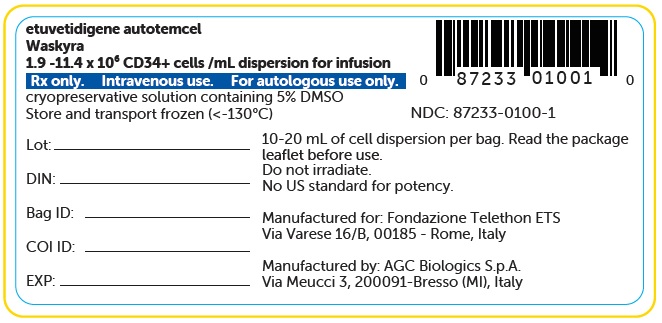
NDC: 87233-0100-1

etuvetidigene autotemcel

Waskyra

1.9 -11.4 x 10⁶ CD34+ cells /mL dispersion for infusion

Rx only. Intravenous use. For autologous use only.

cryopreservative solution containing 5% DMSO

Store and transport frozen (<-130°C)

Infusionbag (Image01)

Infusionbag (Image01)

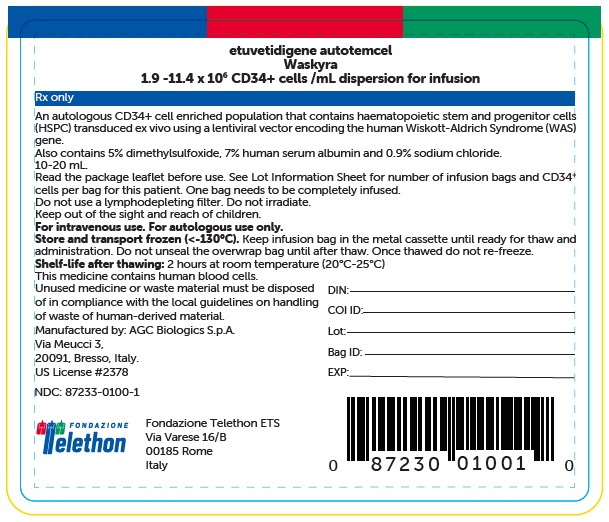
Principal Display Panel - Metal Cassette

etuvetidigene autotemcel 

Waskyra
1.9 -11.4 x 10⁶ CD34+ cells /mL dispersion for infusion

Rx only

NDC: 87233-0100-1

Metalcassette (Image002)

Metalcassette (Image002)

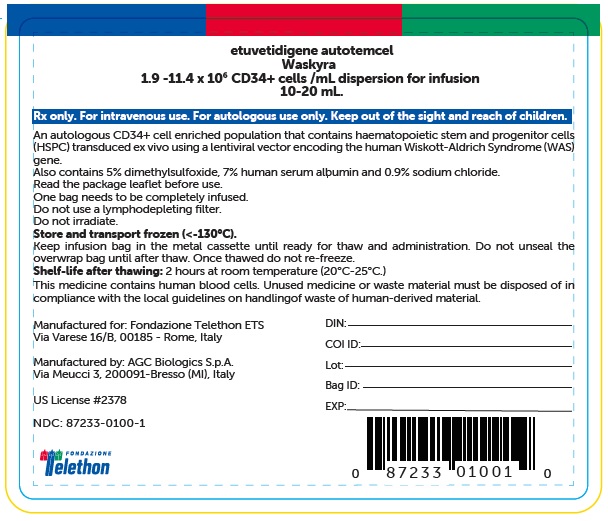
Principal Display Panel - Over Wrap Bag

etuvetidigene autotemcel 

Waskyra
1.9 -11.4 x 10⁶ CD34+ cells /mL dispersion for infusion
10-20 mL.

Rx only. For intravenous use. For autologous use only. Keep out of the sight and reach of children.

NDC: 87233-0100-1

Overwrapbag (Image03)

Overwrapbag (Image03)

* Please review the disclaimer below.