Sevelamer Carbonate Tablet, Film Coated
Product Images NDC 87367-266

View Photos of Packaging, Regulatory Labels, and Product Appearance

Product Visual Gallery

This gallery contains 12 technical images submitted to the FDA as part of the official labeling for Sevelamer Carbonate (NDC 87367-266). Unlike standard consumer photos, these assets often include clinical data figures, molecular chemical structures, and official manufacturer packaging layouts.

As provided by Insignamedex Llc, these visuals offer a comprehensive scientific overview of the product's physical and chemical identity, aiding pharmacists and researchers in product verification and study.

FDA Label Image

51ce5fd7 047c Fb08 E063 6294a90a4fb6
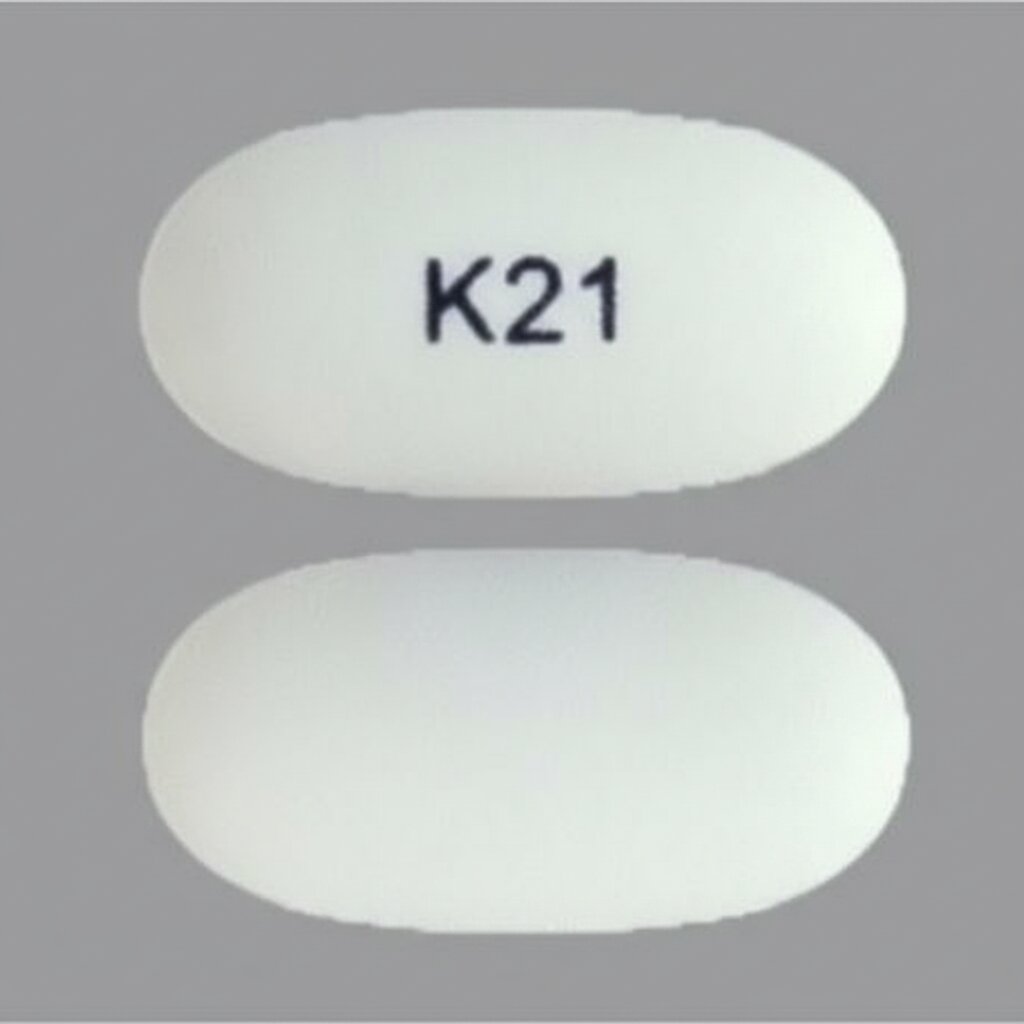
51ce5fd7 047c Fb08 E063 6294a90a4fb6
Sevelamer Carbonate 800 mg film-coated tablet, oval and white, embossed with the imprint 'K21' on one side and plain on the other, used for oral administration. The tablet is associated with Insignamedex LLC as the labeler.*
FDA Label Image

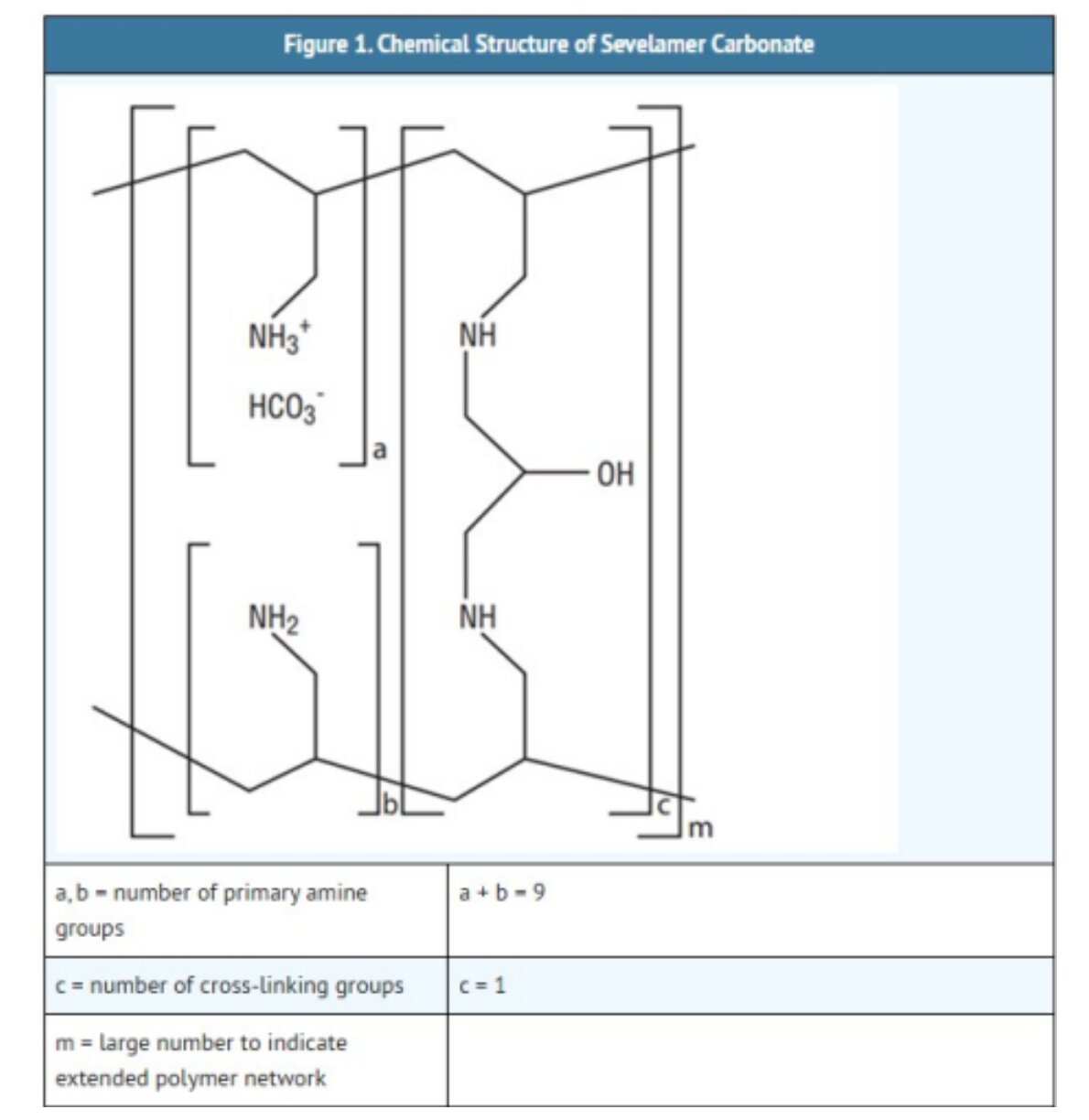
Figure 1 (Figure 1)

Figure 1 (Figure 1)
Chemical structure of Sevelamer Carbonate, showing its polymeric structure with primary amine groups, cross-linking groups, and an extended polymer network. The image includes a legend defining the variables a, b, c, and m representing the number of primary amine groups, cross-linking groups, and polymer length.*
FDA Label Image

Figure 2 Pro (Figure 2)

Figure 2 Pro (Figure 2)
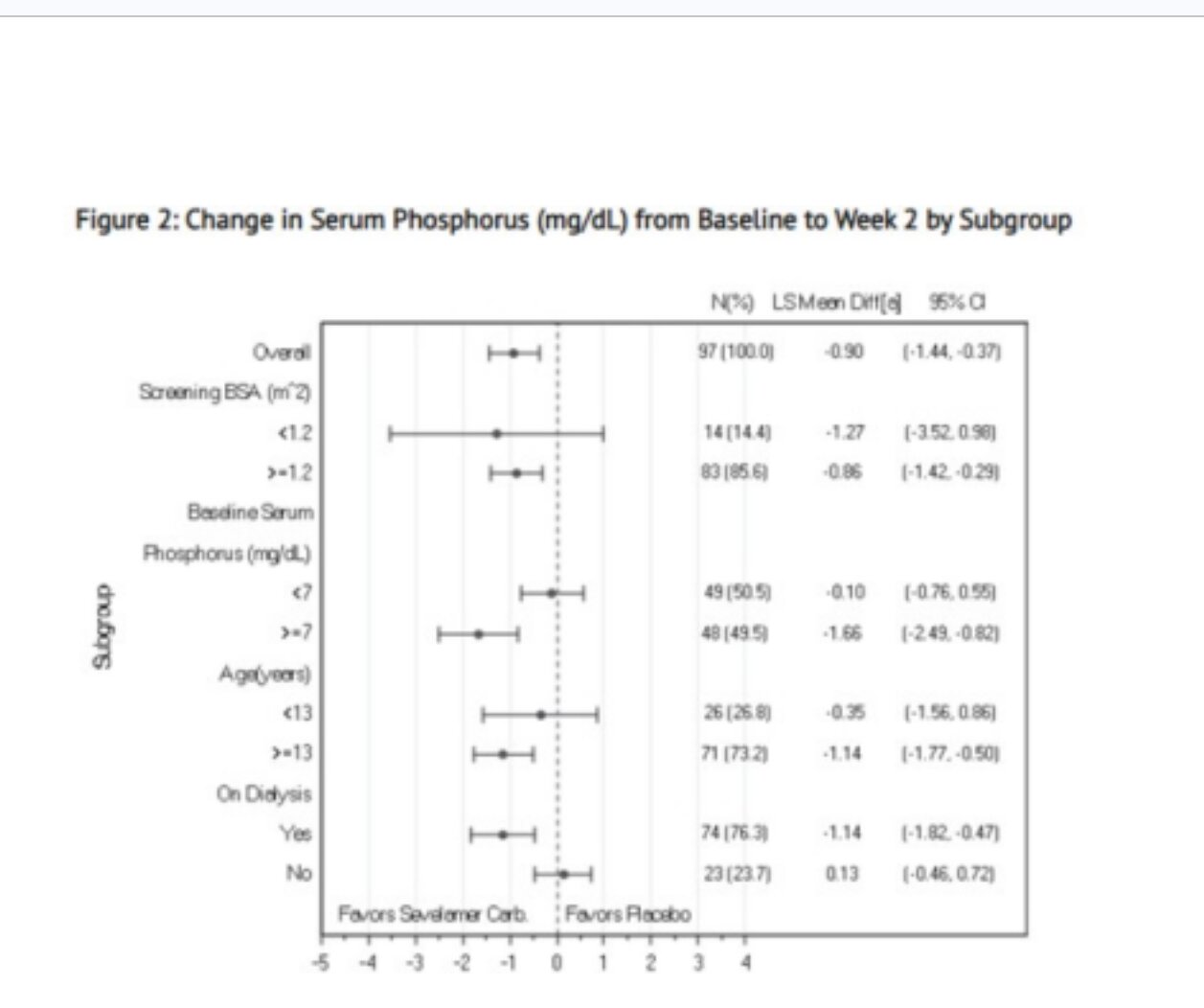
A forest plot graph depicting the change in serum phosphorus (mg/dL) from baseline to week 2 by subgroup. The subgroups include screening BSA, baseline serum phosphorus, age, and dialysis status. The x-axis shows the difference favoring Sevelamer Carbonate or placebo, with confidence intervals for each subgroup estimate shown as horizontal lines.*
FDA Label Image

Figure 3 (Figure 3)

Figure 3 (Figure 3)
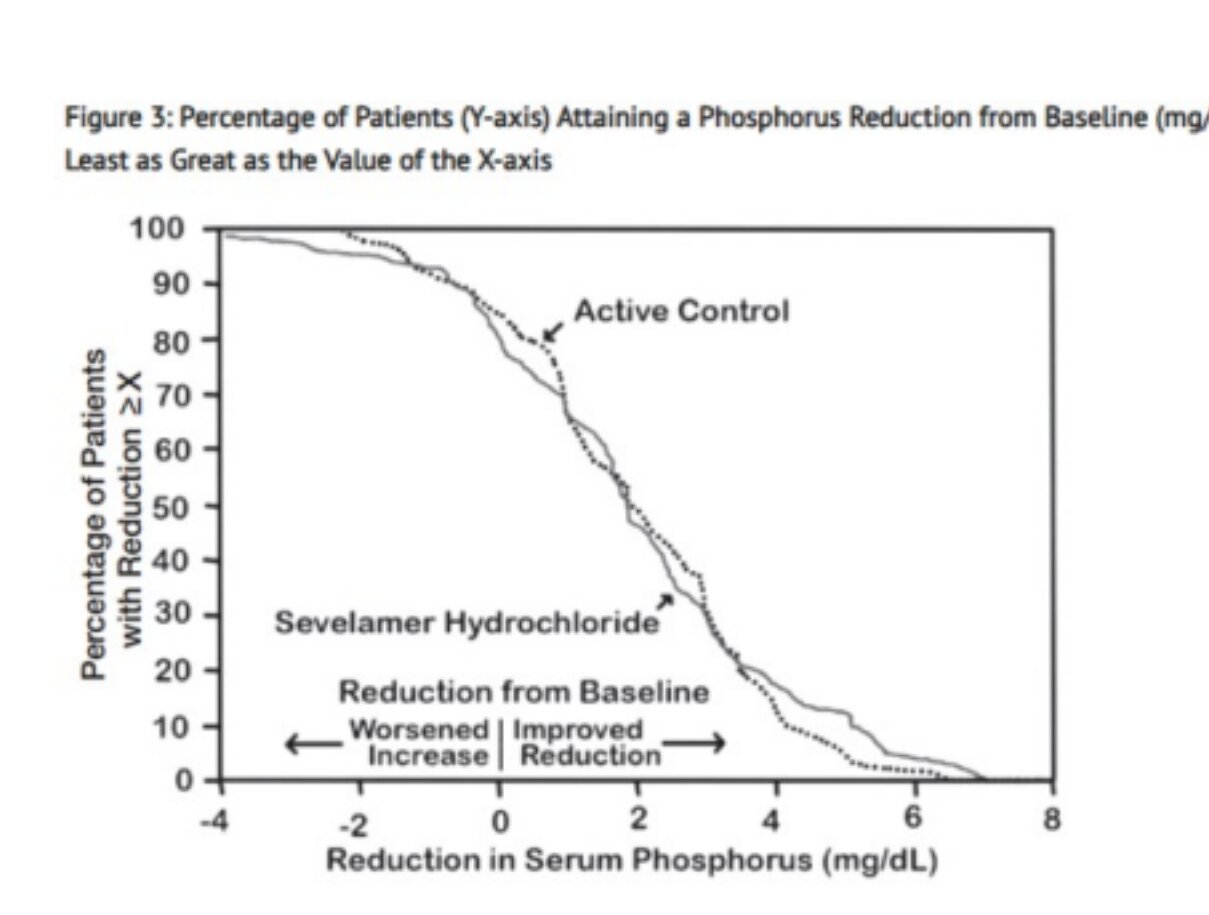
A chart showing the percentage of patients (Y-axis) achieving a reduction in serum phosphorus (mg/dL) from baseline (X-axis). The graph compares two lines labeled Active Control and Sevelamer Hydrochloride, indicating the distribution of patients with reductions ranging from worsened increase to improved reduction in serum phosphorus.*
FDA Label Image

Figure 4 (Figure 4)

Figure 4 (Figure 4)
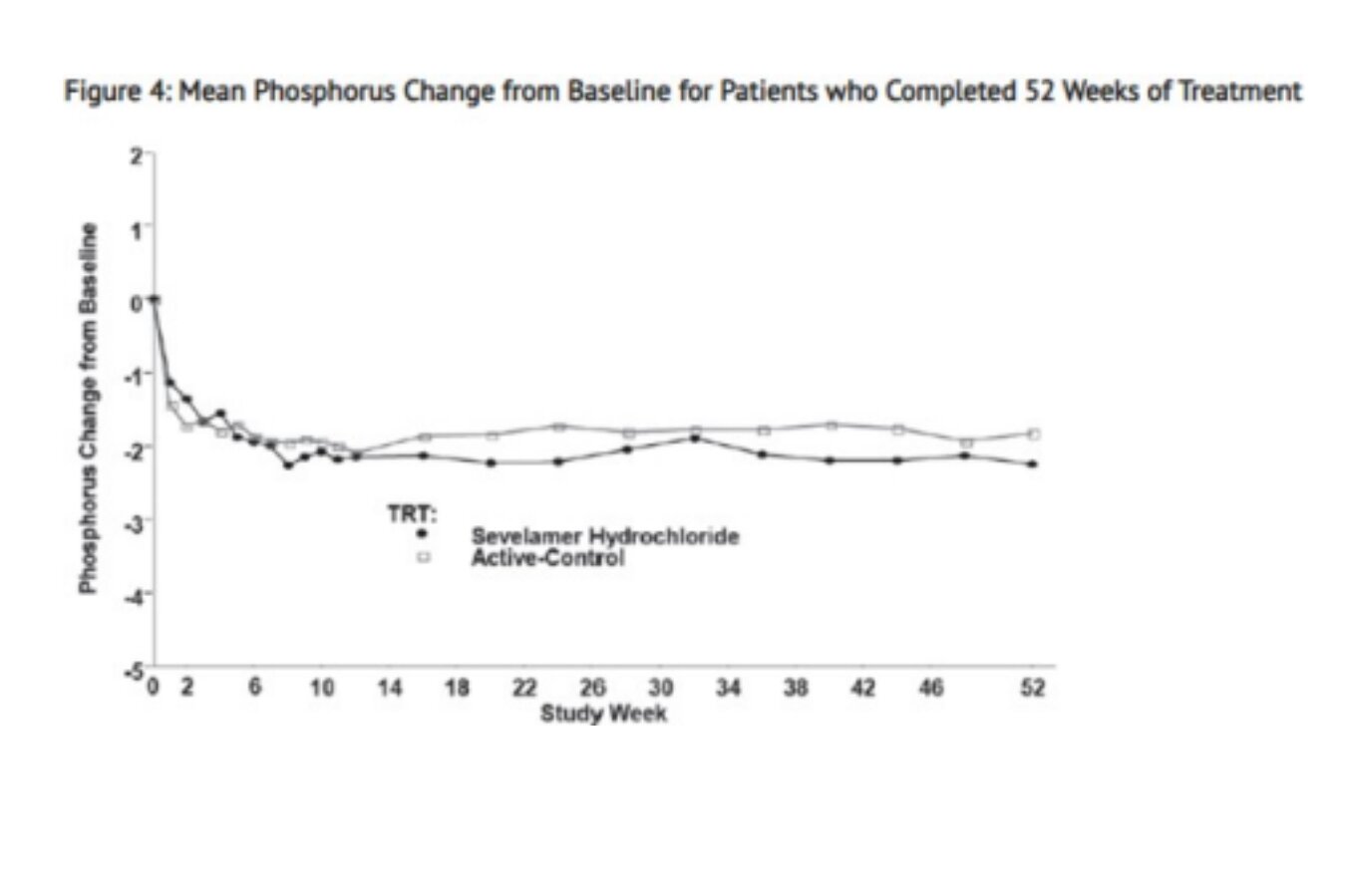
A line graph titled 'Mean Phosphorus Change from Baseline for Patients who Completed 52 Weeks of Treatment' showing phosphorus change on the Y-axis and study week on the X-axis. Two treatment groups are plotted: Sevelamer Hydrochloride (black circles) and Active-Control (gray squares), with phosphorus change values ranging approximately from 0 to -5 over 52 weeks.*
FDA Label Image

Sevelamer Label (Sevelamer Product Label 26612)

Sevelamer Label (Sevelamer Product Label 26612)
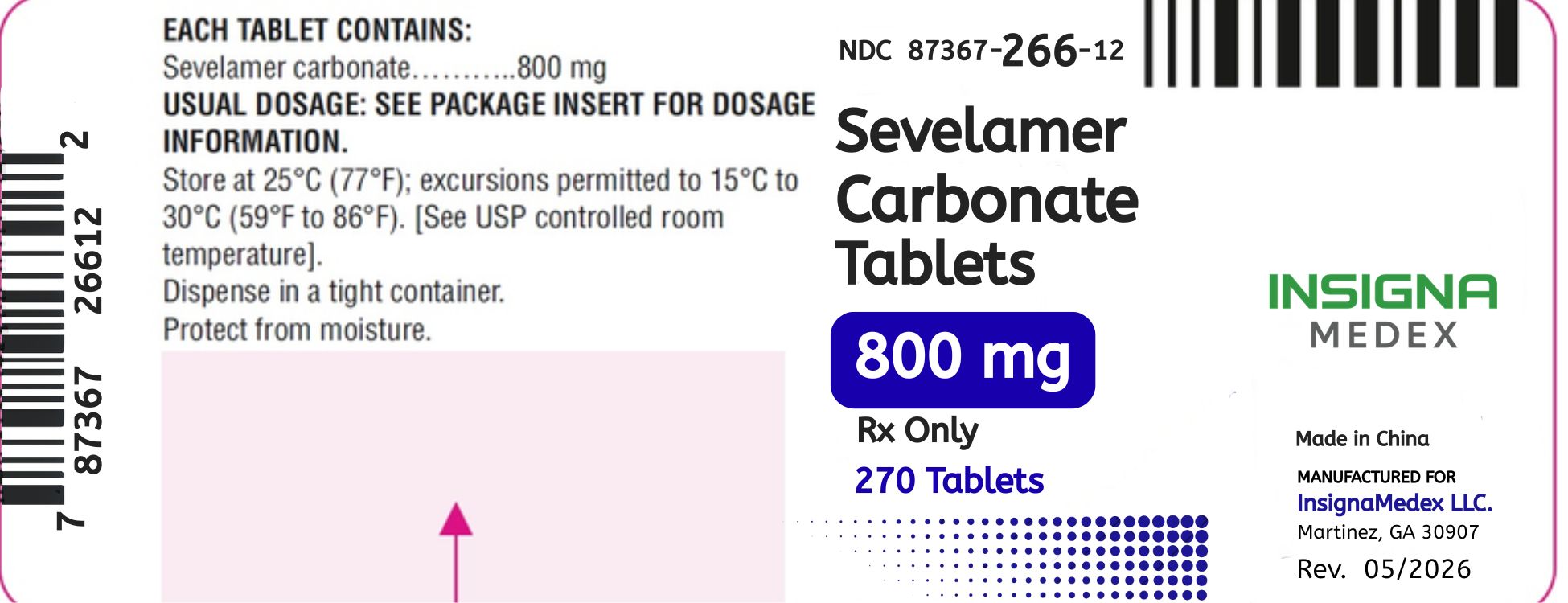
Sevelamer Carbonate 800 mg film-coated tablets label showing 270 tablets per container. The label includes storage instructions, manufacturer InsignaMedex LLC, and NDC 87367-266. The label states the product is prescription only and made in China.*
FDA Label Image

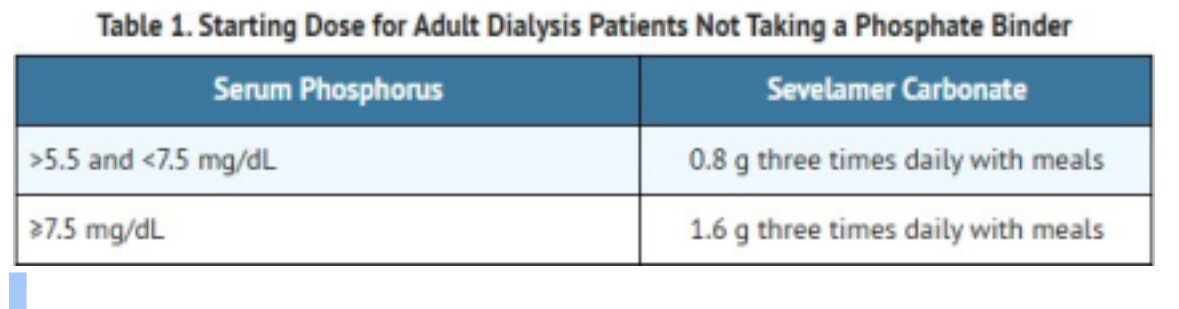
Table 1 Image (Table 1)

Table 1 Image (Table 1)
Table titled 'Starting Dose for Adult Dialysis Patients Not Taking a Phosphate Binder' comparing serum phosphorus levels with corresponding Sevelamer Carbonate doses. Serum phosphorus values are divided into two ranges: greater than 5.5 and less than 7.5 mg/dL, and 7.5 mg/dL or higher, with corresponding Sevelamer Carbonate doses of 0.8 g and 1.6 g three times daily with meals, respectively.*
FDA Label Image

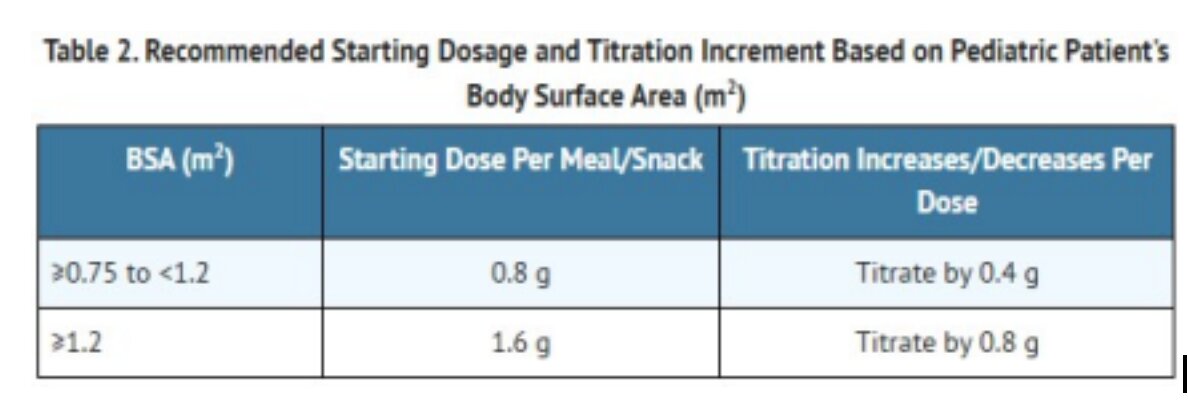
Tablet 2 Image Pro (Table 2)

Tablet 2 Image Pro (Table 2)
Table showing recommended starting dosage and titration increments of sevelamer carbonate based on pediatric patient's body surface area (BSA) in square meters. It includes starting dose per meal or snack and titration increases or decreases per dose for two BSA ranges: 0.75 to less than 1.2 m², and 1.2 m² or greater.*
FDA Label Image

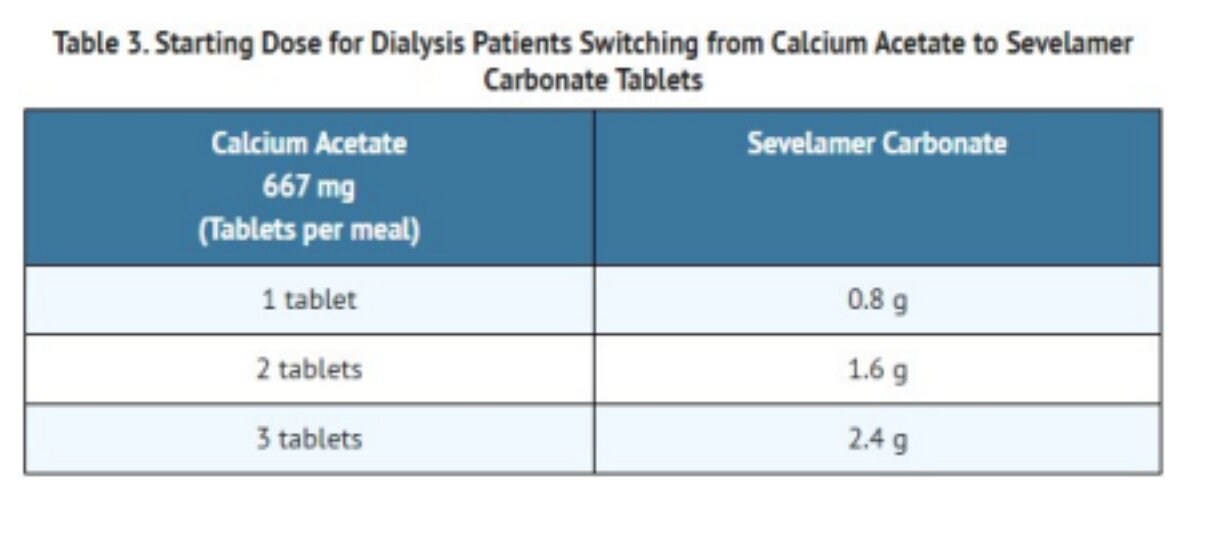
Table 3 (Table 3)

Table 3 (Table 3)
A table titled 'Starting Dose for Dialysis Patients Switching from Calcium Acetate to Sevelamer Carbonate Tablets' comparing doses. It shows columns for Calcium Acetate (667 mg tablets per meal) and Sevelamer Carbonate in grams, listing 1 tablet as 0.8 g, 2 tablets as 1.6 g, and 3 tablets as 2.4 g for Sevelamer Carbonate.*
FDA Label Image

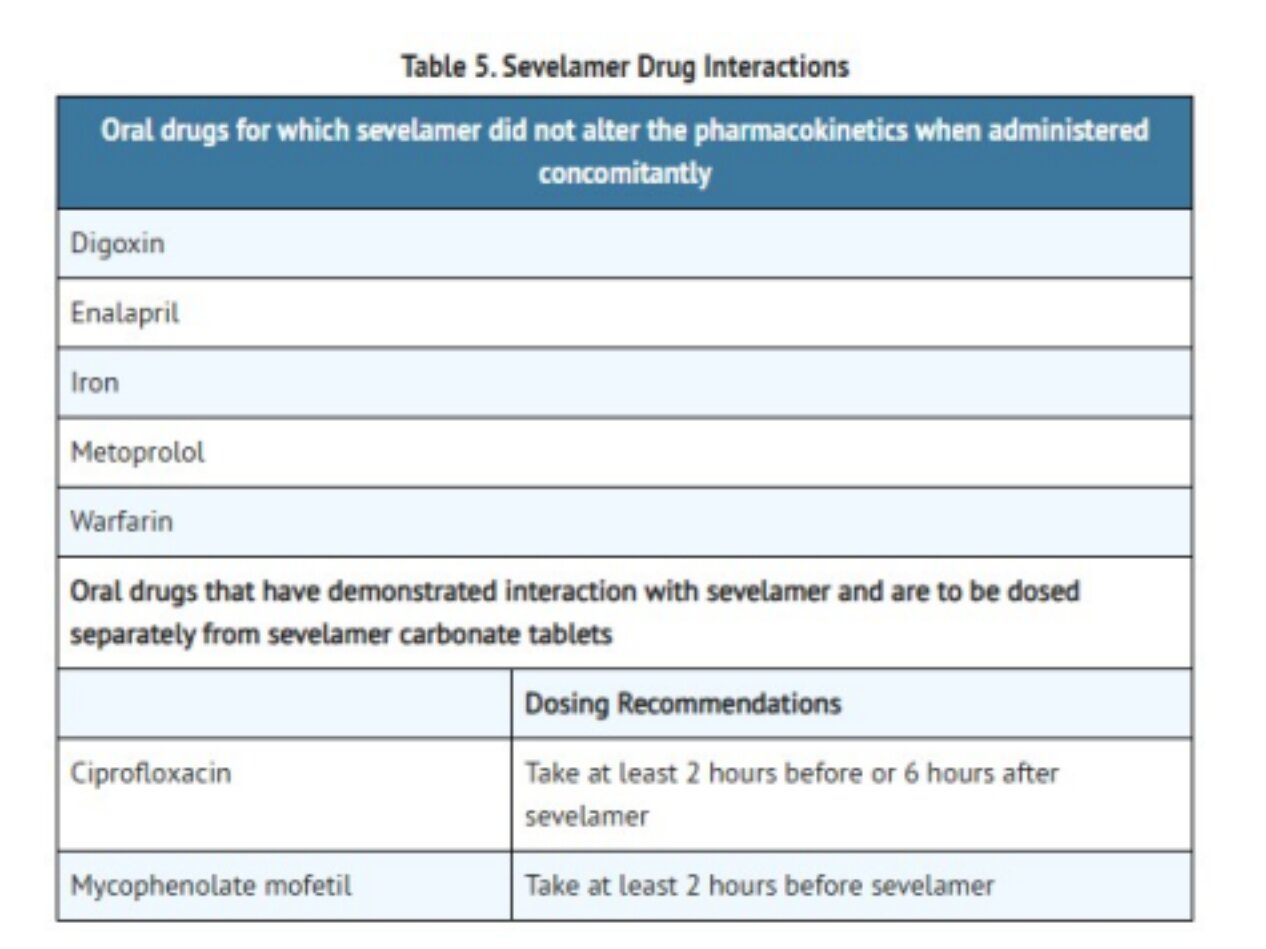
Tablet 5 (Table 5)

Tablet 5 (Table 5)
Table titled 'Sevelamer Drug Interactions' displaying oral drugs that do not have altered pharmacokinetics when taken with sevelamer, including Digoxin, Enalapril, Iron, Metoprolol, and Warfarin. It also lists oral drugs with known interaction requiring separate dosing from sevelamer carbonate tablets: Ciprofloxacin (take at least 2 hours before or 6 hours after sevelamer) and Mycophenolate mofetil (take at least 2 hours before sevelamer).*
FDA Label Image

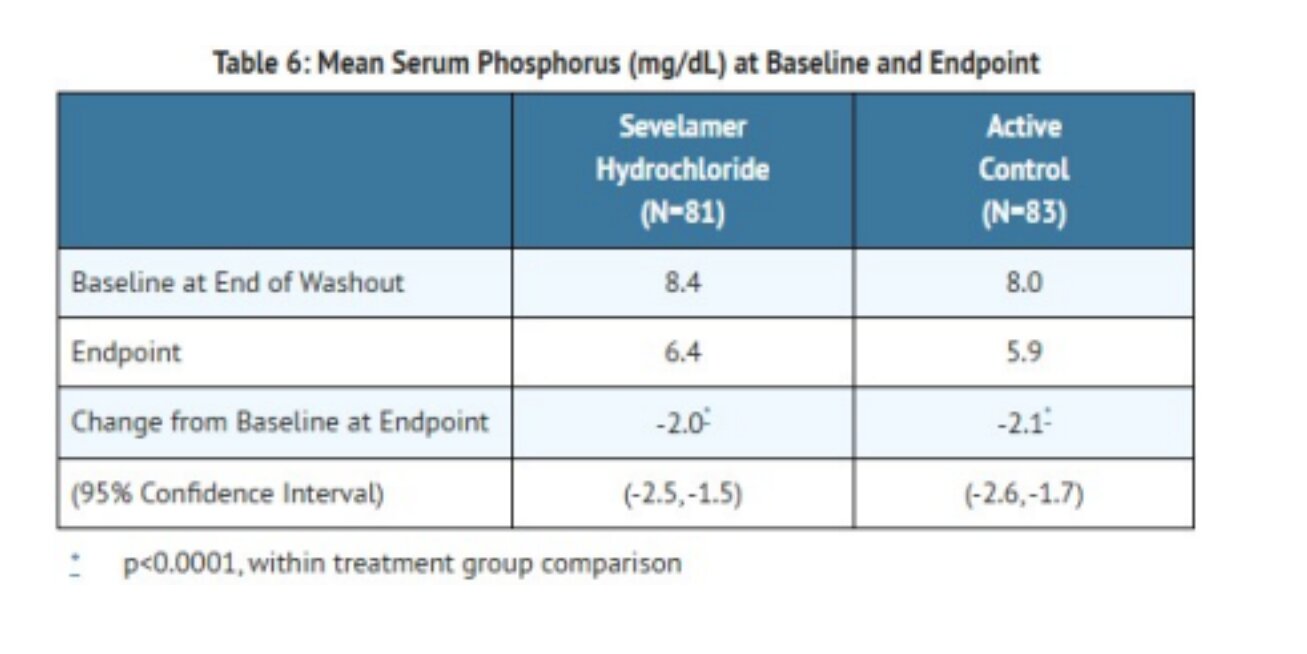
Table 6 (Table 6)

Table 6 (Table 6)
A data table titled 'Mean Serum Phosphorus (mg/dL) at Baseline and Endpoint' comparing Sevelamer Hydrochloride (N=81) and Active Control (N=83). It shows baseline values at the end of washout, endpoint values, change from baseline at endpoint, and 95% confidence intervals for each group, with noted statistical significance (p<0.0001) within treatment group comparisons.*
FDA Label Image

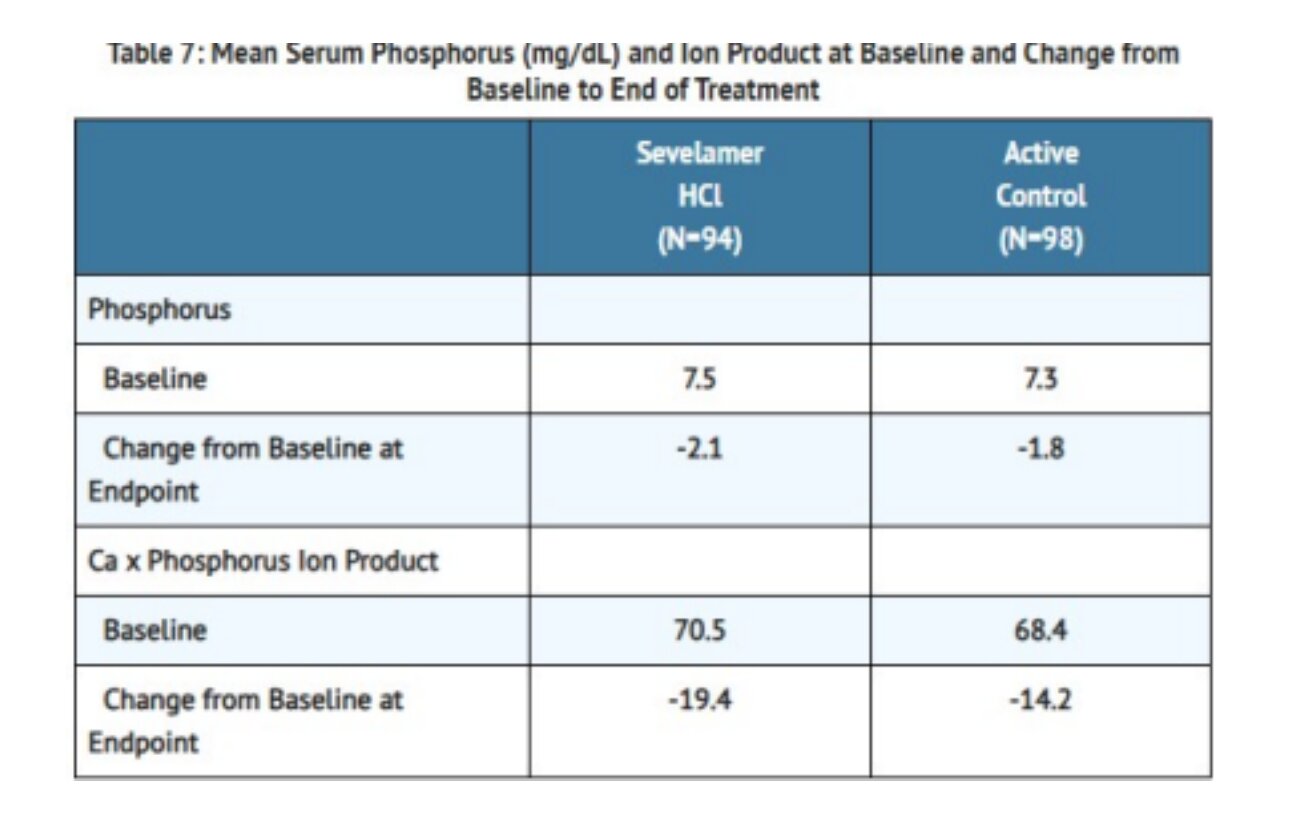
Tablet 7 (Tablet 7)

Tablet 7 (Tablet 7)
A data table titled 'Mean Serum Phosphorus (mg/dL) and Ion Product at Baseline and Change from Baseline to End of Treatment' comparing two groups: Sevelamer HCl (N=94) and Active Control (N=98). It presents baseline and endpoint change values for phosphorus levels and calcium-phosphorus ion product.*

* About these descriptions: Image descriptions on this page are generated by automated AI analysis of the product label images from the manufacturer's FDA label submission (SPL). They are provided for reference only and may contain errors or omissions. Always rely on the printed label itself and the official FDA labeling, and consult a pharmacist or healthcare professional with any questions about this product.