Antibacterial Wipes
Product Images NDC 90042-201

View Photos of Packaging, Regulatory Labels, and Product Appearance

Product Visual Gallery

This gallery contains 7 technical images submitted to the FDA as part of the official labeling for Antibacterial Wipes (NDC 90042-201). Unlike standard consumer photos, these assets often include clinical data figures, molecular chemical structures, and official manufacturer packaging layouts.

As provided by Shandong Mengyida Daily Necessities Co., Ltd., these visuals offer a comprehensive scientific overview of the product's physical and chemical identity, aiding pharmacists and researchers in product verification and study.

FDA Label Image

Label (100 Non Alcohol)

Label (100 Non Alcohol)
This is a product label for antibacterial wipes containing Benzakonium Chioride and Didecyldimonium Chloride as the active ingredients with water and glycerin as inactive ingredients. The wipes are intended for multipurpose cleaning and can be used for sanitizing hands. The directions on the label indicate to moisten the skin with the product and let it dry. The label warns against ingesting the product and instructs to seek medical help in case it happens. It also advises that children below age of 6 years should be supervised when using the product. The product is distributed by Sipa Holdings USA, Inc and made in China.*
FDA Label Image

Label (180 Non Alcohol)

Label (180 Non Alcohol)
This appears to be a label for a package of antibacterial wipes. The label includes information such as the number of wipes in the package (180), directions for use, inactive ingredients, and contact information for the distributor. It also indicates that the wipes are made in China and that they are effective at killing 99.9% of germs.*
FDA Label Image

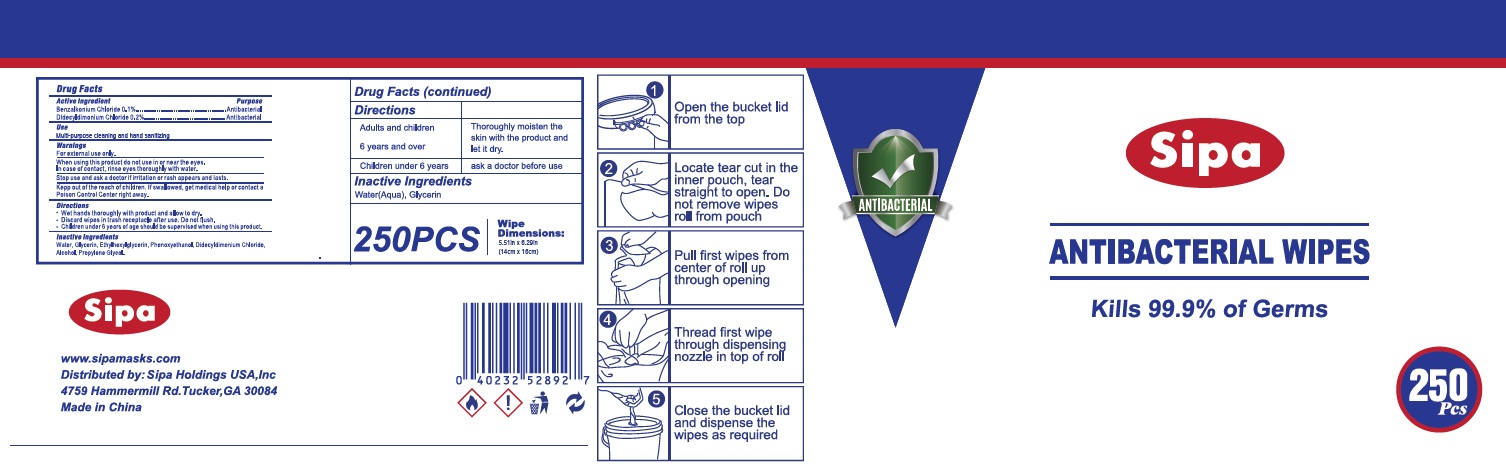
Label (250 Non Alcohol)

Label (250 Non Alcohol)
This is a drug fact sheet from a company named Sipa Holdings USA, Inc. The sheet provides instructions for users who are 8 years and above on how to open and use the antibacterial wipes. It also includes inactive ingredients and a website address for the mask manufacturer, sipamasks.com. The drug fact sheet warns users under six years to seek a doctor's advice before use. Additionally, it highlights that the antibacterial wipes kill 99.9% of germs.*
FDA Label Image

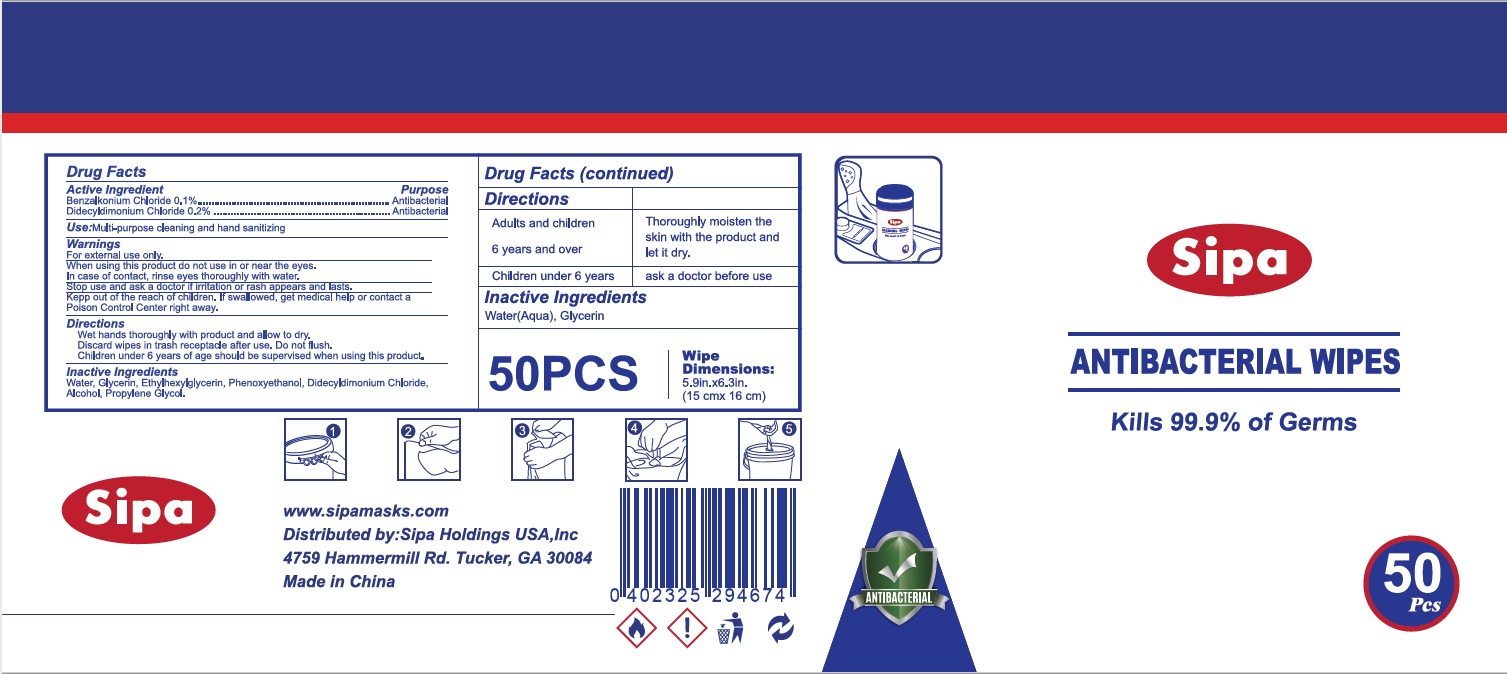
Label (50 Non Alcohol 25.5x11 0922q)

Label (50 Non Alcohol 25.5x11 0922q)
This is a drug fact sheet for antibacterial wipes that contains a list of active and inactive ingredients, directions of use, warnings, and information on the wipe's dimensions. It is a product that can kill 99.9% of germs and should be used with care by adults and children over six years old. The wipes should be discarded after use and not flushed. The product is distributed by Sipa Holdings USA Inc and is made in China.*
FDA Label Image

Label (50 Non Alcohol)

Label (50 Non Alcohol)
This is a description of a package of antibacterial wipes that claims to kill 99.9% of germs. The package states that it contains drug facts, but the text is not readable due to errors. The directions suggest moistening the skin with the product and leaving it on. The ingredients include water and glycerin, but inactive ingredients are not specified.*
FDA Label Image

Label (500 Non Alcohol)

Label (500 Non Alcohol)
This text is a set of instructions for using antibacterial wipes. It provides information on how to open the package, how to remove the wipes, how to use them, and how to store them. The wipes are said to be effective in killing 99.9% of germs. The packaging is distributed by Sipa Holdings USA, Inc. and made in China.*
FDA Label Image

Label (800 Non Alcohol)

Label (800 Non Alcohol)
This is a description of a product that appears to be a package of antibacterial wipes. The package contains the brand name "Sipa Masks" and an address in Tucker, GA, USA, but it was made in China. The product claims to kill 99.9% of germs and comes in a pouch. There is a barcode on the package, but the text is not readable. The rest of the text is difficult to interpret due to errors.*

* These product label images have been analyzed using experimental machine learning. Please verify findings with the primary label text.