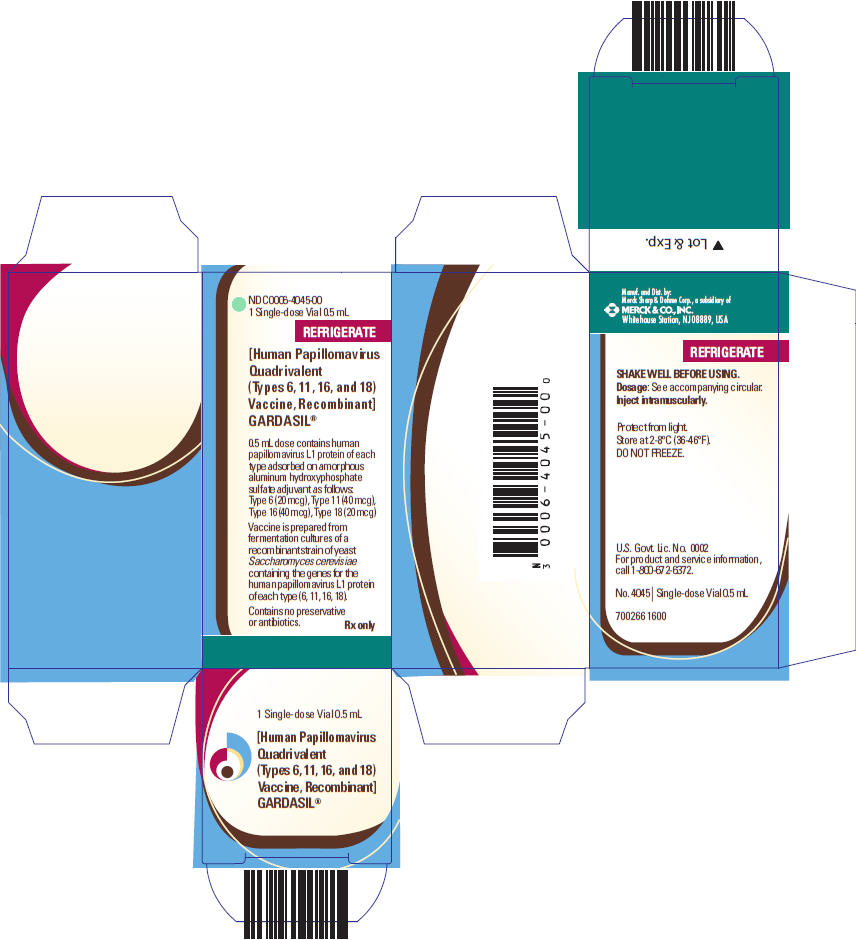
Single-Dose Vial Use
Withdraw the 0.5-mL dose of vaccine from the single-dose vial using a sterile needle and syringe and use promptly.
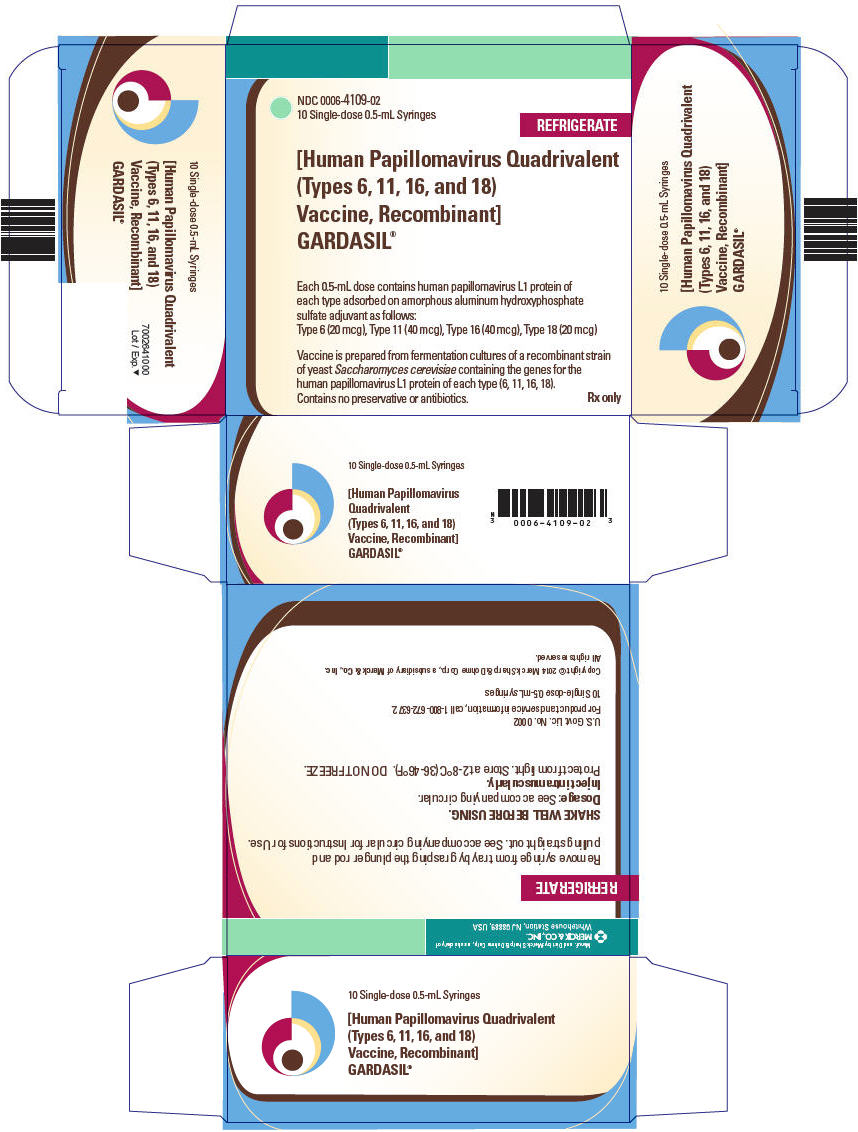
Prefilled Syringe Use
This package does not contain a needle. Shake well before use. Attach the needle by twisting in a clockwise direction until the needle fits securely on the syringe. Administer the entire dose as per standard protocol.
Overall Summary of Adverse Reactions
Headache, fever, nausea, and dizziness; and local injection site reactions (pain, swelling, erythema, pruritus, and bruising) occurred after administration with GARDASIL.
Syncope, sometimes associated with tonic-clonic movements and other seizure-like activity, has been reported following vaccination with GARDASIL and may result in falling with injury; observation for 15 minutes after administration is recommended. [See Warnings and Precautions (5.1).]
Anaphylaxis has been reported following vaccination with GARDASIL.
Studies in Girls and Women (9 Through 45 Years of Age) and Boys and Men (9 Through 26 Years of Age)
In 7 clinical trials (5 Amorphous Aluminum Hydroxyphosphate Sulfate [AAHS]-controlled, 1 saline placebo-controlled, and 1 uncontrolled), 18,083 individuals were administered GARDASIL or AAHS control or saline placebo on the day of enrollment, and approximately 2 and 6 months thereafter, and safety was evaluated using vaccination report cards (VRC)-aided surveillance for 14 days after each injection of GARDASIL or AAHS control or saline placebo in these individuals. The individuals who were monitored using VRC-aided surveillance included 10,088 individuals 9 through 45 years of age at enrollment who received GARDASIL and 7,995 individuals who received AAHS control or saline placebo. Few individuals (0.2%) discontinued due to adverse reactions. The race distribution of the 9- through 26-year-old girls and women in the safety population was as follows: 62.3% White; 17.6% Hispanic (Black and White); 6.8% Asian; 6.7% Other; 6.4% Black; and 0.3% American Indian. The race distribution of the 24- through 45-year-old women in the safety population of Study 6 was as follows: 20.6% White; 43.2% Hispanic (Black and White); 0.2% Other; 4.8% Black; 31.2% Asian; and 0.1% American Indian. The race distribution of the 9- through 26-year-old boys and men in the safety population was as follows: 42.0% White; 19.7% Hispanic (Black and White); 11.0% Asian; 11.2% Other; 15.9% Black; and 0.1% American Indian.
Common Injection-Site Adverse Reactions in Girls and Women 9 Through 26 Years of Age
The injection site adverse reactions that were observed among recipients of GARDASIL at a frequency of at least 1.0% and also at a greater frequency than that observed among AAHS control or saline placebo recipients are shown in Table 1.
Table 1: Injection-Site Adverse Reactions in Girls and Women 9 Through 26 Years of AgeThe injection-site adverse reactions that were observed among recipients of GARDASIL were at a frequency of at least 1.0% and also at a greater frequency than that observed among AAHS control or saline placebo recipients.
Adverse Reaction
(1 to 5 Days Postvaccination) | GARDASIL
(N = 5088)
% | AAHS Control AAHS Control = Amorphous Aluminum Hydroxyphosphate Sulfate
(N = 3470)
% | Saline Placebo
(N = 320)
% |
|---|
| Injection Site | | | |
| Pain | 83.9 | 75.4 | 48.6 |
| Swelling | 25.4 | 15.8 | 7.3 |
| Erythema | 24.7 | 18.4 | 12.1 |
| Pruritus | 3.2 | 2.8 | 0.6 |
| Bruising | 2.8 | 3.2 | 1.6 |
Common Injection-Site Adverse Reactions in Boys and Men 9 Through 26 Years of Age
The injection site adverse reactions that were observed among recipients of GARDASIL at a frequency of at least 1.0% and also at a greater frequency than that observed among AAHS control or saline placebo recipients are shown in Table 2.
Table 2: Injection-Site Adverse Reactions in Boys and Men 9 Through 26 Years of AgeThe injection-site adverse reactions that were observed among recipients of GARDASIL were at a frequency of at least 1.0% and also at a greater frequency than that observed among AAHS control or saline placebo recipients.
Adverse Reaction
(1 to 5 Days Postvaccination) | GARDASIL
(N = 3093)
% | AAHS Control AAHS Control = Amorphous Aluminum Hydroxyphosphate Sulfate
(N = 2029)
% | Saline Placebo
(N = 274)
% |
|---|
| Injection Site | | | |
| Pain | 61.4 | 50.8 | 41.6 |
| Erythema | 16.7 | 14.1 | 14.5 |
| Swelling | 13.9 | 9.6 | 8.2 |
| Hematoma | 1.0 | 0.3 | 3.3 |
Evaluation of Injection-Site Adverse Reactions by Dose in Girls and Women 9 Through 26 Years of Age
An analysis of injection-site adverse reactions in girls and women by dose is shown in Table 3. Of those girls and women who reported an injection-site reaction, 94.3% judged their injection-site adverse reaction to be mild or moderate in intensity.
Table 3: Postdose Evaluation of Injection-Site Adverse Reactions in Girls and Women 9 Through 26 Years of Age (1 to 5 Days Postvaccination) | GARDASIL
(% occurrence) | AAHS Control AAHS Control = Amorphous Aluminum Hydroxyphosphate Sulfate
(% occurrence) | Saline Placebo
(% occurrence) |
|---|
| Adverse Reaction | Post-dose 1
NN = Number of individuals with follow-up = 5011 | Post-dose 2
N = 4924 | Post-dose 3
N = 4818 | Post-dose 1
N = 3410 | Post-dose 2
N = 3351 | Post-dose 3
N = 3295 | Post-dose 1
N = 315 | Post-dose 2
N = 301 | Post-dose 3
N = 300 |
|---|
| Pain | 63.4 | 60.7 | 62.7 | 57.0 | 47.8 | 49.6 | 33.7 | 20.3 | 27.3 |
| Mild/Moderate | 62.5 | 59.7 | 61.2 | 56.6 | 47.3 | 48.9 | 33.3 | 20.3 | 27.0 |
| Severe | 0.9 | 1.0 | 1.5 | 0.4 | 0.5 | 0.6 | 0.3 | 0.0 | 0.3 |
| Swelling Intensity of swelling and erythema was measured by size (inches): Mild = 0 to ≤1; Moderate = >1 to ≤2; Severe = >2. | 10.2 | 12.8 | 15.1 | 8.2 | 7.5 | 7.6 | 4.4 | 3.0 | 3.3 |
| Mild/Moderate | 9.6 | 11.9 | 14.2 | 8.1 | 7.2 | 7.3 | 4.4 | 3.0 | 3.3 |
| Severe | 0.6 | 0.8 | 0.9 | 0.2 | 0.2 | 0.2 | 0.0 | 0.0 | 0.0 |
| Erythema | 9.2 | 12.1 | 14.7 | 9.8 | 8.4 | 8.9 | 7.3 | 5.3 | 5.7 |
| Mild/Moderate | 9.0 | 11.7 | 14.3 | 9.5 | 8.4 | 8.8 | 7.3 | 5.3 | 5.7 |
| Severe | 0.2 | 0.3 | 0.4 | 0.3 | 0.1 | 0.1 | 0.0 | 0.0 | 0.0 |
Evaluation of Injection-Site Adverse Reactions by Dose in Boys and Men 9 Through 26 Years of Age
An analysis of injection-site adverse reactions in boys and men by dose is shown in Table 4. Of those boys and men who reported an injection-site reaction, 96.4% judged their injection-site adverse reaction to be mild or moderate in intensity.
Table 4: Postdose Evaluation of Injection-Site Adverse Reactions in Boys and Men 9 Through 26 Years of Age (1 to 5 Days Postvaccination) | GARDASIL
(% occurrence) | AAHS Control AAHS Control = Amorphous Aluminum Hydroxyphosphate Sulfate
(% occurrence) | Saline Placebo
(% occurrence) |
|---|
| Adverse Reaction | Post-dose 1
NN = Number of individuals with follow-up = 3003 | Post-dose 2
N = 2898 | Post-dose 3
N = 2826 | Post-dose 1
N = 1950 | Post-dose 2
N = 1854 | Post-dose 3
N = 1799 | Post-dose 1
N = 269 | Post-dose 2
N = 263 | Post-dose 3
N = 259 |
|---|
| Pain | 44.7 | 36.9 | 34.4 | 38.4 | 28.2 | 25.8 | 27.5 | 20.5 | 16.2 |
| Mild/Moderate | 44.5 | 36.4 | 34.1 | 37.9 | 28.2 | 25.5 | 27.5 | 20.2 | 16.2 |
| Severe | 0.2 | 0.5 | 0.3 | 0.4 | 0.1 | 0.3 | 0.0 | 0.4 | 0.0 |
| Swelling Intensity of swelling and erythema was measured by size (inches): Mild = 0 to ≤1; Moderate = >1 to ≤2; Severe = >2. | 5.6 | 6.6 | 7.7 | 5.6 | 4.5 | 4.1 | 4.8 | 1.5 | 3.5 |
| Mild/Moderate | 5.3 | 6.2 | 7.1 | 5.4 | 4.5 | 4.0 | 4.8 | 1.5 | 3.1 |
| Severe | 0.2 | 0.3 | 0.5 | 0.2 | 0.0 | 0.1 | 0.0 | 0.0 | 0.4 |
| Erythema | 7.2 | 8.0 | 8.7 | 8.3 | 6.3 | 5.7 | 7.1 | 5.7 | 5.0 |
| Mild/Moderate | 6.8 | 7.7 | 8.3 | 8.0 | 6.2 | 5.6 | 7.1 | 5.7 | 5.0 |
| Severe | 0.3 | 0.2 | 0.3 | 0.2 | 0.1 | 0.1 | 0.0 | 0.0 | 0.0 |
Common Systemic Adverse Reactions in Girls and Women 9 Through 26 Years of Age
Headache was the most commonly reported systemic adverse reaction in both treatment groups (GARDASIL = 28.2% and AAHS control or saline placebo = 28.4%). Fever was the next most commonly reported systemic adverse reaction in both treatment groups (GARDASIL = 13.0% and AAHS control or saline placebo = 11.2%).
Adverse reactions that were observed among recipients of GARDASIL, at a frequency of greater than or equal to 1.0% where the incidence in the GARDASIL group was greater than or equal to the incidence in the AAHS control or saline placebo group, are shown in Table 5.
Table 5: Common Systemic Adverse Reactions in Girls and Women 9 Through 26 Years of Age (GARDASIL ≥Control)The adverse reactions in this table are those that were observed among recipients of GARDASIL at a frequency of at least 1.0% and greater than or equal to those observed among AAHS control or saline placebo recipients.
Adverse Reactions
(1 to 15 Days Postvaccination) | GARDASIL
(N = 5088)
% | AAHS Control AAHS Control = Amorphous Aluminum Hydroxyphosphate Sulfate or Saline Placebo
(N = 3790)
% |
|---|
| Pyrexia | 13.0 | 11.2 |
| Nausea | 6.7 | 6.5 |
| Dizziness | 4.0 | 3.7 |
| Diarrhea | 3.6 | 3.5 |
| Vomiting | 2.4 | 1.9 |
| Cough | 2.0 | 1.5 |
| Toothache | 1.5 | 1.4 |
| Upper respiratory tract infection | 1.5 | 1.5 |
| Malaise | 1.4 | 1.2 |
| Arthralgia | 1.2 | 0.9 |
| Insomnia | 1.2 | 0.9 |
| Nasal congestion | 1.1 | 0.9 |
Common Systemic Adverse Reactions in Boys and Men 9 Through 26 Years of Age
Headache was the most commonly reported systemic adverse reaction in both treatment groups (GARDASIL = 12.3% and AAHS control or saline placebo = 11.2%). Fever was the next most commonly reported systemic adverse reaction in both treatment groups (GARDASIL = 8.3% and AAHS control or saline placebo = 6.5%).
Adverse reactions that were observed among recipients of GARDASIL, at a frequency of greater than or equal to 1.0% where the incidence in the group that received GARDASIL was greater than or equal to the incidence in the AAHS control or saline placebo group, are shown in Table 6.
Table 6: Common Systemic Adverse Reactions in Boys and Men 9 Through 26 Years of Age (GARDASIL ≥Control)The adverse reactions in this table are those that were observed among recipients of GARDASIL at a frequency of at least 1.0% and greater than or equal to those observed among AAHS control or saline placebo recipients.
Adverse Reactions
(1 to 15 Days Postvaccination) | GARDASIL
(N = 3093)
% | AAHS Control AAHS Control = Amorphous Aluminum Hydroxyphosphate Sulfate or Saline Placebo
(N = 2303)
% |
|---|
| Headache | 12.3 | 11.2 |
| Pyrexia | 8.3 | 6.5 |
| Oropharyngeal pain | 2.8 | 2.1 |
| Diarrhea | 2.7 | 2.2 |
| Nasopharyngitis | 2.6 | 2.6 |
| Nausea | 2.0 | 1.0 |
| Upper respiratory tract infection | 1.5 | 1.0 |
| Abdominal pain upper | 1.4 | 1.4 |
| Myalgia | 1.3 | 0.7 |
| Dizziness | 1.2 | 0.9 |
| Vomiting | 1.0 | 0.8 |
Evaluation of Fever by Dose in Girls and Women 9 Through 26 Years of Age
An analysis of fever in girls and women by dose is shown in Table 7.
Table 7: Postdose Evaluation of Fever in Girls and Women 9 Through 26 Years of Age (1 to 5 Days Postvaccination) | GARDASIL
(% occurrence) | AAHS Control AAHS Control = Amorphous Aluminum Hydroxyphosphate Sulfate or Saline Placebo
(% occurrence) |
|---|
Temperature
(°F) | Postdose 1
NN = Number of individuals with follow-up = 4945 | Postdose 2
N = 4804 | Postdose 3
N = 4671 | Postdose 1
N = 3681 | Postdose 2
N = 3564 | Postdose 3
N = 3467 |
|---|
| ≥100 to <102 | 3.7 | 4.1 | 4.4 | 3.1 | 3.8 | 3.6 |
| ≥102 | 0.3 | 0.5 | 0.5 | 0.2 | 0.4 | 0.5 |
Evaluation of Fever by Dose in Boys and Men 9 Through 26 Years of Age
An analysis of fever in boys and men by dose is shown in Table 8.
Table 8: Postdose Evaluation of Fever in Boys and Men 9 Through 26 Years of Age (1 to 5 Days Postvaccination) | GARDASIL
(% occurrence) | AAHS Control AAHS Control = Amorphous Aluminum Hydroxyphosphate Sulfate or Saline Placebo
(% occurrence) |
|---|
Temperature
(°F) | Postdose 1
NN = Number of individuals with follow-up = 2972 | Postdose 2
N = 2849 | Postdose 3
N = 2792 | Postdose 1
N = 2194 | Postdose 2
N = 2079 | Postdose 3
N = 2046 |
|---|
| ≥100 to <102 | 2.4 | 2.5 | 2.3 | 2.1 | 2.2 | 1.6 |
| ≥102 | 0.6 | 0.5 | 0.5 | 0.5 | 0.3 | 0.3 |
Serious Adverse Reactions in the Entire Study Population
Across the clinical studies, 258 individuals (GARDASIL N = 128 or 0.8%; placebo N = 130 or 1.0%) out of 29,323 (GARDASIL N = 15,706; AAHS control N = 13,023; or saline placebo N = 594) individuals (9- through 45-year-old girls and women; and 9- through 26-year-old boys and men) reported a serious systemic adverse reaction.
Of the entire study population (29,323 individuals), 0.04% of the reported serious systemic adverse reactions were judged to be vaccine related by the study investigator. The most frequently (frequency of 4 cases or greater with either GARDASIL, AAHS control, saline placebo, or the total of all three) reported serious systemic adverse reactions, regardless of causality, were:
Headache [0.02% GARDASIL (3 cases) vs. 0.02% AAHS control (2 cases)],
Gastroenteritis [0.02% GARDASIL (3 cases) vs. 0.02% AAHS control (2 cases)],
Appendicitis [0.03% GARDASIL (5 cases) vs. 0.01% AAHS control (1 case)],
Pelvic inflammatory disease [0.02% GARDASIL (3 cases) vs. 0.03% AAHS control (4 cases)],
Urinary tract infection [0.01% GARDASIL (2 cases) vs. 0.02% AAHS control (2 cases)],
Pneumonia [0.01% GARDASIL (2 cases) vs. 0.02% AAHS control (2 cases)],
Pyelonephritis [0.01% GARDASIL (2 cases) vs. 0.02% AAHS control (3 cases)],
Pulmonary embolism [0.01% GARDASIL (2 cases) vs. 0.02% AAHS control (2 cases)].
One case (0.006% GARDASIL; 0.0% AAHS control or saline placebo) of bronchospasm; and 2 cases (0.01% GARDASIL; 0.0% AAHS control or saline placebo) of asthma were reported as serious systemic adverse reactions that occurred following any vaccination visit.
In addition, there was 1 individual in the clinical trials, in the group that received GARDASIL, who reported two injection-site serious adverse reactions (injection-site pain and injection-site joint movement impairment).
Deaths in the Entire Study Population
Across the clinical studies, 40 deaths (GARDASIL N = 21 or 0.1%; placebo N = 19 or 0.1%) were reported in 29,323 (GARDASIL N = 15,706; AAHS control N = 13,023, saline placebo N = 594) individuals (9- through 45-year-old girls and women; and 9- through 26-year-old boys and men). The events reported were consistent with events expected in healthy adolescent and adult populations. The most common cause of death was motor vehicle accident (5 individuals who received GARDASIL and 4 individuals who received AAHS control), followed by drug overdose/suicide (2 individuals who received GARDASIL and 6 individuals who received AAHS control), gunshot wound (1 individual who received GARDASIL and 3 individuals who received AAHS control), and pulmonary embolus/deep vein thrombosis (1 individual who received GARDASIL and 1 individual who received AAHS control). In addition, there were 2 cases of sepsis, 1 case of pancreatic cancer, 1 case of arrhythmia, 1 case of pulmonary tuberculosis, 1 case of hyperthyroidism, 1 case of post-operative pulmonary embolism and acute renal failure, 1 case of traumatic brain injury/cardiac arrest, 1 case of systemic lupus erythematosus, 1 case of cerebrovascular accident, 1 case of breast cancer, and 1 case of nasopharyngeal cancer in the group that received GARDASIL; 1 case of asphyxia, 1 case of acute lymphocytic leukemia, 1 case of chemical poisoning, and 1 case of myocardial ischemia in the AAHS control group; and 1 case of medulloblastoma in the saline placebo group.
Systemic Autoimmune Disorders in Girls and Women 9 Through 26 Years of Age
In the clinical studies, 9- through 26-year-old girls and women were evaluated for new medical conditions that occurred over the course of follow-up. New medical conditions potentially indicative of a systemic autoimmune disorder seen in the group that received GARDASIL or AAHS control or saline placebo are shown in Table 9. This population includes all girls and women who received at least one dose of GARDASIL or AAHS control or saline placebo, and had safety data available.
Table 9: Summary of Girls and Women 9 Through 26 Years of Age Who Reported an Incident Condition Potentially Indicative of a Systemic Autoimmune Disorder After Enrollment in Clinical Trials of GARDASIL, Regardless of Causality| Conditions | GARDASIL
(N = 10,706) | AAHS Control AAHS Control = Amorphous Aluminum Hydroxyphosphate Sulfate or Saline Placebo
(N = 9412) |
|---|
| n (%) | n (%) |
|---|
| N = Number of individuals enrolled |
| n = Number of individuals with specific new Medical Conditions |
| NOTE: Although an individual may have had two or more new Medical Conditions, the individual is counted only once within a category. The same individual may appear in different categories. |
| Arthralgia/Arthritis/Arthropathy Arthralgia/Arthritis/Arthropathy includes the following terms: Arthralgia, Arthritis, Arthritis reactive, and Arthropathy | 120 (1.1) | 98 (1.0) |
| Autoimmune Thyroiditis | 4 (0.0) | 1 (0.0) |
| Celiac Disease | 10 (0.1) | 6 (0.1) |
| Diabetes Mellitus Insulin-dependent | 2 (0.0) | 2 (0.0) |
| Erythema Nodosum | 2 (0.0) | 4 (0.0) |
| Hyperthyroidism Hyperthyroidism includes the following terms: Basedow's disease, Goiter, Toxic nodular goiter, and Hyperthyroidism | 27 (0.3) | 21 (0.2) |
| Hypothyroidism Hypothyroidism includes the following terms: Hypothyroidism and thyroiditis | 35 (0.3) | 38 (0.4) |
| Inflammatory Bowel Disease Inflammatory bowel disease includes the following terms: Colitis ulcerative, Crohn's disease, and Inflammatory bowel disease | 7 (0.1) | 10 (0.1) |
| Multiple Sclerosis | 2 (0.0) | 4 (0.0) |
| Nephritis Nephritis includes the following terms: Nephritis, Glomerulonephritis minimal lesion, Glomerulonephritis proliferative | 2 (0.0) | 5 (0.1) |
| Optic Neuritis | 2 (0.0) | 0 (0.0) |
| Pigmentation Disorder Pigmentation disorder includes the following terms: Pigmentation disorder, Skin depigmentation, and Vitiligo | 4 (0.0) | 3 (0.0) |
| Psoriasis Psoriasis includes the following terms: Psoriasis, Pustular psoriasis, and Psoriatic arthropathy | 13 (0.1) | 15 (0.2) |
| Raynaud's Phenomenon | 3 (0.0) | 4 (0.0) |
| Rheumatoid Arthritis Rheumatoid arthritis includes juvenile rheumatoid arthritis. One woman counted in the rheumatoid arthritis group reported rheumatoid arthritis as an adverse experience at Day 130. | 6 (0.1) | 2 (0.0) |
| Scleroderma/Morphea | 2 (0.0) | 1 (0.0) |
| Stevens-Johnson Syndrome | 1 (0.0) | 0 (0.0) |
| Systemic Lupus Erythematosus | 1 (0.0) | 3 (0.0) |
| Uveitis | 3 (0.0) | 1 (0.0) |
| All Conditions | 245 (2.3) | 218 (2.3) |
Systemic Autoimmune Disorders in Boys and Men 9 Through 26 Years of Age
In the clinical studies, 9- through 26-year-old boys and men were evaluated for new medical conditions that occurred over the course of follow-up. New medical conditions potentially indicative of a systemic autoimmune disorder seen in the group that received GARDASIL or AAHS control or saline placebo are shown in Table 10. This population includes all boys and men who received at least one dose of GARDASIL or AAHS control or saline placebo, and had safety data available.
Table 10: Summary of Boys and Men 9 Through 26 Years of Age Who Reported an Incident Condition Potentially Indicative of a Systemic Autoimmune Disorder After Enrollment in Clinical Trials of GARDASIL, Regardless of Causality| Conditions | GARDASIL
(N = 3093) | AAHS Control AAHS Control = Amorphous Aluminum Hydroxyphosphate Sulfate or Saline Placebo
(N = 2303) |
|---|
| n (%) | n (%) |
|---|
| N = Number of individuals who received at least one dose of either vaccine or placebo |
| n = Number of individuals with specific new Medical Conditions |
| NOTE: Although an individual may have had two or more new Medical Conditions, the individual is counted only once within a category. The same individual may appear in different categories. |
| Alopecia Areata | 2 (0.1) | 0 (0.0) |
| Ankylosing Spondylitis | 1 (0.0) | 2 (0.1) |
| Arthralgia/Arthritis/Reactive Arthritis | 30 (1.0) | 17 (0.7) |
| Autoimmune Thrombocytopenia | 1 (0.0) | 0 (0.0) |
| Diabetes Mellitus Type 1 | 3 (0.1) | 2 (0.1) |
| Hyperthyroidism | 0 (0.0) | 1 (0.0) |
| Hypothyroidism Hypothyroidism includes the following terms: Hypothyroidism and Autoimmune thyroiditis | 3 (0.1) | 0 (0.0) |
| Inflammatory Bowel Disease Inflammatory bowel disease includes the following terms: Colitis ulcerative and Crohn's disease | 1 (0.0) | 2 (0.1) |
| Myocarditis | 1 (0.0) | 1 (0.0) |
| Proteinuria | 1 (0.0) | 0 (0.0) |
| Psoriasis | 0 (0.0) | 4 (0.2) |
| Skin Depigmentation | 1 (0.0) | 0 (0.0) |
| Vitiligo | 2 (0.1) | 5 (0.2) |
| All Conditions | 46 (1.5) | 34 (1.5) |
Safety in Concomitant Use with RECOMBIVAX HB® [hepatitis B vaccine (recombinant)] in Girls and Women 16 Through 23 Years of Age
The safety of GARDASIL when administered concomitantly with RECOMBIVAX HB® [hepatitis B vaccine (recombinant)] was evaluated in an AAHS-controlled study of 1871 girls and women with a mean age of 20.4 years [see Clinical Studies (14.10)]. The race distribution of the study individuals was as follows: 61.6% White; 23.8% Other; 11.9% Black; 1.6% Hispanic (Black and White); 0.8% Asian; and 0.3% American Indian. The rates of systemic and injection-site adverse reactions were similar among girls and women who received concomitant vaccination as compared with those who received GARDASIL or RECOMBIVAX HB [hepatitis B vaccine (recombinant)].
Safety in Concomitant Use with Menactra [Meningococcal (Groups A, C, Y and W-135) Polysaccharide Diphtheria Toxoid Conjugate Vaccine] and Adacel [Tetanus Toxoid, Reduced Diphtheria Toxoid and Acellular Pertussis Vaccine Adsorbed (Tdap)]
The safety of GARDASIL when administered concomitantly with Menactra [Meningococcal (Groups A, C, Y and W-135) Polysaccharide Diphtheria Toxoid Conjugate Vaccine] and Adacel [Tetanus Toxoid, Reduced Diphtheria Toxoid and Acellular Pertussis Vaccine Adsorbed (Tdap)] was evaluated in a randomized study of 1040 boys and girls with a mean age of 12.6 years [see Clinical Studies (14.11)]. The race distribution of the study subjects was as follows: 77.7% White; 1.4% Multi-racial; 12.3% Black; 6.8% Hispanic (Black and White); 1.2% Asian; 0.4% American Indian, and 0.2% Indian.
There was an increase in injection-site swelling reported at the injection site for GARDASIL (concomitant = 10.9%, non-concomitant = 6.9%) when GARDASIL was administered concomitantly with Menactra and Adacel as compared to non-concomitant (separated by 1 month) vaccination. The majority of injection-site swelling adverse experiences were reported as being mild to moderate in intensity.
Safety in Women 27 Through 45 Years of Age
The adverse reaction profile in women 27 through 45 years of age was comparable to the profile seen in girls and women 9 through 26 years of age.
Clinical Studies in Humans
In clinical studies, women underwent urine pregnancy testing prior to administration of each dose of GARDASIL. Women who were found to be pregnant before completion of a 3-dose regimen of GARDASIL were instructed to defer completion of their vaccination regimen until resolution of the pregnancy.
GARDASIL is not indicated for women 27 years of age or older. However, safety data in women 16 through 45 years of age was collected, and 3819 women (GARDASIL N = 1894 vs. AAHS control or saline placebo N = 1925) reported at least 1 pregnancy each.
The overall proportions of pregnancies that resulted in an adverse outcome, defined as the combined numbers of spontaneous abortion, late fetal death, and congenital anomaly cases out of the total number of pregnancy outcomes for which an outcome was known (and excluding elective terminations), were 22.6% (446/1973) in women who received GARDASIL and 23.1% (460/1994) in women who received AAHS control or saline placebo.
Overall, 55 and 65 women in the group that received GARDASIL or AAHS control or saline placebo, respectively (2.9% and 3.4% of all women who reported a pregnancy in the respective vaccination groups), experienced a serious adverse reaction during pregnancy. The most common events reported were conditions that can result in Caesarean section (e.g., failure of labor, malpresentation, cephalopelvic disproportion), premature onset of labor (e.g., threatened abortions, premature rupture of membranes), and pregnancy-related medical problems (e.g., pre-eclampsia, hyperemesis). The proportions of pregnant women who experienced such events were comparable between the groups receiving GARDASIL and AAHS control or saline placebo.
There were 45 cases of congenital anomaly in pregnancies that occurred in women who received GARDASIL and 34 cases of congenital anomaly in pregnancies that occurred in women who received AAHS control or saline placebo.
Further sub-analyses were conducted to evaluate pregnancies with estimated onset within 30 days or more than 30 days from administration of a dose of GARDASIL or AAHS control or saline placebo. For pregnancies with estimated onset within 30 days of vaccination, 5 cases of congenital anomaly were observed in the group that received GARDASIL compared to 1 case of congenital anomaly in the group that received AAHS control or saline placebo. The congenital anomalies seen in pregnancies with estimated onset within 30 days of vaccination included pyloric stenosis, congenital megacolon, congenital hydronephrosis, hip dysplasia, and club foot. Conversely, in pregnancies with onset more than 30 days following vaccination, 40 cases of congenital anomaly were observed in the group that received GARDASIL compared with 33 cases of congenital anomaly in the group that received AAHS control or saline placebo.
Women who receive GARDASIL during pregnancy are encouraged to contact Merck Sharp & Dohme Corp., a subsidiary of Merck & Co., Inc., at 1-877-888-4231 or VAERS at 1-800-822-7967 or www.vaers.hhs.gov.
Women 16 Through 45 Years of Age
It is not known whether GARDASIL is excreted in human milk. Because many drugs are excreted in human milk, caution should be exercised when GARDASIL is administered to a nursing woman.
GARDASIL or AAHS control were given to a total of 1133 women (vaccine N = 582, AAHS control N = 551) during the relevant Phase 3 clinical studies.
Overall, 27 and 13 infants of women who received GARDASIL or AAHS control, respectively (representing 4.6% and 2.4% of the total number of women who were breast-feeding during the period in which they received GARDASIL or AAHS control, respectively), experienced a serious adverse reaction.
In a post-hoc analysis of clinical studies, a higher number of breast-feeding infants (n = 7) whose mothers received GARDASIL had acute respiratory illnesses within 30 days post vaccination of the mother as compared to infants (n = 2) whose mothers received AAHS control.
Effectiveness of GARDASIL in Prevention of HPV Types 6-, 11-, 16-, or 18-Related Genital Disease in Girls and Women 16 Through 26 Years of Age, Regardless of Current or Prior Exposure to Vaccine HPV Types
The clinical trials included girls and women regardless of current or prior exposure to vaccine HPV types, and additional analyses were conducted to evaluate the impact of GARDASIL with respect to HPV 6-, 11-, 16-, and 18-related cervical and genital disease in these girls and women. Here, analyses included events arising among girls and women regardless of baseline PCR status and serostatus, including HPV infections that were present at the start of vaccination as well as events that arose from infections that were acquired after the start of vaccination.
The impact of GARDASIL in girls and women regardless of current or prior exposure to a vaccine HPV type is shown in Table 14. Impact was measured starting 1 month Postdose 1. Prophylactic efficacy denotes the vaccine's efficacy in girls and women who are naïve (PCR negative and seronegative) to the relevant HPV types at Day 1. Vaccine impact in girls and women who were positive for vaccine HPV infection, as well as vaccine impact among girls and women regardless of baseline vaccine HPV PCR status and serostatus are also presented. The majority of CIN and genital warts, VIN, and VaIN related to a vaccine HPV type detected in the group that received GARDASIL occurred as a consequence of HPV infection with the relevant HPV type that was already present at Day 1.
There was no clear evidence of protection from disease caused by HPV types for which girls and women were PCR positive regardless of serostatus at baseline.
Table 14: Effectiveness of GARDASIL in Prevention of HPV 6, 11, 16, or 18-Related Genital Disease in Girls and Women 16 Through 26 Years of Age, Regardless of Current or Prior Exposure to Vaccine HPV Types| Endpoint | Analysis | GARDASIL or HPV 16 L1 VLP Vaccine | AAHS Control | % Reduction
(95% CI) |
|---|
| N | Cases | N | Cases |
|---|
| CI = Confidence Interval |
| N = Number of individuals who have at least one follow-up visit after Day 1 |
| Note 1: The 16- and 18-related CIN 2/3 or AIS composite endpoint included data from studies 1, 2, 3, and 4. All other endpoints only included data from studies 2, 3, and 4. |
| Note 2: Positive status at Day 1 denotes PCR positive and/or seropositive for the respective type at Day 1. |
| Note 3: Table 14 does not include disease due to non-vaccine HPV types. |
| AAHS Control = Amorphous Aluminum Hydroxyphosphate Sulfate |
| HPV 16- or 18-related CIN 2/3 or AIS | Prophylactic Efficacy Includes all individuals who received at least 1 vaccination and who were HPV-naïve (i.e., seronegative and PCR negative) at Day 1 to the vaccine HPV type being analyzed. Case counting started at 1 month postdose 1. | 9346 | 4 | 9407 | 155 | 97.4 (93.3, 99.3) |
| HPV 16 and/or HPV 18 Positive at Day 1 Includes all individuals who received at least 1 vaccination and who were HPV positive or had unknown HPV status at Day 1, to at least one vaccine HPV type. Case counting started at Day 1. | 2870 | 142 | 2898 | 148 Out of the 148 AAHS control cases of 16/18 CIN 2/3, 2 women were missing serology or PCR results for Day 1. | -- There is no expected efficacy since GARDASIL has not been demonstrated to provide protection against disease from vaccine HPV types to which a person has previously been exposed through sexual activity. |
| Girls and Women Regardless of Current or Prior Exposure to HPV 16 or 18 | 9836 | 146 | 9904 | 303 | 51.8 (41.1, 60.7) |
| HPV 16- or 18-related VIN 2/3 or VaIN 2/3 | Prophylactic Efficacy | 8642 | 1 | 8673 | 34 | 97.0 (82.4, 99.9) |
| HPV 16 and/or HPV 18 Positive at Day 1 | 1880 | 8 | 1876 | 4 | -- |
| Girls and Women Regardless of Current or Prior Exposure to HPV 16 or 18 Includes all individuals who received at least 1 vaccination (regardless of baseline HPV status at Day 1). Case counting started at 1 month postdose 1. | 8955 | 9 | 8968 | 38 | 76.3 (50.0, 89.9) |
| HPV 6-, 11-, 16-, 18-related CIN (CIN 1, CIN 2/3) or AIS | Prophylactic Efficacy | 8630 | 16 | 8680 | 309 | 94.8 (91.5, 97.1) |
| HPV 6, HPV 11, HPV 16, and/or HPV 18 Positive at Day 1 | 2466 | 186 Includes 2 AAHS control women with missing serology/PCR data at Day 1. | 2437 | 213 | -- |
| Girls and Women Regardless of Current or Prior Exposure to Vaccine HPV Types | 8819 | 202 | 8854 | 522 | 61.5 (54.6, 67.4) |
| HPV 6-, 11-, 16-, or 18-related Genital Warts | Prophylactic Efficacy | 8761 | 10 | 8792 | 252 | 96.0 (92.6, 98.1) |
| HPV 6, HPV 11, HPV 16, and/or HPV 18 Positive at Day 1 | 2501 | 51 Includes 1 woman with missing serology/PCR data at Day 1. | 2475 | 55 | -- |
| Girls and Women Regardless of Current or Prior Exposure to Vaccine HPV Types | 8955 | 61 | 8968 | 307 | 80.3 (73.9, 85.3) |
| HPV 6- or 11-related Genital Warts | Prophylactic Efficacy | 7769 | 9 | 7792 | 246 | 96.4 (93.0, 98.4) |
| HPV 6 and/or HPV 11 Positive at Day 1 | 1186 | 51 | 1176 | 54 | -- |
| Girls and Women Regardless of Current or Prior Exposure to Vaccine HPV Types | 8955 | 60 | 8968 | 300 | 80.1 (73.7, 85.2) |
Effectiveness of GARDASIL in Prevention of Any HPV Type Related Genital Disease in Girls and Women 16 Through 26 Years of Age, Regardless of Current or Prior Infection with Vaccine or Non-Vaccine HPV Types
The impact of GARDASIL against the overall burden of dysplastic or papillomatous cervical, vulvar, and vaginal disease regardless of HPV detection, results from a combination of prophylactic efficacy against vaccine HPV types, disease contribution from vaccine HPV types present at time of vaccination, the disease contribution from HPV types not contained in the vaccine, and disease in which HPV was not detected.
Additional efficacy analyses were conducted in 2 populations: (1) a generally HPV-naïve population (negative to 14 common HPV types and had a Pap test that was negative for SIL [Squamous Intraepithelial Lesion] at Day 1), approximating a population of sexually-naïve girls and women and (2) the general study population of girls and women regardless of baseline HPV status, some of whom had HPV-related disease at Day 1.
Among generally HPV-naïve girls and women and among all girls and women in the study population (including girls and women with HPV infection at Day 1), GARDASIL reduced the overall incidence of CIN 2/3 or AIS; of VIN 2/3 or VaIN 2/3; of CIN (any grade) or AIS; and of Genital Warts (Table 15). These reductions were primarily due to reductions in lesions caused by HPV types 6, 11, 16, and 18 in girls and women naïve (seronegative and PCR negative) for the specific relevant vaccine HPV type. Infected girls and women may already have CIN 2/3 or AIS at Day 1 and some will develop CIN 2/3 or AIS during follow-up, either related to a vaccine or non-vaccine HPV type present at the time of vaccination or related to a non-vaccine HPV type not present at the time of vaccination.
Table 15: Effectiveness of GARDASIL in Prevention of Any HPV Type Related Genital Disease in Girls and Women 16 Through 26 Years of Age, Regardless of Current or Prior Infection with Vaccine or Non-Vaccine HPV Types| Endpoints Caused by Vaccine or Non-vaccine HPV Types | Analysis | GARDASIL | AAHS Control | % Reduction
(95% CI) |
|---|
| N | Cases | N | Cases |
|---|
| CI = Confidence Interval |
| AAHS Control = Amorphous Aluminum Hydroxyphosphate Sulfate |
| CIN 2/3 or AIS | Prophylactic Efficacy Includes all individuals who received at least 1 vaccination and who had a Pap test that was negative for SIL [Squamous Intraepithelial Lesion] at Day 1 and were naïve to 14 common HPV types at Day 1. Case counting started at 1 month postdose 1. | 4616 | 77 | 4680 | 136 | 42.7 (23.7, 57.3) |
| Girls and Women Regardless of Current or Prior Exposure to Vaccine or Non-Vaccine HPV Types Includes all individuals who received at least 1 vaccination (regardless of baseline HPV status or Pap test result at Day 1). Case counting started at 1 month postdose 1. | 8559 | 421 | 8592 | 516 | 18.4 (7.0, 28.4) |
| VIN 2/3 and VaIN 2/3 | Prophylactic Efficacy | 4688 | 7 | 4735 | 31 | 77.1 (47.1, 91.5) |
| Girls and Women Regardless of Current or Prior Exposure to Vaccine or Non-Vaccine HPV Types | 8688 | 30 | 8701 | 61 | 50.7 (22.5, 69.3) |
| CIN (Any Grade) or AIS | Prophylactic Efficacy | 4616 | 272 | 4680 | 390 | 29.7 (17.7, 40.0) |
| Girls and Women Regardless of Current or Prior Exposure to Vaccine or Non-Vaccine HPV Types | 8559 | 967 | 8592 | 1189 | 19.1 (11.9, 25.8) |
| Genital Warts | Prophylactic Efficacy | 4688 | 29 | 4735 | 169 | 82.8 (74.3, 88.8) |
| Girls and Women Regardless of Current or Prior Exposure to Vaccine or Non-Vaccine HPV Types | 8688 | 132 | 8701 | 350 | 62.5 (54.0, 69.5) |
Effectiveness of GARDASIL in Prevention of HPV Types 6-, 11-, 16-, or 18-Related Anogenital Disease in Boys and Men 16 Through 26 Years of Age, Regardless of Current or Prior Exposure to Vaccine HPV Types
Study 5 included boys and men regardless of current or prior exposure to vaccine HPV types, and additional analyses were conducted to evaluate the impact of GARDASIL with respect to HPV 6-, 11-, 16-, and 18-related anogenital disease in these boys and men. Here, analyses included events arising among boys and men regardless of baseline PCR status and serostatus, including HPV infections that were present at the start of vaccination as well as events that arose from infections that were acquired after the start of vaccination.
The impact of GARDASIL in boys and men regardless of current or prior exposure to a vaccine HPV type is shown in Table 16. Impact was measured starting at Day 1. Prophylactic efficacy denotes the vaccine's efficacy in boys and men who are naïve (PCR negative and seronegative) to the relevant HPV types at Day 1. Vaccine impact in boys and men who were positive for vaccine HPV infection, as well as vaccine impact among boys and men regardless of baseline vaccine HPV PCR status and serostatus are also presented. The majority of anogenital disease related to a vaccine HPV type detected in the group that received GARDASIL occurred as a consequence of HPV infection with the relevant HPV type that was already present at Day 1.
There was no clear evidence of protection from disease caused by HPV types for which boys and men were PCR positive regardless of serostatus at baseline.
Table 16: Effectiveness of GARDASIL in Prevention of HPV Types 6-, 11-, 16-, or 18-Related Anogenital Disease in Boys and Men 16 Through 26 Years of Age, Regardless of Current or Prior Exposure to Vaccine HPV Types| Endpoint | Analysis | GARDASIL | AAHS Control | % Reduction
(95% CI) |
|---|
| N | Cases | N | Cases | |
|---|
| CI = Confidence Interval |
| AAHS Control = Amorphous Aluminum Hydroxyphosphate Sulfate |
| External Genital Lesions | Prophylactic Efficacy Includes all individuals who received at least 1 vaccination and who were HPV-naïve (i.e., seronegative and PCR negative) at Day 1 to the vaccine HPV type being analyzed. Case counting started at Day 1. | 1775 | 13 | 1770 | 54 | 76.3 (56.0, 88.1) |
| HPV 6, HPV 11, HPV 16, and/or HPV 18 Positive at Day 1 Includes all individuals who received at least 1 vaccination and who were HPV positive or had unknown HPV status at Day 1, to at least one vaccine HPV type. Case counting started at Day 1. | 460 | 14 | 453 | 26 | -- There is no expected efficacy since GARDASIL has not been demonstrated to provide protection against disease from vaccine HPV types to which a person has previously been exposed through sexual activity. |
| Boys and Men Regardless of Current or Prior Exposure to Vaccine or Non-Vaccine HPV Types Includes all individuals who received at least 1 vaccination. Case counting started at Day 1. | 1943 | 27 | 1937 | 80 | 66.7 (48.0, 79.3) |
| Condyloma | Prophylactic Efficacy | 1775 | 10 | 1770 | 49 | 80.0 (59.9, 90.9) |
| HPV 6, HPV 11, HPV 16, and/or HPV 18 Positive at Day 1 | 460 | 14 | 453 | 25 | -- |
| Boys and Men Regardless of Current or Prior Exposure to Vaccine or Non-Vaccine HPV Types | 1943 | 24 | 1937 | 74 | 68.1 (48.8, 80.7) |
| PIN 1/2/3 | Prophylactic Efficacy | 1775 | 4 | 1770 | 5 | 20.7 (-268.4, 84.3) |
| HPV 6, HPV 11, HPV 16, and/or HPV 18 Positive at Day 1 | 460 | 2 | 453 | 1 | -- |
| Boys and Men Regardless of Current or Prior Exposure to Vaccine or Non-Vaccine HPV Types | 1943 | 6 | 1937 | 6 | 0.3 (-272.8, 73.4) |
| AIN 1/2/3 | Prophylactic Efficacy | 259 | 9 | 261 | 39 | 76.9 (51.4, 90.1) |
| HPV 6, HPV 11, HPV 16, and/or HPV 18 Positive at Day 1 | 103 | 29 | 116 | 38 | -- |
| Boys and Men Regardless of Current or Prior Exposure to Vaccine or Non-Vaccine HPV Types | 275 | 38 | 276 | 77 | 50.3 (25.7, 67.2) |
| AIN 2/3 | Prophylactic Efficacy | 259 | 7 | 261 | 19 | 62.5 (6.9, 86.7) |
| HPV 6, HPV 11, HPV 16, and/or HPV 18 Positive at Day 1 | 103 | 11 | 116 | 20 | -- |
| Boys and Men Regardless of Current or Prior Exposure to Vaccine or Non-Vaccine HPV Types | 275 | 18 | 276 | 39 | 54.2 (18.0, 75.3) |
Effectiveness of GARDASIL in Prevention of Any HPV Type Related Anogenital Disease in Boys and Men 16 Through 26 Years of Age, Regardless of Current or Prior Infection with Vaccine or Non-Vaccine HPV Types
The impact of GARDASIL against the overall burden of dysplastic or papillomatous anogenital disease regardless of HPV detection, results from a combination of prophylactic efficacy against vaccine HPV types, disease contribution from vaccine HPV types present at time of vaccination, the disease contribution from HPV types not contained in the vaccine, and disease in which HPV was not detected.
Additional efficacy analyses from Study 5 were conducted in 2 populations: (1) a generally HPV-naïve population that consisted of boys and men who are seronegative and PCR negative to HPV 6, 11, 16, and 18 and PCR negative to HPV 31, 33, 35, 39, 45, 51, 52, 56, 58 and 59 at Day 1, approximating a population of sexually-naïve boys and men and (2) the general study population of boys and men regardless of baseline HPV status, some of whom had HPV-related disease at Day 1.
Among generally HPV-naïve boys and men and among all boys and men in Study 5 (including boys and men with HPV infection at Day 1), GARDASIL reduced the overall incidence of anogenital disease (Table 17). These reductions were primarily due to reductions in lesions caused by HPV types 6, 11, 16, and 18 in boys and men naïve (seronegative and PCR negative) for the specific relevant vaccine HPV type. Infected boys and men may already have anogenital disease at Day 1 and some will develop anogenital disease during follow-up, either related to a vaccine or non-vaccine HPV type present at the time of vaccination or related to a non-vaccine HPV type not present at the time of vaccination.
Table 17: Effectiveness of GARDASIL in Prevention of Any HPV Type Related Anogenital Disease in Boys and Men 16 Through 26 Years of Age, Regardless of Current or Prior Infection with Vaccine or Non-Vaccine HPV Types| Endpoint | Analysis | GARDASIL | AAHS Control | % Reduction
(95% CI) |
|---|
| N | Cases | N | Cases | |
|---|
| CI = Confidence Interval |
| AAHS Control = Amorphous Aluminum Hydroxyphosphate Sulfate |
| External Genital Lesions | Prophylactic Efficacy Includes all individuals who received at least 1 vaccination and who were seronegative and PCR negative at enrollment to HPV 6, 11, 16 and 18, and PCR negative at enrollment to HPV 31, 33, 35, 39, 45, 51, 52, 56, 58 and 59. Case counting started at Day 1. | 1275 | 7 | 1270 | 37 | 81.5 (58.0, 93.0) |
| Boys and Men Regardless of Current or Prior Exposure to Vaccine or Non-Vaccine HPV Types Includes all individuals who received at least 1 vaccination. Case counting started at Day 1. | 1943 | 38 | 1937 | 92 | 59.3 (40.0, 72.9) |
| Condyloma | Prophylactic Efficacy | 1275 | 5 | 1270 | 33 | 85.2 (61.8, 95.5) |
| Boys and Men Regardless of Current or Prior Exposure to Vaccine or Non-Vaccine HPV Types | 1943 | 33 | 1937 | 85 | 61.8 (42.3, 75.3) |
| PIN 1/2/3 | Prophylactic Efficacy | 1275 | 2 | 1270 | 4 | 50.7 (-244.3, 95.5) |
| Boys and Men Regardless of Current or Prior Exposure to Vaccine or Non-Vaccine HPV Types | 1943 | 8 | 1937 | 7 | -13.9 (-269.0, 63.9) |
| AIN 1/2/3 | Prophylactic Efficacy | 129 | 12 | 126 | 28 | 54.9 (8.4, 79.1) |
| Boys and Men Regardless of Current or Prior Exposure to Vaccine or Non-Vaccine HPV Types | 275 | 74 | 276 | 103 | 25.7 (-1.1, 45.6) |
| AIN 2/3 | Prophylactic Efficacy | 129 | 8 | 126 | 18 | 52.5 (-14.8, 82.1) |
| Boys and Men Regardless of Current or Prior Exposure to Vaccine or Non-Vaccine HPV Types | 275 | 44 | 276 | 59 | 24.3 (-13.8, 50.0) |
Assays to Measure Immune Response
The minimum anti-HPV titer that confers protective efficacy has not been determined.
Because there were few disease cases in individuals naïve (PCR negative and seronegative) to vaccine HPV types at baseline in the group that received GARDASIL, it has not been possible to establish minimum anti-HPV 6, anti-HPV 11, anti-HPV 16, and anti-HPV 18 antibody levels that protect against clinical disease caused by HPV 6, 11, 16, and/or 18.
The immunogenicity of GARDASIL was assessed in 23,951 9- through 45-year-old girls and women (GARDASIL N = 12,634; AAHS control or saline placebo N = 11,317) and 5417 9- through 26-year-old boys and men (GARDASIL N = 3109; AAHS control or saline placebo N = 2308).
Type-specific immunoassays with type-specific standards were used to assess immunogenicity to each vaccine HPV type. These assays measured antibodies against neutralizing epitopes for each HPV type. The scales for these assays are unique to each HPV type; thus, comparisons across types and to other assays are not appropriate.
Immune Response to GARDASIL
The primary immunogenicity analyses were conducted in a per-protocol immunogenicity (PPI) population. This population consisted of individuals who were seronegative and PCR negative to the relevant HPV type(s) at enrollment, remained HPV PCR negative to the relevant HPV type(s) through 1 month postdose 3 (Month 7), received all 3 vaccinations, and did not deviate from the study protocol in ways that could interfere with the effects of the vaccine.
Immunogenicity was measured by (1) the percentage of individuals who were seropositive for antibodies against the relevant vaccine HPV type, and (2) the Geometric Mean Titer (GMT).
In clinical studies in 16- through 26-year-old girls and women, 99.8%, 99.8%, 99.8%, and 99.4% who received GARDASIL became anti-HPV 6, anti-HPV 11, anti-HPV 16, and anti-HPV 18 seropositive, respectively, by 1 month postdose 3 across all age groups tested.
In clinical studies in 27- through 45-year-old women, 98.2%, 97.9%, 98.6%, and 97.1% who received GARDASIL became anti-HPV 6, anti-HPV 11, anti-HPV 16, and anti-HPV 18 seropositive, respectively, by 1 month postdose 3 across all age groups tested.
In clinical studies in 16- through 26-year-old boys and men, 98.9%, 99.2%, 98.8%, and 97.4% who received GARDASIL became anti-HPV 6, anti-HPV 11, anti-HPV 16, and anti-HPV 18 seropositive, respectively, by 1 month postdose 3 across all age groups tested.
Across all populations, anti-HPV 6, anti-HPV 11, anti-HPV 16, and anti-HPV 18 GMTs peaked at Month 7 (Table 18 and Table 19). GMTs declined through Month 24 and then stabilized through Month 36 at levels above baseline. Tables 20 and 21 display the persistence of anti-HPV cLIA geometric mean titers by gender and age group. The duration of immunity following a complete schedule of immunization with GARDASIL has not been established.
Table 18: Summary of Month 7 Anti-HPV cLIA Geometric Mean Titers in the PPIThe PPI population consisted of individuals who received all 3 vaccinations within pre-defined day ranges, did not have major deviations from the study protocol, met predefined criteria for the interval between the Month 6 and Month 7 visit, and were naïve (PCR negative and seronegative) to the relevant HPV type(s) (types 6, 11, 16, and 18) prior to dose 1 and through 1 month Postdose 3 (Month 7).
Population of Girls and Women| Population | N Number of individuals randomized to the respective vaccination group who received at least 1 injection. | n Number of individuals contributing to the analysis. | % Seropositive
(95% CI) | GMT
(95% CI) mMUmMU = milli-Merck Units /mL |
|---|
| cLIA = Competitive Luminex Immunoassay |
| CI = Confidence Interval |
| GMT = Geometric Mean Titers |
| Anti-HPV 6 |
| 9- through 15-year-old girls | 1122 | 917 | 99.9 (99.4, 100.0) | 929.2 (874.6, 987.3) |
| 16- through 26-year-old girls and women | 9859 | 3329 | 99.8 (99.6, 99.9) | 545.0 (530.1, 560.4) |
| 27- through 34-year-old women | 667 | 439 | 98.4 (96.7, 99.4) | 435.6 (393.4, 482.4) |
| 35- through 45-year-old women | 957 | 644 | 98.1 (96.8, 99.0) | 397.3 (365.2, 432.2) |
| Anti-HPV 11 |
| 9- through 15-year-old girls | 1122 | 917 | 99.9 (99.4, 100.0) | 1304.6 (1224.7, 1389.7) |
| 16- through 26-year-old girls and women | 9859 | 3353 | 99.8 (99.5, 99.9) | 748.9 (726.0, 772.6) |
| 27- through 34-year-old women | 667 | 439 | 98.2 (96.4, 99.2) | 577.9 (523.8, 637.5) |
| 35- through 45-year-old women | 957 | 644 | 97.7 (96.2, 98.7) | 512.8 (472.9, 556.1) |
| Anti-HPV 16 |
| 9- through 15-year-old girls | 1122 | 915 | 99.9 (99.4, 100.0) | 4918.5 (4556.6, 5309.1) |
| 16- through 26-year-old girls and women | 9859 | 3249 | 99.8 (99.6, 100.0) | 2409.2 (2309.0, 2513.8) |
| 27- through 34-year-old women | 667 | 435 | 99.3 (98.0, 99.9) | 2342.5 (2119.1, 2589.6) |
| 35- through 45-year-old women | 957 | 657 | 98.2 (96.8, 99.1) | 2129.5 (1962.7, 2310.5) |
| Anti-HPV 18 |
| 9- through 15-year-old girls | 1122 | 922 | 99.8 (99.2, 100.0) | 1042.6 (967.6, 1123.3) |
| 16- through 26-year-old girls and women | 9859 | 3566 | 99.4 (99.1, 99.7) | 475.2 (458.8, 492.1) |
| 27- through 34-year-old women | 667 | 501 | 98.0 (96.4, 99.0) | 385.8 (347.6, 428.1) |
| 35- through 45-year-old women | 957 | 722 | 96.4 (94.8, 97.6) | 324.6 (297.6, 354.0) |
Table 19: Summary of Month 7 Anti-HPV cLIA Geometric Mean Titers in the PPIThe PPI population consisted of individuals who received all 3 vaccinations within pre-defined day ranges, did not have major deviations from the study protocol, met predefined criteria for the interval between the Month 6 and Month 7 visit, and were naïve (PCR negative and seronegative) to the relevant HPV type(s) (types 6, 11, 16, and 18) prior to dose 1 and through 1 month Postdose 3 (Month 7).
Population of Boys and Men| Population | N Number of individuals randomized to the respective vaccination group who received at least 1 injection. | n Number of individuals contributing to the analysis. | % Seropositive
(95% CI) | GMT
(95% CI) mMUmMU = milli-Merck Units /mL |
|---|
| cLIA = Competitive Luminex Immunoassay |
| CI = Confidence Interval |
| GMT = Geometric Mean Titers |
| Anti-HPV 6 |
| 9- through 15-year-old boys | 1072 | 884 | 99.9 (99.4, 100.0) | 1037.5 (963.5, 1117.3) |
| 16- through 26-year-old boys and men | 2026 | 1093 | 98.9 (98.1, 99.4) | 447.8 (418.9, 478.6) |
| Anti-HPV 11 |
| 9- through 15-year-old boys | 1072 | 885 | 99.9 (99.4, 100.0) | 1386.8 (1298.5, 1481.0) |
| 16- through 26-year-old boys and men | 2026 | 1093 | 99.2 (98.4, 99.6) | 624.3 (588.4, 662.3) |
| Anti-HPV 16 |
| 9- through 15-year-old boys | 1072 | 882 | 99.8 (99.2, 100.0) | 6056.5 (5601.3, 6548.7) |
| 16- through 26-year-old boys and men | 2026 | 1136 | 98.8 (97.9, 99.3) | 2403.3 (2243.4, 2574.6) |
| Anti-HPV 18 |
| 9- through 15-year-old boys | 1072 | 887 | 99.8 (99.2, 100) | 1357.4 (1249.4, 1474.7) |
| 16- through 26-year-old boys and men | 2026 | 1175 | 97.4 (96.3, 98.2) | 402.6 (374.6, 432.7) |
Table 20: Persistence of Anti-HPV cLIA Geometric Mean Titers in 9- Through 45-Year-Old Girls and Women| Assay (cLIA)/ Time Point | 9- to 15-Year-Old Girls
(NN = Number of individuals randomized in the respective group who received at least 1 injection. = 1122) | 16- to 26-Year-Old Girls and Women
(N = 9859) | 27- to 34-Year-Old Women
(N = 667) | 35- to 45-Year-Old Women
(N = 957) |
|---|
| n n = Number of individuals in the indicated immunogenicity population. | GMT
(95% CI) mMUmMU = milli-Merck Units /mL | n | GMT
(95% CI) mMU/mL | n | GMT
(95% CI) mMU/mL | n | GMT
(95% CI) mMU/mL |
|---|
| cLIA = Competitive Luminex Immunoassay |
| CI = Confidence Interval |
| GMT = Geometric Mean Titers |
| Anti-HPV 6 |
| Month 07 | 917 | 929.2
(874.6, 987.3) | 3329 | 545.0
(530.1, 560.4) | 439 | 435.6
(393.4, 482.4) | 644 | 397.3
(365.2, 432.2) |
| Month 24 | 214 | 156.1
(135.6, 179.6) | 2788 | 109.1
(105.2, 113.1) | 421 | 70.7
(63.8, 78.5) | 628 | 69.3
(63.7, 75.4) |
| Month 36 Month 37 for 9- to 15-year-old girls. No serology samples were collected at this time point for 16- to 26-year-old girls and women. | 356 | 129.4
(115.6, 144.8) | - | - | 399 | 79.5
(72.0, 87.7) | 618 | 81.1
(75.0, 87.8) |
| Month 48 Month 48/End-of-study visits for 16- to 26-year-old girls and women were generally scheduled earlier than Month 48. Mean visit timing was Month 44. The studies in 9- to 15-year-old girls were planned to end prior to 48 months and therefore no serology samples were collected. | - | - | 2514 | 73.8
(70.9, 76.8) | 391 | 58.8
(52.9, 65.3) | 616 | 62.0
(57.0, 67.5) |
| Anti-HPV 11 |
| Month 07 | 917 | 1304.6
(1224.7, 1389.7) | 3353 | 748.9
(726.0, 772.6) | 439 | 577.9
(523.8, 637.5) | 644 | 512.8
(472.9, 556.1) |
| Month 24 | 214 | 218.0
(188.3, 252.4) | 2817 | 137.1
(132.1, 142.3) | 421 | 79.3
(71.5, 87.8) | 628 | 73.4
(67.4, 79.8) |
| Month 36 | 356 | 148.0
(131.1, 167.1) | - | - | 399 | 81.8
(74.3, 90.1) | 618 | 77.4
(71.6, 83.6) |
| Month 48 | - | - | 2538 | 89.4
(85.9, 93.1) | 391 | 67.4
(60.9, 74.7) | 616 | 62.7
(57.8, 68.0) |
| Anti-HPV 16 |
| Month 07 | 915 | 4918.5
(4556.6, 5309.1) | 3249 | 2409.2
(2309.0, 2513.8) | 435 | 2342.5
(2119.1, 2589.6) | 657 | 2129.5
(1962.7, 2310.5) |
| Month 24 | 211 | 944.2
(804.4, 1108.3) | 2721 | 442.6
(425.0, 460.9) | 416 | 285.9
(254.4, 321.2) | 642 | 271.4
(247.1, 298.1) |
| Month 36 | 353 | 642.2
(562.8, 732.8) | - | - | 399 | 291.5
(262.5, 323.8) | 631 | 276.7
(254.5, 300.8) |
| Month 48 | - | - | 2474 | 326.2
(311.8, 341.3) | 394 | 211.8
(189.5, 236.8) | 628 | 192.8
(176.5, 210.6) |
| Anti-HPV 18 |
| Month 07 | 922 | 1042.6
(967.6, 1123.3) | 3566 | 475.2
(458.8, 492.1) | 501 | 385.8
(347.6, 428.1) | 722 | 324.6
(297.6, 354.0) |
| Month 24 | 214 | 137.7
(114.8, 165.1) | 3002 | 50.8
(48.2, 53.5) | 478 | 31.8
(28.1, 36.0) | 705 | 26.0
(23.5, 28.8) |
| Month 36 | 357 | 87.0
(74.8, 101.2) | - | - | 453 | 32.1
(28.5, 36.3) | 689 | 27.0
(24.5, 29.8) |
| Month 48 | - | - | 2710 | 33.2
(31.5, 35.0) | 444 | 25.2
(22.3, 28.5) | 688 | 21.2
(19.2, 23.4) |
Table 21: Persistence of Anti-HPV cLIA Geometric Mean Titers in 9- Through 26-Year-Old Boys and Men| Assay (cLIA)/ Time Point | 9- to 15-Year-Old Boys
(NN = Number of individuals randomized in the respective group who received at least 1 injection. = 1072) | 16- to 26-Year-Old Boys and Men
(N = 2026) |
|---|
| n n = Number of individuals in the indicated immunogenicity population. | GMT
(95% CI) mMUmMU = milli-Merck Units /mL | n | GMT
(95% CI) mMU/mL |
|---|
| cLIA = Competitive Luminex Immunoassay |
| CI = Confidence Interval |
| GMT = Geometric Mean Titers |
| Anti-HPV 6 |
| Month 07 | 884 | 1037.5
(963.5, 1117.3) | 1094 | 447.2
(418.4, 477.9) |
| Month 24 | 323 | 134.1
(119.5, 150.5) | 907 | 80.3
(74.9, 86.0) |
| Month 36 Month 36 time point for 16- to 26-year-old boys and men; Month 37 for 9- to 15-year-old boys. | 342 | 126.6
(111.9, 143.2) | 654 | 72.4
(68.0, 77.2) |
| Month 48 The studies in 9- to 15-year-old boys and girls and 16- to 26-year-old boys and men were planned to end prior to 48 months and therefore no serology samples were collected. | - | - | - | - |
| Anti-HPV 11 |
| Month 07 | 885 | 1386.8
(1298.5, 1481.0) | 1094 | 624.5
(588.6, 662.5) |
| Month 24 | 324 | 188.5
(168.4, 211.1) | 907 | 94.6
(88.4, 101.2) |
| Month 36 | 342 | 148.8
(131.1, 169.0) | 654 | 80.3
(75.7, 85.2) |
| Month 48 | - | - | - | - |
| Anti-HPV 16 |
| Month 07 | 882 | 6056.5
(5601.4, 6548.6) | 1137 | 2401.5
(2241.8, 2572.6) |
| Month 24 | 322 | 938.2
(825.0, 1067.0) | 938 | 347.7
(322.5, 374.9) |
| Month 36 | 341 | 708.8
(613.9, 818.3) | 672 | 306.7
(287.5, 327.1) |
| Month 48 | - | - | - | - |
| Anti-HPV 18 |
| Month 07 | 887 | 1357.4
(1249.4, 1474.7) | 1176 | 402.6
(374.6, 432.6) |
| Month 24 | 324 | 131.9
(112.1, 155.3) | 967 | 38.7
(35.2, 42.5) |
| Month 36 | 343 | 113.0
(94.7, 135.0) | 690 | 33.4
(30.9, 36.1) |
| Month 48 | - | - | - | - |
Tables 18 and 19 display the Month 7 immunogenicity data for girls and women and boys and men. Anti-HPV responses 1 month postdose 3 among 9- through 15-year-old adolescent girls were non-inferior to anti-HPV responses in 16- through 26-year-old girls and women in the combined database of immunogenicity studies for GARDASIL. Anti-HPV responses 1 month postdose 3 among 9- through 15-year-old adolescent boys were non-inferior to anti-HPV responses in 16- through 26-year-old boys and men in Study 5.
On the basis of this immunogenicity bridging, the efficacy of GARDASIL in 9- through 15-year-old adolescent girls and boys is inferred.
GMT Response to Variation in Dosing Regimen in 18- Through 26-Year-Old Women
Girls and women evaluated in the PPE population of clinical studies received all 3 vaccinations within 1 year of enrollment. An analysis of immune response data suggests that flexibility of ±1 month for Dose 2 (i.e., Month 1 to Month 3 in the vaccination regimen) and flexibility of ±2 months for Dose 3 (i.e., Month 4 to Month 8 in the vaccination regimen) do not impact the immune responses to GARDASIL.
Duration of the Immune Response to GARDASIL
The duration of immunity following a complete schedule of immunization with GARDASIL has not been established. The peak anti-HPV GMTs for HPV types 6, 11, 16, and 18 occurred at Month 7. Anti-HPV GMTs for HPV types 6, 11, 16, and 18 were similar between measurements at Month 24 and Month 60 in Study 2.
Persistence of Effectiveness
An extension of Study 4 used national healthcare registries in Denmark, Iceland, Norway, and Sweden to monitor endpoint cases of HPV 6-, 11-, 16-, or 18-related CIN (any grade), AIS, cervical cancer, vulvar cancer, or vaginal cancer among 2,650 girls and women 16 through 23 years of age at enrollment who were randomized to vaccination with GARDASIL and consented to be followed in the extension study. An interim analysis of the per-protocol effectiveness population included 1,902 subjects who completed the GARDASIL vaccination series within one year, were naïve to the relevant HPV type through 1 month postdose 3, had no protocol violations, and had follow-up data available. The median follow-up from initial vaccination was 6.7 years with a range of 2.8 to 8.4 years. No cases of HPV 6-, 11-, 16-, or 18-related CIN (any grade), AIS, cervical cancer, vulvar cancer, or vaginal cancer were observed over a total of 5,765 person-years at risk.
An extension of a Phase 3 study (Study 7) in which 614 girls and 565 boys 9 through 15 years of age at enrollment were randomized to vaccination with GARDASIL actively followed subjects for endpoint cases of HPV 6-, 11-, 16-, or 18-related persistent infection, CIN (any grade), AIS, VIN, VaIN, cervical cancer, vulvar cancer, vaginal cancer, and genital lesions from the initiation of sexual activity or age 16 onwards. An interim analysis of the per-protocol effectiveness population included 246 girls and 168 boys who completed the GARDASIL vaccination series within one year, were seronegative to the relevant HPV type at initiation of the vaccination series, and had not initiated sexual activity prior to receiving the third dose of GARDASIL. The median follow-up, from the first dose of vaccine, was 7.2 years with a range of 0.5 to 8.5 years. No cases of persistent infection of at least 12 months' duration and no cases of HPV 6-, 11-, 16-, or 18-related CIN (any grade), AIS, VIN, VaIN, cervical cancer, vulvar cancer, vaginal cancer, or genital lesions were observed over a total 1,105 person-years at risk. There were 4 cases of HPV 6-, 11-, 16-, or 18-related persistent infection of at least 6 months' duration, including 3 cases related to HPV 16 and 1 case related to HPV 6, none of which persisted to 12 months' duration.
Persistence of the Immune Response
The interim reports of the two extension studies described above included analyses of type-specific anti-HPV antibody titers at 9 years postdose 1 for girls and women 16 through 23 years of age at enrollment (range of 1,178 to 1,331 subjects with evaluable data across HPV types) and at 8 years postdose 1 for boys and girls 9 through 15 years of age at enrollment (range of 436 to 440 subjects with evaluable data across HPV types). Anti-HPV 6, 11, 16, and 18 GMTs as measured by cLIA were decreased compared with corresponding values at earlier time points, but the proportions of seropositive subjects ranged from 88.4% to 94.4% for anti-HPV 6, from 89.1% to 95.5% for anti-HPV 11, from 96.8% to 99.1% for anti-HPV 16, and from 60.0% to 64.1% for anti-HPV 18.
Manuf. and Dist. by: Merck Sharp & Dohme Corp., a subsidiary of
MERCK & CO., INC., Whitehouse Station, NJ 08889, USA
For patent information: www.merck.com/product/patent/home.html
The trademarks depicted herein are owned by their respective companies.
Copyright © 2006, 2009, 2010, 2011 Merck Sharp & Dohme Corp., a subsidiary of Merck & Co., Inc.
All rights reserved.
uspi-v501-i-1504r021
Printed in USA
Manufactured and Distributed by: Merck Sharp & Dohme Corp., a subsidiary of Merck & Co., Inc.
Whitehouse Station, NJ 08889, USA
Issued April 2011
9883616
1Registered trademark of Merck Sharp & Dohme Corp., a subsidiary of Merck & Co., Inc.
Copyright © 2006, 2009 Merck Sharp & Dohme Corp., a subsidiary of Merck & Co., Inc.
All rights reserved