Winrevair Kit
Product Images NDC 0006-5088

139 FDA label images from Merck Sharp & Dohme Llc · Packaging, Regulatory Labels, and Product Appearance

Product Visual Gallery

This gallery contains 139 technical images submitted to the FDA as part of the official labeling for Winrevair (NDC 0006-5088). Unlike standard consumer photos, these assets often include clinical data figures, molecular chemical structures, and official manufacturer packaging layouts.

As provided by Merck Sharp & Dohme Llc, these visuals offer a comprehensive scientific overview of the product's physical and chemical identity, aiding pharmacists and researchers in product verification and study.

Product Images & Figures Index

FDA Label Image

Figure 1 (Winrevair 01)

Figure 1 (Winrevair 01)
A data table comparing placebo and WINREVAIR (sotatercept-csrk) effects across various subgroups of patients including sex, PAH diagnostic groups, background therapy at baseline, prostacyclin infusion therapy at baseline, WHO functional class, and baseline PVR. The table presents sample sizes, shifts in HL* location with 95% confidence intervals, and absolute subgroup effects with standard errors. The graphical elements indicate favor towards either placebo or WINREVAIR for each subgroup.*
FDA Label Image

Figure 2 (Winrevair 02)

Figure 2 (Winrevair 02)
A Kaplan-Meier survival curve showing survival probability over time (weeks) to the first occurrence of death or pulmonary arterial hypertension (PAH) clinical worsening event. The graph compares two groups: WINREVAIR (solid line) and Placebo (dashed line), with WINREVAIR showing generally higher survival probability. The chart includes censored data points and sample sizes over time for both groups.*
FDA Label Image

Figure 138 (Winrevair 138)

Figure 138 (Winrevair 138)
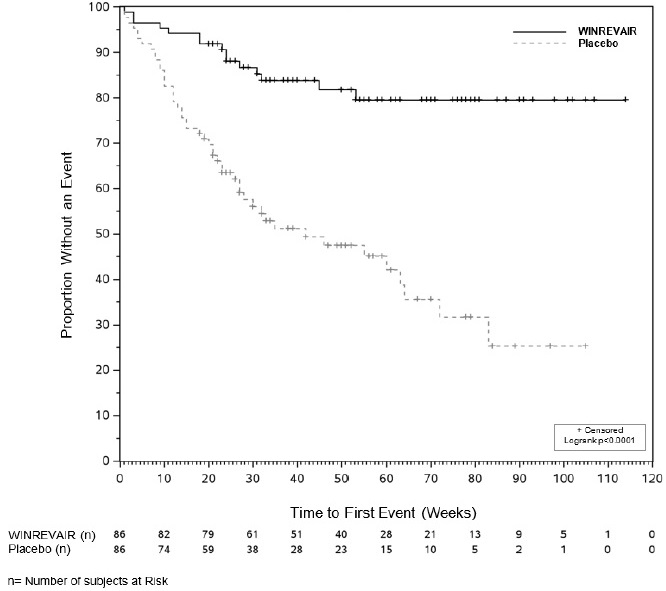
A Kaplan-Meier survival curve comparing WINREVAIR and placebo treatments over time to first event up to 120 weeks. The vertical axis shows the proportion without an event, while the horizontal axis represents time in weeks. Two lines indicate event-free proportions for WINREVAIR (solid line) and placebo (dashed line), with the WINREVAIR group showing a higher event-free proportion. Number of subjects at risk is displayed below the time axis.*
FDA Label Image

Figure 139 (Winrevair 139)

Figure 139 (Winrevair 139)
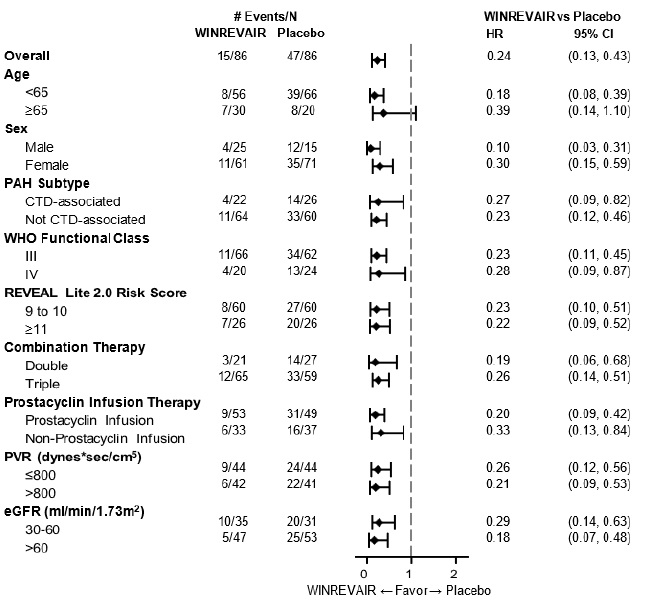
A forest plot comparing WINREVAIR versus placebo across multiple patient subgroups, including age, sex, PAH subtype, WHO functional class, REVEAL Lite 2.0 risk score, combination therapy, prostacyclin infusion therapy, PVR levels, and eGFR values. The plot shows hazard ratios with 95% confidence intervals and event counts, indicating the relative effect of WINREVAIR compared to placebo.*
FDA Label Image

Figure (Winrevair 03)

Figure (Winrevair 03)
WINREVAIR Sotatercept-CSRK kit by Merck Sharp & Dohme LLC depicted with a vial. The vial is partially filled with a white or off-white powder, sealed with a stopper, and wrapped with a tamper-evident band. No additional text or label details are visible.*
FDA Label Image

Figure (Winrevair 04)

FDA Label Image

Figure (Winrevair 05)

Figure (Winrevair 05)
WINREVAIR kit packaging label showing the product name and nonproprietary name SOTATERCEPT-CSRK. The label identifies it as a human prescription drug kit manufactured by Merck Sharp & Dohme LLC. The image depicts a small clear container with text and a partly visible yellow-greenish liquid or material inside.*
FDA Label Image

Figure (Winrevair 06)

Figure (Winrevair 06)
WINREVAIR kit packaging label showing the proprietary name WINREVAIR. The label prominently displays the generic name Sotatercept-CSRK. It is a human prescription drug kit labeled by Merck Sharp & Dohme LLC. The image shows the front and side panels of the box with additional brand and regulatory information visible.*
FDA Label Image

Figure (Winrevair 07)

FDA Label Image

Figure (Winrevair 08)

FDA Label Image

Figure (Winrevair 09)

FDA Label Image

Figure (Winrevair 10)

FDA Label Image

Figure (Winrevair 11)

Figure (Winrevair 11)
Illustration showing components of the WINREVAIR kit by Merck Sharp & Dohme LLC. It includes a prefilled syringe with sterile water for injection, a vial adapter, alcohol wipes, and a medicine vial. The image labels each component and highlights where to lift parts of the packaging.*
FDA Label Image

Figure (Winrevair 12)

Figure (Winrevair 12)
An illustration showing a vial labeled as containing medicine powder. The vial has a black cap and a transparent body displaying the powder inside. This is likely part of the WINREVAIR SOTATERCEPT-CSRK kit by Merck Sharp & Dohme LLC.*
FDA Label Image

Figure (Winrevair 13)

Figure (Winrevair 13)
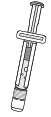
An instructional line drawing showing a pre-filled syringe as part of a kit, with a protective cap on the needle and a plunger at the top, intended for use with the prescription drug WINREVAIR (SOTATERCEPT-CSRK) by Merck Sharp & Dohme LLC.*
FDA Label Image

Figure (Winrevair 14)

Figure (Winrevair 14)
An instructional illustration depicting a blue and white cylindrical inhaler device positioned inside a grey holder with three supporting legs. This image likely relates to the administration device for the WINREVAIR kit containing sotatercept-csrk.*
FDA Label Image

Figure (Winrevair 15)

Figure (Winrevair 15)
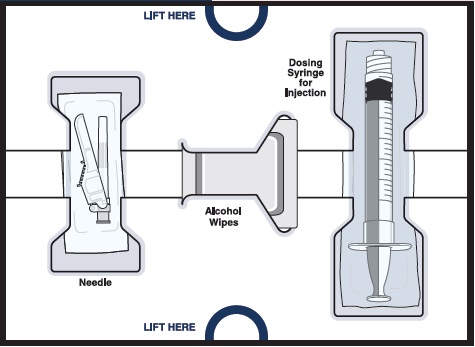
An instructional diagram illustrating the components of the WINREVAIR kit by Merck Sharp & Dohme LLC. It shows the layout including the needle, alcohol wipes, and dosing syringe for injection, each labeled and displayed in their respective compartments within the packaging.*
FDA Label Image

Figure (Winrevair 16)

Figure (Winrevair 16)
An illustration of a device resembling an inhaler or spray unit, shown in a side profile with a mouthpiece and trigger mechanism, likely part of the WINREVAIR kit by Merck Sharp & Dohme LLC for delivering Sotatercept-CSRK.*
FDA Label Image

Figure (Winrevair 17)

Figure (Winrevair 17)
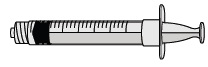
WINREVAIR Sotatercept-csrk kit includes a prefilled syringe with a black and pink stopper and a plunger. The image shows the syringe component of the prescription drug kit by Merck Sharp & Dohme LLC, but does not show any labeling, dosage strength, or additional packaging details.*
FDA Label Image

Figure (Winrevair 18)

Figure (Winrevair 18)
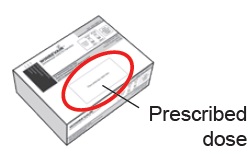
Illustration showing a WINREVAIR kit box with a label section marked for the "Prescribed dose." The box is positioned at an angle, highlighting the area where dosage information is to be filled.*
FDA Label Image

Figure (Winrevair 19)

FDA Label Image

Figure (Winrevair 20)

FDA Label Image

Figure (Winrevair 21)

FDA Label Image

Figure (Winrevair 22)

Figure (Winrevair 22)
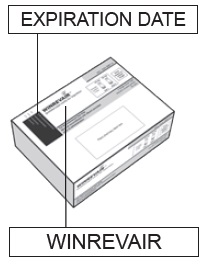
Packaging label for WINREVAIR kit by Merck Sharp & Dohme LLC. The image highlights the box with an expiration date area clearly marked. The product name WINREVAIR is visible on the carton, indicating this is a prescription drug kit.*
FDA Label Image

Figure (Winrevair 23)

Figure (Winrevair 23)
WINREVAIR kit by Merck Sharp & Dohme LLC featuring the nonproprietary name SOTATERCEPT-CSRK. The image shows the product's outer packaging with branding and labeling details consistent with prescription drug kits.*
FDA Label Image

Figure (Winrevair 24)

FDA Label Image

Figure (Winrevair 25)

Figure (Winrevair 25)
Illustration of a clock-like timer showing 15 minutes, with a shaded segment representing the time interval. This type of image is typically used to indicate a wait time or duration.*
FDA Label Image

Figure (Winrevair 26)

Figure (Winrevair 26)
WINREVAIR kit by Merck Sharp & Dohme LLC is depicted as a red rectangular container with a white lid labeled 'SHARPS' in black text on the front. The image shows a sharps disposal container likely used in conjunction with the medication kit.*
FDA Label Image

Figure (Winrevair 27)

Figure (Winrevair 27)
An illustration showing components of a medical kit, including a roll of tape or bandage, an adhesive bandage strip, a cotton ball, and another small round cotton pad. The image depicts basic wound care supplies commonly included in a kit.*
FDA Label Image

Figure (Winrevair 28)

Figure (Winrevair 28)
An instructional illustration showing a hand using soap dispenser to wash hands with running water, demonstrating handwashing technique.*
FDA Label Image

Figure (Winrevair 29)

Figure (Winrevair 29)
Illustration of the top tray contents from the WINREVAIR kit, showing a prefilled syringe with sterile water for injection, a vial adapter, alcohol wipes, and a medicine vial. The image labels each component and highlights the tray as part of the drug product kit by Merck Sharp & Dohme LLC.*
FDA Label Image

Figure (Winrevair 30)

Figure (Winrevair 30)
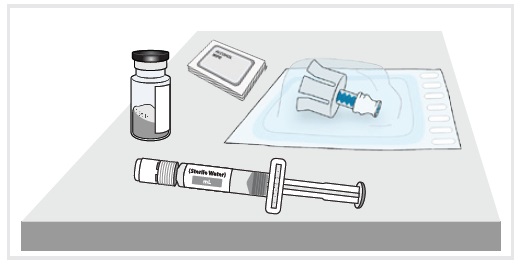
An illustration showing components of the WINREVAIR kit, including a vial, a syringe prefilled with medication, a needle cap, and a wipe packet arranged on a flat surface. The kit is for the prescription drug sotatercept-csrk by Merck Sharp & Dohme LLC.*
FDA Label Image

Figure (Winrevair 31)

Figure (Winrevair 31)
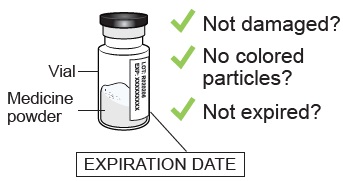
An instructional illustration showing a vial labeled as containing medicine powder for the WINREVAIR (SOTATERCEPT-CSRK) kit. The diagram highlights checking the vial for damage, the absence of colored particles, and verifying that it has not expired by reviewing the expiration date on the vial label.*
FDA Label Image

Figure (Winrevair 32)

Figure (Winrevair 32)
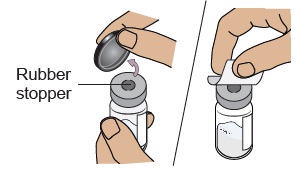
An instructional illustration showing a hand removing a rubber stopper from a vial, and then a hand pressing down on the top of the vial. The vial is clear with a liquid inside, indicating steps for preparing or accessing medication.*
FDA Label Image

Figure (Winrevair 33)

Figure (Winrevair 33)
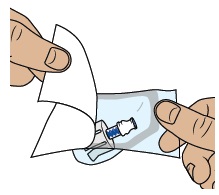
An instructional illustration showing hands opening a foil pouch containing a vial with a blue cap, likely part of the WINREVAIR (SOTATERCEPT-CSRK) kit by Merck Sharp & Dohme LLC. The image demonstrates how to access the vial inside the sealed packaging.*
FDA Label Image

Figure (Winrevair 34)

Figure (Winrevair 34)
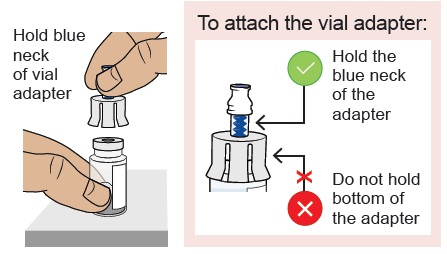
Instructional diagram showing how to attach the vial adapter for the WINREVAIR kit. The left side illustrates holding the blue neck of the vial adapter while aligning it with a vial. The right side emphasizes holding the blue neck of the adapter with a green check mark and warns not to hold the bottom of the adapter with a red cross symbol.*
FDA Label Image

Figure (Winrevair 35)

Figure (Winrevair 35)
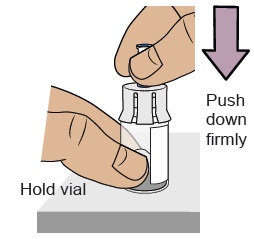
An instructional illustration showing hands holding a vial labeled 'Hold vial' with an arrow pointing downward accompanied by text 'Push down firmly,' indicating the action to firmly push down on the vial cap or stopper. The image is likely part of a preparation or administration guide for the WINREVAIR kit.*
FDA Label Image

Figure (Winrevair 36)

Figure (Winrevair 36)
An instructional illustration showing a hand pouring the contents of a sachet labeled 'ALCOHOL WIPE' next to a vial, indicating use of an alcohol wipe to clean the vial's top before administration. This image is part of a kit for the prescription drug WINREVAIR (sotatercept-csrk) by Merck Sharp & Dohme LLC.*
FDA Label Image

Figure (Winrevair 37)

Figure (Winrevair 37)
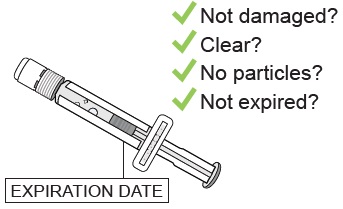
An instructional illustration of a prefilled syringe, highlighting where to find the expiration date on the syringe barrel. The image includes a checklist reminding users to verify the syringe is not damaged, clear, free of particles, and not expired before use.*
FDA Label Image

Figure (Winrevair 38)

Figure (Winrevair 38)
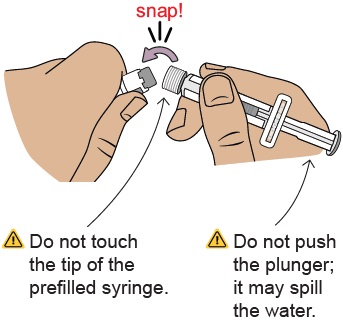
An instructional illustration showing how to snap a cap off the tip of a prefilled syringe, held by two hands. The image includes warnings not to touch the syringe tip or push the plunger to avoid spilling water. The illustration is likely part of the WINREVAIR (Sotatercept-csrk) kit instructions.*
FDA Label Image

Figure (Winrevair 39)

Figure (Winrevair 39)
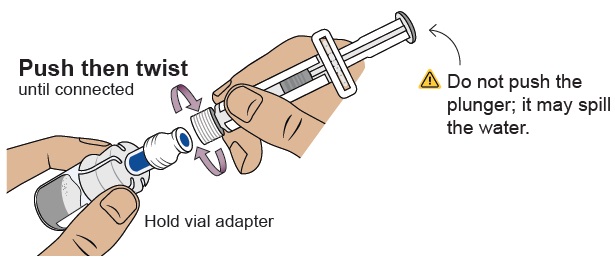
Instructional illustration for the WINREVAIR (Sotatercept-CSRK) kit demonstrating how to connect the syringe to the vial adapter by pushing and twisting until connected. A warning advises not to push the plunger to avoid spilling water.*
FDA Label Image

Figure (Winrevair 40)

Figure (Winrevair 40)
Instructional diagram showing how to prepare WINREVAIR (Sotatercept-CSRK) kit by slowly pushing the plunger of a syringe to transfer sterile water into a vial. The image emphasizes ensuring all sterile water is transferred to the vial during preparation.*
FDA Label Image

Figure (Winrevair 41)

Figure (Winrevair 41)
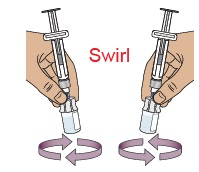
An instructional illustration showing a person's hand holding a syringe above a small vial. The illustration includes a pink circular arrow below the vial indicating a swirling motion to be applied to the vial before use. The word 'Swirl' is displayed in red near the syringe.*
FDA Label Image

Figure (Winrevair 42)

Figure (Winrevair 42)
An instructional illustration showing a syringe connected to a vial. Next to it is the text asking if the vial's contents are clear and free of clumps and white powder, accompanied by an eye icon, indicating a visual inspection step.*
FDA Label Image

Figure (Winrevair 43)

Figure (Winrevair 43)
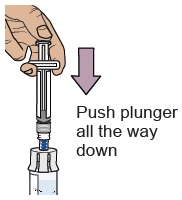
An instructional illustration showing a hand pushing a syringe plunger all the way down into a vial or container, accompanied by the text instruction to push the plunger fully down. The image likely depicts a step in the preparation or administration of the WINREVAIR kit by Merck Sharp & Dohme LLC.*
FDA Label Image

Figure (Winrevair 44)

Figure (Winrevair 44)
An instructional illustration showing a syringe connected to a vial with a clock indicating 3 minutes. The image suggests a waiting or mixing time step in a kit preparation process.*
FDA Label Image

Figure (Winrevair 45)

Figure (Winrevair 45)
A text panel providing pre-administration instructions for the medication in a vial. It advises ensuring the medicine is clear to slightly pearly and colorless to slightly brownish-yellow, without clumps, powder, or large bubbles before use.*
FDA Label Image

Figure (Winrevair 46)

Figure (Winrevair 46)
An instructional diagram showing how to remove extra air from a syringe before use. The image depicts a syringe inserted into a vial, with an arrow indicating to pull the plunger upwards to expel air, illustrating the 'Before' and 'After' states of the syringe with air removed.*
FDA Label Image

Figure (Winrevair 47)

Figure (Winrevair 47)
An instructional illustration showing how to remove a prefilled syringe from packaging by twisting and lifting, followed by disposal of the empty syringe into a designated sharps container. The image emphasizes safe handling and disposal procedures for syringes.*
FDA Label Image

Figure (Winrevair 48)

Figure (Winrevair 48)
An instructional illustration showing a vial with a stopper and an attached blue-tipped needle or connector device. The vial is positioned on a flat surface, and the image likely depicts a step in preparing or administering medication from the vial. The product is WINREVAIR (sotatercept-csrk) kit by Merck Sharp & Dohme LLC.*
FDA Label Image

Figure (Winrevair 49)

Figure (Winrevair 49)
An instructional diagram displaying a kit containing a needle, alcohol wipes, and a dosing syringe for injection. The components are arranged in a tray with lift tabs labeled 'LIFT HERE,' and a warning advises to use items from the bottom tray.*
FDA Label Image

Figure (Winrevair 50)

Figure (Winrevair 50)
An instructional illustration showing a hand removing an alcohol wipe from its packet and preparing to clean the top of a vial containing medication. This is likely part of the WINREVAIR (SOTATERCEPT-CSRK) kit usage instructions.*
FDA Label Image

Figure (Winrevair 51)

Figure (Winrevair 51)
An instructional illustration showing two hands peeling back protective covers from a dosing syringe inside its packaging. A caution note advises not to touch the tip of the dosing syringe.*
FDA Label Image

Figure (Winrevair 52)

Figure (Winrevair 52)
An instructional diagram showing how to pull the plunger of a syringe until the top rim aligns with the prescribed dose marked on the syringe. The image includes a box labeled 'kit' indicating where the prescribed dose amount in mL can be found for the WINREVAIR (SOTATERCEPT-CSRK) kit by Merck Sharp & Dohme LLC.*
FDA Label Image

Figure (Winrevair 53)

Figure (Winrevair 53)
Illustration showing how to connect a dosing syringe to a vial adapter by pushing and twisting until connected. The image also notes that the syringe should contain an amount of air matching the dose.*
FDA Label Image

Figure (Winrevair 54)

Figure (Winrevair 54)
An instructional illustration showing two steps for using the WINREVAIR kit. The first step shows a hand pushing the plunger of a syringe attached to a vial all the way down. The second step shows holding the plunger in place while the vial is positioned above the syringe.*
FDA Label Image

Figure (Winrevair 55)

Figure (Winrevair 55)
An instructional illustration showing how to align the top rim of the plunger in a syringe with the prescribed dose markings for WINREVAIR (SOTATERCEPT-CSRK) kit. It highlights that each line on the dosing syringe represents 0.1 mL and includes a depiction of the kit box with a labeled prescribed dose amount in mL.*
FDA Label Image

Figure (Winrevair 56)

Figure (Winrevair 56)
An instructional diagram showing how to identify and avoid large air bubbles and air pockets in a syringe or vial. The image uses red crosses to mark incorrect conditions of air presence, labeled 'Large air bubbles' and 'Air pocket', with illustrations of hands holding the device.*
FDA Label Image

Figure (Winrevair 57)

Figure (Winrevair 57)
An instructional illustration showing how to remove large air bubbles from a syringe containing WINREVAIR (SOTATERCEPT-CSRK) medication in kit form. It advises tapping the syringe and slowly pushing air out for an accurate dose, noting that 1 or 2 small bubbles are acceptable but large bubbles must be removed.*
FDA Label Image

Figure (Winrevair 58)

Figure (Winrevair 58)
An instructional illustration showing a hand holding a vial and syringe. The syringe needle is inserted into the vial stopper, with an arrow pointing downward, indicating the action of withdrawing liquid from the vial into the syringe.*
FDA Label Image

Figure (Winrevair 59)

Figure (Winrevair 59)
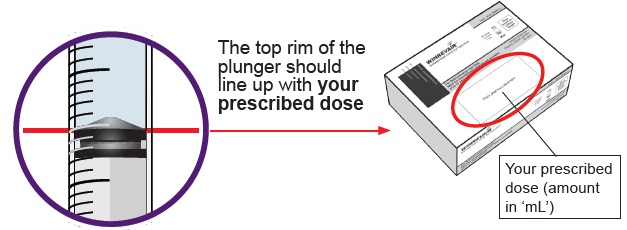
An instructional diagram showing the alignment of the plunger with the prescribed dose measurement on a syringe, indicating that the top rim of the plunger should line up with the prescribed dose amount in milliliters on the WINREVAIR kit packaging by Merck Sharp & Dohme LLC.*
FDA Label Image

Figure (Winrevair 60)

Figure (Winrevair 60)
An instructional illustration showing two steps for drug administration: one side depicts holding the plunger of a syringe while withdrawing medication from a vial, and the other side shows disposing of a used vial into a sharps container labeled 'SHARPS.' There are explanatory text labels next to each step.*
FDA Label Image

Figure (Winrevair 61)

Figure (Winrevair 61)
Illustration of a syringe on a flat surface. The syringe appears empty and is angled diagonally, showing the plunger and measurement markings.*
FDA Label Image

Figure (Winrevair 62)

Figure (Winrevair 62)
An instructional illustration showing hands handling a medical device or needle cap with a warning 'Do not touch the connection hub of the needle.' The image demonstrates proper technique to maintain sterility by avoiding contact with the needle hub.*
FDA Label Image

Figure (Winrevair 63)

Figure (Winrevair 63)
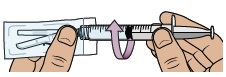
An instructional illustration showing hands preparing a syringe for use. The image depicts a syringe with a needle cap being removed by twisting and pulling upward, demonstrating the preparation step for administering medication. There is a green check mark indicating the correct action.*
FDA Label Image

Figure (Winrevair 64)

Figure (Winrevair 64)
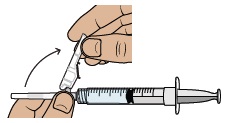
An instructional illustration showing a hand removing a cap from the needle of a prefilled syringe, positioned above a vial, indicating the preparation steps for administering medication from the WINREVAIR kit by Merck Sharp & Dohme LLC.*
FDA Label Image

Figure (Winrevair 65)

Figure (Winrevair 65)
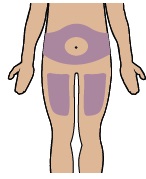
An anatomical illustration of the front view of a human torso and upper legs highlighting four areas with purple shading: the abdomen around the navel, the left and right front thighs, and the left and right upper chest/shoulder area, likely indicating recommended injection sites for medication administration.*
FDA Label Image

Figure (Winrevair 66)

Figure (Winrevair 66)
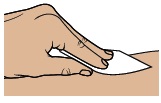
An illustration of a hand using a cloth or tissue to wipe a flat surface, suggesting a cleaning or preparation step.*
FDA Label Image

Figure (Winrevair 67)

Figure (Winrevair 67)
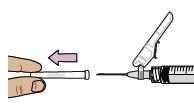
An instructional illustration showing a hand holding a small vial or cartridge, with an arrow pointing left, next to a syringe needle attached to a syringe. The image appears to depict the process of removing or detaching the vial or cartridge from the syringe setup.*
FDA Label Image

Figure (Winrevair 68)

Figure (Winrevair 68)
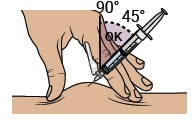
An instructional illustration showing two hands preparing to inject a syringe into the skin at a 45 to 90-degree angle, demonstrating proper injection technique. The image appears to be part of a medication administration guide, likely related to a prescription drug kit.*
FDA Label Image

Figure (Winrevair 69)

Figure (Winrevair 69)
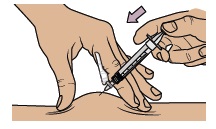
An instructional illustration showing a person administering an injection into the hand of another person. The image depicts one hand stabilizing the skin while the other hand inserts a syringe needle into the injection site, indicated by a downward arrow above the syringe.*
FDA Label Image

Figure (Winrevair 70)

Figure (Winrevair 70)
An instructional illustration showing a hand holding a syringe with a needle, positioned above skin with an arrow indicating the needle's insertion direction for injection. This likely demonstrates proper administration technique for the WINREVAIR kit by Merck Sharp & Dohme LLC.*
FDA Label Image

Figure (Winrevair 71)

Figure (Winrevair 71)
Instructional illustration showing a hand holding a device part labeled WINREVAIR and demonstrating an opening or pivoting action, with a red arrow indicating the direction of movement.*
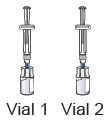
FDA Label Image

Figure (Winrevair 72)

Figure (Winrevair 72)
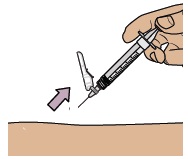
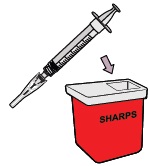
Illustration depicting the disposal of a used syringe into a bright red sharps container labeled 'SHARPS.' A downward arrow indicates the proper direction for discarding the syringe into the container.*
FDA Label Image

Figure (Winrevair 73)

Figure (Winrevair 73)
WINREVAIR kit consisting of two clear glass vials with white caps labeled as Vial 1 and Vial 2, used for human prescription drug formulation. Produced by Merck Sharp & Dohme LLC, containing the active ingredient sotatercept-csrk in a multi-vial presentation for administration preparation.*
FDA Label Image

Figure (Winrevair 74)

Figure (Winrevair 74)
WINREVAIR (SOTATERCEPT-CSRK) KIT packaging label by Merck Sharp & Dohme LLC. The label features the proprietary name WINREVAIR prominently on a white and green background, with the nonproprietary name Sotatercept-csrk mentioned below. The label shows the product type as a human prescription drug and includes a partial image of the kit contents and branding elements.*
FDA Label Image

Figure (Winrevair 75)

Figure (Winrevair 75)
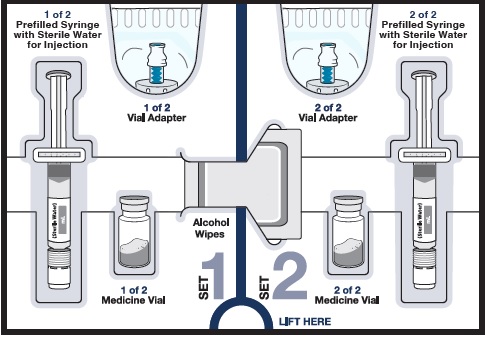
WINREVAIR kit by Merck Sharp & Dohme LLC includes two sets, each containing a prefilled syringe with sterile water for injection, a vial adapter, and a medicine vial. The kit is designed for human prescription drug use and facilitates medication preparation with alcohol wipes depicted for aseptic technique.*
FDA Label Image

Figure (Winrevair 76)

Figure (Winrevair 76)
An illustration depicting a vial labeled as a medicine powder container, with a gray cap and clear glass body. The vial is shown as part of the WINREVAIR kit by Merck Sharp & Dohme LLC.*
FDA Label Image

Figure (Winrevair 77)

Figure (Winrevair 77)
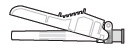
Illustration of a medical syringe or injector device, likely part of the WINREVAIR kit, showing the syringe barrel, plunger, and needle section. The image appears to be a line drawing intended for use in instructions or packaging for the SOTATERCEPT-CSRK kit by Merck Sharp & Dohme LLC.*
FDA Label Image

Figure (Winrevair 78)

Figure (Winrevair 78)
An instructional illustration showing a step in the use or assembly of a medication device or kit. It depicts a hand gripping a cap or part of the device above a base structure, possibly demonstrating how to unlock, remove, or attach the component as part of the WINREVAIR Sotatercept-CSRK kit usage.*
FDA Label Image

Figure (Winrevair 79)

Figure (Winrevair 79)
An instructional diagram showing the contents of the WINREVAIR kit with labeled compartments for the Needle, Alcohol Wipes, and Dosing Syringe for Injection. The illustration highlights where to lift the packaging to access each component.*
FDA Label Image

Figure (Winrevair 80)

Figure (Winrevair 80)
An illustration showing a handheld device, possibly an inhaler or similar medical delivery tool, in a side profile. The device appears to have a lever mechanism and a mouthpiece; specific product branding or labeling is not visible in the image.*
FDA Label Image

Figure (Winrevair 81)

Figure (Winrevair 81)
The image shows a prefilled syringe with a plunger and needle cap, containing a liquid medication. It is part of the WINREVAIR kit by Merck Sharp & Dohme LLC, featuring the active ingredient sotatercept-csrk. The syringe is marked with measurement gradations for dosing.*
FDA Label Image

Figure (Winrevair 82)

Figure (Winrevair 82)
WINREVAIR kit packaging label by Merck Sharp & Dohme LLC. The box label includes a designated space for indicating the prescribed dose. The label is primarily white with black text and a barcode section.*
FDA Label Image

Figure (Winrevair 83)

Figure (Winrevair 83)
Packaging image of WINREVAIR kit, a human prescription drug containing sotatercept-csrk, labeled by Merck Sharp & Dohme LLC. The rectangular box indicates the expiration date on the top side.*
FDA Label Image

Figure (Winrevair 84)

Figure (Winrevair 84)
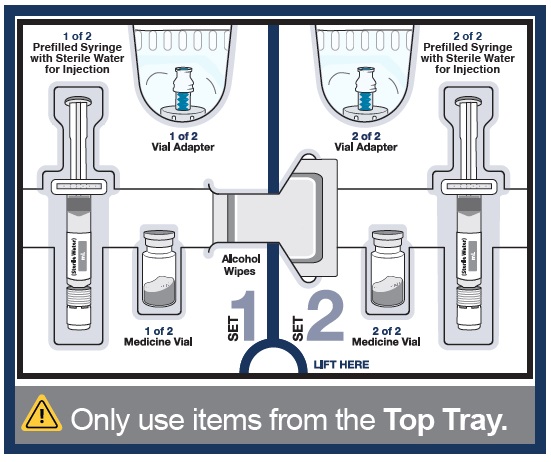
Illustration of the WINREVAIR kit components showing the top tray layout. It includes two sets, each with a prefilled syringe containing sterile water for injection, a vial adapter, and a medicine vial. Alcohol wipes are also included. A caution note instructs to only use items from the top tray.*
FDA Label Image

Figure (Winrevair 85)

Figure (Winrevair 85)
An illustration depicting components of the WINREVAIR kit by Merck Sharp & Dohme LLC, including a vial, a sterile water syringe, a sealed medical device or injection assembly, and a small folded instruction or information leaflet, all arranged on a flat surface.*
FDA Label Image

Figure (Winrevair 86)

Figure (Winrevair 86)
An instructional illustration showing a vial labeled as containing medicine powder, with text prompts to check if the vial is not damaged, contains no colored particles, and is not expired, highlighting the importance of verifying the expiration date on the vial.*
FDA Label Image

Figure (Winrevair 87)

Figure (Winrevair 87)
An instructional illustration showing how to remove and replace the rubber stopper on a vial, likely part of the WINREVAIR (Sotatercept-csrk) kit. The left side depicts a hand lifting the stopper off the vial, while the right side shows the stopper being pressed back onto the vial.*
FDA Label Image

Figure (Winrevair 88)

Figure (Winrevair 88)
An instructional illustration showing hands peeling back a protective foil or paper cover from a small vial or cartridge, likely part of the WINREVAIR kit by Merck Sharp & Dohme LLC. The vial has a blue cap and appears to be inside a clear plastic wrapper, indicating preparation or usage steps for the medication.*
FDA Label Image

Figure (Winrevair 89)

Figure (Winrevair 89)
An instructional diagram showing how to attach the vial adapter for WINREVAIR (sotatercept-csrk) kit. It depicts a hand holding the blue neck of the vial adapter correctly and emphasizes not to hold the bottom of the adapter during attachment to the vial.*
FDA Label Image

Figure (Winrevair 90)

Figure (Winrevair 90)
Illustration showing how to use a vial from the WINREVAIR kit. It depicts a hand holding the vial while another hand pushes down firmly on the vial cap, with an arrow indicating the pressing motion and instructions to "Hold vial" and "Push down firmly."*
FDA Label Image

Figure (Winrevair 91)

Figure (Winrevair 91)
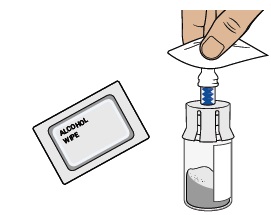
An instructional illustration showing a hand opening a vial by peeling back a protective layer to reveal a blue stopper inside. An alcohol wipe packet is visible beside the vial, suggesting preparation for injection or medication use. No text besides 'ALCOHOL WIPE' is legible.*
FDA Label Image

Figure (Winrevair 92)

Figure (Winrevair 92)
An instructional illustration showing a syringe with liquid inside it. Four checklist questions appear to the right: Not damaged?, Clear?, No particles?, Not expired?. A box labeled 'EXPIRATION DATE' is shown below the syringe. This diagram likely relates to checking the syringe prior to use.*
FDA Label Image

Figure (Winrevair 93)

Figure (Winrevair 93)
Instructional illustration showing two hands handling a prefilled syringe from the WINREVAIR KIT. The left hand is snapping off the syringe tip, with cautions not to touch the tip of the syringe and not to push the plunger to avoid spilling water.*
FDA Label Image

Figure (Winrevair 94)

Figure (Winrevair 94)
Instructional illustration for the WINREVAIR kit showing hands connecting a syringe by pushing then twisting to attach it to a vial adapter. A caution note advises not to push the plunger to avoid spilling water.*
FDA Label Image

Figure (Winrevair 95)

Figure (Winrevair 95)
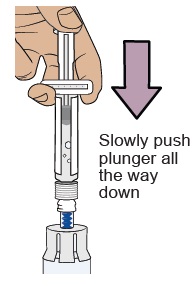
Instructional illustration showing a hand holding a syringe-like device. A downward purple arrow indicates the action to slowly push the plunger all the way down. Text beside the image reads, "Slowly push plunger all the way down." This diagram is likely part of usage instructions for the WINREVAIR kit by Merck Sharp & Dohme LLC.*
FDA Label Image

Figure (Winrevair 96)

Figure (Winrevair 96)
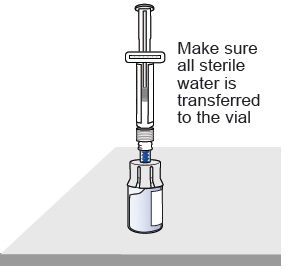
Illustration showing a syringe transferring sterile water into a vial. The syringe is inserted into the vial's stopper, and a note advises making sure all sterile water is transferred to the vial. The image demonstrates part of the medication preparation process for WINREVAIR (sotatercept-csrk) kit by Merck Sharp & Dohme LLC.*
FDA Label Image

Figure (Winrevair 97)

Figure (Winrevair 97)
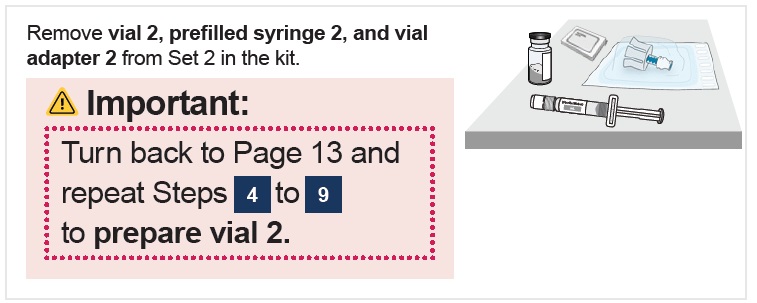
An instructional illustration showing components from the WINREVAIR kit by Merck Sharp & Dohme LLC. The image includes vial 2, prefilled syringe 2, and vial adapter 2 laid out with packaging on a surface. Text highlights the importance of returning to page 13 to repeat steps 4 to 9 to prepare vial 2.*
FDA Label Image

Figure (Winrevair 98)

Figure (Winrevair 98)
Illustration showing two labeled vials, Vial 1 and Vial 2, each connected to a syringe. This image likely depicts components of the WINREVAIR (SOTATERCEPT-CSRK) kit by Merck Sharp & Dohme LLC for human prescription use.*
FDA Label Image

Figure (Winrevair 99)

Figure (Winrevair 99)
Illustration showing two hands holding syringes and mixing contents in vials using a swirling motion, indicated by curved arrows and the word 'Swirl' in red text. This instructional diagram demonstrates proper technique for mixing or preparing medication from vials, likely part of the WINREVAIR sotatercept-csrk kit by Merck Sharp & Dohme LLC.*
FDA Label Image

Figure (Winrevair 100)

Figure (Winrevair 100)
An instructional illustration showing two syringes with needle caps and vials, accompanied by the question: "Is it clear and free of clumps and white powder?" and an eye icon, indicating a visual inspection step for the kit components.*
FDA Label Image

Figure (Winrevair 101)

Figure (Winrevair 101)
Illustration showing two hands each holding a syringe positioned above vials. Arrows point downward indicating to push the plunger all the way down, demonstrating how to properly use the syringe with the vial in the WINREVAIR kit.*
FDA Label Image

Figure (Winrevair 102)

Figure (Winrevair 102)
An instructional illustration showing two syringes being inserted into vial caps, with a clock icon indicating a 3-minute wait time. The image appears to depict a step in preparing or mixing the drug WINREVAIR (SOTATERCEPT-CSRK) kit prior to administration.*
FDA Label Image

Figure (Winrevair 103)

Figure (Winrevair 103)
A text panel providing pre-administration instructions for WINREVAIR (Sotatercept-csrk) KIT, stating that the medicine in the vials should be clear to slightly pearly and colorless to slightly brownish-yellow, with no clumps, powder, or large bubbles present.*
FDA Label Image

Figure (Winrevair 104)

Figure (Winrevair 104)
Instructional diagram showing the steps to prepare a syringe of WINREVAIR (sotatercept-csrk) kit. The three-panel sequence illustrates a syringe before injection, pulling the plunger upwards to remove extra air, and the syringe ready after air removal.*
FDA Label Image

Figure (Winrevair 105)

Figure (Winrevair 105)
An instructional image panel showing a safety warning for preparing medication. It advises to perform a specific step for both vials, emphasizing checking that both vials are prepared before continuing. The panel includes illustrations of two syringes above the text.*
FDA Label Image

Figure (Winrevair 106)

Figure (Winrevair 106)
An instructional diagram illustrating how to use prefilled syringes: removing the cap from the syringe needle with a twisting motion, attaching it to a vial, and then discarding empty prefilled syringes into a sharps disposal container. This likely relates to preparation and disposal steps for a medication kit.*
FDA Label Image

Figure (Winrevair 107)

Figure (Winrevair 107)
An illustration showing two identical medical vials with blue and white caps, both secured in a shared holder or tray. The image suggests a preparation or storage setup, likely related to the WINREVAIR kit by Merck Sharp & Dohme LLC containing Sotatercept-CSRK.*
FDA Label Image

Figure (Winrevair 108)

Figure (Winrevair 108)
An instructional diagram showing components of the WINREVAIR kit including a needle, alcohol wipes, and a dosing syringe for injection. The diagram highlights their placement in the bottom tray and indicates areas to lift for access.*
FDA Label Image

Figure (Winrevair 109)

Figure (Winrevair 109)
An instructional illustration depicting the preparation of a bottle in a kit format. It shows hands opening an alcohol prep pad, then cleaning the top of a vial before attaching a dropper or other component to the vial. The vial contains a liquid medication, part of a medication kit.*
FDA Label Image

Figure (Winrevair 110)

Figure (Winrevair 110)
An instructional illustration showing hands peeling away protective covers from both sides of the tip of a dosing syringe. A caution symbol is present with the warning, 'Do not touch tip of the dosing syringe.' This image relates to handling the dosing syringe in the WINREVAIR kit by Merck Sharp & Dohme LLC.*
FDA Label Image

Figure (Winrevair 111)

Figure (Winrevair 111)
An instructional illustration showing a person holding a syringe and pulling back the plunger. A zoomed-in view highlights the top rim of the plunger aligned with the 1.5 mL mark, with text indicating to pull the plunger until this point. This diagram demonstrates correct syringe plunger positioning for WINREVAIR kits.*
FDA Label Image

Figure (Winrevair 112)

Figure (Winrevair 112)
An instructional illustration showing hands holding a vial and a dosing syringe for the WINREVAIR kit. The image includes directions to push then twist the vial adapter until connected, and notes that the dosing syringe should contain 1.5 mL of air before use.*
FDA Label Image

Figure (Winrevair 113)

Figure (Winrevair 113)
An instructional illustration showing how to use a prefilled syringe in the WINREVAIR kit. It depicts a hand pushing the plunger down and then holding the plunger in place, with arrows indicating the correct motions for proper injection technique.*
FDA Label Image

Figure (Winrevair 114)

Figure (Winrevair 114)
An instructional illustration demonstrating the correct handling of a dosing syringe. It shows a hand holding the syringe with a plunger and a stopper below the 1.5 mL mark. Warning labels advise against pulling the plunger beyond 1.5 mL and caution to avoid pulling the plunger out of the dosing syringe.*
FDA Label Image

Figure (Winrevair 115)

Figure (Winrevair 115)
Instructional illustration showing the process of drawing medication from a vial into a syringe, followed by disposing of the empty vial into a designated sharps container. This image supports proper handling and disposal of medication components in the WINREVAIR sotatercept-csrk kit.*
FDA Label Image

Figure (Winrevair 116)

Figure (Winrevair 116)
An instructional illustration showing a hand holding a syringe while the other hand secures a vial. The syringe tip is inserted into the vial, with arrows indicating a twisting motion. A warning note advises not to touch the plunger as it may cause medicine spillage. This appears to guide proper preparation or handling of a medication kit.*
FDA Label Image

Figure (Winrevair 117)

Figure (Winrevair 117)
Instructional illustration showing how to use the WINREVAIR kit containing Sotatercept-CSRK. The left panel shows a hand pushing the plunger down into a vial, while the right panel shows a hand holding the plunger in place after drawing up liquid. Arrows and text guide the user through the steps.*
FDA Label Image

Figure (Winrevair 118)

Figure (Winrevair 118)
Illustration showing how to properly measure the prescribed dose using a dosing syringe for the WINREVAIR kit. The top rim of the plunger should align with the prescribed dose amount marked on the syringe, with each line representing 0.1 mL. The image includes a close-up of the syringe markings and an image of the kit packaging.*
FDA Label Image

Figure (Winrevair 119)

Figure (Winrevair 119)
An instructional illustration showing two syringe images for WINREVAIR kit by Merck Sharp & Dohme LLC. The left image highlights the presence of large air bubbles in the syringe, marked with a red X, and the right image points out an air pocket in the syringe, also marked with a red X, indicating improper syringe preparation.*
FDA Label Image

Figure (Winrevair 120)

Figure (Winrevair 120)
An instructional diagram for WINREVAIR (SOTATERCEPT-CSRK) kit showing syringe handling. It advises to tap the syringe to remove large bubbles and air pockets to ensure accurate dosing, illustrating correct and incorrect bubble amounts, with a note that one or two small bubbles are acceptable.*
FDA Label Image

Figure (Winrevair 121)

Figure (Winrevair 121)
An instructional illustration showing a hand holding a vial and needle, with a downward arrow indicating the needle is being pushed into or drawn from the vial. The image depicts a step in the preparation or administration of medication from a vial in a kit format.*
FDA Label Image

Figure (Winrevair 122)

Figure (Winrevair 122)
An instructional illustration for WINREVAIR (sotatercept-csrk) kit showing a syringe with a plunger. The image highlights aligning the top rim of the plunger with the prescribed dose marked on the syringe, which equals the dose indicated on the kit packaging. The instruction focuses on accurate dose measurement in milliliters (mL).*
FDA Label Image

Figure (Winrevair 123)

Figure (Winrevair 123)
Instructional diagram illustrating how to draw medication from a vial into a syringe by holding the plunger in place, alongside guidance to throw away the used vial into a sharps disposal container. The image emphasizes safe medication preparation and disposal.*
FDA Label Image

Figure (Winrevair 124)

Figure (Winrevair 124)
An illustration of a syringe partially filled with liquid against a white background, shown from an angled top-down perspective.*
FDA Label Image

Figure (Winrevair 125)

Figure (Winrevair 125)
An instructional illustration demonstrating the correct handling of a needle connection hub. The image shows hands holding a needle with a caution not to touch the connection hub of the needle, emphasizing safe handling practices.*
FDA Label Image

Figure (Winrevair 126)

Figure (Winrevair 126)
An instructional illustration showing hands assembling a syringe by connecting or twisting a component. The image is likely part of directions for preparing the WINREVAIR (SOTATERCEPT-CSRK) kit by Merck Sharp & Dohme LLC.*
FDA Label Image

Figure (Winrevair 127)

Figure (Winrevair 127)
An instructional illustration showing a hand removing a cap from a vial and drawing liquid into a syringe. The image depicts the initial steps of preparing an injection, typically part of a medication kit like WINREVAIR (SOTATERCEPT-CSRK).*
FDA Label Image

Figure (Winrevair 128)

Figure (Winrevair 128)
An instructional illustration showing a hand holding a small vial or cartridge with an arrow indicating removal of a cap or stopper. To the right, a syringe with a needle attached is shown preparing to draw fluid from the vial or cartridge. This likely demonstrates how to prepare a medication dose using a syringe and vial for injection.*
FDA Label Image

Figure (Winrevair 129)

Figure (Winrevair 129)
An instructional illustration showing how to administer an injection. It depicts a hand pinching skin and a syringe being inserted at a 90-degree angle and a 45-degree angle, with the label 'OK' indicating correct injection techniques.*
FDA Label Image

Figure (Winrevair 130)

Figure (Winrevair 130)
An instructional illustration showing the administration of an injection into the skin. One hand is holding the injection site taut, while the other hand is inserting a syringe at an angle into the area below. An arrow indicates the direction for the syringe insertion.*
FDA Label Image

Figure (Winrevair 131)

Figure (Winrevair 131)
An instructional illustration showing a hand holding a syringe with a needle being inserted at an angle into skin, accompanied by an arrow indicating the direction of injection.*
FDA Label Image

Figure (Winrevair 132)

Figure (Winrevair 132)
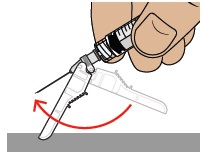
Illustration showing a hand holding a syringe with a needle, connected to a device with a hinged wing, depicted with a red arrow indicating the wing is being flipped or rotated outward. The image likely demonstrates a step in preparing or handling an injection device.*
FDA Label Image

Figure (Winrevair 133)

Figure (Winrevair 133)
An instructional illustration showing a syringe with needle cap being disposed into a red sharps container labeled 'SHARPS.' An arrow indicates the direction of disposal from syringe to container.*
FDA Label Image

Principal Display Panel (45 mg Vial Carton)

Principal Display Panel (45 mg Vial Carton)
WINREVAIR 45 mg/vial kit for injection containing sotatercept-csrk by Merck Sharp & Dohme LLC. The label indicates storage refrigerated at 2°C to 8°C and specifies that the product is for subcutaneous use only. The carton includes one vial and detailed usage instructions, emphasizing the need to reconstitute with provided diluent. Packaging also highlights safety precautions and components included in the kit.*
FDA Label Image

Principal Display Panel (60 mg Vial Carton)

Principal Display Panel (60 mg Vial Carton)
WINREVAIR 60 mg/vial (sotatercept-csrk) injection kit packaging label. The carton includes a single-dose vial with 60 mg of sotatercept-csrk for injection. It specifies storage refrigerated at 2°C to 8°C and not to freeze. The package contains one vial, dosing based on patient weight, and components for subcutaneous use only. The labeler is Merck Sharp & Dohme LLC.*
FDA Label Image

Principal Display Panel (45 mg Vial Carton)

Principal Display Panel (45 mg Vial Carton)
WINREVAIR (sotatercept-csrk) for injection 45 mg/vial packaging label for a kit containing two single-dose vials. The label includes storage instructions (2°C to 8°C), dosage information, and a list of components in the kit such as syringes, needles, and alcohol wipes. Manufactured by Merck Sharp & Dohme LLC.*
FDA Label Image

Principal Display Panel (60 mg Vial Carton)

Principal Display Panel (60 mg Vial Carton)
WINREVAIR 60 mg/vial kit for injection (sotatercept-csrk) by Merck Sharp & Dohme LLC. The packaging label shows a box containing 2 single-dose vials each with 60 mg of sotatercept-csrk, for subcutaneous use only, requiring reconstitution with provided diluent. Storage instructions specify refrigeration at 2°C to 8°C. The kit includes vials, syringes, needles, vial adapters, wipes, and instructions.*

* About these descriptions: Image descriptions on this page are generated by automated AI analysis of the product label images from the manufacturer's FDA label submission (SPL). They are provided for reference only and may contain errors or omissions. Always rely on the printed label itself and the official FDA labeling, and consult a pharmacist or healthcare professional with any questions about this product.