Etonogestrel And Ethinyl Estradiol Insert, Extended Release
Product Images NDC 0093-7679

10 FDA label images from Teva Pharmaceuticals Usa, Inc. · Packaging, Regulatory Labels, and Product Appearance

Product Visual Gallery

This gallery contains 10 technical images submitted to the FDA as part of the official labeling for Etonogestrel And Ethinyl Estradiol (NDC 0093-7679). Unlike standard consumer photos, these assets often include clinical data figures, molecular chemical structures, and official manufacturer packaging layouts.

As provided by Teva Pharmaceuticals Usa, Inc., these visuals offer a comprehensive scientific overview of the product's physical and chemical identity, aiding pharmacists and researchers in product verification and study.

FDA Label Image

Fig1 (Images 1)

Fig1 (Images 1)
A horizontal bar chart depicting the number of women with blood clots per 10,000 woman-years (WY) across four groups: Non-CHC users who are non-pregnant, CHC users, pregnant women, and postpartum women (12 weeks only). Each bar shows a range representing blood clot incidence, with postpartum women having the highest range, followed by pregnant women, CHC users, and non-CHC non-pregnant users with the lowest ranges.*
FDA Label Image

Final Carton (Images 10)

Final Carton (Images 10)
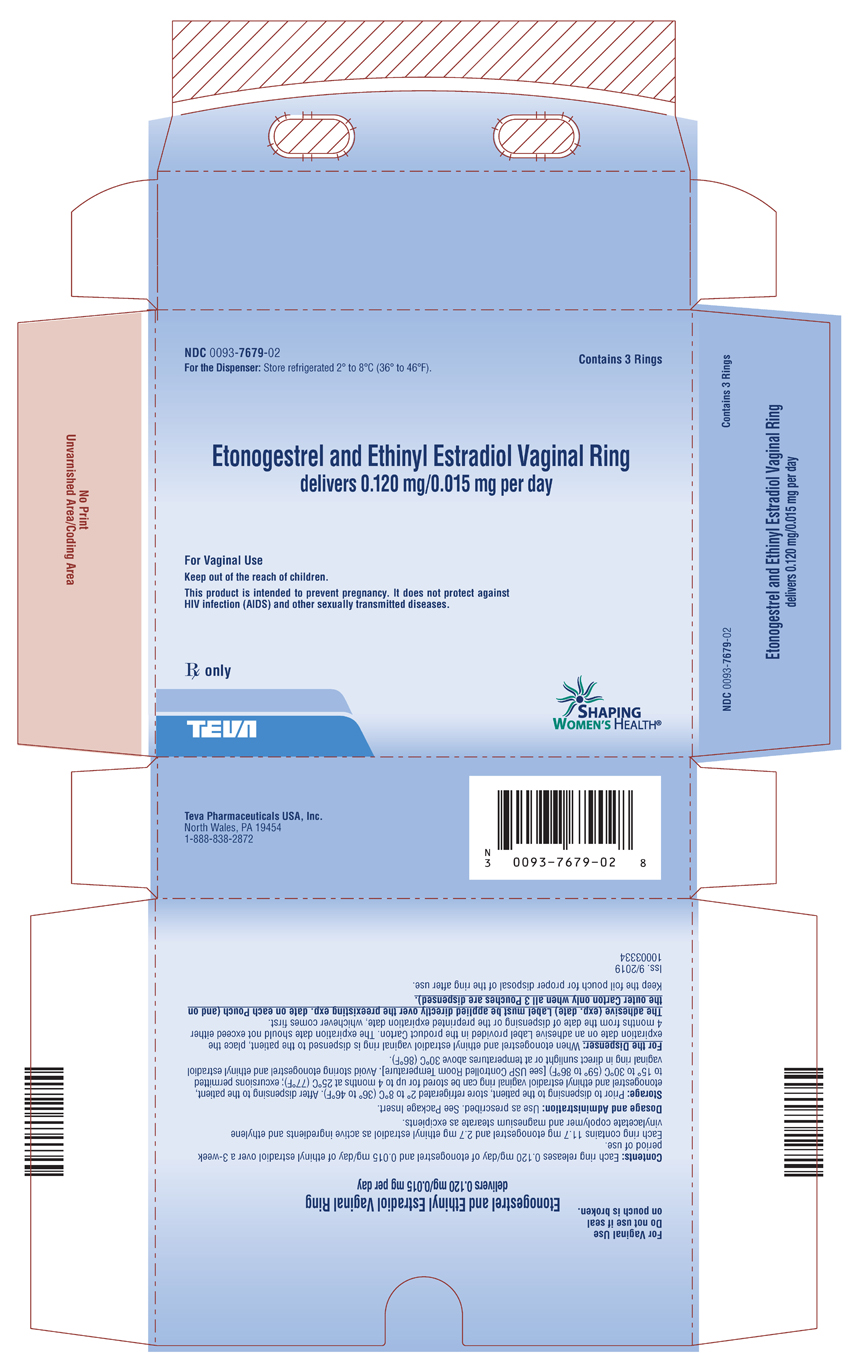
Packaging label for Etonogestrel and Ethinyl Estradiol Vaginal Ring delivering 0.120 mg/0.015 mg per day. The extended-release vaginal insert comes in a pack containing 3 rings and is labeled for Rx use only. The labeler is Teva Pharmaceuticals USA, Inc., with directions for vaginal use and storage instructions to keep refrigerated at 2° to 8°C (36° to 46°F).*
FDA Label Image

Structural Formula (Images 2)

Structural Formula (Images 2)
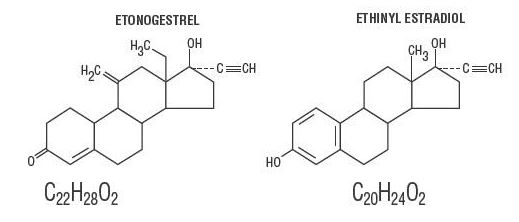
Chemical structure diagram showing the molecular formulas of Etonogestrel (C22H28O2) and Ethinyl Estradiol (C20H24O2). Both structures are depicted with labeled rings and functional groups as part of the active ingredients in the product.*
FDA Label Image

Fig2 (Images 3)

Fig2 (Images 3)
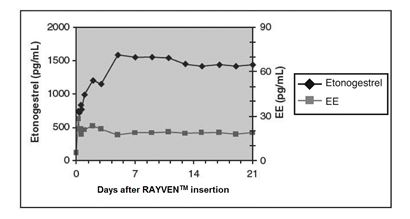
A line graph showing the plasma concentrations of Etonogestrel and Ethinyl Estradiol (EE) over 21 days following insertion of the RAYVEN™ vaginal insert. The x-axis represents days after insertion, while the left y-axis shows Etonogestrel concentration (pg/mL) and the right y-axis shows Ethinyl Estradiol concentration (pg/mL). Etonogestrel levels rise quickly and plateau, whereas EE levels remain relatively constant throughout the period.*
FDA Label Image

Pil_figure (Images 4)

Pil_figure (Images 4)
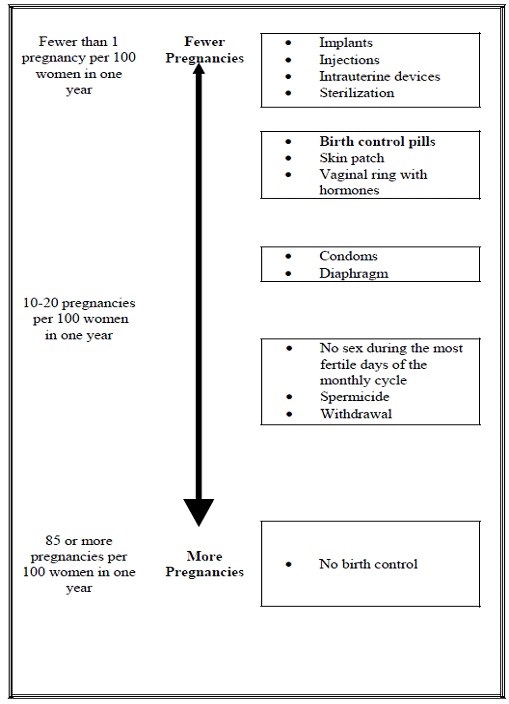
An illustration showing a vertical arrow labeled 'Fewer Pregnancies' at the top and 'More Pregnancies' at the bottom, with corresponding ranges of pregnancies per 100 women per year (fewer than 1, 10-20, 85 or more). To the right of the arrow, different birth control methods are grouped by effectiveness: most effective methods like implants and injections at the top, followed by birth control pills, skin patch, and vaginal ring with hormones; then condoms and diaphragm; then behavioral methods like no sex during fertile days, spermicide, and withdrawal; and lowest effectiveness with no birth control at the bottom.*
FDA Label Image

Fig1 (Images 5)

Fig1 (Images 5)
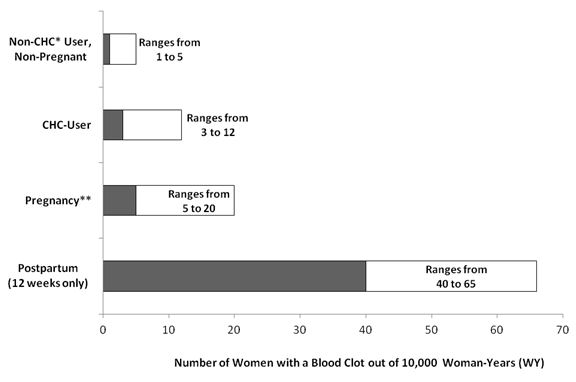
A horizontal bar chart depicting the number of women with a blood clot per 10,000 woman-years (WY) across four groups: Non-CHC users (ranges 1 to 5), CHC users (ranges 3 to 12), pregnant women (ranges 5 to 20), and postpartum women within 12 weeks (ranges 40 to 65). Each group’s range is visually represented by a filled bar followed by an open bar extending to the upper range.*
FDA Label Image

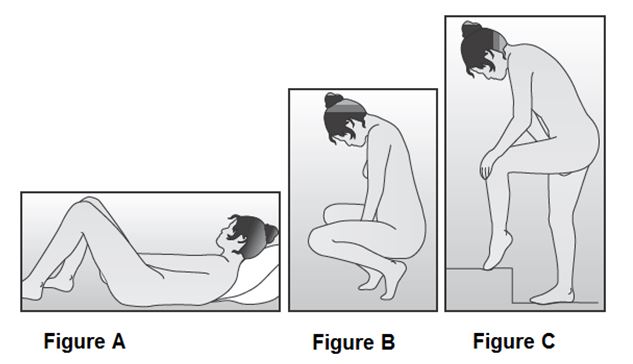
Fig-a,b,c (Images 6)

Fig-a,b,c (Images 6)
An instructional illustration showing three figures labeled A, B, and C, each depicting a woman in different positions: reclining with knees bent, squatting, and standing with one foot elevated on a step. The images likely demonstrate various body postures for vaginal insert usage or placement.*
FDA Label Image

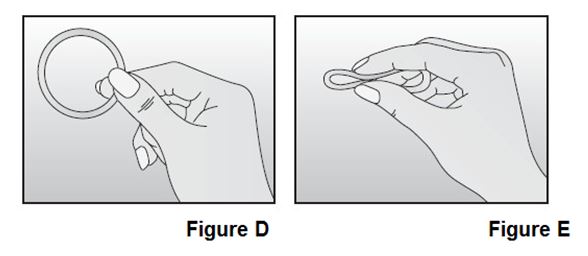
Fig D,e (Images 7)

Fig D,e (Images 7)
Instructional illustrations showing how to hold the Etonogestrel and Ethinyl Estradiol vaginal insert. Figure D depicts a hand holding a circular device by pinching it between the thumb and index finger. Figure E shows a hand folding the insert lengthwise between the thumb and index finger.*
FDA Label Image

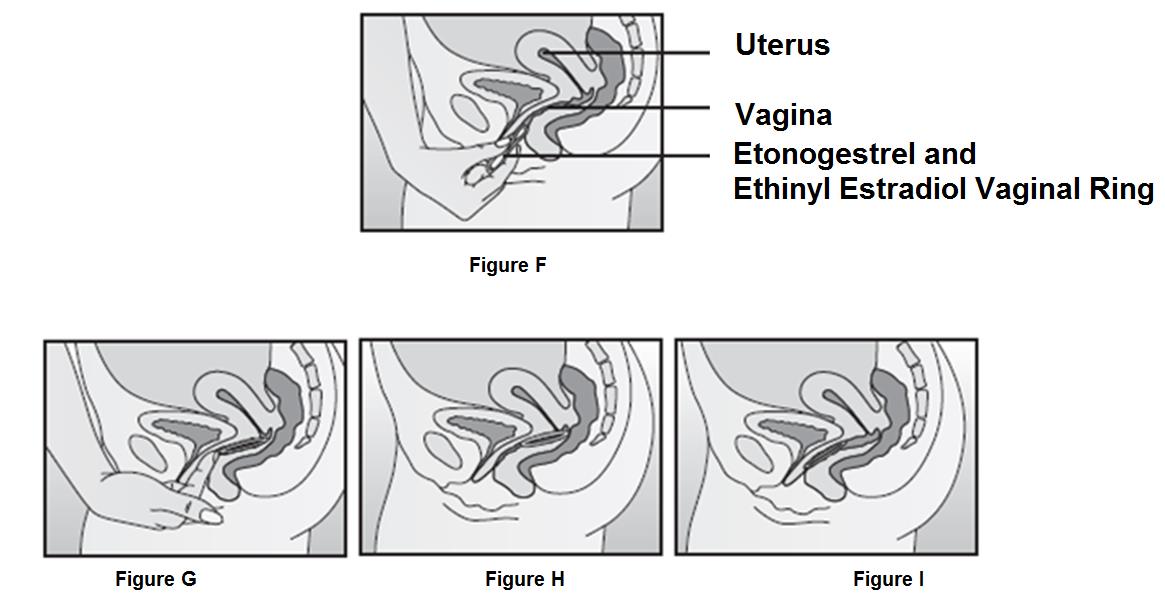
Fig (f,g,h,i)

Fig (f,g,h,i)
Illustrations demonstrating the vaginal insertion of an Etonogestrel and Ethinyl Estradiol vaginal ring. Figures show hand placement and the ring positioned inside the vagina near the uterus, highlighting its correct placement for extended-release hormonal delivery.*
FDA Label Image

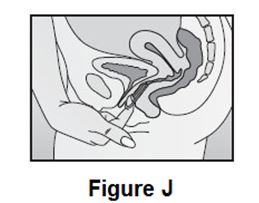
Fig-j (Images 9)

Fig-j (Images 9)
An anatomical illustration showing the female reproductive system in a lateral view. The image demonstrates the vaginal insertion of a small, flexible vaginal insert, positioned inside the vaginal canal near the cervix. This diagram visually explains the placement procedure for a vaginal extended-release drug insert.*

* About these descriptions: Image descriptions on this page are generated by automated AI analysis of the product label images from the manufacturer's FDA label submission (SPL). They are provided for reference only and may contain errors or omissions. Always rely on the printed label itself and the official FDA labeling, and consult a pharmacist or healthcare professional with any questions about this product.