Because clinical trials are conducted under widely varying conditions, adverse reaction rates observed in the clinical trials of a drug cannot be directly compared to rates in the clinical trials of another drug and may not reflect the rates observed in practice.
The data described in the WARNINGS AND PRECAUTIONS reflect exposure to Lynparza as a single agent in 2901 patients; 2135 patients with exposure to 300 mg twice daily tablet dose including five controlled, randomized, trials (SOLO-1, SOLO-2, OlympiAD, POLO, and PROfound) and to 400 mg twice daily capsule dose in 766 patients in other trials that were pooled to conduct safety analyses. In these trials, 56% of patients were exposed for 6 months or longer and 28% were exposed for greater than one year in the Lynparza group.
In this pooled safety population, the most common adverse reactions in ≥10% of patients were nausea (60%), fatigue (55%), anemia (36%), vomiting (32%), diarrhea (24%), decreased appetite (22%), headache (16%), dysgeusia (15%), cough (15%), neutropenia (14%), dyspnea (14%), dizziness (12%), dyspepsia (12%), leukopenia (11%), and thrombocytopenia (10%).
First-Line Maintenance Treatment of BRCA-mutated Advanced Ovarian Cancer
SOLO-1
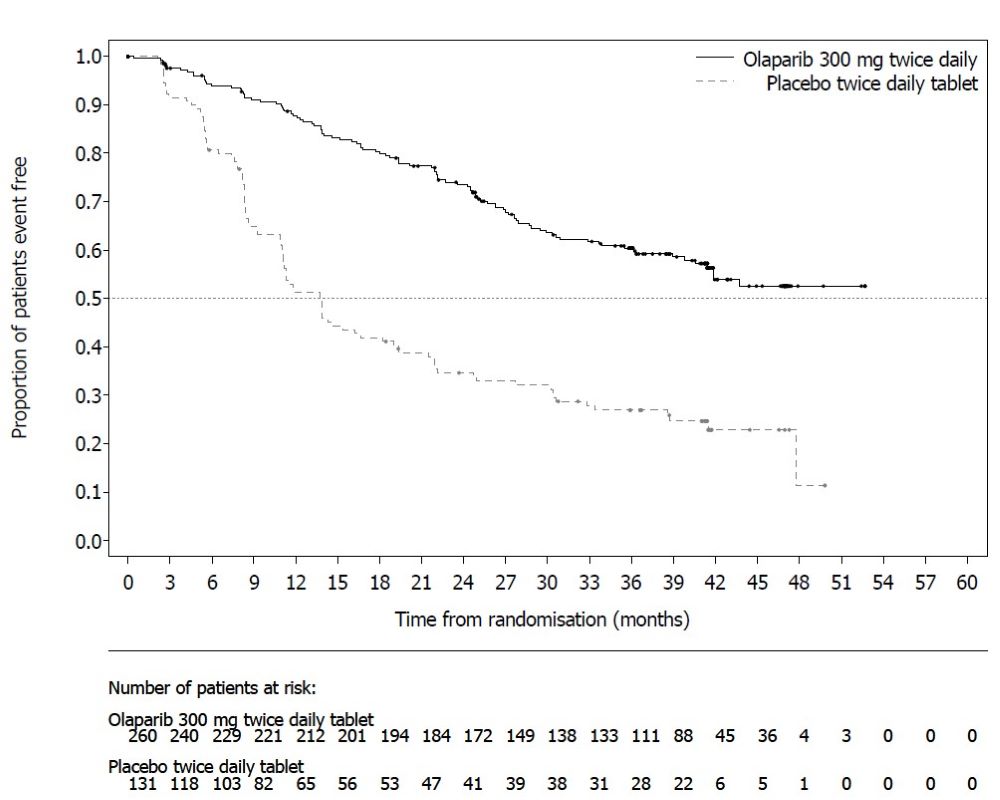
The safety of Lynparza for the maintenance treatment of patients with BRCA-mutated advanced ovarian cancer following first-line treatment with platinum-based chemotherapy was investigated in SOLO-1 [see Clinical Studies (14.1)]. Patients received Lynparza tablets 300 mg orally twice daily (n=260) or placebo (n=130) until disease progression or unacceptable toxicity. The median duration of study treatment was 25 months for patients who received Lynparza and 14 months for patients who received placebo.
Among patients who received Lynparza, dose interruptions due to an adverse reaction of any grade occurred in 52% and dose reductions due to an adverse reaction occurred in 28%. The most frequent adverse reactions leading to dose interruption or reduction of Lynparza were anemia (23%), nausea (14%), and vomiting (10%). Discontinuation due to adverse reactions occurred in 12% of patients receiving Lynparza. The most frequent adverse reactions that led to discontinuation of Lynparza were fatigue (3.1%), anemia (2.3%), and nausea (2.3%).
Tables 2 and 3 summarize adverse reactions and laboratory abnormalities in SOLO-1.
Table 2 Adverse ReactionsGraded according to the National Cancer Institute Common Terminology Criteria for Adverse Events (NCI CTCAE), version 4.0.
in SOLO-1 (≥10% of Patients Who Received Lynparza)| Adverse Reaction | Lynparza tablets
n=260 | Placebo
n=130 |
|---|
All Grades
(%) | Grades
3 – 4 (%) | All
Grades
(%) | Grades
3 – 4 (%) |
|---|
Gastrointestinal Disorders |
Nausea | 77 | 1 | 38 | 0 |
Abdominal pain Includes abdominal pain, abdominal pain lower, abdominal pain upper, abdominal distension, abdominal discomfort, and abdominal tenderness. | 45 | 2 | 35 | 1 |
Vomiting | 40 | 0 | 15 | 1 |
Diarrhea Includes colitis, diarrhea, and gastroenteritis. | 37 | 3 | 26 | 0 |
Constipation | 28 | 0 | 19 | 0 |
Dyspepsia | 17 | 0 | 12 | 0 |
Stomatitis Includes stomatitis, aphthous ulcer; and mouth ulceration. | 11 | 0 | 2 | 0 |
General Disorders and Administration Site Conditions |
Fatigue Includes asthenia, fatigue, lethargy, and malaise. | 67 | 4 | 42 | 2 |
Blood and Lymphatic System Disorders |
Anemia | 38 | 21 | 9 | 2 |
Neutropenia Includes neutropenia, and febrile neutropenia. | 17 | 6 | 7 | 3 |
Leukopenia Includes leukopenia, and white blood cell count decreased. | 13 | 3 | 8 | 0 |
Thrombocytopenia Includes platelet count decreased, and thrombocytopenia. | 11 | 1 | 4 | 2 |
Infections and Infestations |
Upper respiratory tract
infection/influenza/nasopharyngitis/bronchitis | 28 | 0 | 23 | 0 |
UTI Includes urosepsis, urinary tract infection, urinary tract pain, and pyuria. | 13 | 1 | 7 | 0 |
Nervous System Disorders |
Dysgeusia | 26 | 0 | 4 | 0 |
Dizziness | 20 | 0 | 15 | 1 |
Metabolism and Nutrition Disorders |
Decreased appetite | 20 | 0 | 10 | 0 |
Respiratory, Thoracic and Mediastinal Disorders |
Dyspnea Includes dyspnea, and dyspnea exertional. | 15 | 0 | 6 | 0 |
In addition, the adverse reactions observed in SOLO-1 that occurred in <10% of patients receiving Lynparza were increased blood creatinine (8%), lymphopenia (6%), hypersensitivity (2%), MDS/AML (1%), dermatitis (1%), and increased mean cell volume (0.4%).
Table 3 Laboratory Abnormalities Reported in ≥25% of Patients in SOLO-1Laboratory Parameter Patients were allowed to enter clinical studies with laboratory values of CTCAE Grade 1. | Lynparza tablets n This number represents the safety population. The derived values in the table are based on the total number of evaluable patients for each laboratory parameter. =260 | Placebo n=130 |
Grades 1-4 (%) | Grades 3-4 (%) | Grades 1-4 (%) | Grades 3-4 (%) |
Decrease in hemoglobin | 87 | 19 | 63 | 2 |
Increase in mean corpuscular volume | 87 | - | 43 | - |
Decrease in leukocytes | 70 | 7 | 52 | 1 |
Decrease in lymphocytes | 67 | 14 | 29 | 5 |
Decrease in absolute neutrophil count | 51 | 9 | 38 | 6 |
Decrease in platelets | 35 | 1 | 20 | 2 |
Increase in serum creatinine | 34 | 0 | 18 | 0 |
First-line Maintenance Treatment of HRD-positive Advanced Ovarian Cancer in Combination with Bevacizumab
PAOLA-1
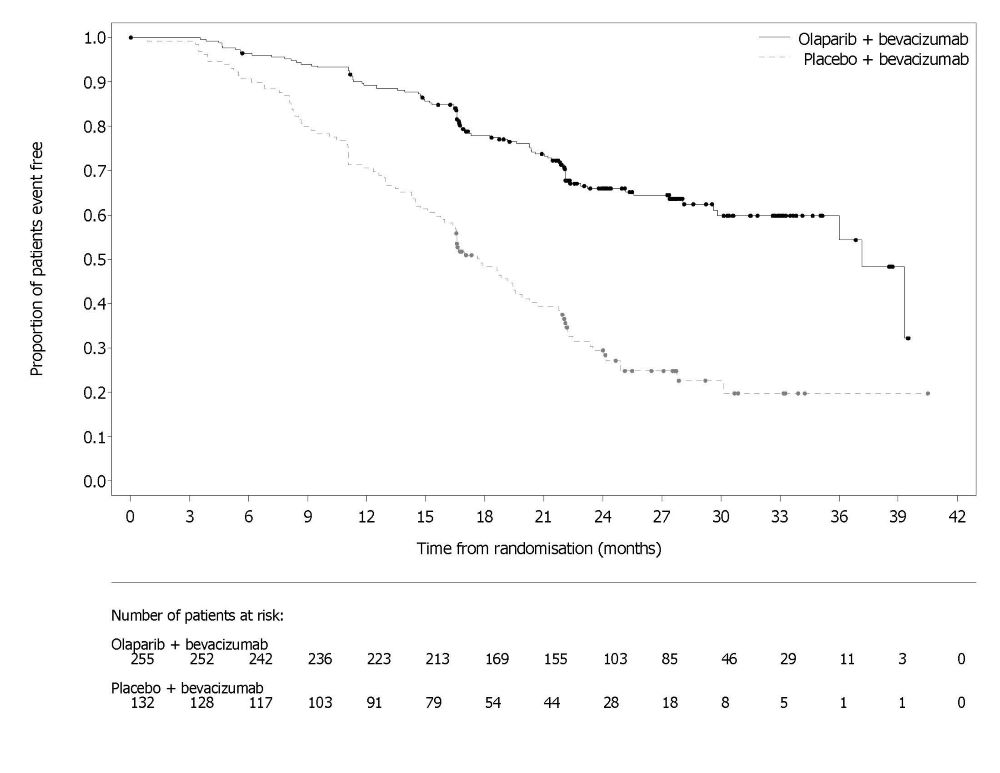
The safety of Lynparza in combination with bevacizumab for the maintenance treatment of patients with advanced ovarian cancer following first-line treatment containing platinum-based chemotherapy and bevacizumab was investigated in PAOLA-1 [see Clinical Studies (14.2)]. This study was a placebo-controlled, double-blind study in which 802 patients received either Lynparza 300 mg BID in combination with bevacizumab (n=535) or placebo in combination with bevacizumab (n=267) until disease progression or unacceptable toxicity. The median duration of treatment with Lynparza was 17.3 months and 11 months for bevacizumab post-randomization on the Lynparza/bevacizumab arm.
Fatal adverse reactions occurred in 1 patient due to concurrent pneumonia and aplastic anemia. Serious adverse reactions occurred in 31% of patients who received Lynparza/bevacizumab. Serious adverse reactions in >5% of patients included hypertension (19%) and anemia (17%).
Dose interruptions due to an adverse reaction of any grade occurred in 54% of patients receiving Lynparza/bevacizumab and dose reductions due to an adverse reaction occurred in 41% of patients who received Lynparza/bevacizumab.
The most frequent adverse reactions leading to dose interruption in the Lynparza/bevacizumab arm were anemia (21%), nausea (7%), vomiting (3%), and fatigue (3%), and the most frequent adverse reactions leading to reduction in the Lynparza/bevacizumab arm were anemia (19%), nausea (7%), and fatigue (4%).
Discontinuation due to adverse reactions occurred in 20% of patients receiving Lynparza/bevacizumab. Specific adverse reactions that most frequently led to discontinuation in patients treated with Lynparza/bevacizumab were anemia (4%) and nausea (3%).
Tables 4 and 5 summarize adverse reactions and laboratory abnormalities in PAOLA-1, respectively.
Table 4 Adverse ReactionsGraded according to the National Cancer Institute Common Terminology Criteria for Adverse Events (NCI CTCAE), version 4.0.
Occurring in ≥10% of Patients Treated with Lynparza/bevacizumab in PAOLA-1 and at ≥5% Frequency Compared to the Placebo/bevacizumab ArmAdverse Reactions | Lynparza/bevacizumab n=535 | Placebo/bevacizumab
n=267 |
Grades 1-4 (%) | Grades 3-4 (%) | Grades 1-4 (%) | Grades 3-4 (%) |
General Disorders and Administration Site Conditions |
Fatigue (including asthenia) Includes asthenia, and fatigue. | 53 | 5 | 32 | 1.5 |
Gastrointestinal Disorders |
Nausea | 53 | 2.4 | 22 | 0.7 |
Vomiting | 22 | 1.7 | 11 | 1.9 |
Blood and Lymphatic Disorders |
Anemia Includes anemia, anemia macrocytic, erythropenia, haematocrit decreased, haemoglobin decreased, normochromic anemia, normochromic normocytic anemia, normocytic anemia, and red blood cell count decreased. | 41 | 17 | 10 | 0.4 |
Lymphopenia Includes B-lymphocyte count decreased, lymphocyte count decreased, lymphopenia, and T-lymphocyte count decreased. | 24 | 7 | 9 | 1.1 |
Leukopenia Includes leukopenia, and white blood cell count decreased. | 18 | 1.9 | 10 | 1.5 |
The most common adverse reactions (≥ 10%) for patients receiving Lynparza/bevacizumab irrespective of the frequency compared with the placebo/bevacizumab arm were nausea (53%), fatigue (including asthenia) (53%), anemia (41%), lymphopenia (24%), vomiting (22%), diarrhea (18%), neutropenia (18%), leukopenia (18%), urinary tract infection (15%), and headache (14%).
The adverse reactions that occurred in <10% of patients receiving Lynparza/bevacizumab were dysgeusia (8%), dyspnea (8%), stomatitis (5%), dyspepsia (4.3%), erythema (3%), dizziness (2.6%), hypersensitivity (1.7%) and MDS/AML (0.7%).
In addition, venous thromboembolic events occurred more commonly in patients receiving Lynparza/bevacizumab (5%) than in those receiving placebo/bevacizumab (1.9%).
Table 5 Laboratory Abnormalities Reported in ≥25% of Patients in PAOLA-1Reported within 30 days of the last dose.
Laboratory Parameter Patients were allowed to enter clinical studies with laboratory values of CTCAE Grade 1. | Lynparza/bevacizumab
n=535 | Placebo/bevacizumab
n This number represents the safety population. The derived values in the table are based on the total number of evaluable patients for each laboratory parameter. =267 |
Grades 1-4 (%) | Grades 3-4 (%) | Grades 1-4 (%) | Grades 3-4 (%) |
Decrease in hemoglobin | 79 | 13 | 55 | 0.4 |
Decrease in lymphocytes | 63 | 10 | 42 | 3.0 |
Increase in serum creatinine | 61 | 0.4 | 36 | 0.4 |
Decrease in leukocytes | 59 | 3.4 | 45 | 2.2 |
Decrease in absolute neutrophil count | 35 | 7 | 30 | 3.7 |
Decrease in platelets | 35 | 2.4 | 28 | 0.4 |
Maintenance Treatment of Recurrent Ovarian Cancer
SOLO-2
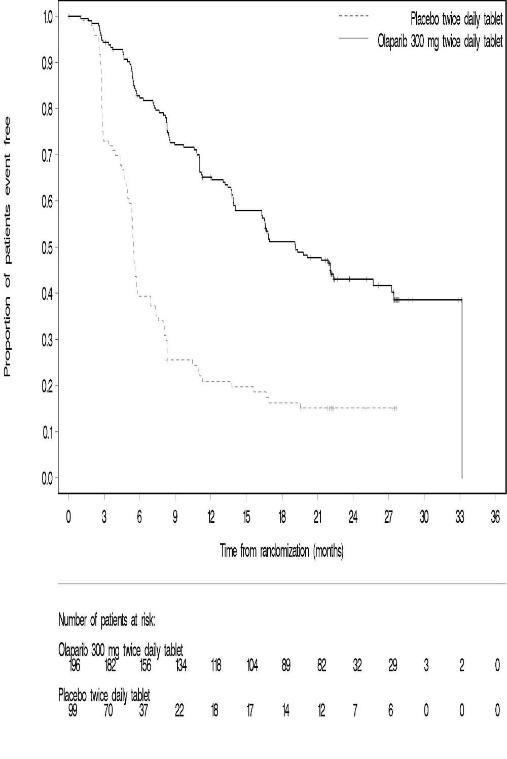
The safety of Lynparza for the maintenance treatment of patients with platinum sensitive gBRCAm ovarian cancer was investigated in SOLO-2 [see Clinical Studies (14.3)]. Patients received Lynparza tablets 300 mg orally twice daily (n=195) or placebo (n=99) until disease progression or unacceptable toxicity. The median duration of study treatment was 19.4 months for patients who received Lynparza and 5.6 months for patients who received placebo.
Among patients who received Lynparza, dose interruptions due to an adverse reaction of any grade occurred in 45% and dose reductions due to an adverse reaction occurred in 27%. The most frequent adverse reactions leading to dose interruption or reduction of Lynparza were anemia (22%), neutropenia (9%), and fatigue/asthenia (8%). Discontinuation due to an adverse reaction occurred in 11% of patients receiving Lynparza.
Tables 6 and 7 summarize adverse reactions and laboratory abnormalities in SOLO-2.
Table 6 Adverse ReactionsGraded according to the National Cancer Institute Common Terminology Criteria for Adverse Events (NCI CTCAE), version 4.0.
in SOLO-2 (≥20% of Patients Who Received Lynparza)Adverse Reaction | Lynparza tablets n=195 | Placebo n=99 |
Grades 1-4 (%) | Grades 3-4 (%) | Grades 1-4 (%) | Grades 3-4 (%) |
Gastrointestinal Disorders |
Nausea | 76 | 3 | 33 | 0 |
Vomiting | 37 | 3 | 19 | 1 |
Diarrhea | 33 | 2 | 22 | 0 |
Stomatitis Represents grouped term consisting of abscess oral, aphthous ulcer, gingival abscess, gingival disorder, gingival pain, gingivitis, mouth ulceration, mucosal infection, mucosal inflammation, oral candidiasis, oral discomfort, oral herpes, oral infection, oral mucosal erythema, oral pain, oropharyngeal discomfort, and oropharyngeal pain. | 20 | 1 | 16 | 0 |
General Disorders and Administration Site Conditions |
Fatigue including asthenia | 66 | 4 | 39 | 2 |
Blood and Lymphatic Disorders |
Anemia Represents grouped term consisting of anemia, hematocrit decreased, hemoglobin decreased, iron deficiency, mean cell volume increased and red blood cell count decreased. | 44 | 20 | 9 | 2 |
Infections and Infestations |
Nasopharyngitis/URI/sinusitis/ rhinitis/influenza | 36 | 0 | 29 | 0 |
Musculoskeletal and Connective Tissue Disorders |
Arthralgia/myalgia | 30 | 0 | 28 | 0 |
Nervous System Disorders |
Dysgeusia | 27 | 0 | 7 | 0 |
Headache | 26 | 1 | 14 | 0 |
Metabolism and Nutrition Disorders |
Decreased appetite | 22 | 0 | 11 | 0 |
In addition, the adverse reactions observed in SOLO-2 that occurred in <20% of patients receiving Lynparza were neutropenia (19%), cough (18%), leukopenia (16%), hypomagnesemia (14%), thrombocytopenia (14%), dizziness (13%), dyspepsia (11%), increased creatinine (11%), MDS/AML (8%), edema (8%), rash (6%), and lymphopenia (1%).
Table 7 Laboratory Abnormalities Reported in ≥25% of Patients in SOLO-2Laboratory Parameter Patients were allowed to enter clinical studies with laboratory values of CTCAE Grade 1. | Lynparza tablets n This number represents the safety population. The derived values in the table are based on the total number of evaluable patients for each laboratory parameter. =195 | Placebo n=99 |
Grades 1-4 (%) | Grades 3-4 (%) | Grades 1-4 (%) | Grades 3-4 (%) |
Increase in mean corpuscular volume Represents the proportion of subjects whose mean corpuscular volume was > upper limit of normal (ULN). | 89 | - | 52 | - |
Decrease in hemoglobin | 83 | 17 | 69 | 0 |
Decrease in leukocytes | 69 | 5 | 48 | 1 |
Decrease in lymphocytes | 67 | 11 | 37 | 1 |
Decrease in absolute neutrophil count | 51 | 7 | 34 | 3 |
Increase in serum creatinine | 44 | 0 | 29 | 0 |
Decrease in platelets | 42 | 2 | 22 | 1 |
Study 19
The safety of Lynparza as maintenance monotherapy was evaluated in patients with platinum sensitive ovarian cancer who had received 2 or more previous platinum containing regimens in Study 19 [see Clinical Studies (14.3)]. Patients received Lynparza capsules 400 mg orally twice daily (n=136) or placebo (n=128). At the time of final analysis, the median duration of exposure was 8.7 months in patients who received Lynparza and 4.6 months in patients who received placebo.
Adverse reactions led to dose interruptions in 35% of patients receiving Lynparza; dose reductions in 26% and discontinuation in 6% of patients receiving Lynparza.
Tables 8 and 9 summarize adverse reactions and laboratory abnormalities in Study 19.
Table 8 Adverse ReactionsGraded according to NCI CTCAE v4.0.
in Study 19 (≥20% of Patients Who Received Lynparza)Adverse Reaction | Lynparza capsules n=136 | Placebo n=128 |
Grades 1-4 (%) | Grades 3-4 (%) | Grades 1-4 (%) | Grades 3-4 (%) |
Gastrointestinal Disorders |
Nausea | 71 | 2 | 36 | 0 |
Vomiting | 35 | 2 | 14 | 1 |
Diarrhea | 28 | 2 | 25 | 2 |
Constipation | 22 | 1 | 12 | 0 |
Dyspepsia | 20 | 0 | 9 | 0 |
General Disorders and Administration Site Conditions |
Fatigue (including asthenia) | 63 | 9 | 46 | 3 |
Blood and Lymphatic Disorders |
Anemia Represents grouped terms of related terms that reflect the medical concept of the adverse reaction. | 23 | 7 | 7 | 1 |
Infections and Infestations |
Respiratory tract infection | 22 | 2 | 11 | 0 |
Metabolism and Nutrition Disorders |
Decreased appetite | 21 | 0 | 13 | 0 |
Nervous System Disorders |
Headache | 21 | 0 | 13 | 1 |
In addition, the adverse reactions in Study 19 that occurred in <20% of patients receiving Lynparza were dysgeusia (16%), dizziness (15%), dyspnea (13%), pyrexia (10%), stomatitis (9%), edema (9%), increase in creatinine (7%), neutropenia (5%), thrombocytopenia (4%), leukopenia (2%), MDS/AML (1%) and lymphopenia (1%).
Table 9 Laboratory Abnormalities Reported in ≥25% of Patients in Study 19Laboratory Parameter Patients were allowed to enter clinical studies with laboratory values of CTCAE Grade 1. | Lynparza capsules n This number represents the safety population. The derived values in the table are based on the total number of evaluable patients for each laboratory parameter. =136 | Placebo n=129 |
| Grades 1-4 (%) | Grades 3-4 (%) | Grades 1-4 (%) | Grades 3-4 (%) |
Decrease in hemoglobin | 82 | 8 | 58 | 1 |
Increase in mean corpuscular volume Represents the proportion of subjects whose mean corpuscular volume was > ULN. | 82 | - | 51 | - |
Decrease in leukocytes | 58 | 4 | 37 | 2 |
Decrease in lymphocytes | 52 | 10 | 32 | 3 |
Decrease in absolute neutrophil count | 47 | 7 | 40 | 2 |
Increase in serum creatinine | 45 | 0 | 14 | 0 |
Decrease in platelets | 36 | 4 | 18 | 0 |
Advanced Germline BRCA-mutated Ovarian Cancer After 3 or More Lines of Chemotherapy
Pooled Data
The safety of Lynparza was investigated in 223 patients (pooled from 6 studies) with gBRCAm advanced ovarian cancer who had received 3 or more prior lines of chemotherapy [see Clinical Studies (14.4)]. Patients received Lynparza capsules 400 mg orally twice daily until disease progression or unacceptable tolerability. The median exposure to Lynparza in these patients was 5.2 months.
There were 8 (4%) patients with adverse reactions leading to death, two were attributed to acute leukemia, and one each was attributed to COPD, cerebrovascular accident, intestinal perforation, pulmonary embolism, sepsis, and suture rupture. Adverse reactions led to dose interruption in 40% of patients, dose reduction in 4%, and discontinuation in 7%.
Tables 10 and 11 summarize the adverse reactions and laboratory abnormalities from the pooled studies.
Table 10 Adverse Reactions Reported in Pooled Data (≥20% of Patients Who Received Lynparza)Adverse Reaction | Lynparza capsules n=223 |
Grades 1-4 (%) | Grades 3-4 (%) |
General Disorders |
Fatigue/asthenia | 66 | 8 |
Gastrointestinal Disorders |
Nausea | 64 | 3 |
Vomiting | 43 | 4 |
Diarrhea | 31 | 1 |
Dyspepsia | 25 | 0 |
Decreased appetite | 22 | 1 |
Blood and Lymphatic Disorders |
Anemia | 34 | 18 |
Infections and Infestations |
Nasopharyngitis/URI | 26 | 0 |
Musculoskeletal and Connective Tissue Disorders |
Arthralgia/musculoskeletal pain | 21 | 0 |
Myalgia | 22 | 0 |
Table 11 Laboratory Abnormalities Reported in ≥25% of Patients in Pooled DataLaboratory Parameter Patients were allowed to enter clinical studies with laboratory values of CTCAE Grade 1. | Lynparza capsules n This number represents the safety population. The derived values in the table are based on the total number of evaluable patients for each laboratory parameter. =223 |
Grades 1-4 (%) | Grades 3-4 (%) |
Decrease in hemoglobin | 90 | 15 |
Mean corpuscular volume elevation | 57 | - |
Decrease in lymphocytes | 56 | 17 |
Decrease in platelets | 30 | 3 |
Increase in creatinine | 30 | 2 |
Decrease in absolute neutrophil count | 25 | 7 |
The following adverse reactions and laboratory abnormalities have been identified in ≥10 to <20% of the 223 patients receiving Lynparza and not included in the table: cough (16%), constipation (16%), dysgeusia (16%), headache (15%), peripheral edema (14%), back pain (14%), urinary tract infection (14%), dyspnea (13%), and dizziness (11%).
The following adverse reactions and laboratory abnormalities have been identified in <10% of the 223 patients receiving Lynparza and not included in the table: leukopenia (9%), pyrexia (8%), peripheral neuropathy (5%), hypomagnesemia (5%), rash (5%), stomatitis (4%), MDS/AML (1.8%), and venous thrombosis (including pulmonary embolism) (1%).
Germline BRCA-mutated HER2-negative Metastatic Breast Cancer
OlympiAD
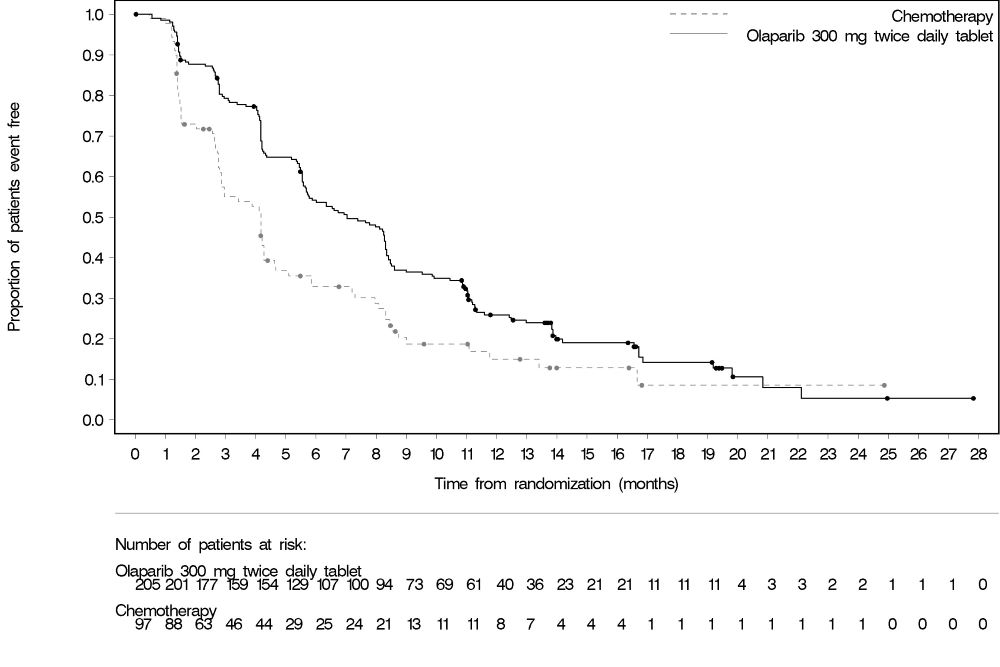
The safety of Lynparza was evaluated in gBRCAm patients with HER2-negative metastatic breast cancer who had previously received up to two lines of chemotherapy for the treatment of metastatic disease in OlympiAD [see Clinical Studies (14.5)]. Patients received either Lynparza tablets 300 mg orally twice daily (n=205) or a chemotherapy (capecitabine, eribulin, or vinorelbine) of the healthcare provider’s choice (n=91) until disease progression or unacceptable toxicity. The median duration of study treatment was 8.2 months in patients who received Lynparza and 3.4 months in patients who received chemotherapy.
Among patients who received Lynparza, dose interruptions due to an adverse reaction of any grade occurred in 35% and dose reductions due to an adverse reaction occurred in 25%. Discontinuation due to an adverse reaction occurred in 5% of patients receiving Lynparza.
Tables 12 and 13 summarize the adverse reactions and laboratory abnormalities in OlympiAD.
Table 12 Adverse ReactionsGraded according to NCI CTCAE v4.0.
in OlympiAD (≥20% of Patients Who Received Lynparza)Adverse Reaction | Lynparza tablets n=205 | Chemotherapy n=91 |
Grades 1-4 (%) | Grades 3-4 (%) | Grades 1-4 (%) | Grades 3-4 (%) |
Gastrointestinal Disorders |
Nausea | 58 | 0 | 35 | 1 |
Vomiting | 30 | 0 | 15 | 1 |
Diarrhea | 21 | 1 | 22 | 0 |
Blood and Lymphatic Disorders |
Anemia Represents grouped terms consisting of anemia (anemia erythropenia, hematocrit decreased, hemoglobin decreased and red blood cell count decreased). | 40 | 16 | 26 | 4 |
Neutropenia Represents grouped terms consisting of neutropenia (febrile neutropenia, granulocyte count decreased, granulocytopenia, neutropenia, neutropenic infection, neutropenic sepsis, and neutrophil count decreased). | 27 | 9 | 50 | 26 |
Leukopenia Represents grouped terms consisting of leukopenia (leukopenia and white blood cell count decreased). | 25 | 5 | 31 | 13 |
General Disorders and Administration Site Conditions |
Fatigue (including asthenia) | 37 | 4 | 36 | 1 |
Infections and Infestations |
Respiratory tract infection Represents grouped terms consisting of bronchitis, influenza, lower respiratory tract infection, nasopharyngitis, pharyngitis, respiratory tract infection, rhinitis, sinusitis, upper respiratory tract infection, and upper respiratory tract infection bacterial. | 27 | 1 | 22 | 0 |
Nervous System Disorders |
Headache | 20 | 1 | 15 | 2 |
In addition, adverse reactions in OlympiAD that occurred in <20% of patients receiving Lynparza were cough (18%), decreased appetite (16%), thrombocytopenia (11%), dysgeusia (9%), lymphopenia (8%), dyspepsia (8%), dizziness (7%), stomatitis (7%), upper abdominal pain (7%), rash (5%), increase in serum creatinine (3%), and dermatitis (1%).
Table 13 Laboratory Abnormalities Reported in ≥25% of Patients in OlympiADLaboratory Parameter Patients were allowed to enter clinical studies with laboratory values of CTCAE Grade 1. | Lynparza tablets n This number represents the safety population. The derived values in the table are based on the total number of evaluable patients for each laboratory parameter. = 205 | Chemotherapy n= 91 |
Grades 1-4 (%) | Grades 3-4 (%) | Grades 1-4 (%) | Grades 3-4 (%) |
Decrease in hemoglobin | 82 | 17 | 66 | 3 |
Decrease in lymphocytes | 73 | 21 | 63 | 3 |
Decrease in leukocytes | 71 | 8 | 70 | 23 |
Increase in mean corpuscular volume Represents the proportion of subjects whose mean corpuscular volume was > ULN. | 71 | - | 33 | - |
Decrease in absolute neutrophil count | 46 | 11 | 65 | 38 |
Decrease in platelets | 33 | 3 | 28 | 0 |
First-line Maintenance Treatment of Germline BRCA-mutated Metastatic Pancreatic Adenocarcinoma
POLO
The safety of Lynparza as maintenance treatment of germline BRCA-mutated metastatic pancreatic adenocarcinoma following first-line treatment with platinum-based chemotherapy was evaluated in POLO [see Clinical Studies (14.6)]. Patients received Lynparza tablets 300 mg orally twice daily (n=90) or placebo (n=61) until disease progression or unacceptable toxicity. Among patients receiving Lynparza, 34% were exposed for 6 months or longer and 25% were exposed for greater than one year.
Among patients who received Lynparza, dosage interruptions due to an adverse reaction of any grade occurred in 35% and dosage reductions due to an adverse reaction occurred in 17%. The most frequent adverse reactions leading to dosage interruption or reduction in patients who received Lynparza were anemia (11%), vomiting (5%), abdominal pain (4%), asthenia (3%), and fatigue (2%). Discontinuation due to adverse reactions occurred in 6% of patients receiving Lynparza. The most frequent adverse reaction that led to discontinuation of Lynparza was fatigue (2.2%).
Tables 14 and 15 summarize the adverse reactions and laboratory abnormalities in patients in POLO.
Table 14 Adverse ReactionsGraded according to NCI CTCAE, version 4.0
in POLO (Occurring in ≥10% of Patients who Received Lynparza)| Adverse Reaction | Lynparza tablets
(n=91)This number represents the safety population. The derived values in the table are based on the total number of evaluable patients for each laboratory parameter. | Placebo
(n=60) |
|---|
| All Grades (%) | Grades
3 – 4 (%) | All
Grades
(%) | Grades
3 – 4 (%) |
|---|
General Disorders and Administration Site Conditions | | |
Fatigue Includes asthenia and fatigue | 60 | 5 | 35 | 2 |
Gastrointestinal Disorders |
Nausea | 45 | 0 | 23 | 2 |
Abdominal pain Includes abdominal pain, abdominal pain upper, abdominal pain lower | 34 | 2 | 37 | 5 |
Diarrhea | 29 | 0 | 15 | 0 |
Constipation | 23 | 0 | 10 | 0 |
Vomiting | 20 | 1 | 15 | 2 |
Stomatitis Includes stomatitis and mouth ulceration | 10 | 0 | 5 | 0 |
Blood and Lymphatic System Disorders |
Anemia | 27 | 11 | 17 | 3 |
Thrombocytopenia Includes platelets count decreased and thrombocytopenia | 14 | 3 | 7 | 0 |
Neutropenia Includes neutropenia, febrile neutropenia and neutrophil count decreased | 12 | 4 | 8 | 3 |
Metabolism and Nutrition Disorders |
Decreased appetite | 25 | 3 | 7 | 0 |
Musculoskeletal and Connective Tissue Disorders |
Back pain | 19 | 0 | 17 | 2 |
Arthralgia | 15 | 1 | 10 | 0 |
Skin and Subcutaneous Tissue Disorder |
Rash Includes rash erythematous, rash macular and rash maculo-papular | 15 | 0 | 5 | 0 |
Respiratory, Thoracic and Mediastinal Disorders |
Dyspnea Includes dyspnea and dyspnea exertional | 13 | 0 | 5 | 2 |
Infections and Infestations |
Nasopharyngitis | 12 | 0 | 3 | 0 |
Nervous System Disorders |
Dysgeusia | 11 | 0 | 5 | 0 |
In addition, the adverse reactions observed in POLO that occurred in <10% of patients receiving Lynparza were cough (9%), abdominal pain upper (7%), blood creatinine increased (7%), dizziness (7%), headache (7%), dyspepsia (5%), leukopenia (5%), hypersensitivity (2%), and lymphopenia (2%).
Table 15 Laboratory Abnormalities Reported in ≥25% of Patients in POLOLaboratory Parameter Patients were allowed to enter POLO with hemoglobin ≥9 g/dL (CTCAE Grade 2) and other laboratory values of CTCAE Grade 1. | Lynparza tablets n This number represents the safety population. The derived values in the table are based on the total number of evaluable patients for each laboratory parameter. =91 | Placebo n=60 |
Grades 1-4 (%) | Grades 3-4 (%) | Grades 1-4 (%) | Grades 3-4 (%) |
Increase in serum creatinine | 99 | 2 | 85 | 0 |
Decrease in hemoglobin | 86 | 11 | 65 | 0 |
Increase in mean corpuscular volume Represents the proportion of subjects whose mean corpuscular volume was > ULN. | 71 | - | 30 | - |
Decrease in lymphocytes | 61 | 9 | 27 | 0 |
Decrease in platelets | 56 | 2 | 39 | 0 |
Decrease in leukocytes | 50 | 3 | 23 | 0 |
Decrease in absolute neutrophil count | 25 | 3 | 10 | 0 |
HRR Gene-mutated Metastatic Castration-Resistant Prostate Cancer
PROfound
The safety of Lynparza as monotherapy was evaluated in patients with mCRPC and HRR gene mutations who have progressed following prior treatment with enzalutamide or abiraterone in PROfound [see Clinical Studies (14.7)]. This study was a randomized, open-label, multi-center study in which 386 patients received either Lynparza tablets 300 mg orally twice daily (n=256) or investigator’s choice of enzalutamide or abiraterone acetate (n=130) until disease progression or unacceptable toxicity. Among patients receiving Lynparza, 62% were exposed for 6 months or longer and 20% were exposed for greater than one year.
Fatal adverse reactions occurred in 4% of patients treated with Lynparza. These included pneumonia (1.2%), cardiopulmonary failure (0.4%), aspiration pneumonia (0.4%), intestinal diverticulum (0.4%), septic shock (0.4%), Budd-Chiari Syndrome (0.4%), sudden death (0.4%), and acute cardiac failure (0.4%).
Serious adverse reactions occurred in 36% of patients receiving Lynparza. The most frequent serious adverse reactions (≥2%) were anemia (9%), pneumonia (4%), pulmonary embolism (2%), fatigue/asthenia (2%), and urinary tract infection (2%).
Dose interruptions due to an adverse reaction of any grade occurred in 45% of patients receiving Lynparza; dose reductions due to an adverse reaction occurred in 22% of Lynparza patients. The most frequent adverse reactions leading to dose interruption of Lynparza were anemia (25%) and thrombocytopenia (6%) and the most frequent adverse reaction leading to reduction of Lynparza was anemia (16%). Discontinuation due to adverse reactions occurred in 18% of Lynparza. The adverse reaction that most frequently led to discontinuation of Lynparza was anemia (7%).
Tables 16 and 17 summarize the adverse reactions and laboratory abnormalities, respectively, in patients in PROfound.
Table 16 Adverse ReactionsGraded according to the National Cancer Institute Common Terminology Criteria for Adverse Events (NCI CTCAE), version 4.03
Reported in ≥10% of Patients in PROfoundAdverse Reactions | Lynparza tablets n=256 | Enzalutamide or abiraterone n=130 |
Grades 1-4 (%) | Grades 3-4 (%) | Grades 1-4 (%) | Grades 3-4 (%) |
Blood and lymphatic disorders |
Anemia Includes anemia and hemoglobin decreased | 46 | 21 | 15 | 5 |
Thrombocytopenia Includes platelet count decreased and thrombocytopenia | 12 | 4 | 3 | 0 |
Gastrointestinal disorders |
Nausea | 41 | 1 | 19 | 0 |
Diarrhea | 21 | 1 | 7 | 0 |
Vomiting | 18 | 2 | 12 | 1 |
General disorders and administration site conditions |
Fatigue (including asthenia) | 41 | 3 | 32 | 5 |
Metabolism and nutrition disorders |
Decreased appetite | 30 | 1 | 18 | 1 |
Respiratory, thoracic, and mediastinal disorders |
Cough | 11 | 0 | 2 | 0 |
Dyspnea | 10 | 2 | 3 | 0 |
In addition, adverse reactions of clinical relevance in PROfound that occurred in <10% of patients receiving Lynparza were neutropenia (9%), venous thromboembolic events (7%), dizziness (7%), dysgeusia (7%), dyspepsia (7%), headache (6%), pneumonia (5%), stomatitis (5%), rash (4%), blood creatinine increase (4%), pneumonitis (2%), upper abdominal pain (2%), and hypersensitivity (1%).
Table 17 Laboratory Abnormalities Reported in ≥25% of Patients in PROfoundLaboratory
ParameterPatients were allowed to enter clinical studies with laboratory values of CTCAE Grade 1. | Lynparza tablets n This number represents the safety population. The derived values in the table are based on the total number of evaluable patients for each laboratory parameter. = 256 | Enzalutamide or abiraterone n=130 |
Grades 1-4 n= 247 (%) | Grades 3-4 n=247 (%) | Grades 1-4 n=124 (%) | Grades 3-4 n=124 (%) |
Decrease in hemoglobin | 242 (98) | 33 (13) | 91 (73) | 5 (4) |
Decrease in lymphocytes | 154 (62) | 57 (23) | 42 (34) | 16 (13) |
Decrease in leukocytes | 130 (53) | 9 (4) | 26 (21) | 0 |
Decrease in absolute neutrophil count | 83 (34) | 8 (3) | 11 (9) | 0 |