Bevespi Aerosphere Aerosol, Metered
Product Images NDC 0310-4600

26 FDA label images from Astrazeneca Pharmaceuticals Lp · Packaging, Regulatory Labels, and Product Appearance

Product Visual Gallery

This gallery contains 26 technical images submitted to the FDA as part of the official labeling for Bevespi Aerosphere (NDC 0310-4600). Unlike standard consumer photos, these assets often include clinical data figures, molecular chemical structures, and official manufacturer packaging layouts.

As provided by Astrazeneca Pharmaceuticals Lp, these visuals offer a comprehensive scientific overview of the product's physical and chemical identity, aiding pharmacists and researchers in product verification and study.

FDA Label Image

The Structural Formula Of Glycopyrrolate Contains Two Chiral Centers (denoted By * In Structure Above) And Is A Racemate Of A 1:1 Mixture Of The R,s And S,r Diastereomers. (Image 20)
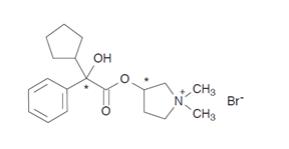
The Structural Formula Of Glycopyrrolate Contains Two Chiral Centers (denoted By * In Structure Above) And Is A Racemate Of A 1:1 Mixture Of The R,s And S,r Diastereomers. (Image 20)
Chemical structure of the active ingredient Glycopyrrolate from the BEVESPI AEROSPHERE aerosol, metered inhalation medication by AstraZeneca Pharmaceuticals LP.*
FDA Label Image

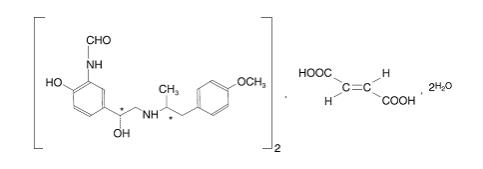
The Structural Formula Of Formoterol Fumarate Contains Two Chiral Centers (denoted By * In Structure Above), And Consists Of A Single Enantiomeric Pair (a Racemate Of R,r And S,s). (Image 21)

The Structural Formula Of Formoterol Fumarate Contains Two Chiral Centers (denoted By * In Structure Above), And Consists Of A Single Enantiomeric Pair (a Racemate Of R,r And S,s). (Image 21)
Chemical structure diagram showing components of the active ingredients in BEVESPI AEROSPHERE, including glycopyrrolate and formoterol fumarate represented with molecular formulas and structural elements.*
FDA Label Image

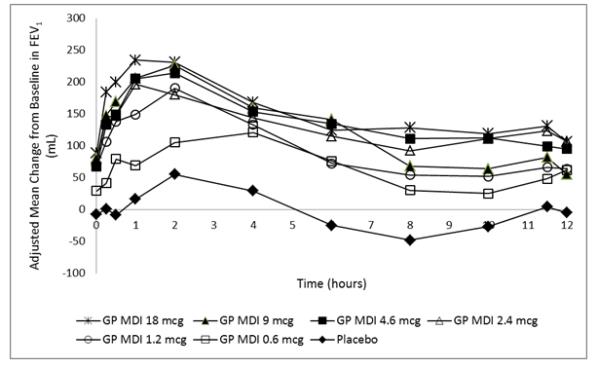
Figure 1 (Mean Change from Baseline in FEV1 over Time on Day 14 (MITT Population))

Figure 1 (Mean Change from Baseline in FEV1 over Time on Day 14 (MITT Population))
A line graph depicting the adjusted mean change from baseline in FEV1 (mL) over 12 hours for various doses of glycopyrrolate metered dose inhaler (GP MDI) compared to placebo. Multiple doses ranging from 0.6 mcg to 18 mcg are shown with distinct symbols, illustrating changes in lung function over time.*
FDA Label Image

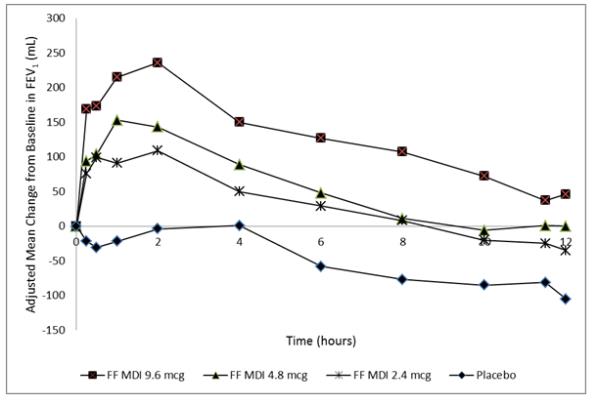
Figure 2 (Mean Change from Baseline in FEV1 over Time on Day 1)

Figure 2 (Mean Change from Baseline in FEV1 over Time on Day 1)
A line graph showing the adjusted mean change from baseline in FEV1 (mL) over time (hours) comparing four treatments: FF MDI 9.6 mcg, FF MDI 4.8 mcg, FF MDI 2.4 mcg, and Placebo. The graph illustrates the change in FEV1 at multiple time points up to 12 hours.*
FDA Label Image

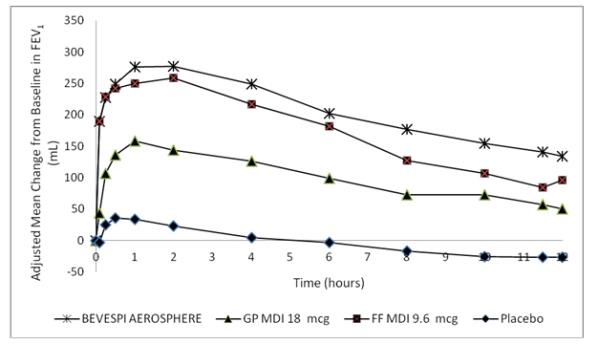
Figure 3 (Mean Change from Baseline in FEV1 over Time at Day 1 and Week 12 (Trial 1) Day 1)

Figure 3 (Mean Change from Baseline in FEV1 over Time at Day 1 and Week 12 (Trial 1) Day 1)
A line graph showing adjusted mean change from baseline in FEV1 (mL) over time (hours) for BEVESPI AEROSPHERE, GP MDI 18 mcg, FF MDI 9.6 mcg, and placebo. The graph compares lung function improvements over an 11-hour period after dosing for each treatment group.*
FDA Label Image

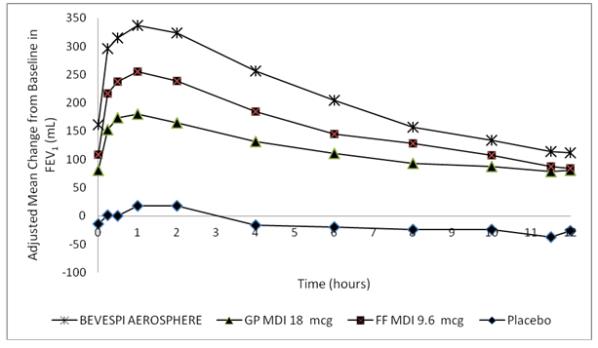
Week 12 (Bevespi Aerosphere 06)

Week 12 (Bevespi Aerosphere 06)
A line graph depicting adjusted mean change from baseline in FEV1 (mL) over time (hours) for BEVESPI AEROSPHERE, GP MDI 18 mcg, FF MDI 9.6 mcg, and placebo. The graph shows FEV1 changes on the y-axis and time in hours on the x-axis, comparing pulmonary function responses of different treatments.*
FDA Label Image

Figure 1 (Image 01)

Figure 1 (Image 01)
An instructional diagram of a Bevespi Aerosphere metered dose inhaler showing side and top views. The side view labels the canister, actuator, mouthpiece, cap, and dose indicator. The top view highlights the dose indicator display window, pointer, and press area for the inhaler.*
FDA Label Image

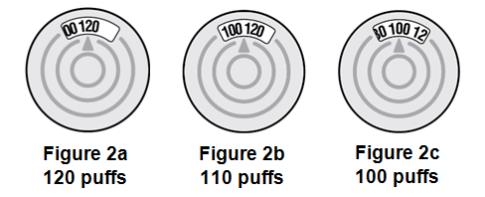
Figure 2a, 2b, And 2c (Image 02)

Figure 2a, 2b, And 2c (Image 02)
Illustration showing three dose counters indicating different puff levels: 120 puffs, 110 puffs, and 100 puffs. Each figure depicts a circular dose counter with numeric markings corresponding to the remaining puffs.*
FDA Label Image

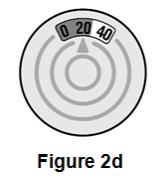
Figure 2d (Image 03)

Figure 2d (Image 03)
An illustration labeled Figure 2d, showing a circular dial with numeric markings at 0, 20, and 40. A small triangular pointer is positioned near the center pointing just above 20 on the scale. The dial includes concentric circles around the center.*
FDA Label Image

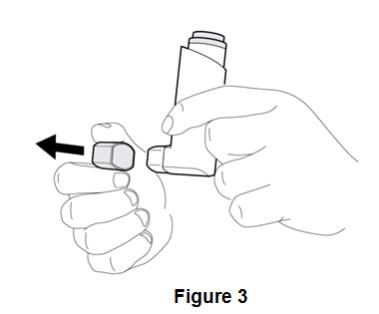
Figure 3 (Image 04)

Figure 3 (Image 04)
An instructional illustration showing how to remove the protective cap from a metered dose inhaler device by pulling it off with the thumb and forefinger. A hand is holding the inhaler while the other hand pulls the cap away, indicated by a left-pointing arrow beneath the cap.*
FDA Label Image

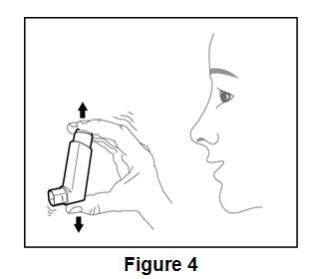
Figure 4 (Image 05)

Figure 4 (Image 05)
An instructional diagram showing a person holding a metered-dose inhaler in their hand, shaking it up and down before use. The figure demonstrates correct handling technique for the aerosol inhaler before administration.*
FDA Label Image

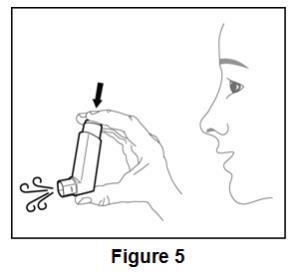
Figure 5 (Image 06)

Figure 5 (Image 06)
An instructional diagram showing a person holding a BEVESPI AEROSPHERE inhaler with one hand. The illustration indicates pressing down on the top of the inhaler with a finger to release aerosol medication, visualized by small clouds emerging from the mouthpiece, demonstrating how to use the metered-dose aerosol inhalation product.*
FDA Label Image

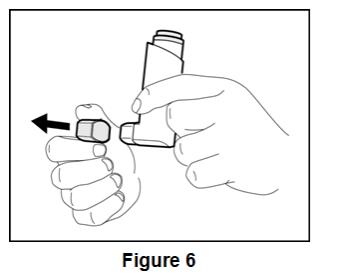
Figure 6 (Image 07)

Figure 6 (Image 07)
Instructional illustration showing the removal of the cap from a metered-dose inhaler device, used for respiratory inhalation drug delivery. The image depicts hands holding the inhaler and pulling the cap off, with an arrow indicating the direction to remove the cap.*
FDA Label Image

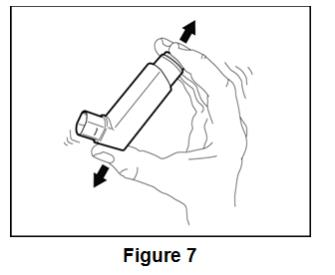
Figure 7 (Image 08)

Figure 7 (Image 08)
Illustration showing a hand holding a BEVESPI AEROSPHERE metered dose inhaler. The image demonstrates the action of shaking the inhaler by moving it up and down, indicated by arrows, as part of the preparation for use.*
FDA Label Image

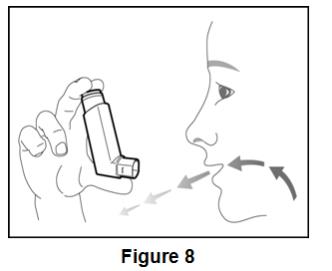
Figure 8 (Image 09)

Figure 8 (Image 09)
An instructional illustration showing a person holding a metered dose inhaler near the mouth. Arrows indicate the inhalation process, with the person exhaling away from and then inhaling toward the inhaler mouthpiece, demonstrating the correct use of a respiratory aerosol inhaler.*
FDA Label Image

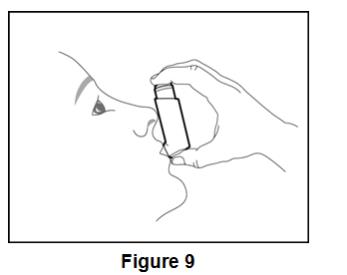
Figure 9 (Image 10)

Figure 9 (Image 10)
An instructional diagram showing a hand holding a Bevespi Aerosphere metered aerosol inhaler near a person's mouth, positioned for inhalation through respiratory inhalation.*
FDA Label Image

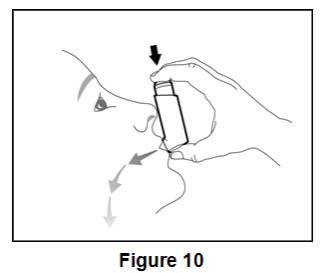
Figure 10 (Image 11)

Figure 10 (Image 11)
Instructional illustration showing a person using BEVESPI AEROSPHERE aerosol inhaler by holding it near the mouth and pressing down on the canister to release the medication into the respiratory airway during inhalation.*
FDA Label Image

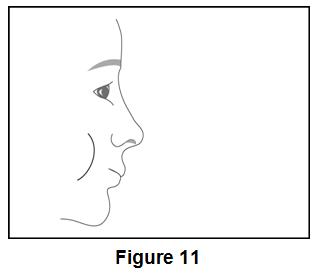
Figure 11 (Image 12)

Figure 11 (Image 12)
An instructional line drawing showing a side profile of a person's face, likely illustrating inhalation or respiratory technique relevant to the use of BEVESPI AEROSPHERE aerosol inhaler.*
FDA Label Image

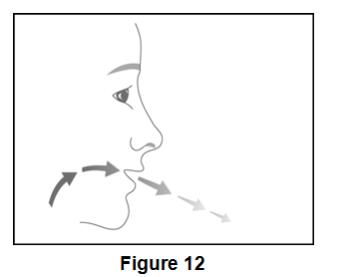
Figure 12 (Image 13)

Figure 12 (Image 13)
An illustration labeled Figure 12 showing a side profile of a human face exhaling or blowing air, represented by arrows moving out from the mouth.*
FDA Label Image

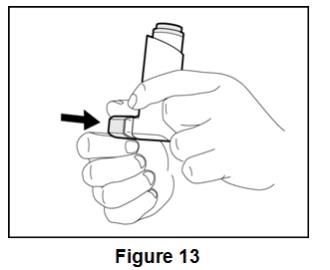
Figure 13 (Image 14)

Figure 13 (Image 14)
An instructional illustration showing a hand holding a metered-dose inhaler with the thumb pressing the base and the index finger positioned on the top, demonstrating how to actuate the inhaler. The image includes an arrow indicating the direction of pressing.*
FDA Label Image

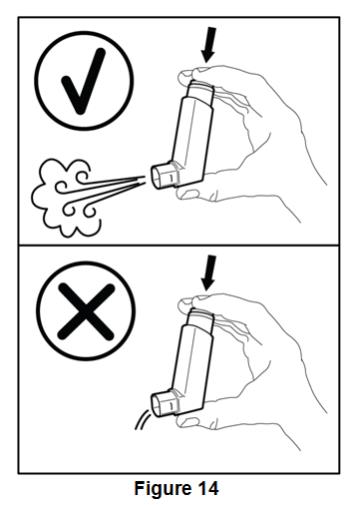
Figure 14 (Image 15)

Figure 14 (Image 15)
Illustration showing correct and incorrect ways to use a metered-dose inhaler. The upper image with a check mark depicts proper actuation, with aerosol sprayed outward while holding the inhaler upright. The lower image with an X mark shows incorrect use, with aerosol leaking downward from the inhaler mouthpiece.*
FDA Label Image

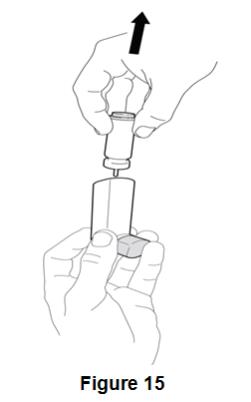
Figure 15 (Image 16)

Figure 15 (Image 16)
An instructional line drawing showing two hands assembling an inhalation device by inserting or removing the medication canister from the mouthpiece component, with an arrow indicating the direction of movement upward.*
FDA Label Image

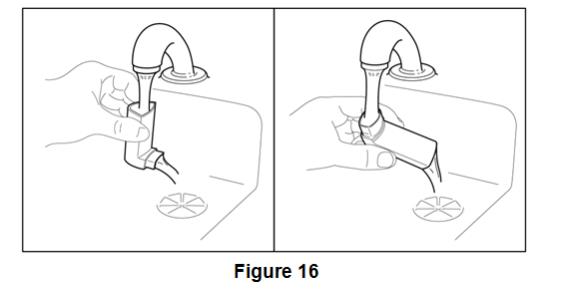
Figure 16 (Image 17)

Figure 16 (Image 17)
Illustration showing two diagrams of a hand positioning the mouthpiece of an inhaler under a faucet with running water. The images depict the process of rinsing or cleaning the mouthpiece of the metered dose inhaler.*
FDA Label Image

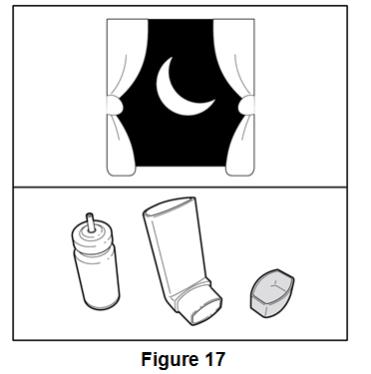
Figure 17 (Image 18)

Figure 17 (Image 18)
An instructional illustration showing nighttime use of BEVESPI AEROSPHERE metered aerosol inhaler. The image includes a window with a crescent moon visible, alongside three inhaler components: a metered dose inhaler canister with mouthpiece, a spacer or holding chamber, and a protective cap.*
FDA Label Image

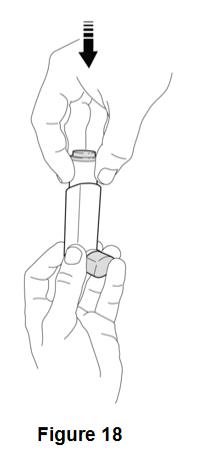
Figure 18 (Image 19)

Figure 18 (Image 19)
An instructional illustration showing how to hold and press the top of a metered-dose inhaler, likely related to the use of BEVESPI AEROSPHERE (glycopyrrolate and formoterol fumarate) aerosol inhaler. It depicts a hand pressing down on the canister while holding the inhaler body in the other hand, with a downward arrow indicating the direction of pressure.*
FDA Label Image

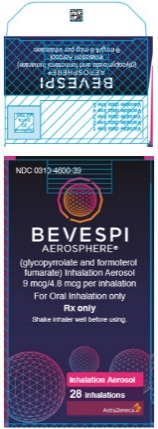
Bevespi 9 Mcg/4.8 Mcg Per Inhalation Carton (Bevespi Aerosphere 1a)

Bevespi 9 Mcg/4.8 Mcg Per Inhalation Carton (Bevespi Aerosphere 1a)
BEVESPI AEROSPHERE inhalation aerosol label shows the proprietary name and active ingredients glycopyrrolate and formoterol fumarate. The strength is labeled as 9 mcg and 4.8 mcg per inhalation. It is designated for oral inhalation only and is prescription use (Rx only). The label includes a 28 inhalation count and AstraZeneca Pharmaceuticals LP as the labeler. It advises shaking the inhaler well before use.*

* About these descriptions: Image descriptions on this page are generated by automated AI analysis of the product label images from the manufacturer's FDA label submission (SPL). They are provided for reference only and may contain errors or omissions. Always rely on the printed label itself and the official FDA labeling, and consult a pharmacist or healthcare professional with any questions about this product.