5.1 Malignant Hyperthermia
In susceptible individuals, potent inhalation anesthetic agents may trigger a skeletal muscle hypermetabolic state leading to high oxygen demand and the clinical syndrome known as malignant hyperthermia. In genetically susceptible pigs, desflurane induced malignant hyperthermia. The clinical syndrome is signaled by hypercapnia, and may include muscle rigidity, tachycardia, tachypnea, cyanosis, arrhythmias, and/or unstable blood pressure. Some of these nonspecific signs may also appear during light anesthesia: acute hypoxia, hypercapnia, and hypovolemia.
Treatment of malignant hyperthermia includes discontinuation of triggering agents, administration of intravenous dantrolene sodium, and application of supportive therapy. (Consult prescribing information for dantrolene sodium intravenous for additional information on patient management.) Renal failure may appear later, and urine flow should be monitored and sustained if possible.
Fatal outcome of malignant hyperthermia has been reported with desflurane.
5.2 Perioperative Hyperkalemia
Use of inhaled anesthetic agents has been associated with rare increases in serum potassium levels that have resulted in cardiac arrhythmias and death in pediatric patients during the postoperative period. Patients with latent as well as overt neuromuscular disease, particularly Duchenne muscular dystrophy, appear to be most vulnerable. Concomitant use of succinylcholine has been associated with most, but not all, of these cases. These patients also experienced significant elevations in serum creatinine kinase levels and, in some cases, changes in urine consistent with myoglobinuria. Despite the similarity in presentation to malignant hyperthermia, none of these patients exhibited signs or symptoms of muscle rigidity or hypermetabolic state. Early and aggressive intervention to treat the hyperkalemia and resistant arrhythmias is recommended, as is subsequent evaluation for latent neuromuscular disease.
5.3 Respiratory Adverse Reactions in Pediatric Patients
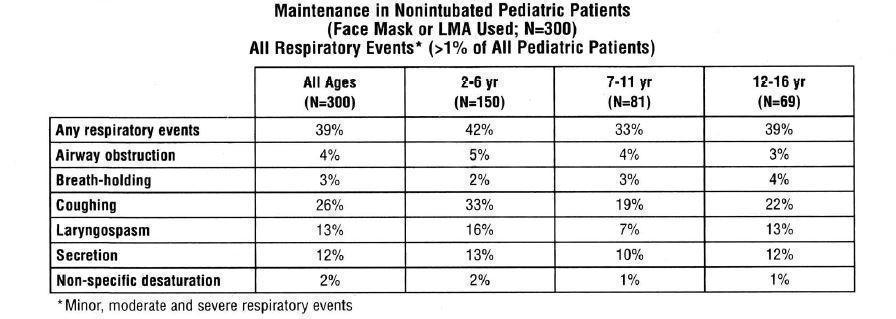
SUPRANE is not approved for maintenance of anesthesia in non-intubated children due to an increased incidence of respiratory adverse reactions, including coughing, laryngospasm and secretions [See CLINICAL STUDIES (14.5)].
Children, particularly if 6 years old or younger, who are under an anesthetic maintenance of SUPRANE delivered via laryngeal mask airway (LMA™ mask) are at increased risk for adverse respiratory reactions, e.g., coughing and laryngospasm, especially with removal of the laryngeal mask airway under deep anesthesia [See CLINICAL STUDIES (14.5)]. Therefore, closely monitor these patients for signs and symptoms associated with laryngospasm and treat accordingly.
When SUPRANE is used for maintenance of anesthesia in children with asthma or a history of recent upper airway infection, there is an increased risk for airway narrowing and increases in airway resistance. Therefore, closely monitor these patients for signs and symptoms associated with airway narrowing and treat accordingly.
5.4 QTc Prolongation
QTc prolongation, associated with torsade de pointes, has been reported [see Adverse Reactions (6.2)]. Carefully monitor cardiac rhythm when administering SUPRANE to susceptible patients (e.g., patients with congenital Long QT Syndrome or patients taking drugs that can prolong the QT interval).
5.5 Interactions with Desiccated Carbon Dioxide Absorbents
Desflurane like some other inhalation anesthetics, can react with desiccated carbon dioxide (CO2) absorbents to produce carbon monoxide that may result in elevated levels of carboxyhemoglobin in some patients. Case reports suggest that barium hydroxide lime and soda lime become desiccated when fresh gases are passed through the CO2 canister at high flow rates over many hours or days. When a clinician suspects that CO2 absorbent may be desiccated, it should be replaced before the administration of SUPRANE.
5.6 Hepatobiliary Disorders
With the use of halogenated anesthetics, disruption of hepatic function, icterus and fatal liver necrosis have been reported; such reactions appear to indicate hypersensitivity. As with other halogenated anesthetic agents, SUPRANE may cause sensitivity hepatitis in patients who have been sensitized by previous exposure to halogenated anesthetics [See CONTRAINDICATIONS (4)]. Cirrhosis, viral hepatitis or other pre-existing hepatic disease may be a reason to select an anesthetic other than a halogenated anesthetic. As with all halogenated anesthetics, repeated anesthesia within a short period of time should be approached with caution.
5.7 Pediatric Neurotoxicity
Published animal studies demonstrate that the administration of anesthetic and sedation drugs that block NMDA receptors and/or potentiate GABA activity increase neuronal apoptosis in the developing brain and result in long-term cognitive deficits when used for longer than 3 hours. The clinical significance of these findings is not clear. However, based on the available data, the window of vulnerability to these changes is believed to correlate with exposures in the third trimester of gestation through the first several months of life, but may extend out to approximately three years of age in humans. [see USE IN SPECIFIC POPULATIONS (8.1, 8.4), NONCLINICAL TOXICOLOGY (13.2)].
Some published studies in children suggest that similar deficits may occur after repeated or prolonged exposures to anesthetic agents early in life and may result in adverse cognitive or behavioral effects. These studies have substantial limitations, and it is not clear if the observed effects are due to the anesthetic/sedation drug administration or other factors such as the surgery or underlying illness.
Anesthetic and sedation drugs are a necessary part of the care of children needing surgery, other procedures, or tests that cannot be delayed, and no specific medications have been shown to be safer than any other. Decisions regarding the timing of any elective procedures requiring anesthesia should take into consideration the benefits of the procedure weighed against the potential risks.
5.8 Laboratory Findings
Transient elevations in glucose and white blood cell count may occur as with use of other anesthetic agents.
5.9 Postoperative Agitation in Children
Emergence from anesthesia in children may evoke a brief state of agitation that may hinder cooperation.