1 Indications And Usage
VONVENDI [von Willebrand factor (Recombinant)] is a recombinant von Willebrand factor indicated for on-demand treatment and control of bleeding episodes in adults (age 18 and older) diagnosed with von Willebrand disease.
The following Structured Product Label (SPL) was submitted to the FDA by Takeda Pharmaceuticals America, Inc. for the product Vonvendi (NDC 0944-7551). This document serves as the official prescribing information, containing essential scientific data and clinical materials required for healthcare providers and patients.
This specific version of the label includes detailed information regarding 1 indications and usage, 2 dosage and administration, 2.1 dose, other, 2.2 preparation and reconstitution, 2.3 administration, 3 dosage forms and strengths, 4 contraindications, and other regulatory disclosures. Use the navigation below to review specific sections of the FDA submission.
VONVENDI [von Willebrand factor (Recombinant)] is a recombinant von Willebrand factor indicated for on-demand treatment and control of bleeding episodes in adults (age 18 and older) diagnosed with von Willebrand disease.
For intravenous use after reconstitution only.
Physician supervision of the treatment regimen is required.
Administer initial dose of 40 to 80 international units per kg body weight. Dosing guidelines for treatment of minor and major hemorrhages are provided in Table 1. Administer VONVENDI within the designated ranges based on clinical judgment, taking into account severity, site of bleeding, and medical history of the patient. Adjust the dose based on the extent and location of the bleeding episode. Administer subsequent doses as long as clinically required. Monitor appropriate clinical and laboratory measures [see Warnings and Precautions (5.2, 5.3)].
| Hemorrhagic Event | Initial Dose If recombinant factor VIII is administered, see recombinant factor VIII package insert for reconstitution and administration instructions. | Subsequent Dose |
|---|---|---|
| Minor (e.g. readily managed epistaxis, oral bleeding, menorrhagia) | 40 to 50 IU/kg | 40 to 50 IU/kg every 8 to 24 hours (as clinically required) |
| Major A bleed could be considered major if red blood cell transfusion is either required or potentially indicated or if bleeding occurs in a critical anatomical site (e.g., intracranial or gastrointestinal hemorrhage). (e.g. severe or refractory epistaxis, menorrhagia, GI bleeding, CNS trauma, hemarthrosis, or traumatic hemorrhage) | 50 to 80 IU/kg | 40 to 60 IU/kg every 8 to 24 hours for approximately 2–3 days (as clinically required) |
The initial dose of VONVENDI should achieve greater than 60% of von Willebrand factor (VWF) levels (based on VWF:RCo greater than 0.6 IU/mL) and an infusion of recombinant factor VIII should achieve factor VIII levels greater than 40% (FVIII:C greater than 0.4 IU/mL). In major bleeding episodes, maintain trough levels of VWF:RCo greater than 50% for as long as deemed necessary.
Administer VONVENDI with recombinant factor VIII if required, to control bleeding. Dosing should be at a ratio of 1.3:1 (i.e., 30% more VONVENDI than recombinant factor VIII, based on the approximate mean recoveries to 1.5 and 2 IU/dL for VONVENDI and recombinant factor VIII, respectively). Administer the complete dose of VONVENDI followed by recombinant factor VIII within 10 minutes.
Calculating dose:
VONVENDI dose [IU] = dose in [IU/kg] × weight [kg]
Recombinant factor VIII dose [IU] = VONVENDI dose divided by 1.3
Example: a patient weighing 70 kg with a type 2 or 3 von Willebrand disease experiencing a major bleed and requiring 80 IU/kg of VONVENDI will be infused 5600 IU of VONVENDI and 4308 IU of recombinant factor VIII for the initial bleeding episode. If required, subsequent dose is 4200 IU of VONVENDI based on 60 IU/kg infused every 8 to 24 hours as per the dosing ranges in Table 1.
If expected VWF activity plasma levels are not attained, or if bleeding episode is not controlled with an appropriate dose, perform an assay that measures the presence of von Willebrand factor or factor VIII inhibitors. [see Warnings and Precautions (5.3)]
Reconstitution
Administration
Immunogenicity
The immunogenicity of VONVENDI was assessed in clinical trials by assessing the development of neutralizing antibodies against rVWF and rFVIII, as well as binding antibodies against rVWF, rFurin, Chinese hamster ovary (CHO) protein and mouse IgG. No treatment-related development of binding or neutralizing antibodies against VWF or of neutralizing antibodies against FVIII was observed. Moreover, binding antibodies against potential impurities such as rFurin, CHO-protein or mouse IgG did not develop after treatment with VONVENDI.
The detection of antibody formation is highly dependent on the sensitivity and specificity of the assay. Additionally, the observed incidence of antibody (including neutralizing antibody) positivity in an assay may be influenced by several factors including assay methodology, sample handling, timing of sample collection, concomitant medications, and underlying disease. For these reasons, it may be misleading to compare the incidence of antibodies to VONVENDI in the studies described above with the incidence of antibodies in other studies or to other products.
Risk Summary
There are no studies of VONVENDI use in pregnant women. The background risk of major birth defects and miscarriage in the indicated population is unknown; however, the background risk of major birth defects in the U.S. general population is 2-4% and of miscarriage is 15-20% of clinically recognized pregnancies. Animal reproduction studies have not been conducted with VONVENDI. It is not known whether VONVENDI can cause fetal harm when administered to a pregnant woman or whether it can affect reproduction capacity. VONVENDI should be given to a pregnant woman only if clearly needed.
Risk Summary
There is no information regarding the presence of VONVENDI in human milk, its effects on the breastfed infant, or its effects on milk production. The developmental and health benefits of breastfeeding should be considered along with the mother's clinical need for VONVENDI and any potential adverse effects on the breastfed infant from VONVENDI or from the underlying maternal condition.
BAXALTA® and VONVENDI® are trademarks of Baxalta Incorporated, a wholly-owned, indirect subsidiary of Shire plc.
Mix2Vial is a registered trademark of Medimop Medical Projects Ltd.
Patented: see www.shire.com/legal-notice/product-patents
Baxalta US Inc.
Lexington, MA 02421
U.S. License No. 2020
16J051-VON-US
For intravenous administration only.
VONVENDI is available as a non-pyrogenic lyophilized powder for reconstitution in single-use vials containing nominally 650 or 1300 international units VWF:RCo per vial.
Each VONVENDI vial is labeled with the number of units of VWF:RCo expressed in international units, which are based on the current World Health Organization (WHO) standard for von Willebrand factor concentrate.
VONVENDI is contraindicated in patients who have had life-threatening hypersensitivity reactions to VONVENDI or constituents of the product (tri-sodium citrate-dihydrate, glycine, mannitol, trehalose-dihydrate, polysorbate 80, and hamster or mouse proteins). [see Description (11)]
Thromboembolic reactions, including disseminated intravascular coagulation (DIC), venous thrombosis, pulmonary embolism, myocardial infarction, and stroke, can occur, particularly in patients with known risk factors for thrombosis. Monitor for early signs and symptoms of thrombosis such as pain, swelling, discoloration, dyspnea, cough, hemoptysis, and syncope.
In patients requiring frequent doses of VONVENDI with recombinant factor VIII, monitor plasma levels for FVIII:C activity because an excessive rise in factor VIII levels can increase the risk of thromboembolic complications.
Hypersensitivity reactions, including anaphylaxis, may occur. Symptoms can include anaphylactic shock, generalized urticaria, angioedema, chest tightness, hypotension, shock, lethargy, nausea, vomiting, paresthesia, pruritus, restlessness, wheezing and/or acute respiratory distress. If signs and symptoms of severe allergic reactions occur, immediately discontinue administration of VONVENDI and provide appropriate supportive care.
VONVENDI contains trace amounts of mouse immunoglobulin G (MuIgG) and hamster proteins less than or equal to 2 ng/IU VONVENDI. Patients treated with this product may develop hypersensitivity reactions to non-human mammalian proteins.
Neutralizing antibodies (inhibitors) to von Willebrand factor and/or factor VIII can occur. If the expected plasma levels of VWF activity (VWF:RCo) are not attained, perform an appropriate assay to determine if anti-VWF or anti-FVIII inhibitors are present. Consider other therapeutic options and direct the patient to a physician with experience in the care of either von Willebrand disease or hemophilia A.
In patients with high levels of inhibitors to VWF or factor VIII, VONVENDI therapy may not be effective and infusion of this protein may lead to severe hypersensitivity reactions. Since inhibitor antibodies can occur concomitantly with anaphylactic reactions, evaluate patients experiencing an anaphylactic reaction for the presence of inhibitors.
The most common adverse reaction observed in ≥2% of subjects in clinical trials (n=66) was generalized pruritus.
Because clinical trials are conducted under widely varying conditions, adverse reaction rates observed in the clinical trials of a drug cannot be directly compared to rates in clinical trials of another drug and may not reflect the rates observed in clinical practice.
The safety profile of VONVENDI was evaluated in three prospective, multicenter trials; two were conducted in subjects with von Willebrand disease (n=66) and one was conducted in subjects with hemophilia A (n=12). The adverse reactions reported in the two von Willebrand disease trials are listed in Table 2.
| System Organ Class (SOC) | Adverse Reaction | Number of Subjects (%) (n=66) | Number of Infusions (%) (n=355) |
|---|---|---|---|
| Cardiac Disorders | Tachycardia | 1 (1.52%) | 1 (0.28%) |
| Gastrointestinal Disorders | Nausea | 1 (1.52%) | 1 (0.28%) |
| General Disorders and Administration Site Conditions | Infusion site paresthesia | 1 (1.52%) | 1 (0.28%) |
| Chest discomfort | 1 (1.52%) | 1 (0.28%) | |
| Skin and Subcutaneous Tissues Disorders | Generalized pruritus | 2 (3.03%) | 2 (0.56%) |
| Vascular Disorder | Hot flush | 1 (1.52%) | 1 (0.28%) |
| Hypertension | 1 (1.52%) | 2 (0.56%) | |
| Nervous System Disorders | Dizziness | 1 (1.52%) | 1 (0.28%) |
| Dysgeusia | 1 (1.52%) | 1 (0.28%) | |
| Tremor | 1 (1.52%) | 1 (0.28%) | |
| Investigations | Heart rate increase | 1 (1.52%) | 1 (0.28%) |
| Electrocardiogram T wave inversions | 1 (1.52%) | 1 (0.28%) |
Safety and effectiveness in pediatric patients below the age of 18 years have not been established.
Clinical trials of VONVENDI did not include subjects aged 65 and over to determine whether they respond differently compared to younger subjects.
VONVENDI is a purified recombinant von Willebrand factor (rVWF) expressed in Chinese Hamster Ovary (CHO) cells. VONVENDI is produced and formulated without the addition of any exogenous raw materials of human or animal origin in the cell culture, purification, or formulation of the final product. The only proteins present in the final container product other than rVWF are trace quantities of mouse immunoglobulin (IgG, from the immunoaffinity purification), host cell (i.e., CHO) protein, rFurin (used to further process rVWF), and recombinant factor VIII (rFVIII).
Von Willebrand factor is a large multimeric glycoprotein that is normally found in plasma, and stored as ultra-large multimers in alpha-granules of platelets and intracellular organelles known as Weibel-Palade bodies, prior to secretion into the blood.1 Once the VWF is released to the blood stream and in contact with ADAMTS13 a (proteolytic enzyme in blood), it is cleaved to smaller sizes that can be detected with SDS agarose gels as multimer bands, representing the various species of VWF within the circulation. VONVENDI is rVWF that contains ultra-large multimers in addition to all of the multimers found in plasma as it is not exposed to proteolysis by ADAMTS13 during the manufacturing process.
VONVENDI is formulated as a sterile, non-pyrogenic, white to off-white powder for intravenous injection after reconstitution. VONVENDI in a single-use vial contains nominally 650 or 1300 International Units (IU) VWF Ristocetin Cofactor (VWF:RCo). The product contains the following stabilizers and excipients: tri-sodium citrate-dihydrate, glycine, mannitol, trehalose-dihydrate, and polysorbate 80.
The product contains no preservative. When reconstituted with the provided sterile water for injection the final solution contains the following stabilizers and excipients in targeted amounts:
| Stabilizer and Excipient | Targeted Concentration for nominal strengths (650, 1300 IU) |
|---|---|
| Tri-Sodium Citrate-dihydrate | 15 mM |
| Glycine | 15 mM |
| Mannitol | 20 g/L |
| Trehalose-dihydrate | 10 g/L |
| Polysorbate 80 | 0.1 g/L |
Each vial of VONVENDI is labeled with the specific number of units of VWF: RCo expressed in international units (IU), which are based on the current World Health Organization (WHO) standard for VWF concentrate. After reconstitution of the lyophilized powder and filtration/withdrawal into a syringe, all dosage strengths yield a clear, colorless solution free of particles.
In VWD patients, VONVENDI acts 1) to promote hemostasis by mediating platelet adhesion to damaged vascular sub-endothelial matrix (e.g. collagen) and platelet aggregation, and 2) as a carrier protein for factor VIII, protecting it from rapid proteolysis. The adhesive activity of VWF depends on the size of its multimers, with large multimers being the most effective in supporting interactions with collagen and platelet receptors.1 The binding capacity and affinity of VONVENDI to factor VIII in plasma is comparable to that of endogenous VWF, allowing for VONVENDI to reduce factor VIII clearance.2
The pharmacokinetic profile of VONVENDI was determined in two clinical trials by assessment of VWF:RCo, VWF:Ag, and VWF:CB. Subjects were evaluated in the non-bleeding state. Sustained increase of FVIII:C was observed by six hours after a single infusion of VONVENDI. Table 4 below summarizes the pharmacokinetics of VONVENDI after infusions of 50 IU/kg (PK50) or 80 IU/kg VWF:RCo (PK80) VONVENDI. The mean duration of infusion was 16.5 minutes (± 3.51 minutes) for 50 IU/kg (PK50) and 11.8 minutes (±2.86 minutes) for 80 IU/kg VWF:RCo (PK80).
| Parameter [unit] | Phase 1 PK50 VONVENDI with ADVATE This trial was done using ADVATE [Antihemophilic factor (Recombinant)], a recombinant factor VIII. | Phase 3 PK50 VONVENDI | Phase 3 PK80 VONVENDI |
|---|---|---|---|
| Mean (SD) Min;Max | Mean (SD) Min;Max | Mean (SD) Min;Max | |
| T1/2 [hours] | 19.3 (10.99) 10.8;51.2 | 22.6 (5.34) 17.0;37.2 | 19.1 (4.32) 11.8;28.0 |
| Cl [dL/kg/hour] | 0.04 (0.028) 0.01;0.16 | 0.02 (0.005) 0.02;0.04 | 0.03 (0.009) 0.02;0.05 |
| IR [(U/dL)/(U VWF:RCo/kg)] | 1.7 (0.62) 1.0;3.6 | 1.9 (0.41) 1.2;2.7 | 2.0 (0.39) 1.4;2.9 |
| AUC0-inf [(h*U/dL)] | 1541.4 (554.31) 173.8;2862.0 | 2105.4 (427.51) 1334.0;2813.3 | 2939.0 (732.72) 1507.8;4121.1 |
| AUC0-inf/Dose [(h*U/dL)/(U VWF:RCo/kg)] | 33.4 (13.87) 6.4;70.4 | 42.1 (8.31) 27.8;54.8 | 36.8 (8.97) 18.8;50.4 |
In vitro and in vivo genotoxicity studies indicated no mutagenic potential for VONVENDI. Long-term animal studies to assess the carcinogenic potential of VONVENDI have not been performed. Animal studies evaluating the reproductive and developmental toxicity of VONVENDI have not been conducted.
Hemostatic efficacy of VONVENDI was assessed in a multicenter, open label trial investigating different dosing strategies with and without recombinant factor VIII for on-demand treatment and control of bleeding episodes in adults (age 18 years and older) diagnosed with von Willebrand disease. In this trial, all subjects requiring recombinant factor VIII received ADVATE [Antihemophilic factor (Recombinant)].
Bleeding episodes were treated initially with an infusion of VONVENDI and ADVATE at a ratio of 1.3:1 respectively (i.e., 30% more VONVENDI than ADVATE), and subsequently with VONVENDI with or without ADVATE, based on FVIII:C levels. The aim of the initial dose of VONVENDI with ADVATE was to achieve target plasma levels of greater than 0.6 IU/mL (60%) VWF:RCo and greater than 0.4 IU/mL (40%) of FVIII:C.
A total of 193 bleeding episodes were reported in 22/37 subjects exposed to VONVENDI. Demographic and baseline characteristics are listed in Table 5.
| Parameter | Category | Exposed subjects n = 37 n (%) | Treated Subjects n = 22 n (%) |
|---|---|---|---|
| Gender | Male | 17 (45.9) | 10 (45.5) |
| Female | 20 (54.1) | 12 (54.5) | |
| Age | median (years) | 37.0 | 28.0 |
| Race | Caucasian | 32 (86.5) | 20 (90.9) |
| Asian | 5 (13.5) | 2 (9.1) | |
| Ethnicity | Hispanic or Latino | 2 (5.4) | 2 (9.1) |
| Not Hispanic or Latino | 35 (94.6) | 20 (90.9) | |
| VWD type | 1 | 2 (5.4) | 0 (0.0) |
| 2A | 5 (13.5) | 4 (18.2) | |
| 2B | 0 (0.0) | 0 (0.0) | |
| 2M | 0 (0.0) | 0 (0.0) | |
| 2N | 1 (2.7) | 1 (4.5) | |
| 3 | 29 (78.4) | 17 (77.3) |
The primary efficacy endpoint was the number of subjects with treatment success for control of bleeding episodes. Treatment success was defined as a mean efficacy rating score of less than 2.5 for all bleeding episodes in a subject treated with VONVENDI (with or without ADVATE) during the trial period. The efficacy rating was assessed using a pre-specified 4 point rating scale comparing the prospectively estimated number of infusions needed to treat the bleeding episodes as assessed by the investigator to the actual number of infusions administered. The definitions for each of the 4 point rating scales are provided in Table 6.
| Rating | Minor and Moderate Bleeding Events | Major Bleeding Events |
|---|---|---|
| Excellent (= 1) | Actual number of infusions ≤ estimated number of infusions required to treat that bleeding episode. No additional VWF coagulation factor containing product required. | Actual number of infusions ≤ estimated number of infusions required to treat that bleeding episode. No additional VWF coagulation factor containing product required. |
| Good (= 2) | 1-2 infusions greater than estimated required to control that bleeding episode. No additional VWF coagulation factor containing product required. | <1.5× infusions greater than estimated required to control that bleeding episode. No additional VWF coagulation factor containing product required. |
| Moderate (= 3) | 3 or more infusions greater than estimated used to control that bleeding event. No additional VWF coagulation factor containing product required. | ≥1.5× more infusions greater than estimated used to control that bleeding event. No additional VWF coagulation factor containing product required. |
| None (= 4) | Severe uncontrolled bleeding or intensity of bleeding not changed. Additional VWF coagulation factor containing product required. | Severe uncontrolled bleeding or intensity of bleeding not changed. Additional VWF coagulation factor containing product required. |
Secondary efficacy measures were the number of treated bleeding episodes with an efficacy rating of 'excellent' or 'good,' the number of infusions and number of units of VONVENDI, administered with or without ADVATE, per bleeding episode.
The primary efficacy assessment excluded subjects with GI bleeds (n=2), and subjects in whom the number of infusions to control a bleeding episode was estimated retrospectively (n=2). The rate of subjects (n=18) with treatment success was 100% (95% CI 81.5 to 100). Sensitivity analyses of treatment success for bleeding episodes including GI bleeds and those bleeding episodes for which the investigator had to make retrospective assessment of the number of infusions required (n=22: 17 with type 3 VWD, 4 with type 2A VWD and 1 with type 2N VWD) confirmed the primary analysis, with a 100% treatment success rate for each scenario.
All bleeding episodes treated with VONVENDI and ADVATE or VONVENDI alone were controlled with an efficacy rating of excellent (96.9%) or good (3.1%). Control of bleeding episodes was consistent across all degrees of severity.
For an overview of hemostatic efficacy by bleeding severity and number of infusions required to treat a bleeding episode refer to Table 7.
| Severity of Bleeding Episodes | |||||
|---|---|---|---|---|---|
| Number of Infusions per Bleed | Minor n (%) n=122 | Moderate n (%) n=61 | Major/Severe n (%) n=7 | Unknown n (%) n=2 | All n (%) n=192 |
| 1 | 113 (92.6%) | 41 (67.2%) | 1 (14.3%) | 2 (100%) | 157 (81.8%) |
| 2 | 8 (6.6%) | 13 (21.3%) | 4 (57.1%) | 0 (0.0) | 25 (13.0%) |
| 3 | 1 (0.8%) | 6 (9.8%) | 2 (28.6%) | 0 (0.0) | 9 (4.7%) |
| 4 | 0 (0.0) | 1 (1.6%) | 0 (0.0) | 0 (0.0) | 1 (0.5%) |
| Median | 1 | 1 | 2 | 1 | 1 |
| Range | 1-3 | 1-4 | 1-3 | 1-1 | 1-4 |
The median cumulative dose of VONVENDI administered per bleeding episode (with or without ADVATE) was 48.2 IU/kg (90% CI, 43.9 to 50.2 IU/kg). In relation to bleeding severity, the median cumulative dose to treat a bleeding episode was 43.3 (range, 25.2 to 158.2) IU/kg for minor bleeding episodes (n=122), 52.7 (range, 23.8 to 184.9) IU/kg for moderate bleeding episodes (n=61), 100 (range, 57.5 to 135) IU/kg for major bleeding episodes (n=7).
Table 8 summarizes data obtained for number of infusions and efficacy rating per bleeding episode by location.
| Bleeding Episodes by Location (n) | Median Number of Infusions (Range) | Rating (%) |
|---|---|---|
| Joint (n=59) | 1 (1 to 3) | Excellent (96.6%) |
| Good (3.4%) | ||
| GI (n=6 ) | 1 (1 to 2) | Excellent (83.3%) |
| Good (16.7%) | ||
| Mucosal: Genital Tract Female (n=32) | 1 (1 to 2) | Excellent (96.9%) |
| Good (3.1%) | ||
| Mucosal: Nasopharyngeal (n=42) | 1 (1 to 2) | Excellent (97.6%) |
| Good (2.4%) | ||
| Mucosal: Mouth and Oral Cavity (n=26) | 1 (1 to 4) | Excellent (100%) |
| Good (0%) |
How Supplied
VONVENDI is packaged with Sterile Water for Injection (sWFI), one Mix2Vial reconstitution device, one full prescribing physician insert, and one patient insert.
VONVENDI is available in single-use vials that contain the following product strengths:
| Color Code | VWF:RCo Potency Range | Carton NDC | sWFI fill size |
|---|---|---|---|
| Green | 450–850 IU per vial | 0944-7551-02 | 5 mL |
| Dark Red | 900–1700 IU per vial | 0944-7553-02 | 10 mL |
The actual von Willebrand factor activity in international units is printed on the label of each VONVENDI vial and carton.
Components are not made with natural rubber latex.
Storage and Handling
VONVENDI
[von Willebrand factor (Recombinant)]
This leaflet summarizes important information about VONVENDI. Please read it carefully before using this medicine. This information does not take the place of talking with your healthcare provider, and it does not include all of the important information about VONVENDI. If you have any questions after reading this, ask your healthcare provider.
Do not attempt to do an infusion to yourself unless you have been taught how by your healthcare provider or hemophilia center.
You must carefully follow your healthcare provider's instructions regarding the dose and schedule for infusing VONVENDI so that your treatment will work best for you.
What is VONVENDI?
VONVENDI is a medicine used to replace von Willebrand factor that is missing in people with von Willebrand disease. Von Willebrand disease is an inherited bleeding disorder in which blood does not clot normally.
VONVENDI is used to treat and control bleeding episodes in adults (age 18 years and older) diagnosed with von Willebrand disease.
Who should not use VONVENDI?
You should not use VONVENDI if you:
Tell your healthcare provider if you are pregnant or breastfeeding because VONVENDI may not be right for you.
How should I use VONVENDI?
VONVENDI is given directly into the bloodstream. Your first dose of VONVENDI for each bleeding episode may be administered with a recombinant factor VIII (factor VIII not produced from plasma) as instructed by your healthcare provider.
Your healthcare provider will instruct you whether additional doses of recombinant factor VIII are needed.
You may infuse VONVENDI at a hemophilia treatment center, at your healthcare provider's office or in your home. You should be trained on how to do infusions by your healthcare provider or hemophilia treatment center. Many people with von Willebrand disease learn to infuse VONVENDI by themselves or with the help of a family member.
Your healthcare provider will tell you how much VONVENDI to use based on your weight, the severity of your von Willebrand disease, and where you are bleeding.
Call your healthcare provider right away if your bleeding does not stop after taking VONVENDI.
Use the reconstituted product (after mixing dry product with the supplied sterile water) immediately. If not, store at room temperature not to exceed 25°C (77°F) for up to three hours. Discard after three hours.
What should I tell my healthcare provider before I use VONVENDI?
You should tell your healthcare provider if you:
What are the possible side effects of VONVENDI?
You can have an allergic reaction to VONVENDI.
Call your healthcare provider right away and stop treatment if you get a rash or hives, itching, tightness of the throat, chest pain or tightness, difficulty breathing, lightheadedness, dizziness, nausea or fainting.
Side effects that have been reported with VONVENDI include: nausea, tingling or burning at infusion site, chest discomfort, dizziness, hot flashes, itching, nausea, high blood pressure, muscle twitching, unusual taste, and increased heart rate.
These are not all the possible side effects with VONVENDI. You can ask your healthcare provider for information that is written for healthcare professionals.
Tell your healthcare provider about any side effects that bother you or do not go away.
What are the VONVENDI dosage strengths?
VONVENDI with Sterile Water for Injection and Mix2Vial reconstitution device comes in two different dosage strengths.
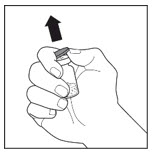 Image (Vonvendi 01) | Dosage strength of approximately 650 International Units (450–850 IU) ( reconstituted with 5 mL of sterile water) |
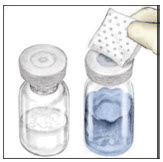 Image (Vonvendi 02) | Dosage strength of approximately 1300 International Units (900–1700 IU) ( reconstituted with 10 mL of sterile water) |
How do I store VONVENDI?
What else should I know about VONVENDI and von Willebrand Disease?
Your body can form inhibitors to von Willebrand factor or factor VIII. An inhibitor is part of the body's normal defense system. If you form inhibitors, it may stop VONVENDI or FVIII from working properly. Consult with your healthcare provider to make sure you are carefully monitored with blood tests for the development of inhibitors to von Willebrand factor or factor VIII.
Medicines are sometimes prescribed for purposes other than those listed here. Do not use VONVENDI for a condition for which it is not prescribed. Do not share VONVENDI with other people, even if they have the same symptoms that you have.
Resources at Baxalta available to the patients:
For more product information on VONVENDI, please visit www.VONVENDI.com or call 1-888-423-8283.
For information on additional Baxalta patient resources, please visit www.VONVENDI.com.
Baxalta US Inc.
Lexington, MA 02421
U.S. License No. 2020
Printed in USA
Issued: 02/2018
INSTRUCTIONS FOR USE
VONVENDI
[von Willebrand factor (Recombinant)]
(For intravenous use only)
For first dose for each bleeding episode, use with recombinant factor VIII as instructed by your physician.
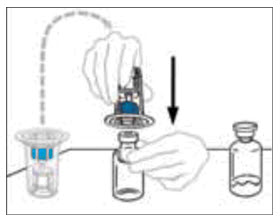
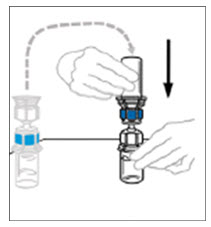
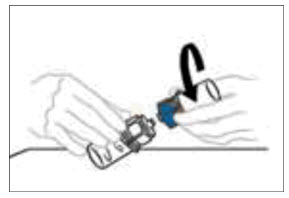
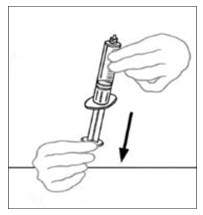
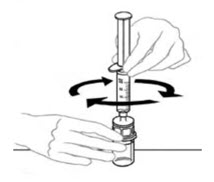
See below for step-by-step instructions for reconstituting and administrating VONVENDI:
Reconstitution:
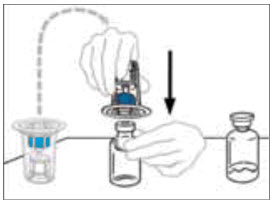
Figure (Vonvendi 03)
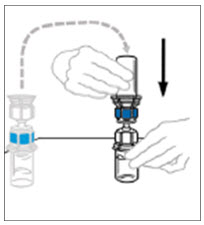
Figure (Vonvendi 04)
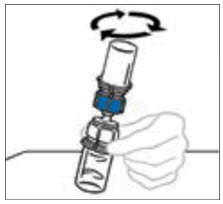
Figure (Vonvendi 05)

Figure (Vonvendi 06)

Figure (Vonvendi 07)
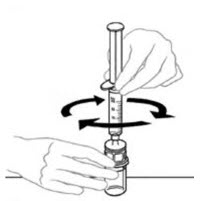
Figure (Vonvendi 08)
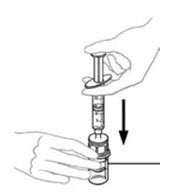
Figure (Vonvendi 09)
| Figure A | Figure B |
|---|---|
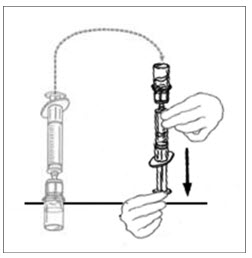 Figure (Vonvendi 10) | 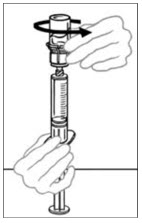 Figure (Vonvendi 11) |
| Figure C | Figure D |
|---|---|
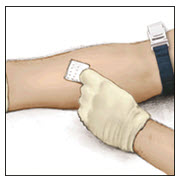 Figure (Vonvendi 12) |  Figure (Vonvendi 13) |
Administration:
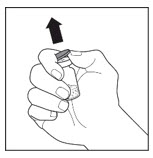
Figure (Vonvendi 14)
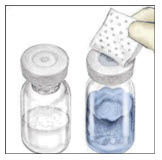
Figure (Vonvendi 15)
Important: Contact your healthcare provider or local hemophilia treatment center if you experience any problems.
BAXALTA® and VONVENDI® are trademarks of Baxalta Incorporated, a wholly-owned, indirect subsidiary of Shire plc.
Mix2Vial is a registered trademark of Medimop Medical Projects Ltd.
Patented: see www.shire.com/legal-notice/product-patents
Baxalta US Inc.
Lexington, MA 02421
U.S. License No. 2020
Printed in USA
Issued 02/2018
NDC 0944-7551-02
VONVENDI
von Willebrand factor
(Recombinant)
NO COAT
ACTUAL POTENCY
Single-use vials, lyophilized powder for solution
For Intravenous Administration After Reconstitution Only.
Rx Only
Shire
Principal Display Panel (Kit Carton)
NDC 0944-7550-01
VONVENDI
von Willebrand factor
(Recombinant)
Single-use vial, lyophilized powder, sterile
Rx Only
For Intravenous Administration After
Reconstitution Only.
Baxalta US Inc.
Lexington, MA 02421 USA
U.S. License No. 2020
Principal Display Panel (650 IU Vial Label)
5 mL
NDC 52919-003-08
Shire
Sterile Water for Injection, USP
for reconstitution of accompanying product
Do not use unless clear. No antimicrobial agent or other substance
has been added. Do not use for intravascular injection without making
approximately isotonic by additon of suitable solute.
Rx Only
0740379
Single dose container
Nonpyrogenic

Principal Display Panel (5 mL Vial Label)
NDC 0944-7553-02
VONVENDI
von Willebrand factor
(Recombinant)
NO COAT
ACTUAL POTENCY
Single-use vials, lyophilized powder for solution
For Intravenous Administration After Reconstitution Only.
Rx Only
Shire
Principal Display Panel (Kit Carton)
NDC 0944-7552-01
VONVENDI
von Willebrand factor
(Recombinant)
Single-use vial, lyophilized powder, sterile
Rx Only
For Intravenous Administration After
Reconstitution Only.
Baxalta US Inc.
Lexington, MA 02421 USA
U.S. License No. 2020
Principal Display Panel (1300 IU Vial Label)
10 mL NDC 52919-005-05
Shire
Sterile Water for Injection, USP
for reconstitution of accompanying product
Do not use unless clear. No antimicrobial agent or other substance
has been added. Do not use for intravascular injection without making
approximately isotonic by addition of suitable solute.
Discard unused portion. Rx Only
0740384
Single dose container
Nonpyrogenic
Principal Display Panel (10 mL Vial Label)
* Please review the disclaimer below.
