Omcazio Capsule
Product Images NDC 17201-011

16 FDA label images from Handa Pharma · Packaging, Regulatory Labels, and Product Appearance

Product Visual Gallery

This gallery contains 16 technical images submitted to the FDA as part of the official labeling for Omcazio (NDC 17201-011). Unlike standard consumer photos, these assets often include clinical data figures, molecular chemical structures, and official manufacturer packaging layouts.

As provided by Handa Pharma, these visuals offer a comprehensive scientific overview of the product's physical and chemical identity, aiding pharmacists and researchers in product verification and study.

FDA Label Image

Chemical Structure (Cabozantinib 01)
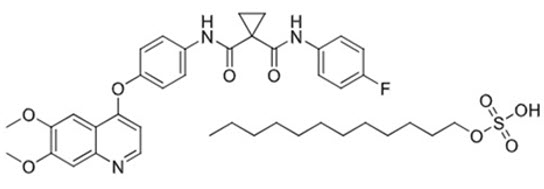
Chemical Structure (Cabozantinib 01)
Chemical structure of Cabozantinib Laurylsulfate, the active ingredient in Omcazio capsules.*
FDA Label Image

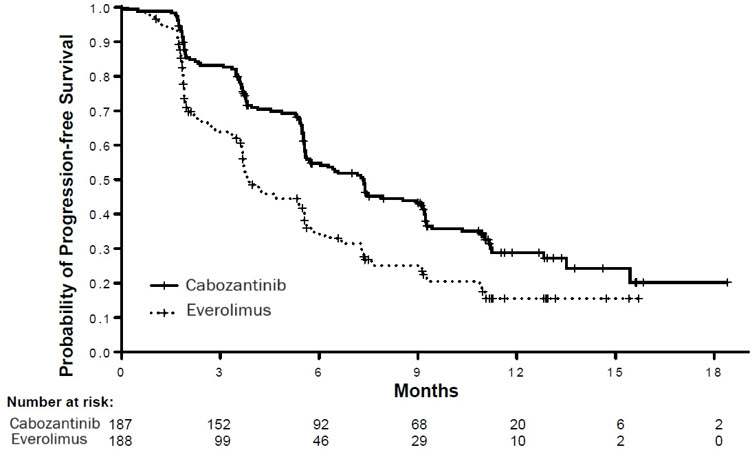
Figure 1 (Cabozantinib 02)

Figure 1 (Cabozantinib 02)
A Kaplan-Meier curve showing the probability of progression-free survival over months, comparing Cabozantinib versus Everolimus. The graph includes risk numbers for both treatments at various time points up to 18 months, with Cabozantinib demonstrating higher survival probabilities throughout the study period.*
FDA Label Image

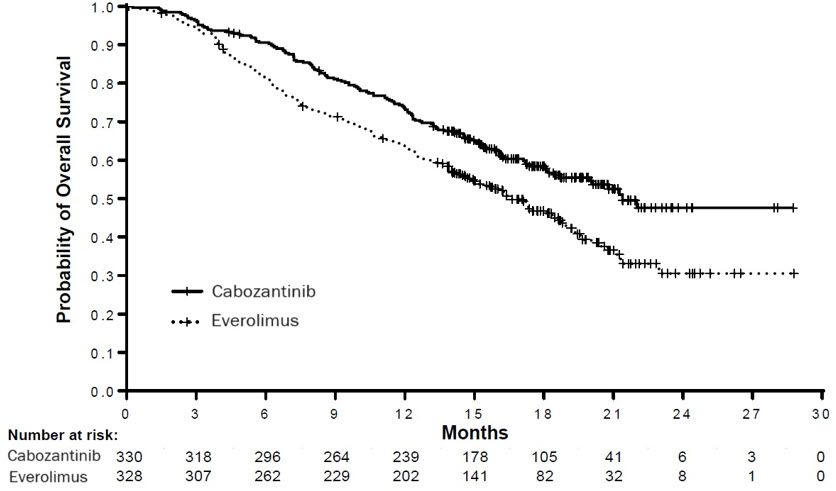
Figure 2 (Cabozantinib 03)

Figure 2 (Cabozantinib 03)
A Kaplan-Meier survival curve comparing the probability of overall survival for patients treated with Cabozantinib versus Everolimus over 30 months. The graph shows a higher survival probability trend for Cabozantinib. The x-axis represents time in months, and the y-axis shows the probability of overall survival. A table below the graph lists the number of patients at risk at different time points for both treatments.*
FDA Label Image

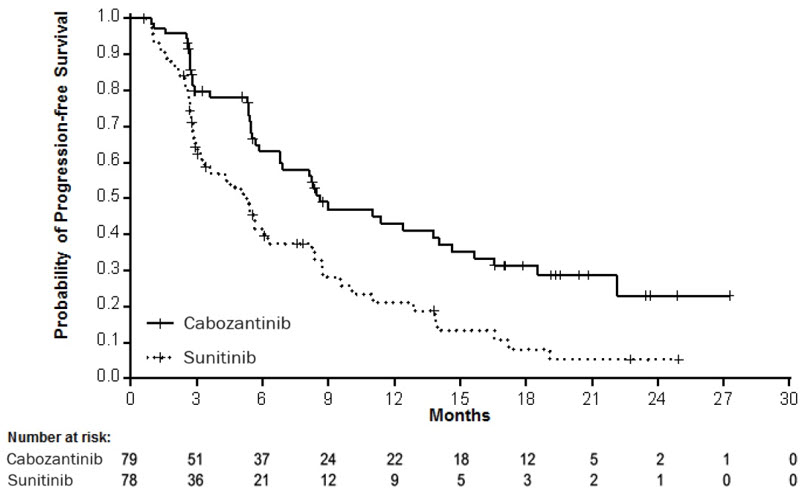
Figure 3 (Cabozantinib 04)

Figure 3 (Cabozantinib 04)
A Kaplan-Meier survival curve graph depicting the probability of progression-free survival over time in months for two drugs, Cabozantinib and Sunitinib. The y-axis represents the probability of progression-free survival from 0 to 1.0, while the x-axis shows time in months up to 30. The graph compares higher survival probability with Cabozantinib to lower with Sunitinib. The number of patients at risk at various time points is provided below the graph for both drugs.*
FDA Label Image

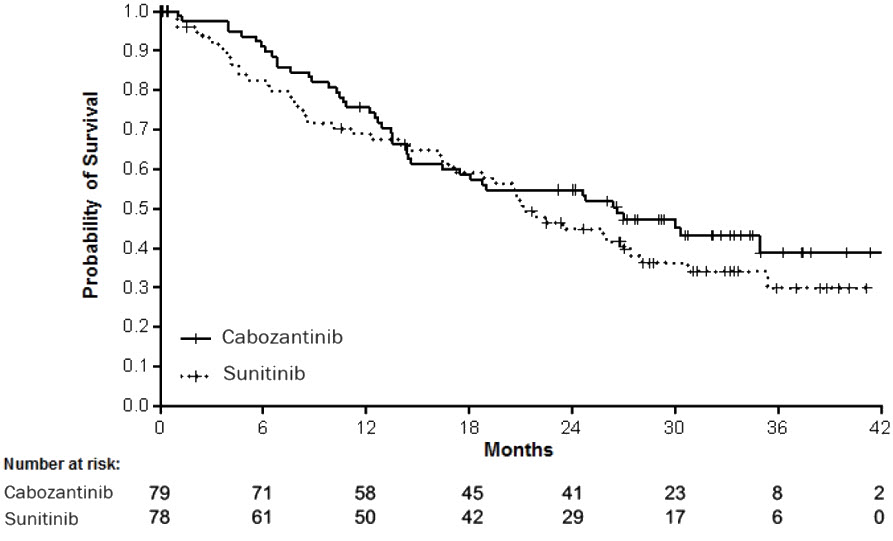
Figure 4 (Cabozantinib 05)

Figure 4 (Cabozantinib 05)
A Kaplan-Meier survival curve graph comparing the probability of survival over time in months between Cabozantinib and Sunitinib treatment groups. The y-axis represents the probability of survival from 0.0 to 1.0, and the x-axis shows time from 0 to 42 months. Two lines depict survival for Cabozantinib (solid line) and Sunitinib (dotted line), with data points indicating censored observations. A table below the graph lists the number of patients at risk at various time points for each treatment.*
FDA Label Image

Figure 5 (Cabozantinib 06)

Figure 5 (Cabozantinib 06)
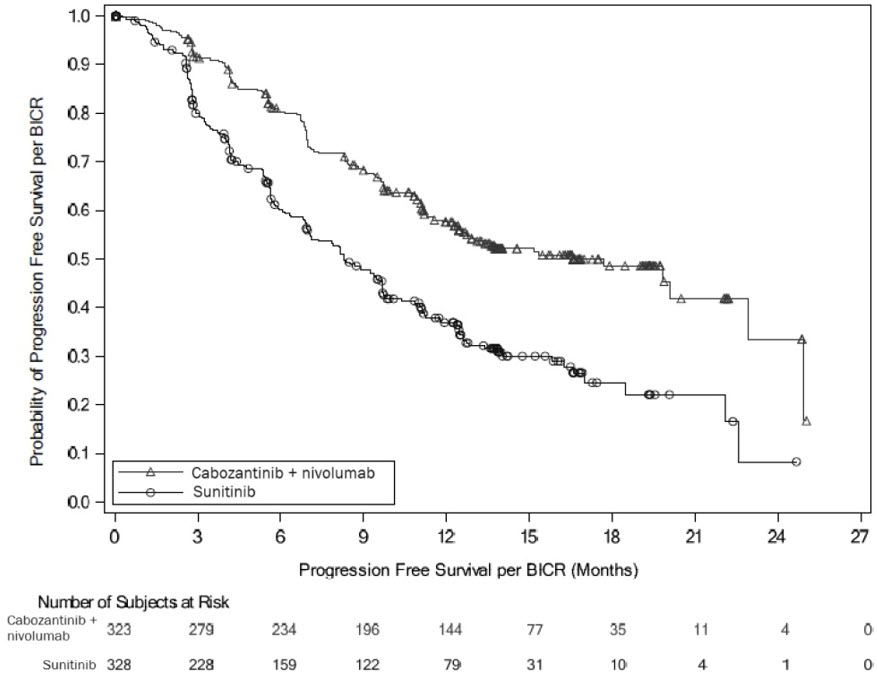
A Kaplan-Meier survival curve graph showing the probability of progression-free survival per BICR (Blinded Independent Central Review) over time in months. The graph compares two treatment groups: Cabozantinib plus nivolumab and Sunitinib. The vertical axis represents the probability of progression-free survival, ranging from 0 to 1, while the horizontal axis shows progression-free survival duration from 0 to 27 months. A table below the graph displays the number of subjects at risk at various time points for each treatment group.*
FDA Label Image

Figure 6 (Cabozantinib 07)

Figure 6 (Cabozantinib 07)
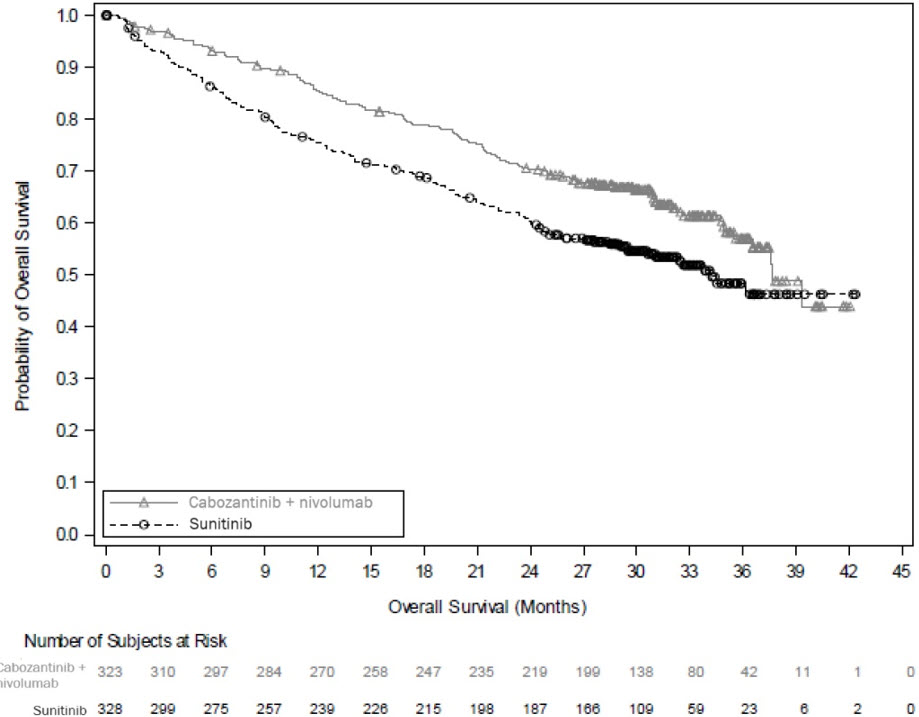
A Kaplan-Meier survival curve chart showing the probability of overall survival over time in months. The chart compares two treatment groups: Cabozantinib plus nivolumab and Sunitinib. The probability of overall survival is plotted on the vertical axis, and overall survival in months is on the horizontal axis. The chart includes a legend and a table displaying the number of subjects at risk at various time points for each group.*
FDA Label Image

Figure 7 (Cabozantinib 08)

Figure 7 (Cabozantinib 08)
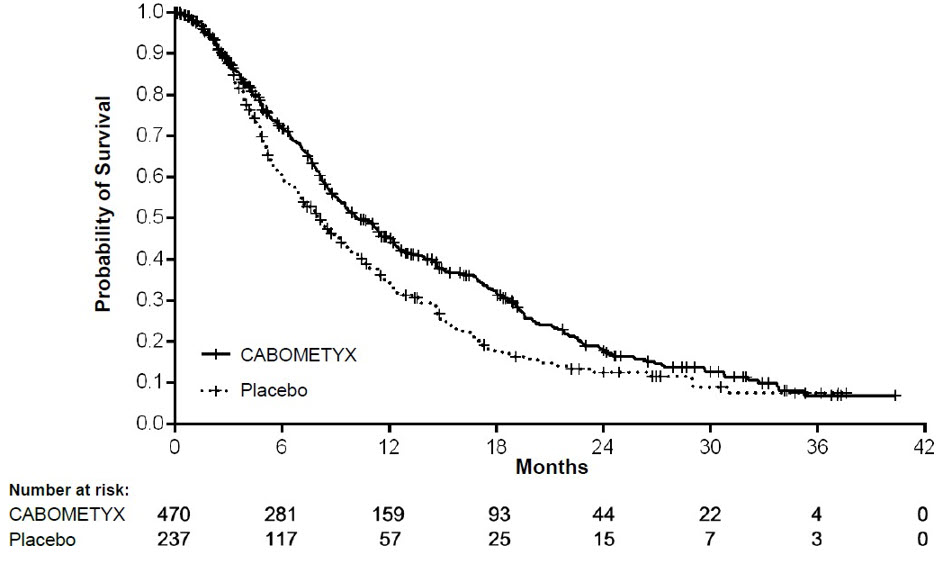
A survival probability Kaplan-Meier curve comparing CABOMETYX and placebo over 42 months. The y-axis shows probability of survival from 0 to 1, and the x-axis shows time in months. The chart includes a risk table showing the number of subjects at risk for both groups at various time points.*
FDA Label Image

Figure 8 (Cabozantinib 09)

Figure 8 (Cabozantinib 09)
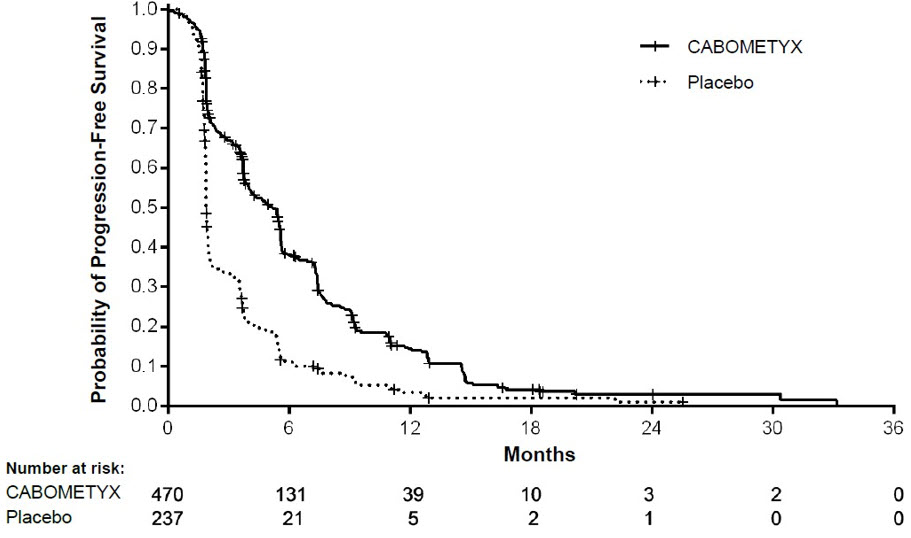
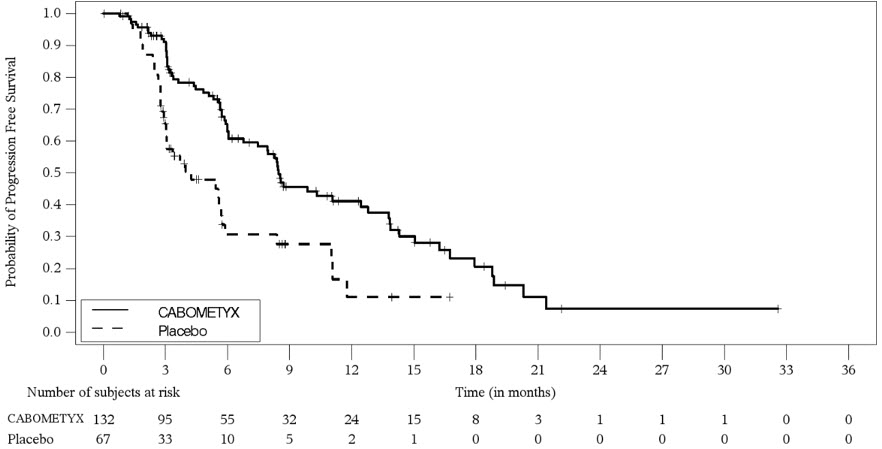
A Kaplan-Meier survival curve chart displaying the probability of progression-free survival over a 36-month period. The chart compares CABOMETYX (Cabozantinib Laurylsulfate) with placebo, showing higher survival probabilities for CABOMETYX. The x-axis represents months, and the y-axis represents survival probability. A numbers-at-risk table is included below, showing decreasing patient counts over time for both groups.*
FDA Label Image

Figure 9 (Cabozantinib 10)

Figure 9 (Cabozantinib 10)
A Kaplan-Meier survival curve chart showing the probability of progression-free survival over time (in months) comparing CABOMETYX and placebo groups. The chart includes a table below indicating the number of subjects at risk over various time points for both groups.*
FDA Label Image

Principal Display Panel (11.5 mg Bottle Label)

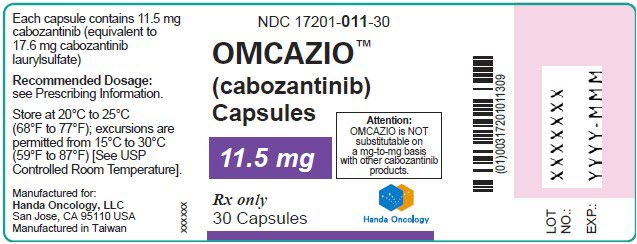
Principal Display Panel (11.5 mg Bottle Label)
Omcazio 11.5 mg capsules packaging label showing cabozantinib as the active ingredient in oral capsule form by Handa Pharma. The label includes dosage information, storage instructions between 20°C to 25°C, and indicates 30 capsules per container. It notes this product is Rx only and not substitutable with other cabozantinib products on a mg-to-mg basis. Manufactured for Handa Oncology, LLC in San Jose, California, produced in Taiwan.*
FDA Label Image

Principal Display Panel (11.5 mg Bottle Carton)

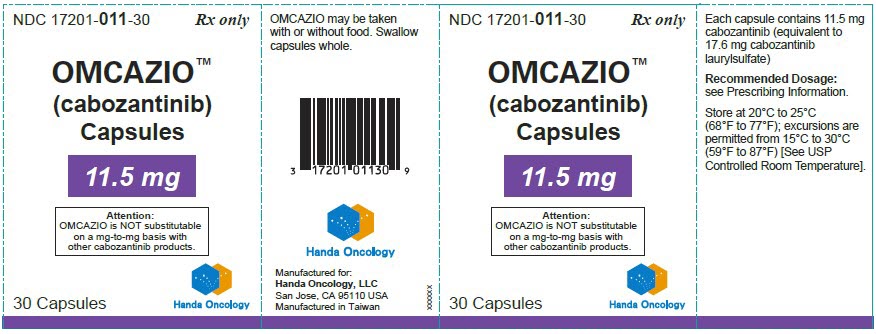
Principal Display Panel (11.5 mg Bottle Carton)
Omcazio 11.5 mg capsules packaging label featuring cabozantinib as the active ingredient. The label shows 30 capsules per container, with storage instructions and dosage recommendations. It is manufactured by Handa Oncology for Handa Pharma, with a barcode and an attention notice about non-substitutability with other cabozantinib products.*
FDA Label Image

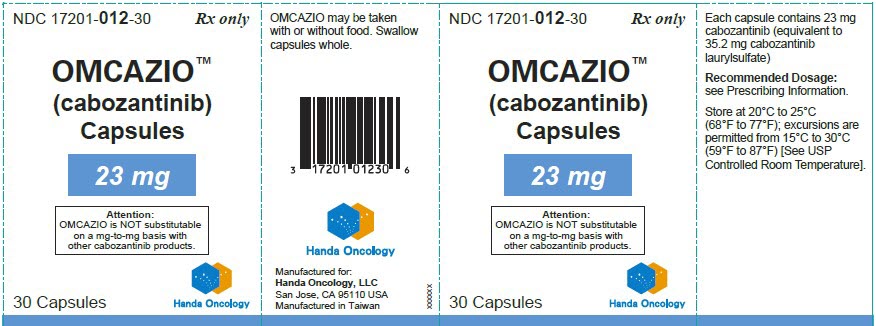
Principal Display Panel (23 mg Bottle Label)

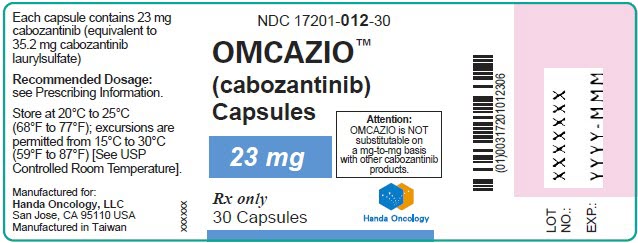
Principal Display Panel (23 mg Bottle Label)
Omcazio 23 mg capsules packaging label showing the brand name Omcazio with generic name cabozantinib. The label states each capsule contains 23 mg cabozantinib (equivalent to 35.2 mg cabozantinib laurylsulfate). The package contains 30 capsules. Manufacturer is Handa Oncology, LLC. Storage instructions and a warning that Omcazio is not substitutable on a mg-to-mg basis with other cabozantinib products are included.*
FDA Label Image

Principal Display Panel (23 mg Bottle Carton)

Principal Display Panel (23 mg Bottle Carton)
Omcazio 23 mg capsules packaging label showing the product name and strength, generic name cabozantinib, and a count of 30 capsules. The label includes storage instructions, a barcode, and states the product is manufactured for Handa Oncology, San Jose, CA and made in Taiwan. It also notes Omcazio is not substitutable on a mg-to-mg basis with other cabozantinib products.*
FDA Label Image

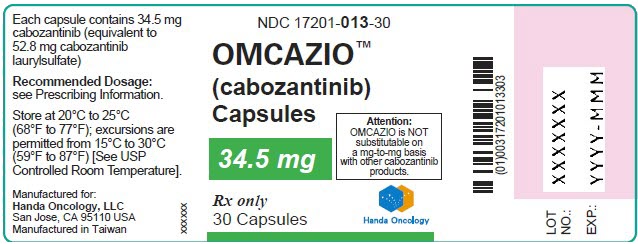
Principal Display Panel (34.5 mg Bottle Label)

Principal Display Panel (34.5 mg Bottle Label)
Omcazio 34.5 mg capsules packaging label showing the product name, generic name cabozantinib, and dosage strength 34.5 mg. The label includes storage instructions, manufacturer information (Handa Oncology, LLC), prescription status (Rx only), and package quantity of 30 capsules. Also present are the NDC number 17201-013-30 and a barcode.*
FDA Label Image

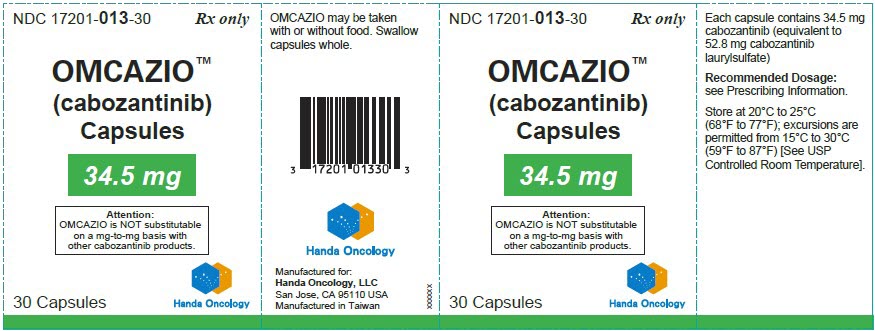
Principal Display Panel (34.5 mg Bottle Carton)

Principal Display Panel (34.5 mg Bottle Carton)
Omcazio 34.5 mg capsules containing cabozantinib laurylsulfate, oral prescription drug by Handa Pharma. The label states 30 capsules per package and includes dosage and storage information. It emphasizes that Omcazio is not substitutable on a mg-to-mg basis with other cabozantinib products, with branding by Handa Oncology.*

* About these descriptions: Image descriptions on this page are generated by automated AI analysis of the product label images from the manufacturer's FDA label submission (SPL). They are provided for reference only and may contain errors or omissions. Always rely on the printed label itself and the official FDA labeling, and consult a pharmacist or healthcare professional with any questions about this product.