Because clinical trials are conducted under widely varying conditions, adverse reaction rates observed in the clinical trials of a drug cannot be directly compared to rates in the clinical trials of another drug and may not reflect the rates observed in practice.
The safety of OMCAZIO (cabozantinib) capsules has been established from adequate and well-controlled studies of CABOMETYX
®(cabozantinib) tablets, which has different recommended dosages than OMCAZIO.
The data described in the WARNINGS AND PRECAUTIONS section and below reflect the adverse reactions of CABOMETYX
®(cabozantinib) tablets in these adequate and well-controlled studies. These data reflect exposure to CABOMETYX
®(cabozantinib) tablets as a single agent at 60 mg orally once daily until disease progression or unacceptable toxicity in 409 patients with renal cell carcinoma (RCC) enrolled in a randomized, active-controlled trial (CABOSUN, METEOR), 467 patients with hepatocellular carcinoma (HCC) enrolled in a randomized, placebo- controlled trial (CELESTIAL), 132 patients with extra-pancreatic neuroendocrine tumors (epNET) enrolled in a randomized, placebo-controlled trial (CABINET), and at 40 mg CABOMETYX
®(cabozantinib) tablets in combination with nivolumab 240 mg/m
2every 2 weeks, in 320 patients with RCC enrolled in a randomized, active-controlled trial (CHECKMATE-9ER).
Renal Cell Carcinoma
METEOR
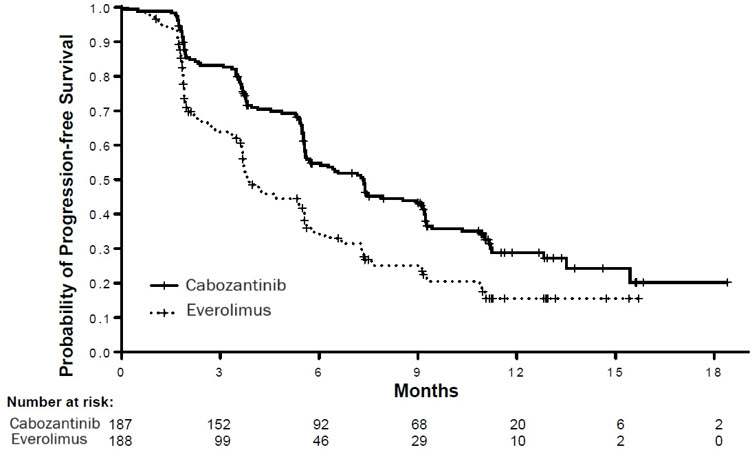
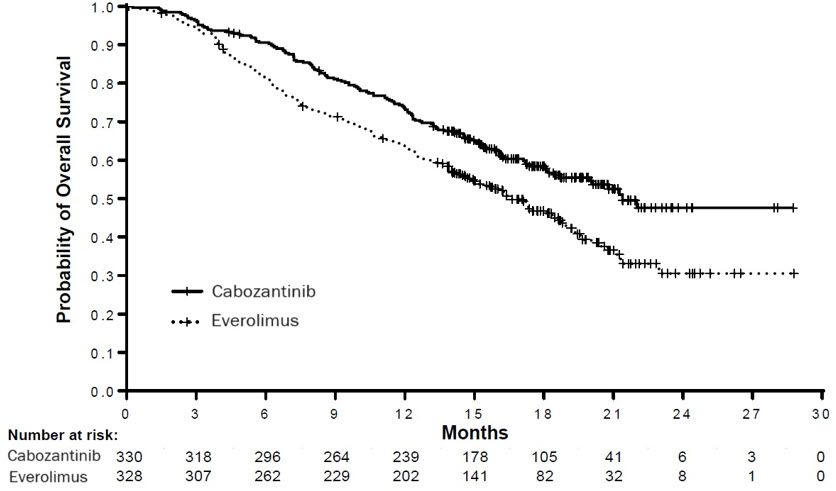
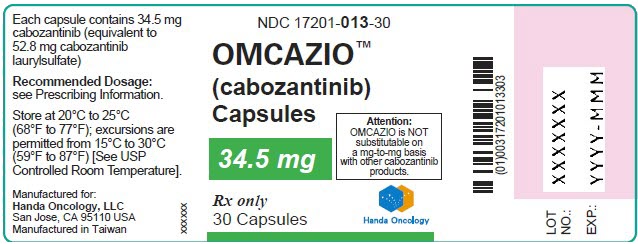
The safety of cabozantinib was evaluated in METEOR, a randomized, open-label trial in which 331 patients with advanced renal cell carcinoma received cabozantinib tablets 60 mg once daily (equivalent to OMCAZIO 34.5 mg) and 322 patients received everolimus 10 mg once daily until disease progression or unacceptable toxicity. Patients on both arms who had disease progression could continue treatment at the discretion of the investigator
[see
Clinical Studies (14.1)]
. The median duration of treatment was 7.6 months (range 0.3 – 20.5) for patients receiving cabozantinib and 4.4 months (range 0.21 – 18.9) for patients receiving everolimus.
Adverse reactions which occurred in ≥25% of cabozantinib-treated patients, in order of decreasing frequency, were: diarrhea, fatigue, nausea, decreased appetite, palmar-plantar erythrodysesthesia (PPE), hypertension, vomiting, weight decreased, and constipation. Grade 3-4 adverse reactions and laboratory abnormalities which occurred in ≥5% of patients were hypertension, diarrhea, fatigue, PPE, hyponatremia, hypophosphatemia, hypomagnesemia, lymphopenia, anemia, hypokalemia, and increased GGT.
The dose was reduced in 60% of patients receiving cabozantinib and in 24% of patients receiving everolimus. Twenty percent (20%) of patients received cabozantinib tablets 20 mg once daily (equivalent to OMCAZIO 11.5 mg) as their lowest dose. The most frequent adverse reactions leading to dose reduction in patients treated with cabozantinib were: diarrhea, PPE, fatigue, and hypertension. Adverse reactions leading to dose interruption occurred in 70% patients receiving cabozantinib and in 59% patients receiving everolimus. Adverse reactions led to study treatment discontinuation in 10% of patients receiving cabozantinib and in 10% of patients receiving everolimus. The most frequent adverse reactions leading to permanent discontinuation in patients treated with cabozantinib were decreased appetite (2%) and fatigue (1%).
Table 8. Adverse Reactions Occurring in ≥10% Patients Who Received Cabozantinib in METEOR| Adverse Reaction | Cabozantinib
(n=331)
One subject randomized to everolimus received cabozantinib. | Everolimus
(n=322)
|
|---|
| All Grades
National Cancer Institute (NCI) Common Terminology Criteria for Adverse Events (CTCAE) Version 4.0 | Grade 3-4 | All Grades
| Grade 3-4 |
|---|
| Percentage (%) of Patients |
|---|
| Gastrointestinal |
| Diarrhea | 74 | 11 | 28 | 2 |
| Nausea | 50 | 4 | 28 | <1 |
| Vomiting | 32 | 2 | 14 | <1 |
| Stomatitis | 22 | 2 | 24 | 2 |
| Constipation | 25 | <1 | 19 | <1 |
| Abdominal pain
Includes the following terms: abdominal pain, abdominal pain upper, and abdominal pain lower | 23 | 4 | 13 | 2 |
| Dyspepsia | 12 | <1 | 5 | 0 |
| General |
| Fatigue | 56 | 9 | 47 | 7 |
| Mucosal inflammation | 19 | <1 | 23 | 3 |
| Asthenia | 19 | 4 | 16 | 2 |
| Metabolism and Nutrition |
| Decreased appetite | 46 | 3 | 34 | <1 |
| Skin and Subcutaneous Tissue |
| Palmar-plantar erythrodysesthesia | 42 | 8 | 6 | <1 |
| Rash
Includes the following terms: rash, rash erythematous, rash follicular, rash macular, rash papular, rash pustular, rash vesicular, genital rash, intermittent leg rash, rash on scrotum and penis, rash maculo-papular, rash pruritic, contact dermatitis, dermatitis acneiform | 23 | <1 | 43 | <1 |
| Dry skin | 11 | 0 | 10 | 0 |
| Vascular |
| Hypertension
Includes the following terms: hypertension, blood pressure increased, hypertensive crisis, blood pressure fluctuation | 39 | 16 | 8 | 3 |
| Investigations |
| Weight decreased | 31 | 2 | 12 | 0 |
| Nervous System |
| Dysgeusia | 24 | 0 | 9 | 0 |
| Headache | 11 | <1 | 12 | <1 |
| Dizziness | 11 | 0 | 7 | 0 |
| Endocrine |
| Hypothyroidism | 21 | 0 | <1 | <1 |
| Respiratory, Thoracic, and Mediastinal |
| Dysphonia | 20 | <1 | 4 | 0 |
| Dyspnea | 19 | 3 | 29 | 4 |
| Cough | 18 | <1 | 33 | <1 |
| Blood and Lymphatic |
| Anemia | 17 | 5 | 38 | 16 |
| Musculoskeletal and Connective Tissue |
| Pain in extremity | 14 | 1 | 8 | <1 |
| Muscle spasms | 13 | 0 | 5 | 0 |
| Arthralgia | 11 | <1 | 14 | 1 |
| Renal and Urinary |
| Proteinuria | 12 | 2 | 9 | <1 |
Other clinically relevant adverse reactions (all grades) that were reported in <10% of patients treated with cabozantinib included: wound complications (2%), cardiac failure (<1%), convulsion (<1%), pancreatitis (<1%), osteonecrosis of the jaw (<1%), and hepatitis cholestatic (<1%).
Table 9. Laboratory Abnormalities Occurring in ≥25% Patients Who Received Cabozantinib in METEOR| Laboratory Abnormality | Cabozantinib
(n=331)
| Everolimus
(n=322)
|
|---|
| All Grades | Grade 3-4 | All Grades | Grade 3-4 |
|---|
| Percentage (%) of Patients |
|---|
| ALP, alkaline phosphatase; ALT, alanine aminotransferase; AST, aspartate aminotransferase; GGT, gamma glutamyl transferase. |
| NCI CTCAE, Version 4.0 |
| Chemistry |
| Increased AST | 74 | 3 | 40 | <1 |
| Increased ALT | 68 | 3 | 32 | <1 |
| Increased creatinine | 58 | <1 | 71 | 0 |
| Increased triglycerides | 53 | 4 | 73 | 13 |
| Hypophosphatemia | 48 | 8 | 36 | 5 |
| Hyperglycemia | 37 | 2 | 59 | 8 |
| Hypoalbuminemia | 36 | 2 | 28 | <1 |
| Increased ALP | 35 | 2 | 29 | 1 |
| Hypomagnesemia | 31 | 7 | 4 | <1 |
| Hyponatremia | 30 | 8 | 26 | 6 |
| Increased GGT | 27 | 5 | 43 | 9 |
| Hematology |
| Leukopenia | 35 | <1 | 31 | <1 |
| Neutropenia | 31 | 2 | 17 | <1 |
| Anemia
Based on laboratory abnormalities | 31 | 4 | 71 | 17 |
| Lymphopenia | 25 | 7 | 39 | 12 |
| Thrombocytopenia | 25 | <1 | 27 | <1 |
CABOSUN
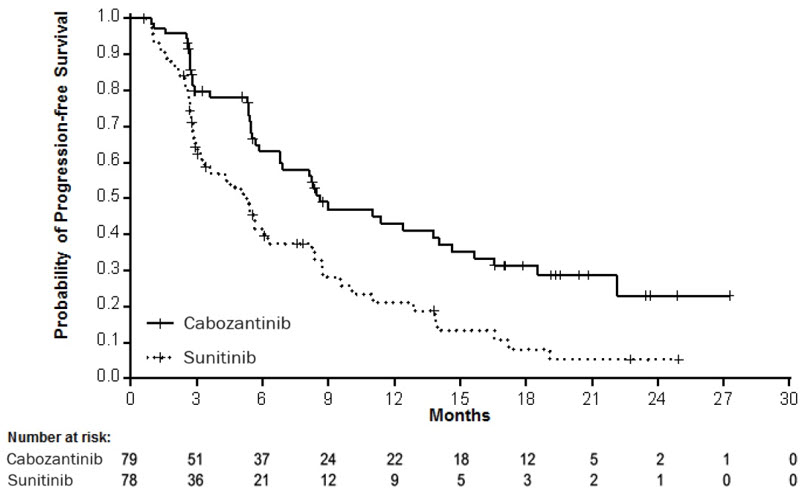
The safety of cabozantinib was evaluated in CABOSUN, a randomized, open-label trial in patients with advanced renal cell carcinoma, in which 78 patients received cabozantinib tablets 60 mg once daily (equivalent to OMCAZIO 34.5 mg) and 72 patients received sunitinib 50 mg once daily (4 weeks on treatment followed by 2 weeks off), until disease progression or unacceptable toxicity
[see
Clinical Studies (14.1)]
. The median duration of treatment was 6.5 months (range 0.2 – 28.7) for patients receiving cabozantinib and 3.1 months (range 0.2 – 25.5) for patients receiving sunitinib.
Within 30 days of treatment, there were 4 deaths in patients treated with cabozantinib and 6 deaths in patients treated with sunitinib. Of the 4 patients treated with cabozantinib, 2 patients died due to gastrointestinal perforation, 1 patient had acute renal failure, and 1 patient died due to clinical deterioration. All Grade 3-4 adverse reactions were collected in the entire safety population. The most frequent Grade 3-4 adverse reactions (≥5%) in patients treated with cabozantinib were hypertension, diarrhea, hyponatremia, hypophosphatemia, PPE, fatigue, increased ALT, decreased appetite, stomatitis, pain, hypotension, and syncope.
The median average daily dose was 50.3 mg for cabozantinib and 44.7 mg for sunitinib (excluding scheduled sunitinib non-dosing days). The dose was reduced in 46% of patients receiving cabozantinib and in 35% of patients receiving sunitinib. The dose was held in 73% of patients receiving cabozantinib and in 71% of patients receiving sunitinib. Based on patient disposition, 21% of patients receiving cabozantinib and 22% of patients receiving sunitinib discontinued due to an adverse reaction.
Table 10. Grade 3-4 Adverse Reactions Occurring in ≥1% Patients Who Received Cabozantinib in CABOSUN| Adverse Reaction | Cabozantinib
(n = 78)
| Sunitinib
(n = 72)
|
|---|
| Grade 3-4
NCI CTCAE Version 4.0 | Grade 3-4
|
|---|
| Percentage (%) of Patients |
|---|
| ALT, alanine aminotransferase; AST, aspartate aminotransferase |
| Patients with any Grade 3-4 Adverse Reaction | 68 | 65 |
| | | |
| Gastrointestinal |
| Diarrhea | 10 | 11 |
| Stomatitis | 5 | 6 |
| Nausea | 3 | 4 |
| Vomiting | 1 | 3 |
| Constipation | 1 | 0 |
| General |
| Fatigue | 6 | 17 |
| Pain | 5 | 0 |
| Metabolism and Nutrition |
| Hyponatremia
Laboratory abnormalities are reported as adverse reactions and not based on shifts in laboratory values | 9 | 8 |
| Hypophosphatemia
| 9 | 7 |
| Decreased appetite | 5 | 1 |
| Dehydration | 4 | 1 |
| Hypocalcemia
| 3 | 0 |
| Hypomagnesemia
| 3 | 0 |
| Hyperkalemia
| 1 | 3 |
| Skin and Subcutaneous Tissue |
| Palmar-plantar erythrodysesthesia | 8 | 4 |
| Skin ulcer | 3 | 0 |
| Vascular |
| Hypertension
Includes the following term: hypertension | 28 | 21 |
| Hypotension | 5 | 1 |
| Angiopathy | 1 | 1 |
| Investigations |
| Increased ALT
| 5 | 0 |
| Weight decreased | 4 | 0 |
| Increased AST
| 3 | 3 |
| Increased blood creatinine
| 3 | 3 |
| Lymphopenia
| 1 | 6 |
| Thrombocytopenia
| 1 | 11 |
| Nervous System |
| Syncope | 5 | 0 |
| Respiratory, Thoracic, and Mediastinal |
| Dyspnea | 1 | 6 |
| Dysphonia | 1 | 0 |
| Blood and Lymphatic |
| Anemia | 1 | 3 |
| Psychiatric |
| Depression | 4 | 0 |
| Confusional state | 1 | 1 |
| Infections |
| Lung infection | 4 | 0 |
| Musculoskeletal and Connective Tissue |
| Back pain | 4 | 0 |
| Bone pain | 3 | 1 |
| Pain in extremity | 3 | 0 |
| Arthralgia | 1 | 0 |
| Renal and Urinary |
| Renal failure acute | 4 | 1 |
| Proteinuria | 3 | 1 |
CHECKMATE-9ER
The safety of cabozantinib with nivolumab was evaluated in CHECKMATE-9ER, a randomized, open-label study in patients with previously untreated advanced RCC
[see
Clinical Studies (14.1)]
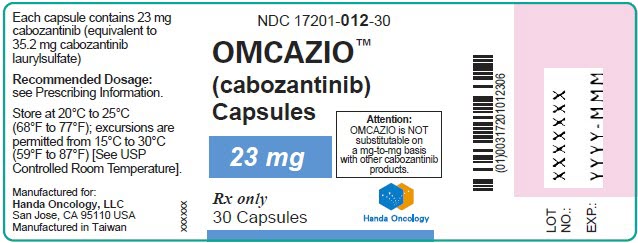
. Patients received cabozantinib tablets 40 mg orally once daily (equivalent to OMCAZIO 23 mg) with nivolumab 240 mg over 30 minutes every 2 weeks (n=320) or sunitinib 50 mg daily, administered orally for 4 weeks on treatment followed by 2 weeks off (n=320)
[see
Clinical Studies (14.1)]
.
Cabozantinib tablets could be interrupted or reduced to 20 mg daily or 20 mg every other day (equivalent to OMCAZIO 11.5 mg). The median duration of treatment was 14 months (range: 0.2 to 27 months) in cabozantinib and nivolumab-treated patients. In this trial, 82% of patients in the cabozantinib and nivolumab arm were exposed to treatment for >6 months and 60% of patients were exposed to treatment for >1 year.
Serious adverse reactions occurred in 48% of patients receiving cabozantinib and nivolumab. The most frequent (≥2%) serious adverse reactions were diarrhea, pneumonia, pneumonitis, pulmonary embolism, urinary tract infection, and hyponatremia. Fatal intestinal perforations occurred in 3 (0.9%) patients.
Adverse reactions leading to discontinuation of either cabozantinib or nivolumab occurred in 20% of patients: 8% cabozantinib only, 7% nivolumab only, and 6% both drugs due to the same adverse reaction at the same time. Adverse reactions leading to dose interruption or reduction of either cabozantinib or nivolumab occurred in 83% of patients: 46% cabozantinib only, 3% nivolumab only, and 21% both drugs due to the same adverse reaction at the same time, and 6% both drugs sequentially.
The most common adverse reactions reported in ≥20% of patients treated with cabozantinib and nivolumab were diarrhea, fatigue, hepatotoxicity, PPE, stomatitis, rash, hypertension, hypothyroidism, musculoskeletal pain, decreased appetite, nausea, dysgeusia, abdominal pain, cough, and upper respiratory tract infection.
Table 11. Adverse Reactions in >15% of Patients Receiving Cabozantinib and Nivolumab - CHECKMATE-9ER| Adverse Reaction | Cabozantinib and Nivolumab
(n=320)
| Sunitinib
(n=320)
|
|---|
| Grades 1-4 | Grades 3-4 | Grades 1-4 | Grades 3-4 |
|---|
| Percentage (%) of Patients |
|---|
| Toxicity was graded per NCI CTCAE v4. |
| Gastrointestinal |
| Diarrhea | 64 | 7 | 47 | 4.4 |
| Nausea | 27 | 0.6 | 31 | 0.3 |
| Abdominal pain
Includes abdominal discomfort, abdominal pain lower, abdominal pain upper. | 22 | 1.9 | 15 | 0.3 |
| Vomiting | 17 | 1.9 | 21 | 0.3 |
| Dyspepsia
Includes gastroesophageal reflux disease. | 15 | 0 | 22 | 0.3 |
| General |
| Fatigue
Includes asthenia. | 51 | 8 | 50 | 8 |
| Hepatobiliary |
| Hepatotoxicity
Includes hepatotoxicity, ALT increased, AST increased, blood alkaline phosphatase increased, gamma-glutamyl transferase increased, autoimmune hepatitis, blood bilirubin increased, drug induced liver injury, hepatic enzyme increased, hepatitis, hyperbilirubinemia, liver function test increased, liver function test abnormal, transaminases increased, hepatic failure. | 44 | 11 | 26 | 5 |
| Skin and Subcutaneous Tissue |
| Palmar-plantar erythrodysesthesia | 40 | 8 | 41 | 8 |
| Stomatitis
Includes mucosal inflammation, aphthous ulcer, mouth ulceration. | 37 | 3.4 | 46 | 4.4 |
| Rash
Includes dermatitis, dermatitis acneiform, dermatitis bullous, exfoliative rash, rash erythematous, rash follicular, rash macular, rash maculo-papular, rash papular, rash pruritic. | 36 | 3.1 | 14 | 0 |
| Pruritus | 19 | 0.3 | 4.4 | 0 |
| Vascular |
| Hypertension
Includes blood pressure increased, blood pressure systolic increased. | 36 | 13 | 39 | 14 |
| Endocrine |
| Hypothyroidism
Includes primary hypothyroidism. | 34 | 0.3 | 30 | 0.3 |
| Musculoskeletal and Connective Tissue |
| Musculoskeletal pain
Includes back pain, bone pain, musculoskeletal chest pain, musculoskeletal discomfort, myalgia, neck pain, pain in extremity, spinal pain. | 33 | 3.8 | 29 | 3.1 |
| Arthralgia | 18 | 0.3 | 9 | 0.3 |
| Metabolism and Nutrition |
| Decreased appetite | 28 | 1.9 | 20 | 1.3 |
| Nervous System Disorders |
| Dysgeusia | 24 | 0 | 22 | 0 |
| Headache | 16 | 0 | 12 | 0.6 |
| Respiratory, Thoracic and Mediastinal |
| Cough
Includes productive cough. | 20 | 0.3 | 17 | 0 |
| Dysphonia | 17 | 0.3 | 3.4 | 0 |
| Infections and Infestations |
| Upper respiratory tract infection
Includes nasopharyngitis, pharyngitis, rhinitis. | 20 | 0.3 | 8 | 0.3 |
Table 12. Laboratory Values Worsening from Baseline
Each test incidence is based on the number of patients who had both baseline and at least one on-study laboratory measurement available: cabozantinib and nivolumab group (range: 170 to 317 patients) and sunitinib group (range: 173 to 311 patients).
Occurring in >20% of Patients Receiving Cabozantinib and Nivolumab - CHECKMATE-9ER
| Laboratory Abnormality | Cabozantinib and Nivolumab | Sunitinib |
|---|
| Grades 1-4 | Grades 3-4 | Grades 1-4 | Grades 3-4 |
|---|
| Percentage (%) of Patients |
|---|
| Chemistry |
| Increased ALT | 79 | 9.8 | 39 | 3.5 |
| Increased AST | 77 | 7.9 | 57 | 2.6 |
| Hypophosphatemia | 69 | 28 | 48 | 10 |
| Hypocalcemia | 54 | 1.9 | 24 | 0.6 |
| Hypomagnesemia | 47 | 1.3 | 25 | 0.3 |
| Hyperglycemia | 44 | 3.5 | 44 | 1.7 |
| Hyponatremia | 43 | 11 | 36 | 12 |
| Increased lipase | 41 | 14 | 38 | 13 |
| Increased amylase | 41 | 10 | 28 | 6 |
| Increased alkaline phosphatase | 41 | 2.8 | 37 | 1.6 |
| Increased creatinine | 39 | 1.3 | 42 | 0.6 |
| Hyperkalemia | 35 | 4.7 | 27 | 1 |
| Hypoglycemia | 26 | 0.8 | 14 | 0.4 |
| Hematology |
| Lymphopenia | 42 | 6.6 | 45 | 10 |
| Thrombocytopenia | 41 | 0.3 | 70 | 9.7 |
| Anemia | 37 | 2.5 | 61 | 4.8 |
| Leukopenia | 37 | 0.3 | 66 | 5.1 |
| Neutropenia | 35 | 3.2 | 67 | 12 |
Hepatocellular Carcinoma
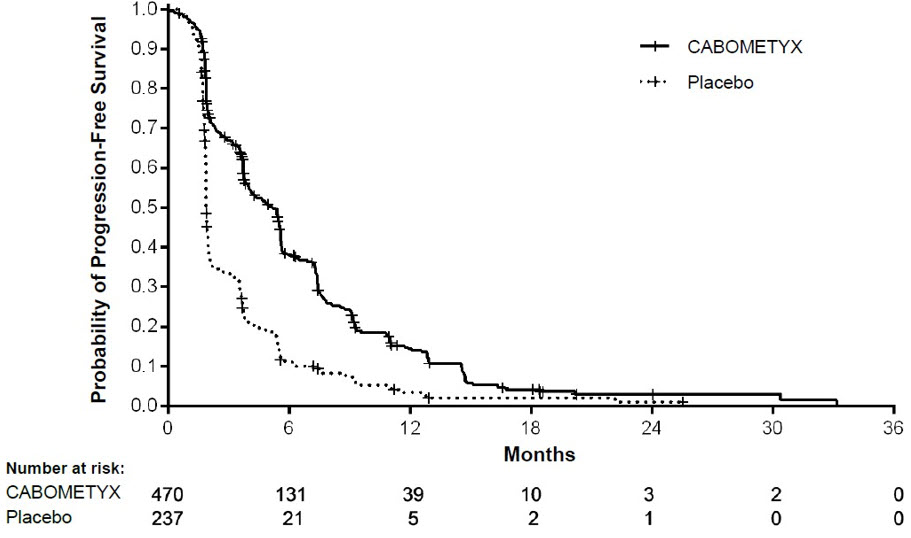
The safety of cabozantinib was evaluated in CELESTIAL, a randomized, double-blind, placebo-controlled trial in which 704 patients with advanced hepatocellular carcinoma were randomized to receive cabozantinib tablets 60 mg orally once daily (equivalent to OMCAZIO 34.5 mg) (n=467) or placebo (n=237) until disease progression or unacceptable toxicity
[see
Clinical Studies (14.2)]
. The median duration of treatment was 3.8 months (range 0.1 – 37.3) for patients receiving cabozantinib and 2.0 months (range 0.0 – 27.2) for patients receiving placebo. The population exposed to cabozantinib was 81% male, 56% White, and had a median age of 64 years.
Adverse reactions occurring in ≥25% of cabozantinib-treated patients, in order of decreasing frequency were: diarrhea, decreased appetite, PPE, fatigue, nausea, hypertension, and vomiting. Grade 3-4 adverse reactions which occurred in ≥5% of patients were PPE, hypertension, fatigue, diarrhea, asthenia, and decreased appetite. There were 6 adverse reactions leading to death in patients receiving cabozantinib (hepatic failure, hepatorenal syndrome, esophagobronchial fistula, portal vein thrombosis, pulmonary embolism, upper gastrointestinal hemorrhage).
The median average daily dose was 35.8 mg for cabozantinib. The dose was reduced in 62% of patients receiving cabozantinib; 33% of patients required a reduction to 20 mg daily (equivalent to OMCAZIO 11.5 mg). The most frequent adverse reactions or laboratory abnormalities leading to dose reduction of cabozantinib were: PPE, diarrhea, fatigue, hypertension, and increased AST. Adverse reactions leading to dose interruption occurred in 84% patients receiving cabozantinib. Adverse reactions leading to permanent discontinuation of cabozantinib occurred in 16% of patients. The most frequent adverse reactions leading to permanent discontinuation of cabozantinib were PPE (2%), fatigue (2%), decreased appetite (1%), diarrhea (1%), and nausea (1%).
Table 13. Adverse Reactions Occurring in ≥5% of Cabozantinib-Treated Patients in CELESTIAL
Includes terms with a between-arm difference of ≥5% (all grades) or ≥2% (Grade 3-4)
| Adverse Reaction | Cabozantinib
(n = 467)
| Placebo
(n = 237)
|
|---|
| All Grades
NCI CTCAE Version 4.0 | Grade 3-4 | All Grades
| Grade 3-4 |
|---|
| Percentage (%) of Patients |
|---|
| Gastrointestinal |
| Diarrhea | 54 | 10 | 19 | 2 |
| Nausea | 31 | 2 | 18 | 2 |
| Vomiting | 26 | <1 | 12 | 3 |
| Stomatitis | 13 | 2 | 2 | 0 |
| Dyspepsia | 10 | 0 | 3 | 0 |
| General |
| Fatigue | 45 | 10 | 30 | 4 |
| Asthenia | 22 | 7 | 8 | 2 |
| Mucosal inflammation | 14 | 2 | 2 | <1 |
| Metabolism and Nutrition |
| Decreased appetite | 48 | 6 | 18 | <1 |
| Skin and Subcutaneous Tissue |
| Palmar-plantar erythrodysesthesia | 46 | 17 | 5 | 0 |
| Rash
Includes the following terms: rash, rash erythematous, rash generalized, rash macular, rash maculo- papular, rash papular, rash pruritic, rash pustular, rash vesicular, dermatitis, dermatitis acneiform, dermatitis contact, dermatitis diaper, dermatitis exfoliative, dermatitis infected | 21 | 2 | 9 | <1 |
| Vascular |
| Hypertension
Includes the following terms: hypertension, blood pressure diastolic increased, blood pressure increased | 30 | 16 | 6 | 2 |
| Investigations |
| Weight decreased | 17 | 1 | 6 | 0 |
| Nervous System |
| Dysgeusia | 12 | 0 | 2 | 0 |
| Endocrine |
| Hypothyroidism | 8 | <1 | <1 | 0 |
| Respiratory, Thoracic, and Mediastinal |
| Dysphonia | 19 | 1 | 2 | 0 |
| Dyspnea | 12 | 3 | 10 | <1 |
| Musculoskeletal and Connective Tissue |
| Pain in extremity | 9 | <1 | 4 | 1 |
| Muscle spasms | 8 | <1 | 2 | 0 |
Table 14. Laboratory Abnormalities Occurring in ≥5% of Cabozantinib-Treated Patients in CELESTIAL
Includes laboratory abnormalities with a between-arm difference of ≥5% (all grades) or ≥2% (Grade 3-4)
| Laboratory Abnormality | Cabozantinib
(n=467)
| Placebo
(n=237)
|
|---|
| All Grades | Grade 3-4 | All Grades | Grade 3-4 |
|---|
| Percentage of Patients |
|---|
| ALP, alkaline phosphatase; ALT, alanine aminotransferase; AST, aspartate aminotransferase; LDH, blood lactate dehydrogenase |
| Chemistry |
| Increased LDH | 84 | 9 | 29 | 2 |
| Increased ALT | 73 | 12 | 37 | 6 |
| Increased AST | 73 | 24 | 46 | 19 |
| Hypoalbuminemia | 51 | 1 | 32 | 1 |
| Increased ALP | 43 | 8 | 38 | 6 |
| Hypophosphatemia | 25 | 9 | 8 | 4 |
| Hypokalemia | 23 | 6 | 6 | 1 |
| Hypomagnesemia | 22 | 3 | 3 | 0 |
| Increased amylase | 16 | 2 | 9 | 2 |
| Hypocalcemia | 8 | 2 | 0 | 0 |
| Hematology |
| Decreased platelets | 54 | 10 | 16 | 1 |
| Neutropenia | 43 | 7 | 8 | 1 |
| Increased hemoglobin | 8 | 0 | 1 | 0 |
Extra-pancreatic Neuroendocrine Tumors
The safety of cabozantinib was evaluated in adult patients with unresectable, locally advanced or metastatic, well-differentiated neuroendocrine tumors in the CABINET trial
[see
Clinical Studies (14.3)].
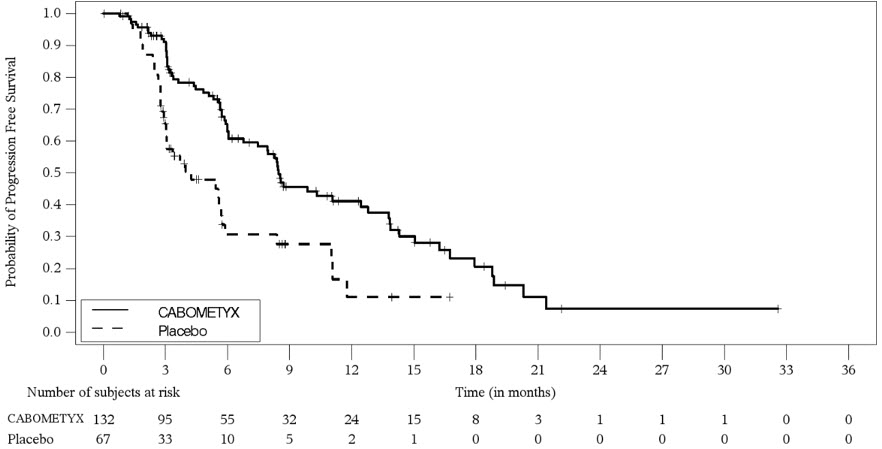
Patients received cabozantinib tablets 60 mg (equivalent to OMCAZIO 34.5 mg) (n=132) or placebo (n=67) orally once daily until disease progression or unacceptable toxicity. Patients with epNET were required to have disease progression after prior treatment with at least one FDA approved therapy (everolimus or lutetium Lu 177 dotatate), other than somatostatin analogs. The median duration of treatment was 5.4 months (range 0.1 to 32.4) for patients receiving cabozantinib and 2.8 months (range 0.5 to 22.8) for patients receiving placebo.
The median age was 66 years (range 28 to 86), 55% were female, 86% were White, 7% were Black, 2.3% were Asian, 5% had unknown race or race not reported, and 6% were Hispanic or Latino.
Serious adverse reactions occurred in 44% of patients who received cabozantinib. Serious adverse reactions in ≥2% included hypertension (6%), abdominal pain (5%), musculoskeletal pain (5%), diarrhea (3.0%), vomiting (3.0%), blood bilirubin increased (3.0%), thromboembolic events (3.0%), nausea (2.3%), hemoglobin decreased (2.3%), muscular weakness (2.3%), fatigue (2.3%), sepsis (2.3%), and syncope (2.3%). Fatal adverse reactions occurred in 4.5% of patients who received cabozantinib, including hepatic failure, multi-organ dysfunction, gastrointestinal hemorrhage, cardiac arrest, ruptured ascending aortic aneurysm, and sudden death not otherwise specified, occurring in one patient each.
Permanent discontinuation of cabozantinib due to an adverse reaction occurred in 28% of patients receiving cabozantinib. Adverse reactions which resulted in permanent discontinuation of cabozantinib included diarrhea, fatigue, increased AST, increased ALT, blood bilirubin increased, rash, thromboembolic events, hypertension, increased ALP, nausea, and stomatitis.
The median average daily dose was 42.9 mg for cabozantinib tablets. Dosage interruptions of cabozantinib due to an adverse reaction occurred in 81% of patients. Adverse reactions which required dosage interruption in ≥5% of patients included diarrhea, fatigue, rash, hypertension, nausea, stomatitis, abdominal pain, increased AST, vomiting, and musculoskeletal pain.
Dose reductions of cabozantinib due to an adverse reaction occurred in 38% of patients. Adverse reactions which required dose reductions in ≥5% of patients included rash, fatigue, diarrhea, and hypertension.
The most common adverse reactions occurring in ≥20% of cabozantinib-treated patients were fatigue, increased AST, diarrhea, hypertension, increased ALT, platelet count decreased, rash, stomatitis, nausea, white blood cell count decreased, neutrophil count decreased, musculoskeletal pain, dysgeusia, hypothyroidism, decreased appetite, hemoglobin decreased, hyperglycemia, abdominal pain, increased ALP, lymphocyte count decreased, weight decreased, blood creatinine increased, hypoalbuminemia, blood bilirubin increased, hypocalcemia, hypokalemia, and hypomagnesemia.
Table 15 summarizes the adverse reactions in patients with epNET in CABINET.
Table 15. Adverse Reactions (≥15%) in Patients with epNET Who Received Cabozantinib in CABINET| Adverse Reaction | Cabozantinib
(n=132)
| Placebo
(n=67)
|
|---|
| All Grades
NCI CTCAE Version 5.0 | Grade 3-4 | All Grades
| Grade 3-4 |
|---|
| Percentage (%) of Patients |
|---|
| General |
| Fatigue
Includes fatigue, asthenia | 73 | 14 | 58 | 9 |
| Edema
Includes edema, edema peripheral, generalized edema, localized edema, periorbital edema, face edema, eye edema | 16 | 1.5 | 10 | 0 |
| Gastrointestinal |
| Diarrhea
Includes diarrhea, colitis | 65 | 11 | 42 | 4.5 |
| Stomatitis
Includes stomatitis, aphthous ulcer, mucosal inflammation, cheilitis, glossitis | 40 | 3.8 | 10 | 0 |
| Nausea | 39 | 2.3 | 21 | 0 |
| Abdominal pain
Includes abdominal pain, abdominal pain lower, abdominal pain upper, gastrointestinal pain, abdominal discomfort, hepatic pain | 29 | 9 | 43 | 8 |
| Vomiting | 17 | 2.3 | 10 | 1.5 |
| Vascular |
| Hypertension
Includes hypertension, blood pressure increased, blood pressure systolic increased, systolic hypertension | 64 | 27 | 37 | 6 |
| Skin and Subcutaneous Tissue |
| Rash
Includes rash, palmar-plantar erythrodysesthesia syndrome, dermatitis acneiform, skin exfoliation, rash macular, rash pustular, dermatitis bullous, dermatitis, erythema multiforme, rash maculo-papular, dermatitis contact, erythema, dermatitis psoriasiform | 50 | 3.0 | 10 | 0 |
| Musculoskeletal and Connective Tissue Disorders |
| Musculoskeletal pain
Includes musculoskeletal pain, non-cardiac chest pain, back pain, arthralgia, pain in extremity, myalgia, bone pain, arthritis, neck pain, musculoskeletal chest pain, musculoskeletal stiffness, chest discomfort | 36 | 8 | 33 | 1.5 |
| Endocrine System |
| Hypothyroidism
Includes hypothyroidism, blood thyroid stimulating hormone increased | 34 | 0 | 4.5 | 0 |
| Metabolism and Nutrition |
| Decreased appetite | 33 | 1.5 | 15 | 1.5 |
| Nervous System |
| Dysgeusia
Includes dysgeusia, taste disorder, ageusia, anosmia | 35 | 0 | 1.5 | 0 |
| Dizziness
Includes dizziness, vertigo | 17 | 0 | 6 | 0 |
| Investigations |
| Weight decreased | 27 | 4.5 | 8 | 0 |
| Respiratory, Thoracic, and Mediastinal |
| Cough
Includes cough, upper-airway cough syndrome, productive cough | 17 | 0 | 10 | 0 |
Clinically relevant adverse reactions in <15% of patients who received cabozantinib included cardiac arrhythmia, hemorrhage, thromboembolic events, kidney injury, proteinuria, hypotension, peripheral neuropathy, reversible posterior leukoencephalopathy syndrome, alopecia, hair color changes, and cardiac failure.
Table 16 summarizes the laboratory abnormalities in patients with epNET in CABINET.
Table 16. Select Laboratory Abnormalities (≥10%) Reported as Adverse Reactions in Patients with epNET Who Received Cabozantinib in CABINET| Laboratory Abnormality | Cabozantinib
(n=132)
| Placebo
(n=67)
|
|---|
| All Grades
NCI CTCAE Version 5.0
(%)
| Grade 3 or 4
(%)
| All Grades
(%)
| Grade 3 or 4
(%)
|
|---|
| Chemistry |
| Increased AST | 70 | 3.8 | 21 | 1.5 |
| Increased ALT | 63 | 0.8 | 18 | 1.5 |
| Hyperglycemia
Includes hyperglycemia, blood glucose increased | 30 | 0.8 | 39 | 1.5 |
| Increased ALP
Includes blood alkaline phosphatase, blood alkaline phosphatase increased | 29 | 4.5 | 30 | 6 |
| Blood creatinine increased | 23 | 0 | 12 | 1.5 |
| Blood bilirubin increased
Includes blood bilirubin increased, hyperbilirubinemia | 20 | 3 | 10 | 6 |
| Hypoalbuminemia
Includes hypoalbuminemia, blood albumin decreased | 20 | 0.8 | 9 | 0 |
| Hypocalcemia
Includes hypocalcemia, blood calcium decreased, adjusted calcium decreased | 20 | 0 | 4.5 | 0 |
| Hypokalemia
Includes hypokalemia, blood potassium decreased | 20 | 2.3 | 10 | 1.5 |
| Hypomagnesemia
Includes hypomagnesemia, blood magnesium decreased | 20 | 0.8 | 4.5 | 0 |
| Hypophosphatemia
Includes hypophosphatemia, blood phosphorus decreased | 19 | 0.8 | 4.5 | 0 |
| Hyponatremia
Includes hyponatremia, blood sodium decreased | 16 | 2.3 | 7 | 1.5 |
| Hematology |
| Platelet count decreased
Includes platelet count decreased, thrombocytopenia | 55 | 1.5 | 13 | 1.5 |
| White blood cell count decreased
Includes white blood cell count decreased, leukopenia | 37 | 3 | 4.5 | 0 |
| Neutrophil count decreased
Includes neutrophil count decreased, neutropenia | 36 | 3 | 6 | 0 |
| Hemoglobin decreased
Includes hemoglobin decreased, anemia | 30 | 2.3 | 19 | 0 |
| Lymphocyte count decreased
Includes lymphocyte count decreased, lymphopenia | 28 | 9 | 18 | 1.5 |