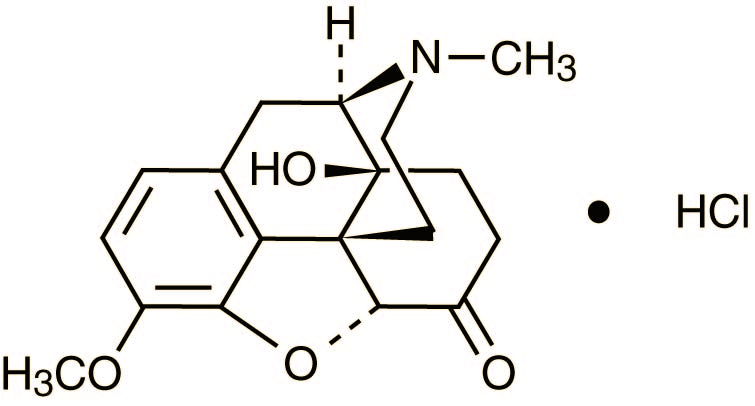
Serious adverse reactions that may be associated with oxycodone therapy in clinical use are those observed with other opioid analgesics and include: respiratory depression, respiratory arrest, circulatory depression, cardiac arrest, hypotension, and/or shock.
The common adverse events seen on initiation of therapy with oxycodone are also typical opioid side effects. These events are dose dependent, and their frequency depends on the clinical setting, the patient’s level of opioid tolerance, and host factors specific to the individual. They should be expected and managed as a part of opioid therapy. The most frequent adverse events include nausea, constipation, vomiting, headache, and pruritus.
The frequency of adverse events during initiation of opioid therapy may be minimized by careful individualization of starting dosage, slow titration and the avoidance of large rapid swings in plasma concentration of the opioid. Many of these common adverse events may abate as therapy is continued and some degree of tolerance is developed, but others may be expected to remain throughout therapy.
In all patients for whom dosing information was available (n=191) from the open-label and double-blind studies involving immediate-release oxycodone, the following adverse events were recorded in oxycodone treated patients with an incidence ≥3%. In descending order of frequency they were: nausea, constipation, vomiting, headache, pruritus, insomnia, dizziness, asthenia, and somnolence.
The following adverse experiences occurred in less than 3% of patients involved in clinical trials with oxycodone:
abdominal pain, accidental injury, allergic reaction, back pain, chills and fever, fever, flu syndrome, infection, neck pain, pain, photosensitivity reaction, and sepsis.
Body as a Whole:
: deep thrombophlebitis, heart failure, hemorrhage, hypotension, migraine, palpitation, and tachycardia.
Cardiovascular
: anorexia, diarrhea, dyspepsia, dysphagia, gingivitis, glossitis, and nausea and vomiting.
Digestive
: anemia and leukopenia.
Hemic and Lymphatic
: edema, gout, hyperglycemia, iron deficiency anemia and peripheral edema.
Metabolic and Nutritional
: arthralgia, arthritis, bone pain, myalgia and pathological fracture.
Musculoskeletal
agitation, anxiety, confusion, dry mouth, hypertonia, hypesthesia, nervousness, neuralgia, personality disorder, tremor, and vasodilation.
Nervous:
: bronchitis, cough increased, dyspnea, epistaxis, laryngismus, lung disorder, pharyngitis, rhinitis, and sinusitis.
Respiratory
: herpes simplex, rash, sweating, and urticaria.
Skin and Appendages
: amblyopia.
Special Senses
: urinary tract infection
Urogenital