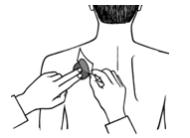
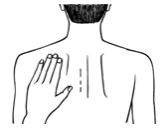
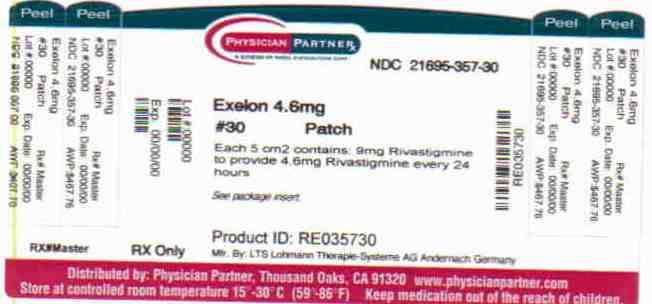
Significant gastrointestinal adverse reactions including nausea, vomiting, anorexia, and weight loss have been reported with the Exelon Patch at higher than recommended doses [see Warnings and Precautions (5.1)].
6.1 Incidence in
C
ontrolled
C
linical
T
rial in Alzheimer’s Disease
6.1.1
Associated with
D
iscontinuation of
T
reatment
In the single controlled clinical trial of Exelon Patch [see Clinical Studies (14)], which randomized a total of 1195 patients, the proportions of patients in the Exelon Patch 9.5 mg/24 hours, Exelon Patch 17.4 mg/24 hours, Exelon capsules 6 mg BID, and placebo groups who discontinued treatment due to adverse events were 9.6%, 8.6%, 8.1%, and 5.0%, respectively.
The most common adverse events in the Exelon Patch-treated groups that led to treatment discontinuation in this study were nausea and vomiting. The proportions of patients who discontinued treatment due to nausea were 0.7%, 1.7%, 1.7%, and 1.3% in the Exelon Patch 9.5 mg/24 hours, Exelon Patch 17.4 mg/24 hours, Exelon capsules 6 mg BID, and placebo groups, respectively. The proportions of patients who discontinued treatment due to vomiting were 0%, 1.7%, 2.0%, and 0.3% in the Exelon Patch 9.5 mg/24 hours, Exelon Patch 17.4 mg/24 hours, Exelon capsules 6 mg BID, and placebo groups, respectively.
6.1.2
Most Commonly Observed Adverse E
vents
The most commonly observed adverse events seen in patients administered Exelon Patch in the controlled clinical trial, defined as those occurring at a frequency of at least 5% in the 9.5 mg/24 hours group and at a frequency at least as high as in the placebo group are largely predicted by the cholinergic effects of Exelon. These are nausea, vomiting, and diarrhea. All these events were more common at the higher Exelon Patch dose of 17.4 mg/24 hours than at a dose of 9.5 mg/24 hours.
6.1.3
Adverse Events Observed at an I
ncidence of ≥2%
The following table lists treatment-emergent adverse events that were seen at an incidence of ≥2% in either Exelon Patch-treated group in the controlled clinical trial and for which the rate of occurrence was greater for patients treated with that dose of Exelon Patch than for those treated with placebo. The prescriber should be aware that these frequencies cannot be used to predict the frequency of adverse events in the course of usual medical practice when patient characteristics and other factors may differ from those prevailing during clinical studies. Similarly, the cited frequencies cannot be directly compared with frequencies obtained from other clinical investigations involving different treatments, uses, or investigators. An inspection of these frequencies, however, does provide the prescriber with one basis by which to estimate the relative contribution of drug and non-drug factors to the adverse event incidences in the population studied.
Table 2: Adverse Events Observed with a Frequency of ≥2% and Occurring with a Rate Greater Than Placebo
| Exelon
Patch
9.5 mg/
24 hours
n (%)
| Exelon
Patch
17.4 mg/
24 hours
n (%)
| Exelon
capsule
6 mg
BID
n (%)
|
Placebo
n (%)
|
Total Patients
Studied
Total Number
of Patients with
AEs
| 291
147 (51)
| 303
200 (66)
| 294
186 (63)
| 302
139 (46)
|
Nausea
| 21 (7)
| 64 (21)
| 68 (23)
| 15 (5)
|
Vomiting
| 18 (6)
| 57 (19)
| 50 (17)
| 10 (3)
|
Diarrhea
| 18 (6)
| 31 (10)
| 16 (5)
| 10 (3)
|
Depression
| 11 (4)
| 12 (4)
| 13 (4)
| 4 (1)
|
Headache
| 10 (3)
| 13 (4)
| 18 (6)
| 5 (2)
|
Anxiety
| 9 (3)
| 8 (3)
| 5 (2)
| 4 (1)
|
Anorexia/
Decreased
| 9 (3)
| 27 (9)
| 26 (9)
| 6 (2)
|
Weight
Decreased
| 8 (3)
| 23 (8)
| 16 (5)
| 4 (1)
|
Dizziness
| 7 (2)
| 21 (7)
| 22 (7)
| 7 (2)
|
Abdominal
Pain
| 7 (2)
| 11 (4)
| 4 (1)
| 2 (1)
|
Urinary Tract
Infection
| 6 (2)
| 5 (2)
| 4 (1)
| 3 (1)
|
Asthenia
| 5 (2)
| 9 (3)
| 17 (6)
| 3 (1)
|
Fatigue
| 5 (2)
| 7 (2)
| 2 (1)
| 4 (1)
|
Insomnia
| 4 (1)
| 12 (4)
| 6 (2)
| 6 (2)
|
Abdominal
Pain Upper
| 3 (1)
| 8 (3)
| 6 (2)
| 6 (2)
|
Vertigo
| 0 (0)
| 7 (2)
| 4 (1)
| 3 (1)
|
|
|
|
|
|
6.1.4
Incidenc
e of Application Site Reactions
The vast majority of patients participating in the controlled clinical trial had either no observed skin irritation or mild to moderate skin reactions. The incidence of severe reactions was very low regardless of administered dosage.
6.2
Other Adverse Events O
bserved
D
uring
C
linical
T
rials
Exelon Patch has been administered to 1071 patients with Alzheimer’s disease during clinical trials worldwide. Of these, 869 patients have been treated for at least 3 months, 706 patients have been treated for at least 6 months, and 212 patients have been treated for 1 year.
Treatment-emergent signs and symptoms that occurred during 1 controlled and 4 open-label trials in North America, Europe, Latin America, Asia and Japan were recorded as adverse events by the clinical investigators using terminology of their own choosing.
To provide an overall estimate of the proportion of individuals having similar types of events, the events were grouped into a smaller number of standardized categories using the MedDRA dictionary, and event frequencies were calculated across all studies. These categories are used in the listing below. The frequencies represent the proportion of 1071 patients from these trials who experienced that event while receiving Exelon Patch. All patch doses are pooled.
All adverse events occurring in at least 1 patient (approximately 0.1%) are included, except for those already listed elsewhere in labeling, too general to be informative, or relatively minor events.
Events are classified by system organ class and listed using the following definitions: Frequent – those occurring in at least 1/100 patients; Infrequent – those occurring in 1/100 to 1/1,000 patients. These adverse events are not necessarily related to Exelon Patch treatment and in most cases were observed at a similar frequency in placebo-treated patients in the controlled studies.
Blood and Lymphatic System Disorders: Frequent : Anemia.
Cardiac Disorders: Infrequent : Angina pectoris, cardiac failure, bradycardia, atrial fibrillation, supraventricular extrasystoles, myocardial infarction, tachycardia, arrhythmia, atrioventricular block.
Ear and Labyrinth Disorders: Infrequent : Tinnitus.
Eye Disorders: Infrequent : Cataract, glaucoma, vision blurred.
Gastrointestinal System: Frequent : Constipation, gastritis. Infrequent : Gastroesophageal reflux disease, hematochezia, peptic ulcer, hematemesis, pancreatitis, salivary hypersecretion.
General Disorders and Administration Site Conditions: Infrequent : Application site dermatitis, application site irritation, peripheral edema, chest pain, application site eczema, hyperpyrexia.
Hepatobiliary Disorders: Infrequent : Cholecystitis.
Infections and Infestations: Frequent : Nasopharyngitis, pneumonia. Infrequent : Diverticulitis.
Injury, Poisoning and Procedural Complications: Frequent : Fall. Infrequent : Hip fracture, subdural hematoma.
Investigations: Infrequent : Blood creatine phosphokinase increased, lipase increased, blood amylase increased, electrocardiogram QT prolonged.
Metabolic and Nutritional Disorders: Frequent : Dehydration Infrequent : Hyperlipidemia, hypokalemia, hyponatremia.
Musculoskeletal and Connective Tissue Disorders: Infrequent: Arthralgia, muscle spasms, myalgia.
Nervous System Disorders: Frequent : Tremor. Infrequent : Migraine, parkinsonism, epilepsy.
Psychiatric Disorders: Infrequent : Delusion.
Renal and Urinary Disorders: Frequent : Urinary incontinence. Infrequent : Pollakiuria, hematuria, nocturia, renal failure.
Reproductive System and Breast Disorders: Infrequent : Benign prostatic hyperplasia.
Respiratory, Thoracic, and Mediastinal Disorders: Infrequent : Dyspnea, bronchospasm, chronic obstructive pulmonary disease.
Skin and Subcutaneous Tissue Disorders: Frequent : Pruritus. Infrequent : Erythema, eczema, dermatitis, rash erythematous, skin ulcer.
Vascular Disorders: Infrequent : Hypotension.