Methylphenidate Hydrochloride Tablet, Extended Release
Product Images NDC 31722-953

View Photos of Packaging, Regulatory Labels, and Product Appearance

Product Visual Gallery

This gallery contains 14 technical images submitted to the FDA as part of the official labeling for Methylphenidate Hydrochloride (NDC 31722-953). Unlike standard consumer photos, these assets often include clinical data figures, molecular chemical structures, and official manufacturer packaging layouts.

As provided by Camber Pharmaceuticals, Inc., these visuals offer a comprehensive scientific overview of the product's physical and chemical identity, aiding pharmacists and researchers in product verification and study.

FDA Label Image

18 mg

18   mg
Label for Methylphenidate Hydrochloride 18 mg Extended-Release Tablets USP by Camber Pharmaceuticals, Inc. The label indicates a package containing 100 tablets, identifies it as prescription only, and provides storage instructions, manufacturer details, and a barcode. The logo of Camber Pharmaceuticals appears at the top.*
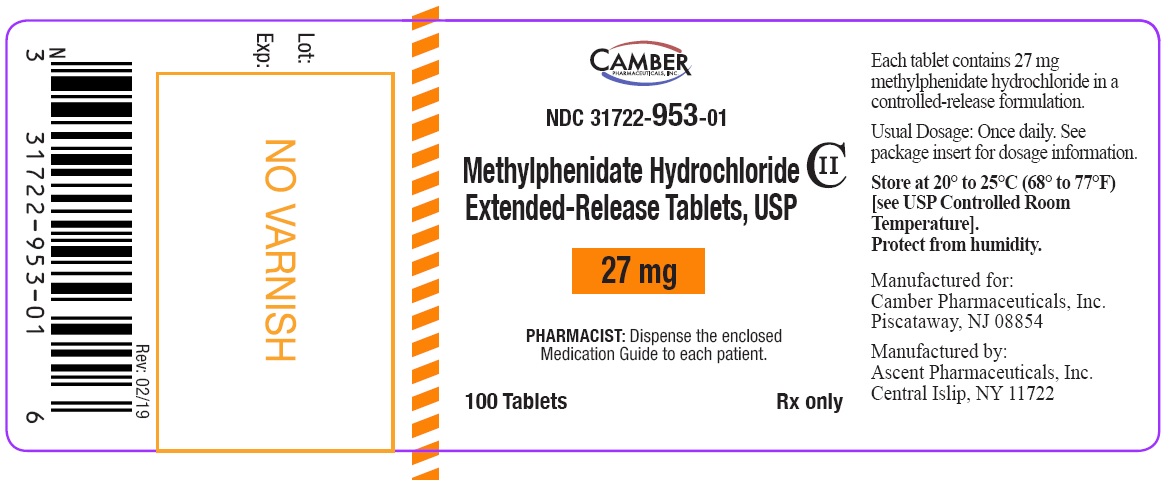
FDA Label Image

27 mg

27   mg
Label for Methylphenidate Hydrochloride Extended-Release Tablets, USP, 27 mg strength, oral dosage form. The label indicates a 100-tablet count and is manufactured for Camber Pharmaceuticals, Inc. Instructions note dispensing a Medication Guide to patients. Storage instructions specify 20° to 25°C (68° to 77°F) with protection from humidity. The NDC 31722-953-01 code is visible, along with barcode and manufacturing information for Ascent Pharmaceuticals, Inc.*
FDA Label Image

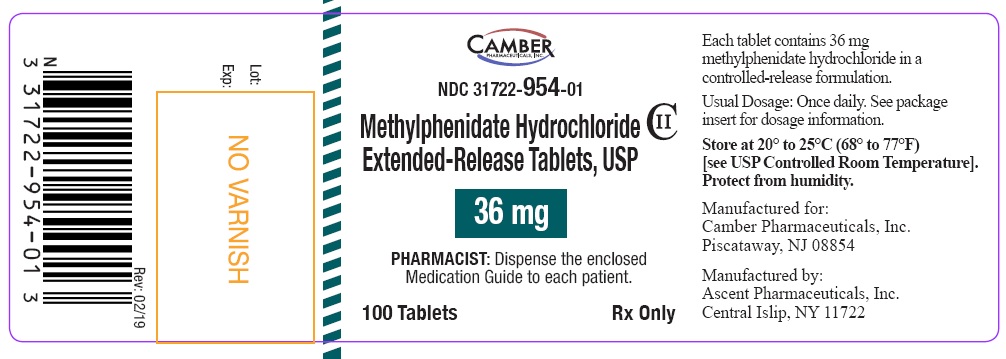
36 mg

36   mg
Label for Methylphenidate Hydrochloride 36 mg Extended-Release Tablets, USP, oral dosage form by Camber Pharmaceuticals, Inc. The label indicates 100 tablets per container and prescription use only. It includes storage instructions, manufacturing information, pharmacy dispensing instructions, and states the controlled-release formulation.*
FDA Label Image

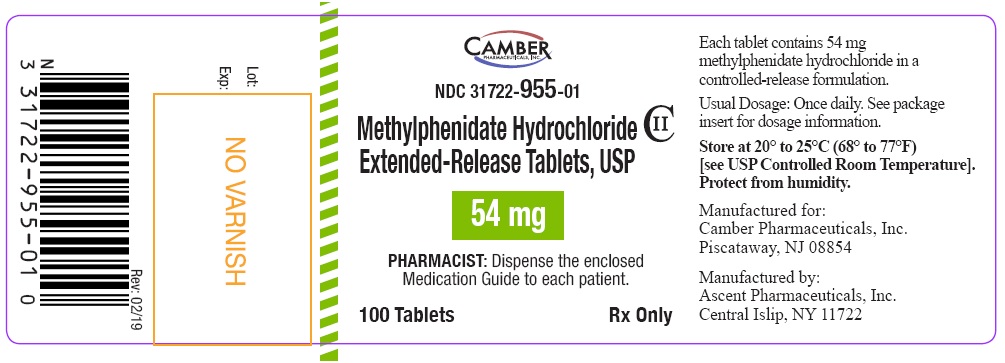
54 mg

54   mg
Label for Methylphenidate Hydrochloride Extended-Release Tablets USP, 54 mg strength. The label shows a package of 100 tablets, Rx only, manufactured for Camber Pharmaceuticals, Inc., with manufacturing by Ascent Pharmaceuticals, Inc. Storage instructions and dosage notes are included. The label features the Camber Pharmaceuticals logo and the NDC 31722-955-01.*
FDA Label Image

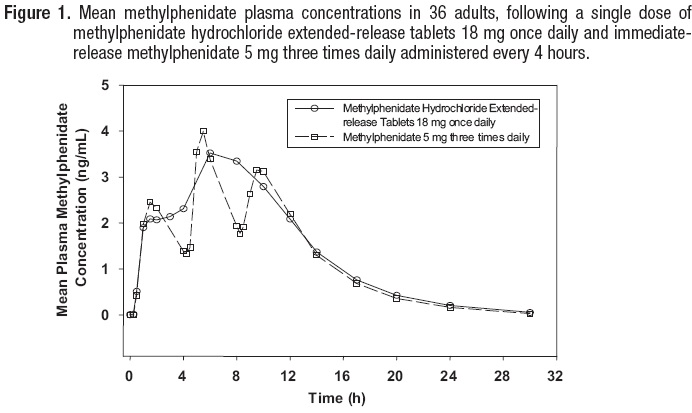
Figure1

Figure1
A line graph depicting mean plasma methylphenidate concentrations (ng/mL) over time (hours) in 36 adults. It compares 18 mg extended-release methylphenidate hydrochloride tablets taken once daily with 5 mg immediate-release methylphenidate taken three times daily every 4 hours. The graph displays concentration curves for both dosing regimens over a 32-hour period.*
FDA Label Image

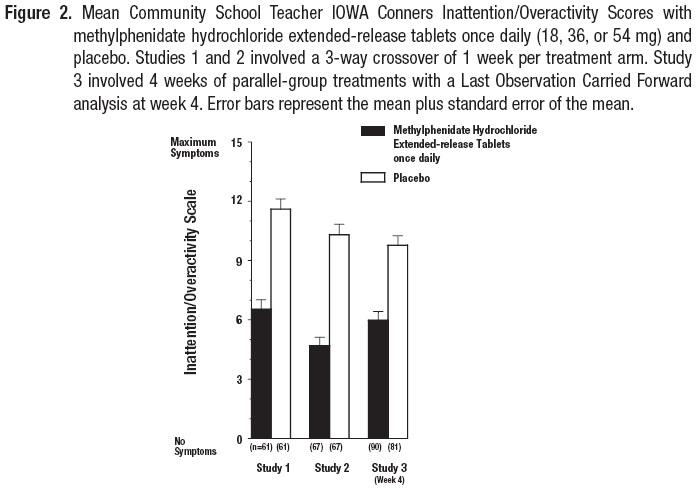
Figure2

Figure2
A bar graph comparing mean Community School Teacher IOWA Conners Inattention/Overactivity Scores for methylphenidate hydrochloride extended-release tablets once daily (18, 36, or 54 mg) versus placebo across three studies. The y-axis represents the Inattention/Overactivity Scale from no symptoms to maximum symptoms. Error bars indicate mean plus standard error for Study 1, Study 2, and Study 3 (week 4).*
FDA Label Image

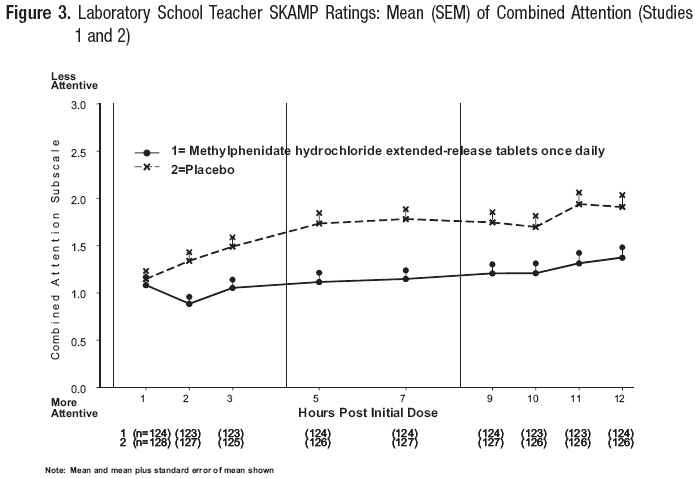
Figure3

Figure3
A line graph titled 'Laboratory School Teacher SKAMP Ratings: Mean (SEM) of Combined Attention (Studies 1 and 2)', comparing combined attention subscale scores over 12 hours post initial dose for Methylphenidate Hydrochloride extended-release tablets once daily versus placebo. The y-axis measures attention, with lower values indicating more attentiveness. Data points include mean and standard error of mean (SEM).*
FDA Label Image

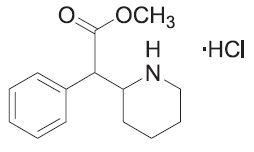
Struct

Struct
Chemical structure diagram of Methylphenidate Hydrochloride, showing its molecular components and arrangement including a phenyl ring, piperidine ring, and ester functional group.*
FDA Label Image

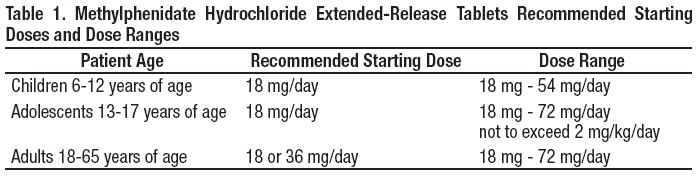
Table1

Table1
A data table titled 'Methylphenidate Hydrochloride Extended-Release Tablets Recommended Starting Doses and Dose Ranges.' It presents patient age groups (Children 6-12 years, Adolescents 13-17 years, Adults 18-65 years), recommended starting doses, and dose ranges for each group.*
FDA Label Image

Table2

Table2
A table presenting recommended dose conversion from previous methylphenidate regimens to methylphenidate hydrochloride extended-release tablets. It lists the previous daily dose in mg taken two or three times daily and the corresponding recommended starting dose of extended-release tablets in mg taken every morning.*
FDA Label Image

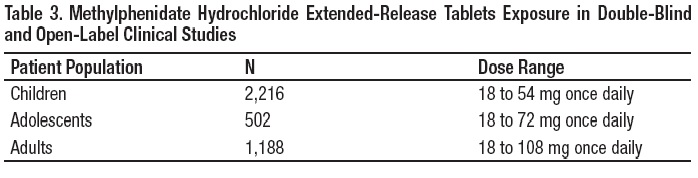
Table3

Table3
Table showing methylphenidate hydrochloride extended-release tablets exposure in clinical studies, listing patient population groups (children, adolescents, adults), number of participants, and corresponding dose ranges administered once daily.*
FDA Label Image

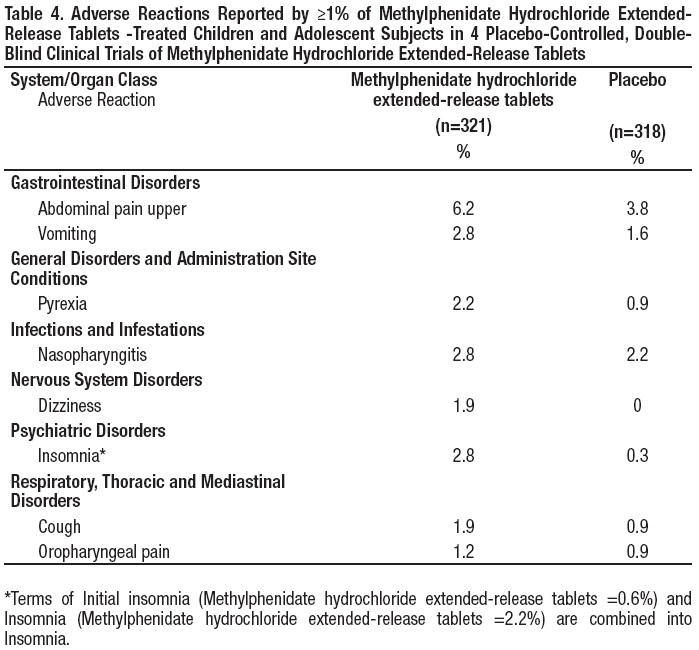
Table4

Table4
A data table presenting adverse reactions reported by 1% or more of children and adolescent subjects treated with Methylphenidate Hydrochloride extended-release tablets compared to placebo in four double-blind clinical trials. It lists system/organ class, specific adverse reactions, and the percentage of subjects experiencing each reaction in the treatment and placebo groups.*
FDA Label Image

Table5

Table5
A data table listing adverse reactions reported by at least 1% of adult subjects treated with Methylphenidate Hydrochloride extended-release tablets versus placebo in two placebo-controlled, double-blind clinical trials. The table categorizes adverse reactions under various system/organ classes with corresponding percentages for the drug and placebo groups.*
FDA Label Image

Table6

Table6
A data table presenting pharmacokinetic parameters (mean ± SD) for methylphenidate hydrochloride extended-release tablets 18 mg once daily compared with methylphenidate 5 mg three times daily in healthy adults. Parameters include Cmax, Tmax, AUCinf, and half-life (t1/2).*

* About these descriptions: Image descriptions on this page are generated by automated AI analysis of the product label images from the manufacturer's FDA label submission (SPL). They are provided for reference only and may contain errors or omissions. Always rely on the printed label itself and the official FDA labeling, and consult a pharmacist or healthcare professional with any questions about this product.