Aplisol Injection
Product Images NDC 42023-104

View Photos of Packaging, Regulatory Labels, and Product Appearance

Product Visual Gallery

This gallery contains 2 technical images submitted to the FDA as part of the official labeling for Aplisol (NDC 42023-104). Unlike standard consumer photos, these assets often include clinical data figures, molecular chemical structures, and official manufacturer packaging layouts.

As provided by Endo Usa, Inc., these visuals offer a comprehensive scientific overview of the product's physical and chemical identity, aiding pharmacists and researchers in product verification and study.

FDA Label Image

Principal Display Panel (1 mL Vial Carton)

Principal Display Panel (1 mL Vial Carton)
This is a description of a product called Tuberculin, Purified Protein Derivative, Diluted. The text includes the manufacturer's name, the product name (Aplisol), and its prescription use. It notes that the product is clinically equivalent in potency to the standard PPD-S and is meant for intradermal testing for the diagnosis of tuberculosis. The product information includes storage instructions and warnings not to freeze the solution, and that the vial should be discarded after 30 days once entered. The lot number and other relevant information about the product are also included.*
FDA Label Image

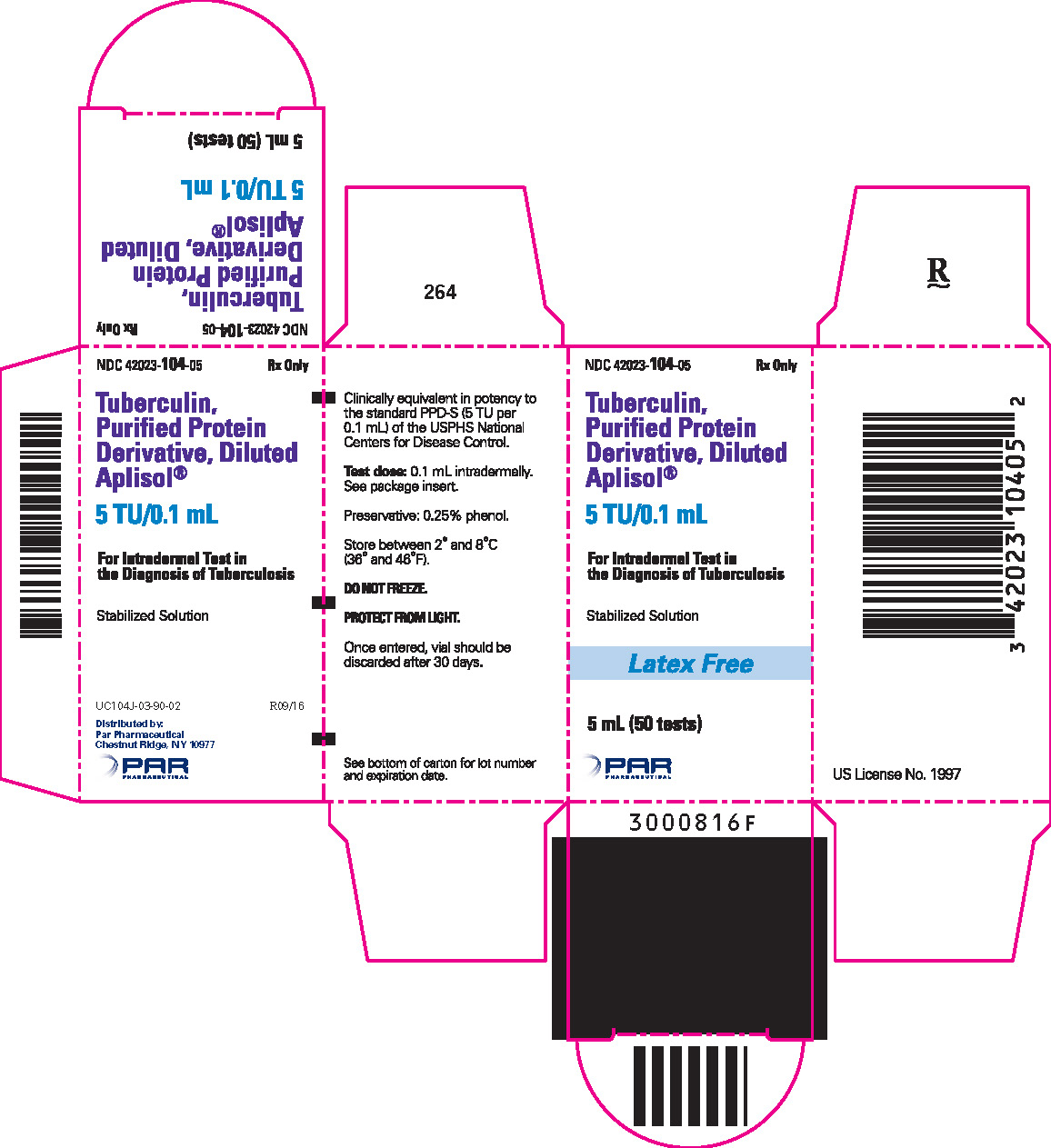
Principal Display Panel (5 mL Vial Carton)

Principal Display Panel (5 mL Vial Carton)
This text describes a solution for intradermal Tuberculosis test. It is a stabilized solution clinically equivalent in potency to Tuberculin, Purified Protein Derivative, Diluted Aplisol® with 5TU/0.1 mL. The test dose instructed to be 0.1 mL administered intradermally. The solution is preserved with a 0.25% phenol and can be stored between 2° and 8°C. The package also includes additional instructions and NDC 42023-104-05. The vial should be discarded after 30 days from the opening. This product is distributed by Par Pharmaceutical, and the US License No is 1957.*

* These product label images have been analyzed using experimental machine learning. Please verify findings with the primary label text.