Tofacitinib Tablet, Film Coated, Extended Release
Product Images NDC 42799-970

View Photos of Packaging, Regulatory Labels, and Product Appearance

Product Visual Gallery

This gallery contains 23 technical images submitted to the FDA as part of the official labeling for Tofacitinib (NDC 42799-970). Unlike standard consumer photos, these assets often include clinical data figures, molecular chemical structures, and official manufacturer packaging layouts.

As provided by Edenbridge Pharmaceuticals Llc., these visuals offer a comprehensive scientific overview of the product's physical and chemical identity, aiding pharmacists and researchers in product verification and study.

FDA Label Image

1 (11mg Bottle Label)
1 (11mg Bottle Label)
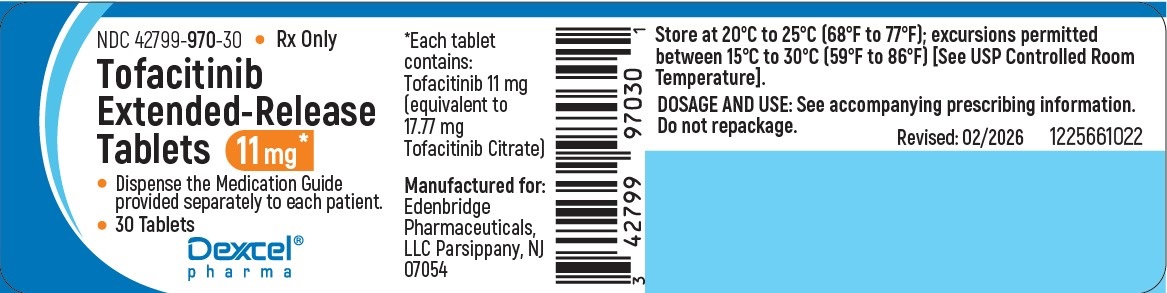
This text provides information about storing a medication between 20°C to 25°C (68°F to 77°F) with permitted excursions. The medication's temperature range for storage is specified as between 15°C to 30°C (59°F to 86°F). It mentions extended release tablets equivalent to 11 mg of tofacitinib. The text also instructs not to repackage the tablets and refers to accompanying prescribing information for dosage and use details. Additionally, it indicates that the Medication Guide should be dispensed separately to each patient and mentions the manufacturer as Dexcel® LLC located in Parsippany, NJ.*
FDA Label Image

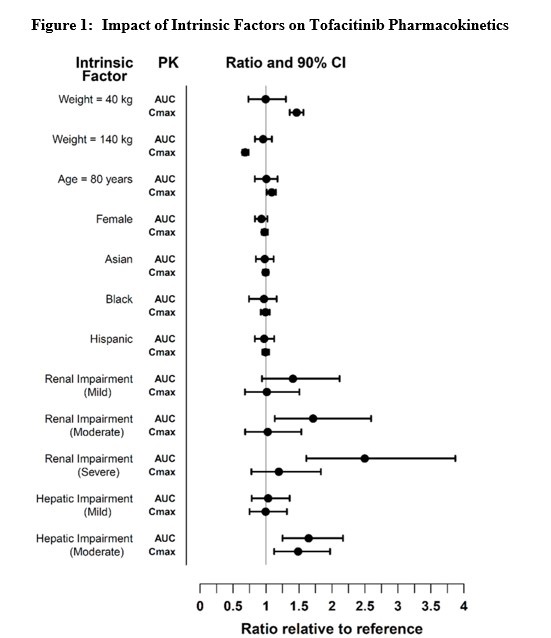
1 (Figure 1)

1 (Figure 1)
This text presents an evaluation of the impact of intrinsic factors on Tofacitinib pharmacokinetics. It includes factors such as weight, age, gender, ethnicity (Asian, Hispanic), and renal and hepatic impairments at different levels of severity. The table lists the PK ratio and 90% confidence interval for each intrinsic factor on Tofacitinib's area under the curve (AUC) and maximum concentration (Cmax). This information can be valuable for understanding how these factors influence the pharmacokinetics of Tofacitinib in different populations or conditions.*
FDA Label Image

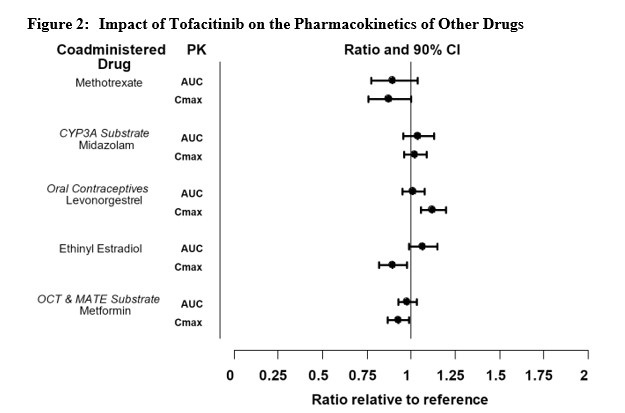
1 (Figure 2)

1 (Figure 2)
This text provides information on the impact of Tofacitinib on the pharmacokinetics of certain drugs, including methotrexate, midazolam, oral contraceptives (levonorgestrel and ethinyl estradiol), and metformin. It presents data on peak plasma concentration (Cmax) and area under the plasma concentration-time curve (AUC). The text also mentions ratios relative to reference values and confidence intervals (CI) for the observed changes.*
FDA Label Image

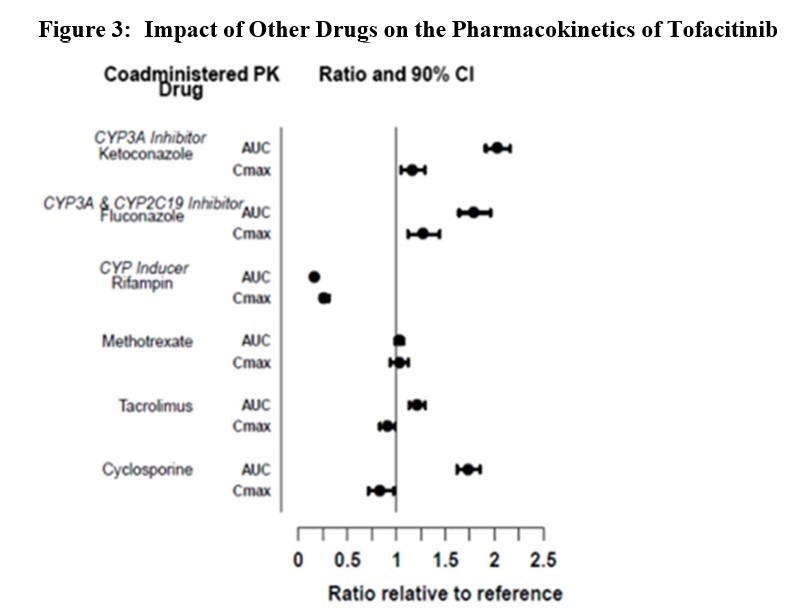
1 (Figure 3)

1 (Figure 3)
This document shows the impact of other drugs on the pharmacokinetics of Tofacitinib. It includes information on the effects of CYP3A inhibitors and inducers, as well as the impact of Methotrexate, Tacrolimus, and Cyclosporine on parameters like Cmax and AUC. The figure provides ratio and 90% confidence interval for these drug interactions.*
FDA Label Image

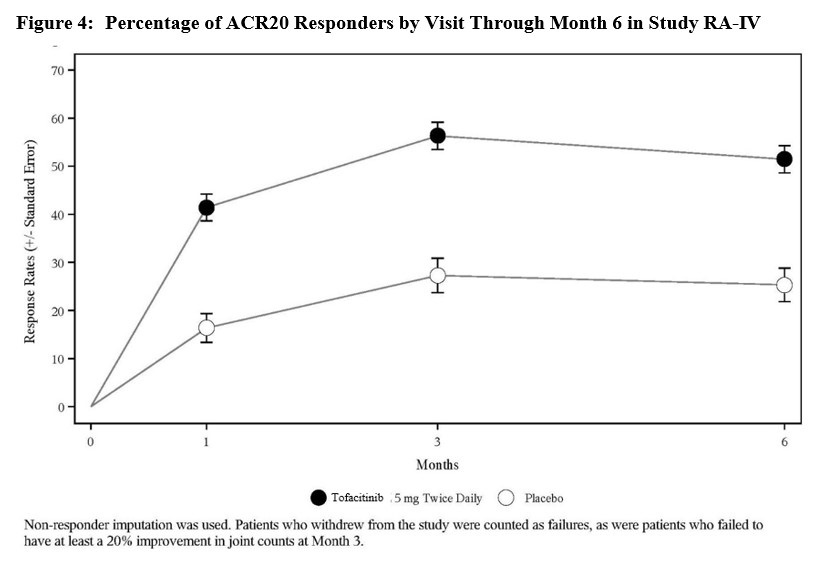
1 (Figure 4)

1 (Figure 4)
The text provides information about the percentage of ACR20 responders by visit through Month 6 in Study RA-TV. It presents response rates with standard error and mentions the use of non-responder imputation in the study. Withdrawn patients were considered failures in achieving a 20% improvement in joint counts at Month 3.*
FDA Label Image

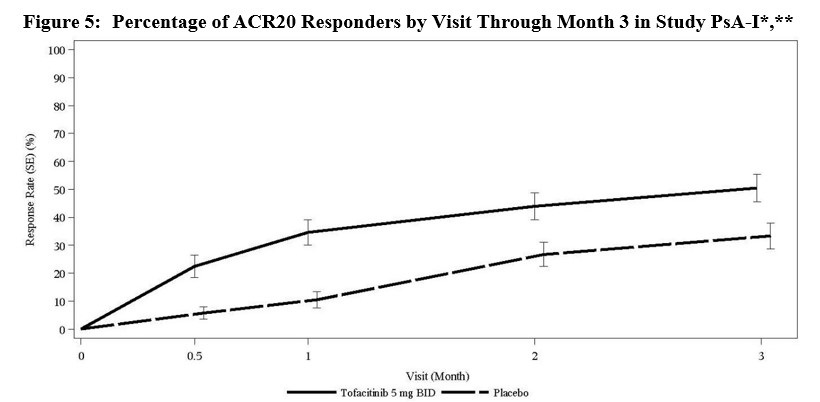
1 (Figure 5)

FDA Label Image

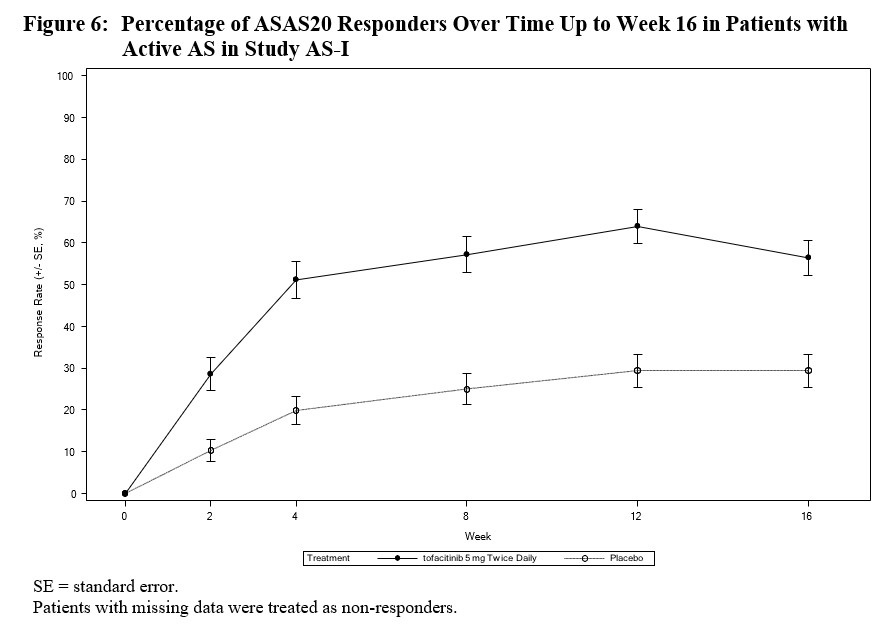
1 (Figure 6)

1 (Figure 6)
This text provides information about the percentage of ASAS20 responders over time up to Week 16 in patients with active AS in Study AS-T. The data includes a figure showing the trend in response rate and mentions that patients with missing data were treated as non-responders. The SE (standard error) is also explained in the text.*
FDA Label Image

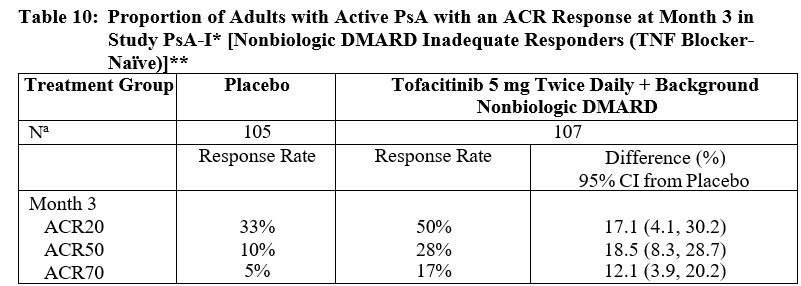
1 (Table 10)

1 (Table 10)
This text shows a table presenting the proportion of adults with active Psoriatic Arthritis (PsA) and their response to treatment at Month 3 in Study PsA-I. The study focused on nonbiologic DMARD inadequate responders (TNF blocker-naive). Two treatment groups were compared: Placebo and Tofacitinib 5 mg twice daily with background nonbiologic DMARD. Response rates for ACR20, ACR50, and ACR70 are provided with the response rate differences and corresponding 95% confidence intervals from the placebo. The results show the impact of Tofacitinib treatment on improving PsA symptoms compared to placebo.*
FDA Label Image

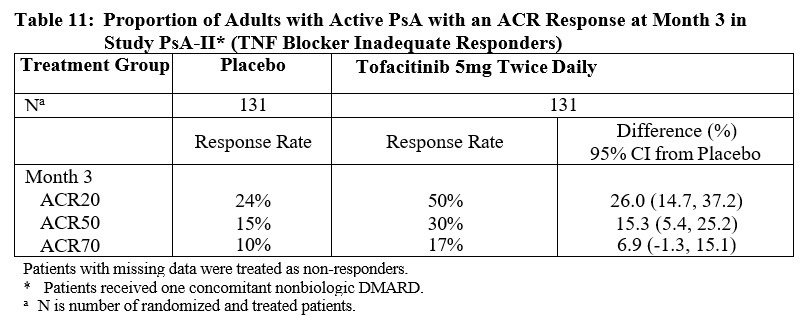
1 (Table 11)

1 (Table 11)
This text presents data on the proportion of adults with active Psoriatic Arthritis (PsA) who showed an American College of Rheumatology (ACR) response at Month 3 in Study PsA-II. The study focused on patients who were inadequate responders to Infliximab (INF) Blocker. The treatment groups included Placebo, and Tofacitinib 5mg twice daily. The data shows response rates for ACR20, ACR50, and ACR70 at Month 3, with percentage differences between the groups. Patients with missing data were considered non-responders. Each treatment group had 131 patients, and the study also notes that patients received one concomitant nonbiologic DMARD.*
FDA Label Image

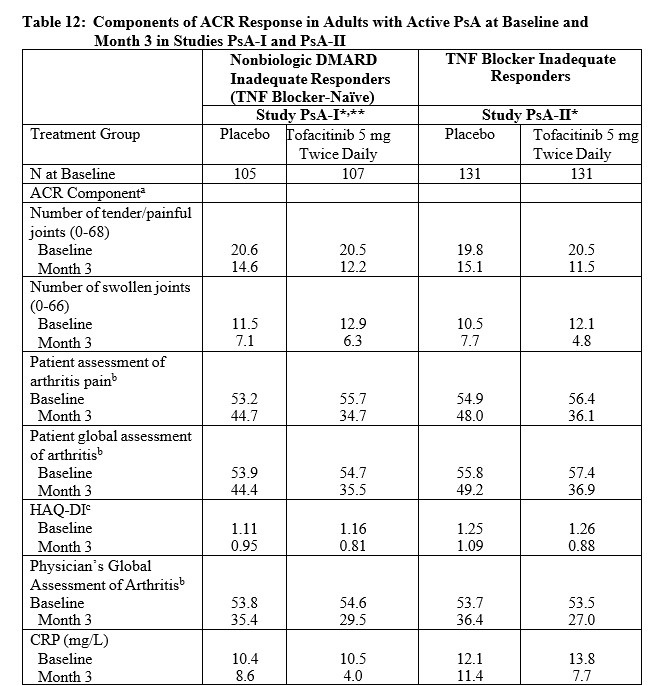
1 (Table 12)

1 (Table 12)
This is data on the components of ACR response in adults with active Psoriatic Arthritis (PsA) at baseline and Month 3 in studies PsA-I and PsA-TL. It includes information on tender/painful joints, swollen joints, patient assessments of arthritis pain and global assessment, HAQ-DE, physician's global assessment of arthritis, and CRP levels for different treatment groups. The study compares the response of patients to nonbiologic DMARDs and TNF blockers in inadequate responders.*
FDA Label Image

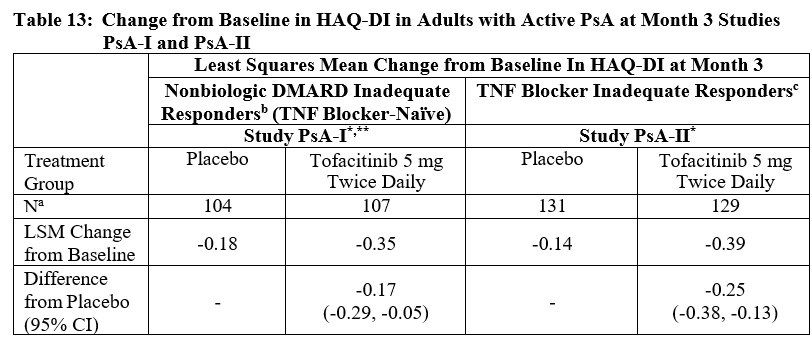
1 (Table 13)

1 (Table 13)
This information provides data on the change from baseline in HAQ-DI (Health Assessment Questionnaire-Disability Index) in adults with active Psoriatic Arthritis (PsA) at month 3 in PsA clinical studies PsA-T and PsA-TI. The table compares the results of nonbiologic DMARD (Disease-Modifying Antirheumatic Drug) inadequate responders and TNF (Tumor Necrosis Factor) blocker inadequate responders. The least squares mean change from baseline in HAQ-DI at month 3 is shown for each treatment group, including placebo and Tofacitinib 5 mg administered twice daily. The 95% confidence intervals for the changes from baseline are also provided.*
FDA Label Image

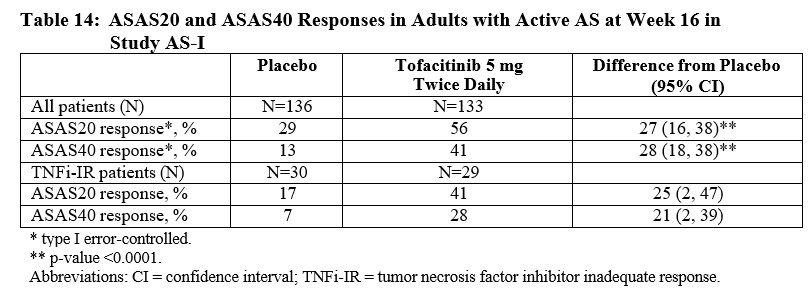
1 (Table 14)

1 (Table 14)
This text provides data on the ASAS20 and ASAS40 responses in adults with active Ankylosing Spondylitis (AS) at Week 16 in Study AS-T. It compares the response rates between those receiving Placebo and Tofacitinib 5 mg twice daily. The results show significant differences in response rates, with Tofacitinib demonstrating higher ASAS20 and ASAS40 responses compared to Placebo. Additionally, it provides specific response rates for TNFi-IR patients, indicating a substantial improvement in response rates for this subgroup as well. The abbreviation TNFi-IR stands for tumor necrosis factor inhibitor inadequate response.*
FDA Label Image

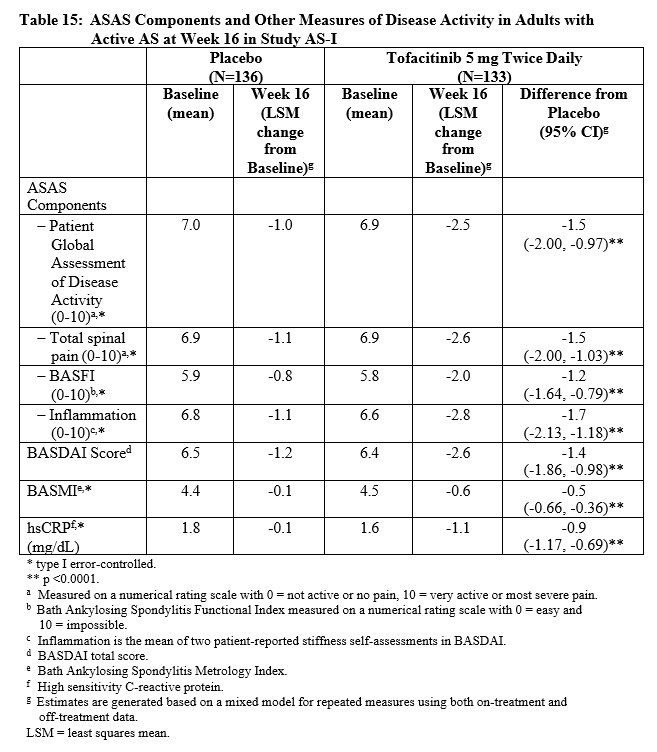
1 (Table 15)

1 (Table 15)
This text presents Table 15 from a study on ASAS components and other measures of disease activity in adults with active Ankylosing Spondylitis at week 16. It compares the effects of Placebo and Tofacitinib 5 mg twice daily on various aspects including Patient Global Assessment of Disease Activity, Total Spinal Pain, BASFI, Inflammation, BASDAI Score, BASMI, and hsCRP levels. The data is represented in mean values with changes from baseline, along with 95% confidence intervals. Additionally, it provides clarification on the scales used for measurements and statistical notes. The estimates are based on a mixed model for repeated measures incorporating both on-treatment and off-treatment data.*
FDA Label Image

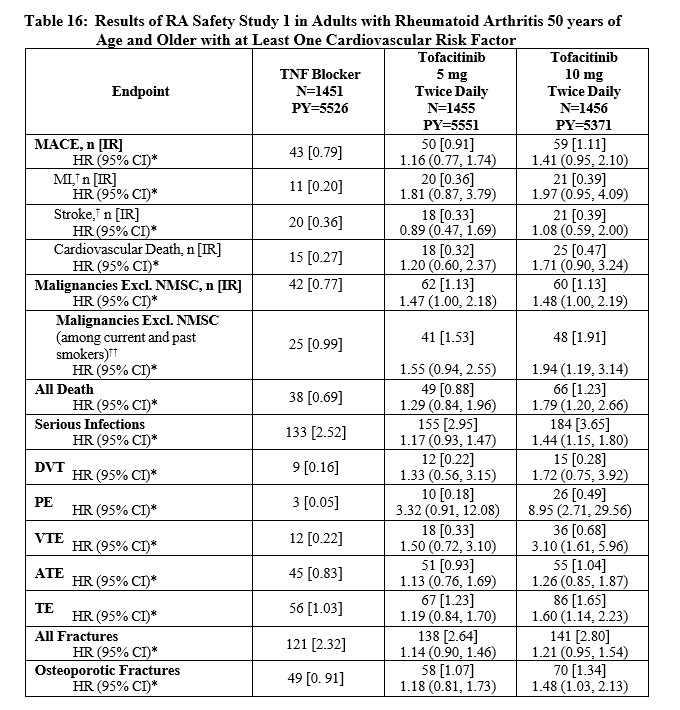
1 (Table 16)

1 (Table 16)
This text appears to be a table presenting the results of a RA Safety Study 1 in adults aged 50 years and older with rheumatoid arthritis and at least one cardiovascular risk factor. The study involves Tofacitinib and TNF Blocker Sme and includes various endpoints such as cardiovascular death, malignancies excluding NMSC, serious infections, DVT, PE, VIE, ATE, TE, and Al and Osteoporotic fractures. The table provides hazard ratios with 95% confidence intervals for different outcomes in the study population.*
FDA Label Image

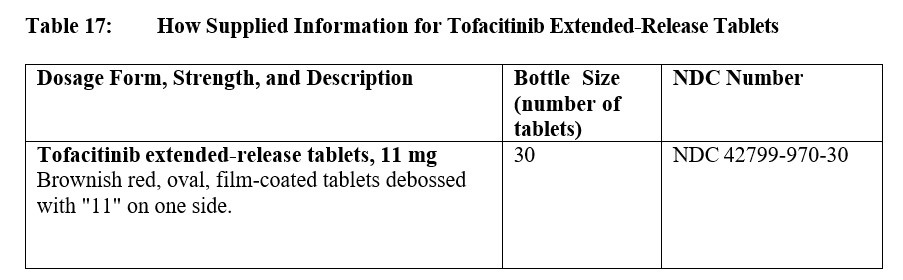
1 (Table 17)

1 (Table 17)
This is a description of the Tofacitinib extended-release tablets in 11 mg strength. The tablets come in a bottle size of 30 tablets and have a brownish-red color. They are oval-shaped, film-coated, and have the number "11" debossed on one side. The National Drug Code (NDC) number for this product is 42799-970-30.*
FDA Label Image

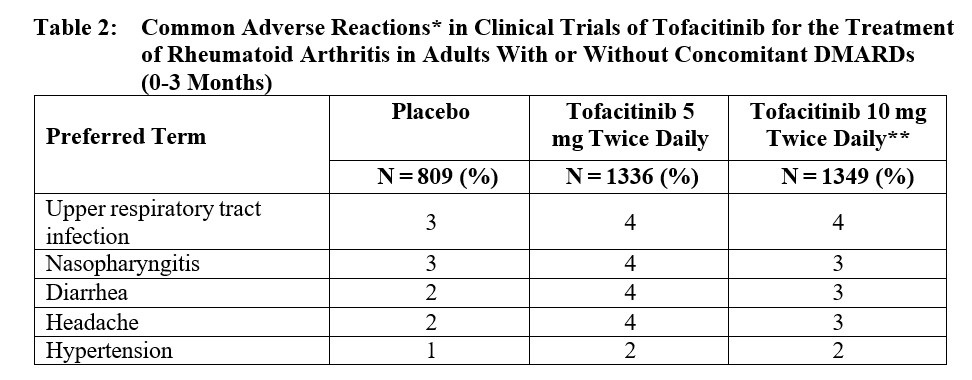
1 (Table 2)

1 (Table 2)
This is a table showing common adverse reactions observed in clinical trials of Tofacitinib for the treatment of Rheumatoid Arthritis in adults with or without concomitant DMARDs during the 0-3 months period. The adverse reactions include upper respiratory tract infection, nasopharyngitis, diarrhea, headache, and hypertension among others. The percentages of these reactions are compared between patients who received placebo, Tofacitinib 5 mg twice daily, and Tofacitinib 10 mg twice daily.*
FDA Label Image

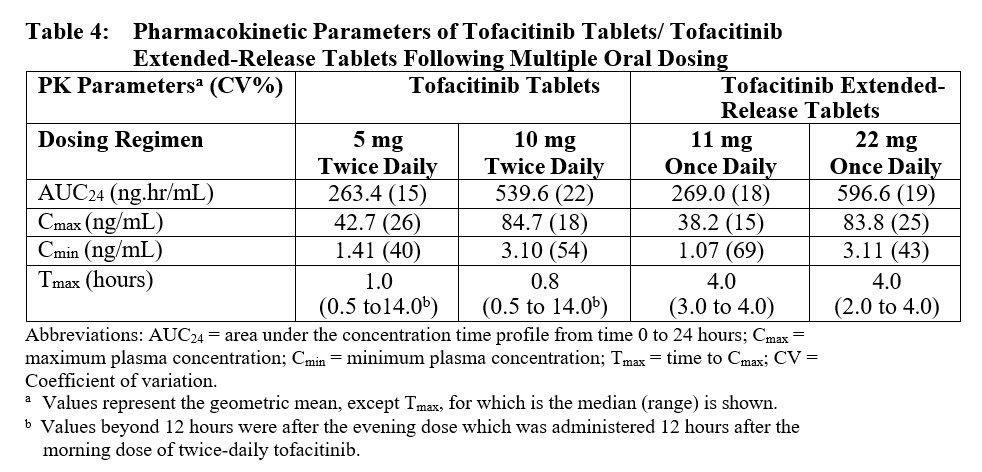
1 (Table 4)

1 (Table 4)
Table 4 shows the pharmacokinetic parameters of Tofacitinib tablets and Tofacitinib Extended-Release Tablets following multiple oral dosing. The parameters include AUC (area under the concentration time profile), Cumax (maximum plasma concentration), Cumin (minimum plasma concentration), and Tmax (time to maximum concentration). The dosing regimens compared are 5mg, 10mg, 11mg, and 22mg taken twice daily or once daily. The table provides values for each parameter along with coefficients of variation for each dosing regimen. It also includes abbreviations and a note about values beyond 12 hours.*
FDA Label Image

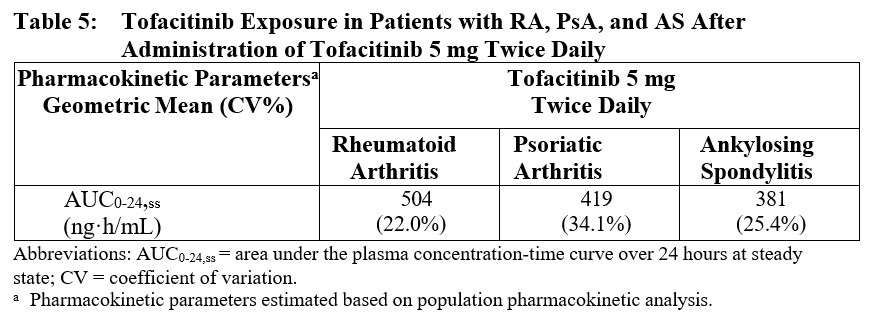
1 (Table 5)

1 (Table 5)
This text provides information on the exposure of Tofacitinib in patients with Rheumatoid Arthritis, Psoriatic Arthritis, and Ankylosing Spondylitis after the administration of Tofacitinib 5 mg twice daily. It includes pharmacokinetic parameters such as the geometric mean for AUC0-24 (area under the plasma concentration-time curve over 24 hours at steady state) for each condition. The values are given in ng-h/mL along with the coefficient of variation (CV%) for each condition. The data was estimated based on population pharmacokinetic analysis.*
FDA Label Image

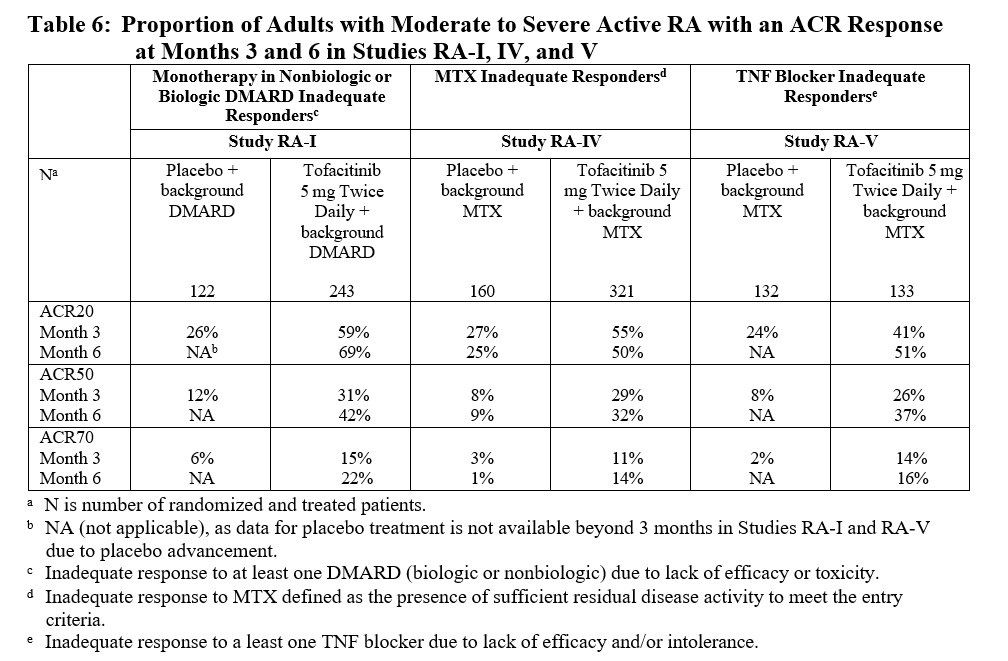
1 (Table 6)

1 (Table 6)
This is a table presenting data on the proportion of adults with moderate to severe active rheumatoid arthritis (RA) with an ACR response at months 3 and 6 in studies RA-L, IV, and V. The data indicates the response rates for different treatments in nonbiologic or MTX inadequate responders, including ACR20, ACR50, and ACR70 criteria. It shows the percentage of patients achieving these responses at both month 3 and month 6. The table also provides information on the number of randomized and treated patients (N). Additionally, it explains that certain data points are not available beyond 3 months for placebo treatment due to placebo advancement. Overall, the table gives insight into the effectiveness of various treatments for RA patients with inadequate responses to DMARDs and TNF blockers.*
FDA Label Image

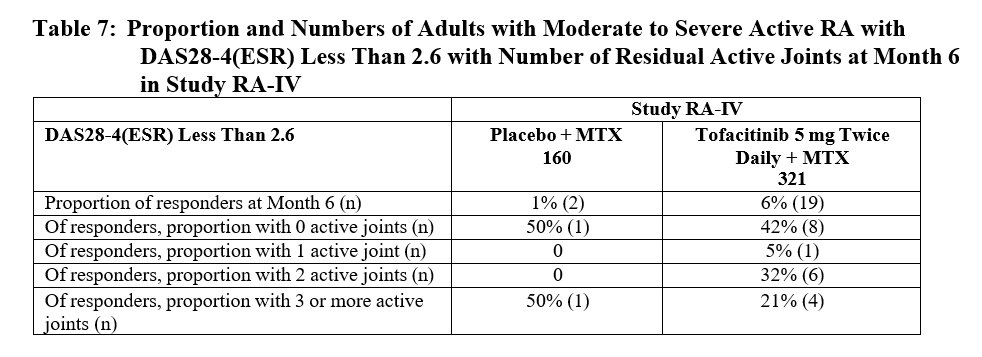
1 (Table 7)

1 (Table 7)
This text provides information on the proportion and numbers of adults with moderate to severe active rheumatoid arthritis (RA) who achieved a Disease Activity Score 28-4 (erythrocyte sedimentation rate) less than 2.6 after 6 months in a study named RA-IV. It compares the results between the placebo plus methotrexate group and the group treated with tofacitinib 5 mg twice daily plus methotrexate. It includes data on the proportion of responders, the proportion of responders with different numbers of active joints, and the number of responders with 0, 1, 2, and 3 or more active joints.*
FDA Label Image

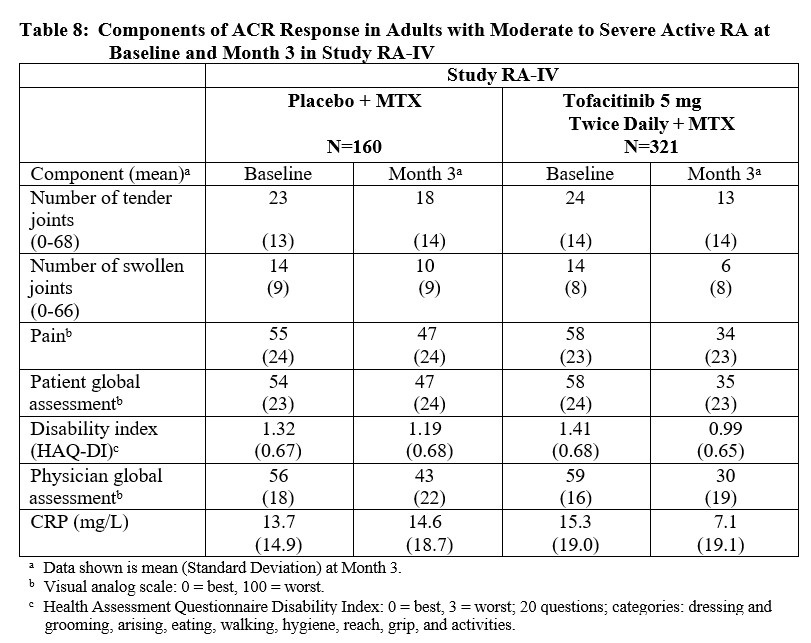
1 (Table 8)

1 (Table 8)
Table 8 provides an overview of the components of ACR response in adults with moderate to severe active Rheumatoid Arthritis (RA) at baseline and Month 3 in Study RA-TV. The table compares outcomes between the group receiving Placebo + Methotrexate (MTX) and the group receiving Tofacitinib 5 mg twice daily + MTX. Various indicators such as the number of tender and swollen joints, pain levels, patient global assessment, disability index (HAQ-DI), physician global assessment, and CRP levels are included in the comparison. The data is presented as means along with standard deviations at Month 3. Important notes about the visual analog scale and the Health Assessment Questionnaire Disability Index are also provided to aid in the interpretation of the results.*
FDA Label Image

1 (Table 9)

1 (Table 9)
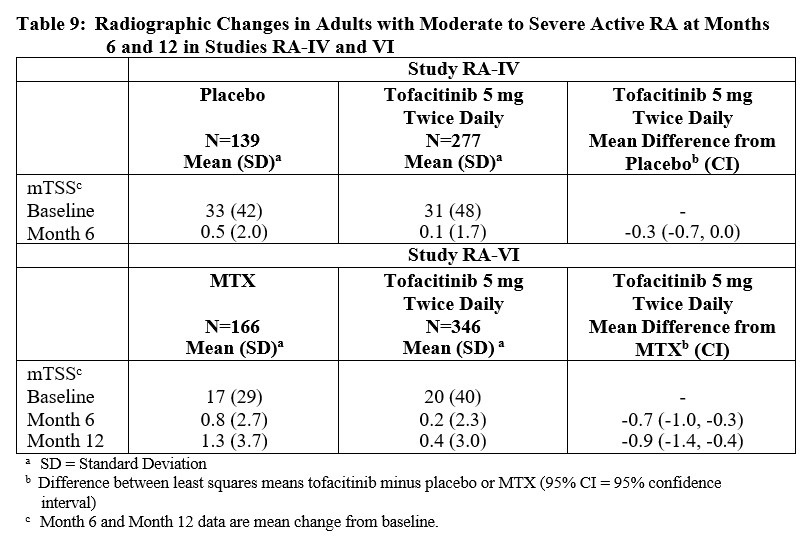
This is a summary of radiographic changes in adults with moderate to severe active Rheumatoid Arthritis (RA) at months 6 and 12 in studies RA-TV and VI. The table compares the effects of Placebo, Tofacitinib 5 mg twice daily, and Methotrexate (MTX) on mean Total Sharp Score (mTSSe) measurements. The data includes baseline values and the mean differences in mTSSe at months 6 and 12 for each treatment group. The results are presented in tabular form for easy comparison. The values represent the mean change from baseline at each time point.*
FDA Label Image

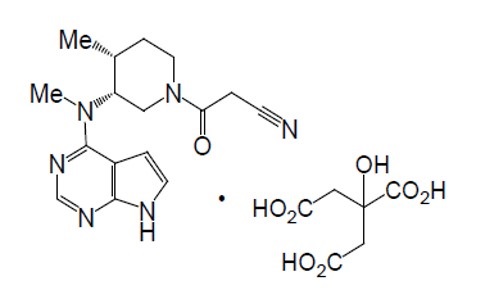
1 (Tofacitinib Citrate)

* These product label images have been analyzed using experimental machine learning. Please verify findings with the primary label text.