Because clinical trials are conducted under widely varying conditions, adverse reaction rates observed in the clinical trials of a drug cannot be directly compared to rates in the clinical trials of another drug and may not reflect the rates observed in practice.
Testosterone gel 1.62% was evaluated in a two-phase, 364-day, controlled clinical study.
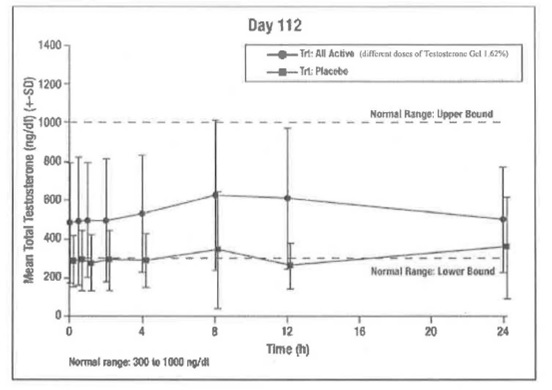
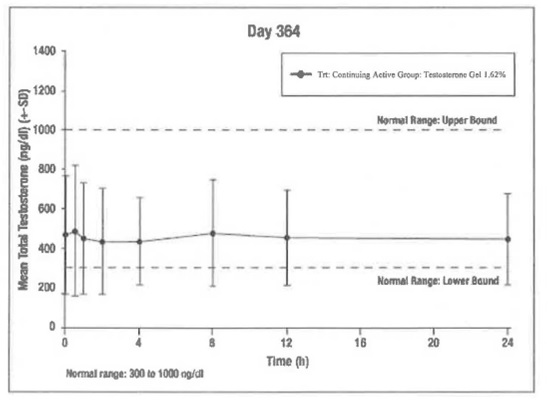
The first phase was a multi-center, randomized, double-blind, parallel-group, placebo-controlled period of 182 days, in which 234 hypogonadal men were treated with testosterone gel 1.62% and 40 received placebo. Patients could continue in an open-label, non-comparative, maintenance period for an additional 182 days[see Clinical Studies (14.1)].
The most common adverse reaction reported in the double-blind period was increased prostate specific antigen (PSA) reported in 26 testosterone gel 1.62%-treated patients (11.1%). In 17 patients, increased PSA was considered an adverse event by meeting one of the two pre-specified criteria for abnormal PSA values, defined as (1) average serum PSA >4 ng/mL based on two separate determinations, or (2) an average change from baseline in serum PSA of greater than 0.75 ng/mL on two determinations.
During the 182-day, double-blind period of the clinical trial, the mean change in serum PSA value was 0.14 ng/mL for patients receiving testosterone gel 1.62% and -0.12 ng/mL for the patients in the placebo group. During the double-blind period, seven patients had a PSA value >4 ng/mL, four of these seven patients had PSA less than or equal to 4 ng/mL upon repeat testing. The other three patients did not undergo repeat PSA testing.
During the 182-day, open-label period of the study, the mean change in serum PSA values was 0.10 ng/mL for both patients continuing on active therapy and patients transitioning onto active from placebo. During the open-label period, three patients had a serum PSA value > 4 ng/mL, two of whom had a serum PSA less than or equal to 4 ng/mL upon repeated testing. The other patient did not undergo repeat PSA testing. Among previous placebo patients, 3 of 28 (10.7%), had increased PSA as an adverse event in the open-label period.
Table 4 shows adverse reactions reported by >2% of patients in the 182-day, double-blind period of the testosterone gel 1.62% clinical trial and more frequent in the testosterone gel 1.62% treated group versus placebo.
Table 4: Adverse Reactions Reported in >2% of Patients in the 182-Day, Double-Blind Period of Testosterone Gel 1.62% Clinical Trial
| | Number (%) of Patients |
| Adverse Reaction | Testosterone gel 1.62%
N=234 | Placebo
N= 40 |
| PSA increased* | 26 (11.1%) | 0% |
| Emotional lability** | 6 (2.6%) | 0% |
| Hypertension | 5 (2.1%) | 0% |
| Hematocrit or hemoglobin increased | 5 (2.1%) | 0% |
| Contact dermatitis*** | 5 (2.1%) | 0% |
*PSA increased includes: PSA values that met pre-specified criteria for abnormal PSA values (an average change from baseline > 0.75 ng/mL and/or an average PSA value >4 ng/mL based on two measurements) as well as those reported as adverse events.
**Emotional lability includes: mood swings, affective disorder, impatience, anger, and aggression.
***Contact dermatitis includes: 4 patients with dermatitis at non-application sites.
Other adverse reactions occurring in less than or equal to 2% of testosterone gel 1.62%-treated patients and more frequently than placebo included: frequent urination, and hyperlipidemia.
In the open-label period of the study (N=191), the most commonly reported adverse reaction (experienced by greater than 2% of patients) was increased PSA (n=13; 6.2%) and sinusitis. Other adverse reactions reported by less than or equal to 2% of patients included increased hemoglobin or hematocrit, hypertension, acne, libido decreased, insomnia, and benign prostatic hypertrophy.
During the 182-day, double-blind period of the clinical trial, 25 testosterone gel 1.62%-treated patients (10.7%) discontinued treatment because of adverse reactions. These adverse reactions included 17 patients with PSA increased and 1 report each of: hematocrit increased, blood pressure increased, frequent urination, diarrhea, fatigue, pituitary tumor, dizziness, skin erythema and skin nodule (same patient – neither at application site), vasovagal syncope, and diabetes mellitus. During the 182-day, open-label period, 9 patients discontinued treatment because of adverse reactions. These adverse reactions included 6 reports of PSA increased, 2 of hematocrit increased, and 1 each of triglycerides increased and prostate cancer.
Application Site Reactions
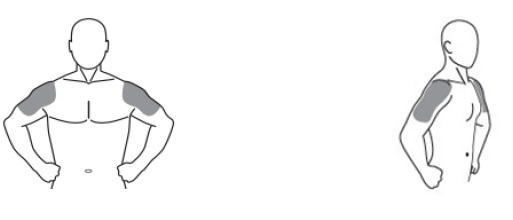
In the 182-day double-blind period of the study, application site reactions were reported in two (2/234; 0.9%) patients receiving testosterone gel 1.62%, both of which resolved. Neither of these patients discontinued the study due to application site adverse reactions. In the open-label period of the study, application site reactions were reported in three (3/219; 1.4%) additional patients that were treated with testosterone gel 1.62%. None of these subjects were discontinued from the study due to application site reactions.