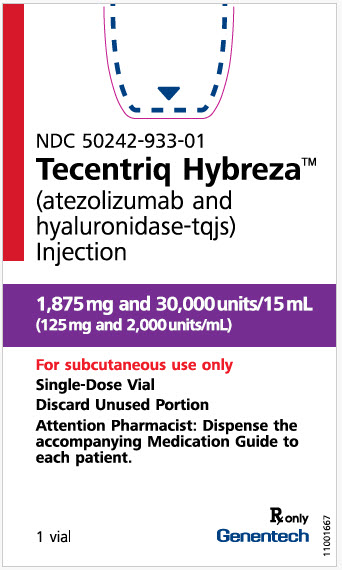
The safety of TECENTRIQ HYBREZA was evaluated in IMscin001, open-label, multi-center, international, randomized trial for patients with locally advanced or metastatic NSCLC who have not been exposed to cancer immunotherapy and who have had disease progression on prior platinum-based therapy [see Clinical Studies (14.1)]. Patients with previously treated metastatic non-small cell lung cancer (NSCLC) either received TECENTRIQ HYBREZA (containing 1,875 mg of atezolizumab and 30,000 units of hyaluronidase) administered subcutaneously into the thigh over approximately 7 minutes every 3 weeks or intravenous atezolizumab every 3 weeks until disease progression or unacceptable toxicity. Among 247 patients who received TECENTRIQ HYBREZA, 32% were exposed for 6 months or longer and 8% were exposed for greater than one year.
The median age was 64 years (range: 27 to 85); 69% male; 67% White, 22% Asian, 0.8% Black or African American; 74% were non-Hispanic or Latino; 26% had an Eastern Cooperative Oncology Group (ECOG) performance status (PS) of 0, 74% had an ECOG PS of 1; and 70% of patients were current or previous smokers.
Serious adverse reactions occurred in 19% of patients who received TECENTRIQ HYBREZA. Serious adverse reactions (> 1%) included pneumonia, myocardial infarction, and pleural effusion. Fatal adverse reactions occurred in 6% of patients who received TECENTRIQ HYBREZA, including pneumonia (2.4%), myocardial infarction (1.2%), head injury (0.4%), ischemic stroke (0.4%), pleural effusion (0.4%), pulmonary embolism (0.4%), respiratory tract infection (0.4%), sepsis (0.4%), and toxic epidermal necrolysis (0.4%).
Permanent discontinuation of TECENTRIQ HYBREZA due to an adverse reaction occurred in 3.6% of patients. Adverse reactions which resulted in permanent discontinuation of TECENTRIQ HYBREZA in > 1% of patients included pneumonia (2%).
Dosage interruptions of TECENTRIQ HYBREZA due to an adverse reaction occurred in 32% of patients. Adverse reactions which required dosage interruption in > 1% of patients were COVID-19 (4.9%), increased aspartate aminotransferase (2.8%), increased alanine aminotransferase (2.4%), pneumonia (2.4%), anemia (1.6%), dyspnea (1.6%), fatigue (1.2%), and viral respiratory tract infection (1.2%). The most common adverse reactions of any grade (occurring in ≥ 10% of patients) were fatigue (19%), musculoskeletal pain (15%), cough (13%), dyspnea (12%), and decreased appetite (11%).
Clinically relevant adverse reactions in < 10% of patients who received TECENTRIQ HYBREZA were local injection site reactions (4.5%) and pyrexia (1.2%).
- adjuvant treatment (following tumor resection and platinum-based chemotherapy) in adult patients with stage II to IIIA NSCLC whose tumors have PD-L1 expression on ≥ 1% of tumor cells (IMpower010 study).
- first-line treatment of adult patients with metastatic NSCLC whose tumors have high PD-L1 expression (PD-L1 stained ≥ 50% of tumor cells [TC ≥ 50%] or PD-L1 stained tumor-infiltrating immune cells [IC] covering ≥ 10% of the tumor area [IC ≥ 10%]), with no EGFR or ALK genomic tumor aberrations (IMpower110 study).
- first-line treatment of adult patients with metastatic non-squamous NSCLC with no EGFR or ALK genomic tumor aberrations (IMpower150 study).
- first-line treatment of adult patients with metastatic non-squamous NSCLC with no EGFR or ALK genomic tumor aberrations (IMpower130 study).
- first-line treatment of adult patients with metastatic NSCLC whose tumors have high PD-L1 expression, with no EGFR or ALK genomic tumor aberrations (OAK study).
Below is a description of adverse reactions of intravenous atezolizumab in these adequate and well-controlled NSCLC studies.
Non-Small Cell Lung Cancer (NSCLC)
Adjuvant Treatment of Early-stage NSCLC
IMpower010
The safety of intravenous atezolizumab was evaluated in IMpower010, a multicenter, open-label, randomized trial for the adjuvant treatment of patients with stage IB (tumors ≥ 4 cm) -IIIA NSCLC who had complete tumor resection and received up to 4 cycles of cisplatin-based adjuvant chemotherapy. Patients received intravenous atezolizumab 1200 mg every 3 weeks (n = 495) for 1 year (16 cycles), unless disease progression or unacceptable toxicity occurred, or best supportive care [see Clinical Studies (14.1)]. The median number of cycles received was 16 (range: 1, 16).
Fatal adverse reactions occurred in 1.8% of patients receiving intravenous atezolizumab; these included multiple organ dysfunction syndrome, pneumothorax, interstitial lung disease, arrhythmia, acute cardiac failure, myocarditis, cerebrovascular accident, death of unknown cause, and acute myeloid leukemia (1 patient each).
Serious adverse reactions occurred in 18% of patients receiving intravenous atezolizumab. The most frequent serious adverse reactions (> 1%) were pneumonia (1.8%), pneumonitis (1.6%), and pyrexia (1.2%).
Intravenous atezolizumab was discontinued due to adverse reactions in 18% of patients; the most common adverse reactions (≥ 1%) leading to intravenous atezolizumab discontinuation were pneumonitis (2.2%), hypothyroidism (1.6%), increased aspartate aminotranferase (1.4%), arthralgia (1.0%), and increased alanine aminotransferase (1.0%).
Adverse reactions leading to interruption of intravenous atezolizumab occurred in 29% of patients; the most common (> 1%) were rash (3.0%), hyperthyroidism (2.8%), hypothyroidism (1.6%), increased AST (1.6%), pyrexia (1.6%), increased ALT (1.4%), upper respiratory tract infection (1.4%), headache (1.2%), peripheral neuropathy (1.2%), and pneumonia (1.2%).
Tables 5 and 6 summarize adverse reactions and selected laboratory abnormalities in patients receiving intravenous atezolizumab in IMpower010.
Table 5: Adverse Reactions Occurring in ≥ 10% of Patients with Early-Stage NSCLC Receiving Intravenous Atezolizumab in IMpower010| Adverse Reaction Graded per NCI CTCAE v4.0 | Intravenous Atezolizumab
N = 495 | Best Supportive Care
N = 495 |
|---|
All Grades
(%) | Grades 3–4
(%) | All Grades
(%) | Grades 3–4
(%) |
|---|
| Skin and Subcutaneous Tissue |
| Rash Includes rash, dermatitis, genital rash, skin exfoliation, rash maculo-papular, rash erythematous, rash papular, lichen planus, eczema asteatotic, dermatitis exfoliative, palmar-plantar erythrodysaesthesia syndrome, dyshidrotic eczema, eczema, drug eruption, rash pruritic, toxic skin eruption, dermatitis acneiform | 17 | 1.2 | 1.4 | 0 |
| Pruritus | 10 | 0 | 0.6 | 0 |
| Endocrine Disorders |
| Hypothyroidism Includes hypothyroidism, autoimmune hypothyroidism, primary hypothyroidism, blood thyroid stimulating hormone increased | 14 | 0 | 0.6 | 0 |
| Respiratory, Thoracic and Mediastinal |
| Cough Productive cough, upper airway cough syndrome, cough | 16 | 0 | 11 | 0 |
| General |
| Pyrexia Includes pyrexia, body temperature increased, hyperthermia | 14 | 0.8 | 2.2 | 0.2 |
| Fatigue Includes fatigue, asthenia | 14 | 0.6 | 5 | 0.2 |
| Nervous System Disorders |
| Peripheral neuropathy Includes paraesthesia, neuropathy peripheral, peripheral sensory neuropathy, hypoaesthesia, polyneuropathy, dysaesthesia, neuralgia, axonal neuropathy | 12 | 0.4 | 7 | 0.2 |
| Musculoskeletal and Connective Tissue |
| Musculoskeletal pain Includes myalgia, bone pain, back pain, spinal pain, musculoskeletal chest pain, pain in extremity, neck pain, non-cardiac chest pain, musculoskeletal discomfort, musculoskeletal stiffness, musculoskeletal pain | 14 | 0.8 | 9 | 0.2 |
| Arthralgia Includes arthralgia, arthritis | 11 | 0.6 | 6 | 0 |
Table 6: Laboratory Abnormalities Worsening from Baseline Occurring in ≥ 20% of Patients with Early-Stage NSCLC Receiving Intravenous Atezolizumab in IMpower010| Laboratory Abnormality Graded per NCI CTCAE v4.0, except for increased creatinine which only includes patients with creatinine increase based on upper limit of normal definition for Grade 1 events (NCI CTCAE v5.0). | Intravenous Atezolizumab The denominators used to calculate the rate varied from 78–480 for BSC arm and 483 for intravenous atezolizumab are for all tests of interest based on the number of patients with a baseline value and at least one post-treatment value. | Best Supportive Care |
|---|
All Grades
(%) | Grades 3–4
(%) | All Grades
(%) | Grades 3–4
(%) |
|---|
| Chemistry |
| Increased aspartate aminotransferase | 34 | 2.5 | 18 | 0 |
| Increased alanine aminotransferase | 30 | 3.3 | 19 | 0.4 |
| Hyperkalemia | 24 | 3.5 | 15 | 2.5 |
| Increased blood creatinine | 31 | 0.2 | 23 | 0.2 |
Metastatic Chemotherapy-Naïve NSCLC
IMpower110
The safety of intravenous atezolizumab was evaluated in IMpower110, a multicenter, international, randomized, open-label study in 549 chemotherapy-naïve patients with stage IV NSCLC, including those with EGFR or ALK genomic tumor aberrations. Patients received intravenous atezolizumab 1200 mg every 3 weeks (n = 286) or platinum-based chemotherapy consisting of carboplatin or cisplatin with either pemetrexed or gemcitabine (n = 263) until disease progression or unacceptable toxicity [see Clinical Studies (14.1)]. IMpower110 enrolled patients whose tumors express PD-L1 (PD-L1 stained ≥ 1% of tumor cells [TC] or PD-L1 stained tumor-infiltrating immune cells [IC] covering ≥ 1% of the tumor area). The median duration of exposure to intravenous atezolizumab was 5.3 months (0 to 33 months).
Fatal adverse reactions occurred in 3.8% of patients receiving intravenous atezolizumab; these included death (reported as unexplained death and death of unknown cause), aspiration, chronic obstructive pulmonary disease, pulmonary embolism, acute myocardial infarction, cardiac arrest, mechanical ileus, sepsis, cerebral infarction, and device occlusion (1 patient each).
Serious adverse reactions occurred in 28% of patients receiving intravenous atezolizumab. The most frequent serious adverse reactions (> 2%) were pneumonia (2.8%), chronic obstructive pulmonary disease (2.1%) and pneumonitis (2.1%).
Intravenous atezolizumab was discontinued due to adverse reactions in 6% of patients; the most common adverse reactions (≥ 2 patients) leading to intravenous atezolizumab discontinuation were peripheral neuropathy and pneumonitis.
Adverse reactions leading to interruption of intravenous atezolizumab occurred in 26% of patients; the most common (> 1%) were ALT increased (2.1%), AST increased (2.1%), pneumonitis (2.1%), pyrexia (1.4%), pneumonia (1.4%) and upper respiratory tract infection (1.4%).
Tables 7 and 8 summarize adverse reactions and selected laboratory abnormalities in patients receiving intravenous atezolizumab in IMpower110.
Table 7: Adverse Reactions Occurring in ≥ 10% of Patients with NSCLC Receiving Intravenous Atezolizumab in IMpower110| Adverse Reaction | Intravenous Atezolizumab
N = 286 | Platinum-Based Chemotherapy
N = 263 |
|---|
All Grades
(%) | Grades 3–4
(%) | All Grades
(%) | Grades 3–4
(%) |
|---|
| Graded per NCI CTCAE v4.0 |
| Gastrointestinal |
| Nausea | 14 | 0.3 | 34 | 1.9 |
| Constipation | 12 | 1.0 | 22 | 0.8 |
| Diarrhea | 11 | 0 | 12 | 0.8 |
| General |
| Fatigue/Asthenia | 25 | 1.4 | 34 | 4.2 |
| Pyrexia | 14 | 0 | 9 | 0.4 |
| Metabolism and Nutrition |
| Decreased appetite | 15 | 0.7 | 19 | 0 |
| Respiratory, Thoracic and Mediastinal |
| Dyspnea | 14 | 0.7 | 10 | 0 |
| Cough | 12 | 0.3 | 10 | 0 |
Table 8: Laboratory Abnormalities Worsening from Baseline Occurring in ≥ 20% of Patients Receiving Intravenous Atezolizumab in IMpower110| Laboratory Abnormality | Intravenous Atezolizumab | Platinum-Based Chemotherapy |
|---|
All Grades
(%) | Grades 3–4
(%) | All Grades
(%) | Grades 3–4
(%) |
|---|
| Each test incidence is based on the number of patients who had at least one on-study laboratory measurement available: intravenous atezolizumab (range: 278–281); platinum-based chemotherapy (range: 256–260). Graded per NCI CTCAE v4.0. Increased blood creatinine only includes patients with test results above the normal range. |
| Hematology |
| Anemia | 69 | 1.8 | 94 | 20 |
| Lymphopenia | 47 | 9 | 59 | 17 |
| Chemistry |
| Hypoalbuminemia | 48 | 0.4 | 39 | 2 |
| Increased alkaline phosphatase | 46 | 2.5 | 42 | 1.2 |
| Hyponatremia | 44 | 9 | 36 | 7 |
| Increased ALT | 38 | 3.2 | 32 | 0.8 |
| Increased AST | 36 | 3.2 | 32 | 0.8 |
| Hyperkalemia | 29 | 3.9 | 36 | 2.7 |
| Hypocalcemia | 24 | 1.4 | 24 | 2.7 |
| Increased blood creatinine | 24 | 0.7 | 33 | 1.5 |
| Hypophosphatemia | 23 | 3.6 | 21 | 2 |
First-Line Metastatic Non-squamous NSCLC
IMpower150
The safety of intravenous atezolizumab with bevacizumab, paclitaxel and carboplatin was evaluated in IMpower150, a multicenter, international, randomized, open-label trial in which 393 chemotherapy-naïve patients with metastatic non-squamous NSCLC received intravenous atezolizumab 1200 mg with bevacizumab 15 mg/kg, paclitaxel 175 mg/m2 or 200 mg/m2, and carboplatin AUC 6 mg/mL/min intravenously every 3 weeks for a maximum of 4 or 6 cycles, followed by intravenous atezolizumab 1200 mg with bevacizumab 15 mg/kg intravenously every 3 weeks until disease progression or unacceptable toxicity [see Clinical Studies (14.1)]. The median duration of exposure to intravenous atezolizumab was 8.3 months in patients receiving intravenous atezolizumab with bevacizumab, paclitaxel, and carboplatin.
Fatal adverse reactions occurred in 6% of patients receiving intravenous atezolizumab; these included hemoptysis, febrile neutropenia, pulmonary embolism, pulmonary hemorrhage, death, cardiac arrest, cerebrovascular accident, pneumonia, aspiration pneumonia, chronic obstructive pulmonary disease, intracranial hemorrhage, intestinal angina, intestinal ischemia, intestinal obstruction and aortic dissection.
Serious adverse reactions occurred in 44%. The most frequent serious adverse reactions (> 2%) were febrile neutropenia, pneumonia, diarrhea, and hemoptysis.
Intravenous atezolizumab was discontinued due to adverse reactions in 15% of patients; the most common adverse reaction leading to discontinuation was pneumonitis (1.8%).
Adverse reactions leading to interruption of intravenous atezolizumab occurred in 48%; the most common (> 1%) were neutropenia, thrombocytopenia, fatigue/asthenia, diarrhea, hypothyroidism, anemia, pneumonia, pyrexia, hyperthyroidism, febrile neutropenia, increased ALT, dyspnea, dehydration and proteinuria.
Tables 9 and 10 summarize adverse reactions and laboratory abnormalities in patients receiving intravenous atezolizumab with bevacizumab, paclitaxel, and carboplatin in IMpower150.
Table 9: Adverse Reactions Occurring in ≥ 15% of Patients with NSCLC Receiving Intravenous Atezolizumab in IMpower150| Adverse Reaction | Intravenous Atezolizumab with Bevacizumab, Paclitaxel, and Carboplatin
N = 393 | Bevacizumab, Paclitaxel and Carboplatin
N = 394 |
|---|
All Grades
(%) | Grades 3–4
(%) | All Grades
(%) | Grades 3–4
(%) |
|---|
| Graded per NCI CTCAE v4.0 |
| Nervous System |
| Neuropathy Includes neuropathy peripheral, peripheral sensory neuropathy, hypoesthesia, paresthesia, dysesthesia, polyneuropathy | 56 | 3 | 47 | 3 |
| Headache | 16 | 0.8 | 13 | 0 |
| General |
| Fatigue/Asthenia | 50 | 6 | 46 | 6 |
| Pyrexia | 19 | 0.3 | 9 | 0.5 |
| Skin and Subcutaneous Tissue |
| Alopecia | 48 | 0 | 46 | 0 |
| Rash Includes rash, rash maculo-papular, drug eruption, eczema, eczema asteatotic, dermatitis, contact dermatitis, rash erythematous, rash macular, pruritic rash, seborrheic dermatitis, dermatitis psoriasiform | 23 | 2 | 10 | 0.3 |
| Musculoskeletal and Connective Tissue |
| Myalgia/Pain Includes pain in extremity, musculoskeletal chest pain, musculoskeletal discomfort, neck pain, back pain, myalgia, and bone pain | 42 | 3 | 34 | 2 |
| Arthralgia | 26 | 1 | 22 | 1 |
| Gastrointestinal |
| Nausea | 39 | 4 | 32 | 2 |
| Diarrhea Includes diarrhea, gastroenteritis, colitis, enterocolitis | 33 | 6 | 25 | 0.5 |
| Constipation | 30 | 0.3 | 23 | 0.3 |
| Vomiting | 19 | 2 | 18 | 1 |
| Metabolism and Nutrition |
| Decreased appetite | 29 | 4 | 21 | 0.8 |
| Vascular |
| Hypertension | 25 | 9 | 22 | 8 |
| Respiratory |
| Cough | 20 | 0.8 | 19 | 0.3 |
| Epistaxis | 17 | 1 | 22 | 0.3 |
| Renal |
| Proteinuria Based on adverse reaction terms since laboratory data for proteinuria was not systematically collected | 16 | 3 | 15 | 3 |
Table 10: Laboratory Abnormalities Worsening from Baseline Occurring in ≥ 20% of Patients with NSCLC Receiving Intravenous Atezolizumab in IMpower150| Laboratory Abnormality | Intravenous Atezolizumab with Bevacizumab, Paclitaxel, and Carboplatin | Bevacizumab, Paclitaxel and Carboplatin |
|---|
All Grades
(%) | Grades 3–4
(%) | All Grades
(%) | Grades 3–4
(%) |
|---|
| Each test incidence is based on the number of patients who had both baseline and at least one on-study laboratory measurement available: Intravenous Atezolizumab with bevacizumab, paclitaxel, and carboplatin range: (337–380); bevacizumab, paclitaxel, and carboplatin (range: 337–382). Graded per NCI CTCAE v4.0 |
| Hematology |
| Anemia | 83 | 10 | 83 | 9 |
| Neutropenia | 52 | 31 | 45 | 26 |
| Lymphopenia | 48 | 17 | 38 | 13 |
| Chemistry |
| Hyperglycemia | 61 | 0 | 60 | 0 |
| Increased BUN | 52 | NA NA = Not applicable. NCI CTCAE does not provide a Grades 3–4 definition for these laboratory abnormalities | 44 | NA |
| Hypomagnesemia | 42 | 2 | 36 | 1 |
| Hypoalbuminemia | 40 | 3 | 31 | 2 |
| Increased AST | 40 | 4 | 28 | 0.8 |
| Hyponatremia | 38 | 10 | 36 | 9 |
| Increased Alkaline Phosphatase | 37 | 2 | 32 | 1 |
| Increased ALT | 37 | 6 | 28 | 0.5 |
| Increased TSH | 30 | NA | 20 | NA |
| Hyperkalemia | 28 | 3 | 25 | 2 |
| Increased Creatinine | 28 | 1 | 19 | 2 |
| Hypocalcemia | 26 | 3 | 21 | 3 |
| Hypophosphatemia | 25 | 4 | 18 | 4 |
| Hypokalemia | 23 | 7 | 14 | 4 |
| Hyperphosphatemia | 25 | NA | 19 | NA |
IMpower130
The safety of intravenous atezolizumab with paclitaxel protein-bound and carboplatin was evaluated in IMpower130, a multicenter, international, randomized, open-label trial in which 473 chemotherapy-naïve patients with metastatic non-squamous NSCLC received intravenous atezolizumab 1200 mg and carboplatin AUC 6 mg/mL/min intravenously on Day 1 and paclitaxel protein-bound 100 mg/m2 intravenously on Days 1, 8, and 15 of each 21-day cycle for a maximum of 4 or 6 cycles, followed by intravenous atezolizumab 1200 mg intravenously every 3 weeks until disease progression or unacceptable toxicity [see Clinical Studies (14.1)]. Among patients receiving intravenous atezolizumab, 55% were exposed for 6 months or longer and 3.5% were exposed for greater than one year.
Fatal adverse reactions occurred in 5.3% of patients receiving intravenous atezolizumab; these included pneumonia (1.1%), pulmonary embolism (0.8%), myocardial infarction (0.6%), cardiac arrest (0.4%), pneumonitis (0.4%) and sepsis, septic shock, staphylococcal sepsis, aspiration, respiratory distress, cardiorespiratory arrest, ventricular tachycardia, death (not otherwise specified), and hepatic cirrhosis (0.2% each).
Serious adverse reactions occurred in 51% of patients receiving intravenous atezolizumab. The most frequent serious adverse reactions (≥ 2%) were pneumonia (6%), diarrhea (3%), lung infection (3%), pulmonary embolism (3%), chronic obstructive pulmonary disease exacerbation (2.5%), dyspnea (2.3%), and febrile neutropenia (1.9%).
Intravenous atezolizumab was discontinued due to adverse reactions in 13% of patients; the most common adverse reactions leading to discontinuation were pneumonia (0.8%), pulmonary embolism (0.8%), fatigue (0.6%), dyspnea (0.6%), pneumonitis (0.6%), neutropenia (0.4%), nausea (0.4%), renal failure (0.4%), cardiac arrest (0.4%), and septic shock (0.4%).
Adverse reactions leading to interruption of intravenous atezolizumab occurred in 62% of patients; the most common (> 1%) were neutropenia, thrombocytopenia, anemia, diarrhea, fatigue/asthenia, pneumonia, dyspnea, pneumonitis, pyrexia, nausea, acute kidney injury, vomiting, pulmonary embolism, arthralgia, infusion-related reaction, abdominal pain, chronic obstructive pulmonary disease exacerbation, dehydration, and hypokalemia.
Tables 11 and 12 summarize adverse reactions and laboratory abnormalities in patients receiving intravenous atezolizumab with paclitaxel protein-bound and carboplatin in IMpower130.
Table 11: Adverse Reactions Occurring in ≥ 20% of Patients with NSCLC Receiving Intravenous Atezolizumab in IMpower130| Adverse Reaction | Intravenous Atezolizumab with Paclitaxel Protein-Bound and Carboplatin
N = 473 | Paclitaxel Protein-Bound and Carboplatin
N = 232 |
|---|
All Grades
(%) | Grades 3–4
(%) | All Grades
(%) | Grades 3–4
(%) |
|---|
| Graded per NCI CTCAE v4.0 |
| General |
| Fatigue/Asthenia | 61 | 11 | 60 | 8 |
| Gastrointestinal |
| Nausea | 50 | 3.4 | 46 | 2.2 |
| Diarrhea Includes diarrhea, colitis, and gastroenteritis | 43 | 6 | 32 | 6 |
| Constipation | 36 | 1.1 | 31 | 0 |
| Vomiting | 27 | 2.7 | 19 | 2.2 |
| Musculoskeletal and Connective Tissue |
| Myalgia/Pain Includes back pain, pain in extremity, myalgia, musculoskeletal chest pain, bone pain, neck pain and musculoskeletal discomfort | 38 | 3 | 22 | 0.4 |
| Nervous System |
| Neuropathy Includes neuropathy peripheral, peripheral sensory neuropathy, hypoesthesia, paresthesia, dysesthesia, polyneuropathy | 33 | 2.5 | 28 | 2.2 |
| Respiratory, Thoracic and Mediastinal |
| Dyspnea Includes dyspnea, dyspnea exertional and wheezing | 32 | 4.9 | 25 | 1.3 |
| Cough | 27 | 0.6 | 17 | 0 |
| Skin and Subcutaneous Tissue |
| Alopecia | 32 | 0 | 27 | 0 |
| Rash Includes rash, rash maculo-papular, eczema, rash pruritic, rash erythematous, dermatitis, dermatitis contact, drug eruption, seborrheic dermatitis and rash macular | 20 | 0.6 | 11 | 0.9 |
| Metabolism and Nutrition |
| Decreased appetite | 30 | 2.1 | 26 | 2.2 |
Table 12: Laboratory Abnormalities Worsening from Baseline Occurring in ≥ 20% of Patients Receiving Intravenous Atezolizumab in IMpower130| Laboratory Abnormality | Intravenous Atezolizumab with Paclitaxel Protein-Bound and Carboplatin
N = 473 | Paclitaxel Protein-Bound and Carboplatin
N = 232 |
|---|
All Grades
(%) | Grades 3–4
(%) | All Grades
(%) | Grades 3–4
(%) |
|---|
| Each test incidence is based on the number of patients who had both baseline and at least one on-study laboratory measurement available: intravenous atezolizumab with paclitaxel protein-bound and carboplatin (range: 423–467); paclitaxel protein-bound and carboplatin (range: 218–229). Graded per NCI CTCAE v4.0. |
| Hematology |
| Anemia | 92 | 33 | 87 | 25 |
| Neutropenia | 75 | 50 | 67 | 39 |
| Thrombocytopenia | 73 | 19 | 59 | 13 |
| Lymphopenia | 71 | 23 | 61 | 16 |
| Chemistry |
| Hyperglycemia | 75 | 8 | 66 | 8 |
| Hypomagnesemia | 50 | 3.4 | 42 | 3.2 |
| Hyponatremia | 37 | 9 | 28 | 7 |
| Hypoalbuminemia | 35 | 1.3 | 31 | 0 |
| Increased ALT | 31 | 2.8 | 24 | 3.9 |
| Hypocalcemia | 31 | 2.6 | 27 | 1.8 |
| Hypophosphatemia | 29 | 6 | 20 | 3.2 |
| Increased AST | 28 | 2.2 | 24 | 1.8 |
| Increased TSH | 26 | NA NA = Not applicable. NCI CTCAE does not provide a Grades 3–4 definition for these laboratory abnormalities | 5 | NA |
| Hypokalemia | 26 | 6 | 24 | 4.4 |
| Increased Alkaline Phosphatase | 25 | 2.6 | 22 | 1.3 |
| Increased Blood Creatinine | 23 | 2.8 | 16 | 0.4 |
| Hyperphosphatemia | 21 | NA | 13 | NA |
Previously Treated Metastatic NSCLC
OAK
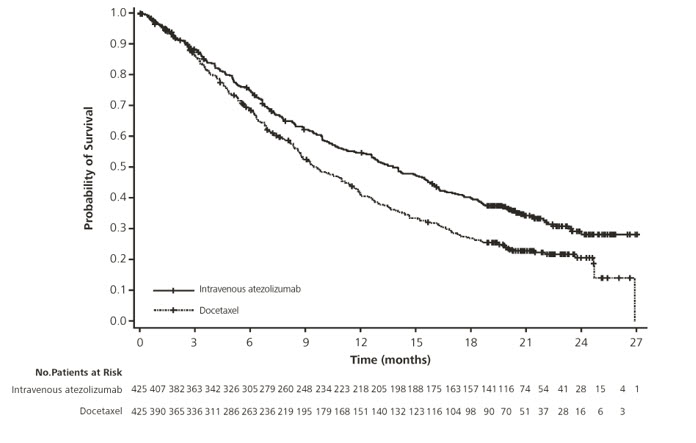
The safety of intravenous atezolizumab was evaluated in OAK, a multicenter, international, randomized, open-label trial in patients with metastatic NSCLC who progressed during or following a platinum-containing regimen, regardless of PD-L1 expression [see Clinical Studies (14.1)]. A total of 609 patients received intravenous atezolizumab 1200 mg intravenously every 3 weeks until unacceptable toxicity, radiographic progression, or clinical progression or docetaxel (n = 578) 75 mg/m2 intravenously every 3 weeks until unacceptable toxicity or disease progression. The study excluded patients with active or prior autoimmune disease or with medical conditions that required systemic corticosteroids. The median duration of exposure was 3.4 months (0 to 26 months) in intravenous atezolizumab-treated patients and 2.1 months (0 to 23 months) in docetaxel-treated patients.
The study population characteristics were: median age of 63 years (25 to 85 years), 46% age 65 years or older, 62% male, 71% White, 20% Asian, 68% former smoker, 16% current smoker, and 63% had ECOG performance status of 1.
Fatal adverse reactions occurred in 1.6% of patients; these included pneumonia, sepsis, septic shock, dyspnea, pulmonary hemorrhage, sudden death, myocardial ischemia or renal failure.
Serious adverse reactions occurred in 33.5% of patients. The most frequent serious adverse reactions (> 1%) were pneumonia, sepsis, dyspnea, pleural effusion, pulmonary embolism, pyrexia and respiratory tract infection.
Intravenous atezolizumab was discontinued due to adverse reactions in 8% of patients. The most common adverse reactions leading to intravenous atezolizumab discontinuation were fatigue, infections and dyspnea. Adverse reactions leading to interruption of intravenous atezolizumab occurred in 25% of patients; the most common (> 1%) were pneumonia, liver function test abnormality, dyspnea, fatigue, pyrexia, and back pain.
Tables 13 and 14 summarize adverse reactions and laboratory abnormalities, respectively, in OAK.
Table 13: Adverse Reactions Occurring in ≥ 10% of Patients with NSCLC Receiving Intravenous Atezolizumab in OAK| Adverse Reaction | Intravenous Atezolizumab
N = 609 | Docetaxel
N = 578 |
|---|
All Grades
(%) | Grades 3–4
(%) | All Grades
(%) | Grades 3–4
(%) |
|---|
| Graded per NCI CTCAE v4.0 |
| General |
| Fatigue/Asthenia Includes fatigue and asthenia | 44 | 4 | 53 | 6 |
| Pyrexia | 18 | < 1 | 13 | < 1 |
| Respiratory |
| Cough Includes cough and exertional cough | 26 | < 1 | 21 | < 1 |
| Dyspnea | 22 | 2.8 | 21 | 2.6 |
| Metabolism and Nutrition |
| Decreased appetite | 23 | < 1 | 24 | 1.6 |
| Musculoskeletal |
| Myalgia/Pain Includes musculoskeletal pain, musculoskeletal stiffness, musculoskeletal chest pain, myalgia | 20 | 1.3 | 20 | < 1 |
| Arthralgia | 12 | 0.5 | 10 | 0.2 |
| Gastrointestinal |
| Nausea | 18 | < 1 | 23 | < 1 |
| Constipation | 18 | < 1 | 14 | < 1 |
| Diarrhea | 16 | < 1 | 24 | 2 |
| Skin |
| Rash Includes rash, erythematous rash, generalized rash, maculopapular rash, papular rash, pruritic rash, pustular rash, pemphigoid | 12 | < 1 | 10 | 0 |
Table 14: Laboratory Abnormalities Worsening from Baseline Occurring in ≥ 20% of Patients with NSCLC Receiving Intravenous Atezolizumab in OAK| Laboratory Abnormality | Intravenous Atezolizumab | Docetaxel |
|---|
All Grades
(%) | Grades 3–4
(%) | All Grades
(%) | Grades 3–4
(%) |
|---|
| Each test incidence is based on the number of patients who had both baseline and at least one on-study laboratory measurement available: intravenous atezolizumab (range: 546–585) and docetaxel (range: 532–560). Graded according to NCI CTCAE version 4.0 |
| Hematology |
| Anemia | 67 | 3 | 82 | 7 |
| Lymphocytopenia | 49 | 14 | 60 | 21 |
| Chemistry |
| Hypoalbuminemia | 48 | 4 | 50 | 3 |
| Hyponatremia | 42 | 7 | 31 | 6 |
| Increased Alkaline Phosphatase | 39 | 2 | 25 | 1 |
| Increased AST | 31 | 3 | 16 | 0.5 |
| Increased ALT | 27 | 3 | 14 | 0.5 |
| Hypophosphatemia | 27 | 5 | 23 | 4 |
| Hypomagnesemia | 26 | 1 | 21 | 1 |
| Increased Creatinine | 23 | 2 | 16 | 1 |
Adverse Reactions in Adult Patients with Small Cell Lung Cancer
The safety of TECENTRIQ HYBREZA for its approved Small Cell Lung Cancer (SCLC) indication [see Indications and Usage (1.2)] has been established in adequate and well-controlled studies of intravenous atezolizumab for SCLC (IMpower133 study).
Small Cell Lung Cancer (SCLC)
IMpower133
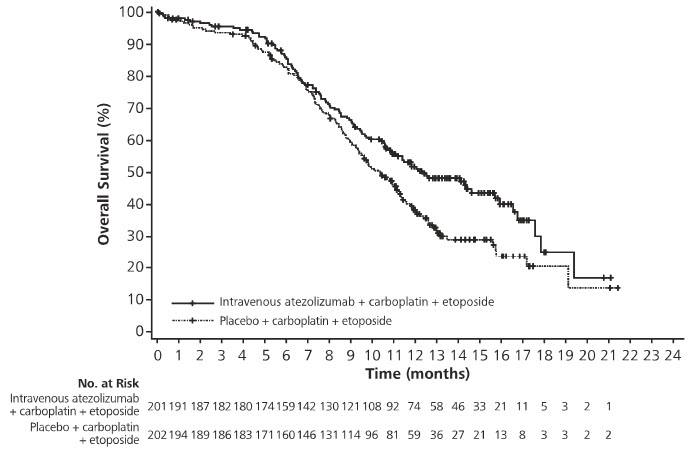
The safety of intravenous atezolizumab with carboplatin and etoposide was evaluated in IMpower133, a randomized, multicenter, double-blind, placebo-controlled trial in which 198 patients with ES-SCLC received intravenous atezolizumab 1200 mg and carboplatin AUC 5 mg/mL/min on Day 1 and etoposide 100 mg/m2 intravenously on Days 1, 2 and 3 of each 21-day cycle for a maximum of 4 cycles, followed by intravenous atezolizumab 1200 mg every 3 weeks until disease progression or unacceptable toxicity [see Clinical Studies (14.2)]. Among 198 patients receiving intravenous atezolizumab, 32% were exposed for 6 months or longer and 12% were exposed for 12 months or longer.
Fatal adverse reactions occurred in 2% of patients receiving intravenous atezolizumab. These included pneumonia, respiratory failure, neutropenia, and death (1 patient each).
Serious adverse reactions occurred in 37% of patients receiving intravenous atezolizumab. Serious adverse reactions in > 2% were pneumonia (4.5%), neutropenia (3.5%), febrile neutropenia (2.5%), and thrombocytopenia (2.5%).
Intravenous atezolizumab was discontinued due to adverse reactions in 11% of patients. The most frequent adverse reaction requiring permanent discontinuation in > 2% of patients was infusion-related reactions (2.5%).
Adverse reactions leading to interruption of intravenous atezolizumab occurred in 59% of patients; the most common (> 1%) were neutropenia (22%), anemia (9%), leukopenia (7%), thrombocytopenia (5%), fatigue (4.0%), infusion-related reaction (3.5%), pneumonia (2.0%), febrile neutropenia (1.5%), increased ALT (1.5%), and nausea (1.5%).
Tables 15 and 16 summarize adverse reactions and laboratory abnormalities, respectively, in patients who received intravenous atezolizumab with carboplatin and etoposide in IMpower133.
Table 15: Adverse Reactions Occurring in ≥ 20% of Patients with SCLC Receiving Intravenous Atezolizumab in IMpower133| Adverse Reaction | Intravenous Atezolizumab with Carboplatin and Etoposide
N = 198 | Placebo with Carboplatin and Etoposide
N = 196 |
|---|
All Grades
(%) | Grades 3–4
(%) | All Grades
(%) | Grades 3–4
(%) |
|---|
| Graded per NCI CTCAE v4.0 |
| General |
| Fatigue/Asthenia | 39 | 5 | 33 | 3 |
| Gastrointestinal |
| Nausea | 38 | 1 | 33 | 1 |
| Constipation | 26 | 1 | 30 | 1 |
| Vomiting | 20 | 2 | 17 | 3 |
| Skin and Subcutaneous Tissue |
| Alopecia | 37 | 0 | 35 | 0 |
| Metabolism and Nutrition |
| Decreased appetite | 27 | 1 | 18 | 0 |
Table 16: Laboratory Abnormalities Worsening from Baseline Occurring in ≥ 20% of Patients with SCLC Receiving Intravenous Atezolizumab in IMpower133| Laboratory Abnormality | Intravenous Atezolizumab with Carboplatin and Etoposide | Placebo with Carboplatin and Etoposide |
|---|
All Grades
(%) | Grades 3–4
(%) | All Grades
(%) | Grades 3–4
(%) |
|---|
| Each test incidence is based on the number of patients who had both baseline and at least one on-study laboratory measurement available: Intravenous Atezolizumab (range: 181–193); Placebo (range: 181–196). Graded per NCI CTCAE v4.0 |
| Hematology |
| Anemia | 94 | 17 | 93 | 19 |
| Neutropenia | 73 | 45 | 76 | 48 |
| Thrombocytopenia | 58 | 20 | 53 | 17 |
| Lymphopenia | 46 | 14 | 38 | 11 |
| Chemistry |
| Hyperglycemia | 67 | 10 | 65 | 8 |
| Increased Alkaline Phosphatase | 38 | 1 | 35 | 2 |
| Hyponatremia | 34 | 15 | 33 | 11 |
| Hypoalbuminemia | 32 | 1 | 30 | 0 |
| Decreased TSH TSH = thyroid-stimulating hormone. NCI CTCAE v4.0 does not include these laboratories. | 28 | NA NA = Not applicable | 15 | NA |
| Hypomagnesemia | 31 | 5 | 35 | 6 |
| Hypocalcemia | 26 | 3 | 28 | 5 |
| Increased ALT | 26 | 3 | 31 | 1 |
| Increased AST | 22 | 1 | 21 | 2 |
| Increased Blood Creatinine | 22 | 4 | 15 | 1 |
| Hyperphosphatemia | 21 | NA | 23 | NA |
| Increased TSH | 21 | NA | 7 | NA |
Adverse Reactions in Adult Patients with Hepatocellular Carcinoma
The safety of TECENTRIQ HYBREZA for its approved indication hepatocellular carcinoma [see Indications and Usage (1.3)] has been established in adequate and well-controlled studies of intravenous atezolizumab for hepatocellular carcinoma (IMbrave150 study).
Hepatocellular Carcinoma
IMbrave150
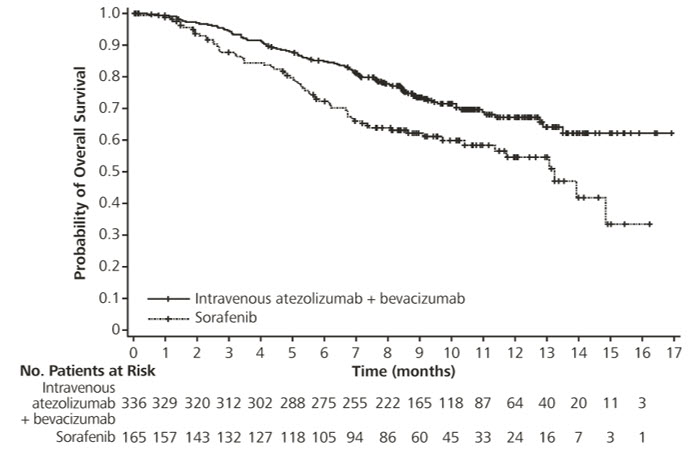
The safety of intravenous atezolizumab in combination with bevacizumab was evaluated in IMbrave150, a multicenter, international, randomized, open-label trial in patients with locally advanced or metastatic or unresectable hepatocellular carcinoma who have not received prior systemic treatment [see Clinical Studies (14.3)]. Patients received 1,200 mg of intravenous atezolizumab intravenously followed by 15 mg/kg bevacizumab (n = 329) every 3 weeks, or 400 mg of sorafenib (n = 156) given orally twice daily, until disease progression or unacceptable toxicity. The median duration of exposure to intravenous atezolizumab was 7.4 months (range: 0–16 months) and to bevacizumab was 6.9 months (range: 0–16 months).
Fatal adverse reactions occurred in 4.6% of patients in the intravenous atezolizumab and bevacizumab arm. The most common adverse reactions leading to death were gastrointestinal and esophageal varices hemorrhage (1.2%) and infections (1.2%).
Serious adverse reactions occurred in 38% of patients in the intravenous atezolizumab and bevacizumab arm. The most frequent serious adverse reactions (≥ 2%) were gastrointestinal hemorrhage (7%), infections (6%), and pyrexia (2.1%).
Adverse reactions leading to discontinuation of intravenous atezolizumab occurred in 9% of patients in the intravenous atezolizumab and bevacizumab arm. The most common adverse reactions leading to intravenous atezolizumab discontinuation were hemorrhages (1.2%), including gastrointestinal, subarachnoid, and pulmonary hemorrhages; increased transaminases or bilirubin (1.2%); infusion-related reaction/cytokine release syndrome (0.9%); and autoimmune hepatitis (0.6%).
Adverse reactions leading to interruption of intravenous atezolizumab occurred in 41% of patients in the intravenous atezolizumab and bevacizumab arm; the most common (≥ 2%) were liver function laboratory abnormalities including increased transaminases, bilirubin, or alkaline phosphatase (8%); infections (6%); gastrointestinal hemorrhages (3.6%); thrombocytopenia/decreased platelet count (3.6%); hyperthyroidism (2.7%); and pyrexia (2.1%).
Immune-related adverse reactions requiring systemic corticosteroid therapy occurred in 12% of patients in the intravenous atezolizumab and bevacizumab arm.
Tables 17 and 18 summarize adverse reactions and laboratory abnormalities, respectively, in patients who received intravenous atezolizumab and bevacizumab in IMbrave150.
Table 17: Adverse Reactions Occurring in ≥ 10% of Patients with HCC Receiving Intravenous Atezolizumab in IMbrave150| Adverse Reaction | Intravenous Atezolizumab in combination with Bevacizumab
(n = 329) | Sorafenib
(n = 156) |
|---|
| All Grades Graded per NCI CTCAE v4.0
(%) | Grades 3–4
(%) | All Grades
(%) | Grades 3–4
(%) |
|---|
| Vascular Disorders |
| Hypertension | 30 | 15 | 24 | 12 |
| General Disorders and Administration Site Conditions |
| Fatigue/Asthenia Includes fatigue and asthenia | 26 | 2 | 32 | 6 |
| Pyrexia | 18 | 0 | 10 | 0 |
| Renal and Urinary Disorders |
| Proteinuria | 20 | 3 | 7 | 0.6 |
| Investigations |
| Weight Decreased | 11 | 0 | 10 | 0 |
| Skin and Subcutaneous Tissue Disorders |
| Pruritus | 19 | 0 | 10 | 0 |
| Rash | 12 | 0 | 17 | 2.6 |
| Gastrointestinal Disorders |
| Diarrhea | 19 | 1.8 | 49 | 5 |
| Constipation | 13 | 0 | 14 | 0 |
| Abdominal Pain | 12 | 0 | 17 | 0 |
| Nausea | 12 | 0 | 16 | 0 |
| Vomiting | 10 | 0 | 8 | 0 |
| Metabolism and Nutrition Disorders |
| Decreased Appetite | 18 | 1.2 | 24 | 3.8 |
| Respiratory, Thoracic and Mediastinal Disorders |
| Cough | 12 | 0 | 10 | 0 |
| Epistaxis | 10 | 0 | 4.5 | 0 |
| Injury, Poisoning and Procedural Complications |
| Infusion-Related Reaction | 11 | 2.4 | 0 | 0 |
Table 18: Laboratory Abnormalities Worsening from Baseline Occurring in ≥ 20% of Patients with HCC Receiving Intravenous Atezolizumab in IMbrave150| Laboratory Abnormality | Intravenous Atezolizumab in combination with Bevacizumab
(n = 329) | Sorafenib
(n = 156) |
|---|
| All Grades Graded per NCI CTCAE v4.0
(%) | Grades 3–4
(%) | All Grades
(%) | Grades 3–4
(%) |
|---|
| Each test incidence is based on the number of patients who had both baseline and at least one on-study laboratory measurement available: intravenous atezolizumab plus bevacizumab (222-323) and sorafenib (90-153) |
| Chemistry |
| Increased AST | 86 | 16 | 90 | 16 |
| Increased Alkaline Phosphatase | 70 | 4 | 76 | 4.6 |
| Increased ALT | 62 | 8 | 70 | 4.6 |
| Decreased Albumin | 60 | 1.5 | 54 | 0.7 |
| Decreased Sodium | 54 | 13 | 49 | 9 |
| Increased Glucose | 48 | 9 | 43 | 4.6 |
| Decreased Calcium | 30 | 0.3 | 35 | 1.3 |
| Decreased Phosphorus | 26 | 4.7 | 58 | 16 |
| Increased Potassium | 23 | 1.9 | 16 | 2 |
| Hypomagnesemia | 22 | 0 | 22 | 0 |
| Hematology |
| Decreased Platelet | 68 | 7 | 63 | 4.6 |
| Decreased Lymphocytes | 62 | 13 | 58 | 11 |
| Decreased Hemoglobin | 58 | 3.1 | 62 | 3.9 |
| Increased Bilirubin | 57 | 8 | 59 | 14 |
| Decreased Leukocyte | 32 | 3.4 | 29 | 1.3 |
| Decreased Neutrophil | 23 | 2.3 | 16 | 1.1 |
Adverse Reactions in Adult Patients with Melanoma
The safety of TECENTRIQ HYBREZA for its approved melanoma indication [see Indications and Usage (1.4)] has been established in adequate and well-controlled studies of intravenous atezolizumab for melanoma (IMspire150 study).
Metastatic Melanoma
IMspire150
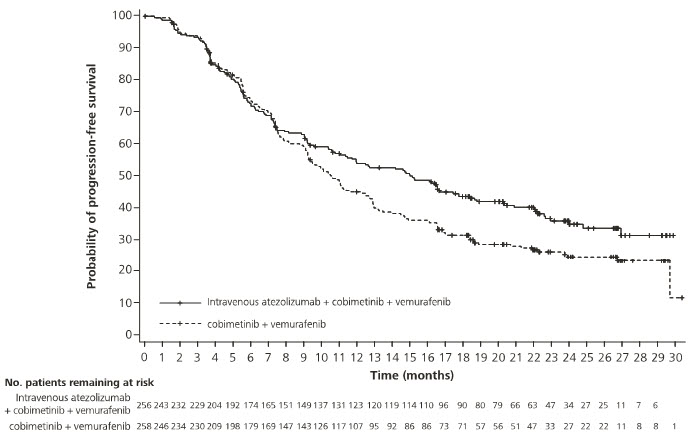
The safety of intravenous atezolizumab, administered with cobimetinib and vemurafenib, was evaluated in IMspire150, a double-blind, randomized (1:1), placebo-controlled study conducted in patients with previously untreated BRAF V600 mutation-positive metastatic or unresectable melanoma [see Clinical Studies (14.4)]. Patients received intravenous atezolizuamb with cobimetinib and vemurafenib (n = 230) or placebo with cobimetinib and vemurafenib (n = 281).
Among the 230 patients who received intravenous atezolizumab administered with cobimetinib and vemurafenib, the median duration of exposure to intravenous atezolizumab was 9.2 months (range: 0–30 months), to cobimetinib was 10.0 months (range: 1–31 months) and to vemurafenib was 9.8 months (range: 1–31 months).
Fatal adverse reactions occurred in 3% of patients in the intravenous atezolizumab plus cobimetinib and vemurafenib arm. Adverse reactions leading to death were hepatic failure, fulminant hepatitis, sepsis, septic shock, pneumonia, and cardiac arrest.
Serious adverse reactions occurred in 45% of patients in the intravenous atezolizumab plus cobimetinib and vemurafenib arm. The most frequent (≥ 2%) serious adverse reactions were hepatotoxicity (7%), pyrexia (6%), pneumonia (4.3%), malignant neoplasms (2.2%), and acute kidney injury (2.2%).
Adverse reactions leading to discontinuation of intravenous atezolizumab occurred in 21% of patients in the intravenous atezolizumab plus cobimetinib and vemurafenib arm. The most frequent (≥ 2%) adverse reactions leading to intravenous atezolizumab discontinuation were increased ALT (2.2%) and pneumonitis (2.6%).
Adverse reactions leading to interruption of intravenous atezolizumab occurred in 68% of patients in the intravenous atezolizumab plus cobimetinib and vemurafenib arm. The most frequent (≥ 2%) adverse reactions leading to intravenous atezolizuamb interruption were pyrexia (14%), increased ALT (13%), hyperthyroidism (10%), increased AST (10%), increased lipase (9%), increased amylase (7%), pneumonitis (5%), increased CPK (4.3%), diarrhea (3.5%), pneumonia (3.5%), asthenia (3%), rash (3%), influenza (3%), arthralgia (2.6%), fatigue (2.2%), dyspnea (2.2%), cough (2.2%), peripheral edema (2.2%), uveitis (2.2%), bronchitis (2.2%), hypothyroidism (2.2%), and respiratory tract infection (2.2%).
Tables 19 and 20 summarize the incidence of adverse reactions and laboratory abnormalities in IMspire150.
Table 19: Adverse Reactions Occurring in ≥ 10% of Patients on the Intravenous Atezolizumab plus Cobimetinib and Vemurafenib Arm or the Placebo plus Cobimetinib and Vemurafenib Arm and at a Higher Incidence (Between Arm Difference of ≥ 5% All Grades or ≥ 2% Grades 3-4 Intravenous Atezolizumb in IMspire150)| Adverse Reaction | Intravenous Atezolizumab in combination with Cobimetinib and Vemurafenib
(n=230) | Placebo with Cobimetinib and Vemurafenib
(n=281) |
|---|
All Grades
(%) | Grades 3–4
(%) | All Grades
(%) | Grades 3–4
(%) |
|---|
| Skin and Subcutaneous Tissue Disorders |
| Rash Includes rash, rash maculo-papular, dermatitis acneiform, rash macular, rash erythematous, eczema, skin exfoliation, rash papular, rash pustular, palmar-plantar erythrodysaesthesia syndrome, dermatitis, dermatitis contact, erythema multiforme, rash pruritic, drug eruption, nodular rash, dermatitis allergic, exfoliative rash, dermatitis exfoliative generalised and rash morbilliform | 75 | 27 | 72 | 23 |
| Pruritus | 26 | < 1 | 17 | < 1 |
| Photosensitivity reaction | 21 | < 1 | 25 | 3.2 |
| General Disorders and Administration Site Conditions |
| Fatigue Includes fatigue, asthenia and malaise | 51 | 3 | 45 | 1.8 |
| Pyrexia Includes pyrexia and hyperpyrexia | 49 | 1.7 | 35 | 2.1 |
| Edema Includes edema peripheral, lymphoedema, oedema, face oedema, eyelid oedema, periorbital oedema, lip oedema and generalised oedema | 26 | < 1 | 21 | 0 |
| Gastrointestinal Disorders |
| Hepatotoxicity Includes alanine aminotransferase increased, aspartate aminotransferase increased, blood bilirubin increased, transaminases increased, hepatitis, hepatic enzyme increased, hepatotoxicity, hypertransaminasaemia, bilirubin conjugated increased, hepatocellular injury, hyperbilirubinaemia, liver function test increased, hepatic failure, hepatitis fulminant and liver function test abnormal | 50 | 21 | 36 | 13 |
| Nausea | 30 | < 1 | 32 | 2.5 |
| Stomatitis Includes stomatitis, mucosal inflammation, aphthous ulcer, mouth ulceration, cheilitis and glossitis | 23 | 1.3 | 15 | < 1 |
| Musculoskeletal and Connective Tissue Disorders |
| Musculoskeletal pain Includes arthralgia, myalgia, pain in extremity, back pain, musculoskeletal pain, arthritis, neck pain, musculoskeletal chest pain, musculoskeletal stiffness, bone pain, spinal pain, immune-mediated arthritis, joint stiffness and non-cardiac chest pain | 62 | 4.3 | 48 | 3.2 |
| Endocrine Disorders |
| Hypothyroidism Includes hypothyroidism and blood thyroid stimulating hormone increased | 22 | 0 | 10 | 0 |
| Hyperthyroidism | 18 | < 1 | 8 | 0 |
| Injury, Poisoning and Procedural Complications |
| Infusion-related reaction Includes infusion related reaction and hypersensitivity | 10 | 2.6 | 8 | < 1 |
| Respiratory, Thoracic and Mediastinal Disorders |
| Pneumonitis Includes pneumonitis and interstitial lung disease | 12 | 1.3 | 6 | < 1 |
| Vascular Disorders |
| Hypertension Includes hypertension, blood pressure increased, hypertensive crisis | 17 | 10 | 18 | 7 |
Clinically important adverse reactions in < 10% of patients who received intravenous atezolizumab plus cobimetinib and vemurafenib were:
Cardiac Disorders: Arrhythmias, ejection fraction decreased, electrocardiogram QT prolonged
Eye Disorders: Uveitis
Gastrointestinal disorders: Pancreatitis
Infections and infestations: Pneumonia, urinary tract infection
Metabolism and nutrition disorders: Hyperglycemia
Nervous system Disorders: Dizziness, dysgeusia, syncope
Respiratory, thoracic and mediastinal disorders: Dyspnea, oropharyngeal pain
Skin and Subcutaneous Tissue Disorders: Vitiligo
Table 20: Laboratory Abnormalities Worsening from Baseline Occurring in ≥ 20% of Patients Receiving Intravenous Atezolizumab Plus Cobimetinib and Vemurafenib Arm or the Placebo Plus Cobimetinib and Vemurafenib Arm and at a Higher Incidence (Between Arm Difference of ≥ 5% All Grades or ≥ 2% Grades 3–4) in IMspire150| Laboratory Abnormality | Intravenous Atezolizumab in combination with Cobimetinib and Vemurafenib
(n=230) | Placebo with Cobimetinib and Vemurafenib
(n=281) |
|---|
All Grades
(%) | Grades 3–4
(%) | All Grades
(%) | Grades 3–4
(%) |
|---|
Graded per NCI CTCAE v4.0.
Each test incidence is based on the number of patients who had both baseline and at least one on-study laboratory measurement available: intravenous atezolizumab plus cobimetinib and vemurafenib (28-277), placebo plus cobimetinib and vemurafenib arm (25-230). |
| Hematology |
| Decreased Lymphocytes | 80 | 24 | 72 | 17 |
| Decreased Hemoglobin | 77 | 2.6 | 72 | 2.2 |
| Decreased Platelet | 34 | 1.3 | 24 | 0.4 |
| Decreased Neutrophils | 26 | 2.2 | 19 | 1.5 |
| Chemistry |
| Increased Creatine Kinase | 88 | 22 | 81 | 18 |
| Increased AST | 80 | 13 | 68 | 6 |
| Increased ALT | 79 | 18 | 62 | 12 |
| Increased Triacylglycerol Lipase | 75 | 46 | 62 | 35 |
| Increased Alkaline Phosphatase | 73 | 6 | 63 | 2.9 |
| Decreased Phosphorus | 67 | 22 | 64 | 14 |
| Increased Amylase | 51 | 13 | 45 | 13 |
| Increased Blood Urea Nitrogen | 47 | NA NA = Not applicable. NCI CTCAE v4.0 does not include these laboratories | 37 | NA |
| Decreased Albumin | 43 | 0.9 | 34 | 1.5 |
| Increased Bilirubin | 42 | 3.1 | 33 | 0.7 |
| Decreased Calcium | 41 | 1.3 | 28 | 0 |
| Decreased Sodium | 40 | 5 | 34 | 7 |
| Decreased Thyroid-Stimulating Hormone | 38 | NA | 23 | NA |
| Increased Thyroid-Stimulating Hormone Increased Thyroid Stimulating Hormone has a difference < 5% (All Grades) between arms and is included for clinical completeness | 37 | NA | 33 | NA |
| Decreased Potassium | 36 | 5 | 22 | 4.3 |
| Increased Triiodothyronine | 33 | NA | 18 | NA |
| Increased Free Thyroxine | 32 | NA | 21 | NA |
| Decreased Total Triiodothyronine | 32 | NA | 8 | NA |
| Increased Potassium | 29 | 1.3 | 19 | 1.4 |
| Decreased Triiodothyronine | 27 | NA | 21 | NA |
| Increased Sodium | 20 | 0 | 13 | 0.4 |
Adverse Reactions in Adults with Alveolar Soft Part Sarcoma
The safety of TECENTRIQ HYBREZA for its approved alveolar soft part sarcoma (ASPS) indication [see Indications and Usage (1.5)] has been established in adequate and well-controlled studies of intravenous atezolizumab for ASPS (ML39345 study).
Alveolar Soft Part Sarcoma
ML39345 Study
The safety of intravenous atezolizumab was evaluated in 47 adult and 2 pediatric patients enrolled in Study ML39345 [see Clinical Studies (14.5)]. Adult patients received intravenous atezolizumab 1200 mg every 3 weeks and pediatric patients received 15 mg/kg up to a maximum 1200 mg every 3 weeks until disease progression or unacceptable toxicity. The median duration of exposure to intravenous atezolizumab was 8.9 months (1 to 40 months).
Serious adverse reactions occurred in 41% of patients receiving intravenous atezolizumab. The most frequent serious adverse reactions (> 2%) were fatigue, pain in extremity, pulmonary hemorrhage, and pneumonia (4.1% each).
Dosage interruptions of intravenous atezolizumab due to an adverse reaction occurred in 35% of patients. The most common adverse reactions (≥ 3%) leading to dose interruptions were pneumonitis and pain in extremity (4.1% each).
Tables 21 and 22 summarize adverse reactions and laboratory abnormalities in Study ML39345.
Table 21: Adverse Reactions Occurring in ≥ 15% of Patients with ASPS Receiving Intravenous Atezolizumab in ML39345| Adverse Reaction | Intravenous Atezolizumab
N = 49 |
|---|
All Grades
(%) | Grades 3–4
(%) |
|---|
| Graded per NCI CTCAE v4.0 |
| General disorders and administration site conditions |
| Fatigue | 55 | 2 |
| Pyrexia | 25 | 2 |
| Influenza like illness | 18 | 0 |
| Gastrointestinal disorders |
| Nausea | 43 | 0 |
| Vomiting | 37 | 0 |
| Constipation | 33 | 0 |
| Diarrhea | 27 | 2 |
| Abdominal pain Includes abdominal pain and abdominal pain upper | 25 | 0 |
| Metabolism and nutrition disorders |
| Decreased appetite | 22 | 2 |
| Respiratory, Thoracic and Mediastinal |
| Cough Includes cough, upper-airway cough syndrome, and productive cough | 45 | 0 |
| Dyspnea | 33 | 0 |
| Rhinitis allergic | 16 | 0 |
| Musculoskeletal and connective tissue disorders |
| Musculoskeletal pain Includes arthralgia, pain in extremity, myalgia, non-cardiac chest pain, neck pain, musculoskeletal chest pain, and back pain | 67 | 8 |
| Skin and subcutaneous tissue disorders |
| Rash Includes rash maculo-papular, rash, dermatitis acneiform, eczema, skin exfoliation, and drug eruption | 47 | 2 |
| Nervous system disorders |
| Headache | 43 | 4 |
| Dizziness Includes vertigo and dizziness | 29 | 4 |
| Vascular disorders |
| Hypertension | 43 | 6 |
| Hemorrhage Includes pulmonary hemorrhage, hemoptysis, conjunctival hemorrhage, epistaxis, hematuria, rectal hemorrhage, and laryngeal hemorrhage | 29 | 2 |
| Psychiatric disorders |
| Insomnia | 27 | 0 |
| Anxiety | 25 | 0 |
| Cardiac Disorders |
| Arrhythmia Includes atrial fibrillation, sinus bradycardia, ventricular tachycardia, and sinus tachycardia | 22 | 2 |
| Endocrine disorders |
| Hypothyroidism Includes hypothyroidism and blood thyroid stimulating hormone increased | 25 | 0 |
| Investigations |
| Weight decreased | 18 | 0 |
| Weight increased | 16 | 6 |
Table 22: Laboratory Abnormalities Worsening from Baseline Occurring in ≥ 20% of Patients with ASPS Receiving Intravenous Atezolizumab in ML39345| Laboratory Abnormality Laboratory tests which do not have NCI CTCAE grading criteria are also included for All Grade assessments, which were performed by comparing to respective lab normal ranges | Intravenous Atezolizumab The denominators used to calculate the rate varied from 4–49 for all tests of interest based on the number of patients with a baseline value and at least one on-study laboratory measurement available |
|---|
All Grades
(%) | Grades 3–4
(%) |
|---|
| Hematology |
| Decreased Hemoglobin | 63 | 0 |
| Decreased Platelets | 27 | 0 |
| Increased Platelets | 29 | 0 |
| Chemistry |
| Increased Alkaline Phosphatase | 29 | 0 |
| Decreased Amylase | 40 | 0 |
| Increased Amylase | 20 | 20 |
| Decreased Bilirubin | 49 | 0 |
| Decreased Calcium | 47 | 0 |
| Increased Calcium | 25 | 14 |
| Decreased Glucose | 33 | 0 |
| Increased Glucose | 78 | 0 |
| Decreased Glucose (fasting) | 25 | 0 |
| Decreased Magnesium | 21 | 0 |
| Increased Magnesium | 26 | 26 |
| Increased AST | 39 | 2 |
| Increased ALT | 33 | 2 |
| Decreased Sodium | 43 | 0 |
| Increased Lipase | 25 | 25 |
Risk Summary
Based on its mechanism of action [see Clinical Pharmacology (12.1)], TECENTRIQ HYBREZA can cause fetal harm when administered to a pregnant woman. There are no available data on the use of TECENTRIQ HYBREZA in pregnant women.
Animal studies have demonstrated that inhibition of the PD-L1/PD-1 pathway can lead to increased risk of immune-related rejection of the developing fetus resulting in fetal death (see Data). Advise females of reproductive potential of the potential risk to a fetus [see Warnings and Precautions (5.4)].
In the U.S. general population, the estimated background risk of major birth defects and miscarriage in clinically recognized pregnancies is 2% to 4% and 15% to 20%, respectively.
Data
Animal Data:
TECENTRIQ HYBREZA for subcutaneous injection contains atezolizumab and hyaluronidase [see Description (11)].
Atezolizumab: Animal reproduction studies have not been conducted with atezolizumab to evaluate its effect on reproduction and fetal development. A literature-based assessment of the effects on reproduction demonstrated that a central function of the PD-L1/PD-1 pathway is to preserve pregnancy by maintaining maternal immune tolerance to a fetus. Blockage of PD-L1 signaling has been shown in murine models of pregnancy to disrupt tolerance to a fetus and to result in an increase in fetal loss; therefore, potential risks of administering atezolizumab during pregnancy include increased rates of abortion or stillbirth. As reported in the literature, there were no malformations related to the blockade of PD-L1/PD-1 signaling in the offspring of these animals; however, immune-mediated disorders occurred in PD-1 and PD-L1 knockout mice. Based on its mechanism of action, fetal exposure to atezolizumab may increase the risk of developing immune-mediated disorders or altering the normal immune response.
Hyaluronidase: In an embryo-fetal study, mice were dosed daily by subcutaneous injection during the period of organogenesis with hyaluronidase (recombinant human) at dose levels up to 2,200,000 U/kg, which is > 2,400 times higher than the human dose. The study found no evidence of teratogenicity. Reduced fetal weight and increased numbers of fetal resorptions were observed, with no effects found at a daily dose of 360,000 U/kg, which is > 400 times higher than the human dose.
In a peri-and post-natal reproduction study, mice have been dosed daily by subcutaneous injection, with hyaluronidase (recombinant human) from implantation through lactation and weaning at dose levels up to 1,100,000 U/kg, which is > 1,200 times higher than the human dose. The study found no adverse effects on sexual maturation, learning and memory or fertility of the offspring.
Risk Summary
There is no information regarding the presence of atezolizumab or hyaluronidase in human milk or its effects on the breastfed child, or on milk production. Maternal IgG is known to be present in human milk. The effects of local gastrointestinal exposure and limited systemic exposure in the breastfed child to TECENTRIQ HYBREZA are unknown. Because of the potential for serious adverse reactions in breastfed children from TECENTRIQ HYBREZA, advise women not to breastfeed during treatment with TECENTRIQ HYBREZA and for 5 months after the last dose.
Pregnancy Testing
Verify pregnancy status in females of reproductive potential prior to initiating TECENTRIQ HYBREZA [see Warnings and Precautions (5.4) and Use in Specific Populations (8.1)].
Contraception
Females: Advise females of reproductive potential to use effective contraception during treatment with TECENTRIQ HYBREZA and for 5 months following the last dose.
Infertility
Females: Based on animal studies, TECENTRIQ HYBREZA may impair fertility in females of reproductive potential while receiving TECENTRIQ HYBREZA treatment [see Nonclinical Toxicology (13.1)].
Absorption
The mean absolute bioavailability (CV%) of atezolizumab was 72% (83%) and the median time (range) to reach maximum atezolizumab concentration (Tmax) was 4.5 (2.2, 9) days.
Distribution
The volume of distribution of atezolizumab at steady state was 6.9 L.
Elimination
The atezolizumab clearance (CV%) was 0.2 L/day (29%) and the terminal half-life was 27 days. Atezolizumab clearance decreased over time, with a mean maximal reduction (CV%) from baseline value of 17% (41%); this decrease in clearance is not considered clinically significant.
Specific Populations
No clinically significant differences in the pharmacokinetics of atezolizumab were observed based on age, body weight, sex, albumin levels, tumor burden, region, race, mild or moderate renal impairment (estimated glomerular filtration rate 30 to 89 mL/minute/1.73 m2), mild hepatic impairment (bilirubin ≤ ULN and AST > ULN or bilirubin > 1 to 1.5 × ULN and any AST), moderate hepatic impairment (bilirubin >1.5 to 3× ULN and any AST), level of PD-L1 expression, and performance status.
Immunogenicity with Other Clinical Trials with Intravenous Atezolizumab:
During the first year of treatment with intravenous atezolizumab across clinical studies of patients with NSCLC, SCLC, HCC, and melanoma 13% to 36% of patients developed anti-atezolizumab antibodies. Across clinical studies, the NAb incidence in ADA-positive patients was 24% to 83%.
In OAK and IMbrave150, exploratory analyses showed that the subset of patients who were ADA-positive appeared to have less efficacy (effect on overall survival) as compared to patients who tested negative for ADA [see Clinical Studies (14.1, 14.3)]. In study IMpower150, the impact of ADA on efficacy did not appear to be clinically significant [see Clinical Studies (14.1)]. In the remaining studies, there is insufficient information to characterize the effect of ADA on efficacy.
Median atezolizumab clearance in patients who tested positive for anti-atezolizumab antibodies (ADA) was 19% (range of 18% to 49%) higher as compared to atezolizumab clearance in patients who tested negative for ADA; this change in clearance is not expected to be clinically significant. The presence of ADA did not have a clinically significant effect on the incidence or severity of adverse reactions. The effect of NAb on atezolizumab exposure and safety did not appear to be clinically significant. The effect of NAb on key efficacy endpoints is uncertain due to small sample sizes.
NSCLC - TECENTRIQ HYBREZA
IMscin001 (NCT03735121) was an open-label, multi-center, international, randomized study conducted in adult patients with locally advanced or metastatic NSCLC who were not exposed to cancer immunotherapy and who have disease progression following platinum-based chemotherapy. Patients were excluded if they had a history of autoimmune disease; active or corticosteroid-dependent brain metastases; received a live, attenuated vaccine within 4 weeks prior to randomization; or received systemic immunostimulatory agents within 4 weeks or systemic immunosuppressive drugs within 2 weeks prior to randomization. A total of 371 patients were randomized 2:1 to receive either TECENTRIQ HYBREZA (containing 1,875 mg of atezolizumab and 30,000 units of hyaluronidase) administered subcutaneously in the thigh every 3 weeks (n = 247) or intravenous atezolizumab 1,200 mg every 3 weeks (n = 124) until disease progression or unacceptable toxicity.
The primary outcome measure was atezolizumab exposure (Ctrough and AUC0-21days) of subcutaneous TECENTRIQ HYBREZA as compared to intravenous atezolizumab [see Clinical Pharmacology (12.3)]. Additional descriptive efficacy outcome measures were overall response rate (ORR), progression-free survival (PFS) and overall survival (OS).
The median age was 64 years (range: 27 to 85); 69% were male; 67% were White, 22% were Asian, and 0.8% were Black or African American; 74% were non-Hispanic or Latino; 26% had an Eastern Cooperative Oncology Group (ECOG) performance status (PS) of 0, 74% had an ECOG PS of 1; and 70% of patients were current or previous smokers. Sixty-five percent of patients had non-squamous histology, 5% had known EGFR mutations, 1.6% had known ALK rearrangements, 36% had known PD-L1 positive tumors, 16% had asymptomatic CNS metastases at baseline. Eighty percent of patients had received only one prior therapeutic regimen for NSCLC.
At the primary analysis, the confirmed ORR was 9% (95% CI: 5, 13) in the subcutaneous TECENTRIQ HYBREZA arm and 8% (95% CI: 4, 14) in the intravenous atezolizumab arm. After further follow up, no notable differences in PFS and OS were observed between patients who received subcutaneous TECENTRIQ HYBREZA and patients who received intravenous atezolizumab.
NSCLC Trials - Intravenous Atezolizumab
The effectiveness of TECENTRIQ HYBREZA has been established for:
- adjuvant treatment (following tumor resection and platinum-based chemotherapy) in adult patients with stage II to IIIA NSCLC whose tumors have PD-L1 expression on ≥ 1% of tumor cells (IMpower010 study).
- first-line treatment of adult patients with metastatic NSCLC whose tumors have high PD-L1 expression (PD-L1 stained ≥ 50% of tumor cells [TC ≥ 50%] or PD-L1 stained tumor-infiltrating immune cells [IC] covering ≥ 10% of the tumor area [IC ≥ 10%]), with no EGFR or ALK genomic tumor aberrations (IMpower110 study).
- first-line treatment of adult patients with metastatic non-squamous NSCLC with no EGFR or ALK genomic tumor aberrations (IMpower150 study).
- first-line treatment of adult patients with metastatic non-squamous NSCLC with no EGFR or ALK genomic tumor aberrations (IMpower130 study).
- first-line treatment of adult patients with metastatic NSCLC whose tumors have high PD-L1 expression, with no EGFR or ALK genomic tumor aberrations (OAK study).
Use of TECENTRIQ HYBREZA for these NSCLC indications is supported by evidence from the adequate and well-controlled studies conducted with intravenous atezolizumab in these NSCLC populations and pharmacokinetics data that demonstrated comparable exposures to atezolizumab between TECENTRIQ HYBREZA and intravenous atezolizumab in the IMscin001 trial [see Adverse Reactions (6.1), Clinical Pharmacology (12.3), and Clinical Studies (14.1)]. Below is a description of the efficacy results of these adequate and well-controlled studies of intravenous atezolizumab in these NSCLC populations.
Adjuvant Treatment of Early-stage NSCLC
IMpower010
The efficacy of intravenous atezolizumab was evaluated in IMpower010 (NCT02486718), a multi-center, randomized, open-label trial for the adjuvant treatment of patients with NSCLC who had complete tumor resection and were eligible to receive cisplatin-based adjuvant chemotherapy. Eligible patients were required to have Stage IB (tumors ≥ 4 cm) – Stage IIIA NSCLC per the Union for International Cancer Control/American Joint Committee on Cancer staging system, 7th edition. Patients were excluded if they had a history of autoimmune disease; a history of idiopathic pulmonary fibrosis, organizing pneumonia, drug-induced pneumonitis, idiopathic pneumonitis, or evidence of active pneumonitis; administration of a live, attenuated vaccine within 28 days prior to randomization; administration of systemic immunostimulatory agents within 4 weeks or systemic immunosuppressive medications within 2 weeks prior to randomization.
A total of 1005 patients who had complete tumor resection and received cisplatin-based adjuvant chemotherapy were randomized (1:1) to receive intravenous atezolizumab 1200 mg intravenous infusion every 3 weeks for 16 cycles, unless disease recurrence or unacceptable toxicity occurred, or best supportive care (BSC). Randomization was stratified by sex, stage of disease, histology, and PD-L1 expression.
Tumor assessments were conducted at baseline of the randomization phase and every 4 months for the first year following Cycle 1, Day 1 and then every 6 months until year five, then annually thereafter.
The median age was 62 years (range: 26 to 84), and 67% of patients were male. The majority of patients were White (73%) and Asian (24%). Most patients were current or previous smokers (78%) and baseline ECOG performance status in patients was 0 (55%) or 1 (44%). Overall, 12% of patients had Stage IB, 47% had Stage II and 41% had Stage IIIA disease. PD-L1 expression, defined as the percentage of tumor cells expressing PD-L1 as measured by the VENTANA PD-L1 (SP263) assay, was ≥ 1% in 53% of patients, < 1% in 44% and unknown in 2.6%.
The primary efficacy outcome measure was disease-free survival (DFS) as assessed by the investigator. The primary efficacy analysis population (n = 476) was patients with Stage II – IIIA NSCLC with PD-L1 expression on ≥ 1% of tumor cells (PD-L1 ≥ 1% TC). DFS was defined as the time from the date of randomization to the date of occurrence of any of the following: first documented recurrence of disease, new primary NSCLC, or death due to any cause, whichever occurred first. A key secondary efficacy outcome measure was overall survival (OS) in the intent-to-treat population.
At the time of the interim DFS analysis, the study demonstrated a statistically significant improvement in DFS in the PD-L1 ≥ 1% TC, Stage II – IIIA patient population.
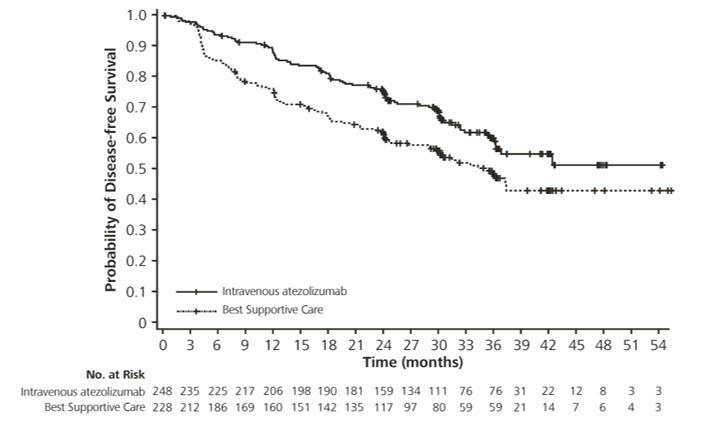
Efficacy results are presented in Table 23 and Figure 1.
Table 23: Efficacy Results from IMpower010 in Patients with Stage II - IIIA NSCLC with PD-L1 expression ≥ 1% TC | Arm A:
Intravenous Atezolizumab
N = 248 | Arm B:
Best Supportive Care
N = 228 |
|---|
| CI = Confidence interval, NE = Not estimable, NR = Not reached |
| Disease-Free Survival | |
| Number of events (%) | 88 (35) | 105 (46) |
| Median, months | NR | 35.3 |
| (95% CI) | (36.1, NE) | (29.0, NE) |
| Hazard ratio Stratified by stage, sex, and histology (95% CI) | 0.66 (0.50, 0.88) |
| p-value | 0.004 |
In a pre-specified secondary subgroup analysis of patients with PD-L1 TC ≥ 50% Stage II – IIIA NSCLC (n = 229), the median DFS was not reached (95% CI: 42.3 months, NE) for patients in the intravenous atezolizumab arm and was 35.7 months (95% CI: 29.7, NE) for patients in the best supportive care arm, with a HR of 0.43 (95% CI: 0.27, 0.68). In an exploratory subgroup analysis of patients with PD-L1 TC 1-49% Stage II – IIIA NSCLC (n = 247), the median DFS was 32.8 months (95% CI:29.4, NE) for patients in the intravenous atezolizumab arm and 31.4 months (95% CI: 24.0, NE) for patients in the best supportive care arm, with a HR of 0.87 (95% CI: 0.60, 1.26).
Figure 1: Kaplan-Meier Plot of Disease-Free Survival in IMpower010 in Patients with Stage II – IIIA NSCLC with PD-L1 expression ≥ 1% TC
At the time of the DFS interim analysis, 19% of patients in the PD-L1 ≥1% TC Stage II – IIIA patient population had died. An exploratory analysis of OS in this population resulted in a stratified HR of 0.77 (95% CI: 0.51, 1.17).
Metastatic Chemotherapy-Naïve NSCLC
IMpower110
The efficacy of intravenous atezolizumab was evaluated in IMpower110 (NCT02409342), a multicenter, international, randomized, open-label trial in patients with stage IV NSCLC whose tumors express PD-L1 (PD-L1 stained ≥ 1% of tumor cells [TC ≥ 1%] or PD-L1 stained tumor-infiltrating immune cells [IC] covering ≥ 1% of the tumor area [IC ≥ 1%]), who had received no prior chemotherapy for metastatic disease. PD-L1 tumor status was determined based on immunohistochemistry (IHC) testing using the VENTANA PD-L1 (SP142) Assay. The evaluation of efficacy is based on the subgroup of patients with high PD-L1 expression (TC ≥ 50% or IC ≥ 10%), excluding those with EGFR or ALK genomic tumor aberrations. The trial excluded patients with a history of autoimmune disease, administration of a live attenuated vaccine within 28 days prior to randomization, active or untreated CNS metastases, administration of systemic immunostimulatory agents within 4 weeks or systemic immunosuppressive medications within 2 weeks prior to randomization.
Randomization was stratified by sex, ECOG performance status, histology (non-squamous vs. squamous) and PD-L1 expression (TC ≥ 1% and any IC vs. TC < 1% and IC ≥ 1%). Patients were randomized (1:1) to receive one of the following treatment arms:
- Arm A: Intravenous atezolizumab 1200 mg every 3 weeks until disease progression or unacceptable toxicity
- Arm B: Platinum-based chemotherapy
Arm B platinum-based chemotherapy regimens for non-squamous NSCLC consisted of cisplatin (75 mg/m²) and pemetrexed (500 mg/m²) OR carboplatin (AUC 6 mg/mL/min) and pemetrexed (500 mg/m²) on Day 1 of each 21-day cycle for a maximum of 4 or 6 cycles followed by pemetrexed (500 mg/m²) until disease progression or unacceptable toxicity.
Arm B platinum-based chemotherapy regimens for squamous NSCLC consisted of cisplatin (75 mg/m²) on Day 1 with gemcitabine (1250 mg/m2) on Days 1 and 8 of each 21-day cycle OR carboplatin (AUC 5 mg/mL/min) on Day 1 with gemcitabine (1000 mg/m2) on Days 1 and 8 of each 21-day cycle for a maximum of 4 or 6 cycles followed by best supportive care until disease progression or unacceptable toxicity.
Administration of intravenous atezolizumab was permitted beyond RECIST-defined disease progression. Tumor assessments were conducted every 6 weeks for the first 48 weeks following Cycle 1, Day 1 and then every 9 weeks thereafter. Tumor specimens were evaluated prospectively using the VENTANA PD-L1 (SP142) Assay at a central laboratory and the results were used to define subgroups for pre-specified analyses.
The major efficacy outcome measure was overall survival (OS) sequentially tested in the following subgroups of patients, excluding those with EGFR or ALK genomic tumor aberrations: TC ≥ 50% or IC ≥ 10%; TC ≥ 5% or IC ≥ 5%; and TC ≥ 1% or IC ≥ 1%.
Among the 205 chemotherapy-naïve patients with stage IV NSCLC with high PD-L1 expression (TC ≥ 50% or IC ≥ 10%) excluding those with EGFR or ALK genomic tumor aberrations, the median age was 65.0 years (range: 33 to 87), and 70% of patients were male. The majority of patients were White (82%) and Asian (17%). Baseline ECOG performance status was 0 (36%) or 1 (64%); 88% were current or previous smokers; and 76% of patients had non-squamous disease while 24% of patients had squamous disease.
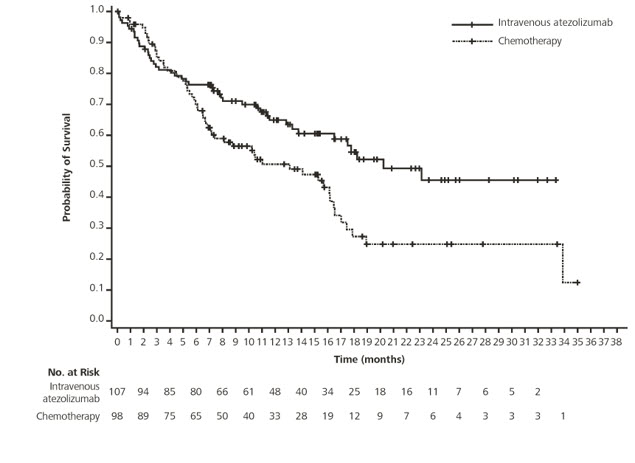
The trial demonstrated a statistically significant improvement in OS for patients with high PD-L1 expression (TC ≥ 50% or IC ≥ 10%) at the time of the OS interim analysis. There was no statistically significant difference in OS for the other two PD-L1 subgroups (TC ≥ 5% or IC ≥ 5%; and TC ≥ 1% or IC ≥ 1%) at the interim or final analyses. Efficacy results for patients with NSCLC with high PD-L1 expression are presented in Table 24 and Figure 2.
Table 24: Efficacy Results from IMpower110 in Patients with NSCLC with High PD-L1 Expression (TC ≥ 50% or IC ≥ 10%) and without EGFR or ALK Genomic Tumor Aberrations | Arm A: Intravenous Atezolizumab | Arm B: Platinum-Based Chemotherapy |
|---|
| N = 107 | N = 98 |
|---|
| CI = confidence interval; NE = not estimable |
| Overall Survival Based on OS interim analysis. The median survival follow-up time in patients was 15.7 months | |
| Deaths (%) | 44 (41%) | 57 (58%) |
| Median, months | 20.2 | 13.1 |
| (95% CI) | (16.5, NE) | (7.4, 16.5) |
| Hazard ratio Stratified by sex and ECOG performance status (95% CI) | 0.59 (0.40, 0.89) |
| p-value Based on the stratified log-rank test compared to Arm A | 0.0106 Compared to the allocated alpha of 0.0413 (two-sided) for this interim analysis |
Figure 2: Kaplan-Meier Plot of Overall Survival in IMpower110 in Patients with NSCLC with High PD-L1 Expression (TC ≥ 50% or IC ≥ 10%) and without EGFR or ALK Genomic Tumor Aberrations
Investigator-assessed PFS showed an HR of 0.63 (95% CI: 0.45, 0.88), with median PFS of 8.1 months (95% CI: 6.8, 11.0) in the intravenous atezolizumab arm and 5 months (95% CI: 4.2, 5.7) in the platinum-based chemotherapy arm. The investigator-assessed confirmed ORR was 38% (95% CI: 29%, 48%) in the intravenous atezolizumab arm and 29% (95% CI: 20%, 39%) in the platinum-based chemotherapy arm.
First-Line Metastatic Non-squamous NSCLC
IMpower150
The efficacy of intravenous atezolizumab with bevacizumab, paclitaxel, and carboplatin was evaluated in IMpower150 (NCT02366143), a multicenter, international, randomized (1:1:1), open-label trial in patients with metastatic non-squamous NSCLC. Patients with stage IV non-squamous NSCLC who had received no prior chemotherapy for metastatic disease but could have received prior EGFR or ALK kinase inhibitor if appropriate, regardless of PD-L1 or T-effector gene (tGE) status and ECOG performance status 0 or 1 were eligible. The trial excluded patients with a history of autoimmune disease, administration of a live attenuated vaccine within 28 days prior to randomization, active or untreated CNS metastases, administration of systemic immunostimulatory agents within 4 weeks or systemic immunosuppressive medications within 2 weeks prior to randomization, or clear tumor infiltration into the thoracic great vessels or clear cavitation of pulmonary lesions as seen on imaging. Randomization was stratified by sex, presence of liver metastases, and PD-L1 expression status on tumor cells (TC) and tumor-infiltrating immune cells (IC) as follows: TC3 and any IC vs. TC0/1/2 and IC2/3 vs. TC0/1/2 and IC0/1. Patients were randomized to one of the following three treatment arms:
- Arm A: intravenous atezolizumab 1200 mg, paclitaxel 175 mg/m² or 200 mg/m² and carboplatin AUC 6 mg/mL/min on Day 1 of each 21-day cycle for a maximum of 4 or 6 cycles
- Arm B: intravenous atezolizumab 1200 mg, bevacizumab 15 mg/kg, paclitaxel 175 mg/m² or 200 mg/m², and carboplatin AUC 6 mg/mL/min on Day 1 of each 21-day cycle for a maximum of 4 or 6 cycles
- Arm C: bevacizumab 15 mg/kg, paclitaxel 175 mg/m² or 200 mg/m², and carboplatin AUC 6 mg/mL/min on Day 1 of each 21-day cycle for a maximum of 4 or 6 cycles
Patients who had not experienced disease progression following the completion or cessation of platinum-based chemotherapy, received:
- Arm A: intravenous atezolizumab 1200 mg intravenously on Day 1 of each 21-day cycle until disease progression or unacceptable toxicity
- Arm B: intravenous atezolizumab 1200 mg and bevacizumab 15 mg/kg intravenously on Day 1 of each 21-day cycle until disease progression or unacceptable toxicity
- Arm C: bevacizumab 15 mg/kg intravenously on Day 1 of each 21-day cycle until disease progression or unacceptable toxicity
Tumor assessments were conducted every 6 weeks for the first 48 weeks following Cycle 1, Day 1 and then every 9 weeks thereafter. Tumor specimens were evaluated prior to randomization for PD-L1 tumor expression using the VENTANA PD-L1 (SP142) assay at a central laboratory. Tumor tissue was collected at baseline for expression of tGE signature and evaluation was performed using a clinical trial assay in a central laboratory prior to the analysis of efficacy outcome measures.
Major efficacy outcome measures for comparison of Arms B and C were progression free survival (PFS) by RECIST v1.1 in the tGE-WT (patients with high expression of T-effector gene signature [tGE], excluding those with EGFR- and ALK-positive NSCLC [WT]) and in the ITT-WT subpopulations and overall survival (OS) in the ITT-WT subpopulation. Additional efficacy outcome measures for comparison of Arms B and C or Arms A and C were PFS and OS in the ITT population, OS in the tGE-WT subpopulation, and ORR/DoR in the tGE-WT and ITT-WT subpopulations.
A total of 1202 patients were enrolled across the three arms of whom 1045 were in the ITT-WT subpopulation and 447 were in the tGE-WT subpopulation. The demographic information is limited to the 800 patients enrolled in Arms B and C where efficacy has been demonstrated. The median age was 63 years (range: 31 to 90), and 60% of patients were male. The majority of patients were White (82%), 13% of patients were Asian, 10% were Hispanic, and 2% of patients were Black. Clinical sites in Asia (enrolling 13% of the study population) received paclitaxel at a dose of 175 mg/m2 while the remaining 87% received paclitaxel at a dose of 200 mg/m2. Approximately 14% of patients had liver metastases at baseline, and most patients were current or previous smokers (80%). Baseline ECOG performance status was 0 (43%) or 1 (57%). PD-L1 was TC3 and any IC in 12%, TC0/1/2 and IC2/3 in 13%, and TC0/1/2 and IC0/1 in 75%. The demographics for the 696 patients in the ITT-WT subpopulation were similar to the ITT population except for the absence of patients with EGFR- or ALK-positive NSCLC.
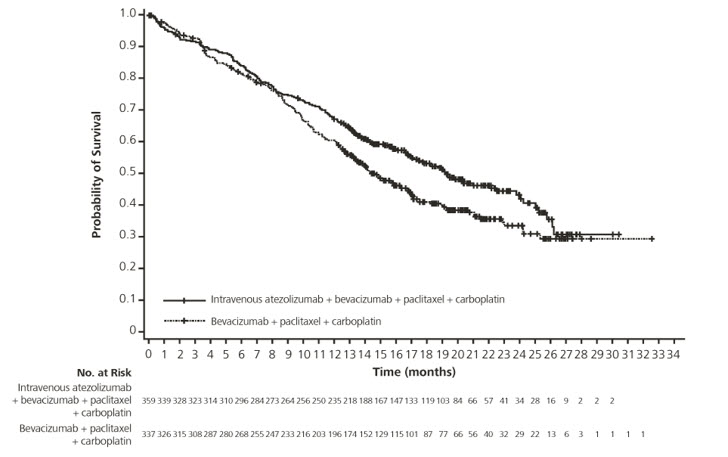
The trial demonstrated a statistically significant improvement in PFS between Arms B and C in both the tGE-WT and ITT-WT subpopulations, but did not demonstrate a significant difference for either subpopulation between Arms A and C based on the final PFS analyses. In the interim analysis of OS, a statistically significant improvement was observed for Arm B compared to Arm C, but not for Arm A compared to Arm C. Efficacy results for the ITT-WT subpopulation are presented in Table 25 and Figure 3.
Table 25: Efficacy Results in ITT-WT Population in IMpower150 | Arm C: Bevacizumab, Paclitaxel and Carboplatin | Arm B: Intravenous Atezolizumab with Bevacizumab, Paclitaxel, and Carboplatin | Arm A: Intravenous Atezolizumab with Paclitaxel, and Carboplatin |
|---|
| N = 337 | N = 359 | N = 349 |
|---|
| CI = confidence interval |
| Overall Survival Based on OS interim analysis | | | |
| Deaths (%) | 197 (59%) | 179 (50%) | 179 (51%) |
| Median, months | 14.7 | 19.2 | 19.4 |
| (95% CI) | (13.3, 16.9) | (17.0, 23.8) | (15.7, 21.3) |
| Hazard ratio Stratified by sex, presence of liver metastases, and PD-L1 expression status on TC and IC (95% CI) | --- | 0.78 (0.64, 0.96) | 0.84 (0.72, 1.08) |
| p-value Based on the stratified log-rank test compared to Arm C | --- | 0.016 Compared to the allocated α=0.0174 (two sided) for this interim analysis | 0.204 Compared to the allocated α=0.0128 (two sided) for this interim analysis |
| Progression-Free Survival As determined by independent review facility (IRF) per RECIST v1.1 (Response Evaluation Criteria in Solid Tumors v1.1) | | | |
| Number of events (%) | 247 (73%) | 247 (69%) | 245 (70%) |
| Median, months | 7.0 | 8.5 | 6.7 |
| (95% CI) | (6.3, 7.9) | (7.3, 9.7) | (5.6, 6.9) |
| Hazard ratio (95% CI) | --- | 0.71 (0.59, 0.85) | 0.94 (0.79, 1.13) |
| p-value | --- | 0.0002 Compared to the allocated α=0.006 (two sided) for the final PFS analysis | 0.5219 |
| Objective Response Rate | | | |
| Number of responders (%) | 142 (42%) | 196 (55%) | 150 (43%) |
| (95% CI) | (37, 48) | (49, 60) | (38, 48) |
| Complete Response | 3 (1%) | 14 (4%) | 9 (3%) |
| Partial Response | 139 (41%) | 182 (51%) | 141 (40%) |
| Duration of Response | n = 142 | n = 196 | n = 150 |
| Median, months | 6.5 | 10.8 | 9.5 |
| (95% CI) | (5.6, 7.6) | (8.4, 13.9) | (7.0, 13.0) |
Figure 3: Kaplan-Meier Curves for Overall Survival in ITT-WT Population in IMpower150
Exploratory analyses showed that the subset of patients in the four drug regimen arm who were ADA positive by week 4 (30%) appeared to have similar efficacy (effect on overall survival) as compared to patients who tested negative for treatment-emergent ADA by week 4 (70%) [see, Clinical Pharmacology (12.6)]. In an exploratory analysis, propensity score matching was conducted to compare ADA positive patients in the intravenous atezolizumab, bevacizumab, paclitaxel, and carboplatin arm with a matched population in the bevacizumab, paclitaxel, and carboplatin arm. Similarly, ADA negative patients in the intravenous atezolizumab, bevacizumab, paclitaxel, and carboplatin arm were compared with a matched population in the bevacizumab, paclitaxel, and carboplatin arm. Propensity score matching factors were: baseline sum of longest tumor size (BSLD), baseline ECOG, baseline albumin, baseline LDH, sex, tobacco history, metastatic site, TC level, and IC level. The hazard ratio comparing the ADA-positive subgroup with its matched control was 0.69 (95% CI: 0.44, 1.07). The hazard ratio comparing the ADA-negative subgroup with its matched control was 0.64 (95% CI: 0.46, 0.90).
IMpower130
The efficacy of intravenous atezolizumab with paclitaxel protein-bound and carboplatin was evaluated in IMpower130 (NCT02367781), a multicenter, randomized (2:1), open-label trial in patients with stage IV non-squamous NSCLC. Patients with Stage IV non-squamous NSCLC who had received no prior chemotherapy for metastatic disease, but could have received prior EGFR or ALK kinase inhibitor, if appropriate, were eligible. The trial excluded patients with history of autoimmune disease, administration of live attenuated vaccine within 28 days prior to randomization, administration of immunostimulatory agents within 4 weeks or systemic immunosuppressive medications within 2 weeks prior to randomization, and active or untreated CNS metastases. Randomization was stratified by sex, presence of liver metastases, and PD-L1 tumor expression according to the VENTANA PD-L1 (SP142) assay as follows: TC3 and any IC vs. TC0/1/2 and IC2/3 vs. TC0/1/2 and IC0/1. Patients were randomized to one of the following treatment regimens:
- Intravenous atezolizumab 1200 mg on Day 1, paclitaxel protein-bound 100 mg/m² on Days 1, 8, and 15, and carboplatin AUC 6 mg/mL/min on Day 1 of each 21-day cycle for a maximum of 4 or 6 cycles followed by intravenous atezolizumab 1200 mg once every 3 weeks until disease progression or unacceptable toxicity, or
- Paclitaxel protein-bound 100 mg/m² on Days 1, 8 and 15 and carboplatin AUC 6 mg/mL/min on Day 1 of each 21-day cycle for a maximum of 4 or 6 cycles followed by best supportive care or pemetrexed.
Tumor assessments were conducted every 6 weeks for the first 48 weeks, then every 9 weeks thereafter. Major efficacy outcome measures were PFS by RECIST v1.1 and OS in the subpopulation of patients evaluated for and documented to have no EGFR or ALK genomic tumor aberrations (ITT-WT).
A total of 724 patients were enrolled; of these, 681 (94%) were in the ITT-WT population. The median age was 64 years (range: 18 to 86) and 59% were male. The majority of patients were White (90%), 2% of patients were Asian, 5% were Hispanic, and 4% were Black. Baseline ECOG performance status was 0 (41%) or 1 (58%). Most patients were current or previous smokers (90%). PD-L1 tumor expression was TC0/1/2 and IC0/1 in 73%; TC3 and any IC in 14%; and TC0/1/2 and IC2/3 in 13%.
Efficacy results for the ITT-WT population are presented in Table 26 and Figure 4.
Table 26: Efficacy Results from IMpower130 | Intravenous Atezolizumb with Paclitaxel Protein-Bound and Carboplatin | Paclitaxel Protein-Bound and Carboplatin |
|---|
| CI = confidence interval |
| Overall Survival Based on OS interim analysis | n = 453 | n = 228 |
| Deaths (%) | 228 (50%) | 131 (57%) |
| Median, months | 18.6 | 13.9 |
| (95% CI) | (15.7, 21.1) | (12.0, 18.7) |
| Hazard ratio Stratified by sex and PD-L1 tumor expression on tumor cells (TC) and tumor infiltrating cells (IC) (95% CI) | 0.80 (0.64, 0.99) |
| p-value Based on the stratified log-rank test | 0.0384 Compared to the allocated α=0.0428 (two sided) for this interim analysis |
| Progression-Free Survival As determined by independent review facility (IRF) per RECIST v1.1 (Response Evaluation Criteria in Solid Tumors v1.1) | n = 453 | n = 228 |
| Number of events (%) | 330 (73%) | 177 (78%) |
| Median, months | 7.2 | 6.5 |
| (95% CI) | (6.7, 8.3) | (5.6, 7.4) |
| Hazard ratio (95% CI) | 0.75 (0.63, 0.91) |
| p-value | 0.0024 Compared to the allocated α=0.006 (two sided) for the final PFS analysis |
| Overall Response Rate, Confirmed response | n = 453 | n = 228 |
| Number of responders (%) | 207 (46%) | 74 (32%) |
| (95% CI) | (41, 50) | (26, 39) |
| Complete Response | 22 (5%) | 2 (1%) |
| Partial Response | 185 (41%) | 72 (32%) |
| Duration of Response, | n = 207 | n = 74 |
| Median, months | 10.8 | 7.8 |
| (95% CI) | (9.0, 14.4) | (6.8, 10.9) |
Figure 4: Kaplan-Meier Curves for Overall Survival in IMpower130
Previously Treated Metastatic NSCLC
OAK
The efficacy of intravenous atezolizumab was evaluated in a multicenter, international, randomized (1:1), open-label study (OAK; NCT02008227) conducted in patients with locally advanced or metastatic NSCLC whose disease progressed during or following a platinum-containing regimen. Patients with a history of autoimmune disease, symptomatic or corticosteroid-dependent brain metastases, or requiring systemic immunosuppression within 2 weeks prior to enrollment were ineligible. Randomization was stratified by PD-L1 expression tumor-infiltrating immune cells (IC), the number of prior chemotherapy regimens (1 vs. 2), and histology (squamous vs. non-squamous).
Patients were randomized to receive intravenous atezolizumab 1200 mg intravenously every 3 weeks until unacceptable toxicity, radiographic progression, or clinical progression or docetaxel 75 mg/m2 intravenously every 3 weeks until unacceptable toxicity or disease progression. Tumor assessments were conducted every 6 weeks for the first 36 weeks and every 9 weeks thereafter. Major efficacy outcome measure was overall survival (OS) in the first 850 randomized patients and OS in the subgroup of patients with PD-L1-expressing tumors (defined as ≥ 1% PD-L1 expression on tumor cells [TC] or immune cells [IC]). Additional efficacy outcome measures were OS in all randomized patients (n = 1225), OS in subgroups based on PD-L1 expression, overall response rate (ORR), and progression free survival as assessed by the investigator per RECIST v.1.1.
Among the first 850 randomized patients, the median age was 64 years (33 to 85 years) and 47% were ≥ 65 years old; 61% were male; 70% were White and 21% were Asian; 15% were current smokers and 67% were former smokers; and 37% had baseline ECOG PS of 0 and 63% had a baseline ECOG PS of 1. Nearly all (94%) had metastatic disease, 74% had non-squamous histology, 75% had received only one prior platinum-based chemotherapy regimen, and 55% of patients had PD-L1-expressing tumors.
Efficacy results are presented in Table 27 and Figure 5
Table 27: Efficacy Results in OAK | Intravenous Atezolizumab | Docetaxel |
|---|
| CI = confidence interval; NE = not estimable |
| Overall Survival in first 850 patients | | |
| Number of patients | N = 425 | N = 425 |
| Deaths (%) | 271 (64%) | 298 (70%) |
| Median, months | 13.8 | 9.6 |
| (95% CI) | (11.8, 15.7) | (8.6, 11.2) |
| Hazard ratio Stratified by PD-L1 expression in tumor infiltrating immune cells, the number of prior chemotherapy regimens, and histology (95% CI) | 0.74 (0.63, 0.87) |
| p-value Based on the stratified log-rank test | 0.0004 Compared to the pre-specified allocated α of 0.03 for this analysis |
| Progression-Free Survival | | |
| Number of Patients | N = 425 | N = 425 |
| Events (%) | 380 (89%) | 375 (88%) |
| Progression (%) | 332 (78%) | 290 (68%) |
| Deaths (%) | 48 (11%) | 85 (20%) |
| Median, months | 2.8 | 4.0 |
| (95% CI) | (2.6, 3.0) | (3.3, 4.2) |
| Hazard ratio (95% CI) | 0.95 (0.82, 1.10) |
| Overall Response Rate Per RECIST v1.1 (Response Evaluation Criteria in Solid Tumors v1.1) | | |
| Number of Patients | N = 425 | N = 425 |
| ORR, n (%) | 58 (14%) | 57 (13%) |
| (95% CI) | (11%, 17%) | (10%, 17%) |
| Complete Response | 6 (1%) | 1 (0.2%) |
| Partial Response | 52 (12%) | 56 (13%) |
| Duration of Response | N = 58 | N = 57 |
| Median, months | 16.3 | 6.2 |
| (95% CI) | (10.0, NE) | (4.9, 7.6) |
| Overall Survival in all 1225 patients | | |
| Number of patients | N = 613 | N = 612 |
| Deaths (%) | 384 (63%) | 409 (67%) |
| Median, months | 13.3 | 9.8 |
| (95% CI) | (11.3, 14.9) | (8.9, 11.3) |
| Hazard ratio (95% CI) | 0.79 (0.69, 0.91) |
| p-value | 0.0013 Compared to the allocated α of 0.0177 for this interim analysis based on 86% information using O'Brien-Fleming boundary |
Figure 5: Kaplan-Meier Curves of Overall Survival in the First 850 Patients Randomized in OAK
Tumor specimens were evaluated prospectively using the VENTANA PD-L1 (SP142) Assay at a central laboratory and the results were used to define the PD-L1 expression subgroups for pre-specified analyses. Of the 850 patients, 16% were classified as having high PD-L1 expression, defined as having PD-L1 expression on ≥ 50% of TC or ≥ 10% of IC. In an exploratory efficacy subgroup analysis of OS based on PD-L1 expression, the hazard ratio was 0.41 (95% CI: 0.27, 0.64) in the high PD-L1 expression subgroup and 0.82 (95% CI: 0.68, 0.98) in patients who did not have high PD-L1 expression.
Exploratory analyses showed that the subset of patients who were ADA positive by week 4 (21%) appeared to have less efficacy (effect on overall survival) as compared to patients who tested negative for treatment-emergent ADA by week 4 (79%) [see Clinical Pharmacology (12.6)]. ADA positive patients by week 4 appeared to have similar OS compared to docetaxel-treated patients. In an exploratory analysis, propensity score matching was conducted to compare ADA positive patients in the atezolizumab arm with a matched population in the docetaxel arm and ADA negative patients in the atezolizumab arm with a matched population in the docetaxel arm. Propensity score matching factors were: baseline sum of longest tumor size (BSLD), baseline ECOG, histology (squamous vs. non-squamous), baseline albumin, baseline LDH, gender, tobacco history, metastases status (advanced or local), metastatic site, TC level, and IC level. The hazard ratio comparing the ADA positive subgroup with its matched control was 0.89 (95% CI: 0.61, 1.3). The hazard ratio comparing the ADA negative subgroup with its matched control was 0.68 (95% CI: 0.55, 0.83).
Small Cell Lung Cancer (SCLC)
IMpower133
The efficacy of intravenous atezolizumab with carboplatin and etoposide was investigated in IMpower133 (NCT02763579), a randomized (1:1), multicenter, double-blind, placebo-controlled trial in 403 patients with ES-SCLC. IMpower133 enrolled patients with ES-SCLC who had received no prior chemotherapy for extensive stage disease and ECOG performance status 0 or 1. The trial excluded patients with active or untreated CNS metastases, history of autoimmune disease, administration of a live, attenuated vaccine within 4 weeks prior to randomization, or administration of systemic immunosuppressive medications within 1 week prior to randomization. Randomization was stratified by sex, ECOG performance status, and presence of brain metastases. Patients were randomized to receive one of the following two treatment arms:
- intravenous atezolizumab 1200 mg and carboplatin AUC 5 mg/mL/min on Day 1 and etoposide 100 mg/m2 intravenously on Days 1, 2 and 3 of each 21-day cycle for a maximum of 4 cycles followed by intravenous atezolizumab 1200 mg once every 3 weeks until disease progression or unacceptable toxicity, or
- placebo and carboplatin AUC 5 mg/mL/min on Day 1 and etoposide 100 mg/m2 intravenously on Days 1, 2, and 3 of each 21-day cycle for a maximum of 4 cycles followed by placebo once every 3 weeks until disease progression or unacceptable toxicity.
Administration of intravenous atezolizumab was permitted beyond RECIST-defined disease progression. Tumor assessments were conducted every 6 weeks for the first 48 weeks following Cycle 1, Day 1 and then every 9 weeks thereafter. Patients treated beyond disease progression had tumor assessment conducted every 6 weeks until treatment discontinuation.
Major efficacy outcome measures were OS and PFS as assessed by investigator per RECIST v1.1 in the intent-to-treat population. Additional efficacy outcome measures included ORR and DoR as assessed by investigator per RECIST v1.1.
A total of 403 patients were randomized, including 201 to the intravenous atezolizumab arm and 202 to the chemotherapy alone arm. The median age was 64 years (range: 26 to 90) and 65% were male. The majority of patients were White (80%); 17% were Asian, 4% were Hispanic and 1% were Black. Baseline ECOG performance status was 0 (35%) or 1 (65%); 9% of patients had a history of brain metastases, and 97% were current or previous smokers. Efficacy results are presented in Table 28 and Figure 6.
Table 28: Efficacy Results from IMpower133 | Intravenous Atezolizumab with Carboplatin and Etoposide | Placebo with Carboplatin and Etoposide |
|---|
| CI = confidence interval |
| Overall Survival | N = 201 | N = 202 |
| Deaths (%) | 104 (52%) | 134 (66%) |
| Median, months | 12.3 | 10.3 |
| (95% CI) | (10.8, 15.9) | (9.3, 11.3) |
| Hazard ratio Stratified by sex and ECOG performance status (95% CI) | 0.70 (0.54, 0.91) |
| p-value Based on the stratified log-rank test ,Compared to the allocated α of 0.0193 for this interim analysis based on 78% information using O'Brien-Fleming boundary | 0.0069 |
| Progression-Free Survival As determined by investigator assessment ,per RECIST v1.1 (Response Evaluation Criteria in Solid Tumors v1.1) | N = 201 | N = 202 |
| Number of events (%) | 171 (85%) | 189 (94%) |
| Median, months | 5.2 | 4.3 |
| (95% CI) | (4.4, 5.6) | (4.2, 4.5) |
| Hazard ratio (95% CI) | 0.77 (0.62, 0.96) |
| p-value, Compared to the allocated α of 0.05 for this analysis | 0.0170 |
| Objective Response Rate,, Confirmed response | N = 201 | N = 202 |
| Number of responders (%) | 121 (60%) | 130 (64%) |
| (95% CI) | (53, 67) | (57, 71) |
| Complete Response (%) | 5 (2%) | 2 (1%) |
| Partial Response (%) | 116 (58%) | 128 (63%) |
| Duration of Response,, | N = 121 | N = 130 |
| Median, months | 4.2 | 3.9 |
| (95% CI) | (4.1, 4.5) | (3.1, 4.2) |
Figure 6: Kaplan-Meier Plot of Overall Survival in IMpower133
Hepatocellular Carcinoma
IMbrave150
The efficacy of intravenous atezolizumab in combination with bevacizumab was investigated in IMbrave150 (NCT03434379), a multicenter, international, open-label, randomized trial in patients with locally advanced unresectable and/or metastatic hepatocellular carcinoma who have not received prior systemic therapy. Randomization was stratified by geographic region (Asia excluding Japan vs. rest of world), macrovascular invasion and/or extrahepatic spread (presence vs. absence), baseline AFP (< 400 vs. ≥ 400 ng/mL), and by ECOG performance status (0 vs. 1).
A total of 501 patients were randomized (2:1) to receive either intravenous atezolizumab as an intravenous infusion of 1200 mg, followed by 15 mg/kg bevacizumab, on the same day every 3 weeks or sorafenib 400 mg given orally twice daily, until disease progression or unacceptable toxicity. Patients could discontinue either intravenous atezolizumab or bevacizumab (e.g., due to adverse events) and continue on monotherapy until disease progression or unacceptable toxicity associated with the monotherapy.
The study enrolled patients who were ECOG performance score 0 or 1 and who had not received prior systemic treatment. Patients were required to be evaluated for the presence of varices within 6 months prior to treatment, and were excluded if they had variceal bleeding within 6 months prior to treatment, untreated or incompletely treated varices with bleeding, or high risk of bleeding. Patients with Child-Pugh B or C cirrhosis, moderate or severe ascites; history of hepatic encephalopathy; a history of autoimmune disease; administration of a live, attenuated vaccine within 4 weeks prior to randomization; administration of systemic immunostimulatory agents within 4 weeks or systemic immunosuppressive medications within 2 weeks prior to randomization; or untreated or corticosteroid-dependent brain metastases were excluded. Tumor assessments were performed every 6 weeks for the first 54 weeks and every 9 weeks thereafter.
The demographics and baseline disease characteristics of the study population were balanced between the treatment arms. The median age was 65 years (range: 26 to 88) and 83% of patients were male. The majority of patients were Asian (57%) or White (35%); 40% were from Asia (excluding Japan). Approximately 75% of patients presented with macrovascular invasion and/or extrahepatic spread and 37% had a baseline AFP ≥ 400 ng/mL. Baseline ECOG performance status was 0 (62%) or 1 (38%). HCC risk factors were Hepatitis B in 48% of patients, Hepatitis C in 22%, and 31% of patients had non-viral liver disease. The majority of patients had BCLC stage C (82%) disease at baseline, while 16% had stage B, and 3% had stage A.
The major efficacy outcome measures were overall survival (OS) and independent review facility (IRF)-assessed progression free survival (PFS) per RECIST v1.1. Additional efficacy outcome measures were IRF-assessed overall response rate (ORR) per RECIST and mRECIST.
Efficacy results are presented in Table 29 and Figure 7.
Table 29: Efficacy Results from IMbrave150 | Intravenous Atezolizumab in combination with Bevacizumab
(N= 336) | Sorafenib
(N=165) |
|---|
+ Denotes a censored value
CI = confidence interval; HCC mRECIST = Modified RECIST Assessment for Hepatocellular Carcinoma;
NE = not estimable; RECIST 1.1 = Response Evaluation Criteria in Solid Tumors v1.1 |
| Overall Survival |
| Number of deaths (%) | 96 (29) | 65 (39) |
| Median OS in months | NE | 13.2 |
| (95% CI) | (NE, NE) | (10.4, NE) |
| Hazard ratio Stratified by geographic region (Asia excluding Japan vs. rest of world), macrovascular invasion and/or extrahepatic spread (presence vs. absence), and baseline AFP (< 400 vs. ≥ 400 ng/mL) (95% CI) | 0.58 (0.42, 0.79) |
| p-value Based on two-sided stratified log-rank test; as compared to significance level 0.004 (2-sided) based on 161/312=52% information using the OBF method | 0.0006 |
| Progression-Free Survival Per independent radiology review |
| Number of events (%) | 197 (59) | 109 (66) |
| Median PFS in months (95% CI) | 6.8 (5.8, 8.3) | 4.3 (4.0, 5.6) |
| Hazard ratio (95% CI) | 0.59 (0.47, 0.76) |
| p-value | < 0.0001 |
| Overall Response Rate, Confirmed responses (ORR), RECIST 1.1 |
| Number of responders (%) | 93 (28) | 19 (12) |
| (95% CI) | (23, 33) | (7,17) |
| p-value Based on two-sided Cochran-Mantel-Haesnszel test | < 0.0001 |
| Complete responses, n (%) | 22 (7) | 0 |
| Partial responses, n (%) | 71 (21) | 19 (12) |
| Duration of Response, (DOR) RECIST 1.1 |
| (n=93) | (n=19) |
| Median DOR in months | NE | 6.3 |
| (95% CI) | (NE, NE) | (4.7, NE) |
| Range (months) | (1.3+, 13.4+) | (1.4+, 9.1+) |
| Overall Response Rate, (ORR), HCC mRECIST |
| Number of responders (%) | 112 (33) | 21 (13) |
| (95% CI) | (28, 39) | (8, 19) |
| p-value | < 0.0001 |
| Complete responses, n (%) | 37 (11) | 3 (1.8) |
| Partial responses, n (%) | 75 (22) | 18 (11) |
| Duration of Response, (DOR) HCC mRECIST |
| (n=112) | (n=21) |
| Median DOR in months | NE | 6.3 |
| (95% CI) | (NE, NE) | (4.9, NE) |
| Range (months) | (1.3+, 13.4+) | (1.4+, 9.1+) |
Figure 7: Kaplan-Meier Plot of Overall Survival in IMbrave150
Exploratory analyses showed that the subset of patients (20%) who were ADA-positive by week 6 appeared to have reduced efficacy (effect on OS) as compared to patients (80%) who tested negative for treatment-emergent ADA by week 6 [see Clinical Pharmacology (12.6)]. ADA-positive patients by week 6 appeared to have similar overall survival compared to sorafenib-treated patients. In an exploratory analysis, inverse probability weighting was conducted to compare ADA-positive patients and ADA-negative patients in the intravenous atezolizumab and bevacizumab arm to the sorafenib arm. Inverse probability weighting factors were: baseline sum of longest tumor size (BSLD), baseline ECOG, baseline albumin, baseline LDH, sex, age, race, geographic region, weight, neutrophil-to-lymphocyte ratio, AFP (< 400 ng/mL vs ≥ 400 ng/mL), number of metastatic sites, MVI and/or EHS present at study entry, etiology (HBV vs. HCV vs. non-viral) and Child-Pugh Score (A5 vs. A6). The OS hazard ratio comparing the ADA-positive subgroup of the intravenous atezolizumab and bevacizumab arm to sorafenib was 0.93 (95% CI: 0.57, 1.53). The OS hazard ratio comparing the ADA-negative subgroup to sorafenib was 0.39 (95% CI: 0.26, 0.60).
Metastatic Melanoma
IMspire150
The efficacy of intravenous atezolizumab in combination with cobimetinib and vemurafenib was evaluated in a double-blind, randomized (1:1), placebo-controlled, multicenter trial (IMspire150; NCT02908672) conducted in 514 patients. Randomization was stratified by geographic location (North America vs. Europe vs. Australia, New Zealand, and others) and baseline lactate dehydrogenase (LDH) [less than or equal to upper limit of normal (ULN) vs. greater than ULN].
Eligible patients were required to have previously untreated unresectable or metastatic BRAF V600 mutation-positive melanoma as detected by a locally available test and centrally confirmed with the FoundationOne™ assay. Patients were excluded if they had history of autoimmune disease; administration of a live, attenuated vaccine within 28 days prior to randomization; administration of systemic immunostimulatory agents within 4 weeks or systemic immunosuppressive medications within 2 weeks prior to randomization; and active or untreated CNS metastases.
Intravenous atezolizumab was initiated after patients received a 28-day treatment cycle of cobimetinib 60 mg orally once daily (21 days on/7 days off) and vemurafenib 960 mg orally twice daily Days 1-21 and 720 mg orally twice daily Days 22-28. Patients received intravenous atezolizumab 840 mg intravenous infusion over 60 minutes every 2 weeks in combination with cobimetinib 60 mg orally once daily and vemurafenib 720 mg orally twice daily, or placebo in combination with cobimetinib 60 mg orally once daily and vemurafenib 960 mg orally twice daily. Treatment continued until disease progression or unacceptable toxicity. There was no crossover at the time of disease progression. Tumor assessments were performed every 8 weeks (± 1 week) for the first 24 months and every 12 weeks (± 1 week) thereafter.
The major efficacy outcome measure was investigator-assessed progression-free survival (PFS) per RECIST v1.1. Additional efficacy outcomes included PFS assessed by an independent central review, investigator-assessed ORR, OS, and DOR.
The median age of the study population was 54 years (range: 22–88), 58% of patients were male, 95% were White, a baseline ECOG performance status of 0 (77%) or 1 (23%), 33% had elevated LDH, 94% had metastatic disease, 60% were Stage IV (M1C), 56% had less than three metastatic sites at baseline, 3% had prior treatment for brain metastases, 30% had liver metastases at baseline, and 14% had received prior adjuvant systemic therapy. Based on central testing, 74% were identified as having a V600E mutation, 11% as having V600K mutation, and 1% as having V600D or V600R mutations.
Efficacy results are summarized in Table 30 and Figure 8. Patients had a median survival follow up time of 18.9 months.
Table 30: Efficacy Results from IMspire150 | Intravenous Atezolizumab + Cobimetinib + Vemurafenib
N = 256 | Placebo + Cobimetinib + Vemurafenib
N = 258 |
|---|
| Progression-Free Survival As determined by investigator assessment with Response Evaluation Criteria in Solid Tumors v1.1.;
CI = confidence interval | | |
| Number of events (%) | 148 (58) | 179 (69) |
| Median, months | 15.1 | 10.6 |
| (95% CI) | (11.4, 18.4) | (9.3, 12.7) |
| Hazard ratio Stratified by baseline LDH (95% CI) | 0.78 (0.63, 0.97) |
| p-value Based on the stratified log-rank test | 0.0249 |
| Overall Response Rate, Confirmed responses | | |
| Number of responders (%) | 170 (66) | 168 (65) |
| (95% CI) | (60, 72) | (59, 71) |
| Complete responses, n (%) | 41 (16) | 46 (18) |
| Partial response, n (%) | 129 (50) | 122 (47) |
| Duration of Response, | n = 170 | n = 168 |
| Median, months | 20.4 | 12.5 |
| (95% CI) | (15.1, NE) | (10.7, 16.6) |
Figure 8: Kaplan-Meier Plot for Progression-Free Survival in IMspire150
At a pre-specified analysis at the time of the primary analysis of PFS, the OS data were not mature. The median OS was 28.8 months with 93 (36%) deaths in the intravenous atezolizumab plus cobimetinib and vemurafenib arm, and 25.1 months with 112 (43%) deaths in the placebo plus cobimetinib and vemurafenib arm. The hazard ratio for OS was 0.85 (95% CI: 0.64, 1.11) and the p-value was 0.2310.
Immune-Mediated Adverse Reactions
Inform patients of the risk of immune-mediated adverse reactions that may require corticosteroid treatment and interruption or discontinuation of TECENTRIQ HYBREZA, including:
- Pneumonitis: Advise patients to contact their healthcare provider immediately for any new or worsening cough, chest pain, or shortness of breath [see Warnings and Precautions (5.1)].
- Colitis: Advise patients to contact their healthcare provider immediately for diarrhea, blood or mucus in stools, or severe abdominal pain [see Warnings and Precautions (5.1)].
- Hepatitis: Advise patients to contact their healthcare provider immediately for jaundice, severe nausea or vomiting, pain on the right side of abdomen, lethargy, or easy bruising or bleeding [see Warnings and Precautions (5.1)].
- Endocrinopathies: Advise patients to contact their healthcare provider immediately for signs or symptoms of hypophysitis, hyperthyroidism, hypothyroidism, adrenal insufficiency, or type 1 diabetes mellitus, including diabetic ketoacidosis [see Warnings and Precautions (5.1)].
- Nephritis: Advise patients to contact their healthcare provider immediately for pelvic pain, frequent urination, or unusual swelling [see Warnings and Precautions (5.1)].
- Dermatologic Adverse Reactions: Advise patients to contact their healthcare provider immediately for generalized rash, skin eruption, or painful skin and mucous membrane lesions [see Warnings and Precautions (5.1)].
- Other Immune-Mediated Adverse Reactions: Advise patients to contact their healthcare provider immediately for signs or symptoms of other potential immune-mediated adverse reactions [see Warnings and Precautions (5.1)].
Infusion-Related Reactions
Advise patients to contact their healthcare provider immediately for signs or symptoms of infusion-related reactions [see Warnings and Precautions (5.2)].
Complications of Allogeneic HSCT after PD-1/PD-L1 Inhibitors
Follow patients closely for evidence of transplant-related complications and intervene promptly. Consider the benefits versus risks of treatment with a PD-1/PD-L1 blocking antibody prior to or after an allogeneic HSCT [see Warnings and Precautions (5.3)].
Embryo-Fetal Toxicity
Advise females of reproductive potential that TECENTRIQ HYBREZA can cause harm to a fetus and to inform their healthcare provider of a known or suspected pregnancy [see Warnings and Precautions (5.4), Use in Specific Populations (8.1, 8.3)].
Advise females of reproductive potential to use effective contraception during treatment and for 5 months after the last dose of TECENTRIQ HYBREZA [see Use in Specific Populations (8.3)].
Lactation
Advise female patients not to breastfeed while taking TECENTRIQ HYBREZA and for 5 months after the last dose [see Use in Specific Populations (8.2)].
TECENTRIQ HYBREZA™ (atezolizumab and hyaluronidase-tqjs)
Manufactured by:
Genentech, Inc.
A Member of the Roche Group
1 DNA Way
South San Francisco, CA 94080-4990
U.S. License No.: 1048
TECENTRIQ HYBREZA is a trademark of
Genentech, Inc.
©2024 Genentech, Inc.