Invega Hafyera Injection, Suspension, Extended Release
Product Images NDC 50458-612
View Photos of Packaging, Regulatory Labels, and Product Appearance
Product Visual Gallery
This gallery contains 30 technical images submitted to the FDA as part of the official labeling for Invega Hafyera (NDC 50458-612). Unlike standard consumer photos, these assets often include clinical data figures, molecular chemical structures, and official manufacturer packaging layouts.
As provided by Janssen Pharmaceuticals, Inc, these visuals offer a comprehensive scientific overview of the product's physical and chemical identity, aiding pharmacists and researchers in product verification and study.
Product Images & Figures Index
Image (Invega 02)
Image (Invega 03)
This appears to be a description of components that are commonly found in a syringe. The syringe tip cap is used to cover and protect the tip of the syringe needle. The luer connection is a type of fitting that allows the syringe to be connected to other devices such as needles or IV tubing. The finger flange is a piece that can be grasped between the fingers to help with needle placement and control. The plunger is the component that is pushed to expel liquid from the syringe. These components are essential in the proper use of a syringe.*
Image (Invega 04)
Image (Invega 05)
Image (Invega 06)
Image (Invega 07)
Image (Invega 08)
Image (Invega 09)
Image (Invega 10)
Image (Invega 11)
Image (Invega 12)
Image (Invega 13)
Image (Invega 14)
Image (Invega 15)
Image (Invega 16)
Image (Invega 17)
Image (Invega 18)
Image (Invega 19)
Image (Invega 20)
Image (Invega 21)
Image (Invega 22)
Image (Invega 23)
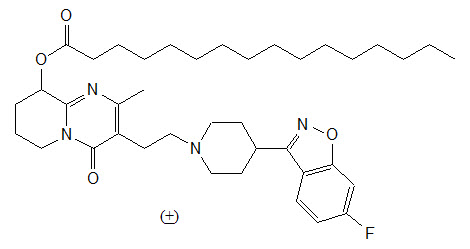
Chemical Structure (Invega 24)
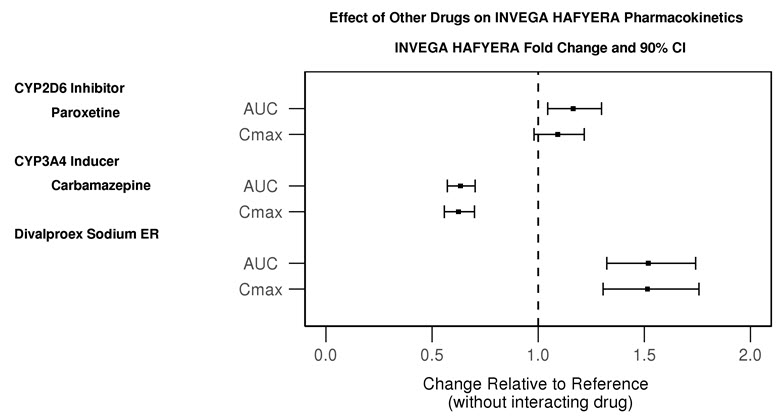
Figure 1 (Invega 25)
Effect of Other Drugs on INVEGA HAFYERA Pharmacokinetics: The text provides a table showing the fold change and 90% confidence intervals of the pharmacokinetics of INVEGA HAFYERA when taken with other drugs, including a CYP2D6 inhibitor (paroxetine) and a CYP3A4 inducer (carbamazepine and divalproex sodium ER). The table shows the change relative to the reference (without interacting drug) in terms of AUC and Cmax.*
Figure 2 (Invega 26)
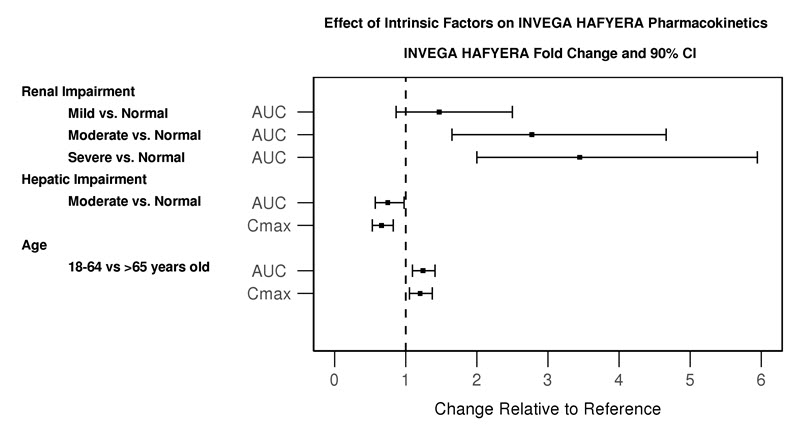
Figure 3 (Invega 27)
This is a table presenting the effect of intrinsic factors on the pharmacokinetics of INVEGA HAFYERA medication. The factors included in the study are renal and hepatic impairment, and age. The table shows the fold change and 90% CI for each factor compared to the reference. The factors are presented by their severity, i.e., mild, moderate, or severe. The parameters measured are AUC and Cmax. However, there is no numerical data presented in the table.*
Figure 4 (Invega 28)
This is a graph that compares the relapse rate between two treatments: INVEGA HAFYERA with N=478 and PP3M with N=224. The relapse rate for the former was 50%, while for the latter, it was 40%. The graph shows the time since randomization in days on the X-axis and the percentage of subjects with relapse on the Y-axis.*
Principal Display Panel (3.5 mL Syringe Carton)
This appears to be a description of a prescription medication called INVEGA HAFYERA, which is an extended-release injectable suspension used for gluteal intramuscular injection only. Each injection must be administered only by a healthcare professional, and their dosage is available from the prescribing information. The medication comes in a single-dose prefilled syringe and a needle. The recommended storage temperature is between 20°C to 25°C. There are also warnings and information about how to use the medication, such as shaking it before using.*
Principal Display Panel (5 mL Syringe Carton)
* These product label images have been analyzed using experimental machine learning. Please verify findings with the primary label text.