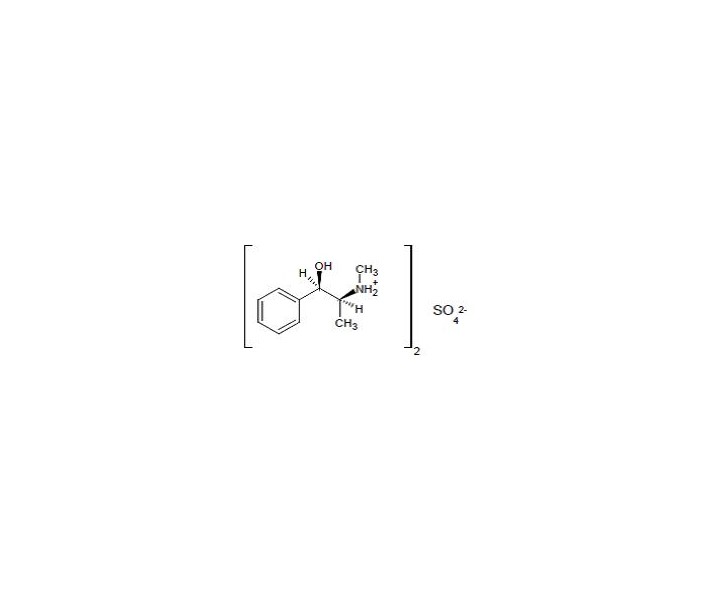
Highlights Of Prescribing Information
These highlights do not include all the information needed to use EPHEDRINE SULFATE INJECTION safely and effectively. See full prescribing information for EPHEDRINE SULFATE INJECTION.
EPHEDRINE SULFATE injection, USP, for intravenous use
Initial U.S. Approval: 2016
INDICATIONS AND USAGE
Ephedrine Sulfate Injection, USP is an alpha- and beta- adrenergic agonist and a norepinephrine-releasing agent indicated for the treatment of clinically important hypotension occurring in the setting of anesthesia. ( 1)
DOSAGE AND ADMINISTRATION
Treatment of hypotension developing during anesthesia: Bolus intravenous injection: 5 to 10 mg as needed, not to exceed 50 mg. Dilute before use. See Full Prescribing Information for instructions on administration and preparation for injection. ( 2)
DOSAGE FORMS AND STRENGTHS
Injection: 50 mg/mL ephedrine sulfate in single-dose vial ( 3)
CONTRAINDICATIONS
None ( 4)
WARNINGS AND PRECAUTIONS
• Pressor Effect with Concomitant Oxytocic Drugs: Pressor effect of sympathomimetic pressor amines is potentiated ( 5-5.1)
• Tachyphylaxis and Tolerance: Repeated administration of ephedrine may cause tachyphylaxis ( 5-5.2)
ADVERSE REACTIONS
Most common adverse reactions during treatment: nausea, vomiting, and tachycardia.( 6)
To report SUSPECTED ADVERSE REACTIONS, contact Par Pharmaceutical at 1-800-828-9393 or FDA at 1-800-FDA-1088 or www.fda.gov/medwatch.
DRUG INTERACTIONS
• Interactions that Augment the Pressor Effect: clonidine, oxytocin and oxytocic drugs, propofol, monoamine oxidase inhibitors (MAOIs), and atropine. Monitor blood pressure. ( 7)
• Interactions that Antagonize the Pressor Effect: Antagonistic effects with α-adrenergic antagonists, β-adrenergic antagonists, reserpine, quinidine, mephentermine. Monitor blood pressure. ( 7)
• Guanethidine: Ephedrine may inhibit the neuron blockage produced by guanethidine, resulting in loss of antihypertensive effectiveness. Monitor blood pressure and adjust the dosage of pressor accordingly. ( 7)
• Rocuronium: Ephedrine may reduce the onset time of neuromuscular blockade when used for intubation with rocuronium if administered simultaneously with anesthetic induction. Be aware of this potential interaction. No treatment or other interventions are needed. ( 7)
• Epidural anesthesia: Ephedrine may decrease the efficacy of epidural blockade by hastening the regression of sensory analgesia. Monitor and treat the patient according to clinical practice. ( 7)
• Theophylline: Concomitant use of ephedrine may increase the frequency of nausea, nervousness, and insomnia. Monitor patient for worsening symptoms and manage symptoms according to clinical practice. ( 7)
• Cardiac glycosides: Giving ephedrine with a cardiac glycoside, such as digitalis, may increase the possibility of arrhythmias. Carefully monitor patients on cardiac glycosides who are also administered ephedrine. ( 7)
Revised: 1/2017