Other
WARNING: AVOID USE IN PREGNANCY
When pregnancy is detected, discontinue amlodipine besylate and benazepril hydrochloride capsules as soon as possible. Drugs that act directly on the renin-angiotensin system can cause injury and death to the developing fetus (5.4)
Amlodipine is an effective treatment of hypertension in once-daily doses of 2.5 to 10 mg while benazepril is effective in doses of 10 to 80 mg. In clinical trials of amlodipine/benazepril combination therapy using amlodipine doses of 2.5 to 10 mg and benazepril doses of 10 to 40 mg, the antihypertensive effects increased with increasing dose of amlodipine in all patient groups, and the effects increased with increasing dose of benazepril in nonblack groups.
The antihypertensive effect of amlodipine besylate and benazepril hydrochloride is largely attained within 2 weeks.
It is usually appropriate to begin therapy with amlodipine besylate and benazepril hydrochloride only after a patient has either (a) failed to achieve the desired antihypertensive effect with one or the other monotherapy, or (b) demonstrated inability to achieve adequate antihypertensive effect with amlodipine therapy without developing edema.
Renal Impairment
Regimens of therapy with amlodipine besylate and benazepril hydrochloride need not take account of renal function as long as the patient’s creatinine clearance is >30 mL/min/1.73m2 (serum creatinine roughly ≤3 mg/dL or 265 µmol/L). Amlodipine besylate and benazepril hydrochloride is not recommended in patients with more severe renal impairment.
Hepatic Impairment and Elderly Patients
The recommended initial dose of amlodipine, as monotherapy or as a component of combination therapy, is 2.5 mg.
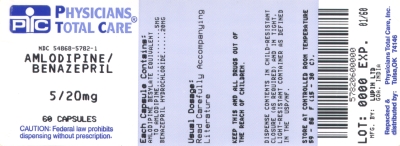
Amlodipine besylate and benazepril hydrochloride capsules are available as follows: 2.5 mg/10 mg, 5 mg/10 mg, 5 mg/20 mg, 5 mg/40 mg, 10 mg/20 mg, and 10 mg/40 mg.
Amlodipine besylate and benazepril hydrochloride is contraindicated in patients with a history of angioedema, with or without previous ACE inhibitor treatment, or patients who are hypersensitive to benazepril, to any other ACE inhibitor, or to amlodipine.
The incidence of edema was greater in patients treated with amlodipine monotherapy (5.1%) than in patients treated with amlodipine besylate and benazepril hydrochloride (2.1%) or placebo (2.2%).
Other side effects considered possibly or probably related to study drug that occurred in U.S. placebo-controlled trials of patients treated with amlodipine besylate and benazepril hydrochloride or in postmarketing experience were the following:
Body as a Whole
Asthenia and fatigue.
CNS
Insomnia, nervousness, anxiety, tremor, and decreased libido.
Dermatologic
Flushing, hot flashes, rash, skin nodule, and dermatitis.
Digestive
Dry mouth, nausea, abdominal pain, constipation, diarrhea, dyspepsia, and esophagitis.
Hematologic
Neutropenia
Metabolic and Nutritional
Hypokalemia.
Musculoskeletal
Back pain, musculoskeletal pain, cramps, and muscle cramps.
Respiratory
Pharyngitis.
Urogenital
Sexual problems such as impotence, and polyuria.
Monotherapies of benazepril and amlodipine have been evaluated for safety in clinical trials in over 6,000 and 11,000 patients, respectively. The observed adverse reactions to the monotherapies in these trials were similar to those seen in trials of amlodipine besylate and benazepril hydrochloride.
What is amlodipine besylate and benazepril hydrochloride capsules?
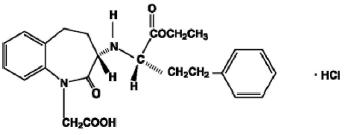
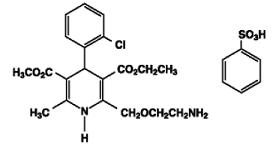
Amlodipine besylate and benazepril hydrochloride capsules contains two prescription medicines that work together to lower blood pressure: amlodipine besylate (the active ingredient found in Norvasc®), a calcium channel blocker, and benazepril hydrochloride (Lotensin®), an ACE inhibitor. Your doctor will prescribe amlodipine besylate and benazepril hydrochloride capsules only after other medicines haven’t worked.
High Blood Pressure (hypertension). Blood pressure is the force of blood in your blood vessels. You have high blood pressure when the force is too much. Amlodipine besylate and benazepril hydrochloride capsules can help your blood vessels relax so your blood pressure is lower.
Amlodipine besylate and benazepril hydrochloride capsules have not been studied in children.
Who should not take amlodipine besylate and benazepril hydrochloride capsules?
Don’t take amlodipine besylate and benazepril hydrochloride capsules if you are allergic to any of the ingredients. There is a complete list at the end of this leaflet.
What should I tell my Doctor before taking amlodipine besylate and benazepril hydrochloride capsules?
Tell your doctor about all your medical conditions, including if:
- you are pregnant or plan to become pregnant. See "What is the most important information I should know about amlodipine besylate and benazepril hydrochloride capsules?"
- you are breastfeeding. Amlodipine besylate and benazepril hydrochloride may pass into your milk. Don’t breastfeed while you are taking amlodipine besylate and benazepril hydrochloride capsules.
- you have a heart condition
- you have liver problems
- you have kidney problems
- you have diabetes (high blood sugar)
- you have systemic lupus erythematosus (SLE), scleroderma or a collagen vascular disease. Ask your doctor if you are not sure.
- medicines for high blood pressure or heart failure
- water pills, extra potassium or a salt substitute
- Lithium (Eskalith®, Lithobid®)
- Take amlodipine besylate and benazepril hydrochloride capsules exactly as your doctor tells you.
- Take amlodipine besylate and benazepril hydrochloride capsules at the same time each day, with or without food.
- If you miss a dose, take it as soon as you remember. If it is more than 12 hours, just take your next dose at the regular time.
- Your doctor may test for kidney problems or check your blood potassium level.
- If you take too much amlodipine besylate and benazepril hydrochloride capsules, call your doctor or Poison Control Center, or go to the emergency room.
- Tell all your doctors or dentist you are taking amlodipine besylate and benazepril hydrochloride capsules if you:
- are going to have surgery
- are getting allergy shots for bee stings
- go for kidney dialysis
- serious allergic reactions that can be life threatening.
- low blood pressure (hypotension). Low blood pressure is most likely to happen if you also take water pills, are on a low salt diet, get dialysis treatments, have heart problems, or get sick with vomiting or diarrhea. Lie down if you feel faint or dizzy.
- liver problems. Call your doctor if:
- you have nausea
- you feel more tired or weaker than usual
- you have itching
- your skin or eyes look yellow
- you have pain in your upper right stomach
- you have flu-like symptoms
- low white blood cells. Low white blood cells happen more in people who have kidney problems and collagen vascular diseases. Low white blood cells can give you a higher chance for getting infections. Call your doctor if you get a fever, sore throat, or other signs of infection that do not go away.
- kidney problems. Kidney problems may get worse in people that already have kidney disease. Some people will have changes on blood tests for kidney function and need a lower dose of amlodipine besylate and benazepril hydrochloride capsules. Call your doctor if you get swelling in your feet, ankles, or hands or unexplained weight gain.
- more chest pain and heart attacks in people that already have severe heart problems. Get emergency help if you get worse chest pain or chest pain that does not go away.
- Cough
- Dizziness
- Headache
- Swelling of the feet, ankles, and hands
- Store amlodipine besylate and benazepril hydrochloride capsules at room temperature (59 to 86°F).
- Keep amlodipine besylate and benazepril hydrochloride capsules in a closed container in a dry place.
- Keep amlodipine besylate and benazepril hydrochloride capsules and all medicines out of the reach of children.
Keep a list of your medicines with you, including vitamins and natural or herbal remedies, to show your doctor or pharmacist. Some of your other medicines and amlodipine besylate and benazepril hydrochloride capsules could affect each other, causing serious side effects. Tell your doctor about all your medicines, especially:
How do I take amlodipine besylate and benazepril hydrochloride capsules?
What are the possible side effects of amlodipine besylate and benazepril hydrochloride capsules?
Amlodipine besylate and benazepril hydrochloride capsules can cause serious side effects including:
Stop amlodipine besylate and benazepril hydrochloride capsules and get emergency help right away if you get:
- swelling of your face, eyelids, lips, tongue or throat
- have trouble swallowing
- asthma (wheezing) or other breathing problems
These allergic reactions are rare but happen more times in people who are African-American.
The more common side effects of amlodipine besylate and benazepril hydrochloride capsules are:
These are not all side effects of amlodipine besylate and benazepril hydrochloride capsules. For a complete list, ask your doctor or pharmacist.
Call your doctor for medical advice about side effects. You may report side effects to FDA at 1-800-FDA-1088 or at www.fda.gov/medwatch.
How do I store amlodipine besylate and benazepril hydrochloride capsules?
General Information about amlodipine besylate and benazepril hydrochloride capsules
Doctors can also use medicine for a condition that is not in the patient information leaflet. Take amlodipine besylate and benazepril hydrochloride capsules the way your doctor tells you. Do not share it with other people. It may harm them.
For more information, ask your doctor or pharmacist, address medical inquiries to www.lupinpharmaceuticals.com or 1-800-399-2561.
What are the ingredients in amlodipine besylate and benazepril hydrochloride capsules?
Active ingredients: amlodipine besylate (the active ingredient found in Norvasc®), benazepril hydrochloride (Lotensin®)
Inactive ingredients: crospovidone, hydrophobic fumed silica, lactose anhydrous, magnesium stearate, microcrystalline cellulose, povidone, gelatin, titanium dioxide (not present in 10 mg/20 mg strength), black iron oxide, red iron oxide (present in 5 mg/10 mg, 5 mg/20 mg and 10 mg/ 20 mg strength), yellow iron oxide, (present in 5 mg/10 mg strength), D&C Yellow #10 (present in 5 mg/40 mg strength), FD&C Blue #1 (present in 10 mg/40 mg strength), FD&C Blue #2 (present in 10 mg/20 mg strength), FD&C Green #3 (present in 5 mg/40 mg strength),FD&C Red #40 (present in 10 mg/40 mg strength), FD&C Yellow #6 (present in 5 mg/ 40 mg strength), shellac, propylene glycol, potassium hydroxide.
Norvasc® is a registered trademark of Pfizer, Inc. Lotensin® is a registered trademark of Novartis Corp. Eskalith® and Lithobid® are registered trademarks of Noven Therapeutics, LLC.
Manufactured for:
Lupin Pharmaceuticals, Inc.
Baltimore, Maryland 21202
United States
Manufactured by:
Lupin Limited
Goa 403 722
INDIA.
Revised: September 15, 2011 ID#: 226181