SOVALDI in combination with ribavirin for 24 weeks can be considered as a therapeutic option for patients with genotype 1 infection who are ineligible to receive an interferon-based regimen [see Clinical Studies (14.4)]. Treatment decision should be guided by an assessment of the potential benefits and risks for the individual patient.
Administer SOVALDI in combination with ribavirin for up to 48 weeks or until the time of liver transplantation, whichever occurs first, to prevent post-transplant HCV reinfection [see Use in Specific Populations (8.8)].
The safety assessment of SOVALDI was based on pooled Phase 3 clinical trial data (both controlled and uncontrolled) including:
- 650 subjects who received SOVALDI + ribavirin (RBV) combination therapy for 12 weeks,
- 98 subjects who received SOVALDI + ribavirin combination therapy for 16 weeks,
- 250 subjects who received SOVALDI + ribavirin combination therapy for 24 weeks,
- 327 subjects who received SOVALDI + peginterferon (Peg-IFN) alfa + ribavirin combination therapy for 12 weeks,
- 243 subjects who received peginterferon alfa + ribavirin for 24 weeks, and
- 71 subjects who received placebo (PBO) for 12 weeks [see Clinical Studies (14)].
The proportion of subjects who permanently discontinued treatment due to adverse events was 4% for subjects receiving placebo, 1% for subjects receiving SOVALDI + ribavirin for 12 weeks, less than 1% for subjects receiving SOVALDI + ribavirin for 24 weeks, 11% for subjects receiving peginterferon alfa + ribavirin for 24 weeks and 2% for subjects receiving SOVALDI + peginterferon alfa + ribavirin for 12 weeks.
Adverse events observed in at least 15% of subjects in the Phase 3 clinical trials outlined above are provided in Table 4. A side-by-side tabulation is displayed to simplify presentation; direct comparison across trials should not be made due to differing trial designs.
The most common adverse events (at least 20%) for SOVALDI + ribavirin combination therapy were fatigue and headache. The most common adverse events (at least 20%) for SOVALDI + peginterferon alfa + ribavirin combination therapy were fatigue, headache, nausea, insomnia and anemia.
Table 4 Adverse Events (All Grades and without Regard to Causality) Reported in ≥15% of Subjects with HCV in Any Treatment Arm | Interferon-free Regimens | Interferon-containing Regimens |
|---|
| PBO
12 weeks | SOVALDI + RBV Subjects received weight-based ribavirin (1000 mg per day if weighing <75 kg or 1200 mg per day if weighing ≥75 kg).
12 weeks | SOVALDI + RBV
24 weeks | Peg-IFN alfa + RBV Subjects received 800 mg ribavirin per day regardless of weight.
24 weeks | SOVALDI + Peg-IFN alfa + RBV
12 weeks |
|---|
| N=71 | N=650 | N=250 | N=243 | N=327 |
|---|
| Fatigue | 24% | 38% | 30% | 55% | 59% |
| Headache | 20% | 24% | 30% | 44% | 36% |
| Nausea | 18% | 22% | 13% | 29% | 34% |
| Insomnia | 4% | 15% | 16% | 29% | 25% |
| Pruritus | 8% | 11% | 27% | 17% | 17% |
| Anemia | 0% | 10% | 6% | 12% | 21% |
| Asthenia | 3% | 6% | 21% | 3% | 5% |
| Rash | 8% | 8% | 9% | 18% | 18% |
| Decreased Appetite | 10% | 6% | 6% | 18% | 18% |
| Chills | 1% | 2% | 2% | 18% | 17% |
| Influenza Like Illness | 3% | 3% | 6% | 18% | 16% |
| Pyrexia | 0% | 4% | 4% | 14% | 18% |
| Diarrhea | 6% | 9% | 12% | 17% | 12% |
| Neutropenia | 0% | <1% | <1% | 12% | 17% |
| Myalgia | 0% | 6% | 9% | 16% | 14% |
| Irritability | 1% | 10% | 10% | 16% | 13% |
With the exception of anemia and neutropenia, the majority of events presented in Table 4 occurred at severity of grade 1 in SOVALDI-containing regimens.
Less Common Adverse Reactions Reported in Clinical Trials (less than 1%): The following adverse reactions occurred in less than 1% of subjects receiving SOVALDI in a combination regimen in any one trial. These events have been included because of their seriousness or assessment of potential causal relationship.
Hematologic Effects: pancytopenia (particularly in subjects receiving concomitant pegylated interferon).
Psychiatric Disorders: severe depression (particularly in subjects with pre-existing history of psychiatric illness), including suicidal ideation and suicide.
Laboratory Abnormalities:
Changes in selected hematological parameters are described in Table 5. A side-by-side tabulation is displayed to simplify presentation; direct comparison across trials should not be made due to differing trial designs.
Table 5 Percentage of Subjects Reporting Selected Hematological Parameters| Hematological Parameters | Interferon-free Regimens | Interferon-containing Regimens |
|---|
PBO
12 weeks | SOVALDI + RBV Subjects received weight-based ribavirin (1000 mg per day if weighing <75 kg or 1200 mg per day if weighing ≥75 kg).
12 weeks | SOVALDI + RBV
24 weeks | Peg-IFN + RBV Subjects received 800 mg ribavirin per day regardless of weight.
24 weeks | SOVALDI + Peg-IFN + RBV
12 weeks |
|---|
| N=71 | N=647 | N=250 | N=242 | N=327 |
|---|
| Hemoglobin (g/dL) | | |
| <10 | 0 | 8% | 6% | 14% | 23% |
| <8.5 | 0 | 1% | <1% | 2% | 2% |
| Neutrophils (×109/L) | | |
| ≥0.5 – <0.75 | 1% | <1% | 0 | 12% | 15% |
| <0.5 | 0 | <1% | 0 | 2% | 5% |
| Platelets (×109/L) | | |
| ≥25 – <50 | 3% | <1% | 1% | 7% | <1% |
| <25 | 0 | 0 | 0 | 0 | 0 |
Bilirubin Elevations
Total bilirubin elevation of more than 2.5×ULN was observed in none of the subjects in the SOVALDI + peginterferon alfa + ribavirin 12 weeks group and in 1%, 3% and 3% of subjects in the peginterferon alfa + ribavirin 24 weeks, SOVALDI + ribavirin 12 weeks and SOVALDI + ribavirin 24 weeks groups, respectively. Bilirubin levels peaked during the first 1 to 2 weeks of treatment and subsequently decreased and returned to baseline levels by post-treatment Week 4. These bilirubin elevations were not associated with transaminase elevations.
Creatine Kinase Elevations
Creatine kinase was assessed in the FISSION and NEUTRINO trials. Isolated, asymptomatic creatine kinase elevation of greater than or equal to 10×ULN was observed in less than 1%, 1% and 2% of subjects in the peginterferon alfa + ribavirin 24 weeks, SOVALDI + peginterferon alfa + ribavirin 12 weeks and SOVALDI + ribavirin 12 weeks groups, respectively.
Lipase Elevations
Isolated, asymptomatic lipase elevation of greater than 3×ULN was observed in less than 1%, 2%, 2%, and 2% of subjects in the SOVALDI + peginterferon alfa + ribavirin 12 weeks, SOVALDI + ribavirin 12 weeks, SOVALDI + ribavirin 24 weeks and peginterferon alfa + ribavirin 24 weeks groups, respectively.
Patients with HCV/HIV-1 Coinfection
SOVALDI used in combination with ribavirin was assessed in 223 HCV/HIV-1 coinfected subjects [see Clinical Studies (14.4)]. The safety profile in HCV/HIV-1 coinfected subjects was similar to that observed in HCV mono-infected subjects. Elevated total bilirubin (grade 3 or 4) was observed in 30/32 (94%) subjects receiving atazanavir as part of the antiretroviral regimen. None of the subjects had concomitant transaminase increases. Among subjects not taking atazanavir, grade 3 or 4 elevated total bilirubin was observed in 2 (1.5%) subjects, similar to the rate observed with HCV mono-infected subjects receiving SOVALDI + ribavirin in Phase 3 trials.
Adverse Reactions in Pediatric Subjects 12 Years of Age and Older
The safety assessment of SOVALDI in pediatric subjects 12 years of age and older is based on data from 50 subjects who were treated with SOVALDI plus ribavirin for 12 weeks (genotype 2 subjects) or 24 weeks (genotype 3 subjects) in a Phase 2, open-label clinical trial. The adverse reactions observed were consistent with those observed in clinical studies of SOVALDI plus ribavirin in adults [see Clinical Studies 14.5)].
Cardiac Disorders
Serious symptomatic bradycardia has been reported in patients taking amiodarone who initiate treatment with a sofosbuvir-containing regimen [see Warnings and Precautions (5.2), Drug Interactions (7.1)].
Risk Summary
If SOVALDI is administered with ribavirin or peginterferon alfa and ribavirin, the combination regimen is contraindicated in pregnant women and in men whose female partners are pregnant. Refer to the ribavirin and/or peginterferon alfa prescribing information for more information on ribavirin- and peginterferon alfa-associated risks of use during pregnancy.
No adequate human data are available to establish whether or not SOVALDI poses a risk to pregnancy outcomes. In animal reproduction studies, no evidence of adverse developmental outcomes was observed with sofosbuvir at exposures greater than those in humans at the recommended human dose (RHD) [see Data]. During organogenesis in the rat and rabbit, systemic exposures (AUC) to the predominant circulating metabolite of sofosbuvir (GS-331007) were ≥5 (rats) and 12 (rabbits) times the exposure in humans at the RHD. In the rat pre/postnatal development study, maternal systemic exposure (AUC) to GS-331007 was ≥6 times the exposure in humans at the RHD.
The background risk of major birth defects and miscarriage for the indicated population is unknown. In the U.S. general population, the estimated background risk of major birth defects and miscarriage in clinically recognized pregnancies is 2–4% and 15–20%, respectively.
Data
Animal Data
Sofosbuvir was administered orally to pregnant rats (up to 500 mg/kg/day) and rabbits (up to 300 mg/kg/day) on gestation days 6 to 18 and 6 to 19, respectively, and also to rats (oral doses up to 500 mg/kg/day) on gestation day 6 to lactation/post-partum day 20. No significant effects on embryo-fetal (rats and rabbits) or pre/postnatal (rats) development were observed at the highest doses tested. Systemic exposures (AUC) to the predominant circulating metabolite of sofosbuvir (GS-331007) were ≥5 (rats) and 12 (rabbits) times the exposure in humans at the RHD, with exposures increasing during gestation from approximately 5 to 10 (rats) and 12 to 28 (rabbits) times the exposure in humans at the RHD.
Risk Summary
It is not known whether sofosbuvir or its metabolites are present in human breast milk, affect human milk production or have effects on the breastfed infant. The predominant circulating metabolite of sofosbuvir (GS-331007) was the primary component observed in the milk of lactating rats, without effect on nursing pups [see Data].
The developmental and health benefits of breastfeeding should be considered along with the mother's clinical need for SOVALDI and any potential adverse effects on the breastfed child from SOVALDI or from the underlying maternal condition.
If SOVALDI is administered with ribavirin, the nursing mother's information for ribavirin also applies to this combination regimen. Refer to the ribavirin prescribing information for more information on use during lactation.
Data
Animal Data
No effects of sofosbuvir on growth and postnatal development were observed in nursing pups at the highest dose tested in rats. Maternal systemic exposure (AUC) to the predominant circulating metabolite of sofosbuvir (GS-331007) was approximately 12 times the exposure in humans at the RHD, with exposure of approximately 2% that of maternal exposure observed in nursing pups on lactation day 10. In a lactation study, sofosbuvir metabolites (primarily GS-331007) were excreted into the milk of lactating rats following administration of a single oral dose of sofosbuvir (20 mg/kg) on lactation day 2, with milk concentrations of approximately 10% that of maternal plasma concentrations observed 1 hour post-dose.
Cardiac Electrophysiology
The effect of sofosbuvir 400 and 1200 mg (three times the recommended dosage) on QTc interval was evaluated in a randomized, single-dose, placebo- and active-controlled (moxifloxacin 400 mg) four period crossover thorough QT trial in 59 healthy subjects. At a dosage three times the maximum recommended dosage, SOVALDI does not prolong QTc to any clinically relevant extent.
Absorption
The pharmacokinetic properties of sofosbuvir and the predominant circulating metabolite GS-331007 have been evaluated in healthy adult subjects and in subjects with chronic hepatitis C. Following oral administration of SOVALDI, sofosbuvir was absorbed with a peak plasma concentration observed at ~0.5–2 hour post-dose, regardless of dose level. Peak plasma concentration of GS-331007 was observed between 2 to 4 hours post-dose. Based on population pharmacokinetic analysis in subjects with genotype 1 to 6 HCV infection who were coadministered ribavirin (with or without pegylated interferon), geometric mean steady state AUC0–24 was 969 ng∙hr/mL for sofosbuvir (N=838), and 6790 ng∙hr/mL for GS-331007 (N=1695). Relative to healthy subjects administered sofosbuvir alone (N=272), the sofosbuvir AUC0–24 was 60% higher; and GS-331007 AUC0–24 was 39% lower, respectively, in HCV-infected subjects. Sofosbuvir and GS-331007 AUCs are near dose proportional over the dose range of 200 mg to 1200 mg.
Effect of Food
Relative to fasting conditions, the administration of a single dose of SOVALDI with a standardized high fat meal did not substantially affect the sofosbuvir Cmax or AUC0–inf. The exposure of GS-331007 was not altered in the presence of a high-fat meal. Therefore, SOVALDI can be administered without regard to food.
Distribution
Sofosbuvir is approximately 61–65% bound to human plasma proteins and the binding is independent of drug concentration over the range of 1 microgram/mL to 20 microgram/mL. Protein binding of GS-331007 was minimal in human plasma. After a single 400 mg dose of [14C]-sofosbuvir in healthy subjects, the blood to plasma ratio of 14C-radioactivity was approximately 0.7.
Metabolism
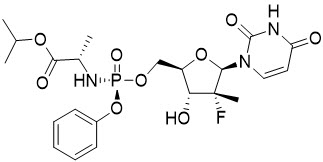
Sofosbuvir is extensively metabolized in the liver to form the pharmacologically active nucleoside analog triphosphate GS-461203. The metabolic activation pathway involves sequential hydrolysis of the carboxyl ester moiety catalyzed by human cathepsin A (CatA) or carboxylesterase 1 (CES1) and phosphoramidate cleavage by histidine triad nucleotide-binding protein 1 (HINT1) followed by phosphorylation by the pyrimidine nucleotide biosynthesis pathway. Dephosphorylation results in the formation of nucleoside metabolite GS-331007 that cannot be efficiently rephosphorylated and lacks anti-HCV activity in vitro.
After a single 400 mg oral dose of [14C]-sofosbuvir, sofosbuvir and GS-331007 accounted for approximately 4% and greater than 90% of drug related material (sum of molecular weight-adjusted AUC of sofosbuvir and its metabolites) systemic exposure, respectively.
Elimination
Following a single 400 mg oral dose of [14C]-sofosbuvir, mean total recovery of the dose was greater than 92%, consisting of approximately 80%, 14%, and 2.5% recovered in urine, feces, and expired air, respectively. The majority of the sofosbuvir dose recovered in urine was GS-331007 (78%) while 3.5% was recovered as sofosbuvir. These data indicate that renal clearance is the major elimination pathway for GS-331007. The median terminal half-lives of sofosbuvir and GS-331007 were 0.4 and 27 hours, respectively.
Specific Populations
Race
Population pharmacokinetics analysis in HCV-infected subjects indicated that race had no clinically relevant effect on the exposure of sofosbuvir and GS-331007.
Gender
No clinically relevant pharmacokinetic differences have been observed between men and women for sofosbuvir and GS-331007.
Pediatric Patients
The pharmacokinetics of sofosbuvir and GS-331007 were determined in 50 pediatric subjects 12 years of age and older, infected with HCV genotype 2 or 3, receiving a daily dose of SOVALDI (400 mg sofosbuvir). The pharmacokinetic properties of sofosbuvir and GS-331007 in pediatric subjects 12 years of age and older are provided in Table 7. Exposures in pediatric subjects were similar to those observed in adults.
Table 7 Pharmacokinetic Properties of SOVALDI in HCV-infected Pediatric Subjects 12 Years of Age and OlderPopulation PK derived parameters
| Geometric Mean | Sofosbuvir Sofosbuvir N=28; GS-331007 N=50 | GS-331007 |
|---|
| AUCtau (ng∙hr/mL) | 1060 | 7570 |
| Cmax (ng/mL) | 472 | 572 |
The pharmacokinetics of sofosbuvir have not been established in pediatric subjects less than 12 years of age [see Use in Specific Populations (8.4)].
Geriatric Patients
Population pharmacokinetic analysis in HCV-infected subjects showed that within the age range (19 to 75 years) analyzed, age did not have a clinically relevant effect on the exposure to sofosbuvir and GS-331007 [see Use in Specific Populations (8.5)].
Patients with Renal Impairment
The pharmacokinetics of sofosbuvir were studied in HCV negative subjects with mild (eGFR between 50 to less than 80 mL/min/1.73m2), moderate (eGFR between 30 to less than 50 mL/min/1.73m2), severe renal impairment (eGFR less than 30 mL/min/1.73m2) and subjects with end stage renal disease (ESRD) requiring hemodialysis following a single 400 mg dose of sofosbuvir. Relative to subjects with normal renal function (eGFR greater than 80 mL/min/1.73m2), the sofosbuvir AUC0–inf was 61%, 107% and 171% higher in mild, moderate and severe renal impairment, while the GS-331007 AUC0–inf was 55%, 88% and 451% higher, respectively. In subjects with ESRD, relative to subjects with normal renal function, sofosbuvir and GS-331007 AUC0–inf was 28% and 1280% higher when sofosbuvir was dosed 1 hour before hemodialysis compared with 60% and 2070% higher when sofosbuvir was dosed 1 hour after hemodialysis, respectively. A 4 hour hemodialysis session removed approximately 18% of administered dose. No dosage adjustment is required for patients with mild or moderate renal impairment. The safety and efficacy of SOVALDI have not been established in patients with severe renal impairment or ESRD. No dosage recommendation can be given for patients with severe renal impairment or ESRD [see Dosage and Administration (2.6) and Use in Specific Populations (8.6)].
Patients with Hepatic Impairment
The pharmacokinetics of sofosbuvir were studied following 7-day dosing of 400 mg sofosbuvir in HCV-infected subjects with moderate and severe hepatic impairment (Child-Pugh Class B and C). Relative to subjects with normal hepatic function, the sofosbuvir AUC0–24 were 126% and 143% higher in moderate and severe hepatic impairment, while the GS-331007 AUC0–24 were 18% and 9% higher, respectively. Population pharmacokinetics analysis in HCV-infected subjects indicated that cirrhosis had no clinically relevant effect on the exposure of sofosbuvir and GS-331007. No dosage adjustment of SOVALDI is recommended for patients with mild, moderate or severe hepatic impairment [see Use in Specific Populations (8.7)].
Assessment of Drug Interactions
Sofosbuvir is a substrate of drug transporter P-gp and breast cancer resistance protein (BCRP) while GS-331007 is not. Drugs that are P-gp inducers in the intestine (e.g., rifampin or St. John's wort) may decrease sofosbuvir plasma concentration, leading to reduced therapeutic effect of SOVALDI, and thus concomitant use with SOVALDI is not recommended [see Warnings and Precautions (5.3) and Drug Interactions (7.1)].
Coadministration of SOVALDI with drugs that inhibit P-gp and/or BCRP may increase sofosbuvir plasma concentration without increasing GS-331007 plasma concentration; accordingly, SOVALDI may be coadministered with P-gp and/or BCRP inhibitors. Sofosbuvir and GS-331007 are not inhibitors of P-gp and BCRP and thus are not expected to increase exposures of drugs that are substrates of these transporters.
The intracellular metabolic activation pathway of sofosbuvir is mediated by generally low affinity and high capacity hydrolase and nucleotide phosphorylation pathways that are unlikely to be affected by concomitant drugs.
The effects of coadministered drugs on the exposure of sofosbuvir and GS-331007 are shown in Table 8. The effects of sofosbuvir on the exposure of coadministered drugs are shown in Table 9 [see Drug Interactions (7.2)].
Table 8 Drug Interactions: Changes in Pharmacokinetic Parameters for Sofosbuvir and the Predominant Circulating Metabolite GS-331007 in the Presence of the Coadministered DrugAll interaction studies conducted in healthy volunteers
| Coadministered Drug | Dose of Coadministered Drug (mg) | Sofosbuvir Dose (mg) | N | Mean Ratio (90% CI) of Sofosbuvir and GS-331007 PK With/Without Coadministered Drug
No Effect=1.00 |
|---|
| Cmax | AUC | Cmin |
|---|
| NA = not available/not applicable |
| Cyclosporine | 600 single dose | 400 single dose | 19 | sofosbuvir | 2.54
(1.87, 3.45) | 4.53
(3.26, 6.30) | NA |
| GS-331007 | 0.60
(0.53, 0.69) | 1.04
(0.90, 1.20) | NA |
Darunavir
(boosted with ritonavir) | 800/100 once daily | 400 single dose | 18 | sofosbuvir | 1.45
(1.10, 1.92) | 1.34
(1.12, 1.59) | NA |
| GS-331007 | 0.97
(0.90, 1.05) | 1.24
(1.18, 1.30) | NA |
| Efavirenz Administered as efavirenz/emtricitabine/tenofovir disoproxil fumarate fixed dose tablet | 600 once daily | 400 single dose | 16 | sofosbuvir | 0.81
(0.60, 1.10) | 0.94
(0.76, 1.16) | NA |
| Emtricitabine | 200 once daily |
| Tenofovir disoproxil fumarate | 300 once daily | GS-331007 | 0.77
(0.70, 0.84) | 0.84 (0.76, 0.92) | NA |
| Methadone | 30 to 130 once daily | 400 once daily | 14 | sofosbuvir | 0.95 Comparison based on historic control
(0.68, 1.33) | 1.30
(1.00, 1.69) | NA |
| GS-331007 | 0.73
(0.65, 0.83) | 1.04
(0.89, 1.22) | NA |
| Rilpivirine | 25 once daily | 400 single dose | 17 | sofosbuvir | 1.21
(0.90, 1.62) | 1.09
(0.94, 1.27) | NA |
| GS-331007 | 1.06
(0.99, 1.14) | 1.01
(0.97, 1.04) | NA |
| Tacrolimus | 5 single dose | 400 single dose | 16 | sofosbuvir | 0.97
(0.65, 1.43) | 1.13
(0.81, 1.57) | NA |
| GS-331007 | 0.97
(0.83, 1.14) | 1.00
(0.87, 1.13) | NA |
No effect on the pharmacokinetic parameters of sofosbuvir and GS-331007 was observed with raltegravir.
Table 9 Drug Interactions: Changes in Pharmacokinetic Parameters for Coadministered Drug in the Presence of SofosbuvirAll interaction studies conducted in healthy volunteers
| Coadministered Drug | Dose of Coadministered Drug (mg) | Sofosbuvir Dose (mg) | N | Mean Ratio (90% CI) of Coadministered Drug PK With/Without Sofosbuvir
No Effect=1.00 |
|---|
| Cmax | AUC | Cmin |
|---|
| NA = not available/not applicable |
| Norelgestromin | norgestimate 0.18/0.215/0.25/ ethinyl estradiol 0.025 once daily | 400 once daily | 15 | 1.07
(0.94, 1.22) | 1.06
(0.92, 1.21) | 1.07
(0.89, 1.28) |
| Norgestrel | 1.18
(0.99, 1.41) | 1.19
(0.98, 1.45) | 1.23
(1.00, 1.51) |
| Ethinyl estradiol | 1.15
(0.97, 1.36) | 1.09
(0.94, 1.26) | 0.99
(0.80, 1.23) |
| Raltegravir | 400 twice daily | 400 single dose | 19 | 0.57
(0.44, 0.75) | 0.73
(0.59, 0.91) | 0.95
(0.81, 1.12) |
| Tacrolimus | 5 single dose | 400 single dose | 16 | 0.73
(0.59, 0.90) | 1.09
(0.84, 1.40) | NA |
| Tenofovir disoproxil fumarate Administered as efavirenz/emtricitabine/tenofovir disoproxil fumarate fixed dose tablet | 300 once daily | 400 single dose | 16 | 1.25
(1.08, 1.45) | 0.98
(0.91, 1.05) | 0.99
(0.91, 1.07) |
No effect on the pharmacokinetic parameters of the following coadministered drugs was observed with sofosbuvir: cyclosporine, darunavir/ritonavir, efavirenz, emtricitabine, methadone, or rilpivirine.
Mechanism of Action
Sofosbuvir is an inhibitor of the HCV NS5B RNA-dependent RNA polymerase, which is essential for viral replication. Sofosbuvir is a nucleotide prodrug that undergoes intracellular metabolism to form the pharmacologically active uridine analog triphosphate (GS-461203), which can be incorporated into HCV RNA by the NS5B polymerase and acts as a chain terminator. In a biochemical assay, GS-461203 inhibited the polymerase activity of the recombinant NS5B from HCV genotype 1b, 2a, 3a and 4a with IC50 values ranging from 0.7 to 2.6 micromolar. GS-461203 is neither an inhibitor of human DNA and RNA polymerases nor an inhibitor of mitochondrial RNA polymerase.
Antiviral Activity
In HCV replicon assays, the EC50 values of sofosbuvir against full-length replicons from genotype 1a, 1b, 2a, 3a and 4a, and chimeric 1b replicons encoding NS5B from genotype 2b, 5a or 6a ranged from 0.014 to 0.11 micromolar. The median EC50 value of sofosbuvir against chimeric replicons encoding NS5B sequences from clinical isolates was 0.062 micromolar for genotype 1a (range 0.029–0.128 micromolar; N=67), 0.102 micromolar for genotype 1b (range 0.045–0.170 micromolar; N=29), 0.029 micromolar for genotype 2 (range 0.014–0.081 micromolar; N=15) and 0.081 micromolar for genotype 3a (range 0.024–0.181 micromolar; N=106). In infectious virus assays, the EC50 values of sofosbuvir against genotype 1a and 2a were 0.03 and 0.02 micromolar, respectively. The presence of 40% human serum had no effect on the anti-HCV activity of sofosbuvir. Evaluation of sofosbuvir in combination with interferon alpha or ribavirin showed no antagonistic effect in reducing HCV RNA levels in replicon cells.
Resistance
In Cell Culture
HCV replicons with reduced susceptibility to sofosbuvir have been selected in cell culture for multiple genotypes including 1b, 2a, 2b, 3a, 4a, 5a and 6a. Reduced susceptibility to sofosbuvir was associated with the primary NS5B substitution S282T in all replicon genotypes examined. An M289L substitution developed along with the S282T substitution in genotype 2a, 5 and 6 replicons. Site-directed mutagenesis of the S282T substitution in replicons of 8 genotypes conferred 2- to 18-fold reduced susceptibility to sofosbuvir and reduced the replication viral capacity by 89% to 99% compared to the corresponding wild-type. In biochemical assays, recombinant NS5B polymerase from genotypes 1b, 2a, 3a and 4a expressing the S282T substitution showed reduced susceptibility to GS-461203 compared to respective wild-types.
In Clinical Trials
In a pooled analysis of 982 subjects who received SOVALDI in Phase 3 trials, 224 subjects had post-baseline NS5B genotypic data from next generation nucleotide sequencing (assay cutoff of 1%).
Treatment-emergent substitutions L159F (n=6) and V321A (n=5) were detected in post-baseline samples from GT3a-infected subjects across the Phase 3 trials. No detectable shift in the phenotypic susceptibility to sofosbuvir of subject isolates with L159F or V321A substitutions was seen. The sofosbuvir-associated resistance substitution S282T was not detected at baseline or in the failure isolates from Phase 3 trials. However, an S282T substitution was detected in one genotype 2b subject who relapsed at Week 4 post-treatment after 12 weeks of sofosbuvir monotherapy in the Phase 2 trial P7977-0523 [ELECTRON]. The isolate from this subject displayed a mean 13.5-fold reduced susceptibility to sofosbuvir. For this subject, the S282T substitution was no longer detectable at Week 12 post-treatment by next generation sequencing with an assay cutoff of 1%.
In the trial done in subjects with hepatocellular carcinoma awaiting liver transplantation where subjects received up to 48 weeks of sofosbuvir and ribavirin, the L159F substitution emerged in multiple subjects with GT1a or GT2b HCV who experienced virologic failure (breakthrough and relapse). Furthermore, the presence of substitutions L159F and/or C316N at baseline was associated with sofosbuvir breakthrough and relapse post-transplant in multiple subjects infected with GT1b HCV. In addition, S282R and L320F substitutions were detected on-treatment by next generation sequencing in a subject infected with GT1a HCV with a partial treatment response.
The clinical significance of these substitutions is not known.
Cross Resistance
HCV replicons expressing the sofosbuvir-associated resistance substitution S282T were susceptible to NS5A inhibitors and ribavirin. HCV replicons expressing the ribavirin-associated substitutions T390I and F415Y were susceptible to sofosbuvir. Sofosbuvir was active against HCV replicons with NS3/4A protease inhibitor, NS5B non-nucleoside inhibitor and NS5A inhibitor resistant variants.
Carcinogenesis and Mutagenesis
Use with Ribavirin and/or Peginterferon alfa: Refer to prescribing information for ribavirin and/or peginterferon alfa for information on carcinogenesis and mutagenesis.
Sofosbuvir was not genotoxic in a battery of in vitro or in vivo assays, including bacterial mutagenicity, chromosome aberration using human peripheral blood lymphocytes and in vivo mouse micronucleus assays.
Two-year carcinogenicity studies in mice and rats were conducted with sofosbuvir. Mice were administered doses of up to 200 mg/kg/day in males and 600 mg/kg/day in females, while rats were administered doses of up to 750 mg/kg/day in males and females. No increase in the incidence of drug-related neoplasms were observed at the highest doses tested in mice and rats, resulting in AUC exposure to the predominant circulating metabolite GS-331007 of approximately 7 and 30 times (in mice) and 13 and 17 times (in rats), in males and females respectively, the exposure in humans at the recommended clinical dose.
Impairment of Fertility
Use with Ribavirin and/or Peginterferon alfa: Refer to prescribing information for ribavirin and/or peginterferon alfa for information on impairment of fertility.
Sofosbuvir had no effects on embryo-fetal viability or on fertility when evaluated in rats. At the highest dose tested, AUC exposure to the predominant circulating metabolite GS-331007 was approximately 8 times the exposure in humans at the recommended clinical dose.
Treatment-Naïve Adults ─ NEUTRINO (Study 110)
NEUTRINO was an open-label, single-arm trial that evaluated 12 weeks of treatment with SOVALDI in combination with peginterferon alfa 2a and ribavirin in treatment-naïve subjects with genotype 1, 4, 5 or 6 HCV infection compared to pre-specified historical control.
Treated subjects (N=327) had a median age of 54 years (range: 19 to 70); 64% of the subjects were male; 79% were White, 17% were Black; 14% were Hispanic or Latino; mean body mass index was 29 kg/m2 (range: 18 to 56 kg/m2); 78% had baseline HCV RNA greater than 6 log10 IU per mL; 17% had cirrhosis; 89% had HCV genotype 1; 9% had HCV genotype 4 and 2% had HCV genotype 5 or 6. Table 11 presents the SVR12 for the treatment group of SOVALDI + peginterferon alfa + ribavirin in subjects with genotype 1 or 4 HCV. Available data on subjects with genotype 5 or 6 HCV treated with SOVALDI + peginterferon alfa + ribavirin for 12 weeks were insufficient for dosing recommendations; therefore these results are not presented in Table 11 [see Use in Specific Populations (8.10)].
Table 11 Study NEUTRINO: SVR12 for Treatment-Naïve Subjects with Genotype 1 or 4 HCV | SOVALDI + Peg-IFN alfa + RBV 12 weeks |
|---|
| N=320 |
|---|
| Overall SVR | 90% (289/320) |
| Genotype 1 One subject had genotype 1a/1b mixed infection. | 90% (262/292) |
| Genotype 1a | 92% (206/225) |
| Genotype 1b | 83% (55/66) |
| Genotype 4 | 96% (27/28) |
| Outcome for subjects without SVR |
| On-treatment virologic failure | 0/320 |
| Relapse The denominator for relapse is the number of subjects with HCV RNA <LLOQ at their last on-treatment assessment. | 9% (28/319) |
| Other Other includes subjects who did not achieve SVR and did not meet virologic failure criteria (e.g., lost to follow-up). | 1% (3/320) |
SVR12 for selected subgroups are presented in Table 12.
Table 12 SVR12 Rates for Selected Subgroups in NEUTRINO in Subjects with Genotype 1 or 4 HCV | SOVALDI + Peg-IFN alfa + RBV 12 weeks |
|---|
| Cirrhosis |
| No | 93% (247/267) |
| Yes | 79% (42/53) |
| Race |
| Black | 87% (47/54) |
| Non-black | 91% (242/266) |
| Multiple Baseline Factors |
| Genotype 1, Metavir F3/F4 fibrosis, IL28B non-C/C, HCV RNA >800,000 IU/mL | 71% (37/52) |
SVR12 rates were 99% (89/90) in subjects with genotype 1 or 4 HCV and baseline IL28B C/C allele and 87% (200/230) in subjects with genotype 1 or 4 HCV and baseline IL28B non-C/C alleles.
It is estimated that the SVR12 in patients who previously failed pegylated interferon and ribavirin therapy will approximate the observed SVR12 in NEUTRINO subjects with multiple baseline factors traditionally associated with a lower response to interferon-based treatment (Table 12). The SVR12 rate in the NEUTRINO trial in genotype 1 subjects with IL28B non-C/C alleles, HCV RNA greater than 800,000 IU/mL and Metavir F3/F4 fibrosis was 71% (37/52).
Treatment-Naïve Adults ─ FISSION (Study 1231)
FISSION was a randomized, open-label, active-controlled trial that evaluated 12 weeks of treatment with SOVALDI and ribavirin compared to 24 weeks of treatment with peginterferon alfa 2a and ribavirin in treatment-naïve subjects with genotype 2 and 3 HCV. The ribavirin dosage used in the SOVALDI + ribavirin and peginterferon alfa 2a + ribavirin arms were weight-based 1000–1200 mg per day and 800 mg per day regardless of weight, respectively. Subjects were randomized in a 1:1 ratio and stratified by cirrhosis (presence vs. absence), HCV genotype (2 vs. 3) and baseline HCV RNA level (less than 6 log10 IU/mL vs. at least 6 log10 IU/mL). Subjects with genotype 2 or 3 HCV were enrolled in an approximately 1:3 ratio.
Treated subjects (N=499) had a median age of 50 years (range: 19 to 77); 66% of the subjects were male; 87% were White, 3% were Black; 14% were Hispanic or Latino; mean body mass index was 28 kg/m2 (range: 17 to 52 kg/m2); 57% had baseline HCV RNA levels greater than 6 log10 IU per mL; 20% had cirrhosis; 72% had HCV genotype 3. Table 13 presents the SVR12 for the treatment groups of SOVALDI + ribavirin and peginterferon alfa + ribavirin in subjects with genotype 2 HCV. SVR12 for genotype 3 subjects treated with SOVALDI + ribavirin for 12 weeks was suboptimal; therefore these results are not presented in Table 13.
Table 13 Study FISSION: SVR12 in Treatment-Naïve Subjects with Genotype 2 HCV | SOVALDI + RBV 12 weeks | Peg-IFN alfa + RBV 24 weeks |
|---|
| N=73 Including three subjects with recombinant genotype 2/1 HCV infection. | N=67 |
|---|
| SVR12 | 95% (69/73) | 78% (52/67) |
| Outcome for subjects without SVR12 |
| On-treatment virologic failure | 0/73 | 4% (3/67) |
| Relapse The denominator for relapse is the number of subjects with HCV RNA <LLOQ at their last on-treatment assessment. | 5% (4/73) | 15% (9/62) |
| Other Other includes subjects who did not achieve SVR and did not meet virologic failure criteria (e.g., lost to follow-up). | 0/73 | 4% (3/67) |
SVR12 for genotype 2 HCV-infected subjects with cirrhosis at baseline are presented in Table 14.
Table 14 SVR12 Rates by Cirrhosis in Study FISSION in Subjects with Genotype 2 HCV | SOVALDI + RBV
12 weeks | Peg-IFN alfa + RBV
24 weeks |
|---|
| N=73 | N=67 |
|---|
| Cirrhosis |
| No | 97% (59/61) | 81% (44/54) |
| Yes | 83% (10/12) | 62% (8/13) |
Interferon Intolerant, Ineligible or Unwilling Adults ─ POSITRON (Study 107)
POSITRON was a randomized, double-blinded, placebo-controlled trial that evaluated 12 weeks of treatment with SOVALDI and ribavirin (N=207) compared to placebo (N=71) in subjects who are interferon intolerant, ineligible or unwilling. Subjects were randomized in 3:1 ratio and stratified by cirrhosis (presence vs. absence).
Treated subjects (N=278) had a median age of 54 years (range: 21 to 75); 54% of the subjects were male; 91% were White, 5% were Black; 11% were Hispanic or Latino; mean body mass index was 28 kg/m2 (range: 18 to 53 kg/m2); 70% had baseline HCV RNA levels greater than 6 log10 IU per mL; 16% had cirrhosis; 49% had HCV genotype 3. The proportions of subjects who were interferon intolerant, ineligible, or unwilling were 9%, 44%, and 47%, respectively. Most subjects had no prior HCV treatment (81%). Table 15 presents the SVR12 for the treatment groups of SOVALDI + ribavirin and placebo in subjects with genotype 2 HCV. SVR12 for genotype 3 subjects treated with SOVALDI + ribavirin for 12 weeks was suboptimal; therefore these results are not presented in Table 15.
Table 15 Study POSITRON: SVR12 in Interferon Intolerant, Ineligible or Unwilling Subjects with Genotype 2 HCV | SOVALDI + RBV 12 weeks | Placebo 12 weeks |
|---|
| N=109 | N= 34 |
|---|
| SVR12 | 93% (101/109) | 0/34 |
| Outcome for subjects without SVR12 |
| On-treatment virologic failure | 0/109 | 97% (33/34) |
| Relapse The denominator for relapse is the number of subjects with HCV RNA <LLOQ at their last on-treatment assessment. | 5% (5/107) | 0/0 |
| Other Other includes subjects who did not achieve SVR and did not meet virologic failure criteria (e.g., lost to follow-up). | 3% (3/109) | 3% (1/34) |
Table 16 presents the subgroup analysis for cirrhosis and interferon classification in subjects with genotype 2 HCV.
Table 16 SVR12 Rates for Selected Subgroups in POSITRON in Subjects with Genotype 2 HCV | SOVALDI + RBV 12 weeks |
|---|
| N=109 |
|---|
| Cirrhosis |
| No | 92% (85/92) |
| Yes | 94% (16/17) |
| Interferon Classification |
| Ineligible | 88% (36/41) |
| Intolerant | 100% (9/9) |
| Unwilling | 95% (56/59) |
Previously Treated Adults ─ FUSION (Study 108)
FUSION was a randomized, double-blinded trial that evaluated 12 or 16 weeks of treatment with SOVALDI and ribavirin in subjects who did not achieve SVR with prior interferon-based treatment (relapsers and nonresponders). Subjects were randomized in a 1:1 ratio and stratified by cirrhosis (presence vs. absence) and HCV genotype (2 vs. 3).
Treated subjects (N=201) had a median age of 56 years (range: 24 to 70); 70% of the subjects were male; 87% were White; 3% were Black; 9% were Hispanic or Latino; mean body mass index was 29 kg/m2 (range: 19 to 44 kg/m2); 73% had baseline HCV RNA levels greater than 6 log10 IU per mL; 34% had cirrhosis; 63% had HCV genotype 3; 75% were prior relapsers. Table 17 presents the SVR12 for the treatment groups of SOVALDI + ribavirin for 12 weeks in subjects with genotype 2 HCV. Treatment of 16 weeks in subjects with genotype 2 HCV was not shown to increase the SVR12 observed with 12 weeks of treatment. SVR12 for genotype 3 subjects treated with SOVALDI + ribavirin for 12 or 16 weeks was suboptimal; therefore these results are not presented in Table 17.
Table 17 Study FUSION: SVR12 in Previous Interferon Relapsers and Nonresponders with Genotype 2 HCV | SOVALDI + RBV
12 weeks |
|---|
| N=39 Including three subjects with recombinant genotype 2/1 HCV infection. |
|---|
| SVR12 | 82% (32/39) |
| Outcome for subjects without SVR12 |
| On-treatment virologic failure | 0/39 |
| Relapse The denominator for relapse is the number of subjects with HCV RNA <LLOQ at their last on-treatment assessment. | 18% (7/39) |
| Other Other includes subjects who did not achieve SVR and did not meet virologic failure criteria (e.g., lost to follow-up). | 0/39 |
Table 18 presents the subgroup analysis for cirrhosis and response to prior HCV treatment in subjects with genotype 2 HCV.
Table 18 SVR12 Rates for Selected Subgroups in Study FUSION in Subjects with Genotype 2 HCV | SOVALDI + RBV 12 weeks |
|---|
| N=39 |
|---|
| Cirrhosis |
| No | 90% (26/29) |
| Yes | 60% (6/10) |
| Response to prior HCV treatment |
| Relapser/ breakthrough | 86% (25/29) |
| Nonresponder | 70% (7/10) |
Treatment-Naïve and Previously Treated Adults ─ VALENCE (Study 133)
The VALENCE trial evaluated SOVALDI in combination with weight-based ribavirin for the treatment of genotype 2 or 3 HCV infection in treatment-naïve subjects or subjects who did not achieve SVR with prior interferon-based treatment, including subjects with compensated cirrhosis. The original trial design was a 4 to 1 randomization to SOVALDI + ribavirin for 12 weeks or placebo. Based on emerging data, this trial was unblinded and all genotype 2 HCV-infected subjects continued the original planned treatment and received SOVALDI + ribavirin for 12 weeks, and duration of treatment with SOVALDI + ribavirin in genotype 3 HCV-infected subjects was extended to 24 weeks. Eleven genotype 3 subjects had already completed SOVALDI + ribavirin for 12 weeks at the time of the amendment.
Treated subjects (N=419) had a median age of 51 years (range: 19 to 74); 60% of the subjects were male; mean body mass index was 26 kg/m2 (range: 17 to 44 kg/m2); the mean baseline HCV RNA level was 6.4 log10 IU per mL; 78% had HCV genotype 3; 58% of the subjects were treatment-experienced and 65% of those subjects experienced relapse/breakthrough to prior HCV treatment.
Table 19 presents the SVR12 for the treatment groups of SOVALDI + ribavirin for 12 weeks and 24 weeks.
Table 19 Study VALENCEPlacebo subjects (N=85) were not included as none achieved SVR12.
: SVR12 in Subjects with Genotype 2 or 3 HCV Who were Treatment-Naïve or Who Did Not Achieve SVR12 with Prior Interferon-Based Treatment | Genotype 2 SOVALDI + RBV
12 weeks | Genotype 3 SOVALDI + RBV
24 weeks |
|---|
| N=73 | N=250 |
|---|
| Overall SVR | 93% (68/73) | 84% (210/250) |
| Outcome for subjects without SVR |
| On-treatment virologic failure | 0% (0/73) | <1% (1/250) |
| Relapse The denominator for relapse is the number of subjects with HCV RNA <LLOQ at their last on-treatment assessment. | 7% (5/73) | 14% (34/249) |
| Treatment-naïve | 3% (1/32) | 5% (5/105) |
| Treatment-experienced | 10% (4/41) | 20% (29/144) |
| Other Other includes subjects who did not achieve SVR12 and did not meet virologic failure criteria (e.g., lost to follow-up). | 0% (0/73) | 2% (5/250) |
Table 20 presents the subgroup analysis by genotype for cirrhosis and prior HCV treatment experience.
Table 20 SVR12 Rates for Selected Subgroups by Genotype in Study VALENCE in Subjects with Genotype 2 or 3 HCV | Genotype 2 SOVALDI + RBV
12 weeks | Genotype 3 SOVALDI + RBV
24 weeks |
|---|
| N=73 | N=250 |
|---|
| Treatment-naïve | 97% (31/32) | 93% (98/105) |
| Non-cirrhotic | 97% (29/30) | 93% (86/92) |
| Cirrhotic | 100% (2/2) | 92% (12/13) |
| Treatment-experienced | 90% (37/41) | 77% (112/145) |
| Non-cirrhotic | 91% (30/33) | 85% (85/100) |
| Cirrhotic | 88% (7/8) | 60% (27/45) |
Risk of Hepatitis B Virus Reactivation in Patients Coinfected with HCV and HBV
Inform patients that HBV reactivation can occur in patients coinfected with HBV during or after treatment of HCV infection. Advise patients to tell their healthcare provider if they have a history of HBV infection [see Warnings and Precautions (5.1)].
Serious Symptomatic Bradycardia When Coadministered with Amiodarone
Advise patients to seek medical evaluation immediately for symptoms of bradycardia such as near-fainting or fainting, dizziness or lightheadedness, malaise, weakness, excessive tiredness, shortness of breath, chest pain, confusion or memory problems [see Warnings and Precautions (5.2), Adverse Reactions (6.2), and Drug Interactions (7.1)].
Pregnancy
Advise patients to avoid pregnancy during combination treatment with SOVALDI and ribavirin or SOVALDI and peginterferon and ribavirin. Inform patients to notify their health care provider immediately in the event of a pregnancy [see Use in Specific Populations (8.1)].
Drug Interactions
Advise patients that SOVALDI may interact with some drugs; therefore, patients should be advised to report the use of any prescription, non-prescription medication or herbal products to their healthcare provider [see Warnings and Precautions (5.3) and Drug Interactions (7.1)].
Hepatitis C Virus Transmission
Inform patients that the effect of treatment of hepatitis C infection on transmission is not known, and that appropriate precautions to prevent transmission of the hepatitis C virus during treatment or in the event of treatment failure should be taken.
Important Information on Coadministration with Ribavirin or Peginterferon and Ribavirin
Advise patients that the recommended regimen for patients with genotype 1 or 4 HCV infection is SOVALDI administered in combination with peginterferon alfa and ribavirin and the recommended regimen for patients with genotype 2 or 3 HCV infection is SOVALDI administered in combination with ribavirin. If peginterferon and/or ribavirin are permanently discontinued, SOVALDI should also be discontinued.
Manufactured and distributed by:
Gilead Sciences, Inc.
Foster City, CA 94404
SOVALDI and HARVONI are trademarks of Gilead Sciences, Inc., or its related companies. All other trademarks referenced herein are the property of their respective owners.
©2017 Gilead Sciences, Inc. All rights reserved.
204671-GS-006