- Gender: Population pharmacokinetics analysis in HCV-infected subjects indicated that gender had no clinically relevant effect on the exposure of sofosbuvir, GS-331007, or velpatasvir.
Drug Interaction Studies
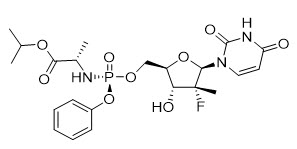
After oral administration of EPCLUSA, sofosbuvir is rapidly absorbed and subject to extensive first-pass hepatic extraction (hydrolysis followed by sequential phosphorylation) to form the pharmacologically active triphosphate. In clinical pharmacology studies, both sofosbuvir and the primary circulating metabolite GS-331007 (dephosphorylated nucleotide metabolite) were monitored for purposes of pharmacokinetic analyses.
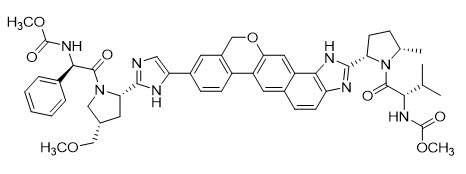
Sofosbuvir and velpatasvir are substrates of drug transporters P-gp and BCRP while GS-331007 is not. Velpatasvir is also transported by OATP1B1 and OATP1B3. In vitro, slow metabolic turnover of velpatasvir by CYP2B6, CYP2C8, and CYP3A4 was observed. Inducers of P-gp and/or moderate to potent inducers of CYP2B6, CYP2C8, or CYP3A4 (e.g., rifampin, St. John's wort, carbamazepine) may decrease plasma concentrations of sofosbuvir and/or velpatasvir, leading to reduced therapeutic effect of EPCLUSA [see Warnings and Precautions (5.3) and Drug Interactions (7.3)]. Coadministration with drugs that inhibit P-gp and/or BCRP may increase sofosbuvir and/or velpatasvir plasma concentrations without increasing GS-331007 plasma concentration. Drugs that inhibit CYP2B6, CYP2C8, or CYP3A4 may increase plasma concentration of velpatasvir.
Velpatasvir is an inhibitor of drug transporter P-gp, BCRP, OATP1B1, OATP1B3, and OATP2B1, and its involvement in drug interactions with these transporters is primarily limited to the process of absorption. At clinically relevant concentration, velpatasvir is not an inhibitor of hepatic transporters OATP1A2 or OCT1, renal transporters OCT2, OAT1, OAT3 or MATE1, or CYP or UGT1A1 enzymes.
Sofosbuvir and GS-331007 are not inhibitors of drug transporters P-gp, BCRP, OATP1B1, OATP1B3, and OCT1 and GS-331007 is not an inhibitor of OAT1, OAT3, OCT2, and MATE1. Sofosbuvir and GS-331007 are not inhibitors or inducers of CYP or UGT1A1 enzymes.
The effects of coadministered drugs on the exposure of sofosbuvir, GS-331007, and velpatasvir are shown in Table 5. The effects of sofosbuvir, velpatasvir, or EPCLUSA on the exposure of coadministered drugs are shown in Table 6.
Table 5 Drug Interactions: Changes in Pharmacokinetic Parameters for Sofosbuvir, GS-331007, and Velpatasvir in the Presence of the Coadministered DrugAll interaction studies conducted in healthy volunteers.
| Coadministered Drug | Dose of Coadministered Drug
(mg) | SOF Dose
(mg) | VEL Dose
(mg) | N | Mean Ratio (90% CI) of Sofosbuvir, GS-331007, and Velpatasvir PK With/Without Coadministered Drug
No Effect=1.00 |
|---|
| Cmax | AUC | Cmin |
|---|
| NA = not available/not applicable, ND = not dosed, DF = disoproxil fumarate. |
| Atazanavir/ ritonavir + emtricitabine/ tenofovir DF | 300/100 + 200/300 once daily | 400 once daily | 100 once daily | 24 | sofosbuvir | 1.12
(0.97, 1.29) | 1.22
(1.12, 1.33) | NA |
| GS-331007 | 1.21
(1.12, 1.29) | 1.32
(1.27, 1.36) | 1.42
(1.37, 1.49) |
| velpatasvir | 1.55
(1.41, 1.71) | 2.42
(2.23, 2.64) | 4.01
(3.57, 4.50) |
| Cyclosporine | 600 single dose | 400 single dose | ND | 19 | sofosbuvir | 2.54
(1.87, 3.45) | 4.53
(3.26, 6.30) | NA |
| GS-331007 | 0.60
(0.53, 0.69) | 1.04
(0.90, 1.20) | NA |
| ND | 100 single dose | 12 | velpatasvir | 1.56
(1.22, 2.01) | 2.03
(1.51, 2.71) | NA |
| Darunavir/ritonavir + emtricitabine/tenofovir DF | 800/100 + 200/300 once daily | 400 once daily | 100 once daily | 29 | sofosbuvir | 0.62
(0.54, 0.71) | 0.72
(0.66, 0.80) | NA |
| GS-331007 | 1.04
(0.99, 1.08) | 1.13
(1.08, 1.18) | 1.13
(1.06, 1.19) |
| velpatasvir | 0.76
(0.65, 0.89) | 0.84
(0.72, 0.98) | 1.01
(0.87, 1.18) |
| Efavirenz/emtricitabine/ tenofovir DF Administered as ATRIPLA® (efavirenz, emtricitabine, and tenofovir DF fixed-dose combination). | 600/200/300 once daily | 400 once daily | 100 once daily | 14 | sofosbuvir | 1.38
(1.14, 1.67) | 0.97
(0.83, 1.14) | NA |
| GS-331007 | 0.86
(0.80, 0.93) | 0.90
(0.85, 0.96) | 1.01
(0.95, 1.07) |
| velpatasvir | 0.53
(0.43, 0.64) | 0.47
(0.39, 0.57) | 0.43
(0.36, 0.52) |
| Elvitegravir/cobicistat/ emtricitabine/tenofovir alafenamide Administered as GENVOYA® (elvitegravir, cobicistat, emtricitabine, and tenofovir alafenamide fixed-dose combination). | 150/150/200/10 once daily | 400 once daily | 100 once daily | 24 | sofosbuvir | 1.23
(1.07, 1.42) | 1.37
(1.24, 1.52) | NA |
| GS-331007 | 1.29
(1.25, 1.33) | 1.48
(1.43, 1.53) | 1.58
(1.52, 1.65) |
| velpatasvir | 1.30
(1.17, 1.45) | 1.50
(1.35, 1.66) | 1.60
(1.44, 1.78) |
| Elvitegravir/cobicistat/ emtricitabine/tenofovir DF Administered as STRIBILD® (elvitegravir, cobicistat, emtricitabine, and tenofovir DF fixed-dose combination). | 150/150/200/300 once daily | 400 once daily | 100 once daily | 24 | sofosbuvir | 1.01
(0.85, 1.19) | 1.24
(1.13, 1.37) | NA |
| GS-331007 | 1.13
(1.07, 1.18) | 1.35
(1.30, 1.40) | 1.45
(1.38, 1.52) |
| velpatasvir | 1.05
(0.93, 1.19) | 1.19
(1.07, 1.34) | 1.37
(1.22, 1.54) |
| Famotidine | 40 single dose simultaneously with EPCLUSA | 400 single dose | 100 single dose | 60 | sofosbuvir | 0.92
(0.82, 1.05) | 0.82
(0.74, 0.91) | NA |
| GS-331007 | 0.84
(0.78, 0.89) | 0.94
(0.91, 0.98) | NA |
| velpatasvir | 0.80
(0.70, 0.91) | 0.81
(0.71, 0.91) | NA |
| 40 single dose 12 hours prior to EPCLUSA | 60 | sofosbuvir | 0.77
(0.68, 0.87) | 0.80
(0.73, 0.88) | NA |
| GS-331007 | 1.20
(1.13, 1.28) | 1.04
(1.01, 1.08) | NA |
| velpatasvir | 0.87
(0.76, 1.00) | 0.85
(0.74, 0.97) | NA |
| Ketoconazole | 200 twice daily | ND | 100 single dose | 12 | velpatasvir | 1.29
(1.02, 1.64) | 1.71
(1.35, 2.18) | NA |
| Lopinavir/ ritonavir + emtricitabine/ tenofovir DF | 4×200/50 + 200/300 once daily | 400 once daily | 100 once daily | 24 | sofosbuvir | 0.59
(0.49, 0.71) | 0.71
(0.64, 0.78) | NA |
| GS-331007 | 1.01
(0.98, 1.05) | 1.15
(1.09, 1.21) | 1.15
(1.07, 1.25) |
| velpatasvir | 0.70
(0.59, 0.83) | 1.02
(0.89, 1.17) | 1.63
(1.43, 1.85) |
| Methadone | 30 to 130 daily | 400 once daily | ND | 14 | sofosbuvir | 0.95
(0.68, 1.33) | 1.30
(1.00, 1.69) | NA |
| GS-331007 | 0.73
(0.65, 0.83) | 1.04
(0.89, 1.22) | NA |
| Omeprazole | 20 once daily simultaneously with EPCLUSA | 400 single dose fasted | 100 single dose fasted | 60 | sofosbuvir | 0.66
(0.55, 0.78) | 0.71
(0.60, 0.83) | NA |
| GS-331007 | 1.18
(1.10, 1.26) | 1.00
(0.95, 1.05) | NA |
| velpatasvir | 0.63
(0.50, 0.78) | 0.64
(0.52, 0.79) | NA |
| 20 once daily 12 hours prior to EPCLUSA | 400 single dose fasted | 100 single dose fasted | 60 | sofosbuvir | 0.55
(0.47, 0.64) | 0.56
(0.49, 0.65) | NA |
| GS-331007 | 1.26
(1.18, 1.34) | 0.97
(0.94, 1.01) | NA |
| velpatasvir | 0.43
(0.35, 0.54) | 0.45
(0.37, 0.55) | NA |
| 20 once daily 2 hours prior to EPCLUSA | 400 single dose fed EPCLUSA was administered under fasted conditions in the reference arms. | 100 single dose fed | 40 | sofosbuvir | 0.84
(0.68, 1.03) | 1.08
(0.94, 1.25) | NA |
| GS-331007 | 0.94
(0.88, 1.02) | 0.99
(0.96, 1.03) | NA |
| velpatasvir | 0.52
(0.43, 0.64) | 0.62
(0.51, 0.75) | NA |
| 20 once daily 4 hours after EPCLUSA | 400 single dose fed | 100 single dose fed | 38 | sofosbuvir | 0.79
(0.68, 0.92) | 1.05
(0.94, 1.16) | NA |
| GS-331007 | 0.91
(0.85, 0.98) | 0.99
(0.95, 1.02) | NA |
| velpatasvir | 0.67
(0.58, 0.78) | 0.74
(0.63, 0.86) | NA |
| 40 once daily 4 hours after EPCLUSA | 400 single dose fed | 100 single dose fed | 40 | sofosbuvir | 0.70
(0.57, 0.87) | 0.91
(0.76, 1.08) | NA |
| GS-331007 | 1.01
(0.96, 1.07) | 0.99
(0.94, 1.03) | NA |
| velpatasvir | 0.44
(0.34, 0.57) | 0.47
(0.37, 0.60) | NA |
| Rifampin | 600 once daily | 400 single dose | ND | 17 | sofosbuvir | 0.23
(0.19, 0.29) | 0.28
(0.24, 0.32) | NA |
| GS-331007 | 1.23
(1.14, 1.34) | 0.95
(0.88, 1.03) | NA |
| ND | 100 single dose | 12 | velpatasvir | 0.29
(0.23, 0.37) | 0.18
(0.15, 0.22) | NA |
| 600 single dose | ND | 100 single dose | 12 | velpatasvir | 1.28
(1.05, 1.56) | 1.46
(1.17, 1.83) | NA |
| Tacrolimus | 5 single dose | 400 single dose | ND | 16 | sofosbuvir | 0.97
(0.65, 1.43) | 1.13
(0.81, 1.57) | NA |
| GS-331007 | 0.97
(0.83, 1.14) | 1.00
(0.87, 1.13) | NA |
No effect on the pharmacokinetic parameters of sofosbuvir, GS-331007, or velpatasvir was observed with dolutegravir; the combination of emtricitabine, rilpivirine, and tenofovir DF; emtricitabine; raltegravir; or tenofovir DF.
Table 6 Changes in Pharmacokinetic Parameters for Coadministered Drug in the Presence of Sofosbuvir, Velpatasvir, or EPCLUSAAll interaction studies conducted in healthy volunteers.
| Coadministered Drug | Dose of Coadministered Drug
(mg) | SOF Dose
(mg) | VEL Dose
(mg) | N | Mean Ratio (90% CI) of Coadministered Drug PK With/Without Sofosbuvir, Velpatasvir, or EPCLUSA
No Effect=1.00 |
|---|
| Cmax | AUC | Cmin |
|---|
| NA = not available/not applicable, ND = not dosed, DF = disoproxil fumarate. |
| Atazanavir/ritonavir + emtricitabine/tenofovir DF Comparison based on exposures when administered as atazanavir/ritonavir + emtricitabine/tenofovir DF. | atazanavir 300 once daily | 400 once daily | 100 once daily | 24 | 1.09
(1.00, 1.19) | 1.20
(1.10, 1.31) | 1.39
(1.20, 1.61) |
| ritonavir 100 once daily | 0.89
(0.82, 0.97) | 0.97
(0.89, 1.05) | 1.29
(1.15, 1.44) |
| emtricitabine 200 once daily | 1.01
(0.96, 1.06) | 1.02
(0.99, 1.04) | 1.06
(1.02, 1.11) |
| tenofovir DF 300 once daily | 1.55
(1.43, 1.68) | 1.30
(1.24, 1.36) | 1.39
(1.31, 1.48) |
| Atorvastatin | 40 single dose | 400 once daily | 100 once daily | 26 | 1.68
(1.49, 1.89) | 1.54
(1.45, 1.64) | NA |
| Darunavir/ritonavir + emtricitabine/tenofovir DF Comparison based on exposures when administered as darunavir/ritonavir + emtricitabine/tenofovir DF. | darunavir 800 once daily | 400 once daily | 100 once daily | 29 | 0.90
(0.86, 0.95) | 0.92
(0.87, 0.98) | 0.87
(0.79, 0.95) |
| ritonavir 100 once daily | 1.07
(0.97, 1.17) | 1.12
(1.05, 1.19) | 1.09
(1.02, 1.15) |
| emtricitabine 200 once daily | 1.05
(1.01, 1.08) | 1.05
(1.02, 1.08) | 1.04
(0.98, 1.09) |
| tenofovir DF 300 once daily | 1.55
(1.45, 1.66) | 1.39
(1.33, 1.44) | 1.52
(1.45, 1.59) |
| Digoxin | 0.25 single dose | ND | 100 | 21 | 1.88
(1.71, 2.08) | 1.34
(1.13, 1.60) | NA |
| Efavirenz/emtricitabine/ tenofovir DF Administered as ATRIPLA (efavirenz, emtricitabine, and tenofovir DF fixed-dose combination). | efavirenz 600 once daily | 400 once daily | 100 once daily | 15 | 0.81
(0.74, 0.89) | 0.85
(0.80, 0.91) | 0.90
(0.85, 0.95) |
| emtricitabine 200 once daily | 1.07
(0.98, 1.18) | 1.07
(1.00, 1.14) | 1.10
(0.97, 1.25) |
| tenofovir DF 300 once daily | 1.77
(1.53, 2.04) | 1.81
(1.68, 1.94) | 2.21
(2.00, 2.43) |
| Elvitegravir/cobicistat/ emtricitabine/tenofovir alafenamide Administered as GENVOYA (elvitegravir, cobicistat, emtricitabine, and tenofovir alafenamide fixed-dose combination). | elvitegravir 150 once daily | 400 once daily | 100 once daily | 24 | 0.87
(0.80, 0.94) | 0.94
(0.88, 1.00) | 1.08
(0.97, 1.20) |
| cobicistat 150 once daily | 1.16
(1.09, 1.23) | 1.30
(1.23, 1.38) | 2.03
(1.67, 2.48) |
| emtricitabine 200 once daily | 1.02
(0.97, 1.06) | 1.01
(0.98, 1.04) | 1.02
(0.97, 1.07) |
| tenofovir alafenamide 10 once daily | 0.80
(0.68, 0.94) | 0.87
(0.81, 0.94) | NA |
| Elvitegravir/cobicistat/ emtricitabine/tenofovir DF Administered as STRIBILD (elvitegravir, cobicistat, emtricitabine, and tenofovir DF fixed-dose combination). | elvitegravir 150 once daily | 400 once daily | 100 once daily | 24 | 0.93
(0.86, 1.00) | 0.93
(0.87, 0.99) | 0.97
(0.91, 1.04) |
| cobicistat 150 once daily | 1.11
(1.06, 1.17) | 1.23
(1.17, 1.29) | 1.71
(1.54, 1.90) |
| emtricitabine 200 once daily | 1.02
(0.97, 1.08) | 1.01
(0.98, 1.04) | 1.06
(1.01, 1.11) |
| tenofovir DF 300 once daily | 1.36
(1.25, 1.47) | 1.35
(1.29, 1.42) | 1.45
(1.39, 1.51) |
| Emtricitabine/rilpivirine/ tenofovir DF Administered as COMPLERA® (emtricitabine, rilpivirine, and tenofovir DF fixed-dose combination). | emtricitabine 200 once daily | 400 once daily | 100 once daily | 24 | 0.95
(0.90, 1.00) | 0.99
(0.97, 1.02) | 1.05
(0.99, 1.11) |
| rilpivirine 25 once daily | 0.93
(0.88, 0.98) | 0.95
(0.90, 1.00) | 0.96
(0.90, 1.03) |
| tenofovir DF 300 once daily | 1.44
(1.33, 1.55) | 1.40
(1.34, 1.46) | 1.84
(1.76, 1.92) |
| Norelgestromin | norgestimate 0.180/0.215/0.25/ethinyl estradiol 0.025 once daily | ND | 100 once daily | 13 | 0.97
(0.88, 1.07) | 0.90
(0.82, 0.98) | 0.92
(0.83, 1.03) |
| 400 once daily | ND | 15 | 1.07
(0.94, 1.22) | 1.06
(0.92, 1.21) | 1.07
(0.89, 1.28) |
| Norgestrel | ND | 100 once daily | 13 | 0.96
(0.78, 1.19) | 0.91
(0.73, 1.15) | 0.92
(0.73, 1.18) |
| 400 once daily | ND | 15 | 1.18
(0.99, 1.41) | 1.19
(0.98, 1.45) | 1.23
(1.00, 1.51) |
| Ethinyl estradiol | ND | 100 once daily | 12 | 1.39
(1.17, 1.66) | 1.04
(0.87, 1.24) | 0.83
(0.65, 1.06) |
| 400 once daily | ND | 15 | 1.15
(0.97, 1.36) | 1.09
(0.94, 1.26) | 0.99
(0.80, 1.23) |
| Pravastatin | 40 single dose | ND | 100 once daily | 18 | 1.28
(1.08, 1.52) | 1.35
(1.18, 1.54) | NA |
| Rosuvastatin | 10 single dose | ND | 100 once daily | 18 | 2.61
(2.32, 2.92) | 2.69
(2.46, 2.94) | NA |
| Raltegravir + emtricitabine/tenofovir DF | emtricitabine 200 once daily | 400 once daily | 100 once daily | 30 | 1.08
(1.04, 1.12) | 1.05
(1.03, 1.07) | 1.02
(0.97, 1.08) |
| tenofovir DF 300 once daily | 1.46
(1.39, 1.54) | 1.40
(1.34, 1.45) | 1.70
(1.61, 1.79) |
| raltegravir 400 twice daily | 1.03
(0.74, 1.43) | 0.97
(0.73, 1.28) | 0.79
(0.42, 1.48) |
| Tacrolimus | 5 single dose | 400 single dose | ND | 16 | 0.73
(0.59, 0.90) | 1.09
(0.84, 1.40) | NA |
No effect on the pharmacokinetic parameters of the following coadministered drugs was observed with EPCLUSA (dolutegravir or lopinavir/ritonavir) or its components sofosbuvir (cyclosporine or methadone) or velpatasvir (cyclosporine).
Antiviral Activity
The EC50 values of sofosbuvir and velpatasvir against full-length or chimeric replicons encoding NS5B and NS5A sequences from the laboratory strains are presented in Table 7. The EC50 values of sofosbuvir and velpatasvir against clinical isolates are presented in Table 8.
Table 7 Activity of Sofosbuvir and Velpatasvir Against Full Length or Chimeric Laboratory Replicons| Replicon Genotype | Sofosbuvir EC50, nM Mean value from multiple experiments of same laboratory replicon. | Velpatasvir EC50, nM |
|---|
| NA = not available. |
| 1a | 40 | 0.014 |
| 1b | 110 | 0.016 |
| 2a | 50 | 0.005–0.016 Data from various strains of full-length NS5A replicons or chimeric NS5A replicons carrying full-length NS5A genes that contain L31 or M31 polymorphisms. |
| 2b | 15 Stable chimeric 1b replicons carrying NS5B genes from genotype 2b, 5a, or 6a were used for testing. | 0.002–0.006 |
| 3a | 50 | 0.004 |
| 4a | 40 | 0.009 |
| 4d | 33.4 | 0.004 |
| 5a | 15 | 0.021–0.054 Data from a chimeric NS5A replicon carrying NS5A amino acids 9–184. |
| 6a | 14–25 | 0.006–0.009 |
| 6e | NA | 0.130 |
Table 8 Activity of Sofosbuvir and Velpatasvir Against Transient Replicons Containing NS5A or NS5B from Clinical Isolates | Replicons Containing NS5B from Clinical Isolates | Replicons Containing NS5A from Clinical Isolates |
|---|
| Replicon Genotype | Number of clinical isolates | Median sofosbuvir EC50, nM (range) | Number of clinical isolates | Median velpatasvir EC50, nM (range) |
|---|
| NA = not available. |
| 1a | 67 | 62 (29–128) | 23 | 0.019 (0.011–0.078) |
| 1b | 29 | 102 (45–170) | 34 | 0.012 (0.005–0.500) |
| 2a | 1 | 28 | 8 | 0.011 (0.006–0.364) |
| 2b | 14 | 30 (14–81) | 16 | 0.002 (0.0003–0.007) |
| 3a | 106 | 81 (24–181) | 38 | 0.005 (0.002–1.871) |
| 4a | NA | NA | 5 | 0.002 (0.001–0.004) |
| 4d | NA | NA | 10 | 0.007 (0.004–0.011) |
| 4r | NA | NA | 7 | 0.003 (0.002–0.006) |
| 5a | NA | NA | 42 | 0.005 (0.001–0.019) |
| 6a | NA | NA | 26 | 0.007 (0.0005–0.113) |
| 6e | NA | NA | 15 | 0.024 (0.005–0.433) |
Velpatasvir was not antagonistic in reducing HCV RNA levels in replicon cells when combined with sofosbuvir or interferon-α, ribavirin, an HCV NS3/4A protease inhibitor, or HCV NS5B non-nucleoside inhibitors.
Resistance
In Cell Culture
HCV replicons with reduced susceptibility to sofosbuvir have been selected in cell culture for multiple genotypes including 1b, 2a, 2b, 3a, 4a, 5a, and 6a. Reduced susceptibility to sofosbuvir was associated with the NS5B substitution S282T in all replicon genotypes examined. An M289L substitution developed along with the S282T substitution in genotype 2a, 5, and 6 replicons. Site-directed mutagenesis of the S282T substitution in replicons of genotypes 1 to 6 conferred 2- to 18-fold reduced susceptibility to sofosbuvir.
HCV genotype 1a, 1b, 2a, 3a, 4a, 5a, and 6a replicon variants with reduced susceptibility to velpatasvir were selected in cell culture. Variants developed amino acid substitutions at NS5A resistance-associated positions 24, 28, 30, 31, 32, 58, 92, and 93. Phenotypic analysis of site-directed mutant replicons of the selected NS5A substitutions showed that single and double combinations of L31V and Y93H/N in genotype 1a, the combination of L31V + Y93H in genotype 1b, Y93H/S in genotype 3a, and L31V and P32A/L/Q/R in genotype 6 conferred greater than 100-fold reduction in velpatasvir susceptibility. In the genotype 2a replicon, the single mutants F28S and Y93H showed 91-fold and 46-fold reduced susceptibility to velpatasvir, respectively. The single mutant Y93H conferred 3-fold reduced susceptibility to velpatasvir in genotype 4a replicons. Combinations of these NS5A substitutions often showed greater reductions in susceptibility to velpatasvir than single substitutions alone.
In Clinical Trials
Studies in Subjects without Cirrhosis and Subjects with Compensated Cirrhosis
In a pooled analysis of subjects without cirrhosis or with compensated cirrhosis who received EPCLUSA for 12 weeks in Phase 3 trials (ASTRAL-1, ASTRAL-2, and ASTRAL-3), 12 subjects (2 with genotype 1 [1a, 1c/h] and 10 with genotype 3a) qualified for resistance analysis due to virologic failure. No subjects with genotype 2, 4, 5, or 6 HCV infection experienced virologic failure.
Of the 2 genotype 1 virologic failure subjects, 1 subject had virus with emergent NS5A resistance substitution Y93N and the other had virus with emergent NS5A resistance substitutions Y93H and low-level K24M/T and L31I/V at virologic failure. The latter subject had genotype 1c/h virus at baseline harboring NS5A resistance polymorphisms (Q30R, L31M, H58P) relative to genotype 1a. No sofosbuvir NS5B nucleoside analog resistance-associated substitutions were observed at failure in the 2 subjects.
Of the 10 genotype 3a virologic failure subjects, NS5A resistance substitution Y93H was observed in all 10 subjects at failure (7 subjects had Y93H emerge post-treatment and 3 subjects had Y93H at baseline and post-treatment). Treatment-emergent sofosbuvir NS5B substitutions L314F (n=2) and L314I (n=1) were observed at high frequency (greater than or equal to 15%) in the NS5B polymerase in 3 genotype 3a subjects who relapsed: one in the EPCLUSA group and two in the sofosbuvir plus ribavirin 24-week group. In addition, low frequency (less than 4%) treatment-emergent L314P was detected in 2 genotype 3a subjects who relapsed, including one subject in the sofosbuvir plus ribavirin 24-week group in ASTRAL-3 and one in the EPCLUSA group in ASTRAL-4. The clinical significance of this substitution is unknown.
Studies in Subjects with Decompensated Cirrhosis
In the ASTRAL-4 trial in subjects with decompensated cirrhosis who received EPCLUSA with ribavirin for 12 weeks, 3 subjects (1 with genotype 1a and 2 with genotype 3a) qualified for resistance analysis due to virologic failure. No subjects with genotype 2 or 4 HCV infection who received EPCLUSA with ribavirin for 12 weeks experienced virologic failure.
The genotype 1 virologic failure subject had no NS5A or NS5B resistance substitutions at failure.
The 2 genotype 3a virologic failure subjects had the NS5A resistance substitutions Y93H and either low-level M28V or S38P emerge at failure. One of these subjects also developed low levels (less than 5%) of NS5B nucleoside analog inhibitor resistance substitutions N142T and E237G at failure.
In the ASTRAL-4 trial, 2 subjects treated with EPCLUSA for 12 or 24 weeks without ribavirin had emergent sofosbuvir NS5B resistance-associated substitutions S282T at low levels (less than 5%) along with L159F. EPCLUSA for 12 or 24 weeks without ribavirin is not recommended in patients with decompensated cirrhosis.
Persistence of Resistance-Associated Substitutions
No data are available on the persistence of sofosbuvir or velpatasvir resistance-associated substitutions. NS5A resistance-associated substitutions observed with administration of other NS5A inhibitors have been found to persist for longer than 1 year in most patients. The long-term clinical impact of the emergence or persistence of virus containing sofosbuvir or velpatasvir resistance-associated substitutions is unknown.
Effect of Baseline HCV Polymorphisms on Treatment Response
Analyses were conducted to explore the association between relapse rates and pre-existing baseline NS5A resistance-associated polymorphisms (RAPs) (any change from reference at NS5A amino acid positions 24, 28, 30, 31, 58, 92, or 93) identified by population or deep sequencing analysis at a sensitivity threshold of 15% or higher for subjects without cirrhosis or with compensated cirrhosis in ASTRAL-1, ASTRAL-2, and ASTRAL-3 and subjects with decompensated cirrhosis in ASTRAL-4.
Studies in Subjects without Cirrhosis and Subjects with Compensated Cirrhosis
Among the subjects who received treatment with EPCLUSA for 12 weeks, 18% (37/209), 32% (38/117), 64% (149/232), 20% (56/274), 63% (73/115), 9% (3/34), and 83% (35/42) of subjects with genotype 1a, 1b, 2, 3, 4, 5, and 6 HCV, respectively, had baseline virus with NS5A RAPs.
Genotype 1: Among the 75 genotype 1 subjects who had baseline NS5A RAPs, one subject (1%) with Q30R, L31M and H58P polymorphisms at baseline and compensated cirrhosis relapsed.
Genotype 3: Among the 56 genotype 3 subjects who had baseline NS5A RAPs, 4 subjects (7%) relapsed (3 with baseline Y93H and 1 with baseline A30K). Overall, 20% (3/15) of genotype 3 subjects with the Y93H polymorphism at baseline relapsed.
For genotype 3 subjects with compensated cirrhosis, relapse rates were 33% (3/9) for subjects with baseline NS5A RAPs compared to 6% (4/71) for subjects without baseline NS5A RAPs.
Genotypes 2, 4, 5, and 6: The presence of baseline NS5A RAPs did not affect relapse rates for subjects with genotypes 2, 4, 5, and 6, because all achieved SVR12.
SVR12 was achieved in all 77 subjects who had baseline NS5B nucleoside analog inhibitor resistance polymorphisms including N142T, L159F, E/N237G, C/M289L/I, L320F/I/V, V321A/I, and S282G + V321I. The sofosbuvir NS5B nucleoside analog inhibitor resistance substitution S282T was not detected in the baseline NS5B sequence of any subject using 1% deep sequencing cutoff in Phase 3 trials.
Studies in Subjects with Decompensated Cirrhosis
In ASTRAL-4, the prevalence of NS5A RAPs at baseline was 24% (48/198), 60% (6/10), 11% (4/37), and 63% (5/8) in GT1, GT2, GT3, and GT4 HCV subjects, respectively. No subjects with genotypes 2, 4 and 6 relapsed. There were no subjects with genotype 5 in this trial.
For genotype 1 subjects, the overall relapse rates were numerically lower for the 12-week EPCLUSA with ribavirin group (2%; 1/66) compared to EPCLUSA 12-week and 24-week treatment groups. For subjects with NS5A RAPs, relapse rates were 0% (0/17) compared to 2% (1/49) for subjects without NS5A RAPs in the 12-week EPCLUSA with ribavirin containing group.
For genotype 3 subjects, overall virologic failure rates were numerically lower for the 12-week EPCLUSA with ribavirin group (15%; 2/13) compared to EPCLUSA 12-week and 24-week treatment groups. There are insufficient data to determine the impact of HCV NS5A RAPs in genotype 3 subjects with decompensated cirrhosis.
Three subjects in the EPCLUSA with ribavirin 12-week group had baseline NS5B nucleoside analog inhibitor polymorphisms (N142T and L159F) using 1% deep sequencing cutoff and all 3 subjects achieved SVR12.
Cross Resistance
Both sofosbuvir and velpatasvir were fully active against substitutions associated with resistance to other classes of direct-acting antivirals with different mechanisms of action, such as NS5B non-nucleoside inhibitors and NS3 protease inhibitors. The efficacy of EPCLUSA has not been established in patients who have previously failed treatment with other regimens that include an NS5A inhibitor.
Carcinogenesis and Mutagenesis
Sofosbuvir: Sofosbuvir was not genotoxic in a battery of in vitro or in vivo assays, including bacterial mutagenicity, chromosome aberration using human peripheral blood lymphocytes and in vivo mouse micronucleus assays.
Sofosbuvir was not carcinogenic in a 2-year mouse study (up to 200 mg/kg/day in males and 600 mg/kg/day in females) and in a 2-year rat study (up to 750 mg/kg/day), resulting in exposures of the predominant circulating metabolite GS-331007 of approximately 3 and 15 times (in mice) and 7 and 9 times (in rats), in males and females, respectively, the exposure in humans at the recommended human dose (RHD).
Velpatasvir: Velpatasvir was not genotoxic in a battery of in vitro or in vivo assays, including bacterial mutagenicity, chromosome aberration using human peripheral blood lymphocytes, and in vivo rat micronucleus assays.
Velpatasvir was not carcinogenic in a 6-month rasH2 transgenic mouse study (up to 1000 mg/kg/day). A 2-year rat carcinogenicity study with velpatasvir is ongoing.
Impairment of Fertility
Sofosbuvir: Sofosbuvir had no effects on embryo-fetal viability or on fertility when evaluated in rats. At the highest dose tested, AUC exposure to the predominant circulating metabolite GS-331007 was approximately 4 times the exposure in humans at the RHD.
Velpatasvir: Velpatasvir had no effects on embryo-fetal viability or on fertility when evaluated in rats. At the highest dose tested, velpatasvir exposure was approximately 6 times the exposure in humans at the RHD.
Genotype 1, 2, 4, 5, and 6 HCV Infected Adults (ASTRAL-1)
ASTRAL-1 was a randomized, double-blind, placebo-controlled trial that evaluated 12 weeks of treatment with EPCLUSA compared with 12 weeks of placebo in subjects with genotype 1, 2, 4, 5, or 6 HCV infection without cirrhosis or with compensated cirrhosis. Subjects with genotype 1, 2, 4, or 6 HCV infection were randomized in a 5:1 ratio to treatment with EPCLUSA or placebo for 12 weeks. Subjects with genotype 5 HCV infection were enrolled to the EPCLUSA group. Randomization was stratified by HCV genotype (1, 2, 4, 6, and indeterminate) and the presence or absence of compensated cirrhosis.
Demographics and baseline characteristics were balanced between the EPCLUSA and placebo group. Of the 740 treated subjects, the median age was 56 years (range: 18 to 82); 60% of the subjects were male; 79% were White, 9% were Black; 21% had a baseline body mass index at least 30 kg/m2; the proportions of subjects with genotype 1, 2, 4, 5, or 6 HCV infection were 53%, 17%, 19%, 5%, and 7%, respectively; 69% had non-CC IL28B alleles (CT or TT); 74% had baseline HCV RNA levels at least 800,000 IU/mL; 19% had compensated cirrhosis; and 32% were treatment-experienced.
Table 10 presents SVR12 and other virologic outcomes in EPCLUSA-treated subjects in the ASTRAL-1 trial by HCV genotype. No subjects in the placebo group achieved SVR12.
Table 10 Study ASTRAL-1: Virologic Outcomes by HCV Genotype in EPCLUSA-Treated Subjects without Cirrhosis or with Compensated Cirrhosis (12 Weeks After Treatment) | EPCLUSA 12 Weeks
(N=624) |
|---|
Total
(all GTs)
(N=624) | GT-1 | GT-2
(N=104) | GT-4
(N=116) | GT-5
(N=35) | GT-6
(N=41) |
|---|
GT-1a
(N=210) | GT-1b
(N=118) | Total
(N=328) |
|---|
| GT = genotype; no subjects in the placebo group achieved SVR12. |
| SVR12 | 99% (618/624) | 98% (206/210) | 99% (117/118) | 98% (323/328) | 100% (104/104) | 100% (116/116) | 97% (34/35) | 100% (41/41) |
| Outcome for Subjects without SVR |
| On-Treatment Virologic Failure | 0/624 | 0/210 | 0/118 | 0/328 | 0/104 | 0/116 | 0/35 | 0/41 |
| Relapse The denominator for relapse is the number of subjects with HCV RNA <LLOQ at their last on-treatment assessment. | <1%
(2/623) | <1%
(1/209) | 1%
(1/118) | 1%
(2/327) | 0/104 | 0/116 | 0/35 | 0/41 |
| Other Other includes subjects who did not achieve SVR and did not meet virologic failure criteria. | 1%
(4/624) | 1%
(3/210) | 0/118 | 1%
(3/328) | 0/104 | 0/116 | 3%
(1/35) | 0/41 |
Genotype 2 HCV Infected Adults (ASTRAL-2)
ASTRAL-2 was a randomized, open-label trial that evaluated 12 weeks of treatment with EPCLUSA compared with 12 weeks of treatment with SOF with ribavirin in subjects with genotype 2 HCV infection. Subjects were randomized in a 1:1 ratio to the treatment groups. Randomization was stratified by the presence or absence of compensated cirrhosis and prior treatment experience (treatment-naïve vs treatment-experienced).
Demographics and baseline characteristics were balanced across the two treatment groups. Of the 266 treated subjects, the median age was 58 years (range: 23 to 81); 59% of the subjects were male; 88% were White; 7% were Black; 33% had a baseline body mass index at least 30 kg/m2; 62% had non-CC IL28B alleles (CT or TT); 80% had baseline HCV RNA levels at least 800,000 IU/mL; 14% had compensated cirrhosis; and 15% were treatment-experienced.
Table 11 presents SVR12 and other virologic outcomes from the ASTRAL-2 trial.
Table 11 Study ASTRAL-2: Virologic Outcomes in Subjects with Genotype 2 HCV without Cirrhosis or with Compensated Cirrhosis (12 Weeks After Treatment) | EPCLUSA 12 Weeks
(N=134) | SOF + RBV 12 Weeks
(N=132) |
|---|
| SOF = sofosbuvir; RBV = ribavirin. |
| SVR12 | 99% (133/134) | 94% (124/132) |
| Treatment difference +5.2%;
95% confidence interval (+0.2% to +10.3%) |
| Outcome for subjects without SVR |
| On-Treatment Virologic Failure | 0/134 | 0/132 |
| Relapse The denominator for relapse is the number of subjects with HCV RNA <LLOQ at the last on-treatment assessment. | 0/133 | 5% (6/132) |
| Other Other includes subjects who did not achieve SVR12 and did not meet virologic failure criteria. | 1% (1/134) | 2% (2/132) |
Genotype 3 HCV Infected Adults (ASTRAL-3)
ASTRAL-3 was a randomized, open-label trial that evaluated 12 weeks of treatment with EPCLUSA compared with 24 weeks of treatment with SOF with ribavirin in subjects with genotype 3 HCV infection. Subjects were randomized in a 1:1 ratio to the treatment groups. Randomization was stratified by the presence or absence of compensated cirrhosis and prior treatment experience (treatment-naïve vs treatment-experienced).
Demographics and baseline characteristics were balanced across the treatment groups. Of the 552 treated subjects, the median age was 52 years (range: 19 to 76); 62% of the subjects were male; 89% were White; 9% were Asian; 20% had a baseline body mass index at least 30 kg/m2; 61% had non-CC IL28B alleles (CT or TT); 70% had baseline HCV RNA levels at least 800,000 IU/mL; 30% had compensated cirrhosis; and 26% were treatment-experienced.
Table 12 presents SVR12 and other virologic outcomes from the ASTRAL-3 trial.
Table 12 Study ASTRAL-3: Virologic Outcomes in Subjects with Genotype 3 HCV without Cirrhosis or with Compensated Cirrhosis (12 Weeks After Treatment) | EPCLUSA 12 Weeks
(N=277) | SOF + RBV 24 Weeks
(N=275) |
|---|
| SOF = sofosbuvir; RBV = ribavirin. |
| SVR12 | 95% (264/277) | 80% (221/275) |
| Treatment difference +14.8%;
95% confidence interval (+9.6% to +20.0%) |
| Outcome for subjects without SVR |
| On-Treatment Virologic Failure | 0/277 | <1% (1/275) |
| Relapse The denominator for relapse is the number of subjects with HCV RNA <LLOQ at the last on-treatment assessment. | 4% (11/276) | 14% (38/272) |
| Other Other includes subjects who did not achieve SVR and did not meet virologic failure criteria. | 1% (2/277) | 5% (15/275) |
SVR12 for selected subgroups are presented in Table 13.
Table 13 Study ASTRAL-3: SVR12 by Prior Treatment and Presence/Absence of Compensated Cirrhosis in Subjects with Genotype 3 HCV | EPCLUSA 12 Weeks | SOF + RBV 24 Weeks Five subjects with missing cirrhosis status in the SOF + RBV 24-week group were excluded from this subgroup analysis. |
|---|
| Treatment-Naïve
(N=206) | Treatment-Experienced
(N=71) | Treatment-Naïve
(N=201) | Treatment-Experienced
(N=69) |
|---|
| SOF = sofosbuvir; RBV = ribavirin. |
| Without cirrhosis | 98% (160/163) | 94% (31/33) One treatment-experienced subject without cirrhosis treated with EPCLUSA had genotype 1a HCV infection at failure, indicating HCV re-infection, and is therefore excluded from this analysis. | 90% (141/156) | 71% (22/31) |
| With compensated cirrhosis | 93% (40/43) | 89% (33/37) | 73% (33/45) | 58% (22/38) |
Risk of Hepatitis B Virus Reactivation in Patients Coinfected with HCV and HBV
Inform patients that HBV reactivation can occur in patients coinfected with HBV during or after treatment of HCV infection. Advise patients to tell their healthcare provider if they have a history of HBV infection [see Warnings and Precautions (5.1)].
Serious Symptomatic Bradycardia When Coadministered with Amiodarone
Advise patients to seek medical evaluation immediately for symptoms of bradycardia such as near-fainting or fainting, dizziness or lightheadedness, malaise, weakness, excessive tiredness, shortness of breath, chest pain, confusion or memory problems [see Warnings and Precautions (5.2), Adverse Reactions (6.2), and Drug Interactions (7.3)].
Drug Interactions
Inform patients that EPCLUSA may interact with other drugs. Advise patients to report to their healthcare provider the use of any other prescription or nonprescription medication or herbal products including St. John's wort [see Warnings and Precautions (5.2, 5.3) and Drug Interactions (7)].
Administration
Advise patients to take EPCLUSA once daily on a regular dosing schedule with or without food. Inform patients that it is important not to miss or skip doses and to take EPCLUSA for the duration that is recommended by the physician.
Pregnancy
Advise patients to avoid pregnancy during combination treatment with EPCLUSA and ribavirin and for 6 months after completion of treatment. Inform patients to notify their healthcare provider immediately in the event of a pregnancy [see Use in Specific Populations (8.1)].
Manufactured and distributed by:
Gilead Sciences, Inc.
Foster City, CA 94404
EPCLUSA, COMPLERA, GENVOYA, HARVONI, and STRIBILD are trademarks of Gilead Sciences, Inc., or its related companies. ATRIPLA is a trademark of Bristol-Myers Squibb & Gilead Sciences, LLC. All other trademarks referenced herein are the property of their respective owners.
© 2017 Gilead Sciences, Inc. All rights reserved.
208341-GS-004