Azithromycin
Product Images NDC 62980-964

View Photos of Packaging, Regulatory Labels, and Product Appearance

Product Visual Gallery

This gallery contains 3 technical images submitted to the FDA as part of the official labeling for Azithromycin (NDC 62980-964). Unlike standard consumer photos, these assets often include clinical data figures, molecular chemical structures, and official manufacturer packaging layouts.

As provided by Vivimed Labs Limited, these visuals offer a comprehensive scientific overview of the product's physical and chemical identity, aiding pharmacists and researchers in product verification and study.

FDA Label Image

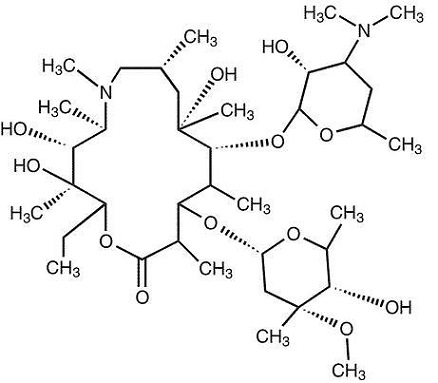
Structure (Abb76e1d A0c6 407b B70c 1d5da87f4902 01)
FDA Label Image

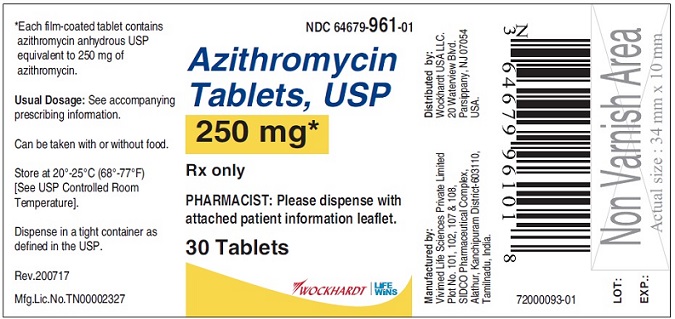
Label (30T 250 mg)

Label (30T 250 mg)
Each film-coated tablet contains 250 mg of azithromycin anhydrous USP. It is indicated in the prescribing information that the medication can be taken with or without food. Azithromycin should be stored at 20°C to 25°C (68°F to 77°F), and dispensed in a tight container. The prescription label also includes the drug identification number (DIN) and the expiry date. Pharmacies are instructed to dispense this medication with the attached patient information leaflet.*
FDA Label Image

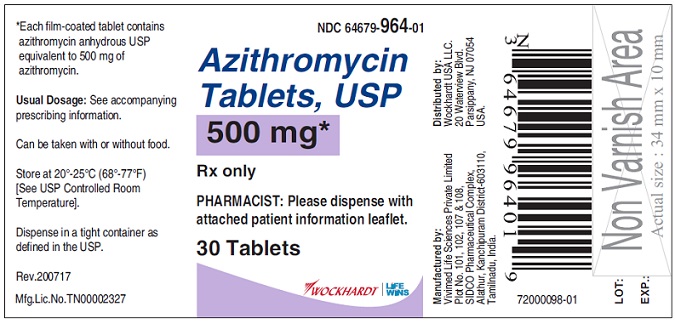
500t-500 mg (Abb76e1d A0c6 407b B70c 1d5da87f4902 03)

500t-500 mg (Abb76e1d A0c6 407b B70c 1d5da87f4902 03)
This is a description of Azithromycin Tablets, USP 500mg. Each fim-coated tablet contains azithromycin, an antibiotic used to treat various bacterial infections. The recommended dosage can be found in the accompanying prescribing information and each tablet can be taken with or without food. The tablets should be stored at 20°25°C (68°77°F) and dispensed in a tightly closed container. This medication is only available with a prescription and should be dispensed with an attached patient information leaflet. The manufacturer is Sacpars UK and the tablets come in a package of 30. There is additional information but it is not legible due to the translation.*

* These product label images have been analyzed using experimental machine learning. Please verify findings with the primary label text.