Other
Berinert® [C1 Esterase Inhibitor (Human)]
Freeze-dried powder
Reconstitution
The procedures below are provided as general guidelines for the reconstitution and administration of Berinert.
| |
| |
| |
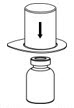
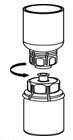
|  Figure 1 (Berinert 01) Figure 1 |
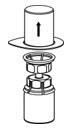
| 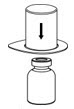 Figure 2 (Berinert 02) Figure 2 |
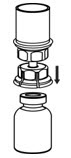
| 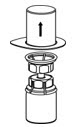 Figure 3 (Berinert 03) Figure 3 |
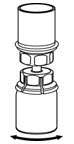
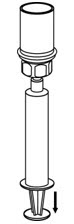
| 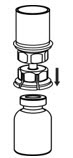 Figure 4 (Berinert 04) Figure 4 |
| 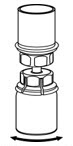 Figure 5 (Berinert 05) Figure 5 |
| 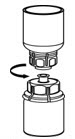 Figure 6 (Berinert 06) Figure 6 |
| |
| 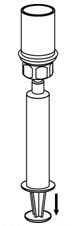 Figure 7 (Berinert 07) Figure 7 |
| 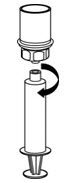 Figure 8 (Berinert 08) Figure 8 |
| |
|
Administration
- Do not mix Berinert with other medicinal products. Administer Berinert by a separate infusion line.
- Use aseptic technique when administering Berinert.
- Use a silicone-free syringe.
- Follow recommended venipuncture guidelines for initiating intravenous therapy.
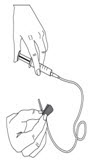
- Administer Berinert by slow intravenous injection at a rate of approximately 4 mL per minute. Please refer to the illustration in step 6 of the self-administration section in the Patient Product Information (PPI) section.
- For self-administration, provide the patient with instructions and training for intravenous injection outside of a clinic setting so patients may self-administer Berinert upon recognition of symptoms of an HAE attack [see Patient Counseling Information (17)].
- After administration, immediately discard any unused product and all used disposable supplies in accordance with local requirements.
- Immune System Disorder: Hypersensitivity/anaphylactic reactions, and shock
- General/Body as a Whole: Pain on injection, redness at injection site, chills, and fever
- Berinert is supplied in a single-use vial.
- 500 IU vial of Berinert for reconstitution with 10 mL of Sterile Water for Injection, USP.
- The components used in the packaging for Berinert are not made with natural rubber latex.
- Berinert in a single-use vial [NDC 63833-835-01]
- 10 mL vial of Sterile Water for Injection, USP [NDC 63833-765-15]
- Mix2Vial filter transfer set
- Alcohol swab
- The patient (or caregiver) is reliably able to recognize the signs and symptoms of their HAE attacks.
- The patient (or caregiver) has the necessary dexterity and comprehension to be trained to self-administer.
- Ensure the patients/caregivers understand the importance of not starting self-administration if the HAE attack (regardless of type) has progressed to a point that the patient/caregiver would be unable to successfully prepare or administer Berinert.
- Given the potential for airway obstruction during acute laryngeal HAE attacks, patients self-administering Berinert should be advised to immediately seek medical attention in an appropriate healthcare facility in addition to treatment with Berinert.
- To help exclude the possibility that another potentially serious medical cause may be responsible for their symptoms, advise patients self-administering Berinert to contact their healthcare provider after treating suspected abdominal HAE attacks.
- Instruct patients/caregivers to record the lot number from the Berinert vial label every time they use Berinert.
Placebo-controlled Clinical Study
In the placebo-controlled clinical study, referred to as the randomized clinical trial (RCT) [see Clinical Studies (14)], 124 subjects experiencing an acute moderate to severe abdominal or facial HAE attack were treated with Berinert (either a 10 IU per kg body weight or a 20 IU per kg body weight dose), or placebo (physiological saline solution).
The treatment-emergent serious adverse reactions/events that occurred in 5 subjects in the RCT were laryngeal edema, facial HAE attacks with laryngeal edema, swelling (shoulder and chest), exacerbation of hereditary angioedema, and laryngospasm.
| Adverse Reactions | Number (%) of subjects Reporting Adverse Reactions Berinert 20 IU/kg (n=43) | Number (%) of subjects Reporting Adverse Reactions Placebo Group (n=42) |
|---|---|---|
| Nausea | 3 (7%) | 5 (11.9%) |
| Dysgeusia | 2 (4.7%) | 0 (0) |
| Abdominal Pain | 2 (4.7%) | 3 (7.1%) |
| Vomiting | 1 (2.3%) | 3 (7.1%) |
| Diarrhea | 0 (0) | 4 (9.5%) |
| Headache | 0 (0) | 2 (4.8%) |
| Adverse Reactions | Number (%) of subjects Reporting Adverse Reactions Adverse reactions following either initial treatment and/or blinded "rescue" treatment. Because more subjects in the placebo randomization group than in the Berinert randomization group received rescue treatment, the median observation period in this analysis for subjects randomized to placebo was slightly longer than for subjects randomized to receive Berinert. Berinert 20 IU/kg (n=43) | Number (%) of subjects Reporting Adverse Reactions Placebo Group (n=42) |
|---|---|---|
| Nausea | 3 (7%) | 11 (26.2%) |
| Headache | 3 (7%) | 5 (11.9%) |
| Abdominal Pain | 3 (7%) | 5 (11.9%) |
| Dysgeusia | 2 (4.7%) | 1 (2.4%) |
| Vomiting | 1 (2.3%) | 7 (16.7%) |
| Pain | 1 (2.3%) | 4 (9.5%) |
| Muscle spasms | 1 (2.3%) | 4 (9.5%) |
| Diarrhea | 0 (0) | 8 (19%) |
| Back pain | 0 (0) | 2 (4.8%) |
| Facial pain | 0 (0) | 2 (4.8%) |
Subjects were tested at baseline and after 3 months for possible exposure to Parvovirus B19, hepatitis B, hepatitis C, and HIV-1 and HIV-2. No subject who underwent testing evidenced seroconversion or treatment-emergent positive polymerase chain reaction testing for these pathogens.
Open-Label Extension Study
In the safety analysis of the open-label extension study, 57 subjects with 1085 acute moderate to severe abdominal, facial, peripheral, and laryngeal HAE attacks received a 20 IU/kg body weight dose of Berinert [see Clinical Studies (14)]. This study provides additional safety data in subjects who received multiple infusions of the product for sequential HAE attacks (one infusion per attack).
Table 3 lists the adverse reactions that occurred in the safety analysis of the open-label extension study in ≥2 subjects or associated with ≥5 HAE attacks during infusion or within 24 hours or 72 hours after the end of a Berinert infusion.
| Number (%) of subjects (n=57) | Number (%) of Attacks (n=1085) | |||
|---|---|---|---|---|
| Preferred term | ARs within 24 hours | ARs within 72 hours | ARs within 24 hours | ARs within 72 hours |
| N = total number of subjects/HAE attacks | ||||
| Data are sorted by decreasing frequency by number of subjects. | ||||
| Any preferred term | 13 (22.8%) | 20 (35.1%) | 27 (2.5%) | 41 (3.8%) |
| Headache | 2 (3.5%) | 4 (7.0%) | 3 (0.3%) | 6 (0.6%) |
| Nasopharyngitis | 1 (1.8%) | 2 (3.5%) | 1 (<0.1%) | 2 (0.2%) |
| Abdominal pain or discomfort | 1 (1.8%) | 3 (5.3%) | 2 (0.2%) | 6 (0.6%) |
| Upper respiratory tract infection | 0 (0) | 1 (1.8%) | 0 (0) | 1 (<0.1%) |
| Hereditary angioedema attack Hereditary angioedema attacks were only to be reported as adverse reaction if it was a worsening of symptoms during a treated HAE attack. New HAE attacks were not to be reported as adverse reactions. Although the adverse reaction of hereditary angioedema in subject 22301 was a new HAE attack that started after the previous HAE attack had completely resolved, this HAE attack was reported as an adverse reaction, because the HAE attack was not included in the study and treated outside study site with medication other than the study medication. | 1 (1.8%) | 1 (1.8%) | 1 (<0.1%) | 1 (<0.1%) |
| Influenza like illness | 1 (1.8%) | 2 (3.5%) | 1 (<0.1%) | 2 (0.2%) |
| Rash | 2 (3.5%) | 2 (3.5%) | 2 (0.2%) | 2 (0.2%) |
| Vulvovaginal mycotic infection | 0 (0) | 2 (3.5%) | 0 (0) | 2 (0.2%) |
| Nausea | 1 (1.8%) | 1 (1.8%) | 4 (0.4%) | 5 (0.5%) |
| Type of HAE Attack Number (%) of subjects | |||||
|---|---|---|---|---|---|
| Overall ARs | Abdominal (n=51) | Peripheral (n=30) | Laryngeal (n=16) | Facial (n=21) | Other (n=3) |
| N = number of subjects | |||||
| Only ARs associated with HAE attacks of the respective subgroups were included in the analysis. | |||||
| Subjects with ARs | 17 (33.3%) | 7 (23.3%) | 2 (12.5%) | 0 (0) | 0 (0) |
| Subjects with serious ARs | 1 (2.0%) | 0 (0) | 0 (0) | 0 (0) | 0 (0) |
| Study medication permanently discontinued due to ARs | 1 (2.0%) | 0 (0) | 0 (0) | 0 (0) | 0 (0) |
| Most frequent ARs (≥3 subjects overall) | |||||
| Headache | 5 (9.8%) | 0 (0) | 0 (0) | 0 (0) | 0 (0) |
| Nasopharyngitis | 1 (2.0%) | 2 (6.7%) | 0 (0) | 0 (0) | 0 (0) |
| Other ARs (<3 subjects overall) | |||||
| Abdominal discomfort | 0 (0) | 1 (3.3%) | 0 (0) | 0 (0) | 0 (0) |
| Dizziness | 1 (2.0%) | 0 (0) | 0 (0) | 0 (0) | 0 (0) |
| Dry mouth | 0 (0) | 1 (3.3%) | 0 (0) | 0 (0) | 0 (0) |
| Erythema infectiosum | 1 (2.0%) | 0 (0) | 0 (0) | 0 (0) | 0 (0) |
| Headache | 1 (2.0%) | 0 (0) | 0 (0) | 0 (0) | 0 (0) |
| Infusion-related reaction | 1 (2.0%) | 0 (0) | 0 (0) | 0 (0) | 0 (0) |
| Influenza like illness | 1 (2.0%) | 0 (0) | 1 (6.3%) | 0 (0) | 0 (0) |
| Pruritus | 0 (0) | 1 (3.3%) | 0 (0) | 0 (0) | 0 (0) |
| Rash | 0 (0) | 1 (3.3%) | 0 (0) | 0 (0) | 0 (0) |
The incidence and type of adverse reactions with Berinert when administered for treatment of multiple consecutive acute HAE attacks of any type was similar to those previously observed. As in the placebo-controlled study, no proven cases of infections due to HIV-1/2, HAV, HBV, HCV or Parvovirus B19 were observed during the study.
TE Events Associated with HAE Treatment
TE events including basilar artery thrombosis, multiple pulmonary microemboli, and thrombosis have been reported with the use of Berinert at the recommended dose following treatment of HAE.
TE Events Associated with Use in Unapproved Indications
TE events have also been reported with the use of Berinert in patients receiving higher than recommended doses during cardiac surgery (unapproved indication) include carotid artery thrombosis, cerebral thrombosis, myocardial infarction, pulmonary embolism, renal vein thrombosis, sagittal sinus thrombosis, inferior vena cava thrombosis, superior vena cava thrombosis, internal jugular vein thrombosis, and peripheral venous thrombosis.1
The following adverse reactions, identified by system organ class, have been attributed to Berinert during post-approval use outside the US.
Risk Summary
Background risk (general population)
A review of available data suggests that major birth defects occur in 2-4% of the U.S. general population and that miscarriage occurs in 15-20% of clinically recognized pregnancies, regardless of drug exposure.
Data
Risk in Berinert patients
In a retrospective case collection study, 20 pregnant women ranging in age from 20 to 35 years received Berinert with repeated doses up to 3,500 IU per HAE attack; these women reported no complications during delivery and no harmful effects on their 34 neonates.3 Berinert should be given to a pregnant woman only if clearly needed.
Risk Summary
It is not known whether Berinert is excreted in human milk. Because many drugs are excreted in human milk, caution should be exercised when Berinert is administered to a nursing woman.
Open-Label Extension Study
Berinert was evaluated in a prospective, open-label, uncontrolled, multicenter extension study conducted at 15 centers in the US and Canada in subjects who had participated in the RCT study for the treatment of acute abdominal or facial HAE attacks in subjects with hereditary angioedema.
The purpose of this extension study was to provide Berinert to subjects who had participated in the RCT study and who experienced any type of subsequent HAE attack (ie, abdominal, facial, peripheral, or laryngeal).
The safety analysis of the open-label extension study included a total of 57 subjects (19 males and 38 females, age range: 10 to 53 years) with 1085 HAE attacks treated with 20 IU/kg body weight dose of Berinert per attack, who were observed at the study site until onset of relief of HAE symptoms, and were followed up for adverse reactions for 7 to 9 days following treatment of each HAE attack [see Adverse Reactions (6.1)]. During the extension study, 51 subjects experienced 747 abdominal attacks, 21 subjects experienced 51 facial HAE attacks, 30 subjects experienced 235 peripheral HAE attacks, and 16 subjects experienced 48 laryngeal HAE attacks. Some study subjects may have experienced HAE attacks in more than one location.
An analysis of laryngeal HAE attacks showed that the median time to initial onset of symptom relief and median time to complete resolution in the per-attack analysis were 0.25 hours and 8.4 hours, respectively (Table 13), which were the shortest times among the various HAE attack locations.
| Statistic | Laryngeal (n=48) |
|---|---|
| CI = confidence interval | |
| HAE = hereditary angioedema | |
| N = number of attacks | |
| Time to initial onset of symptom relief [hours] | |
| Median (range) | 0.25 (0.10 - 1.25) |
| 95% CI for median | [0.23; 0.42] |
| Time to complete resolution of HAE symptoms [hours] | |
| Median (range) | 8.4 (0.6 - 61.8 The maximum time to complete resolution of 61.8 hours was an imputed value. Subject 29301 had 2 laryngeal HAE attacks with missing times to complete resolution of HAE symptoms, which were imputed with the maximum time to complete resolution of HAE symptoms observed for an abdominal HAE attack in this subject. ) |
| 95% CI for median | [6.2; 21.5] |
There were no clinically relevant or consistent data suggesting that gender, age group, race/ethnic group, type of HAE, routine use of androgens, or presence of detectable anti-C1 Esterase Inhibitor antibodies had an effect on the time to initial or complete relief of symptoms following Berinert.
The prospective open-label extension study demonstrated that, in comparison to untreated historical control data retrospectively collected at a study center in Germany over a 20 year period8, the Berinert 20 IU/kg body weight dose appeared to be effective in ameliorating laryngeal HAE attacks by achieving complete resolution of HAE symptoms within 24 hours from attack onset in the majority of subjects. The treatment effects observed with Berinert in the extension study are consistent with the findings from the placebo-controlled efficacy trial.
How Supplied
Each product presentation includes a package insert and the following components:
| Presentation | Carton NDC Number | Components |
|---|---|---|
| 500 IU | 63833-825-02 |
Self-administration — Ensure that the patient (or caregiver) is an appropriate candidate for self-administration, this includes, but not limited to a determination that:
If self-administration is deemed appropriate, ensure that the patient/caregiver receives clear instructions and training on intravenous administration in the home or other appropriate setting and has demonstrated the ability to perform intravenous infusions.
The attached BERINERT "Patient Product Information (PPI)" contains more detailed instructions for patients/caregivers who will be self-administering BERINERT.
Manufactured by:
CSL Behring GmbH
35041 Marburg, Germany
US License No. 1765
Distributed by:
CSL Behring LLC
Kankakee, IL 60901 USA
Mix2Vial® is a registered trademark of Medimop Medical Projects, Ltd., a subsidiary of West Pharmaceuticals Services, Inc.