Special Diagnostic Considerations
Specific etiology of this syndrome is unknown, and there is no single diagnostic test. Adequate diagnosis requires the use not only of medical but of special psychological, educational, and social resources. Learning may or may not be impaired. The diagnosis must be based upon a complete history and evaluation of the patient and not solely on the presence of the required number of DSM-IV® characteristics.
Need for Comprehensive Treatment Program
MAS-ER Capsules are indicated as an integral part of a total treatment program for ADHD that may include other measures (psychological, educational, social) for patients with this syndrome. Drug treatment may not be indicated for all patients with this syndrome. Stimulants are not intended for use in the patient who exhibits symptoms secondary to environmental factors and/or other primary psychiatric disorders, including psychosis. Appropriate educational placement is essential and psychosocial intervention is often helpful. When remedial measures alone are insufficient, the decision to prescribe stimulant medication will depend upon the physician's assessment of the chronicity and severity of the child's symptoms.
Long-Term Use
The effectiveness of MAS-ER Capsules for long-term use, i.e., for more than 3 weeks in children and 4 weeks in adolescents and adults, has not been systematically evaluated in controlled trials. Therefore, the physician who elects to use MAS-ER Capsules for extended periods should periodically re-evaluate the long-term usefulness of the drug for the individual patient.
Sudden Death and Pre-existing Structural Cardiac Abnormalities or Other Serious Heart Problems
Children and Adolescents
Sudden death has been reported in association with CNS stimulant treatment at usual doses in children and adolescents with structural cardiac abnormalities or other serious heart problems. Although some serious heart problems alone carry an increased risk of sudden death, stimulant products generally should not be used in children or adolescents with known serious structural cardiac abnormalities, cardiomyopathy, serious heart rhythm abnormalities, or other serious cardiac problems that may place them at increased vulnerability to the sympathomimetic effects of a stimulant drug [see CONTRAINDICATIONS (4)].
Adults
Sudden deaths, stroke, and myocardial infarction have been reported in adults taking stimulant drugs at usual doses for ADHD. Although the role of stimulants in these adult cases is also unknown, adults have a greater likelihood than children of having serious structural cardiac abnormalities, cardiomyopathy, serious heart rhythm abnormalities, coronary artery disease, or other serious cardiac problems. Adults with such abnormalities should also generally not be treated with stimulant drugs [see CONTRAINDICATIONS (4)].
Hypertension and Other Cardiovascular Conditions
Stimulant medications cause a modest increase in average blood pressure (about 2-4 mmHg) and average heart rate (about 3-6 bpm), and individuals may have larger increases. While the mean changes alone would not be expected to have short-term consequences, all patients should be monitored for larger changes in heart rate and blood pressure. Caution is indicated in treating patients whose underlying medical conditions might be compromised by increases in blood pressure or heart rate, e.g., those with pre-existing hypertension, heart failure, recent myocardial infarction, or ventricular arrhythmia [see CONTRAINDICATIONS (4) and ADVERSE REACTIONS (6)].
Assessing Cardiovascular Status in Patients being Treated with Stimulant Medications
Children, adolescents, or adults who are being considered for treatment with stimulant medications should have a careful history (including assessment for a family history of sudden death or ventricular arrhythmia) and physical exam to assess for the presence of cardiac disease, and should receive further cardiac evaluation if findings suggest such disease (e.g. electrocardiogram and echocardiogram). Patients who develop symptoms such as exertional chest pain, unexplained syncope, or other symptoms suggestive of cardiac disease during stimulant treatment should undergo a prompt cardiac evaluation.
Pre-Existing Psychosis
Administration of stimulants may exacerbate symptoms of behavior disturbance and thought disorder in patients with pre-existing psychotic disorder.
Bipolar Illness
Particular care should be taken in using stimulants to treat ADHD patients with comorbid bipolar disorder because of concern for possible induction of mixed/manic episode in such patients. Prior to initiating treatment with a stimulant, patients with comorbid depressive symptoms should be adequately screened to determine if they are at risk for bipolar disorder; such screening should include a detailed psychiatric history, including a family history of suicide, bipolar disorder, and depression.
Emergence of New Psychotic or Manic Symptoms
Treatment-emergent psychotic or manic symptoms, e.g., hallucinations, delusional thinking, or mania in children and adolescents without prior history of psychotic illness or mania can be caused by stimulants at usual doses. If such symptoms occur, consideration should be given to a possible causal role of the stimulant, and discontinuation of treatment may be appropriate. In a pooled analysis of multiple short-term, placebo-controlled studies, such symptoms occurred in about 0.1% (4 patients with events out of 3482 exposed to methylphenidate or amphetamine for several weeks at usual doses) of stimulant-treated patients compared to 0 in placebo-treated patients.
Aggression
Aggressive behavior or hostility is often observed in children and adolescents with ADHD, and has been reported in clinical trials and the postmarketing experience of some medications indicated for the treatment of ADHD. Although there is no systematic evidence that stimulants cause aggressive behavior or hostility, patients beginning treatment for ADHD should be monitored for the appearance of or worsening of aggressive behavior or hostility.
Adverse Reactions Leading to Discontinuation of Treatment
In two placebo-controlled studies of up to 5 weeks duration among children with ADHD, 2.4% (10/425) of MAS-ER Capsules-treated patients discontinued due to adverse reactions (including 3 patients with loss of appetite, one of whom also reported insomnia) compared to 2.7% (7/259) receiving placebo.
The most frequent adverse reactions leading to discontinuation of MAS-ER Capsules in controlled and uncontrolled, multiple-dose clinical trials of children (N=595) were anorexia (loss of appetite) (2.9%), insomnia (1.5%), weight loss (1.2%), emotional lability (1%), and depression (0.7%). Over half of these patients were exposed to MAS-ER Capsules for 12 months or more.
In a separate placebo-controlled 4-week study in adolescents with ADHD, five patients (2.1%) discontinued treatment due to adverse events among MAS-ER Capsules-treated patients (N=233) compared to none who received placebo (N=54). The most frequent adverse event leading to discontinuation and considered to be drug-related (i.e. leading to discontinuation in at least 1% of MAS-ER Capsules-treated patients and at a rate at least twice that of placebo) was insomnia (1.3%, n=3).
In one placebo-controlled 4-week study among adults with ADHD with doses 20 mg to 60 mg, 23 patients (12.0%) discontinued treatment due to adverse events among MAS-ER Capsules-treated patients (N=191) compared to one patient (1.6%) who received placebo (N=64). The most frequent adverse events leading to discontinuation and considered to be drug-related (i.e. leading to discontinuation in at least 1% of MAS-ER Capsules-treated patients and at a rate at least twice that of placebo) were insomnia (5.2%, n=10), anxiety (2.1%, n=4), nervousness (1.6%, n=3), dry mouth (1.6%, n=3), anorexia (1.6%, n=3), tachycardia (1.6%, n=3), headache (1.6%, n=3), and asthenia (1.0%, n=2).
Adverse Reactions Occurring in Controlled Trials
Adverse reactions reported in a 3-week clinical trial of children and a 4-week clinical trial in adolescents and adults, respectively, treated with MAS-ER Capsules or placebo are presented in the tables below.
Table 1 Adverse Reactions Reported by 2% or More of Children (6-12 Years Old) Receiving MAS-ER Capsules with Higher Incidence Than on Placebo in a 584-Patient Clinical Study| Body System | Preferred Term | MAS-ER Capsules
(n=374) | Placebo
(n=210) |
|---|
| General | Abdominal Pain (stomach ache) | 14% | 10% |
| Fever | 5% | 2% |
| Infection | 4% | 2% |
| Accidental Injury | 3% | 2% |
| Asthenia (fatigue) | 2% | 0% |
| Digestive System | Loss of Appetite | 22% | 2% |
| Vomiting | 7% | 4% |
| Nausea | 5% | 3% |
| Dyspepsia | 2% | 1% |
| Nervous System | Insomnia | 17% | 2% |
| Emotional Lability | 9% | 2% |
| Nervousness | 6% | 2% |
| Dizziness | 2% | 0% |
| Metabolic/Nutritional | Weight Loss | 4% | 0% |
Table 2 Adverse Reactions Reported by 5% or More of Adolescents (13-17 Years Old) Weighing ≤ 75 kg/165 lbs Receiving MAS-ER Capsules with Higher Incidence Than Placebo in a 287 Patient Clinical Forced Weekly-Dose Titration StudyIncluded doses up to 40 mg
| Body System | Preferred Term | MAS-ER Capsules
(n=233) | Placebo
(n=54) |
|---|
| General | Abdominal Pain (stomach ache) | 11% | 2% |
| Digestive System | Loss of Appetite Dose-related adverse reactions | 36% | 2% |
| Nervous System | Insomnia | 12% | 4% |
| Nervousness | 6% | 6% Appears the same due to rounding
Note: The following reactions did not meet the criterion for inclusion in Table 2 but were reported by 2% to 4% of adolescent patients receiving MAS-ER Capsules with a higher incidence than patients receiving placebo in this study: accidental injury, asthenia (fatigue), dry mouth, dyspepsia, emotional lability, nausea, somnolence, and vomiting. |
| Metabolic/Nutritional | Weight Loss | 9% | 0% |
Table 3 Adverse Reactions Reported by 5% or More of Adults Receiving MAS-ER Capsules with Higher Incidence Than on Placebo in a 255 Patient Clinical Forced Weekly-Dose Titration StudyIncluded doses up to 60 mg.
| Body System | Preferred Term | MAS-ER Capsules
(n=191) | Placebo
(n=64) |
|---|
| General | Headache | 26% | 13% |
| Asthenia | 6% | 5% |
| Digestive System | Dry Mouth | 35% | 5% |
| Loss of Appetite | 33% | 3% |
| Nausea | 8% | 3% |
| Diarrhea | 6% | 0% |
| Nervous System | Insomnia | 27% | 13% |
| Agitation | 8% | 5% |
| Anxiety | 8% | 5% |
| Dizziness | 7% | 0% |
| Nervousness | 13% | 13% Appears the same due to rounding
Note: The following reactions did not meet the criterion for inclusion in Table 3 but were reported by 2% to 4% of adult patients receiving MAS-ER Capsules with a higher incidence than patients receiving placebo in this study: infection, photosensitivity reaction, constipation, tooth disorder (e.g., teeth clenching, tooth infection), emotional lability, libido decreased, somnolence, speech disorder (e.g., stuttering, excessive speech), palpitation, twitching, dyspnea, sweating, dysmenorrhea, and impotence. |
| Cardiovascular System | Tachycardia | 6% | 3% |
| Metabolic/Nutritional | Weight Loss | 10% | 0% |
| Urogenital System | Urinary Tract Infection | 5% | 0% |
Hypertension [see WARNINGS AND PRECAUTIONS (5.1)]
In a controlled 4-week outpatient clinical study of adolescents with ADHD, isolated systolic blood pressure elevations ≥15 mmHg were observed in 7/64 (11%) placebo-treated patients and 7/100 (7%) patients receiving MAS-ER Capsules 10 or 20 mg. Isolated elevations in diastolic blood pressure ≥ 8 mmHg were observed in 16/64 (25%) placebo-treated patients and 22/100 (22%) MAS-ER Capsules-treated patients. Similar results were observed at higher doses.
In a single-dose pharmacokinetic study in 23 adolescents with ADHD, isolated increases in systolic blood pressure (above the upper 95% CI for age, gender, and stature) were observed in 2/17 (12%) and 8/23 (35%), subjects administered 10 mg and 20 mg MAS-ER Capsules, respectively. Higher single doses were associated with a greater increase in systolic blood pressure. All increases were transient, appeared maximal at 2 to 4 hours post dose and not associated with symptoms.
Cardiovascular
Palpitations. There have been isolated reports of cardiomyopathy associated with chronic amphetamine use.
Central Nervous System
Psychotic episodes at recommended doses, overstimulation, restlessness, irritability, euphoria, dyskinesia, dysphoria, depression, tremor, tics, aggression, anger, logorrhea, dermatillomania, paresthesia (including formication), and bruxism.
Eye Disorders
Vision blurred, mydriasis.
Gastrointestinal
Unpleasant taste, constipation, other gastrointestinal disturbances.
Allergic
Urticaria, rash, hypersensitivity reactions including angioedema and anaphylaxis. Serious skin rashes, including Stevens-Johnson Syndrome and toxic epidermal necrolysis have been reported.
Endocrine
Impotence, changes in libido, frequent or prolonged erections.
Skin
Alopecia.
Vascular Disorders
Raynaud's phenomenon.
Musculoskeletal and Connective Tissue Disorders
Rhabdomyolysis
Pregnancy Category C.
Amphetamine, in the enantiomer ratio present in MAS-ER Capsules (d- to l- ratio of 3:1), had no apparent effects on embryofetal morphological development or survival when orally administered to pregnant rats and rabbits throughout the period of organogenesis at doses of up to 6 and 16 mg/kg/day, respectively. These doses are approximately 2 and 12 times, respectively, the maximum recommended human dose (MRHD) for adolescents of 20 mg/day, on a mg/m2 body surface area basis. Fetal malformations and death have been reported in mice following parenteral administration of d-amphetamine doses of 50 mg/kg/day (approximately 10 times the MRHD for adolescents on a mg/m2 basis) or greater to pregnant animals. Administration of these doses was also associated with severe maternal toxicity.
A study was conducted in which pregnant rats received daily oral doses of amphetamine (d- to l- enantiomer ratio of 3:1, the same as in MAS-ER Capsules) of 2, 6, and 10 mg/kg from gestation day 6 to lactation day 20. These doses are approximately 0.8, 2, and 4 times the MRHD for adolescents of 20 mg/day, on a mg/m2 basis. All doses caused hyperactivity and decreased weight gain in the dams. A decrease in pup survival was seen at all doses. A decrease in pup bodyweight was seen at 6 and 10 mg/kg which correlated with delays in developmental landmarks. Increased pup locomotor activity was seen at 10 mg/kg on day 22 postpartum but not at 5 weeks postweaning. When pups were tested for reproductive performance at maturation, gestational weight gain, number of implantations, and number of delivered pups were decreased in the group whose mothers had been given 10 mg/kg.
A number of studies in rodents indicate that prenatal or early postnatal exposure to amphetamine (d- or d, l-), at doses similar to those used clinically, can result in long-term neurochemical and behavioral alterations. Reported behavioral effects include learning and memory deficits, altered locomotor activity, and changes in sexual function.
There are no adequate and well-controlled studies in pregnant women. There has been one report of severe congenital bony deformity, tracheo-esophageal fistula, and anal atresia (vater association) in a baby born to a woman who took dextroamphetamine sulfate with lovastatin during the first trimester of pregnancy. Amphetamines should be used during pregnancy only if the potential benefit justifies the potential risk to the fetus.
Nonteratogenic Effects
Infants born to mothers dependent on amphetamines have an increased risk of premature delivery and low birth weight. Also, these infants may experience symptoms of withdrawal as demonstrated by dysphoria, including agitation, and significant lassitude.
Treatment
Consult with a Certified Poison Control Center for up to date guidance and advice.
The prolonged release of mixed amphetamine salts from MAS-ER Capsules should be considered when treating patients with overdose.
Inactive Ingredients and Colors
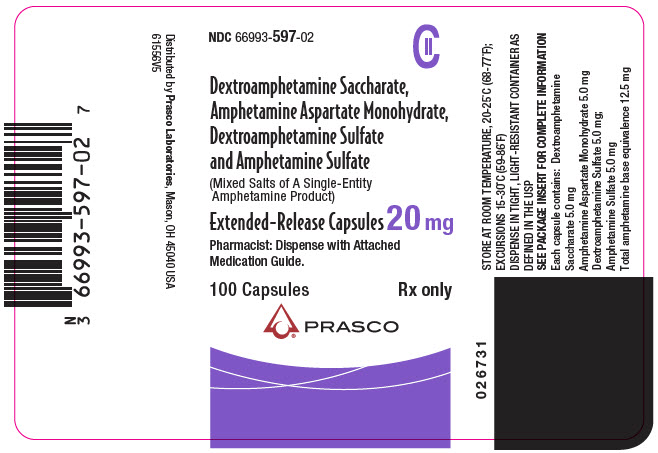
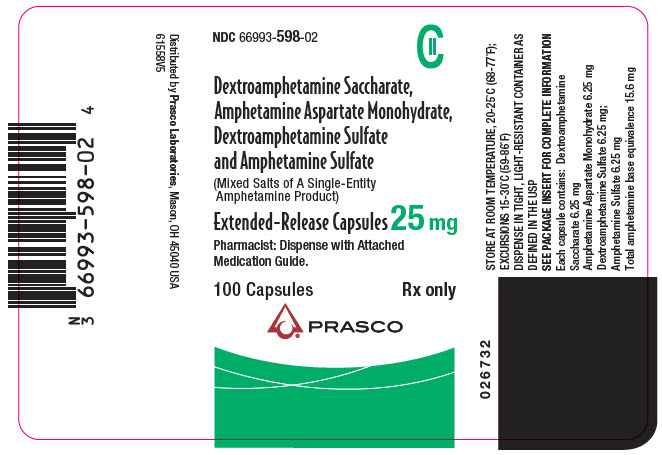
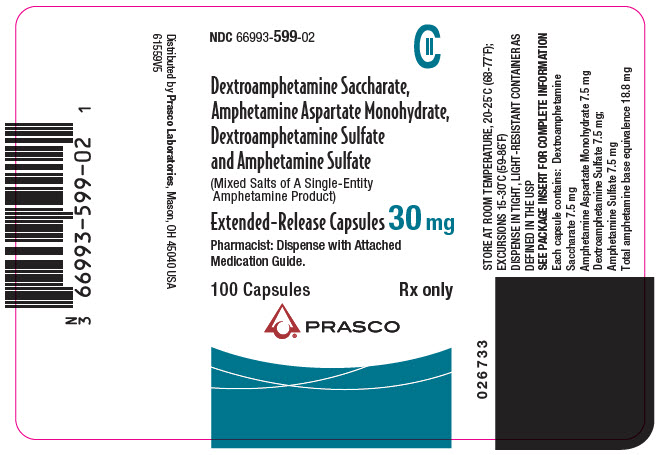
The inactive ingredients in MAS-ER Capsules include: gelatin capsules, hydroxypropyl methylcellulose, methacrylic acid copolymer, opadry beige, sugar spheres, talc, and triethyl citrate. Gelatin capsules contain edible inks, kosher gelatin, and titanium dioxide. The 5 mg, 10 mg, and 15 mg capsules also contain FD&C Blue #2. The 20 mg, 25 mg, and 30 mg capsules also contain red iron oxide and yellow iron oxide.
Metabolism and Excretion
Amphetamine is reported to be oxidized at the 4 position of the benzene ring to form 4-hydroxyamphetamine, or on the side chain α or β carbons to form alpha-hydroxy-amphetamine or norephedrine, respectively. Norephedrine and 4-hydroxy-amphetamine are both active and each is subsequently oxidized to form 4-hydroxy-norephedrine. Alpha-hydroxy-amphetamine undergoes deamination to form phenylacetone, which ultimately forms benzoic acid and its glucuronide and the glycine conjugate hippuric acid. Although the enzymes involved in amphetamine metabolism have not been clearly defined, CYP2D6 is known to be involved with formation of 4-hydroxy-amphetamine. Since CYP2D6 is genetically polymorphic, population variations in amphetamine metabolism are a possibility.
Amphetamine is known to inhibit monoamine oxidase, whereas the ability of amphetamine and its metabolites to inhibit various P450 isozymes and other enzymes has not been adequately elucidated. In vitro experiments with human microsomes indicate minor inhibition of CYP2D6 by amphetamine and minor inhibition of CYP1A2, 2D6, and 3A4 by one or more metabolites. However, due to the probability of auto-inhibition and the lack of information on the concentration of these metabolites relative to in vivo concentrations, no predications regarding the potential for amphetamine or its metabolites to inhibit the metabolism of other drugs by CYP isozymes in vivo can be made.
With normal urine pHs, approximately half of an administered dose of amphetamine is recoverable in urine as derivatives of alpha-hydroxy-amphetamine and approximately another 30-40% of the dose is recoverable in urine as amphetamine itself. Since amphetamine has a pKa of 9.9, urinary recovery of amphetamine is highly dependent on pH and urine flow rates. Alkaline urine pHs result in less ionization and reduced renal elimination, and acidic pHs and high flow rates result in increased renal elimination with clearances greater than glomerular filtration rates, indicating the involvement of active secretion. Urinary recovery of amphetamine has been reported to range from 1% to 75%, depending on urinary pH, with the remaining fraction of the dose hepatically metabolized. Consequently, both hepatic and renal dysfunction have the potential to inhibit the elimination of amphetamine and result in prolonged exposures. In addition, drugs that effect urinary pH are known to alter the elimination of amphetamine, and any decrease in amphetamine's metabolism that might occur due to drug interactions or genetic polymorphisms is more likely to be clinically significant when renal elimination is decreased [see DRUG INTERACTIONS (7)].
Special Populations
Comparison of the pharmacokinetics of d- and l-amphetamine after oral administration of MAS-ER Capsules in children (6-12 years) and adolescent (13-17 years) ADHD patients and healthy adult volunteers indicates that body weight is the primary determinant of apparent differences in the pharmacokinetics of d- and l-amphetamine across the age range. Systemic exposure measured by area under the curve to infinity (AUC∞) and maximum plasma concentration (Cmax) decreased with increases in body weight, while oral volume of distribution (VZ/F), oral clearance (CL/F), and elimination half-life (t1/2) increased with increases in body weight.
Pediatric Patients
On a mg/kg weight basis, children eliminated amphetamine faster than adults. The elimination half-life (t1/2) is approximately 1 hour shorter for d-amphetamine and 2 hours shorter for l-amphetamine in children than in adults. However, children had higher systemic exposure to amphetamine (Cmax and AUC) than adults for a given dose of MAS-ER Capsules, which was attributed to the higher dose administered to children on a mg/kg body weight basis compared to adults. Upon dose normalization on a mg/kg basis, children showed 30% less systemic exposure compared to adults.
Gender
Systemic exposure to amphetamine was 20-30% higher in women (N=20) than in men (N=20) due to the higher dose administered to women on a mg/kg body weight basis. When the exposure parameters (Cmax and AUC) were normalized by dose (mg/kg), these differences diminished. Age and gender had no direct effect on the pharmacokinetics of d- and l-amphetamine.
Race
Formal pharmacokinetic studies for race have not been conducted. However, amphetamine pharmacokinetics appeared to be comparable among Caucasians (N=33), Blacks (N=8) and Hispanics (N=10).
Pediatric Patients
A double-blind, randomized, placebo-controlled, parallel-group study was conducted in children aged 6-12 (N=584) who met DSM-IV® criteria for ADHD (either the combined type or the hyperactive-impulsive type). Patients were randomized to fixed-dose treatment groups receiving final doses of 10, 20, or 30 mg of MAS-ER Capsules or placebo once daily in the morning for three weeks. Significant improvements in patient behavior, based upon teacher ratings of attention and hyperactivity, were observed for all MAS-ER Capsules doses compared to patients who received placebo, for all three weeks, including the first week of treatment, when all MAS-ER Capsules subjects were receiving a dose of 10 mg/day. Patients who received MAS-ER Capsules showed behavioral improvements in both morning and afternoon assessments compared to patients on placebo.
In a classroom analogue study, patients (N=51) receiving fixed doses of 10 mg, 20 mg or 30 mg MAS-ER Capsules demonstrated statistically significant improvements in teacher-rated behavior and performance measures, compared to patients treated with placebo.
A double-blind, randomized, multi-center, parallel-group, placebo-controlled study was conducted in adolescents aged 13-17 (N=327) who met DSM-IV® criteria for ADHD. The primary cohort of patients (n=287, weighing ≤ 75kg/165lbs) was randomized to fixed-dose treatment groups and received four weeks of treatment. Patients were randomized to receive final doses of 10 mg, 20 mg, 30 mg, and 40 mg MAS-ER Capsules or placebo once daily in the morning. Patients randomized to doses greater than 10 mg were titrated to their final doses by 10 mg each week. The secondary cohort consisted of 40 subjects weighing >75kg/165lbs who were randomized to fixed-dose treatment groups receiving final doses of 50 mg and 60 mg MAS-ER Capsules or placebo once daily in the morning for 4 weeks. The primary efficacy variable was the Attention Deficit Hyperactivity Disorder-Rating Scale IV (ADHD-RS-IV) total score for the primary cohort. The ADHD-RS-IV is an 18-item scale that measures the core symptoms of ADHD. Improvements in the primary cohort were statistically significantly greater in all four primary cohort active treatment groups (MAS-ER Capsules 10 mg, 20 mg, 30 mg, and 40 mg) compared with the placebo group. There was not adequate evidence that doses greater than 20 mg/day conferred additional benefit.
Adult Patients
A double-blind, randomized, placebo-controlled, parallel-group study was conducted in adults (N=255) who met DSM-IV® criteria for ADHD. Patients were randomized to fixed-dose treatment groups receiving final doses of 20, 40, or 60 mg of MAS-ER Capsules or placebo once daily in the morning for four weeks. Significant improvements, measured with the Attention Deficit Hyperactivity Disorder-Rating Scale (ADHD-RS), an 18- item scale that measures the core symptoms of ADHD, were observed at endpoint for all MAS-ER Capsules doses compared to patients who received placebo for all four weeks. There was not adequate evidence that doses greater than 20 mg/day conferred additional benefit.
Manufactured for Shire LLC, Florence, KY 41042. Made in USA.
Distributed by Prasco Laboratories, Mason, OH 45040 USA
For more information call 1-866-525-0688.
Pharmacist: Medication Guide to be dispensed to patients
ADDERALL® is a registered trademark of Shire LLC, under license to Prasco Laboratories.
Copyright© 2017 Shire US Inc.
Rev. 01/2017