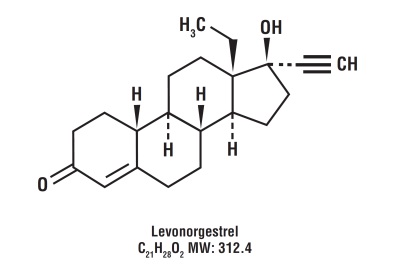
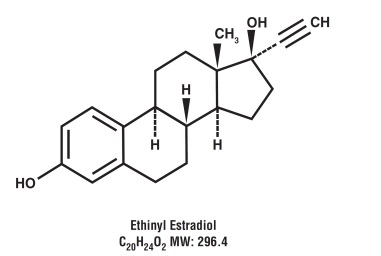
The sections below provide information on substances for which data on drug interactions with COCs are available. There is little information available about the clinical effect of most drug interactions that may affect COCs. However, based on the known pharmacokinetic effects of these drugs, clinical strategies to minimize any potential adverse effect on contraceptive effectiveness or safety are suggested.
Consult the approved product labeling of all concurrently used drugs to obtain further information about interactions with COCs or the potential for metabolic enzyme or transporter system alterations
.
No drug-drug interaction studies were conducted with levonorgestrel and ethinyl estradiol tablets.
4.1 Effects of Other Drugs on Combined Oral Contraceptives
Substances Decreasing the Plasma Concentrations of COCs and Potentially Diminishing the Efficacy of COCs:
Table 1 includes substances that demonstrated an important drug interaction with levonorgestrel and ethinyl estradiol tablets.
Table 1: Significant Drug Interactions Involving Substances That Affect COCs
Metabolic Enzyme Inducers
|
Clinical effect
| - Concomitant use of COCs with metabolic enzyme inducers may decrease the plasma concentrations of the estrogen and/or progestin component of COCs.
- Decreased exposure of the estrogen and/or progestin component of COCs may potentially diminish the effectiveness of COCs and may lead to contraceptive failure or an increase in breakthrough bleeding.
|
Prevention or management
| - Counsel females to use an alternative method of contraception or a backup method when enzyme inducers are used with COCs.
- Continue backup contraception for 28 days after discontinuing the enzyme inducer to maintain contraceptive reliability.
|
Examples
| Aprepitant, barbiturates, bosentan, carbamazepine, efavirenz, felbamate, griseofulvin, oxcarbazepine, phenytoin, rifampin, rifabutin, rufinamide, topiramate, products containing St. John’s wort
a, and certain protease inhibitors (see separate section on protease inhibitors below).
|
Colesevelam
|
|
Clinical effect
| - Concomitant use of COCs with colesevelam significantly decreases systemic exposure of ethinyl estradiol.
- Decreased exposure of the estrogen component of COCs may potentially reduce contraceptive efficacy or result in an increase in breakthrough bleeding, depending on the strength of ethinyl estradiol in the COC.
|
Prevention or management
| Administer 4 or more hours apart to attenuate this drug interaction.
|
aInduction potency of St. John’s wort may vary widely based on preparation.
Substances increasing the systemic exposure of COCs:
Co-administration of atorvastatin or rosuvastatin and COCs containing ethinyl estradiol increase systemic exposure of ethinyl estradiol by approximately 20 to 25 percent. Ascorbic acid and acetaminophen may increase systemic exposure of ethinyl estradiol, possibly by inhibition of conjugation. CYP3A inhibitors such as itraconazole, voriconazole, fluconazole, grapefruit juice,
7or ketoconazole may increase systemic exposure of the estrogen and/or progestin component of COCs.
Human immunodeficiency virus (HIV)/hepatitis C virus (HCV) protease inhibitors and non-nucleoside reverse transcriptase inhibitors:
Significant decreases in systemic exposure of the estrogen and/or progestin have been noted when COCs are co-administered with some HIV protease inhibitors (e.g., nelfinavir, ritonavir, darunavir/ritonavir, (fos)amprenavir/ritonavir, lopinavir/ritonavir, and tipranavir/ritonavir), some HCV protease inhibitors (e.g., boceprevir and telaprevir), and some non-nucleoside reverse transcriptase inhibitors (e.g., nevirapine).
In contrast, significant increases in systemic exposure of the estrogen and/or progestin have been noted when COCs are co-administered with certain other HIV protease inhibitors (e.g., indinavir and atazanavir/ritonavir) and with other non-nucleoside reverse transcriptase inhibitors (e.g., etravirine).
4.2 Effects of Combined Oral Contraceptives on Other Drugs
Table 2 provides significant drug interaction information for drugs co-administered with levonorgestrel and ethinyl estradiol tablets.
Table 2: Significant Drug Interaction Information for Drugs Co-Administered With COCs
Lamotrigine
|
Clinical effect
| - Concomitant use of COCs with lamotrigine may significantly decrease systemic exposure of lamotrigine due to induction of lamotrigine glucuronidation.
- Decreased systemic exposure of lamotrigine may reduce seizure control.
|
Prevention or management
| Dose adjustment may be necessary. Consult the approved product labeling for lamotrigine.
|
Thyroid Hormone Replacement Therapy or Corticosteroid Replacement Therapy
|
Clinical effect
| Concomitant use of COCs with thyroid hormone replacement therapy or corticosteroid replacement therapy may increase systemic exposure of thyroid-binding and cortisol-binding globulin (see
Warnings, EFFECT ON BINDING GLOBULINS).
|
Prevention or management
| The dose of replacement thyroid hormone or cortisol therapy may need to be increased. Consult the approved product labeling for the therapy in use (see
Warnings, EFFECT ON BINDING GLOBULINS).
|
Other Drugs
|
Clinical effect
| Concomitant use of COCs may decrease systemic exposure of acetaminophen, morphine, salicylic acid, and temazepam. Concomitant use with ethinyl estradiol-containing COCs may increase systemic exposure of other drugs (e.g., cyclosporine, prednisolone, theophylline, tizanidine, and voriconazole).
|
Prevention or management
| The dosage of drugs that can be affected by this interaction may need to be increased. Consult the approved product labeling for the concomitantly used drug.
|
4.3 Concomitant Use with Hepatitis C Virus (HCV) Combination Therapy - Liver Enzyme Elevation
Do not co-administer levonorgestrel and ethinyl estradiol tablets with HCV drug combinations containing ombitasvir/paritaprevir/ritonavir, with or without dasabuvir, [see
Warnings (5)], and glecaprevir/pibrentasvir due to potential for ALT elevations
.
4.4 Effect on Laboratory Tests
The use of COCs may influence the results of certain laboratory tests, such as coagulation factors, lipids, glucose tolerance, and binding proteins.