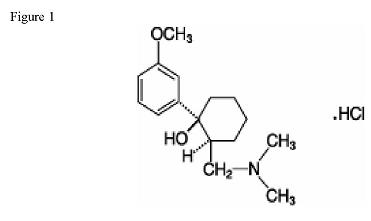
Tramadol hydrochloride ER tablets were administered to a total of 3108 patients during studies conducted in the U.S. These included four double-blind studies in patients with osteoarthritis and/or chronic low back pain and one open-label study in patients with chronic non-malignant pain. A total of 901 patients were 65 years or older. The frequency of adverse events generally increased with doses from 100 mg to 400 mg in the two pooled, twelve-week, randomized, double-blind, placebo-controlled studies in patients with chronic non-malignant pain (see Table 2).
Table 2: Incidence (%) of patients with adverse event rates ≥ 5% from two 12 week placebo-controlled studies in patients with moderate to moderately severe chronic pain by dose (N = 1811). | MedDRA Preferred Term | Tramadol Hydrochloride ER Tablets |
Placebo
(N=406)
n (%) |
| 100 mg(N= 403)n (%) | 200 mg (N=400)n (%) | 300 mg (N=400)n (%) | 400 mg (N=202)n (%) |
| Dizziness (not vertigo) | 64 (15.9) | 81 (20.3) | 90 (22.5) | 57 (28.2) | 28 (6.9) |
| Nausea | 61 (15.1) | 90 (22.5) | 102 (25.5) | 53 (26.2) | 32 (7.9) |
| Constipation | 49 (12.2) | 68 (17.0) | 85 (21.3) | 60 (29.7) | 17 (4.2) |
| Headache | 49 (12.2) | 62 (15.5) | 46 (11.5) | 32 (15.8) | 43 (10.6) |
| Somnolence | 33 (8.2) | 45 (11.3) | 29 (7.3) | 41 (20.3) | 7 (1.7) |
| Flushing | 31 (7.7) | 40 (10.0) | 35 (8.8) | 32 (15.8) | 18 (4.4) |
| Pruritus | 25 (6.2) | 34 (8.5) | 30 (7.5) | 24 (11.9) | 4 (1.0) |
| Vomiting | 20 (5.0) | 29 (7.3) | 34 (8.5) | 19 (9.4) | 11 (2.7) |
| Insomnia | 26 (6.5) | 32 (8.0) | 36 (9.0) | 22 (10.9) | 13 (3.2) |
| Dry Mouth | 20 (5.0) | 29 (7.3) | 39 (9.8) | 18 (8.9) | 6 (1.5) |
| Diarrhea | 15 (3.7) | 27 (6.8) | 37 (8.5) | 10 (5.0) | 17 (4.2) |
| Asthenia | 14 (3.5) | 24 (6.0) | 26 (6.5) | 13 (6.4) | 7 (1.7) |
| Postural hypotension | 7 (1.7) | 17 (4.3) | 8 (2.0) | 11 (5.4) | 9 (2.2) |
| Sweating increased | 6 (1.5) | 8 (2.0) | 15 (3.8) | 13 (6.4) | 1 (0.2) |
| Anorexia | 3 (0.7) | 7 (1.8) | 21 (5.3) | 12 (5.9) | 1 (0.2) |
The following adverse events were reported from all the chronic pain studies (N=3108).
The lists below include adverse events not otherwise noted in Table 2.
Adverse events with incidence rates of 1.0% to <5.0%
Eye disorders: vision blurred
Gastrointestinal disorders: abdominal pain upper, dyspepsia, abdominal pain, sore throat
General disorders: weakness, pain, feeling hot, influenza like illness, fall, rigors, lethargy, pyrexia, chest pain
Infections and infestations: nasopharyngitis, upper respiratory tract infection, sinusitis, influenza, gastroenteritis viral, urinary tract infection, bronchitis
Investigations: blood creatine phosphokinase increased, weight decreased
Metabolism and nutrition disorders: appetite decreased
Musculoskeletal, connective tissue and bone disorders: arthralgia, back pain, pain in limb, neck pain
Nervous system disorders: tremor, paraesthesia, hypoaesthesia
Psychiatric disorders: nervousness, anxiety, depression, restlessness
Respiratory, thoracic and mediastinal disorders: sneezing, cough, rhinorrhea, nasal congestion, dyspnea, sinus congestion
Skin and subcutaneous tissue disorders: sweating increased, dermatitis
Vascular disorders: hot flashes, vasodilatation
Adverse events with incidence rates of 0.5% to <1.0% and serious adverse events reported in at least 2 patients.
Cardiac disorders: palpitations, myocardial infarction
Ear and labyrinth disorders: tinnitus, vertigo
Gastrointestinal disorders: flatulence, toothache, constipation aggravated, appendicitis, pancreatitis
General disorders: feeling jittery, edema lower limb, shivering, joint swelling, malaise, drug withdrawal syndrome, peripheral swelling
Hepato-biliary disorders: cholelithiasis, cholecystitis
Infections and infestations: cellulitis, ear infection, gastroenteritis, pneumonia, viral infection
Injury and poisoning: joint sprain, muscle injury
Investigations: alanine aminotransferase increased, blood pressure increased, aspartate aminotransferase increased, heart rate increased, blood glucose increased, liver function tests abnormal
Musculoskeletal, connective tissue and bone disorders: muscle cramps, muscle spasms, joint stiffness, muscle twitching, myalgia, osteoarthritis aggravated
Nervous system disorders: migraine, sedation, syncope, disturbance in attention, dizziness aggravated
Psychiatric disorders: euphoric mood, irritability, libido decreased, sleep disorder, agitation, disorientation, abnormal dreams
Renal and urinary disorders: difficulty in micturition, urinary frequency, hematuria, dysuria, urinary retention
Respiratory, thoracic and mediastinal disorders: yawning
Skin and subcutaneous tissue disorders: contusion, piloerection, clamminess, night sweats, urticaria
Vascular disorders: hypertension aggravated, hypertension, peripheral ischemia