Table 7 summarizes the pharmacokinetic (PK) parameters of tacrolimus following oral administration of tacrolimus extended-release capsules in healthy subjects and in kidney transplant patients. Whole blood tacrolimus concentrations in these PK studies were measured using validated HPLC/MS/MS assays.
Table 7: Pharmacokinetic Parameters of Tacrolimus Extended-Release Capsules (Given Once Daily) in Healthy Subjects and in Kidney Transplant Patients (Under Fasted Conditions)
| Population |
Tacrolimus Extended-Release Capsules Dose a | Day b | PK Parameters of Tacrolimus Extended-Release Capsules |
Cmaxc (ng/mL) |
Tmaxd (hr) |
AUC24 c (ng•hr/mL) |
C24f (ng/mL) |
Healthy Subjects (N=24) |
4 mg 4 mg |
Day 1 Day 10 |
6.2 ± 2.1 11.6 ± 3.4 |
2 [1 to 5] 2 [1 to 3] |
74 ± 22 155 ± 46 |
2.3 ± 0.8 4.7 ± 1.5 |
Adult Kidney De novoe (N=17) |
0.2 mg/kg 0.19 mg/kg 0.18 mg/kg 0.18 mg/kg |
Day 1 Day 3 Day 7 Day 14 |
26 ± 13.7 31 ± 13.9 32.2 ± 10.2 32.7 ± 9 |
3 [2 to 24] 2 [0.5 to 2] 2 [1 to 6] 2 [1 to 4] |
372 ± 202 437 ± 175 405 ± 117 412 ± 109 |
12.1 ± 7.2 13.5 ± 5.6 11.4 ± 4 11.2 ± 3.9 |
Adult Kidney (6 months or greater post-transplant) (N=60) | 5.2 mg/day g | Day 14 g | 16.1 ± 5.3 | 2 [1 to 6] | 222 ± 64 | 6.7 ± 1.9 h |
a Healthy adult subjects (actual administered dose of tacrolimus extended-release capsules); adult de novo kidney transplant patients (actual group mean dose of tacrolimus extended-release capsules).
b Day of tacrolimus extended-release capsules treatment and PK profiling.
c Arithmetic means ± S.D.
d Median [range].
e “De novo” refers to immunosuppression starting at the time of transplantation; data from PK substudy of Study 2.
f Tacrolimus trough concentration before the next dose.
g Same daily dose of tacrolimus extended-release capsules for 14-day period.
h Correlation coefficient of AUC24 to Cmin r = 0.88.
In de novo adult kidney transplant patients, the tacrolimus systemic exposure, as assessed by AUC24, for tacrolimus extended-release capsules 0.2 mg/kg once daily on Day 1 post-transplant was 18% (Ratio [SD]: 0.822 [1.647]) lower when compared with Prograf (tacrolimus immediate-release) 0.2 mg/kg/day given twice daily. By Day 3 post-transplant, the AUC24 was similar between the two formulations. On Day 14 (steady state), the AUC24 for tacrolimus extended-release capsules was 21% (Ratio [SD]: 1.207 [1.326]) higher than that of Prograf (tacrolimus immediate-release), at comparable trough concentrations (C24).
Due to intersubject variability in tacrolimus PK, individualization of dosing regimen is necessary for optimal therapy [see Dosage and Administration (2.3, 2.4)].
Pharmacokinetic data indicate that whole blood concentrations rather than plasma concentrations serve as the more appropriate sampling compartment to describe tacrolimus PK.
Absorption
In healthy subjects, the administration of escalating tacrolimus extended-release capsules doses ranging from 1.5 mg to 10 mg resulted in dose-proportional increases in tacrolimus AUC and C24h, and no change in elimination half-life.
Food Effects
The presence of a meal affects the absorption of tacrolimus; the rate and extent of absorption is greatest under fasted conditions. In 24 healthy subjects, administration of tacrolimus extended-release capsules immediately following a high-fat meal (150 protein calories, 250 carbohydrate calories, and 500 to 600 fat calories) reduced the Cmax, AUCt, and AUCinf of tacrolimus by approximately 25% compared with fasting values. Food delayed the median Tmax from 2 hours in the fasted state to 4 hours in the fed state; however, the terminal half-life remained 36 hours regardless of dosing conditions. The time when a meal is consumed also affected tacrolimus bioavailability. In 24 healthy subjects, when tacrolimus extended-release capsules was administered 1.5 hours after consumption of a high-fat breakfast, tacrolimus exposure was decreased approximately 35%. Administration of tacrolimus extended-release capsules 1 hour prior to a high-fat breakfast reduced tacrolimus exposure by 10%. Tacrolimus extended-release capsules should be taken, preferably on an empty stomach, at least 1 hour before a meal or at least 2 hours after a meal.
Chronopharmacokinetic Effect
In 23 healthy subjects, a diurnal effect on the absorption of tacrolimus was observed. Evening dosing of tacrolimus extended-release capsules reduced AUCinf by 35% relative to morning dosing. Tacrolimus extended-release capsules should be taken consistently at the same time every morning.
Distribution
The plasma protein binding of tacrolimus is approximately 99% and is independent of concentration over a range of 5 ng/mL to 50 ng/mL. Tacrolimus is bound mainly to albumin and alpha-1-acid glycoprotein, and has a high level of association with erythrocytes. The distribution of tacrolimus between whole blood and plasma depends on several factors, such as hematocrit, temperature at the time of plasma separation, drug concentration, and plasma protein concentration. In a U.S. trial in which tacrolimus was administered as tacrolimus immediate-release, the ratio of whole blood concentration to plasma concentration averaged 35 (range 12 to 67).
Elimination
Metabolism
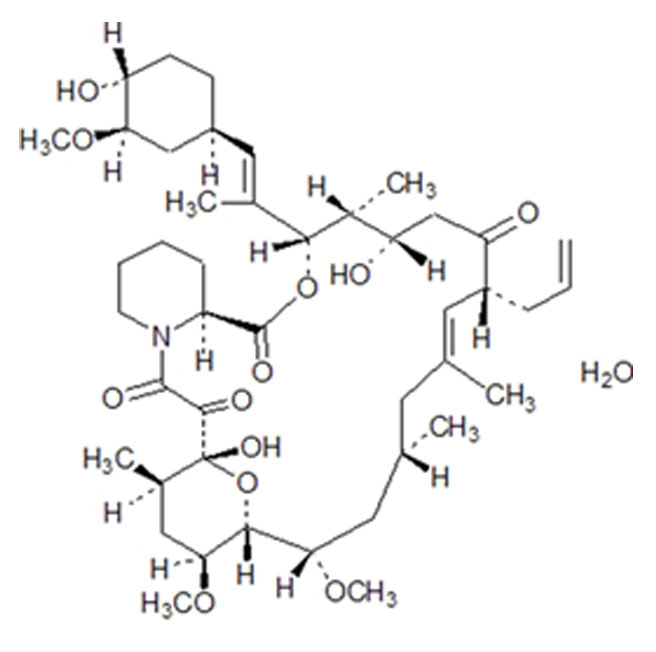
The desired pharmacological activity of tacrolimus is primarily due to the parent drug. Tacrolimus is extensively metabolized by the mixed-function oxidase system, primarily the cytochrome P-450 system (CYP3A4 and CYP3A5). A metabolic pathway leading to the formation of 8 possible metabolites has been proposed. Demethylation and hydroxylation were identified as the primary mechanisms of biotransformation in vitro. The major metabolite identified in incubations with human liver microsomes is 13-demethyl tacrolimus. In in vitro studies, a 31-demethyl metabolite has been reported to have the same activity as tacrolimus.
Excretion
In a mass balance study of orally-administered radiolabeled tacrolimus to 6 healthy subjects, the mean recovery of the radiolabel was 94.9 ± 30.7%. Fecal elimination accounted for 92.6 ± 30.7% and urinary elimination accounted for 2.3 ± 1.1% of the total radiolabel administered. The elimination half-life based on radioactivity was 31.9 ± 10.5 hours, whereas it was 48.4 ± 12.3 hours based on tacrolimus concentrations. The mean clearance of radiolabel was 0.226 ± 0.116 L/hr/kg and the mean clearance of tacrolimus was 0.172 ± 0.088 L/hr/kg.
The elimination half-life of tacrolimus after oral administration of 4 mg tacrolimus extended-release capsules daily for 10 days was 38 ± 3 hours in 24 healthy subjects.
Specific Populations
Pediatric Patients
De Novo Pediatric Transplant Patients
A PK study to compare tacrolimus extended-release capsules to Prograf capsules was conducted in 44 de novo pediatric transplant patients, including 25 pediatric de novo kidney transplant patients, 4 to 15 years of age (mean age of 10.6 years). These patients were administered a starting daily dose of 0.3 mg/kg/day of Prograf capsules divided into two daily doses or tacrolimus extended-release capsules once daily. Overall, the tacrolimus PK parameters AUC24 and C24 are comparable among Prograf and tacrolimus extended-release capsules on Day 7 and Day 28 (Table 8).
Table 8: Tacrolimus Pharmacokinetic Parameters Following Daily Doses of Prograf Capsules or Tacrolimus Extended-Release Capsules in Pediatric De Novo Kidney Transplant Patients 4 to 15 Years of Age
| Study Visit a | Mean ± SD (Range) PK Parameters for Prograf Capsules and Tacrolimus Extended-Release Capsules |
| PK Parameters |
Prograf Capsules b (N=10) |
Tacrolimus Extended-Release Capsules (N=10) |
| Day 1 | AUC24(ng∙hr/mL) |
280.4 ± 164.4 (145 to 688.4) |
211.4 ± 128.2 (76.9 to 459.8) |
| Cmax(ng/mL) |
23.1 ± 14.4 (8.2 to 55.7) |
17.7 ± 11.1 (5 to 44.9) |
| C24(ng/mL)c |
8.5 ± 5.4 (3.2 to 16.7) |
6.7 ± 4.3 (2 to 16.5) |
| Tmax(hr)d |
2 (0.9 to 4) |
2 (1 to 12) |
| Day 7 | AUC24(ng∙hr/mL) |
347.2 ± 124.2 (153.7 to 561.8) |
350.6 ± 92.7 (149 to 493) |
| Cmax(ng/mL) |
28.7 ± 14.6 (10.5 to 49) |
37.7 ± 13.9 (15.1 to 62.6) |
| C24(ng/mL)c |
9.6 ± 2.8 (5.9 to 16) |
8.4 ± 2.7 (4.3 to 14.4) |
| Tmax(hr)d |
1 (1 to 2.3) |
1 (1 to 2) |
| Day 28 | AUC24(ng∙hr/mL) |
323.6 ± 114.5 (234.5 to 614) |
322.4 ± 78.1 (240.3 to 516.4) |
| Cmax(ng/mL) |
28.5 ± 17.1 (17.5 to 70.1) |
24.7 ± 4.8 (14.2 to 32.5) |
| C24(ng/mL)c |
9.8 ± 3.1 (5.4 to 16) |
9.2 ± 3 (5.1 to 15.9) |
| Tmax(hr)d |
1 (1 to 4) |
1.5 (1 to 4) |
a Study Visit Day on which PK profiles were collected following administration of Prograf capsules or tacrolimus extended-release capsules.
b PK estimates following the morning Prograf capsules dose are reported for Tmax and Cmax.
c Observed whole blood tacrolimus trough levels at 12 hours following the evening dose of Prograf capsules or 24 hours after the morning dose of tacrolimus extended-release capsules.
d Tmax - Reported as median (range).
Stable Pediatric Transplant Patients
Another PK study to compare tacrolimus extended-release capsules to Prograf capsules was conducted in 81 stable pediatric transplant patients, including 48 pediatric kidney transplant patients, 5 to 16 years of age (mean age of 11 years). Pediatric kidney transplant patients who had been administered Prograf for at least 3 months prior to treatment were converted on a 1:1 (mg:mg) basis from Prograf, given in two divided doses, to tacrolimus extended-release capsules once-daily. Overall, the tacrolimus AUC24, Cmax, and C24 are comparable upon conversion from Prograf to tacrolimus extended-release capsules on a 1:1 (mg:mg) basis in stable pediatric kidney transplant patients (Table 9).
Table 9: Tacrolimus Pharmacokinetic Parameters at Steady State Following 1:1 (mg:mg) Total Daily Dose Conversion from Prograf Capsules to Tacrolimus Extended-Release Capsules in Stable Pediatric Kidney Transplant Patients 5 to 16 Years of Age
| Organ Transplant Population |
Mean ± SD (Range) PK Parameters for Prograf Capsules and Tacrolimus Extended-Release Capsules |
| Pediatric Kidney (N=45) | PK Parameters | Prograf Capsules | Tacrolimus Extended-Release Capsules |
| AUC24 (ng∙hr/mL) |
188.8 ± 53.5 (102.3 to 406.8) |
173.2 ± 44.6 (80.9 to 262.5) |
| Cmax (ng/mL) |
14.9 ± 5.8 (4.9 to 34.4) |
12.5 ± 4.5 (5.4 to 24.4) |
| 24a (ng/mL) |
5.6 ± 1.9 (2.9 to 13.8) |
5.1 ± 1.4 (2 to 8.4) |
a Observed whole blood tacrolimus trough levels at 12 hours following the evening dose of Prograf capsules and at 24 hours after the morning dose of tacrolimus extended-release capsules once daily under steady-state conditions.
Patients with Renal Impairment
Tacrolimus pharmacokinetics following a single administration of tacrolimus immediate-release injection (administered as a continuous IV infusion) were determined in 12 patients (7 not on dialysis and 5 on dialysis, serum creatinine of 3.9 ± 1.6 and 12 ± 2.4 mg/dL, respectively) prior to their kidney transplant. The mean clearance of tacrolimus in patients with renal dysfunction given tacrolimus IV was similar to that in healthy subjects given tacrolimus IV and in healthy subjects given oral tacrolimus immediate-release [see Use in Specific Populations (8.6)].
Patients with Hepatic Impairment
Tacrolimus pharmacokinetics have been determined in six patients with mild hepatic impairment (mean Child-Pugh score: 6.2) following single oral administration of tacrolimus immediate-release. The mean clearance of tacrolimus in patients with mild hepatic impairment was not substantially different from that in healthy subjects. Tacrolimus pharmacokinetics were studied in six patients with severe hepatic impairment (mean Child-Pugh score: more than 10). The mean clearance was substantially lower in patients with severe hepatic impairment [see Dosage and Administration (2.3) and Use in Specific Populations (8.7)].
Racial or Ethnic Groups
The pharmacokinetics of tacrolimus was studied following single oral administration of tacrolimus immediate-release (5 mg) in 10 African-American, 12 Latino-American, and 12 Caucasian healthy subjects [see Dosage and Administration (2.2), Use in Specific Populations (8.8) and Clinical Studies (14)]:
- The mean (± SD) tacrolimus Cmax in African-Americans (23.6 ± 12.1 ng/mL) was lower than in Caucasians (40.2 ± 12.6 ng/mL) and Latino-Americans (36.2 ± 15.8 ng/mL).
- Mean AUC0-inf tended to be lower in African-Americans (203 ± 115 ng·hr/mL) than Caucasians (344 ± 186 ng·hr/mL) and Latino-Americans (274 ± 150 ng·hr/mL).
- The mean (± SD) absolute oral bioavailability (F) in African-Americans (12 ± 4.5%) and Latino-Americans (14 ± 7.4%) was lower than in Caucasians (19 ± 5.8%).
- There was no significant difference in mean terminal half-life among the three ethnic groups (range from approximately 25 to 30 hours).
Male and Female Patients
A formal trial to evaluate the effect of gender on tacrolimus pharmacokinetics has not been conducted; however, there was no difference in total mg daily dosages between male and female patients receiving tacrolimus extended-release capsules in the kidney transplant trials. A retrospective comparison of pharmacokinetics in healthy subjects, and in kidney transplant patients indicated no gender-based differences.
Drug Interaction Studies
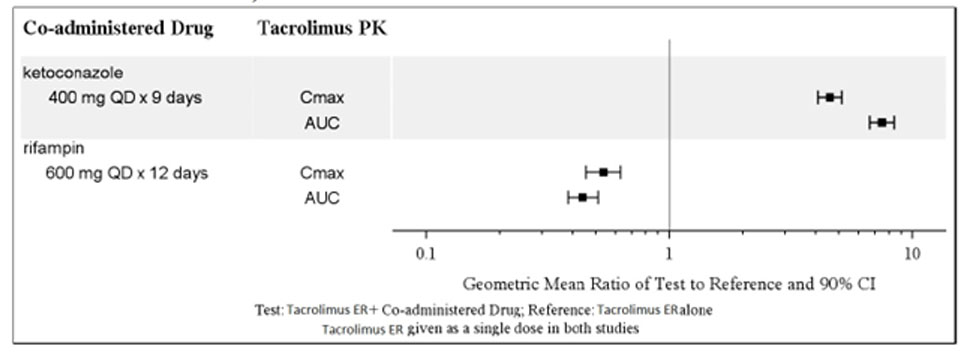
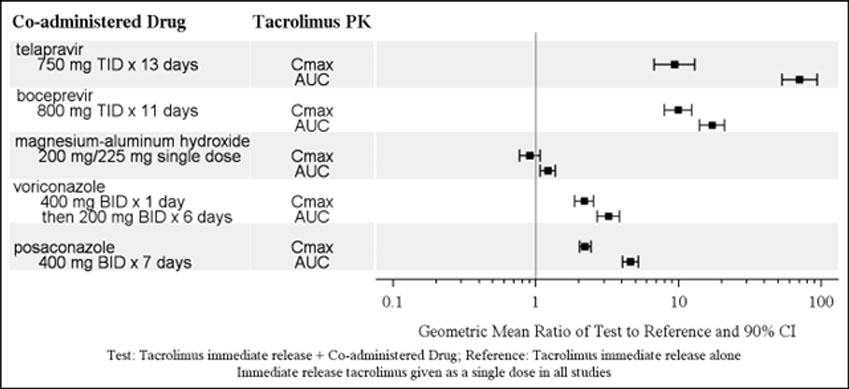
Because tacrolimus is metabolized mainly by CYP3A enzymes, drugs or substances known to inhibit these enzymes and/or are known CYP3A substrates may increase tacrolimus whole blood concentrations. Drugs known to induce CYP3A enzymes may decrease tacrolimus whole blood concentrations [see Warnings and Precautions (5.10) and Drug Interactions (7.2)].
Figure 1 and Figure 2 summarize the PK data from drug interaction studies of tacrolimus extended-release capsules or tacrolimus immediate-release capsules. These studies assessed the effect of co-administered drugs on tacrolimus PK in healthy subjects. Dosing adjustments, when using drugs that inhibit or increase CYP3A enzymes, may be necessary [see Drug Interactions (7.2)].
Figure 1: Effect of Co-administered Drugs on the Pharmacokinetics of Tacrolimus (when Given as Tacrolimus Extended-Release Capsules)
Figure 1 (Tacrolimus Extended Release Capsules 2)
Figure 2: Effect of Co-administered Drugs on the Pharmacokinetics of Tacrolimus (when Given as Immediate-Release Tacrolimus)
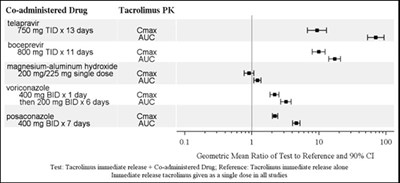
Figure 2 (Tacrolimus Extended Release Capsules 3)
Other Drug Interaction Studies
- Caspofungin(see complete prescribing information for CANCIDAS): Caspofungin reduced the blood AUC0-12 of tacrolimus by approximately 20%, peak blood concentration (Cmax) by 16%, and 12-hour blood concentration (C12hr) by 26% in healthy adult subjects when tacrolimus (2 doses of 0.1 mg/kg 12 hours apart) was administered on the 10th day of CANCIDAS 70 mg daily, as compared to results from a control period in which tacrolimus was administered alone [see Drug Interactions (7.2)]. The mechanism of interaction has not been confirmed.