Doxylamine Succinate And Pyridoxine Hydrochloride Tablet, Delayed Release
Product Images NDC 69452-206

View Photos of Packaging, Regulatory Labels, and Product Appearance

Product Visual Gallery

This gallery contains 3 technical images submitted to the FDA as part of the official labeling for Doxylamine Succinate And Pyridoxine Hydrochloride (NDC 69452-206). Unlike standard consumer photos, these assets often include clinical data figures, molecular chemical structures, and official manufacturer packaging layouts.

As provided by Bionpharma Inc.,, these visuals offer a comprehensive scientific overview of the product's physical and chemical identity, aiding pharmacists and researchers in product verification and study.

FDA Label Image

Image001 (Image001)

Image001 (Image001)
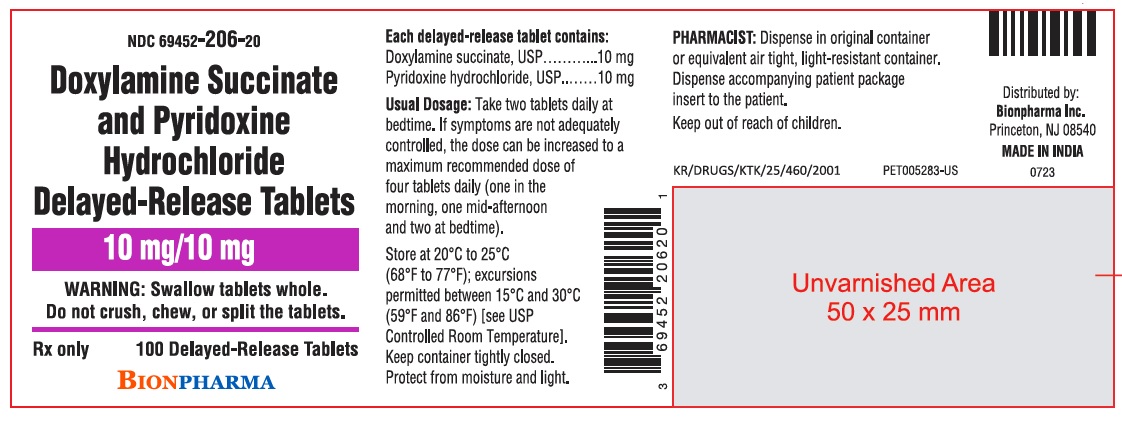
This is a description for a medication with the NDC number 69452-206-20. The medication is in the form of delayed-release tablets containing Doxylamine Succinate and Pyridoxine Hydrochloride. The warning states that the tablets should be swallowed whole and not crushed, chewed, or split. Each tablet contains 0mg of Doxylamine succinate, USP, and 10mg of Pyridoxine hydrochloride, USP. The usual dosage is two tablets daily at bedtime, and the maximum recommended dose is four tablets daily (one in the morning, one mid-afternoon, and two at bedtime) if symptoms are not adequately controlled. The medication should be stored at a temperature between 20°C and 25°C (68°F to 77°F) with excursions permitted between 15°C and 30°C (59°F and 86°F). The container should be kept tightly closed and protected from moisture and light. The medication should be dispensed in its original container or an equivalent air-tight, light-resistant container, along with the patient package insert. It is important to keep the medication out of reach of children. The medication is distributed by Bionpharma Inc. in Princeton, NJ, and is made in India.*
FDA Label Image

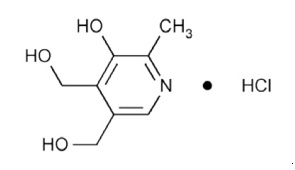
Structure-1 (Structure001)

FDA Label Image

Structure-2 (Structure002)

* These product label images have been analyzed using experimental machine learning. Please verify findings with the primary label text.