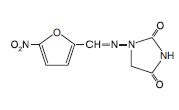
Mode of Action
Nitrofurantoin is reduced by a wide range of enzymes including bacterial flavoproteins to reactive intermediates which are damaging to macromolecules such as DNA and proteins.
Cross- Resistance
Although cross-resistance with other antimicrobials may occur, cross resistance with sulfonamides has not been observed.
Interaction with Other Antimicrobials
Antagonism has been demonstrated in vitro between nitrofurantoin and quinolone antimicrobial agents. Nitrofurantoin, in the form of Nitrofurantoin Oral Suspension, USP, has been shown to be active against most strains of the following bacteria both in vitro and in clinical infections: (See INDICATIONS AND USAGE).
Gram-Positive Aerobes
•Staphylococcus aureus
•Enterococcus species
Gram-Negative Aerobes
•Escherichia coli
NOTE: Some strains of Enterobacter species and Klebsiella species are resistant to nitrofurantoin.
The following in vitro data are available, but their clinical significance is unknown. Nitrofurantoin exhibits in vitro activity against the following bacteria; however, the safety and effectiveness of nitrofurantoin in treating clinical infections due to these bacteria have not been established in adequate and well controlled clinical trials.
Gram-Positive Aerobes
•Coagulase-negative staphylococci (including Staphylococcus epidermidis and Staphylococcus saprophyticus)
•Streptococcus agalactiae
•Viridans group streptococci
Gram-Negative Aerobes
•Citrobacter koseri
•Citrobacter freundii
•Klebsiella oxytoca
Nitrofurantoin is not active against most strains of Proteus species or Serratia species. It has no activity against Pseudomonas species.
Susceptibility Tests Methods
When available, the clinical microbiology laboratory should provide the results of in vitro susceptibility test results for antimicrobial drugs used in local hospitals and practice areas to the physician as periodic reports that describe the susceptibility profile of nosocomial and community-acquired pathogens. These reports should aid the physician in selecting an antibacterial drug product for treatment.
Dilution Techniques
Quantitative methods are used to determine antimicrobial minimal inhibitory concentrations (MIC’s). These MIC’s provide estimates of the susceptibility of bacteria to antimicrobial compounds. The MIC’s should be determined using a standardized test method 1,3 (broth or agar). The MIC values should be interpreted according to the criteria in Table 1.
Diffusion Techniques:
Quantitative methods that require measurement of zone diameters also provide reproducible estimates of the susceptibility of bacteria to antimicrobial compounds. The zone size provides an estimate of the susceptibility of bacteria to antimicrobial compounds. The zone size should be determined using a standardized method.² This procedure uses paper disks impregnated with 300 mcg of nitrofurantoin to test the susceptibility of bacteria to nitrofurantoin. The disk diffusion interpretive criteria are provided in Table 1.
Table 1: Susceptibility interpretive Criteria for Nitrofurantoin
Pathogen
| Minimum
Inhibitory Concentrations
(mcg/ml)
| Disk Diffusion
Zone Diameter
(mm)
|
| S
| I
| R
| S
| I
| R
|
Enterobacteriaceae
| ≤32
| 64
| ≥128
| ≥17
| 15-16
| ≤14
|
Staphylococcus
aureus
| ≤32
| 64
| ≥128
| ≥17
| 15-16
| ≤14
|
Enterococcus
species
| ≤32
| 64
| ≥128
| ≥17
| 15-16
| ≤14
|
S= susceptible, I= intermediate, R= resistant
A report of “Susceptible” indicates that the antimicrobial is likely to inhibit growth of the pathogen if the antimicrobial compound reaches the concentration at the infection site necessary to inhibit growth of the pathogen. A report of “Intermediate” indicates that the result should be considered equivocal, and, if the microorganism is not fully susceptible to alternative, clinically feasible drugs, the test should be repeated. This category implies possible clinical applicability in body site where the drug is physiologically concentrated. This category also provides a buffer zone that prevents small uncontrolled technical factors from causing major discrepancies in interpretation. A report of “Resistant” indicates that the antimicrobial is not likely to inhibit growth of the pathogen if the antimicrobial compound reaches the concentrations usually achievable at the infection site; other therapy should be selected.
Quality Control
Standardized susceptibility test procedures require the use of laboratory controls to monitor and ensure the accuracy and precision of supplies and reagents used in the assay, and the techniques of the individuals performing the test.1,2,3 Standard nitrofurantoin powder should provide the following MIC values provided in Table 2. For the diffusion technique using the 300-mcg nitrofurantoin disk the criteria provided in Table 2 should be achieved.