Extended Adjuvant Treatment of Early-Stage Breast Cancer
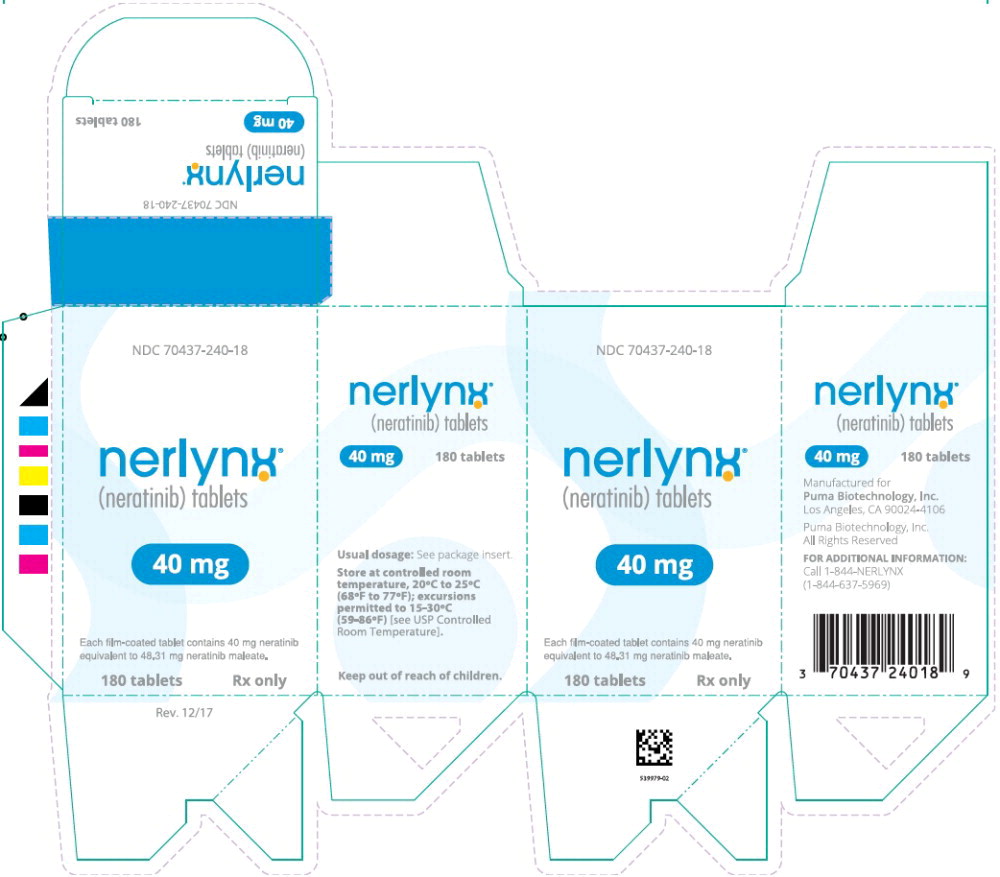
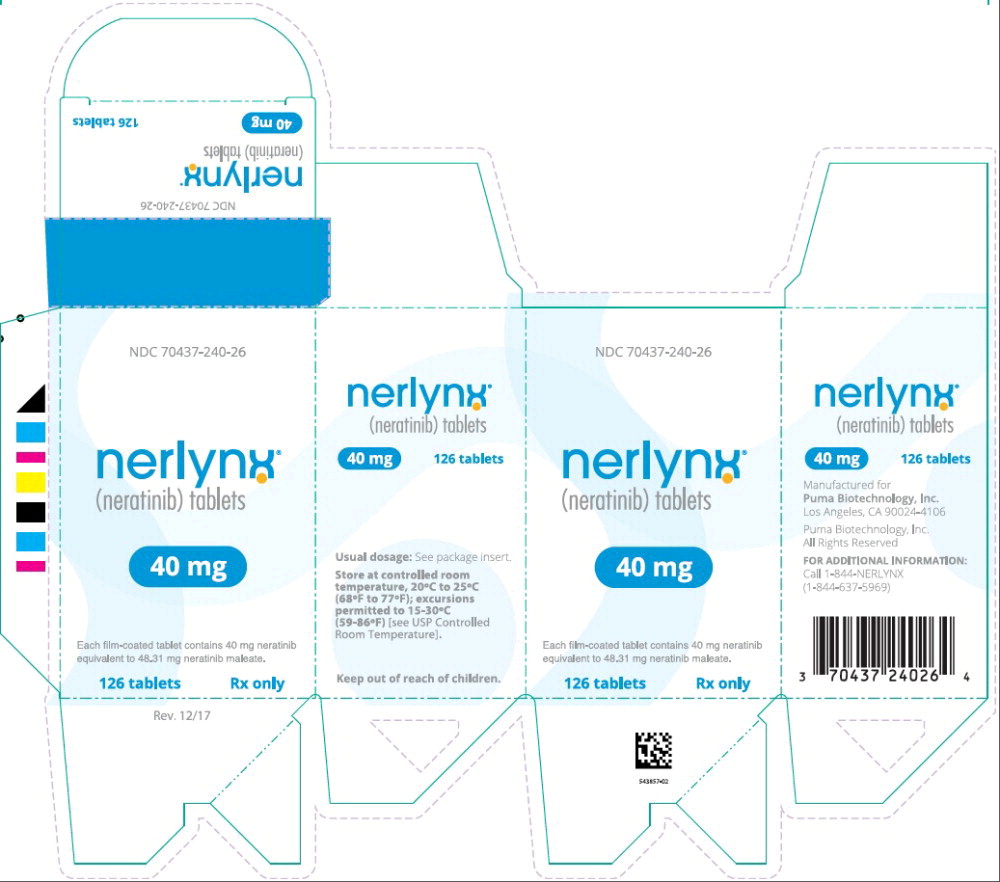
The recommended dose of NERLYNX is 240 mg (six tablets) given orally once daily, with food, continuously until disease recurrence or for up to one year.
Advanced or Metastatic Breast Cancer
The recommended dose of NERLYNX is 240 mg (six tablets) given orally once daily with food on Days 1–21 of a 21-day cycle plus capecitabine (750 mg/m
2 given orally twice daily) on Days 1–14 of a 21-day cycle until disease progression or unacceptable toxicities.
Dose Escalation
A two week dose escalation for NERLYNX may be considered instead of starting at the 240 mg daily dose for patients with early-stage breast cancer and metastatic breast cancer, as described in
Table 2
[see Warnings and Precautions (5.1) and Adverse Reactions (
6.1)]
.
Table 2: NERLYNX Dose Escalation and Treatment Schedule
| Time on NERLYNX | NERLYNX Dose |
|---|
| Week 1 (days 1–7)
| 120 mg daily (three 40 mg tablets)
|
| Week 2 (days 8–14)
| 160 mg daily (four 40 mg tablets)
|
| Week 3 and onwards
| 240 mg daily (six 40 mg tablets, recommended dose)
|
If diarrhea occurs, treat with antidiarrheal medications, fluids, and electrolytes as clinically indicated. NERLYNX dose interruptions and dose reductions may also be required to manage diarrhea
[see Dosage and Administration (
2.3)]
.
Administration Instructions
Instruct patients to take NERLYNX at approximately the same time every day. NERLYNX tablets should be swallowed whole (tablets should not be chewed, crushed, or split prior to swallowing).
If a patient misses a dose, do not replace missed dose, and instruct the patient to resume NERLYNX with the next scheduled daily dose.
Extended Adjuvant Treatment of Early-Stage Breast Cancer
ExteNET
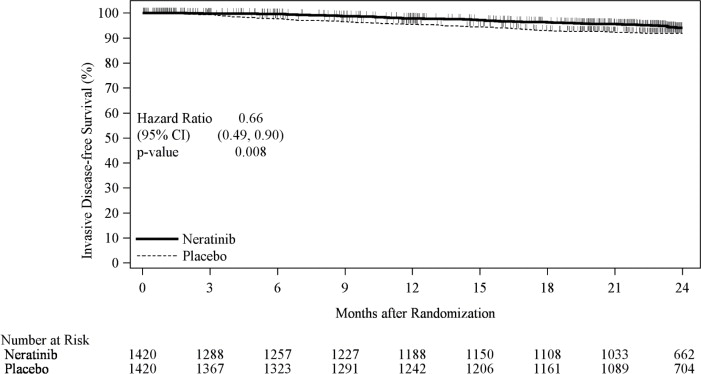
The data described below reflect the safety data of NERLYNX as a single agent in ExteNET, a multicenter, randomized, double-blind, placebo-controlled study of NERLYNX within 2 years after completion of adjuvant treatment with trastuzumab-based therapy in women with HER2-positive early-stage breast cancer. Patients who received NERLYNX in this trial were not required to receive any prophylaxis with antidiarrheal agents to prevent the NERLYNX-related diarrhea. Patients were treated with 240 mg of NERLYNX given orally once daily with food, continuously until disease recurrence or for up to one year. The median duration of treatment was 11.6 months in the NERLYNX arm and 11.8 months in the placebo arm. The median age was 52 years (60% were ≥50 years old, 12% were ≥65 years old); 81% were Caucasian, 3% Black or African American, 14% Asian, and 3% other. A total of 1408 patients were treated with NERLYNX.
NERLYNX dose reduction due to an adverse reaction of any grade occurred in 31% of patients receiving NERLYNX compared to 2.6% of patients receiving placebo. Permanent discontinuation due to any adverse reaction was reported in 28% of NERLYNX-treated patients. The most common adverse reaction leading to discontinuation was diarrhea, accounting for 17% of NERLYNX-treated patients.
The most common adverse reactions (≥5%) were diarrhea, nausea, abdominal pain, fatigue, vomiting, rash, stomatitis, decreased appetite, muscle spasms, dyspepsia, AST or ALT increased, nail disorder, dry skin, abdominal distention, epistaxis, weight decreased, and urinary tract infection. The most frequently reported Grade 3 or 4 adverse reactions were diarrhea, vomiting, nausea, and abdominal pain.
Serious adverse reactions in the NERLYNX arm included diarrhea (1.6%), vomiting (0.9%), dehydration (0.6%), cellulitis (0.4%), renal failure (0.4%), erysipelas (0.4%), ALT (0.3%), AST increased (0.3%), nausea (0.3%), fatigue (0.2%), and abdominal pain (0.2%).
Table 7 summarizes the adverse reactions in ExteNET.
Table 7: Adverse Reactions Reported in ≥2% of NERLYNX-Treated Patients in ExteNET
|
|
|
|
System Organ Class
(Preferred Term)
| NERLYNX
n=1408 | Placebo
n=1408
|
All Grades
(%)
| Grade 3 (%) | Grade 4 (%) | All Grades (%) | Grade 3 (%) | Grade 4 (%) |
| Gastrointestinal Disorders |
| Diarrhea
| 95
| 40
| 0.1
| 35
| 2
| 0
|
| Nausea
| 43
| 2
| 0
| 22
| 0.1
| 0
|
| Abdominal pain
* | 36
| 2
| 0
| 15
| 0.4
| 0
|
| Vomiting
| 26
| 3
| 0
| 8
| 0.4
| 0
|
| Stomatitis
† | 14
| 0.6
| 0
| 6
| 0.1
| 0
|
| Dyspepsia
| 10
| 0.4
| 0
| 4
| 0
| 0
|
| Abdominal distension
| 5
| 0.3
| 0
| 3
| 0
| 0
|
| Dry mouth
| 3
| 0.1
| 0
| 2
| 0
| 0
|
| General Disorders and Administration Site Conditions |
| Fatigue
| 27
| 2
| 0
| 20
| 0.4
| 0
|
| Hepatobiliary Disorders |
| Alanine aminotransferase increased
| 9
| 1
| 0.2
| 3
| 0.2
| 0
|
| Aspartate aminotransferase increased
| 7
| 0.5
| 0.2
| 3
| 0.3
| 0
|
| Infections and Infestations |
| Urinary tract infection
| 5
| 0.1
| 0
| 2
| 0
| 0
|
| Investigations |
| Weight decreased
| 5
| 0.1
| 0
| 0.5
| 0
| 0
|
| Metabolism and Nutrition Disorders |
| Decreased appetite
| 12
| 0.2
| 0
| 3
| 0
| 0
|
| Dehydration
| 4
| 0.9
| 0.1
| 0.4
| 0.1
| 0
|
| Musculoskeletal and Connective Tissue Disorders |
| Muscle spasms
| 11
| 0.1
| 0
| 3
| 0.1
| 0
|
| Respiratory, Thoracic and Mediastinal Disorders |
| Epistaxis
| 5
| 0
| 0
| 1
| 0.1
| 0
|
| Skin and Subcutaneous Tissue Disorders |
| Rash
‡ | 18
| 0.6
| 0
| 9
| 0
| 0
|
| Dry skin
| 6
| 0
| 0
| 2
| 0
| 0
|
| Nail Disorder
§ | 8
| 0.3
| 0
| 2
| 0
| 0
|
| Skin fissures
| 2
| 0.1
| 0
| 0.1
| 0
| 0
|
Advanced or Metastatic Breast Cancer
NALA
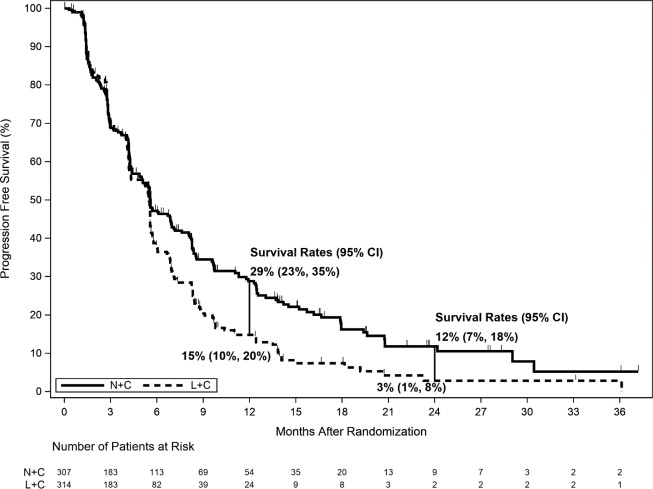
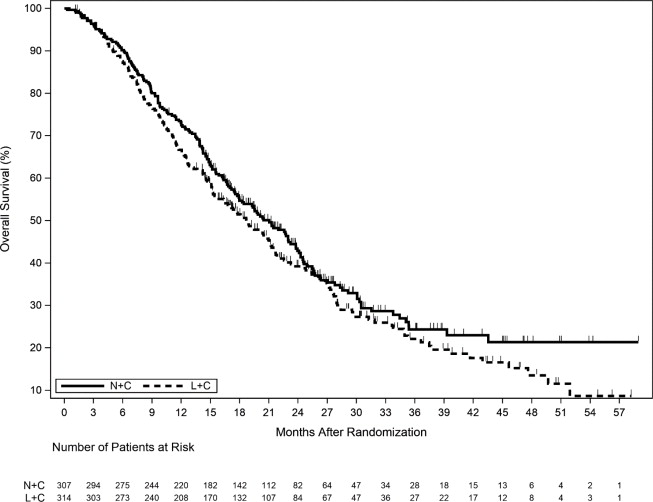
The data described below reflect the safety data of NERLYNX plus capecitabine in NALA, a randomized, multicenter, multinational, open-label, active-controlled study of HER2+ metastatic breast cancer in patients, with or without brain metastases, who have received two or more prior anti HER2-based regimens in the metastatic setting.
Patients were treated with NERLNX 240 mg orally once daily Days 1–21 of a 21-day cycle in combination with capecitabine (750 mg/m
2 given orally twice daily) Days 1–14 of a 21-day cycle, or lapatinib 1250 mg orally once daily Days 1–21 of a 21-day cycle in combination with capecitabine (1000 mg/m
2 given orally twice daily) Days 1–14 of a 21-day cycle until disease progression. The median duration of treatment was 5.7 months in the NERLYNX plus capecitabine arm and 4.4 months in the lapatinib plus capecitabine arm.
NERLYNX dose reduction due to an adverse reaction of any grade occurred in 10% of patients receiving NERLYNX plus capecitabine. Permanent discontinuation due to any adverse reaction was reported in 14% of NERLYNX plus capecitabine treated patients. The most common adverse reactions leading to discontinuation were vomiting (3.6%), diarrhea (2.6%), nausea (2.6%), and palmar-plantar erythrodysaesthesia syndrome (2.3%) of NERLYNX plus capecitabine-treated patients.
The most common adverse reactions of any grade (≥5%) in the NERLYNX plus capecitabine arm were diarrhea, nausea, vomiting, decreased appetite, constipation, fatigue/asthenia, weight decreased, dizziness, back pain, arthralgia, urinary tract infection, upper respiratory tract infection, abdominal distention, renal impairment, and muscle spasms. The most frequently reported Grade 3 or 4 adverse reactions were diarrhea, nausea, vomiting, fatigue, and decreased appetite.
Serious adverse reactions ≥2% in the NERLYNX plus capecitabine arm included diarrhea (7%), vomiting (3%), nausea (2.3%), and acute kidney injury (2.3%).
Table 8 summarizes the adverse reactions in NALA.
Table 8: Adverse Reactions Reported in ≥2% of NERLYNX-Treated Patients in Combination with Capecitabine in NALA
|
System Organ Class
(Preferred Term)
| NERLYNX + capecitabine
n=303 | Lapatinib + capecitabine
n=311
|
All Grades
(%)
| Grade 3 (%) | Grade 4 (%) | All Grades (%) | Grade 3 (%) | Grade 4 (%) |
| Gastrointestinal Disorders |
| Diarrhea
| 83
| 25
| 0
| 66
| 13
| 0
|
| Nausea
| 53
| 4.3
| 0
| 42
| 2.9
| 0
|
| Vomiting
| 46
| 4
| 0
| 31
| 1.9
| 0
|
| Constipation
| 31
| 1
| 0
| 13
| 0
| 0
|
| Abdominal distension
| 8
| 0.3
| 0
| 3.2
| 0.6
| 0
|
| General Disorders and Administration Site Conditions |
| Fatigue/asthenia
| 45
| 6
| 0
| 40
| 4.5
| 0
|
| Malaise
| 4.3
| 0
| 0
| 2.3
| 0.3
| 0
|
| Influenza like illness
| 4
| 0
| 0
| 1.3
| 0
| 0
|
| Infections and Infestations |
| Urinary tract infection
| 9
| 0.7
| 0
| 4.2
| 0.6
| 0
|
| Upper respiratory tract infection
| 8
| 0.3
| 0
| 4.5
| 0.3
| 0
|
| Investigations |
| Weight decreased
| 20
| 0.3
| 0
| 13
| 0.6
| 0
|
| Metabolism and Nutrition Disorders |
| Decreased appetite
| 35
| 2.6
| 0
| 22
| 2.3
| 0
|
| Musculoskeletal and Connective Tissue Disorders |
| Back Pain
| 10
| 0.3
| 0
| 8
| 0.3
| 0
|
| Arthralgia
| 10
| 0
| 0
| 6
| 1
| 0
|
| Muscle spasms
| 5
| 0
| 0
| 1.9
| 0
| 0
|
| Nervous System Disorder |
| Dizziness
| 14
| 0.3
| 0
| 10
| 0.6
| 0
|
| Renal and urinary disorders |
| Renal impairment*
| 7
| 2
| 0.3
| 1
| 0
| 0.3
|
| Dysuria
| 4.6
| 0
| 0
| 1.9
| 0
| 0
|
Management of Diarrhea
CONTROL
The CONTROL (NCT02400476) study was a multicenter, open-label, multi-cohort trial evaluating patients with early-stage HER2-positive breast cancer treated with NERLYNX 240 mg daily for up to one year receiving loperamide prophylaxis with additional anti-diarrheal treatment as needed or NERLYNX dose escalation with loperamide as needed. All patients in the prophylaxis cohort received loperamide 4 mg loading dose, followed by 4 mg three times a day from days 1-14, followed by 4 mg twice a day on days 15-56, followed by loperamide as needed through 1 year of treatment with NERLYNX
[see Dosage and Administration (
2.1)].
All patients in the dose escalation cohort received NERLYNX 120 mg for Week 1, followed by NERLYNX 160 mg for Week 2, followed by NERLYNX 240 mg for Week 3 and thereafter
[see Dosage and Administration (
2.2)]
.
Table 9 summarizes the diarrhea adverse reactions for NERLYNX with loperamide prophylaxis and NERLYNX dose escalation.
Table 9: Diarrhea in Patients Treated with NERLYNX with Antidiarrheal Prophylaxis or Dose Escalation
| Loperamide Prophylaxis
n=109
| NERLYNX Dose Escalation
n=60 |
| Duration of Treatment, months |
| Median
| 11.8
| 12.0
|
| Range
| 0.1, 12.8
| 0.2, 12.4
|
| Dose Intensity, mg per day |
| Median
| 234
| 230
|
| Range
| 46, 240
| 32, 236
|
| Incidence of Diarrhea, % |
| Any Grade
| 78
| 98
|
| Grade 2
| 25
| 45
|
| Grade 3
| 32
| 13
|
| Action Taken, % |
| Discontinuation due to diarrhea
| 18
| 3.3
|
Certain P-glycoprotein (P-gp) Substrates
Concomitant use of NERLYNX increased concentrations of a P-gp substrate
[see Clinical Pharmacology (
12.3)]
, which may increase the risk of adverse reactions of these substrates. Monitor for adverse reactions of certain P-gp substrates for which minimal concentration changes may lead to serious adverse reactions.
Risk Summary
Based on findings from animal studies and the mechanism of action, NERLYNX can cause fetal harm when administered to a pregnant woman
[see Clinical Pharmacology (
12.1)]
.
There are no available data in pregnant women to inform the drug-associated risk. In animal reproduction studies, administration of neratinib to pregnant rabbits during organogenesis resulted in abortions, embryo-fetal death and fetal abnormalities in rabbits at maternal exposures (AUC) approximately 0.2 times exposures in patients at the recommended dose (
see
Data). Advise pregnant women of the potential risk to a fetus.
The background risk of major birth defects and miscarriage for the indicated population is unknown. However, the background risk of major birth defects is 2%–4% and of miscarriage is 15%–20% of clinically recognized pregnancies in the U.S. general population.
Data
Animal Data
In a fertility and early embryonic development study in female rats, neratinib was administered orally for 15 days before mating to Day 7 of pregnancy, which did not cause embryonic toxicity at doses up to 12 mg/kg/day in the presence of maternal toxicity. A dose of 12 mg/kg/day in rats is approximately 0.5 times the maximum recommended dose of 240 mg/day in patients on a mg/m
2 basis.
In an embryo-fetal development study in rats, pregnant animals received oral doses of neratinib up to 15 mg/kg/day during the period of organogenesis. No effects on embryo-fetal development or survival were observed. Maternal toxicity was evident at 15 mg/kg/day (approximately 0.6 times the AUC in patients receiving the maximum recommended dose of 240 mg/day).
In an embryo-fetal development study in rabbits, pregnant animals received oral doses of neratinib up to 9 mg/kg/day during the period of organogenesis. Administration of neratinib at doses ≥6 mg/kg/day resulted in maternal toxicity, abortions, and embryo-fetal death (increased resorptions). Neratinib administration resulted in increased incidence of fetal gross external (domed head), soft tissue (dilation of the brain ventricles and ventricular septal defect), and skeletal (misshapen anterior fontanelles and enlarged anterior and/or posterior fontanelles) abnormalities at ≥3 mg/kg/day. The AUC
(0-t) at 6 mg/kg/day and 9 mg/kg/day in rabbits were approximately 0.5 and 0.8 times, respectively, the AUCs in patients receiving the maximum recommended dose of 240 mg/day.
In a peri- and postnatal development study in rats, oral administration of neratinib from gestation day 7 until lactation day 20 resulted in maternal toxicity at ≥10 mg/kg/day (approximately 0.4 times the maximum recommended dose of 240 mg/day in patients on a mg/m
2 basis) including decreased body weights, body weight gains, and food consumption. Effects on long-term memory were observed in male offspring at maternal doses ≥5 mg/kg/day (approximately 0.2 times the maximum recommended dose of 240 mg/day in patients on a mg/m
2 basis).
Risk Summary
No data are available regarding the presence of neratinib or its metabolites in human milk or its effects on the breastfed infant or on milk production. Because of the potential for serious adverse reactions in breastfed infants from NERLYNX, advise lactating women not to breastfeed while taking NERLYNX and for at least 1 month after the last dose.
Pregnancy
Based on animal studies, NERLYNX can cause fetal harm when administered to a pregnant woman
[see Use in Specific Populations (
8.1)]
. Females of reproductive potential should have a pregnancy test prior to starting treatment with NERLYNX.
Contraception
Females
Based on animal studies, NERLYNX can cause fetal harm when administered to a pregnant woman
[see Use in Specific Populations (
8.1)]
. Advise females of reproductive potential to use effective contraception during treatment with NERLYNX and for at least 1 month after the last dose.
Males
Based on findings in animal reproduction studies, advise male patients with female partners of reproductive potential to use effective contraception during treatment and for 3 months after the last dose of NERLYNX
[see Use in Specific Populations (
8.1)]
.
Cardiac Electrophysiology
The effect of NERLYNX on the QTc interval was evaluated in a randomized, placebo, and positive-controlled, double-blind, single-dose, crossover study in 60 healthy subjects. At 140% the therapeutic exposures of NERLYNX, there was no clinically relevant effect on the QTc interval.
Absorption
Peak concentrations of neratinib and major active metabolites M3, M6 and M7 are reached in the range of 2 to 8 hours after oral administration.
Effect of Food
A high-fat meal (approximately 55% fat, 31% carbohydrate, and 14% protein) increased neratinib C
max and AUC
inf by 70% (90% CI: 1.1–2.7) and 120% (90% CI: 1.4–3.5), respectively, in healthy subjects compared to fasting conditions. A standard breakfast (approximately 50% carbohydrate, 35% fat, and 15% protein) increased the C
max and AUC
inf by 20% (90% CI: 0.97–1.42) and 10% (90% CI: 1.02–1.24), respectively, in healthy subjects
[see Dosage and Administration (
2.2)]
.
Distribution
The mean (%CV) apparent volume of distribution at steady state (V
ss/F) was 6433 (19%) L in patients. In vitro protein binding of neratinib was greater than 99%, predominantly to serum albumin and alpha-1 acid glycoprotein, and was independent of concentration.
Elimination
The mean (%CV) plasma half-life of neratinib, M3, M6, and M7 was 14.6 (38%), 21.6 (77%), 13.8 (50%) and 10.4 (33%) hours, respectively, in healthy subjects. The mean elimination half-life of neratinib ranged from 7 to 17 hours following a single oral dose in patients. The mean (%CV) CL/F after first dose and at steady state (day 21) were 216 (34%) and 281 (40%) L/hour, respectively, in patients.
Metabolism
Neratinib is metabolized primarily in the liver by CYP3A4 and to a lesser extent by flavin-containing monooxygenase (FMO).
Neratinib represents the most prominent component in plasma. The systemic exposures (AUC) of the active metabolites M3, M6, M7 and M11 were 15%, 33%, 22%, and 4% of the systemic neratinib exposure, respectively, at steady state in healthy subjects.
Excretion
After oral administration of radiolabeled neratinib 200 mg (0.83 times of maximum approved recommended dosage), fecal excretion accounted for approximately 97% and urinary excretion accounted for 1.1% of the total dose. Sixty-one percent of the excreted radioactivity was recovered within 96 hours and 98% was recovered after 10 days.
Specific Populations
Age, sex, race, and renal function do not have a clinically significant effect on neratinib pharmacokinetics.
Patients With Hepatic Impairment
Neratinib exposures in patients with mild (Child Pugh A) and moderate hepatic impairment (Child Pugh B) were similar to that in healthy subjects with normal hepatic fuction. Neratinib C
max and AUC increased by 173% and 181%, respectively, in patients with severe hepatic impairment (Child Pugh C) as compared to subjects with normal hepatic function
[see Dosage and Administration (
2.4) and Use in Specific Populations (
8.6)]
.
Drug Interaction Studies
Clinical Studies and Model-Informed Approaches
Gastric Acid Reducing Agents: Concomitant use with lansoprazole (proton pump inhibitor) decreased neratinib C
max by 71% and AUC by 65%. When NERLYNX was administered 2 hours after ranitidine (H
2 receptor antagonist), the neratinib C
max was reduced by 57% and AUC by 48%. When NERLYNX was administered 2 hours prior to ranitidine, neratinib C
max was reduced by 44% and AUC by 32%
[see Dosage and Administration (
2.5) and Drug Interactions (
7.1)]
.
Strong CYP3A4 Inhibitors: Concomitant use of ketoconazole (strong inhibitor of CYP3A4 and P-gp inhibitor) increased neratinib C
max by 221% and AUC by 381%
[see Drug Interactions (
7.1)]
.
P-gp and moderate CYP3A4 Dual Inhibitors: Verapamil (moderate CYP3A4 and P-gp dual inhibitor) increased the C
max and AUC of neratinib by 203% and 299%, respectively
[see Drug Interactions (
7.1)]
.
Moderate CYP3A4 Inhibitors: Fluconazole (moderate CYP3A4 inhibitor) increased the C
max and AUC of neratinib by 30% and 68%, respectively.
Strong and Moderate CYP3A4 Inducers: Concomitant use of rifampin (strong CYP3A4 inducer) decreased neratinib C
max by 76% and AUC by 87%. The AUC of active metabolites M6 and M7 were also reduced by 37–49% when compared to NERLYNX administered alone. Efavirenz (moderate CYP3A4 inducer) decreased the C
max of neratinib by 36% and AUC by 52%
[see Drug Interactions (
7.1)]
.
Effect of NERLYNX on P-gp Transporters: Concomitant use of NERLYNX increased the mean digoxin (P-gp substrate) C
max by 54% and AUC by 32%
[see Drug Interactions (
7.2)]
.