Other
Increased Mortality in Elderly Patients with Dementia-Related Psychosis
Elderly patients with dementia-related psychosis treated with antipsychotic drugs are at an increased risk of death. REXULTI is not approved for the treatment of patients with dementia-related psychosis without agitation associated with dementia due to Alzheimer's disease [see Warnings and Precautions (5.1)] .
Suicidal Thoughts and Behaviors
Antidepressants increased the risk of suicidal thoughts and behaviors in pediatric patients and young adult patients in short-term studies. Closely monitor all antidepressant-treated patients for clinical worsening, and for emergence of suicidal thoughts and behaviors [see Warnings and Precautions (5.2)] . The safety and effectiveness of REXULTI have not been established in pediatric patients with MDD [see Warnings and Precautions (5.2), Use in Specific Populations (8.4)] .
Administer REXULTI orally, once daily with or without food [see Clinical Pharmacology (12.3)]
Adults
The recommended starting REXULTI dosage for the treatment of schizophrenia in adults is 1 mg orally once daily on Days 1 to 4. Titrate to 2 mg once daily on Day 5 through Day 7. On Day 8, the dosage can be increased to the maximum recommended daily dosage of 4 mg based on clinical response and tolerability. The recommended target dosage is 2 mg to 4 mg once daily.
Pediatric Patients (13 to 17 years of age)
The recommended starting REXULTI dosage for the treatment of schizophrenia in pediatric patients 13 to 17 years of age is 0.5 mg orally once daily on Days 1 to 4. On Days 5 through 7, titrate to 1 mg per day and on Day 8 titrate to 2 mg based on clinical response and tolerability. Weekly dose increases can be made in 1 mg increments. A recommended target dosage is 2 to 4 mg once daily. The maximum recommended daily dosage is 4 mg.
Hyperglycemia/Diabetes Mellitus
Hyperglycemia and diabetes mellitus, in some cases extreme and associated with diabetic ketoacidosis hyperosmolar coma or death, have been reported in patients treated with atypical antipsychotics. There have been reports of hyperglycemia in patients treated with REXULTI. Assess fasting plasma glucose before or soon after initiation of antipsychotic medication and monitor periodically during long-term treatment.
Adjunctive Treatment of Major Depressive Disorder
In the 6-week placebo-controlled, fixed-dose clinical studies in adult patients with MDD, the proportions of patients with shifts in fasting glucose from normal (<100 mg/dL) to high (≥126 mg/dL) and borderline (≥100 and <126 mg/dL) to high were similar in patients treated with REXULTI and placebo. In the long-term, open-label depression studies, 5% of adult patients with normal baseline fasting glucose experienced a shift to high while taking REXULTI plus an antidepressant (ADT); 25% of patients with borderline fasting glucose experienced shifts to high. Combined, 9% of patients with normal or borderline fasting glucose experienced shifts to high fasting glucose during the long-term depression studies.
Schizophrenia (Adults)
In the 6-week placebo-controlled, fixed-dose clinical studies in adult patients with schizophrenia, the proportions of patients with shifts in fasting glucose from normal (<100 mg/dL) to high (≥126 mg/dL) or borderline (≥100 and <126 mg/dL) to high were similar in patients treated with REXULTI and placebo. In the long-term, open-label schizophrenia studies, 8% of adult patients with normal baseline fasting glucose experienced a shift from normal to high while taking REXULTI; 17% of patients with borderline fasting glucose experienced shifts from borderline to high. Combined, 10% of patients with normal or borderline fasting glucose experienced shifts to high fasting glucose during the long-term schizophrenia studies.
Schizophrenia Pediatric Patients (13 to 17 years of age)
In a 6-week, placebo-controlled study in pediatric patients with schizophrenia, the proportion of patients with shifts in fasting glucose from normal (<100 mg/dL) to high (≥126 mg/dL) or borderline (≥100 and <126 mg/dL) to high were similar in patients treated with REXULTI and placebo. In this study, 1.1% of pediatric patients with normal baseline fasting glucose experienced a shift from normal (<100 mg/dL) to high (≥126 mg/dL) while taking REXULTI.
In the long-term, open-label study in pediatric patients with schizophrenia, 2.7% of pediatric patients with normal baseline fasting glucose experienced a shift from normal (<100 mg/dL) to high (≥126 mg/dL) while taking REXULTI.
Agitation Associated with Dementia Due to Alzheimer's Disease
In the 12-week placebo-controlled, fixed-dose studies in patients (51 to 90 years of age) with agitation associated with dementia due to Alzheimer's disease, the proportions of patients with shifts in fasting glucose from normal (<100 mg/dL) to high (≥126 mg/dL) or impaired (≥100 and <126 mg/dL) to high were similar in patients treated with REXULTI (14%) and patients treated with placebo (16%).
Of the patients who were previously treated with REXULTI for 12-weeks and continued into a 12-week, active-treatment extension study, 15% of patients with normal baseline fasting glucose experienced a shift from normal (<100 mg/dL) to high (≥126 mg/dL) fasting glucose while taking REXULTI; 30% of patients with impaired fasting glucose experienced shifts from impaired fasting glucose (≥100 and <126 mg/dL) to high fasting glucose. Combined, 20% of patients with normal or impaired fasting glucose experienced shifts to high fasting glucose.
Dyslipidemia
Atypical antipsychotics cause adverse alterations in lipids. Before or soon after initiation of antipsychotic medication, obtain a fasting lipid profile at baseline and monitor periodically during treatment.
Adjunctive Treatment of Major Depressive Disorder
In the 6-week placebo-controlled, fixed-dose clinical studies in adult patients with MDD, changes in fasting total cholesterol, LDL cholesterol, and HDL cholesterol were similar in REXULTI- and placebo-treated patients. Table 3 shows the proportions of patients with changes in fasting triglycerides.
| Proportion of Patients with Shifts Baseline to Post-Baseline | ||||
|---|---|---|---|---|
| Triglycerides | Placebo | 1 mg/day | 2 mg/day | 3 mg/day |
| Normal to High (<150 mg/dL to ≥200 and <500 mg/dL) | 6%
(15/257) denotes n/N where N=the total number of patients who had a measurement at baseline and at least one post-baseline result;n=the number of patients with shift | 5%
(7/145) | 13%
(15/115) | 9%
(13/150) |
| Normal/Borderline to Very High (<200 mg/dL to ≥500 mg/dL) | 0%
(0/309) | 0%
(0/177) | 0.7%
(1/143) | 0%
(0/179) |
In the long-term, open-label depression studies, shifts in baseline fasting cholesterol from normal to high were reported in 9% (total cholesterol), 3% (LDL cholesterol), and shifts in baseline from normal to low were reported in 14% (HDL cholesterol) of patients taking REXULTI. Of patients with normal baseline triglycerides, 17% experienced shifts to high, and 0.2% experienced shifts to very high. Combined, 0.6% of patients with normal or borderline fasting triglycerides experienced shifts to very high fasting triglycerides during the long-term depression studies.
Schizophrenia (Adults)
In the 6-week placebo-controlled, fixed-dose clinical studies in adult patients with schizophrenia, changes in fasting total cholesterol, LDL cholesterol, and HDL cholesterol were similar in REXULTI- and placebo-treated patients. Table 4 shows the proportions of patients with changes in fasting triglycerides.
| Proportion of Patients with Shifts Baseline to Post-Baseline | ||||
|---|---|---|---|---|
| Triglycerides | Placebo | 1 mg/day | 2 mg/day | 4 mg/day |
| Normal to High (<150 mg/dL to ≥200 and <500 mg/dL) | 6%
(15/253) denotes n/N where N=the total number of patients who had a measurement at baseline and at least one post-baseline result;n=the number of patients with shift | 10%
(7/72) | 8%
(19/232) | 10%
(22/226) |
| Normal/Borderline to Very High (<200 mg/dL to ≥500 mg/dL) | 0%
(0/303) | 0%
(0/94) | 0%
(0/283) | 0.4%
(1/283) |
In the long-term, open-label schizophrenia studies in adult patients, shifts in baseline fasting cholesterol from normal to high were reported in 6% (total cholesterol), 2% (LDL cholesterol), and shifts in baseline from normal to low were reported in 17% (HDL cholesterol) of patients taking REXULTI. Of patients with normal baseline triglycerides, 13% experienced shifts to high, and 0.4% experienced shifts to very high triglycerides. Combined, 0.6% of patients with normal or borderline fasting triglycerides experienced shifts to very high fasting triglycerides during the long-term schizophrenia studies.
Schizophrenia [Pediatric Patients (13 to 17 years of age)]
The safety and efficacy of REXULTI have not been established in patients under the age of 13 years. In a 6-week, placebo-controlled study in pediatric patients with schizophrenia, no clinically meaningful changes in fasting cholesterol, LDL cholesterol, HDL cholesterol, and triglycerides were observed between the REXULTI and placebo groups.
In the long-term, open-label study in pediatric patients with schizophrenia, shifts in baseline fasting total cholesterol from normal to high (<170 to ≥200 mg/dL) were reported in 7% of patients taking REXULTI, and shifts in baseline HDL cholesterol from normal to low (>45 to <40 mg/dL) were reported in 10%% of patients taking REXULTI. Of patients with normal baseline triglycerides, 15% experienced shifts from normal to high (<90 to ≥130 mg/dL).
Agitation Associated with Dementia Due to Alzheimer's Disease
In the 12-week placebo-controlled, fixed-dose clinical studies in patients (55 to 90 years of age) with agitation associated with dementia due to Alzheimer's disease, changes in total cholesterol, LDL cholesterol, and HDL cholesterol were similar in REXULTI- and placebo-treated patients.
Table 5 shows the proportions of patients with changes in fasting triglycerides in REXULTI- and placebo-treated patients.
| Proportion of Patients with Shifts Baseline to Post-Baseline | ||||
|---|---|---|---|---|
| Triglycerides | Placebo | 1 mg/day | 2 mg/day | 3 mg/day |
| Normal to High (<150 and 200 to <500 mg/dL) | 6%
(10/157) denotes n/N where N=the total number of patients who had a measurement at baseline and at least one post-baseline result;n=the number of patients with shift | 9%
(9/99) | 13%
(17/133) | 6%
(6/94) |
| Borderline to High (150 and <200mg/dL to 200 and <500 mg/dL) | 12%
(3/26) | 33%
(2/6) | 28%
(7/25) | 26%
(6/23) |
| Normal/Borderline to High (<200 mg/dL to 200 and <500 mg/dL) | 7%
(13/183) | 11%
(11/105) | 15%
(24/158) | 10%
(12/117) |
Of the patients who were previously treated with REXULTI for 12 weeks and continued into a 12-week, active-treatment extension study, 9% of patients taking REXULTI showed shifts in baseline fasting total cholesterol from normal (<200 mg/dL) to high (≥240 mg/dL), and 16% of patients taking REXULTI showed shifts in baseline HDL cholesterol from normal to low (≥40 to <40 mg/dL). Of the patients with normal baseline triglycerides, 18% experienced shifts from normal (<150 mg/dL) to high (200 to <500 mg/dL).
Weight Gain
Weight gain has been observed in patients treated with atypical antipsychotics, including REXULTI. Monitor weight at baseline and frequently thereafter.
Adjunctive Treatment of Major Depressive Disorder: Table 6 shows weight gain data at last visit and percentage of adult patients with ≥7% increase in body weight at endpoint from the 6-week placebo-controlled, fixed-dose clinical studies in patients with MDD.
| Placebo | 1 mg/day | 2 mg/day | 3 mg/day | |
|---|---|---|---|---|
| n=407 | n=225 | n=187 | n=228 | |
| Mean Change from Baseline (kg) at Last Visit | ||||
| All Patients | +0.3 | +1.3 | +1.6 | +1.6 |
| Proportion of Patients with a ≥7% Increase in Body Weight (kg) at Any Visit (n/N
N=the total number of patients who had a measurement at baseline and at least one post-baseline result;n=the number of patients with a shift ≥7% ) | ||||
| 2% | 5% | 5% | 2% | |
| (8/407)
| (11/225)
| (9/187)
| (5/228)
| |
In the long-term, open-label depression studies, 4% of patients discontinued due to weight increase. REXULTI was associated with mean change from baseline in weight of 2.9 kg at Week 26 and 3.1 kg at Week 52. In the long-term, open-label depression studies, 30% of patients demonstrated a ≥7% increase in body weight, and 4% demonstrated a ≥7% decrease in body weight.
Schizophrenia(Adults)
Table 7 shows weight gain data at last visit and percentage of adult patients with ≥7% increase in body weight at endpoint from the 6-week placebo-controlled, fixed-dose clinical studies in adult patients with schizophrenia.
| Placebo | 1 mg/day | 2 mg/day | 4 mg/day | |
|---|---|---|---|---|
| n=362 | n=120 | n=362 | n=362 | |
| Mean Change from Baseline (kg) at Last Visit | ||||
| All Patients | +0.2 | +1.0 | +1.2 | +1.2 |
| Proportion of Patients with a ≥7% Increase in Body Weight (kg) at Any Visit (
denotes n/N where N=the total number of patients who had a measurement at baseline and at least one post-baseline result;n=the number of patients with a shift ≥7% n/N) | ||||
| 4% | 10% | 11% | 10% | |
| (15/362)
| (12/120)
| (38/362)
| (37/362)
| |
In the long-term, open-label schizophrenia studies in adult patients, 0.6% of patients discontinued due to weight increase. REXULTI was associated with mean change from baseline in weight of 1.3 kg at Week 26 and 2.0 kg at Week 52. In the long-term, open label schizophrenia studies, 20% of patients demonstrated a ≥7% increase in body weight, and 10% demonstrated a ≥7% decrease in body weight.
Schizophrenia [Pediatric Patients (13 to 17 years of age)]
In a 6-week, placebo-controlled study in pediatric patients with schizophrenia, no patients discontinued due to weight increase. The mean increase in weight from baseline to last visit was 0.8 kg in the REXULTI group and no changes were seen in the placebo groups. The percentage of pediatric patients demonstrating a ≥7% increase in body weight was 8.2% in the REXULTI group and 4.9% in the placebo group.
In the long-term, open label study in pediatric patients with schizophrenia, 0.5% of patients discontinued due to weight increase. The mean increase in weight from the open-label study baseline to last visit was 3.8 kg. To adjust for normal growth, z-scores were derived (measured in standard deviations [SD]), which normalize for natural growth of children and adolescents by comparisons to age- and gender- matched population standards. A z-score change <0.5 SD is considered not clinically significant. In this study, the mean change in z-score from open-label baseline to last visit was 0.10 SD for body weight, while 20% of patients had an increase in age-and-gender-adjusted body weight z-score of at least 0.5 SD from baseline. When treating pediatric, weight gain should be monitored and assessed against that expected for normal growth.
Agitation Associated with Dementia Due to Alzheimer's Disease
In the 12-week placebo-controlled, fixed-dose clinical studies in patients (51 to 90 years of age) with agitation associated with dementia due to Alzheimer's disease, the proportion of the patients with a ≥7% increase in body weight (kg) at any visit were 2% in REXULTI compared to 0% in placebo group.
In patients who were previously treated with REXULTI for 12 weeks and who continued into a 12-week, active-treatment extension study, there was no mean change in weight (kg) from baseline to last visit in association with REXULTI. In this extension study, 4% of patients demonstrated ≥7% increase in body weight, and 5% demonstrated a ≥7% decrease in body weight from baseline to last visit.
Adjunctive Treatment in Major Depressive Disorder (MDD)
The safety of REXULTI was evaluated in 1054 adult patients (18 to 65 years of age) diagnosed with MDD who participated in two 6-week placebo-controlled, fixed-dose clinical studies in patients with major depressive disorder in which REXULTI was administered at doses of 1 mg to 3 mg daily as adjunctive treatment to continued antidepressant therapy; patients in the placebo group continued to receive antidepressant therapy [see Clinical Studies (14.1)] .
Adverse Reactions Reported as Reasons for Discontinuation of Treatment
A total of 3% (17/643) of REXULTI-treated patients and 1% (3/411) of placebo-treated patients discontinued due to adverse reactions.
Adverse Reactions in REXULTI Studies for Adjunctive MDD in Adults
Adverse reactions associated with the adjunctive use of REXULTI (incidence of 2% or greater and adjunctive REXULTI incidence greater than adjunctive placebo) that occurred during acute therapy (up to 6-weeks in patients with MDD) are shown in Table 8.
| Placebo
(N=411) % | REXULTI | ||||
|---|---|---|---|---|---|
| 1 mg/day
(N=226) % | 2 mg/day
(N=188) % | 3 mg/day
(N=229) % | All REXULTI
(N=643) % | ||
| Gastrointestinal Disorders | |||||
| Constipation | 1 | 3 | 2 | 1 | 2 |
| General Disorders and Administration Site Conditions | |||||
| Fatigue | 2 | 3 | 2 | 5 | 3 |
| Infections and Infestations | |||||
| Nasopharyngitis | 2 | 7 | 1 | 3 | 4 |
| Investigations | |||||
| Weight Increased | 2 | 7 | 8 | 6 | 7 |
| Blood Cortisol Decreased | 1 | 4 | 0 | 3 | 2 |
| Metabolism and Nutrition | |||||
| Increased Appetite | 2 | 3 | 3 | 2 | 3 |
| Nervous System Disorders | |||||
| Akathisia | 2 | 4 | 7 | 14 | 9 |
| Headache | 6 | 9 | 4 | 6 | 7 |
| Somnolence | 0.5 | 4 | 4 | 6 | 5 |
| Tremor | 2 | 4 | 2 | 5 | 4 |
| Dizziness | 1 | 1 | 5 | 2 | 3 |
| Psychiatric Disorders | |||||
| Anxiety | 1 | 2 | 4 | 4 | 3 |
| Restlessness | 0 | 2 | 3 | 4 | 3 |
Dose-Related Adverse Reactions in the Adjunctive MDD Studies
In Studies 1 and 2, among the adverse reactions that occurred at ≥2% incidence in the patients treated with REXULTI plus ADT, the incidences of akathisia and restlessness increased with increases in dose.
Schizophrenia
Adults
The safety of REXULTI was evaluated in 852 adult patients (18 to 65 years of age) diagnosed with schizophrenia who participated in two 6-week placebo-controlled, fixed-dose clinical studies in which REXULTI was administered at daily doses of 1 mg, 2 mg, and 4 mg [see Clinical Studies (14.2)].
Adverse Reactions Occurring at an Incidence of 2% or More in Patients Treated with REXULTI for Schizophrenia
Adverse reactions associated with REXULTI (incidence of 2% or greater and REXULTI incidence greater than placebo) during short-term (up to 6 weeks) studies in adult patients with schizophrenia are shown in Table 9.
| Placebo
(N=368) % | REXULTI | ||||
|---|---|---|---|---|---|
| 1 mg/day
(N=120) % | 2 mg/day
(N=368) % | 4 mg/day
(N=364) % | ALL REXULTI
(N=852) % | ||
| Gastrointestinal Disorders | |||||
| Dyspepsia | 2 | 6 | 2 | 3 | 3 |
| Diarrhea | 2 | 1 | 3 | 3 | 3 |
| Investigations | |||||
| Weight Increased | 2 | 3 | 4 | 4 | 4 |
| Blood Creatinine Phosphokinase Increased | 1 | 4 | 2 | 2 | 2 |
| Nervous System Disorders | |||||
| Akathisia | 5 | 4 | 5 | 7 | 6 |
| Tremor | 1 | 2 | 2 | 3 | 3 |
| Sedation | 1 | 2 | 2 | 3 | 2 |
Pediatric Patients (13 to 17 years of age)]
The safety of REXULTI was evaluated in 110 pediatric patients (13 to 17 years of age) diagnosed with schizophrenia who participated in a 6-week, placebo-controlled, clinical study in which REXULTI was administered at daily doses of 2 mg to 4 mg [see Clinical Studies (14.2)].
Adverse Reactions Occurring at an Incidence of 2% or More in Pediatric Patients (13 to 17 years of age) Treated with REXULTI for Schizophrenia
Adverse reactions associated with REXULTI (incidence of 2% or greater and REXULTI incidence greater than placebo) during short-term (up to 6 weeks) study in pediatric patients with schizophrenia are shown in Table 10.
| Placebo
(N=104) % | REXULTI
(N=110) % | |
|---|---|---|
| Gastrointestinal Disorders | ||
| Nausea | 4 | 6 |
| Nervous System Disorders | ||
| Akathisia | 3 | 4 |
| Extrapyramidal Symptoms
Extrapyramidal Symptoms includes: blepharospasm, dystonia, extrapyramidal disorder, eye movement disorder, hypokinesia, muscle rigidity, musculoskeletal stiffness, psychomotor hyperactivity, tremor | 3 | 6 |
| Headache | 5 | 6 |
Agitation Associated with Dementia Due to Alzheimer's Disease
The safety of REXULTI was evaluated in 503 patients (51 to 90 years of age), with a probable diagnosis of agitation associated with dementia due to Alzheimer's disease, who participated in two 12-week placebo-controlled, fixed-dose clinical studies in which REXULTI was administered at daily doses of 2 mg to 3 mg [see Clinical Studies (14.3)].
Discontinuation of Treatment Due to Adverse Reactions
In two 12-week placebo-controlled, fixed-dose, clinical studies, a total of 5.6% (28/503) of patients treated with REXULTI and 4.8% (12/251) of patients treated with placebo discontinued due to adverse reactions.
Adverse Reactions Occurring at an Incidence of 2% or More in Patients Treated with REXULTI for Agitation Associated with Dementia Due to Alzheimer's Disease
Adverse reactions associated with REXULTI (incidence ≥2% and greater than placebo) during the 12-week fixed-dose clinical studies in geriatric patients for treatment of agitation associated with dementia due to Alzheimer's disease are shown in Table 11.
| Placebo
(N=251) % | REXULTI | ||||
|---|---|---|---|---|---|
| 1 mg/day
1 mg once day REXULTI dosage is not a recommended dosage for the treatment of agitation associated with dementia due to Alzheimer's disease [see Dosage and Administration (2.4)] . (N=137) % | 2 mg/day
(N=213) % | 3 mg/day
(N=153) % | ALL REXULTI
(N=503) % | ||
| Infections and Infestations | |||||
| Nasopharyngitis | 2 | 4 | 2 | 3 | 3 |
| Urinary Tract Infection | 1 | 2 | 3 | 3 | 3 |
| Nervous System Disorders | |||||
| Dizziness
Dizziness and Vertigo are grouped to Dizziness | 2 | 1 | 5 | 3 | 3 |
| Headache | 8 | 9 | 9 | 7 | 8 |
| Somnolence
Sedation and somnolence are grouped to somnolence. | 1 | 2 | 3 | 4 | 3 |
| Psychiatric Disorders | |||||
| Insomnia
Initial insomnia and insomnia are grouped to insomnia | 3 | 5 | 5 | 2 | 4 |
Extrapyramidal Symptoms
Adjunctive Treatment of Major Depressive Disorder
The incidence of reported extrapyramidal symptoms (EPS)-related adverse reactions, excluding akathisia, was 6% for REXULTI plus ADT-treated patients versus 3% for placebo plus ADT-treated patients. The incidence of akathisia events for REXULTI plus ADT-treated patients was 9% versus 2% for placebo plus ADT-treated patients.
In the 6-week placebo-controlled MDD studies, data was objectively collected on the Simpson-Angus Rating Scale (SAS) for EPS, the Barnes Akathisia Rating Scale (BARS) for akathisia and the Abnormal Involuntary Movement Score (AIMS) for dyskinesia. The mean change from baseline at last visit for REXULTI plus ADT-treated patients for the SAS, BARS and AIMS was comparable to placebo-treated patients. The percentage of patients who shifted from normal to abnormal was greater in REXULTI plus ADT-treated patients versus placebo plus ADT-treated patients for the BARS (4% versus 0.6%) and the SAS (4% versus 3%).
Schizophrenia(Adults)
The incidence of reported EPS-related adverse reactions, excluding akathisia, was 5% for REXULTI-treated adult patients versus 4% for placebo-treated patients. The incidence of akathisia events for REXULTI-treated adult patients was 6% versus 5% for placebo-treated patients.
In the 6-week placebo-controlled, fixed-dose schizophrenia studies in adults, data was objectively collected on the Simpson-Angus Rating Scale (SAS) for EPS, the Barnes Akathisia Rating Scale (BARS) for akathisia and the Abnormal Involuntary Movement Scale (AIMS) for dyskinesia. The mean change from baseline at last visit for REXULTI-treated patients for the SAS, BARS and AIMS was comparable to placebo-treated patients. The percentage of patients who shifted from normal to abnormal was greater in REXULTI-treated patients versus placebo for the BARS (2% versus 1%) and the SAS (7% versus 5%).
Schizophrenia [Pediatric Patients (13 to 17 years of age)]
The incidence of reported EPS-related adverse reactions, excluding akathisia, was 6.4% for REXULTI-treated pediatric patients versus 2.9% for placebo-treated patients. The incidence of akathisia events for REXULTI-treated pediatric patients was 3.6% versus 2.9% for placebo-treated patients.
In the 6-week placebo-and active controlled, schizophrenia study in pediatric patients, data was objectively collected on the Simpson-Angus Rating Scale (SAS) for EPS, the Barnes Akathisia Rating Scale (BARS) for akathisia and the Abnormal Involuntary Movement Scale (AIMS) for dyskinesia. The mean change from baseline at last visit for REXULTI-treated pediatric patients for the SAS, BARS and AIMS was comparable to placebo-treated patients. The percentage of patients who shifted from normal to abnormal was greater in REXULTI-treated patients versus placebo for the BARS (0.9% versus 0%) and the SAS (5.5% versus 2.9%).
Agitation Associated with Dementia Due to Alzheimer's Disease
The incidence of reported EPS-related adverse reactions, excluding akathisia, was 3% for REXULTI-treated patients versus 2% for placebo-treated patients. The incidence of akathisia events for REXULTI-treated patients was 1% versus 0% for placebo-treated patients.
In the 12-week placebo-controlled, fixed-dose studies in agitation associated with dementia due to Alzheimer's disease, data was objectively collected on the Simpson-Angus Rating Scale (SAS) for EPS, the Barnes Akathisia Rating Scale (BARS) for akathisia and the Abnormal Involuntary Movement Scale (AIMS) for dyskinesia. The mean change from baseline at last visit for REXULTI-treated patients for the SAS, BARS and AIMS was comparable to placebo-treated patients. The percentage of patients who shifted from normal to abnormal was greater in REXULTI-treated patients versus placebo for the SAS (6% versus 2%).
Dystonia
Symptoms of dystonia may occur in susceptible individuals during the first few days of treatment. Dystonic symptoms include spasm of the neck muscles, sometimes progressing to tightness of the throat, swallowing difficulty, difficulty breathing, and/or protrusion of the tongue. While these symptoms can occur at low doses, they occur more frequently and with greater severity with high potency and at higher doses of first-generation antipsychotic drugs. An elevated risk of acute dystonia is observed in males and younger age groups.
Other Adverse Reactions Observed during Clinical Trial Evaluation of REXULTI
Other adverse reactions (≥1% frequency and greater than placebo) within the short-term, placebo-controlled trials in adult patients with MDD and schizophrenia are shown below. The following listing does not include adverse reactions: 1) already listed in previous tables or elsewhere in the labeling, 2) for which a drug cause was remote, 3) which were so general as to be uninformative, 4) which were not considered to have clinically significant implications, or 5) which occurred at a rate equal to or less than placebo.
Eye Disorders:Vision Blurred
Gastrointestinal Disorders:Nausea, Dry Mouth, Salivary Hypersecretion, Abdominal Pain, Flatulence
Investigations:Blood Prolactin Increased
Musculoskeletal and Connective Tissue Disorders:Myalgia
Psychiatric Disorders:Abnormal Dreams
Skin and Subcutaneous Tissue Disorders:Hyperhidrosis
Pediatric Patients (13 to 17 years of age)
In a short-term, randomized, double-blind, placebo- controlled study in pediatric patients 13 to 17 years of age with schizophrenia, safety was assessed in 110 patients in which 100 received REXULTI for at least 6 weeks. In an on-going, 2 year, open-label study in pediatric patients 13 to 17 years of age with schizophrenia, in which safety was assessed in 194 patients of which 140 received REXULTI for at least 6 months. Adverse reactions reported in clinical studies for this age group were generally similar to those observed in adult patients.
Hyperprolactinemia
In a 6-week, placebo-controlled study in pediatric patients with schizophrenia, a 3.3 ng/mL mean increase (from baseline to last visit) was observed in the REXULTI group (versus a 2.8 ng/mL mean decrease in the placebo group) in females. Additionally, more female subjects in the REXULTI group (28.9%, n=13) compared to the placebo group (4.7%, n=2) had shifts from normal (≤30 ng/mL) prolactin levels at baseline to abnormal (>30 ng/mL) during the course of treatment. In males, overall mean shifts in the REXULTI group were not consistent with an increase in prolactin however, more male subjects in the REXULTI group (21.4%, n=9) compared to the placebo group (7.0%, n=3) had shifts from normal (≤20 ng/mL) prolactin levels at baseline to abnormal (>20 ng/mL) during the course of treatment. One subject in the study experienced TEAE of galactorrhea without elevated prolactin.
Pregnancy Exposure Registry
There is a pregnancy exposure registry that monitors pregnancy outcomes in women exposed to REXULTI during pregnancy. For more information contact the National Pregnancy Registry for Psychiatric Medications at 1-866-961-2388 or visit http://womensmentalhealth.org/clinical-and-research-programs/pregnancyregistry/.
Risk Summary
Adequate and well-controlled studies have not been conducted with REXULTI in pregnant women to inform drug-associated risks. However, neonates whose mothers are exposed to antipsychotic drugs, like REXULTI, during the third trimester of pregnancy are at risk for extrapyramidal and/or withdrawal symptoms. In animal reproduction studies, no teratogenicity was observed with oral administration of brexpiprazole to pregnant rats and rabbits during organogenesis at doses up to 73 and 146 times, respectively, of maximum recommended human dose (MRHD) of 4 mg/day on a mg/m 2basis. However, when pregnant rats were administered brexpiprazole during the period of organogenesis through lactation, the number of perinatal deaths of pups was increased at 73 times the MRHD [see Data] . The background risk of major birth defects and miscarriage for the indicated population(s) is unknown. In the U.S. general population, the estimated background risk of major birth defects and miscarriage in clinically recognized pregnancies is 2 to 4% and 15 to 20%, respectively.
Clinical Considerations
Fetal/Neonatal Adverse Reactions
Extrapyramidal and/or withdrawal symptoms, including agitation, hypertonia, hypotonia, tremor, somnolence, respiratory distress and feeding disorder, have been reported in neonates whose mothers were exposed to antipsychotic drugs during the third trimester of pregnancy. These symptoms have varied in severity. Some neonates recovered within hours or days without specific treatment; others required prolonged hospitalization. Monitor neonates for extrapyramidal and/or withdrawal symptoms and manage symptoms appropriately.
Data
Animal Data
Pregnant rats were treated with oral doses of 3, 10, and 30 mg/kg/day (7.3, 24, and 73 times the MRHD on a mg/m 2basis) of brexpiprazole during the period of organogenesis. Brexpiprazole was not teratogenic and did not cause adverse developmental effects at doses up to 73 times the MRHD.
Pregnant rabbits were treated with oral doses of 10, 30, and 150 mg/kg/day (49, 146, and 730 times the MRHD) of brexpiprazole during the period of organogenesis. Brexpiprazole was not teratogenic and did not cause adverse developmental effects at doses up to 146 times the MRHD. Findings of decreased body weight, retarded ossification, and increased incidences of visceral and skeletal variations were observed in fetuses at 730 times the MRHD, a dose that induced maternal toxicity.
In a study in which pregnant rats were administered oral doses of 3, 10, and 30 mg/kg/day (7.3, 24, and 73 times the MRHD) during the period of organogenesis and through lactation, the number of live-born pups was decreased, and early postnatal deaths increased at a dose 73 times the MRHD. Impaired nursing by dams, and low birth weight and decreased body weight gain in pups were observed at 73 times, but not at 24 times, the MRHD.
Risk Summary
Lactation studies have not been conducted to assess the presence of brexpiprazole in human milk, the effects of brexpiprazole on the breastfed infant, or the effects of brexpiprazole on milk production. Brexpiprazole is present in rat milk. The development and health benefits of breastfeeding should be considered along with the mother's clinical need for REXULTI and any potential adverse effects on the breastfed infant from REXULTI or from the underlying maternal condition.
Schizophrenia
The safety and effectiveness of REXULTI for treatment of schizophrenia have been established in pediatric patients 13 years of age and older. Use of REXULTI in this population is supported by evidence from adequate and well-controlled studies in adults and pediatric patients with schizophrenia, pharmacokinetic data from adults and pediatric patients, and safety data in pediatric patients 13 to 17 years of age [see Warnings and Precautions (5.6), Adverse Reactions (6.1), Clinical Pharmacology (12.3), Clinical Studies (14.2)] .
The safety and effectiveness of REXULTI for the treatment of schizophrenia have not been established in pediatric patients less than 13 years of age.
Major Depressive Disorder
The safety and effectiveness of REXULTI for treatment of major depressive disorder have not been established in pediatric patients. Antidepressants increased the risk of suicidal thoughts and behaviors in pediatric patients [see Boxed Warning, Warnings and Precautions (5.2)] .
Irritability Associated with Autism Spectrum Disorder
The safety and effectiveness of REXULTI for the treatment of irritability associated with autism spectrum disorder have not been established in pediatric patients. Effectiveness was not demonstrated, in an 8-week, double-blind, placebo-controlled, flexible-dose clinical study conducted in 119 REXULTI-treated pediatric patients 5 to 17 years of age with irritability associated with autism spectrum disorder diagnosed by the Diagnostic and Statistical Manual of Mental Disorders, 5 thEdition [DSM-5] criteria. In this study, somnolence (including sedation) occurred at a higher rate than reported in other REXULTI studies evaluating adults and elderly patients (16% in REXULTI-treated pediatric patients versus 5% for placebo). The mean increase in age-and-gender adjusted body weight z-score from baseline to last visit was 0.3 for REXULTI-treated patients versus 0.1 for placebo-treated patients. Increases in age-and-gender adjusted body weight z-score of at least 0.5 SD from baseline was higher in REXULTI-treated patients versus placebo (19% versus 5%).
Of the 119 patients from this study, 95 patients entered the open-label treatment study and received up to 26 weeks of daily treatment with brexpiprazole. During the open-label treatment period, 2% of patients discontinued due to weight increase. In patients previously treated with REXULTI for 8 weeks, the mean increase in weight from the open-label study baseline to last visit was 4.5 kg. and 26% of patients had an increase in age-and-gender-adjusted body weight z-score of at least 0.5 SD from baseline.
Juvenile Animal Studies
Juvenile rats were administered oral doses of brexpiprazole of 3, 10, and 20 mg/kg/day once daily beginning from weaning (postnatal day 21) through adulthood (postnatal day 90), followed by a 4-week recovery (non-dosing) period. Results were similar to those observed in previous repeat‑dose toxicity studies in adolescent (8-week-old) rats. Mortality occurred at the high-dose of 20 mg/kg/day, as well as delayed sexual maturation in males and decreased rearing and motor activity. There was no evidence of neurotoxicity or effects on fertility and reproductive function. Histopathologic changes in reproductive organs and mammary glands occurred at all doses, were related to the pharmacology of brexpiprazole and were comparable to those in adult rats. All findings were at least partially reversible. Juvenile dogs were administered oral doses of brexpiprazole of 1, 3, and 30 mg/kg/day once daily starting at 8 or 9 weeks of age for 26 weeks, followed by an 8-week recovery (non-dosing) period. Decreases in body weight, lethargy, changes in heart rate, and immature male sex organs were observed at 30 mg/kg/day. These findings were at least partially reversible.
Adjunctive Treatment of Major Depressive Disorder (MDD) and Schizophrenia
Of the total number of REXULTI-treated patients in the clinical studies for the adjunctive therapy to antidepressants for MDD and for schizophrenia, 248 (3%) were 65 years of age and older (which included 45 (18%) patients who were 75 years of age and older). Clinical studies of REXULTI in these patients did not include sufficient numbers of patients 65 years of age and older to determine whether they respond differently from younger adult patients. In general, dosage selection for the treatment of MDD or schizophrenia in a geriatric patient should be cautious, usually starting at the low end of the dosing range, reflecting the greater frequency of decreased hepatic, renal, and cardiac function, concomitant diseases, and other drug therapy.
Agitation Associated with Dementia Due to Alzheimer's Disease
The total number of REXULTI-treated patients 65 years of age and older in the clinical studies for agitation associated with dementia due to Alzheimer's disease (Studies 6 and 7) was 448 (86%) including 170 (33%) patients 65 to 74 years of age, 228 (44%) patients 75 to 84 years of age, and 50 (10%) patients 85 years of age and older [see Clinical Studies (14.3)] .
In clinical studies of REXULTI for the treatment of agitation associated with dementia due to Alzheimer's disease did not include sufficient numbers of younger adult patients to determine if patients 65 years of age and older respond differently than younger adult patients.
Cardiac Electrophysiology
At a dose 3 times the MRHD for the treatment of schizophrenia and 4 times the MRHD for adjunctive therapy to antidepressants for the treatment of MDD or agitation associated with dementia due to Alzheimer's disease, REXULTI does not prolong the QTc interval to any clinically relevant extent.
Absorption
After single-dose administration of REXULTI tablets, the peak plasma brexpiprazole concentrations occurred within 4 hours after administration, and the absolute oral bioavailability was 95%. Brexpiprazole steady-state concentrations were attained within 10 to 12 days of dosing.
REXULTI can be administered with or without food. Administration of a 4 mg REXULTI tablet with a standard high-fat meal did not significantly affect the C maxor AUC of brexpiprazole. After single and multiple once daily dose administration, brexpiprazole exposure (C maxand AUC) increased in proportion to the dose administered. In vitrostudies of brexpiprazole did not indicate that brexpiprazole is a substrate of efflux transporters such as MDRI (P-gp) and BCRP.
Distribution
The volume of distribution of brexpiprazole following intravenous administration is high (1.56 ± 0.42 L/kg), indicating extravascular distribution. Brexpiprazole is highly protein bound in plasma (greater than 99%) to serum albumin and α1-acid glycoprotein, and its protein binding is not affected by renal or hepatic impairment. Based on results of in vitrostudies, brexpiprazole protein binding is not affected by warfarin, diazepam, or digitoxin.
Elimination
Metabolism
Based on in vitrometabolism studies of brexpiprazole using recombinant human cytochrome P450 (CYP1A1, 1A2, 2A6, 2B6, 2C8, 2C9, 2C19, 2D6, 2E1, and 3A4), the metabolism of brexpiprazole was shown to be mainly mediated by CYP3A4 and CYP2D6.
In vivobrexpiprazole is metabolized primarily by CYP3A4 and CYP2D6 enzymes. After single- and multiple-dose administrations, brexpiprazole and its major metabolite, DM-3411, were the predominant drug moieties in the systemic circulation. At steady-state, DM-3411 represented 23% to 48% of brexpiprazole exposure (AUC) in plasma. DM-3411 is considered not to contribute to the therapeutic effects of brexpiprazole.
Based on in vitrodata, brexpiprazole showed little to no inhibition of CYP450 isozymes.
Excretion
Following a single oral dose of [ 14C]-labeled brexpiprazole, approximately 25% and 46% of the administered radioactivity was recovered in the urine and feces, respectively. Less than 1% of unchanged brexpiprazole was excreted in the urine, and approximately 14% of the oral dose was recovered unchanged in the feces. Apparent oral clearance of a brexpiprazole oral tablet after once daily administration is 19.8 (±11.4) mL/h/kg. After multiple once-daily administrations of REXULTI, the terminal elimination half-lives of brexpiprazole and its major metabolite, DM-3411, were 91 hours and 86 hours, respectively.
Studies in Specific Populations
Exposure of brexpiprazole in specific populations are summarized in Figure 1. Population pharmacokinetic (PK) analysis indicated exposure of brexpiprazole in patients with moderate renal impairment was higher compared to patients with normal renal function.
Figure 1 The Effect of Intrinsic Factors on Brexpiprazole Pharmacokinetics
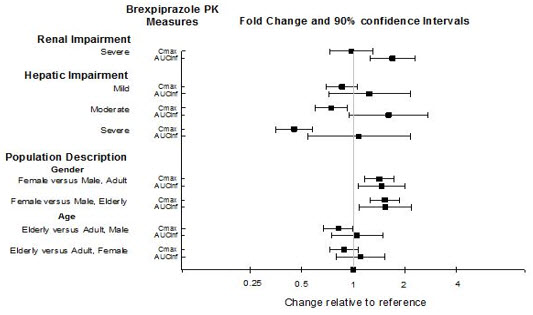
Figure 1 (Rexulti 02)
Pediatric Patients
A multiple dose PK study (0.5, 1, 2, 3 or 4 mg/day) has been conducted in 43 pediatric patients aged 13 years to 17 years old. Population PK analysis indicated systemic exposure (C maxand AUC) of brexpiprazole in pediatric patients (13 to 17 years of age) was comparable to that in adult patients across the dose range from 0.5 to 4 mg.
Drug Interaction Studies
Effect of other drugs on the exposures of brexpiprazole are summarized in Figure 2. Based on simulation, a 5.1-fold increase in AUC values at steady-state is expected when extensive metabolizers of CYP2D6 are administered with both strong CYP2D6 and CYP3A4 inhibitors. A 4.8-fold increase in mean AUC values at steady-state is expected in poor metabolizers of CYP2D6 administered with strong CYP3A4 inhibitors [see Drug Interactions (7.1)].
Figure 2 The Effect of Other Drugs on Brexpiprazole Pharmacokinetics
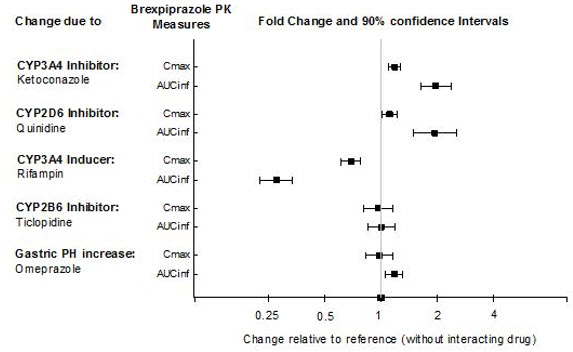
Figure 2 (Rexulti 03)
The effect of REXULTI on the exposures of other drugs are summarized in Figure 3.
Figure 3 The Effect of REXULTI on Pharmacokinetics of Other Drugs
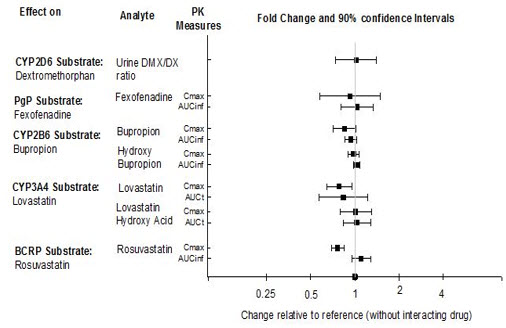
Figure 3 (Rexulti 04)
Carcinogenesis
Lifetime carcinogenicity studies were conducted in ICR mice and Sprague Dawley rats. Brexpiprazole was administered orally for two years to male and female mice at doses of 0.75, 2, and 5 mg/kg/day (0.9 to 6.1 times the oral MRHD of 4 mg/day based on mg/m 2body surface area) and to male and female rats at doses of 1, 3, and 10 mg/kg and 3, 10, and 30 mg/kg/day, respectively (2.4 to 24 and 7.3 to 73 times the oral MRHD, males and females). In female mice, the incidence of mammary gland adenocarcinoma was increased at all doses, and the incidence of adenosquamous carcinoma was increased at 2.4 and 6.1 times the MRHD. No increase in the incidence of tumors was observed in male mice. In the rat study, brexpiprazole was not carcinogenic in either sex at doses up to 73 times the MRHD.
Proliferative and/or neoplastic changes in the mammary and pituitary glands of rodents have been observed following chronic administration of antipsychotic drugs and are considered to be prolactin mediated. The potential for increasing serum prolactin level of brexpiprazole was shown in both mice and rats. The relevance for human risk of the findings of prolactin-mediated endocrine tumors in rodents is unknown.
Mutagenesis
Brexpiprazole was not mutagenic when tested in the in vitrobacterial reverse mutation assay (Ames test). Brexpiprazole was negative for clastogenic activity in the in vivomicronucleus assay in rats and was not genotoxic in the in vivo/in vitrounscheduled DNA synthesis assay in rats. In vitrowith mammalian cells brexpiprazole was clastogenic but only at doses that induced cytotoxicity. Based on a weight of evidence, brexpiprazole is not considered to present a genotoxic risk to humans.
Impairment of Fertility
Female rats were treated with oral doses of 0.3, 3, or 30 mg/kg/day (0.7, 7.3, and 73 times the oral MRHD on a mg/m 2basis) prior to mating with untreated males and continuing through conception and implantation. Estrus cycle irregularities and decreased fertility were observed at 3 and 30 mg/kg/day. Prolonged duration of pairing and increased preimplantation losses were observed at 30 mg/kg/day.
Male rats were treated with oral doses of 3, 10, or 100 mg/kg/day (7.3, 24, and 240 times the oral MRHD on a mg/m 2basis) for 63 days prior to mating with untreated females and throughout the 14 days of mating. No differences were observed in the duration of mating or fertility indices in males at any dose of brexpiprazole.
Adult Patients
The efficacy of REXULTI in the treatment of adults with schizophrenia was demonstrated in two 6-week randomized, double-blind, placebo-controlled, fixed-dose clinical studies in patients who met DSM-IV-TR criteria for schizophrenia.
In both studies, Study 3 (NCT01396421) and Study 4 (NCT01393613), patients were randomized to REXULTI 2 or 4 mg once per day or placebo. Patients in the REXULTI groups initiated treatment at 1 mg once daily on Days 1 to 4. The REXULTI dosage was increased to 2 mg on Days 5 to 7. The dosage was then either maintained at 2 mg once daily or increased to 4 mg once daily, depending on treatment assignment, for the 5 remaining weeks.
The primary efficacy endpoint of both studies was the change from baseline to Week 6 in the Positive and Negative Syndrome Scale (PANSS) total score. The PANSS is a 30-item scale that measures positive symptoms of schizophrenia (7 items), negative symptoms of schizophrenia (7 items), and general psychopathology (16 items), each rated on a scale of 1 (absent) to 7 (extreme); the total PANSS scores range from 30 (best) to 210 (worst).
In Study 3, REXULTI at both 2 mg once daily and 4 mg once daily was superior to placebo on the PANSS total score. In Study 4, REXULTI 4 mg once daily was superior to placebo on the PANSS total score (Table 14). Figure 5 shows the time course of response based on the primary efficacy measure (change from baseline in PANSS total score) in Study 3.
Examination of population subgroups based on age, sex, and race did not suggest differential responsiveness.
| Study | Treatment Group | N | Mean Baseline Score
(SD) | LS Mean Change from Baseline (SE) | Placebo-subtracted Difference
Difference (drug minus placebo) in least-squares mean change from baseline (95% CI) |
|---|---|---|---|---|---|
| SD: standard deviation; SE: standard error; LS Mean: least-squares mean; CI: unadjusted confidence interval | |||||
| 3 | REXULTI (2 mg/day)
Dosages statistically significantly superior to placebo | 180 | 95.9 (13.8) | -20.7 (1.5) | -8.7 (-13.1, -4.4) |
| REXULTI (4 mg/day)
| 178 | 94.7 (12.1) | -19.7 (1.5) | -7.6 (-12.0, -3.1) | |
| Placebo | 178 | 95.7 (11.5) | -12.0 (1.6) | -- | |
| 4 | REXULTI (2 mg/day) | 179 | 96.3 (12.9) | -16.6 (1.5) | -3.1 (-7.2, 1.1) |
| REXULTI (4 mg/day)
| 181 | 95.0 (12.4) | -20.0 (1.5) | -6.5 (-10.6, -2.4) | |
| Placebo | 180 | 94.6 (12.8) | -13.5 (1.5) | -- | |
Figure 5 Change from Baseline in PANSS Total Score by Study Visit (Week) in Adult Patients with Schizophrenia (Study 3)
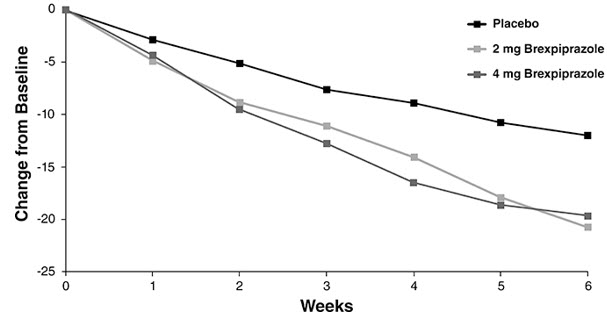
Figure 5 (Rexulti 06)
The safety and efficacy of REXULTI as maintenance treatment in adults with schizophrenia aged 18 to 65 years were demonstrated in the maintenance phase of a randomized withdrawal study (Study 5, NCT01668797). Patients were stabilized for at least 12 weeks on 1 to 4 mg/day of REXULTI (N=202). They were then randomized in the double-blind treatment phase to either continue REXULTI at their achieved stable dose (N=97), or to switch to placebo (N=105).
The primary endpoint in Study 5 was time from randomization to impending relapse during the double-blind phase, defined as: 1) Clinical Global Improvement score of ≥5 (minimally worse) and an increase to a score >4 on PANSS conceptual disorganization, hallucinatory behavior, suspiciousness, or unusual thought content items, with either a ≥2 increase on a specific item or ≥4 point increase on the combined four PANSS items, 2) hospitalization due to worsening of psychotic symptoms, 3) current suicidal behavior, or 4) violent/aggressive behavior.
A pre-specified interim analysis demonstrated a statistically significantly longer time to relapse in patients randomized to the REXULTI group compared to placebo-treated patients. The study was subsequently terminated early because maintenance of efficacy had been demonstrated. The Kaplan-Meier curves of the cumulative proportion of patients with relapse during the double-blind treatment phase for REXULTI and placebo groups are shown in Figure 6. The key secondary endpoint, the proportion of patients who met the criteria for impending relapse, was statistically significantly lower in REXULTI-treated patients compared with placebo group.
Figure 6 Kaplan-Meier Estimation of Percent Impending Relapse in Study 5
| Note: A total of 202 patients were randomized. Among them, one patient in the placebo group did not take investigational medicinal product and one patient in the REXULTI group did not have post-randomization efficacy evaluations. These two patients were excluded from the efficacy analysis. |
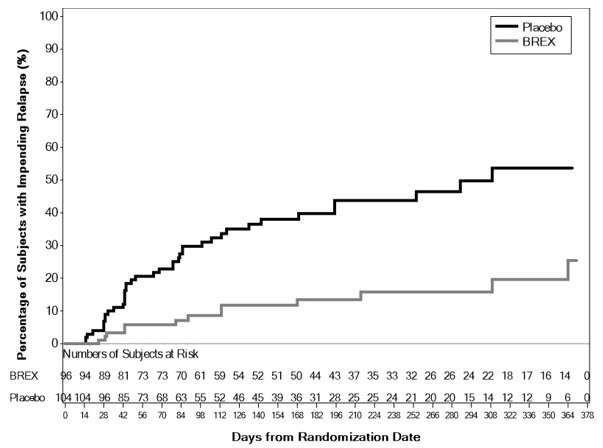 Figure 6 (Rexulti 07) |
Pediatric Patients Ages 13 to 17 years
The efficacy of REXULTI in the treatment of schizophrenia in pediatric patients 13 to 17 years of age was demonstrated in a 6-week, randomized and placebo-controlled, clinical study.
In Study 6 (NCT03198078), patients were randomized to REXULTI 2 mg to 4 mg once per day, active comparator, or placebo. Patients in the REXULTI group initiated treatment at 0.5 mg once daily on Days 1 to 4. The REXULTI dosage was increased to 1 mg daily on Days 5 to 7, and then increased to 2 mg on Days 8 to 14. The dosage was then either maintained at 2 mg or increased to 3 mg once daily from Days 15 to 21 based on patient's tolerability or clinical response. After the titration period, patients were either kept at a maintenance dose, or increased or decreased by 1 mg, for a maximum of REXULTI 4 mg daily.
The primary efficacy endpoint was the change from baseline to Week 6 in the PANSS total score.
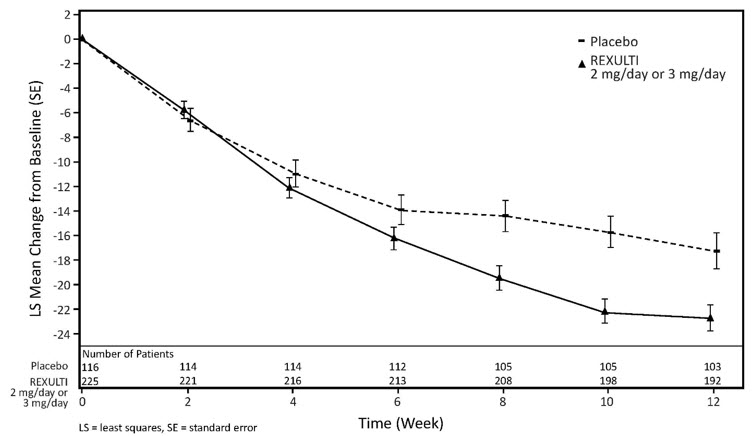
In Study 6, REXULTI group showed a statistically significant improvement compared to placebo on the mean change from baseline in the PANSS total score (Table 15).
Figure 7 shows the time course of response based on the primary efficacy measure (change from baseline in PANSS total score) in Study 6.
| Study | Treatment Group | N
Efficacy sample includes treated subjects who have baseline and at least 1 post-baseline efficacy evaluation for the PANSS Total Score | Mean Baseline Score
(SD) | LS Mean Change from Baseline (SE) | Placebo-subtracted Difference
Difference (drug minus placebo) in least-squares mean change from baseline (95% CI) |
|---|---|---|---|---|---|
| SD: standard deviation; SE: standard error; LS Mean: least-squares mean; CI: confidence interval | |||||
| 6 | REXULTI (2 - 4 mg/day)
Dosages statistically significantly superior to placebo | 110 | 101.1 (14.9) | -22.8 (1.5) | -5.3 (-9.6, -1.1) |
| Placebo | 103 | 102.2 (16.3) | -17.4 (1.6) | -- | |
Figure 7 Change from Baseline in PANSS Total Score by Study Visit (Week) in Pediatric Patients 13 to 17 years of age with Schizophrenia (Study 6)
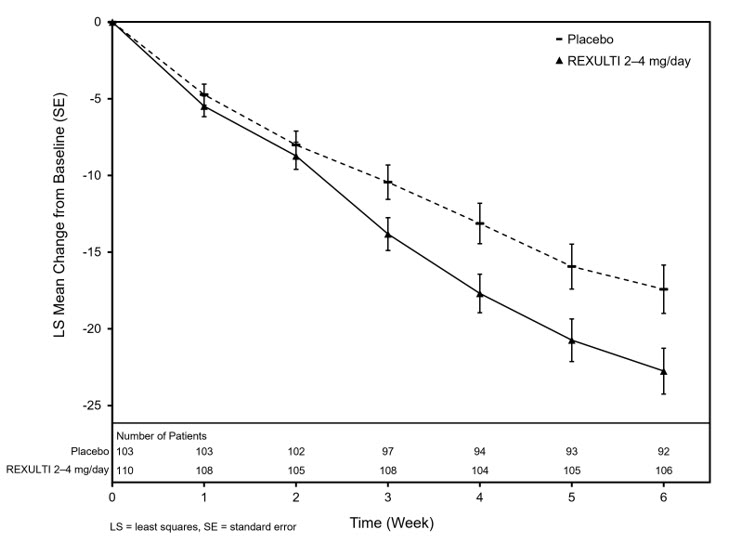
Figure 7 (Rexulti 08)
Suicidal Thoughts and Behaviors
Advise patients and caregivers to look for the emergence of suicidality, especially early during treatment and when the dosage is adjusted up or down, and instruct them to report such symptoms to the healthcare provider [see Boxed Warning, Warnings and Precautions (5.2)] .
Neuroleptic Malignant Syndrome (NMS)
Counsel patients about a potentially fatal adverse reaction, Neuroleptic Malignant Syndrome (NMS), that has been reported in association with administration of antipsychotic drugs. Advise patients to contact a healthcare provider or report to the emergency room if they experience signs or symptoms of NMS [see Warnings and Precautions (5.4)].
Tardive Dyskinesia
Counsel patients on the signs and symptoms of tardive dyskinesia and to contact their healthcare provider if these abnormal movements occur [see Warnings and Precautions (5.5)].
Metabolic Changes
Educate patients about the risk of metabolic changes, how to recognize symptoms of hyperglycemia and diabetes mellitus, and the need for specific monitoring, including blood glucose, lipids, and weight [see Warnings and Precautions (5.6)].
Pathological Gambling and Other Compulsive Behaviors
Advise patients and their caregivers of the possibility that they may experience compulsive urges to shop, intense urges to gamble, compulsive sexual urges, binge eating and/or other compulsive urges and the inability to control these urges while taking REXULTI. In some cases, but not all, the urges were reported to have stopped when the dose was reduced or stopped [see Warnings and Precautions (5.7)].
Leukopenia, Neutropenia and Agranulocytosis
Advise patients with a pre-existing low WBC or a history of drug-induced leukopenia/neutropenia that they should have their CBC monitored while taking REXULTI [see Warnings and Precautions (5.8)].
Orthostatic Hypotension and Syncope
Educate patients about the risk of orthostatic hypotension and syncope, especially early in treatment, and also at times of reinitiating treatment or increases in dosage [see Warnings and Precautions (5.9)].
Heat Exposure and Dehydration
Counsel patients regarding appropriate care in avoiding overheating and dehydration [see Warnings and Precautions (5.12)].
Potential for Cognitive and Motor Impairment
Caution patients about performing activities requiring mental alertness, such as operating hazardous machinery or operating a motor vehicle, until they are reasonably certain that REXULTI therapy does not adversely affect their ability to engage in such activities [see Warnings and Precautions (5.14)] .
Concomitant Medications
Advise patients to inform their healthcare providers of any changes to their current prescription or over-the-counter medications because there is a potential for clinically significant interactions [see Drug Interactions (7.1)] .
Pregnancy
Advise patients that third trimester use of REXULTI may cause extrapyramidal and/or withdrawal symptoms in a neonate and to notify their healthcare provider with a known or suspected pregnancy. Advise patients that there is a pregnancy exposure registry that monitors pregnancy outcomes in women exposed to REXULTI during pregnancy [see Use in Specific Populations (8.1)] .
Repackaged and Distributed By:
Remedy Repack, Inc.
625 Kolter Dr. Suite #4 Indiana, PA 1-724-465-8762