Fulvestrant Injection, Solution
Product Images NDC 70700-284

18 FDA label images from Xiromed, Llc · Packaging, Regulatory Labels, and Product Appearance

Product Visual Gallery

This gallery contains 18 technical images submitted to the FDA as part of the official labeling for Fulvestrant (NDC 70700-284). Unlike standard consumer photos, these assets often include clinical data figures, molecular chemical structures, and official manufacturer packaging layouts.

As provided by Xiromed, Llc, these visuals offer a comprehensive scientific overview of the product's physical and chemical identity, aiding pharmacists and researchers in product verification and study.

FDA Label Image

Carton-label.jpg (Carton Fulv 5ml)
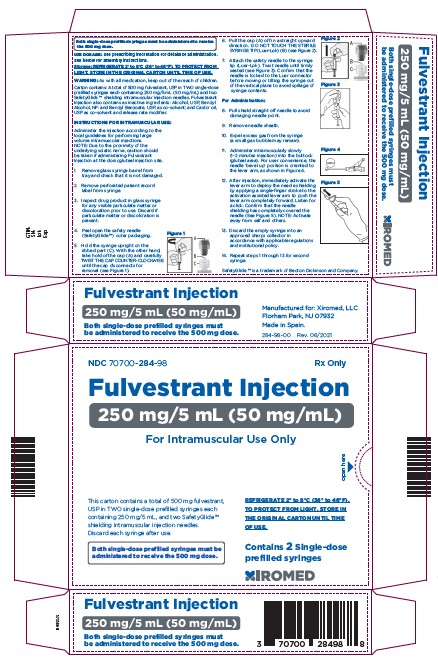
Carton-label.jpg (Carton Fulv 5ml)
Fulvestrant Injection 250 mg/5 mL (50 mg/mL) solution for intramuscular use, manufactured by Xiromed, LLC. The label states the product contains 2 single-dose prefilled syringes with 500 mg total dose per carton. It includes storage instructions, usage directions, and barcodes. The label uses blue and white colors with clear dosage and administration information.*
FDA Label Image

Container Label

Container Label
Label for Fulvestrant Injection 250 mg/5 mL (50 mg/mL), an intramuscular solution by Xiromed, LLC. The label includes dosage strength, administration instructions, and storage advice to protect from light. It features two identical panels with NDC 70700-284-98, barcodes, and spaces for lot, expiration date, and administration details. The label indicates the product is manufactured in Spain for Xiromed, NJ.*
FDA Label Image

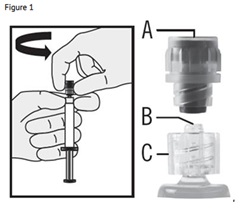
Figure-1 (Fulvestrant Inj Fig 1)

Figure-1 (Fulvestrant Inj Fig 1)
An instructional diagram showing how to twist and remove the syringe cap from a vial or ampule. The image also labels parts of a component with markers A, B, and C, illustrating the connection or assembly of injection equipment likely related to the FULVESTRANT 50 mg/mL intramuscular injection.*
FDA Label Image

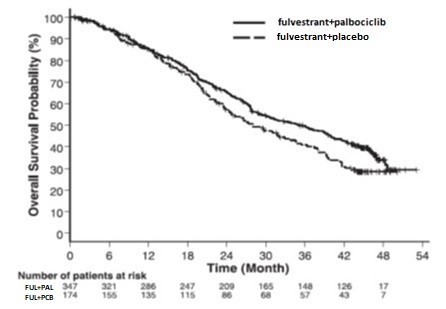
Figure-10 (Fulvestrant Inj Fig 10)

Figure-10 (Fulvestrant Inj Fig 10)
A Kaplan-Meier overall survival probability curve comparing fulvestrant plus palbociclib and fulvestrant plus placebo over time in months. The graph shows survival percentages on the y-axis and time in months on the x-axis, with patient numbers at risk indicated below the chart.*
FDA Label Image

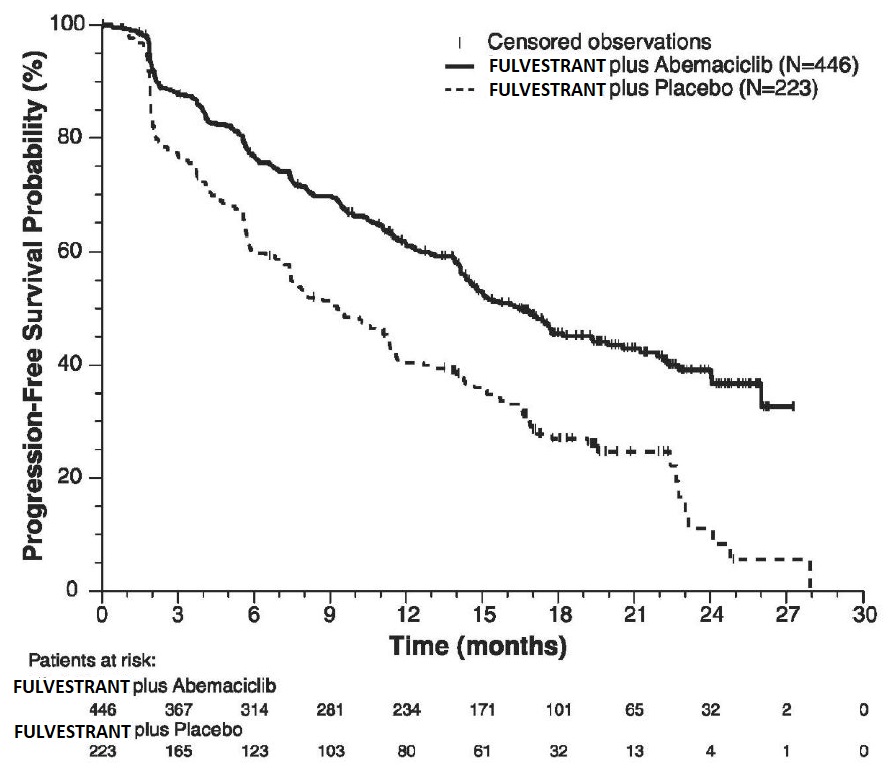
Figure-11 (Fulvestrant Inj Fig 11)

Figure-11 (Fulvestrant Inj Fig 11)
A Kaplan-Meier survival curve showing progression-free survival probability (%) over time in months for two groups: FULVESTRANT plus Abemaciclib (solid line) and FULVESTRANT plus Placebo (dashed line). The graph includes the number of patients at risk at various time points for both groups and indicates censored observations on the curves.*
FDA Label Image

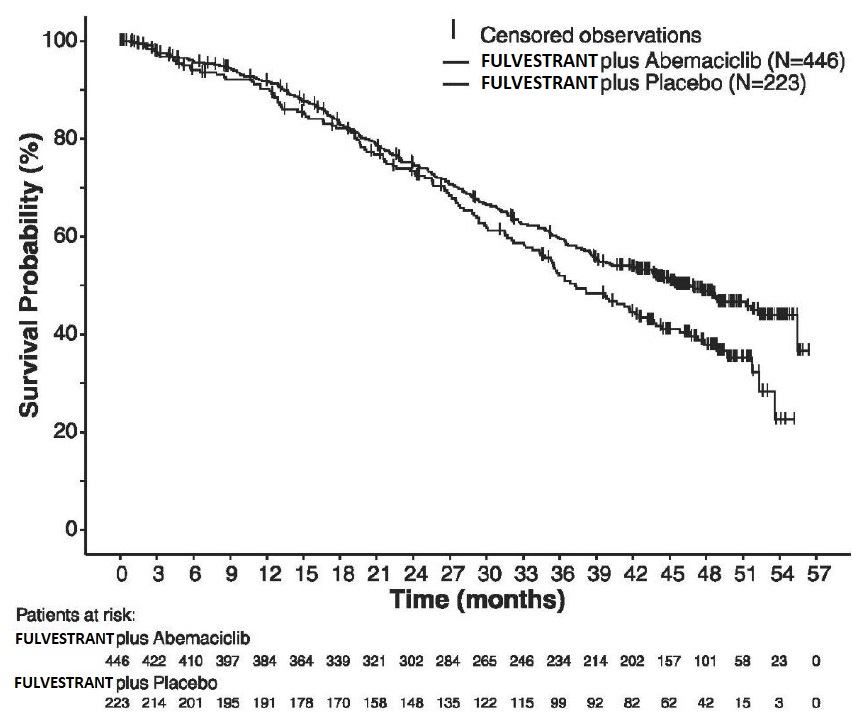
Figure-12 (Fulvestrant Inj Fig 12)

Figure-12 (Fulvestrant Inj Fig 12)
A survival probability curve chart showing the comparison between FULVESTRANT plus Abemaciclib and FULVESTRANT plus Placebo over time in months, with survival probability percentage on the y-axis and time on the x-axis. The graph includes censored observations and numbers of patients at risk at various time points for both treatment groups.*
FDA Label Image

Figure-13 (Fulvestrant Inj Fig 13)

Figure-13 (Fulvestrant Inj Fig 13)
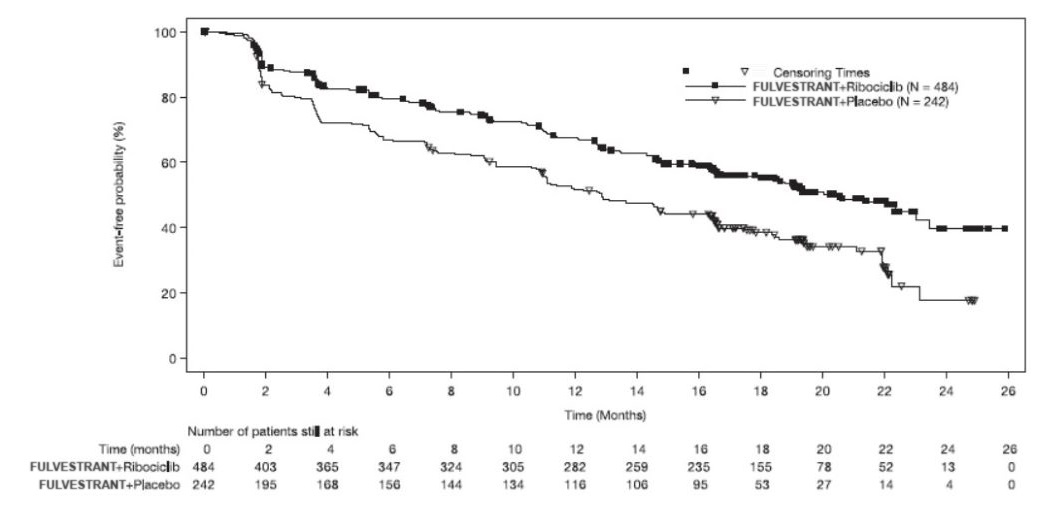
A Kaplan-Meier plot depicting event-free probability (%) over time (months) for two patient groups: FULVESTRANT + Ribociclib (N=484) and FULVESTRANT + Placebo (N=242). The graph includes censoring times, with patient counts at risk listed below the x-axis at various time points up to 26 months.*
FDA Label Image

Figure-14 (Fulvestrant Inj Fig 14)

Figure-14 (Fulvestrant Inj Fig 14)
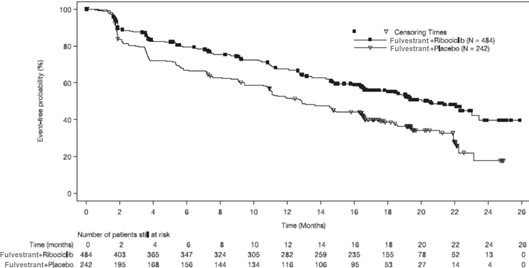
A Kaplan-Meier curve chart comparing event-free probability over time in months between two groups: one receiving Fulvestrant plus Ribociclib (N=484) and the other Fulvestrant plus Placebo (N=242). The x-axis represents time in months up to 26, and the y-axis shows event-free probability as a percentage. The plot includes censoring times and the number of patients at risk at various time points for each group.*
FDA Label Image

Figure-2 (Fulvestrant Inj Fig 2)

Figure-2 (Fulvestrant Inj Fig 2)
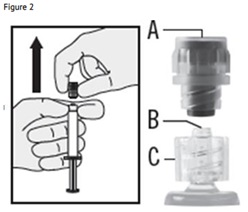
An instructional diagram showing a hand holding a syringe with an arrow indicating upward movement, alongside a labeled close-up of an injection vial's components: A, B, and C parts of the vial system. It likely depicts steps for preparing or assembling the injection device for fulvestrant solution.*
FDA Label Image

Figure-3 (Fulvestrant Inj Fig 3)

Figure-3 (Fulvestrant Inj Fig 3)
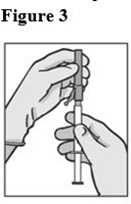
An instructional illustration labeled Figure 3 showing a pair of hands preparing a syringe. One hand holds and stabilizes the syringe barrel while the other hand adjusts or inserts the plunger, demonstrating a step in the injection preparation process.*
FDA Label Image

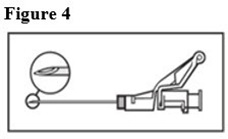
Figure-4 (Fulvestrant Inj Fig 4)

Figure-4 (Fulvestrant Inj Fig 4)
An instructional illustration depicting a syringe with an attached needle and a close-up of the needle tip inside a circular inset, likely demonstrating proper needle use or injection technique for the FULVESTRANT injection solution.*
FDA Label Image

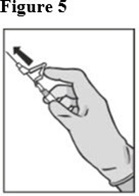
Figure-5 (Fulvestrant Inj Fig 5)

Figure-5 (Fulvestrant Inj Fig 5)
Illustration showing a hand holding a syringe with the plunger being pulled backward, likely demonstrating the preparation or withdrawal of medication into the syringe before administration. No specific branding or dosage information visible.*
FDA Label Image

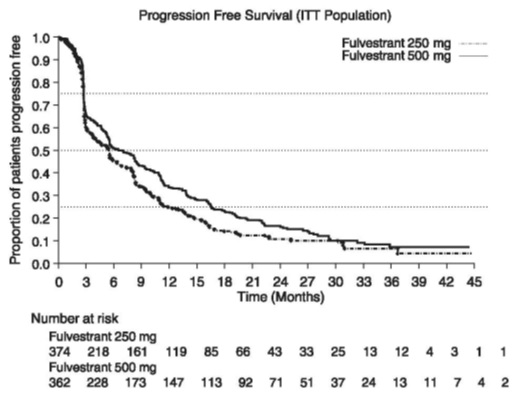
Figure-6 (Fulvestrant Inj Fig 6)

Figure-6 (Fulvestrant Inj Fig 6)
A line graph titled "Progression Free Survival (ITT Population)" showing the proportion of patients progression free over time in months (0 to 45 months) for two fulvestrant doses (250 mg and 500 mg). The graph includes a legend and a table of patient numbers at risk at various time points for each dose group.*
FDA Label Image

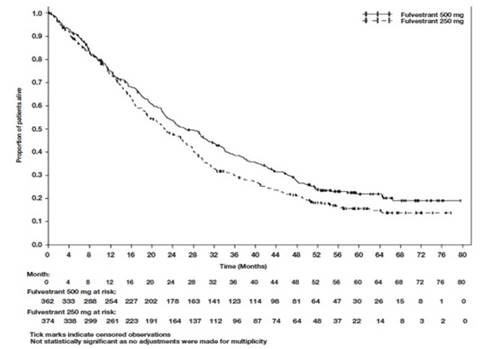
Figure-7 (Fulvestrant Inj Fig 7)

Figure-7 (Fulvestrant Inj Fig 7)
A Kaplan-Meier survival curve graph comparing patient proportions over time for fulvestrant 500 mg and 250 mg dosages. The x-axis represents time in months up to 80, and the y-axis shows the proportion of patients. Two lines show survival proportions for each dosage with tick marks indicating censored observations and corresponding patient counts at multiple time points below the graph.*
FDA Label Image

Figure-8 (Fulvestrant Inj Fig 8)

Figure-8 (Fulvestrant Inj Fig 8)
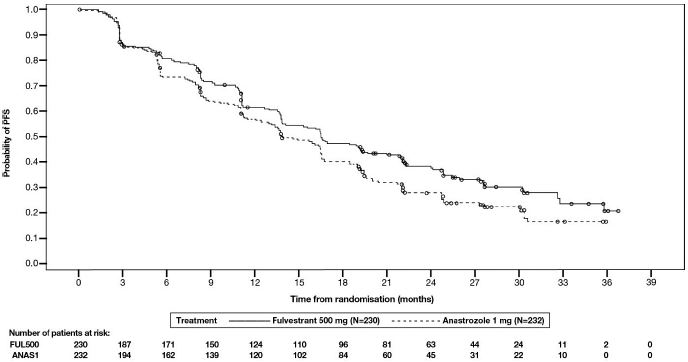
A Kaplan-Meier survival curve chart showing the probability of progression-free survival (PFS) over time in months from randomization. The chart compares treatment groups for fulvestrant 500 mg and anastrozole 1 mg, with a table below displaying the number of patients at risk at different time points for each group.*
FDA Label Image

Figure-9 (Fulvestrant Inj Fig 9)

Figure-9 (Fulvestrant Inj Fig 9)
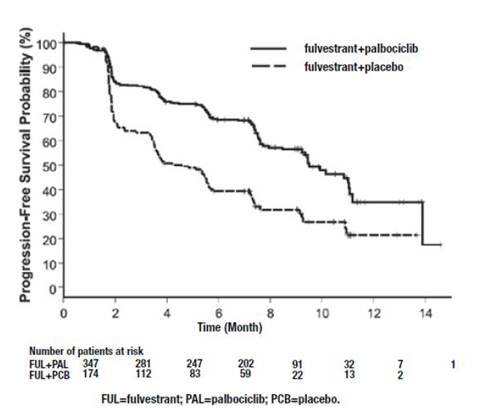
A Kaplan-Meier survival curve comparing progression-free survival probability over 14 months for patients treated with fulvestrant plus palbociclib versus fulvestrant plus placebo. The y-axis shows progression-free survival probability (%) and the x-axis shows time in months. The chart includes patient numbers at risk for each treatment group at multiple time points.*
FDA Label Image

Structure (Fulvestrant Inj Structure)

Structure (Fulvestrant Inj Structure)
Chemical structure diagram of fulvestrant, showing its molecular framework with hydroxyl groups and trifluoromethyl substituents. The illustration highlights the arrangement of carbon rings and side chains characteristic of the fulvestrant molecule.*
FDA Label Image
Xiromed-logo (Xiromed Logo)
The image shows the carton of FULVESTRANT injection, solution with a strength of 50 mg/mL. The product is labeled for intramuscular use and manufactured by Xiromed, LLC. The packaging is primarily white with blue and gray design elements, and the brand name 'XIROMED' appears prominently.*

* About these descriptions: Image descriptions on this page are generated by automated AI analysis of the product label images from the manufacturer's FDA label submission (SPL). They are provided for reference only and may contain errors or omissions. Always rely on the printed label itself and the official FDA labeling, and consult a pharmacist or healthcare professional with any questions about this product.