Because clinical trials are conducted under widely varying conditions, the adverse reaction rates observed cannot be directly compared to rates in other trials and may not reflect the rates observed in clinical practice.
Monotherapy
Comparison of Fulvestrant injection 500 mg and Fulvestrant injection 250 mg (CONFIRM)
The following adverse reactions (ARs) were calculated based on the safety analysis of CONFIRM comparing the administration of fulvestrant injection 500 mg intramuscularly once a month with fulvestrant injection 250 mg intramuscularly once a month. The most frequently reported adverse reactions in the fulvestrant injection 500 mg group were injection site pain (11.6% of patients), nausea (9.7% of patients), and bone pain (9.4% of patients); the most frequently reported adverse reactions in the fulvestrant injection 250 mg group were nausea (13.6% of patients), back pain (10.7% of patients), and injection site pain (9.1% of patients).
Table 1 lists adverse reactions reported with an incidence of 5% or greater, regardless of assessed causality, from CONFIRM.
Table 1: Adverse Reactions in CONFIRM (≥5% in Either Treatment Group) |
Adverse Reactions
| Fulvestrant
injection 500 mg
N=361
%
| Fulvestrant
injection 250 mg
N=374
%
|
Body as a Whole
|
Injection Site Pain*
| 12
| 9
|
Headache
| 8
| 7
|
Back Pain
| 8
| 11
|
Fatigue
| 8
| 6
|
Pain in Extremity
| 7
| 7
|
Asthenia
| 6
| 6
|
Vascular System
|
Hot Flash
| 7
| 6
|
Digestive System
|
Nausea
| 10
| 14
|
Vomiting
| 6
| 6
|
Anorexia
| 6
| 4
|
Constipation
| 5
| 4
|
Musculoskeletal System
|
Bone Pain
| 9
| 8
|
Arthralgia
| 8
| 8
|
Musculoskeletal Pain
| 6
| 3
|
Respiratory System
|
Cough
| 5
| 5
|
Dyspnea
| 4
| 5
|
In the pooled safety population (N=1127) from clinical trials comparing fulvestrant injection 500 mg to fulvestrant injection 250 mg, post-baseline increases of ≥1 CTC grade in either AST, ALT, or alkaline phosphatase were observed in >15% of patients receiving fulvestrant injection. Grade 3-4 increases were observed in 1-2% of patients. The incidence and severity of increased hepatic enzymes (ALT, AST, ALP) did not differ between the 250 mg and the 500 mg fulvestrant injection arms.
Comparison of Fulvestrant injection 500 mg and Anastrozole 1 mg (FALCON)
The safety of fulvestrant injection 500 mg versus anastrozole 1 mg was evaluated in FALCON. The data described below reflect exposure to fulvestrant injection in 228 out of 460 patients with HR-positive advanced breast cancer in postmenopausal women not previously treated with endocrine therapy who received at least one (1) dose of treatment in FALCON.
Permanent discontinuation associated with an adverse reaction occurred in 4 of 228 (1.8%) patients receiving fulvestrant injection and in 3 of 232 (1.3%) patients receiving anastrozole. Adverse reactions leading to discontinuation for those patients receiving fulvestrant injection included drug hypersensitivity (0.9%), injection site hypersensitivity (0.4%), and elevated liver enzymes (0.4%).
The most common adverse reactions (≥10%) of any grade reported in patients in the fulvestrant injection arm were arthralgia, hot flash, fatigue, and nausea.
Adverse reactions reported in patients who received fulvestrant injection in FALCON at an incidence of ≥5% in either treatment arm are listed in Table 2, and laboratory abnormalities are listed in Table 3.
Table 2: Adverse Reactions in FALCON
Adverse Reactions
| Fulvestrant injection 500 mg
N=228
| Anastrozole 1 mg
N=232
|
All Grades
%
| Grade 3 or 4
%
| All Grades
%
| Grade 3 or 4
%
|
Vascular Disorders
|
Hot flash
| 11
| 0
| 10
| 0
|
Gastrointestinal Disorders
|
Nausea
| 11
| 0
| 10
| <1
|
Diarrhea
| 6
| 0
| 6
| <1
|
Musculoskeletal and Connective Tissue Disorders
|
Arthralgia
| 17
| 0
| 10
| 0
|
Myalgia
| 7
| 0
| 3
| 0
|
Pain in extremity
| 6
| 0
| 4
| 0
|
Back pain
| 9
| <1
| 6
| 0
|
General Disorders and Administration Site Conditions
|
Fatigue
| 11
| <1
| 7
| <1
|
Table 3: Laboratory Abnormalities in FALCON* |
Laboratory Parameters
| Fulvestrant injection 500 mg N=228
| Anastrozole 1 mg
N=232
|
All Grades
%
| Grade 3 or 4
%
| All Grades
%
| Grade 3 or 4
%
|
Alanine aminotransferase increased (ALT)
| 7
| 1
| 3
| 0
|
Aspartate aminotransferase increased (AST)
| 5
| 1
| 3
| <1
|
Comparison of Fulvestrant injection 250 mg and Anastrozole 1 mg in Combined Trials (Studies 0020 and 0021)
The most commonly reported adverse reactions in the fulvestrant injection and anastrozole treatment groups were gastrointestinal symptoms (including nausea, vomiting, constipation, diarrhea, and abdominal pain), headache, back pain, vasodilatation (hot flashes), and pharyngitis.
Injection site reactions with mild transient pain and inflammation were seen with fulvestrant injection and occurred in 7% of patients given the single 5 mL injection (Study 0020) and in 27% of patients given the 2 x 2.5 mL injections (Study 0021) in the two clinical trials that compared fulvestrant injection 250 mg and anastrozole 1 mg.
Table 4 lists adverse reactions reported with an incidence of 5% or greater, regardless of assessed causality, from the two controlled clinical trials comparing the administration of fulvestrant injection 250 mg intramuscularly once a month with anastrozole 1 mg orally once a day.
Table 4: Adverse Reactions in Studies 0020 and 0021 (≥5% from Combined Data) |
Adverse Reactions
| Fulvestrant injection 250 mg
N=423
%
| Anastrozole 1 mg
N=423
%
|
Body as a Whole
| 68
| 68
|
Asthenia
| 23
| 27
|
Pain
| 19
| 20
|
Headache
| 15
| 17
|
Back Pain
| 14
| 13
|
Abdominal Pain
| 12
| 12
|
Injection Site Pain*
| 11
| 7
|
Pelvic Pain
| 10
| 9
|
Chest Pain
| 7
| 5
|
Flu Syndrome
| 7
| 6
|
Fever
| 6
| 6
|
Accidental Injury
| 5
| 6
|
Cardiovascular System
| 30
| 28
|
Vasodilatation
| 18
| 17
|
Digestive System
| 52
| 48
|
Nausea
| 26
| 25
|
Vomiting
| 13
| 12
|
Constipation
| 13
| 11
|
Diarrhea
| 12
| 13
|
Anorexia
| 9
| 11
|
Hemic and Lymphatic Systems
| 14
| 14
|
Anemia
| 5
| 5
|
Metabolic and Nutritional Disorders
| 18
| 18
|
Peripheral Edema
| 9
| 10
|
Musculoskeletal System
| 26
| 28
|
Bone Pain
| 16
| 14
|
Arthritis
| 3
| 6
|
Nervous System
| 34
| 34
|
Dizziness
| 7
| 7
|
Insomnia
| 7
| 9
|
Paresthesia
| 6
| 8
|
Depression
| 6
| 7
|
Anxiety
| 5
| 4
|
Respiratory System
| 39
| 34
|
Pharyngitis
| 16
| 12
|
Dyspnea
| 15
| 12
|
Cough Increased
| 10
| 10
|
Skin and Appendages
| 22
| 23
|
Rash
| 7
| 8
|
Sweating
| 5
| 5
|
Urogenital System
| 18
| 15
|
Urinary Tract Infection
| 6
| 4
|
Combination Therapy
Combination Therapy with Palbociclib (PALOMA-3)
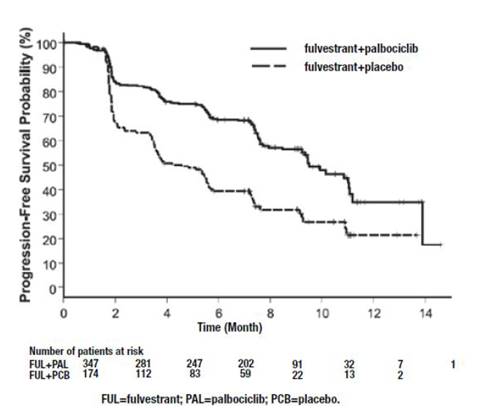
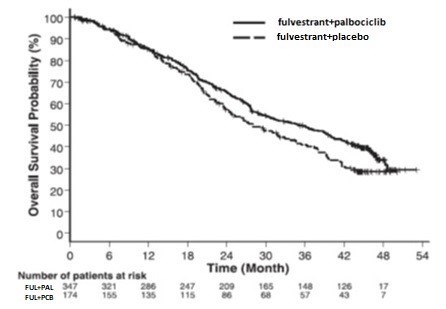
The safety of fulvestrant injection 500 mg plus palbociclib 125 mg/day versus fulvestrant injection plus placebo was evaluated in PALOMA-3. The data described below reflect exposure to fulvestrant injection plus palbociclib in 345 out of 517 patients with HR-positive, HER2-negative advanced or metastatic breast cancer who received at least 1 dose of treatment in PALOMA-3. The median duration of treatment for fulvestrant injection plus palbociclib was 10.8 months while the median duration of treatment for fulvestrant injection plus placebo arm was 4.8 months.
No dose reduction was allowed for fulvestrant injection in PALOMA-3. Dose reductions of palbociclib due to an adverse reaction of any grade occurred in 36% of patients receiving fulvestrant injection plus palbociclib.
Permanent discontinuation associated with an adverse reaction occurred in 19 of 345 (6%) patients receiving fulvestrant injection plus palbociclib, and in 6 of 172 (3%) patients receiving fulvestrant injection plus placebo. Adverse reactions leading to discontinuation for those patients receiving fulvestrant injection plus palbociclib included fatigue (0.6%), infections (0.6%), and thrombocytopenia (0.6%).
The most common adverse reactions (≥10%) of any grade reported in patients in the fulvestrant injection plus palbociclib arm by descending frequency were neutropenia, leukopenia, infections, fatigue, nausea, anemia, stomatitis, diarrhea, thrombocytopenia, vomiting, alopecia, rash, decreased appetite, and pyrexia.
The most frequently reported Grade ≥3 adverse reactions (≥5%) in patients receiving fulvestrant injection plus palbociclib in descending frequency were neutropenia and leukopenia.
Adverse reactions (≥10%) reported in patients who received fulvestrant injection plus palbociclib or fulvestrant injection plus placebo in PALOMA-3 are listed in Table 5, and laboratory abnormalities are listed in Table 6.
Table 5: Adverse Reactions (≥10%) in PALOMA-3 |
|
|
|
|
|
|
|
Adverse Reactions
| Fulvestrant injection plus
Palbociclib N=345
| Fulvestrant injection plus
Placebo N=172
|
All Grades
%
| Grade 3
%
| Grade 4
%
| All Grades
%
| Grade 3
%
| Grade 4
%
|
Infections and Infestations
|
Infections*
| 47†
| 3
| 1
| 31
| 3
| 0
|
Blood and Lymphatic System Disorders
|
Neutropenia
| 83
| 55
| 11
| 4
| 1
| 0
|
Leukopenia
| 53
| 30
| 1
| 5
| 1
| 1
|
Anemia
| 30
| 4
| 0
| 13
| 2
| 0
|
Thrombocytopenia
| 23
| 2
| 1
| 0
| 0
| 0
|
Metabolism and Nutrition Disorders
|
Decreased appetite
| 16
| 1
| 0
| 8
| 1
| 0
|
Gastrointestinal Disorders
|
Nausea
| 34
| 0
| 0
| 28
| 1
| 0
|
Stomatitis‡
| 28
| 1
| 0
| 13
| 0
| 0
|
Diarrhea
| 24
| 0
| 0
| 19
| 1
| 0
|
Vomiting
| 19
| 1
| 0
| 15
| 1
| 0
|
Skin and Subcutaneous Tissue Disorders
|
Alopecia
| 18§
| N/A
| N/A
| 6>¶
| N/A
| N/A
|
Rash#
| 17
| 1
| 0
| 6
| 0
| 0
|
General Disorders and Administration Site Conditions
|
Fatigue
| 41
| 2
| 0
| 29
| 1
| 0
|
Pyrexia
| 13
| <1
| 0
| 5
| 0
| 0
|
Additional adverse reactions occurring at an overall incidence of <10.0% of patients receiving fulvestrant injection plus palbociclib in PALOMA-3 included asthenia (7.5%), aspartate aminotransferase increased (7.5%), dysgeusia (6.7%), epistaxis (6.7%), lacrimation increased (6.4%), dry skin (6.1%), alanine aminotransferase increased (5.8%), vision blurred (5.8%), dry eye (3.8%), and febrile neutropenia (0.9%).
Table 6: Laboratory Abnormalities in PALOMA-3 |
Laboratory Parameters
| Fulvestrant injection plus Palbociclib N=345
| Fulvestrant injection plus Placebo N=172
|
All Grades
%
| Grade 3
%
| Grade 4
%
| All Grades
%
| Grade 3
%
| Grade 4
%
|
WBC decreased
| 99
| 45
| 1
| 26
| 0
| 1
|
Neutrophils decreased
| 96
| 56
| 11
| 14
| 0
| 1
|
Anemia
| 78
| 3
| 0
| 40
| 2
| 0
|
Platelets decreased
| 62
| 2
| 1
| 10
| 0
| 0
|
Aspartate aminotransferase increased
| 43
| 4
| 0
| 48
| 4
| 0
|
Alanine aminotransferase increased
| 36
| 2
| 0
| 34
| 0
| 0
|
Combination Therapy with Abemaciclib (MONARCH 2)
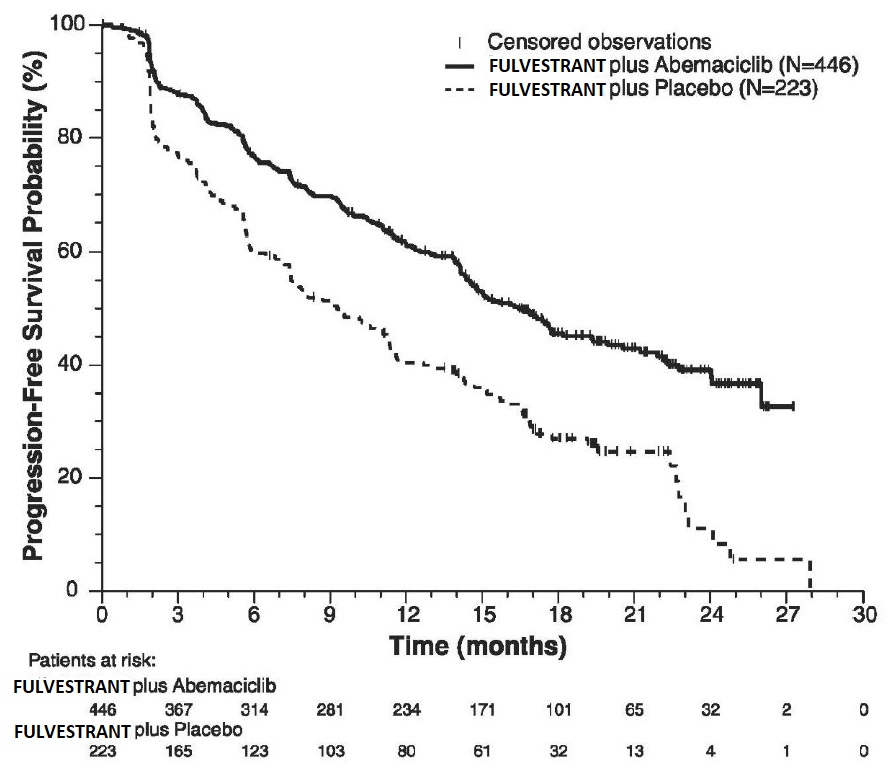
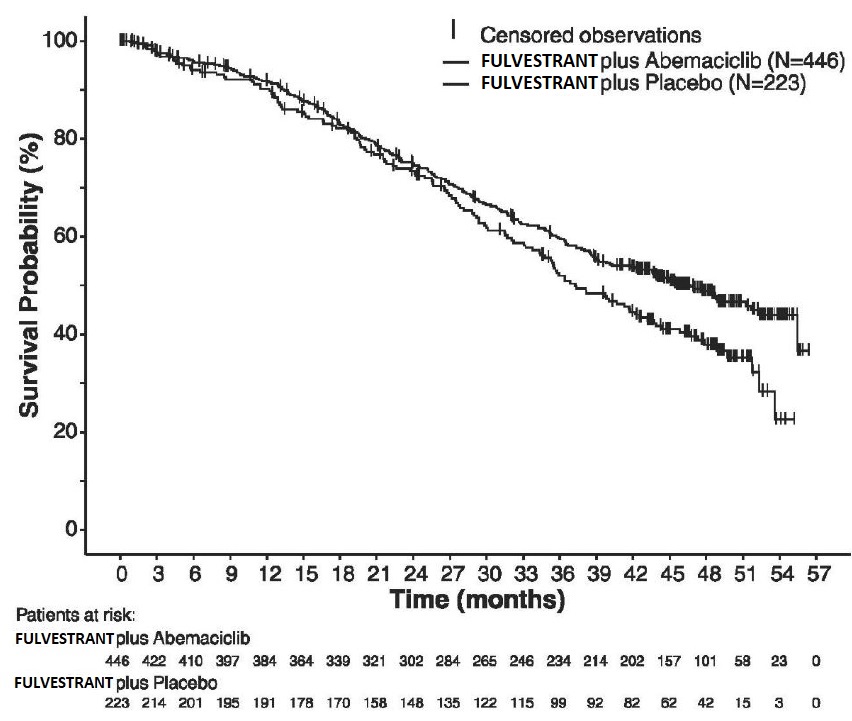
The safety of fulvestrant injection (500 mg) plus abemaciclib (150 mg twice daily) versus fulvestrant injection plus placebo was evaluated in MONARCH 2. The data described below reflect exposure to fulvestrant injection in 664 patients with HR-positive, HER2-negative advanced breast cancer who received at least one dose of fulvestrant injection plus abemaciclib or placebo in MONARCH 2.
Median duration of treatment was 12 months for patients receiving fulvestrant injection plus abemaciclib and 8 months for patients receiving fulvestrant injection plus placebo.
Dose reductions due to an adverse reaction occurred in 43% of patients receiving fulvestrant injection plus abemaciclib. Adverse reactions leading to dose reductions ≥5% of patients were diarrhea and neutropenia. Abemaciclib dose reduction due to diarrhea of any grade occurred in 19% of patients receiving fulvestrant injection plus abemaciclib compared to 0.4% of patients receiving fulvestrant injection plus placebo. Abemaciclib dose reductions due to neutropenia of any grade occurred in 10% of patients receiving fulvestrant injection plus abemaciclib compared to no patients receiving fulvestrant injection plus placebo.
Permanent study treatment discontinuation due to an adverse event was reported in 9% of patients receiving fulvestrant injection plus abemaciclib and in 3% of patients receiving fulvestrant injection plus placebo. Adverse reactions leading to permanent discontinuation for patients receiving fulvestrant injection plus abemaciclib were infection (2%), diarrhea (1%), hepatotoxicity (1%), fatigue (0.7%), nausea (0.2%), abdominal pain (0.2%), acute kidney injury (0.2%), and cerebral infarction (0.2%).
Deaths during treatment or during the 30-day follow up, regardless of causality, were reported in 18 cases (4%) of fulvestrant injection plus abemaciclib treated patients versus 10 cases (5%) of Fulvestrant injection plus placebo treated patients. Causes of death for patients receiving Fulvestrant injection plus abemaciclib included: 7 (2%) patient deaths due to underlying disease, 4 (0.9%) due to sepsis, 2 (0.5%) due to pneumonitis, 2 (0.5%) due to hepatotoxicity, and one (0.2%) due to cerebral infarction.
The most common adverse reactions reported (≥20%) in the fulvestrant injection plus abemaciclib arm were diarrhea, fatigue, neutropenia, nausea, infections, abdominal pain, anemia, leukopenia, decreased appetite, vomiting, and headache (Table 7). The most frequently reported (≥5%) Grade 3 or 4 adverse reactions were neutropenia, diarrhea, leukopenia, anemia, and infections.
Table 7: Adverse Reactions ≥10% of Patients Receiving Fulvestrant injection Plus Abemaciclib and ≥2% Higher Than Fulvestrant injection Plus Placebo in MONARCH 2 |
|
|
|
|
|
|
Adverse Reactions
| Fulvestrant
injection plus
Abemaciclib
N=441
| Fulvestrant injection plus
Placebo
N=223
|
All Grades
%
| Grade 3
%
| Grade 4
%
| All Grades
%
| Grade 3
%
| Grade 4
%
|
Gastrointestinal Disorders
|
Diarrhea
| 86
| 13
| 0
| 25
| <1
| 0
|
Nausea
| 45
| 3
| 0
| 23
| 1
| 0
|
Abdominal pain*
| 35
| 2
| 0
| 16
| 1
| 0
|
Vomiting
| 26
| <1
| 0
| 10
| 2
| 0
|
Stomatitis
| 15
| <1
| 0
| 10
| 0
| 0
|
Infections and Infestations
|
Infections†
| 43
| 5
| <1
| 25
| 3
| <1
|
Blood and Lymphatic System Disorders
|
Neutropenia‡
| 46
| 24
| 3
| 4
| 1
| <1
|
Anemia§
| 29
| 7
| <1
| 4
| 1
| 0
|
Leukopenia¶
| 28
| 9
| <1
| 2
| 0
| 0
|
Thrombocytopenia#
| 16
| 2
| 1
| 3
| 0
| <1
|
General Disorders and Administration Site Conditions
|
FatigueÞ
| 46
| 3
| 0
| 32
| <1
| 0
|
Edema peripheral
| 12
| 0
| 0
| 7
| 0
| 0
|
Pyrexia
| 11
| <1
| <1
| 6
| <1
| 0
|
Metabolism and Nutrition Disorders
|
Decreased appetite
| 27
| 1
| 0
| 12
| <1
| 0
|
Respiratory, Thoracic, and Mediastinal Disorders
|
Cough
| 13
| 0
| 0
| 11
| 0
| 0
|
Skin and Subcutaneous Tissue Disorders
|
Alopecia
| 16
| 0
| 0
| 2
| 0
| 0
|
Pruritus
| 13
| 0
| 0
| 6
| 0
| 0
|
Rash
| 11
| 1
| 0
| 4
| 0
| 0
|
Nervous System Disorders
|
Headache
| 20
| 1
| 0
| 15
| <1
| 0
|
Dysgeusia
| 18
| 0
| 0
| 3
| 0
| 0
|
Dizziness
| 12
| 1
| 0
| 6
| 0
| 0
|
Investigations
|
Alanine aminotransferase increased
| 13
| 4
| <1
| 5
| 2
| 0
|
Aspartate aminotransferase increased
| 12
| 2
| 0
| 7
| 3
| 0
|
Creatinine increased
| 12
| <1
| 0
| <1
| 0
| 0
|
Weight decreased
| 10
| <1
| 0
| 2
| <1
| 0
|
Additional adverse reactions in MONARCH 2 include venous thromboembolic events (deep vein thrombosis, pulmonary embolism, cerebral venous sinus thrombosis, subclavian vein thrombosis, axillary vein thrombosis, and DVT inferior vena cava), which were reported in 5% of patients treated with fulvestrant injection plus abemaciclib as compared to 0.9% of patients treated with fulvestrant injection plus placebo.
Table 8: Laboratory Abnormalities ≥10% in Patients Receiving Fulvestrant Injection Plus Abemaciclib and ≥2% Higher Than Fulvestrant Injection Plus Placebo in MONARCH 2
Laboratory Parameters
| Fulvestrant plus Abemaciclib
N=441
| Fulvestrant plus Placebo
N=223
|
All Grades
%
| Grade 3
%
| Grade 4
%
| All Grades
%
| Grade 3
%
| Grade 4
%
|
Creatinine increased
| 98
| 1
| 0
| 74
| 0
| 0
|
White blood cell decreased
| 90
| 23
| <1
| 33
| <1
| 0
|
Neutrophil count decreased
| 87
| 29
| 4
| 30
| 4
| <1
|
Anemia
| 84
| 3
| 0
| 33
| <1
| 0
|
Lymphocyte count decreased
| 63
| 12
| <1
| 32
| 2
| 0
|
Platelet count decreased
| 53
| <1
| 1
| 15
| 0
| 0
|
Alanine aminotransferase increased
| 41
| 4
| <1
| 32
| 1
| 0
|
Aspartate aminotransferase increased
| 37
| 4
| 0
| 25
| 4
| <1
|
Combination Therapy with Ribociclib (MONALEESA-3)
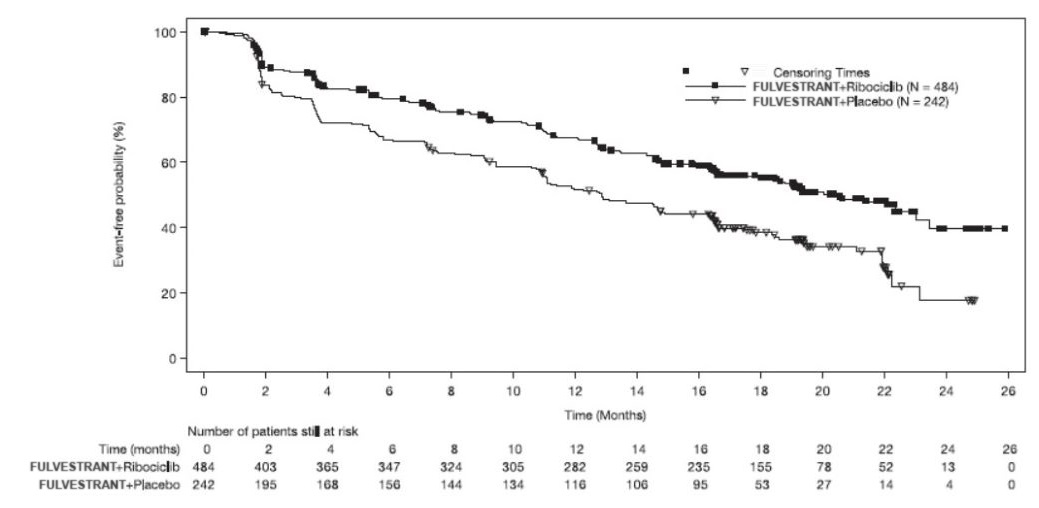
The safety of fulvestrant injection 500 mg plus ribociclib 600 mg versus fulvestrant injection plus placebo was evaluated in MONALEESA-3. The data described below reflect exposure to fulvestrant injection plus ribociclib in 483 out of 724 postmenopausal patients with HRpositive, HER2-negative advanced or metastatic breast cancer for initial endocrine based therapy or after disease progression on endocrine therapy who received at least one dose of fulvestrant injection plus ribociclib or placebo in MONALEESA-3. Median duration of treatment was 15.8 months for fulvestrant injection plus ribociclib and 12 months for fulvestrant injection plus placebo.
Dose reductions due to adverse reactions occurred in 32% of patients receiving fulvestrant injection plus ribociclib and in 3% of patients receiving fulvestrant injection plus placebo. Among patients receiving fulvestrant injection plus ribociclib, 8% were reported to have permanently discontinued both fulvestrant injection plus ribociclib, and 9% were reported to have discontinued ribociclib alone due to ARs. Among patients receiving fulvestrant injection plus placebo, 4% were reported to have permanently discontinued both fulvestrant injection and placebo and 2% were reported to have discontinued placebo alone due to ARs.
Adverse reactions leading to treatment discontinuation of fulvestrant injection plus ribociclib (as compared to fulvestrant injection plus placebo) were ALT increased (5% vs. 0%), AST increased (3% vs. 0.6%), and vomiting (1% vs. 0%).
The most common adverse reactions (reported at a frequency ≥20% on the fulvestrant injection plus ribociclib arm and ≥2% higher than fulvestrant injection plus placebo) were neutropenia, infections, leukopenia, cough, nausea, diarrhea, vomiting, constipation, pruritus, and rash. The most frequently reported Grade 3/4 adverse reactions (reported at a frequency ≥5%) in patients receiving fulvestrant injection plus ribociclib in descending frequency were neutropenia, leukopenia, infections, and abnormal liver function tests.
Adverse reactions and laboratory abnormalities occurring in patients in MONALEESA-3 are listed in Table 9 and Table 10, respectively.
Table 9: Adverse Reactions Occurring in ≥10% and ≥2% higher than Fulvestrant injection plus Placebo Arm in MONALEESA-3 (All Grades) |
|
|
Adverse Reactions
| Fulvestrant injection plus
Ribociclib
N=483
| Fulvestrant injection plus
Placebo
N=241
|
All Grades
%
| Grade 3
%
| Grade 4
%
| All Grades
%
| Grade 3
%
| Grade 4
%
|
Infections and Infestations
|
Infections*
| 42
| 5
| 0
| 30
| 2
| 0
|
Blood and Lymphatic System Disorders
|
Neutropenia
| 69
| 46
| 7
| 2
| 0
| 0
|
Leukopenia
| 27
| 12
| <1
| <1
| 0
| 0
|
Anemia
| 17
| 3
| 0
| 5
| 2
| 0
|
Metabolism and Nutrition Disorders
|
Decreased appetite
| 16
| <1
| 0
| 13
| 0
| 0
|
Nervous System Disorders
|
Dizziness
| 13
| <1
| 0
| 8
| 0
| 0
|
Respiratory, Thoracic, and Mediastinal Disorders
|
Cough
| 22
| 0
| 0
| 15
| 0
| 0
|
Dyspnea
| 15
| 1
| <1
| 12
| 2
| 0
|
Gastrointestinal Disorders
|
Nausea
| 45
| 1
| 0
| 28
| <1
| 0
|
Diarrhea
| 29
| <1
| 0
| 20
| <1
| 0
|
Vomiting
| 27
| 1
| 0
| 13
| 0
| 0
|
Constipation
| 25
| <1
| 0
| 12
| 0
| 0
|
Abdominal pain
| 17
| 1
| 0
| 13
| <1
| 0
|
Skin and Subcutaneous Tissue Disorders
|
Alopecia
| 19
| 0
| 0
| 5
| 0
| 0
|
Pruritus
| 20
| <1
| 0
| 7
| 0
| 0
|
Rash
| 23
| <1
| 0
| 7
| 0
| 0
|
General Disorders and Administration Site Conditions
|
Edema peripheral
| 15
| 0
| 0
| 7
| 0
| 0
|
Pyrexia
| 11
| <1
| 0
| 7
| 0
| 0
|
Investigations
|
Alanine aminotransferase increased
| 15
| 7
| 2
| 5
| <1
| 0
|
Aspartate aminotransferase increased
|
13
|
5
| 1
| 5
|
<1
|
0
|
Additional adverse reactions in MONALEESA-3 for patients receiving fulvestrant injection plus ribociclib included asthenia (14%), dyspepsia (10%), thrombocytopenia (9%), dry skin (8%), dysgeusia (7%), electrocardiogram QT prolonged (6%), dry mouth (5%), vertigo (5%), dry eye (5%), lacrimation increased (4%), erythema (4%), hypocalcemia (4%), blood bilirubin increased (1%), and syncope (1%).
Table 10: Laboratory Abnormalities Occurring in ≥10% of Patients in MONALEESA-3
Laboratory parameters
| Fulvestrant injection plus Ribociclib
N=483
| Fulvestrant injection plus Placebo
N=241
|
All Grades
%
| Grade 3
%
| Grade 4
%
| All Grades
%
| Grade 3
%
| Grade 4
%
|
Hematology
|
Leukocyte count decreased
| 95
| 25
| <1
| 26
| <1
| 0
|
Neutrophil count decreased
| 92
| 46
| 7
| 21
| <1
| 0
|
Hemoglobin decreased
| 60
| 4
| 0
| 35
| 3
| 0
|
Lymphocyte count decreased
| 69
| 14
| 1
| 35
| 4
| <1
|
Platelet count decreased
| 33
| <1
| 1
| 11
| 0
| 0
|
Chemistry
|
Creatinine increased
| 65
| <1
| <1
| 33
| <1
| 0
|
Gamma-glutamyl transferase increased
| 52
| 6
| 1
| 49
| 8
| 2
|
Aspartate aminotransferase increased
| 49
| 5
| 2
| 43
| 3
| 0
|
Alanine aminotransferase increased
| 44
| 8
| 3
| 37
| 2
| 0
|
Glucose serum decreased
| 23
| 0
| 0
| 18
| 0
| 0
|
Phosphorous decreased
| 18
| 5
| 0
| 8
| <1
| 0
|
Albumin decreased
| 12
| 0
| 0
| 8
| 0
| 0
|