Duloxetine
Product Images NDC 70934-729

View Photos of Packaging, Regulatory Labels, and Product Appearance

Product Visual Gallery

This gallery contains 11 technical images submitted to the FDA as part of the official labeling for Duloxetine (NDC 70934-729). Unlike standard consumer photos, these assets often include clinical data figures, molecular chemical structures, and official manufacturer packaging layouts.

As provided by Denton Pharma, Inc. Dba Northwind Pharmaceuticals, these visuals offer a comprehensive scientific overview of the product's physical and chemical identity, aiding pharmacists and researchers in product verification and study.

FDA Label Image

Label (70934 729 30 Master Bottle Label Approval Rev A 08 20)

Label (70934 729 30 Master Bottle Label Approval   Rev A 08 20)
This is a medication called Duloxetine, which is in the form of delayed-release capsules. It comes in a bottle containing 30 capsules, with each capsule weighing 337 mg, and the bottle has an NDC code of 70934-729-30. The rest of the text is not readable.*
FDA Label Image

Chemical Structure (Duloxetine 01)

FDA Label Image

Figure 1 (Duloxetine 02)

Figure 1 (Duloxetine 02)
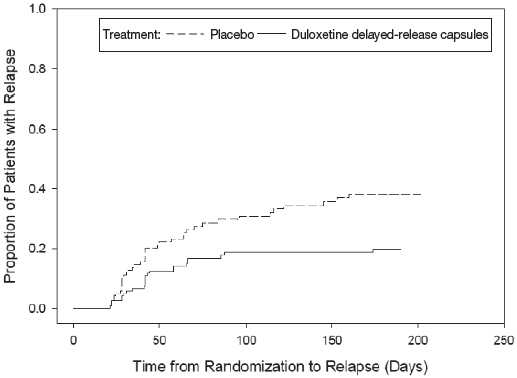
This is a graph showing the proportion of patients with relapse based on the treatment they received (either a Placebo or Duloxstine delayed-release capsules) over time (measured in days). The graph displays percentages ranging from 0% to 10% on the Y-axis and time ranging from 0 to 250 days on the X-axis.*
FDA Label Image

Figure 2 (Duloxetine 03)

Figure 2 (Duloxetine 03)
This is a graph showing the proportion of patients with relapse for two treatments: placebo and Duloxetine delayed-release capsules. The x-axis represents time from randomization to relapse (in days), and the y-axis represents the proportion of patients with relapse. It appears that the group treated with Duloxetine delayed-release capsules had a lower proportion of patients with relapse over time compared to the placebo group.*
FDA Label Image

Figure 3 (Duloxetine 04)

FDA Label Image

Figure 4 (Duloxetine 05)

FDA Label Image

Figure 5 (Duloxetine 06)

FDA Label Image

Figure 6 (Duloxetine 07)

FDA Label Image

Figure 8 (Duloxetine 08)

Figure 8 (Duloxetine 08)
This text appears to be a statistical representation of the percentage of patients who showed improvement in pain after being treated with either a placebo or DUL 60/120 mg daily. The percentages are shown in numbers and divided into different categories. Additionally, there is a graph illustrating the percentage improvement in pain from baseline. The text seems incomplete and does not provide further context or details for the statistical data.*
FDA Label Image

Figure 9 (Duloxetine 09)

Figure 9 (Duloxetine 09)
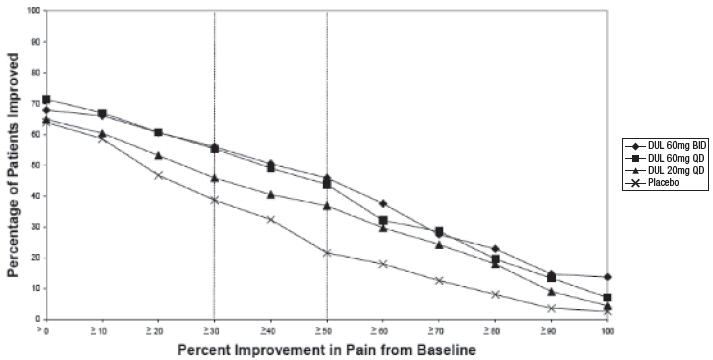
The text shows a chart or graph displaying the percentage of patients who experienced an improvement with a certain treatment, possibly related to pain relief. The treatment being evaluated is likely a medication, as there are two groups compared: a placebo and a 60mg once-daily dose of DUL (could be an abbreviation for a medication name). It also shows a scale ranging from 50 to 100 along the horizontal axis that indicates the percentage of improvement in pain from the baseline (BOCF).*
FDA Label Image

Figure 10 (Duloxetine 10)

Figure 10 (Duloxetine 10)
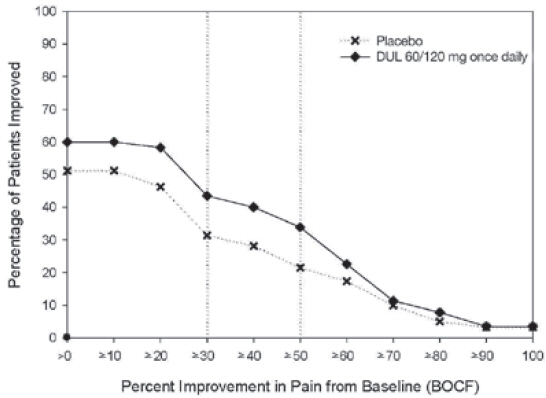
This is a graph showing the percentage improvement in pain from baseline for patients taking either a placebo or Duloxetine (DUL) at either 60mg or 120mg doses, once daily. The graph ranges from 0 to 100 and shows the percentage of patients who have improved their pain levels. There is no further information available.*

* These product label images have been analyzed using experimental machine learning. Please verify findings with the primary label text.