The most commonly observed adverse reactions in Duloxetine delayed-release capsules-treated patients in all the pooled adult populations (i.e., MDD, GAD, DPNP, FM, OA, and CLBP) (incidence of at least 5% and at least twice the incidence in placebo-treated patients) were nausea, dry mouth, somnolence, constipation, decreased appetite, and hyperhidrosis.
Table 2 displays the incidence of adverse reactions in placebo-controlled trials for approved adult populations (i.e., MDD, GAD, DPNP, FM, OA, and CLBP) that occurred in 5% or more of duloxetine-treated patients and with an incidence greater than placebo-treated patients.
Table 3 displays the incidence of adverse reactions in MDD and GAD placebo-controlled adult trials that occurred in 2% or more of duloxetine-treated patients and with an incidence greater than placebo-treated patients.
Table 4 displays the incidence of adverse reactions that occurred in 2% or more of Duloxetine delayed-release capsules-treated patients (determined prior to rounding) in the premarketing acute phase of DPNP, FM, OA, and CLBP placebo-controlled adult trials and with an incidence greater than placebo-treated patients.
Changes in sexual desire, sexual performance and sexual satisfaction often occur as manifestations of psychiatric disorders or diabetes, but they may also be a consequence of pharmacologic treatment. Because adverse sexual reactions are presumed to be voluntarily underreported, the Arizona Sexual Experience Scale (ASEX), a validated measure designed to identify sexual adverse reactions, was used prospectively in 4 MDD placebo-controlled adult trials (Studies MDD-1, MDD-2, MDD-3, and MDD-4)
[see
Clinical Studies (14.2)].
The ASEX scale includes five questions that pertain to the following aspects of sexual function: 1) sex drive, 2) ease of arousal, 3) ability to achieve erection (men) or lubrication (women), 4) ease of reaching orgasm, and 5) orgasm satisfaction. Positive numbers signify a worsening of sexual function from baseline. Negative numbers signify an improvement from a baseline level of dysfunction, which is commonly seen in depressed patients.
In these trials, Duloxetine delayed-release capsules-treated male patients experienced significantly more sexual dysfunction, as measured by the total score on the ASEX and the ability to reach orgasm, than placebo-treated male patients (see
Table 5). Duloxetine delayed-release capsules-treated female patients did not experience more sexual dysfunction than placebo-treated female patients as measured by ASEX total score. Healthcare providers should routinely inquire about possible sexual adverse reactions in Duloxetine delayed-release capsules-treated patients.
In placebo-controlled clinical trials across approved adult populations for change from baseline to endpoint, duloxetine-treated patients had mean increases of 0.23 mm Hg in systolic blood pressure (SBP) and 0.73 mm Hg in diastolic blood pressure (DBP) compared to mean decreases of 1.09 mm Hg in SBP and 0.55 mm Hg in DBP in placebo-treated patients. There was no significant difference in the frequency of sustained (3 consecutive visits) elevated blood pressure
[see
Warnings and Precautions (5.3,
5.11)].
Duloxetine treatment, for up to 26 weeks in placebo-controlled trials across approved adult populations, typically caused a small increase in heart rate for change from baseline to endpoint compared to placebo of up to 1.37 beats per minute (increase of 1.20 beats per minute in duloxetine-treated patients, decrease of 0.17 beats per minute in placebo-treated patients).
Duloxetine delayed-release capsules treatment in placebo-controlled clinical trials across approved adult populations, was associated with small mean increases from baseline to endpoint in ALT, AST, CPK, and alkaline phosphatase; infrequent, modest, transient, abnormal values were observed for these analytes in Duloxetine delayed-release capsules-treated patients when compared with placebo-treated patients
[see
Warnings and Precautions (5.2)].
High bicarbonate, cholesterol, and abnormal (high or low) potassium, were observed more frequently in Duloxetine delayed-release capsules-treated patients compared to placebo-treated patients.
Following is a list of adverse reactions reported by patients treated with duloxetine in clinical adult trials. In clinical trials of all approved adult populations, 34,756 patients were treated with duloxetine. Of these, 27% (9337) took duloxetine for at least 6 months, and 12% (4317) took duloxetine for at least one year. The following listing is not intended to include reactions (1) already listed in previous tables or elsewhere in labeling, (2) for which a drug cause was remote, (3) which were so general as to be uninformative, (4) which were not considered to have significant clinical implications, or (5) which occurred at a rate equal to or less than placebo.
Reactions are categorized by body system according to the following definitions: frequent adverse reactions are those occurring in at least 1/100 patients; infrequent adverse reactions are those occurring in 1/100 to 1/1000 patients; rare reactions are those occurring in fewer than 1/1000 patients.
- Cardiac Disorders —
Frequent: palpitations;
Infrequent: myocardial infarction, tachycardia, and Takotsubo cardiomyopathy.
- Ear and Labyrinth Disorders —
Frequent: vertigo;
Infrequent: ear pain and tinnitus.
- Endocrine Disorders —
Infrequent: hypothyroidism.
- Eye Disorders —
Frequent: vision blurred;
Infrequent: diplopia, dry eye, and visual impairment.
- Gastrointestinal Disorders —
Frequent: flatulence;
Infrequent: dysphagia, eructation, gastritis, gastrointestinal hemorrhage, halitosis, and stomatitis;
Rare: gastric ulcer.
- General Disorders and Administration Site Conditions —
Frequent: chills/rigors;
Infrequent: falls, feeling abnormal, feeling hot and/or cold, malaise, and thirst;
Rare: gait disturbance.
- Infections and Infestations —
Infrequent: gastroenteritis and laryngitis.
- Investigations —
Frequent: weight increased, weight decreased;
Infrequent: blood cholesterol increased.
- Metabolism and Nutrition Disorders —
Infrequent: dehydration and hyperlipidemia;
Rare: dyslipidemia.
- Musculoskeletal and Connective Tissue Disorders —
Frequent: musculoskeletal pain;
Infrequent: muscle tightness and muscle twitching.
- Nervous System Disorders —
Frequent: dysgeusia, lethargy, and paraesthesia/hypoesthesia;
Infrequent: disturbance in attention, dyskinesia, myoclonus, and poor quality sleep;
Rare: dysarthria.
- Psychiatric Disorders —
Frequent: abnormal dreams and sleep disorder;
Infrequent: apathy, bruxism, disorientation/confusional state, irritability, mood swings, and suicide attempt;
Rare: completed suicide.
- Renal and Urinary Disorders —
Frequent: urinary frequency;
Infrequent: dysuria, micturition urgency, nocturia, polyuria, and urine odor abnormal.
- Reproductive System and Breast Disorders —
Frequent: anorgasmia/orgasm abnormal;
Infrequent: menopausal symptoms, sexual dysfunction, and testicular pain;
Rare: menstrual disorder.
- Respiratory, Thoracic and Mediastinal Disorders —
Frequent: yawning, oropharyngeal pain;
Infrequent: throat tightness.
- Skin and Subcutaneous Tissue Disorders —
Frequent: pruritus;
Infrequent: cold sweat, dermatitis contact, erythema, increased tendency to bruise, night sweats, and photosensitivity reaction;
Rare: ecchymosis.
- Vascular Disorders —
Frequent: hot flush;
Infrequent: flushing, orthostatic hypotension, and peripheral coldness.
Adverse Reactions Observed in Placebo-Controlled Clinical Trials in Pediatric Patients
Pediatric Clinical Trial Database
The data described below reflect exposure to duloxetine (N=476) in pediatric patients aged 7 to 17 years of age from two 10-week, placebo-controlled trials in patients with MDD (N=341) (Studies MDD-6 and MDD-7) and one 10-week placebo-controlled trial in GAD (N=135) (Study GAD-6). Duloxetine delayed-release capsules are not approved for the treatment of MDD in pediatric patients
[see
Use in Specific Populations (8.4)].
Of the duloxetine-treated patients in these studies, 42% were 7 to 11 years of age (58% were between 12 to 17 years old), 51% were female, and 69% were white. Patients received 30 to 120 mg of Duloxetine delayed-release capsules per day during placebo-controlled acute treatment studies. In the pediatric MDD and GAD trials up to 36 weeks long, there were 822 duloxetine-treated pediatric patients aged 7 to 17 years of age (most patients received 30-120 mg per day) – 42% were 7 to 11 years of age (58% were 12 to 17 years old) and 52% were female.
Most Common Adverse Reactions in Pediatric Trials
The most common adverse reactions (≥5% in duloxetine-treated patients and at least twice the incidence of placebo-treated patients) in all pooled pediatric populations (MDD, GAD and another indication) were decreased weight, decreased appetite, nausea, vomiting, fatigue, and diarrhea.
Adverse Reactions in Pediatric Patients Aged 7 to 17 Years Old with MDD and GAD
The adverse reaction profile observed in clinical trials in pediatric patients aged 7 to 17 years old with MDD and GAD was consistent with the adverse reaction profile observed in adult clinical trials. The most common (≥5% and twice placebo) adverse reactions observed in these pediatric clinical trials included: nausea, diarrhea, decreased weight, and dizziness.
Table 6 provides the incidence of adverse reactions in MDD and GAD pediatric placebo-controlled trials that occurred in greater than 2% of patients treated with Duloxetine delayed-release capsules and with an incidence greater than patients treated with placebo. Duloxetine delayed-release capsules are not approved in the treatment of MDD in pediatric patients
[see
Use in Specific Populations (8.4)].
Table 6: Adverse Reactions: Incidence of 2% or More and Greater than Placebo in Three 10-week Pediatric Placebo-Controlled Trials in MDD and GAD
Duloxetine delayed-release capsules are not approved for the treatment of pediatric MDD
[see
Use in Specific Populations (8.4)].
The inclusion of an event in the table is determined based on the percentages before rounding; however, the percentages displayed in the table are rounded to the nearest integer.
| System Organ Class / Adverse Reaction | Percentage of Pediatric Patients Reporting Reaction |
|---|
| Duloxetine delayed-release capsules (N=476) | Placebo (N=362) |
|---|
| Gastrointestinal Disorders | | |
| Nausea | 18 | 8 |
| Abdominal Pain
Also includes abdominal pain upper, abdominal pain lower, abdominal tenderness, abdominal discomfort, and gastrointestinal pain. | 13 | 10 |
| Vomiting | 9 | 4 |
| Diarrhea | 6 | 3 |
| Dry Mouth | 2 | 1 |
| General Disorders and Administration Site Conditions | | |
| Fatigue
Also includes asthenia. | 7 | 5 |
| Investigations | | |
| Decreased Weight
Frequency based on weight measurement meeting potentially clinically significant threshold of ≥3.5% weight loss (N=467 Duloxetine; N=354 Placebo). | 14 | 6 |
| Metabolism and Nutrition Disorders | | |
| Decreased Appetite | 10 | 5 |
| Nervous System Disorders | | |
| Headache | 18 | 13 |
| Somnolence
Also includes hypersomnia and sedation. | 11 | 6 |
| Dizziness | 8 | 4 |
| Psychiatric Disorders | | |
| Insomnia
Also includes initial insomnia, insomnia, middle insomnia, and terminal insomnia. | 7 | 4 |
| Respiratory, Thoracic, and Mediastinal Disorders | | |
| Oropharyngeal Pain | 4 | 2 |
| Cough | 3 | 1 |
Other adverse reactions that occurred at an incidence of less than 2% and were reported by more duloxetine-treated patients than placebo-treated patients in pediatric MDD and GAD clinical trials included: abnormal dreams (including nightmare), anxiety, flushing (including hot flush), hyperhidrosis, palpitations, pulse increased, and tremor (Duloxetine delayed-release capsules are not approved to treat pediatric patients with MDD).
The most commonly reported symptoms following discontinuation of Duloxetine delayed-release capsules in pediatric MDD and GAD clinical trials included headache, dizziness, insomnia, and abdominal pain
[see
Warnings and Precautions (5.7)].
Growth (Height and Weight) in Pediatric Patients 7 to 17 Years Old with GAD and MDD
Decreased appetite and weight loss have been observed in association with the use of SSRIs and SNRIs. Duloxetine delayed-release capsules-treated pediatric patients in clinical trials experienced a 0.1 kg mean decrease in weight at 10 weeks, compared with a mean weight gain of approximately 0.9 kg in placebo-treated pediatric patients. The proportion of patients who experienced a clinically significant decrease in weight (≥3.5%) was greater in the Duloxetine delayed-release capsules group than in the placebo group (16% and 6%, respectively). Subsequently, over the 4- to 6-month uncontrolled extension periods, Duloxetine delayed-release capsules-treated patients on average trended toward recovery to their expected baseline weight percentile based on population data from age- and sex-matched peers.
In studies up to 9 months, Duloxetine delayed-release capsules-treated pediatric patients experienced an increase in height of 1.7 cm on average (2.2 cm increase in patients 7 to 11 years of age and 1.3 cm increase in patients 12 to 17 years of age). While height increase was observed during these studies, a mean decrease of 1% in height percentile was observed (decrease of 2% in patients 7 to 11 years of age and increase of 0.3% in patients 12 to 17 years of age). Weight and height should be monitored regularly in pediatric patients treated with Duloxetine delayed-release capsules
[see
Use in Specific Populations (8.4)].
Additional pediatric use information is approved for Eli Lilly and Company, Inc.'s CYMBALTA (duloxetine) delayed-release capsules. However, due to Eli Lilly and Company Inc.'s marketing exclusivity rights, this drug product is not labeled with that pediatric information.
Risk Summary
Data from a postmarketing retrospective cohort study indicate that use of duloxetine in the month before delivery may be associated with an increased risk of postpartum hemorrhage. Data from published literature and from a postmarketing retrospective cohort study have not identified a clear drug-associated risk of major birth defects or other adverse developmental outcomes
(see
Data)
. There are risks associated with untreated depression and fibromyalgia in pregnancy, and with exposure to SNRIs and SSRIs, including Duloxetine delayed-release capsules during pregnancy
(see
Clinical Considerations).
In rats and rabbits treated with duloxetine during the period of organogenesis, fetal weights were decreased but there was no evidence of developmental effects at doses up to 3 and 6 times, respectively, the maximum recommended human dose (MRHD) of 120 mg/day given to adolescents on a mg/m
2 basis. When duloxetine was administered orally to pregnant rats throughout gestation and lactation, pup weights at birth and pup survival to 1 day postpartum were decreased at a dose 2 times the MRHD given to adolescents on a mg/m
2 basis. At this dose, pup behaviors consistent with increased reactivity, such as increased startle response to noise and decreased habituation of locomotor activity were observed. Post-weaning growth was not adversely affected.
The estimated background risk of major birth defects and miscarriage for the indicated population is unknown. All pregnancies have a background risk of birth defect, loss, or other adverse outcomes. In the U.S. general population, the estimated background risk of major birth defects and miscarriage in clinically recognized pregnancies is 2 to 4% and 15 to 20%, respectively.
Clinical Considerations
Disease-associated Maternal and/or Embryo/Fetal Risk
Women who discontinue antidepressants during pregnancy are more likely to experience a relapse of major depression than women who continue antidepressants. This finding is from a prospective, longitudinal study that followed 201 pregnant women with a history of major depressive disorder who were euthymic and taking antidepressants at the beginning of pregnancy. Consider the risk of untreated depression when discontinuing or changing treatment with antidepressant medication during pregnancy and postpartum.
Pregnant women with fibromyalgia are at increased risk for adverse maternal and infant outcomes including preterm premature rupture of membranes, preterm birth, small for gestational age, intrauterine growth restriction, placental disruption, and venous thrombosis. It is not known if these adverse maternal and fetal outcomes are a direct result of fibromyalgia or other comorbid factors.
Maternal Adverse Reactions
Use of duloxetine in the month before delivery may be associated with an increased risk of postpartum hemorrhage
[see
Warnings and Precautions (5.5)].
Fetal/Neonatal Adverse Reaction
Neonates exposed to Duloxetine delayed-release capsules and other SNRIs or SSRIs late in the third trimester have developed complications requiring prolonged hospitalization, respiratory support, and tube feeding. Such complications can arise immediately upon delivery. Reported clinical findings have included respiratory distress, cyanosis, apnea, seizures, temperature instability, feeding difficulty, vomiting, hypoglycemia, hypotonia, hypertonia, hyperreflexia, tremor, jitteriness, irritability, and constant crying. These findings are consistent with either a direct toxic effect of the SNRIs or SSRIs, or possibly, a drug discontinuation syndrome. It should be noted that, in some cases, the clinical picture is consistent with serotonin syndrome
[see
Warnings and Precautions (5.4)].
Data
Human Data
Data from a postmarketing retrospective claims-based cohort study found an increased risk for postpartum hemorrhage among 955 pregnant women exposed to duloxetine in the last month of pregnancy compared to 4,128,460 unexposed pregnant women (adjusted relative risk: 1.53; 95% CI: 1.08-2.18). The same study did not find a clinically meaningful increase in the risk for major birth defects in the comparison of 2532 women exposed to duloxetine in the first trimester of pregnancy to 1,284,827 unexposed women after adjusting for several confounders. Methodologic limitations include possible residual confounding, misclassification of exposure and outcomes, lack of direct measures of disease severity, and lack of information about alcohol use, nutrition, and over-the-counter medication exposures.
Animal Data
In animal reproduction studies, duloxetine has been shown to have adverse effects on embryo/fetal and postnatal development.
When duloxetine was administered orally to pregnant rats and rabbits during the period of organogenesis, there was no evidence of malformations or developmental variations at doses up to 45 mg/kg/day [3 and 6 times, respectively, the MRHD of 120 mg/day given to adolescents on a mg/m
2 basis]. However, fetal weights were decreased at this dose, with a no-effect dose of 10 mg/kg/day (approximately equal to the MRHD in rats and 2 times the MRHD in rabbits).
When duloxetine was administered orally to pregnant rats throughout gestation and lactation, the survival of pups to 1 day postpartum and pup body weights at birth and during the lactation period were decreased at a dose of 30 mg/kg/day (2 times the MRHD given to adolescents on a mg/m
2 basis); the no-effect dose was 10 mg/kg/day. Furthermore, behaviors consistent with increased reactivity, such as increased startle response to noise and decreased habituation of locomotor activity, were observed in pups following maternal exposure to 30 mg/kg/day. Post-weaning growth and reproductive performance of the progeny were not affected adversely by maternal duloxetine treatment.
Risk Summary
Data from published literature report the presence of duloxetine in human milk
(see
Data)
. There are reports of sedation, poor feeding, and poor weight gain in infants exposed to duloxetine through breast milk
(see
Clinical Considerations).
There are no data on the effect of duloxetine on milk production.
The developmental and health benefits of breastfeeding should be considered along with the mother's clinical need for Duloxetine delayed-release capsules and any potential adverse effects on the breastfed child from Duloxetine delayed-release capsules or from the underlying maternal condition.
Clinical Considerations
Infants exposed to Duloxetine delayed-release capsules should be monitored for sedation, poor feeding and poor weight gain.
Data
Disposition of Duloxetine delayed-release capsules was studied in 6 lactating women who were at least 12 weeks postpartum and had elected to wean their infants. The women were given 40 mg of Duloxetine delayed-release capsules twice daily for 3.5 days. The peak concentration measured in breast milk occurred at a median of 3 hours after the dose. The amount of Duloxetine delayed-release capsules in breast milk was approximately 7 mcg/day while on that dose; the estimated daily infant dose was approximately 2 mcg/kg/day, which is less than 1% of the maternal dose. The presence of Duloxetine delayed-release capsules metabolites in breast milk was not examined.
Generalized Anxiety Disorder
Use of Duloxetine delayed-release capsules for the treatment of GAD in patients 7 to 17 years of age is supported by one 10-week, placebo-controlled trial (GAD-6). The study included 272 pediatric patients with GAD of which 47% were 7 to 11 years of age (53% were 12 to 17 years of age). Duloxetine delayed-release capsules demonstrated superiority over placebo as measured by greater improvement in the Pediatric Anxiety Rating Scale (PARS) for GAD severity score
[see
Clinical Studies (14.3)].
The safety and effectiveness of Duloxetine delayed-release capsules for the treatment of GAD in pediatric patients less than 7 years of age have not been established.
Fibromyalgia
The safety and effectiveness of Duloxetine delayed-release capsules for the treatment of fibromyalgia in patents less than 13 years of age have not been established.
Major Depressive Disorder
The safety and effectiveness of Duloxetine delayed-release capsules have not been established in pediatric patients for the treatment of MDD. Efficacy of Duloxetine delayed-release capsules was not demonstrated in two 10-week, placebo-controlled trials with 800 pediatric patients aged 7 to 17 years old with MDD (MDD-6 and MDD-7). Neither Duloxetine delayed-release capsules nor an active control (approved for treatment of pediatric MDD) was superior to placebo.
The most frequently observed adverse reactions in the MDD pediatric clinical trials included nausea, headache, decreased weight, and abdominal pain. Decreased appetite and weight loss have been observed in association with the use of SSRIs and SNRIs.
Juvenile Animal Toxicology Data
Duloxetine administration to young rats from post-natal day 21 (weaning) through post-natal day 90 (adult) resulted in decreased body weights that persisted into adulthood, but recovered when drug treatment was discontinued; slightly delayed (~1.5 days) sexual maturation in females, without any effect on fertility; and a delay in learning a complex task in adulthood, which was not observed after drug treatment was discontinued. These effects were observed at the high dose of 45 mg/kg/day (2 times the MRHD, for a child); the no-effect-level was 20 mg/kg/day (≈1 times the MRHD, for a child).
Additional pediatric use information is approved for Eli Lilly and Company, Inc.'s CYMBALTA (duloxetine) delayed-release capsules. However, due to Eli Lilly and Company Inc.'s marketing exclusivity rights, this drug product is not labeled with that pediatric information.
Geriatric Exposure in Premarketing Clinical Trials of Duloxetine delayed-release capsules
- Of the 2,418 patients in MDD trials, 6% (143) were 65 years of age or over.
- Of the 1041 patients in CLBP trials, 21% (221) were 65 years of age or over.
- Of the 487 patients in OA trials, 41% (197) were 65 years of age or over.
- Of the 1,074 patients in the DPNP trials, 33% (357) were 65 years of age or over.
- Of the 1,761 patients in FM trials, 8% (140) were 65 years of age or over.
In the MDD, GAD, DPNP, FM, OA, and CLBP studies, no overall differences in safety or effectiveness were generally observed between these patients and younger adult patients, and other reported clinical experience has not identified differences in responses between these geriatric and younger adult patients, but greater sensitivity of some older patients cannot be ruled out.
SSRIs and SNRIs, including Duloxetine delayed-release capsules have been associated with clinically significant hyponatremia in geriatric patients, who may be at greater risk for this adverse reaction
[see
Warnings and Precautions (5.13)].
In an analysis of data from all placebo-controlled-trials, Duloxetine delayed-release capsules-treated patients reported a higher rate of falls compared to placebo-treated patients. The increased risk appears to be proportional to a patient's underlying risk for falls. Underlying risk appears to increase steadily with age. As geriatric patients tend to have a higher prevalence of risk factors for falls such as medications, medical comorbidities and gait disturbances, the impact of increasing age by itself on falls during Duloxetine delayed-release capsules treatment is unclear. Falls with serious consequences including bone fractures and hospitalizations have been reported with Duloxetine delayed-release capsules use
[see
Warnings and Precautions (5.3) and
Adverse Reactions (6.1)].
The pharmacokinetics of duloxetine after a single dose of 40 mg were compared in healthy elderly females (65 to 77 years) and healthy middle-age females (32 to 50 years). There was no difference in the C
max, but the AUC of duloxetine was somewhat (about 25%) higher and the half-life about 4 hours longer in the elderly females. Population pharmacokinetic analyses suggest that the typical values for clearance decrease by approximately 1% for each year of age between 25 to 75 years of age; but age as a predictive factor only accounts for a small percentage of between-patient variability. Dosage adjustment based on the age of the adult patient is not necessary.
Cardiac Electrophysiology
The effect of Duloxetine delayed-release capsules, 160 mg and 200 mg administered twice daily (2.7 and 3.3 times the maximum recommended dosage, respectively) to steady state was evaluated in a randomized, double-blinded, two-way crossover study in 117 healthy female adult subjects. No QT interval prolongation was detected. Duloxetine delayed-release capsules appears to be associated with concentration-dependent but not clinically meaningful QT shortening.
Absorption
After oral Duloxetine delayed-release capsules administration, duloxetine hydrochloride is well absorbed. There is a median 2 hour lag until absorption begins (T
lag), with maximal plasma concentrations (C
max) of duloxetine occurring 6 hours post dose. There is a 3 hour delay in absorption and a one-third increase in apparent clearance of duloxetine after an evening dose as compared to a morning dose.
Effect of Food: Food does not affect the C
max of duloxetine, but delays the time to reach peak concentration from 6 to 10 hours and it marginally decreases the extent of absorption (AUC) by about 10%.
Distribution
The apparent volume of distribution averages about 1640 L. Duloxetine is highly bound (>90%) to proteins in human plasma, binding primarily to albumin and α
1-acid glycoprotein. The interaction between duloxetine and other highly protein bound drugs has not been fully evaluated. Plasma protein binding of duloxetine is not affected by renal or hepatic impairment.
Elimination
Metabolism
Biotransformation and disposition of duloxetine in humans have been determined following oral administration of
14C-labeled duloxetine. Duloxetine comprises about 3% of the total radiolabeled material in the plasma, indicating that it undergoes extensive metabolism to numerous metabolites. The major biotransformation pathways for duloxetine involve oxidation of the naphthyl ring followed by conjugation and further oxidation. Both CYP1A2 and CYP2D6 catalyze the oxidation of the naphthyl ring
in vitro. Metabolites found in plasma include 4-hydroxy duloxetine glucuronide and 5-hydroxy, 6-methoxy duloxetine sulfate.
Excretion
Many additional metabolites have been identified in urine, some representing only minor pathways of elimination. Only trace (<1% of the dose) amounts of unchanged duloxetine are present in the urine. Most (about 70%) of the duloxetine dose appears in the urine as metabolites of duloxetine; about 20% is excreted in the feces. Duloxetine undergoes extensive metabolism, but the major circulating metabolites have not been shown to contribute significantly to the pharmacologic activity of duloxetine.
Specific Populations
Pediatric Patients
Duloxetine steady-state plasma concentration was comparable in pediatric patients 7 to 17 years of age and adult patients. The average steady-state duloxetine concentration was approximately 30% lower in this pediatric population relative to adult patients. The model-predicted duloxetine steady state plasma concentrations in pediatric patients 7 to 17 years of age were mostly within the concentration range observed in adult patients and did not exceed the concentration range in adults.
Carcinogenesis
Duloxetine was administered in the diet to mice and rats for 2 years.
In female mice receiving duloxetine at 140 mg/kg/day (3 times the maximum recommended human dose (MRHD) of 120 mg/day given to children on a mg/m
2 basis), there was an increased incidence of hepatocellular adenomas and carcinomas. The no-effect dose was 50 mg/kg/day (1 time the MRHD given to children). Tumor incidence was not increased in male mice receiving duloxetine at doses up to 100 mg/kg/day (2 times the MRHD given to children).
In rats, dietary doses of duloxetine up to 27 mg/kg/day in females (1 time the MRHD given to children) and up to 36 mg/kg/day in males (1.4 times the MRHD given to children) did not increase the incidence of tumors.
Mutagenesis
Duloxetine was not mutagenic in the
in vitro bacterial reverse mutation assay (Ames test) and was not clastogenic in an
in vivo chromosomal aberration test in mouse bone marrow cells. Additionally, duloxetine was not genotoxic in an
in vitro mammalian forward gene mutation assay in mouse lymphoma cells or in an
in vitro unscheduled DNA synthesis (UDS) assay in primary rat hepatocytes, and did not induce sister chromatid exchange in Chinese hamster bone marrow
in vivo.
Impairment of Fertility
Duloxetine administered orally to either male or female rats prior to and throughout mating at doses up to 45 mg/kg/day (3 times the MRHD given to adolescents on a mg/m
2 basis) did not alter mating or fertility.
GAD Trials in Adults (Including Geriatric Patients)
The efficacy of Duloxetine delayed-release capsules in the treatment of generalized anxiety disorder (GAD) was established in 1 fixed-dose randomized, double-blind, placebo-controlled trial and 2 flexible-dose randomized, double-blind, placebo-controlled trials in adult outpatients between 18 and 83 years of age meeting the DSM-IV criteria for GAD (Studies GAD-1, GAD-2, and GAD-3, respectively).
In Studies GAD-1 and GAD-2, the starting dose was 60 mg once daily (down titration to 30 mg once daily was allowed for tolerability reasons; the dosage could be increased to 60 mg once daily). Fifteen percent of patients were down titrated. Study GAD-3 had a starting dose of 30 mg once daily for 1 week before increasing it to 60 mg once daily.
Studies GAD-2 and GAD-3 involved dose titration with Duloxetine delayed-release capsules doses ranging from 60 mg once daily to 120 mg once daily (N=168 and N=162) compared to placebo (N=159 and N=161) over a 10-week treatment period. The mean dosage for completers at endpoint in these trials was 104.8 mg/day. Study GAD-1 evaluated Duloxetine delayed-release capsules dosages of 60 mg once daily (N=168) and 120 mg once daily (N=170) compared to placebo (N=175) over a 9-week treatment period. While a 120 mg/day dose was shown to be effective, there is no evidence that doses greater than 60 mg/day confer additional benefit.
In all 3 trials, Duloxetine delayed-release capsules demonstrated superiority over placebo as measured by greater improvement in the Hamilton Anxiety Scale (HAM-A) total score (see
Table 9) and by the Sheehan Disability Scale (SDS) global functional impairment score. The SDS is a composite measurement of the extent emotional symptoms disrupt patient functioning in 3 life domains: work/school, social life/leisure activities, and family life/home responsibilities.
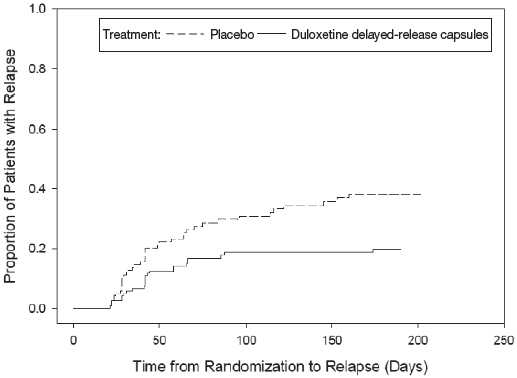
In Study GAD-4, 887 patients meeting DSM-IV-TR criteria for GAD received Duloxetine delayed-release capsules 60 mg to 120 mg once daily during an initial 26-week open-label treatment phase. Four hundred and twenty-nine patients who responded to open-label treatment [defined as meeting the following criteria at weeks 24 and 26: a decrease from baseline HAM-A total score by at least 50% to a score no higher than 11, and a Clinical Global Impressions of Improvement (CGI-Improvement) score of 1 or 2] were randomly assigned to continuation of Duloxetine delayed-release capsules at the same dosage (N=216) or to placebo (N=213) and were observed for relapse. Of the patients randomized, 73% had been in a responder status for at least 10 weeks. Relapse was defined as an increase in CGI-Severity score at least 2 points to a score ≥4 and a MINI (Mini-International Neuropsychiatric Interview) diagnosis of GAD (excluding duration), or discontinuation due to lack of efficacy. Patients taking Duloxetine delayed-release capsules experienced a statistically significantly longer time to relapse of GAD than did patients taking placebo (see
Figure 2).
Subgroup analyses did not indicate that there were any differences in treatment outcomes as a function of age or gender.
GAD Trial in Geriatric Patients
The efficacy of Duloxetine delayed-release capsules in the treatment of patients ≥65 years of age with GAD was established in one 10-week flexible-dose, randomized, double-blind, placebo-controlled trial in adults ≥65 years of age meeting the DSM-IV criteria for GAD (Study GAD-5). In Study GAD-5, the starting dose was 30 mg once daily for 2 weeks before further dose increases in 30 mg increments at treatment weeks 2, 4, and 7 up to 120 mg once daily were allowed based on investigator judgment of clinical response and tolerability. The mean dosage for patients completing the 10-week acute treatment phase was 51 mg. Patients treated with duloxetine (N=151) demonstrated significantly greater improvement compared with placebo (N=140) on mean change from baseline to endpoint as measured by the HAM-A total score (see
Table 9).
GAD Trial in Pediatric Patients 7 to 17 Years Old
The efficacy of Duloxetine delayed-release capsules in the treatment of pediatric patients 7 to 17 years of age with GAD was established in 1 flexible-dose randomized, double-blind, placebo-controlled trial in pediatric outpatients with GAD (based on DSM-IV criteria) (Study GAD-6).
In Study GAD-6, the starting dosage was 30 mg once daily for 2 weeks. Further dosage increases in 30 mg increments up to 120 mg once daily were allowed based on investigator judgment of clinical response and tolerability. The mean dosage for patients completing the 10-week treatment phase was 57.6 mg/day. In this study, Duloxetine delayed-release capsules (N=135) demonstrated superiority over placebo (N=137) from baseline to endpoint as measured by greater improvement in the Pediatric Anxiety Rating Scale (PARS) for GAD severity score (see
Table 9).
Table 9: Summary of the Primary Efficacy Results for GAD TrialsStudy Number
(population)
(measurement)
| Treatment Group | Primary Efficacy Measure |
|---|
| Mean Baseline Score (SD) | LS Mean Change from Baseline (SE) | Placebo-subtracted Difference
Difference (drug minus placebo) in least squares mean change from baseline. (95% CI)
|
|---|
| SD: standard deviation; SE: standard error; LS Mean: least-squares mean; CI: confidence interval, not adjusted for multiplicity in trials where multiple dose groups were included. |
Study GAD-1
(Adult)
(HAM-A)
| Duloxetine delayed-release capsules (60 mg/day)
| 25.1 (7.18) | -12.8 (0.68) | -4.4 (-6.2, -2.5) |
| Duloxetine delayed-release capsules (120 mg/day)
| 25.1 (7.24) | -12.5 (0.67) | -4.1 (-5.9, -2.3) |
| Placebo | 25.8 (7.66) | -8.4 (0.67) | -- |
Study GAD-2
(Adult)
(HAM-A)
| Duloxetine delayed-release capsules (60-120 mg/day)
| 22.5 (7.44) | -8.1 (0.70) | -2.2 (-4.2, -0.3) |
| Placebo | 23.5 (7.91) | -5.9 (0.70) | -- |
Study GAD-3
(Adult)
(HAM-A)
| Duloxetine delayed-release capsules (60-120 mg/day)
| 25.8 (5.66) | -11.8 (0.69 | -2.6 (-4.5, -0.7) |
| Placebo | 25.0 (5.82) | -9.2 (0.67) | -- |
Study GAD-5
(Geriatric)
(HAM-A)
| Duloxetine delayed-release capsules (60-120 mg/day)
| 24.6 (6.21) | -15.9 (0.63) | -4.2 (-5.9, -2.5) |
| Placebo | 24.5 (7.05) | -11.7 (0.67) | -- |
Study GAD-6
(Pediatric)
(PARS for GAD)
| Duloxetine delayed-release capsules (30-120 mg/day)
| 17.5 (1.98) | -9.7 (0.50) | -2.7 (-4.0, -1.3) |
| Placebo | 17.4 (2.24) | -7.1 (0.50) | -- |
| Figure 2: Cumulative Proportion
Kaplan-Meier estimator method. of Adult Patients with GAD Relapse (Study GAD-4)
|
|
Adult Trials in Fibromyalgia
The efficacy of Duloxetine delayed-release capsules for the management of fibromyalgia in adults was established in two randomized, double-blind, placebo-controlled, fixed-dose trials in adult patients meeting the American College of Rheumatology criteria for fibromyalgia (a history of widespread pain for 3 months, and pain present at 11 or more of the 18 specific tender point sites). Study FM-1 was three months in duration and enrolled female patients only. Study FM-2 was six months in duration and enrolled male and female patients. Approximately 25% of participants had a comorbid diagnosis of MDD. Studies FM-1 and FM-2 enrolled a total of 874 patients of whom 541 (62%) completed the trials. A total of 354 patients (234 Duloxetine delayed-release capsules, 120 placebo) were enrolled in Study FM-1 and a total of 520 patients (376 Duloxetine delayed-release capsules, 144 placebo) were enrolled in Study FM-2 (5% male, 95% female). The patients had a baseline pain score of 6.5 on an 11-point scale ranging from 0 (no pain) to 10 (worse possible pain).
Studies FM-1 and FM-2 compared Duloxetine delayed-release capsules 60 mg once daily or 120 mg daily (given in divided doses in Study FM-1 and as a single daily dose in Study FM-2) with placebo. Study FM-2 additionally compared Duloxetine delayed-release capsules 20 mg with placebo during the initial three months of a six-month trial.
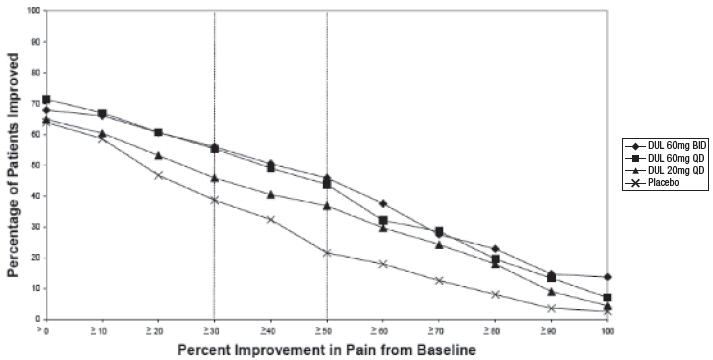
Treatment with Duloxetine delayed-release capsules 60 mg or 120 mg daily statistically significantly improved the endpoint mean pain scores from baseline and increased the proportion of patients with at least a 50% reduction in pain score from baseline. Pain reduction was observed in patients both with and without comorbid MDD. However, the degree of pain reduction may be greater in patients with comorbid MDD. For various degrees of improvement in pain from baseline to study endpoint, Figures 5 and 6 show the fraction of patients achieving that degree of improvement in Studies FM-1 and FM-2, respectively. The figures are cumulative so that patients whose change from baseline is, for example, 50%, are also included at every level of improvement below 50%. Patients who did not complete the trial were assigned 0% improvement. Some patients experienced a decrease in pain as early as week 1, which persisted throughout the trial. Improvement was also demonstrated on measures of function (Fibromyalgia Impact Questionnaires) and patient global impression of change (PGI). Neither trial demonstrated a benefit of 120 mg compared to 60 mg, and a higher dosage was associated with more adverse reactions and premature discontinuations of treatment.
| Figure 5: Percentage of Adult Fibromyalgia Patients Achieving Various Levels of Pain Relief at Study Endpoint as Measured by 24-Hour Average Pain Severity (Study FM-1) | Figure 6: Percentage of Adult Fibromyalgia Patients Achieving Various Levels of Pain Relief at Study Endpoint as Measured by 24-Hour Average Pain Severity (Study FM-2) |
| |
Additionally, the benefit of up-titration in non-responders to Duloxetine delayed-release capsules at 60 mg/day was evaluated in a separate trial (Study FM-3). Adult patients were initially treated with Duloxetine delayed-release capsules 60 mg once daily for eight weeks in open-label fashion. Subsequently, completers of this phase were randomized to double-blind treatment with Duloxetine delayed-release capsules at either 60 mg once daily or 120 mg once daily. Responders were defined as patients who had at least a 30% reduction in pain score from baseline at the end of the 8-week treatment. Patients who were non-responders at 8 weeks were no more likely to meet response criteria at the end of 60 weeks of treatment if blindly titrated to Duloxetine delayed-release capsules 120 mg as compared to those who were blindly continued on Duloxetine delayed-release capsules 60 mg.
Additional pediatric use information is approved for Eli Lilly and Company, Inc.'s CYMBALTA (duloxetine) delayed-release capsules. However, due to Eli Lilly and Company Inc.'s marketing exclusivity rights, this drug product is not labeled with that pediatric information.
Trials in Chronic Low Back Pain in Adults
The efficacy of Duloxetine delayed-release capsules in chronic low back pain (CLBP) in adults was assessed in two double-blind, placebo-controlled, randomized clinical trials of 13-weeks duration (Studies CLBP-1 and CLBP-2), and one of 12-weeks duration (CLBP-3). Studies CLBP-1 and CLBP-3 demonstrated efficacy of Duloxetine delayed-release capsules in the treatment of CLBP. Patients in all trials had no signs of radiculopathy or spinal stenosis.
Study CLBP-1: Two hundred thirty-six adult patients (N=115 on Duloxetine delayed-release capsules, N=121 on placebo) enrolled and 182 (77%) completed 13-week treatment phase. After 7 weeks of treatment, Duloxetine delayed-release capsules-treated patients with less than 30% reduction in average daily pain and who were able to tolerate 60 mg once daily had their Duloxetine delayed-release capsules dosage, in a double-blinded fashion, increased to 120 mg once daily for the remainder of the trial. Patients had a mean baseline pain rating of 6 on a numerical rating scale ranging from 0 (no pain) to 10 (worst possible pain). After 13 weeks of treatment, patients taking Duloxetine delayed-release capsules 60-120 mg daily had a significantly greater pain reduction compared to patients taking placebo. Randomization was stratified by the patients' baseline NSAIDs use status. Subgroup analyses did not indicate that there were differences in treatment outcomes as a function of NSAIDs use.
Study CLBP-2: Four hundred and four patients were randomized to receive fixed dosages of Duloxetine delayed-release capsules daily or a matching placebo (N=59 on Duloxetine delayed-release capsules 20 mg, N=116 on Duloxetine delayed-release capsules 60 mg, N=112 on Duloxetine delayed-release capsules 120 mg, N=117 on placebo) and 267 (66%) completed the entire 13-week trial. After 13 weeks of treatment, none of the three Duloxetine delayed-release capsules dosages showed a statistically significant difference in pain reduction compared to placebo.
Study CLBP-3: Four hundred and one patients were randomized to receive fixed doses of Duloxetine delayed-release capsules 60 mg daily or placebo (N=198 on Duloxetine delayed-release capsules, N=203 on placebo), and 303 (76%) completed the trial. Patients had a mean baseline pain rating of 6 on a numerical rating scale ranging from 0 (no pain) to 10 (worst possible pain). After 12 weeks of treatment, patients taking Duloxetine delayed-release capsules 60 mg daily had significantly greater pain reduction compared to patients taking placebo.
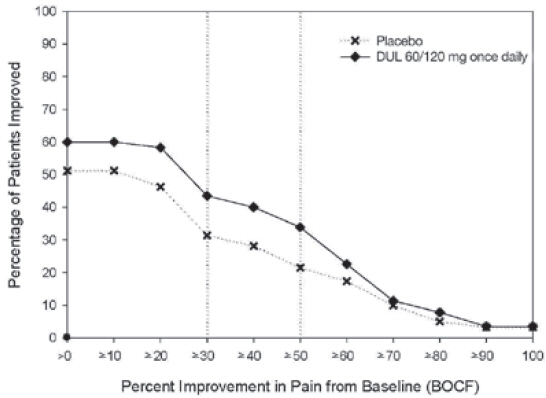
For various degrees of improvement in pain from baseline to study endpoint, Figures 8 and 9 show the fraction of patients in Studies CLBP-1 and CLBP-3 achieving that degree of improvement, respectively. The figures are cumulative, so that patients whose change from baseline is, for example, 50%, are also included at every level of improvement below 50%. Patients who did not complete the trial were assigned the value of 0% improvement.
| Figure 8: Percentage of Adult Patients with CLBP Achieving Various Levels of Pain Relief as Measured by 24-Hour Average Pain Severity (Study CLBP-1) | Figure 9: Percentage of Adult Patients with CLBP Achieving Various Levels of Pain Relief as Measured by 24-Hour Average Pain Severity (Study CLBP-3) |
| |
Trials in Chronic Pain Due to Osteoarthritis in Adults
The efficacy of Duloxetine delayed-release capsules in chronic pain due to osteoarthritis (OA) in adults was assessed in 2 double-blind, placebo-controlled, randomized clinical trials of 13-weeks duration (Study OA-1 and Study OA-2). All patients in both trials fulfilled the ACR clinical and radiographic criteria for classification of idiopathic OA of the knee. Randomization was stratified by the patients' baseline NSAIDs-use status.
Patients assigned to Duloxetine delayed-release capsules started treatment in both trials at a dose of 30 mg once daily for one week. After the first week, the dose of Duloxetine delayed-release capsules was increased to 60 mg once daily. After 7 weeks of treatment with Duloxetine delayed-release capsules 60 mg once daily, in Study OA-1 patients with sub-optimal response to treatment (<30% pain reduction) and tolerated Duloxetine delayed-release capsules 60 mg once daily had their dose increased to 120 mg. However, in Study OA-2, all patients, regardless of their response to treatment after 7 weeks, were re-randomized to either continue receiving Duloxetine delayed-release capsules 60 mg once daily or have their dosage increased to 120 mg once daily for the remainder of the trial. Patients in the placebo treatment groups in both trials received a matching placebo for the entire duration of trials. For both trials, efficacy analyses were conducted using 13-week data from the combined Duloxetine delayed-release capsules 60 mg and 120 mg once daily treatment groups compared to the placebo group.
Study OA-1: Two hundred fifty-six patients (N=128 on Duloxetine delayed-release capsules, N=128 on placebo) enrolled and 204 (80%) completed the trial. Patients had a mean baseline pain rating of 6 on a numerical rating scale ranging from 0 (no pain) to 10 (worst possible pain). After 13 weeks of treatment, patients taking Duloxetine delayed-release capsules had significantly greater pain reduction than patients taking placebo. Subgroup analyses did not indicate that there were differences in treatment outcomes as a function of NSAIDs use.
Study OA-2: Two hundred thirty-one patients (N=111 on Duloxetine delayed-release capsules, N=120 on placebo) enrolled and 173 (75%) completed the trial. Patients had a mean baseline pain of 6 on a numerical rating scale ranging from 0 (no pain) to 10 (worst possible pain). After 13 weeks of treatment, patients taking Duloxetine delayed-release capsules did not show a significantly greater pain reduction than patients taking placebo.
In Study OA-1, for various degrees of improvement in pain from baseline to study endpoint, Figure 10 shows the fraction of patients achieving that degree of improvement. The figure is cumulative, so that patients whose change from baseline is, for example, 50%, are also included at every level of improvement below 50%. Patients who did not complete the trial were assigned the value of 0% improvement.
| Figure 10: Percentage of Adult Patients with OA Achieving Various Levels of Pain Relief as Measured by 24-Hour Average Pain Severity (Study OA-1) |
 Figure 10 (Duloxetine 10) |
Manufactured for:
Breckenridge Pharmaceutical, Inc.,
Berlin, CT 06037
Manufactured by:
Towa Pharmaceutical Europe, S.L.
Martorelles (Barcelona), Spain
711952-03