ALTUVIIIO is not indicated for the treatment of von Willebrand disease.
The recommended dosing for routine prophylaxis for adults and children is 50 IU/kg of ALTUVIIIO administered once weekly.
ALTUVIIIO dosing for the on-demand treatment and control of bleeding episodes is provided in Table 1.
For resumption of prophylaxis (if applicable) after treatment of a bleed, it is recommended to allow an interval of at least 72 hours between the last 50 IU/kg dose for treatment of a bleed and resuming prophylaxis dosing. Thereafter, prophylaxis can be continued as usual on the patient's regular schedule.
ALTUVIIIO dosing for perioperative management is provided in Table 2.
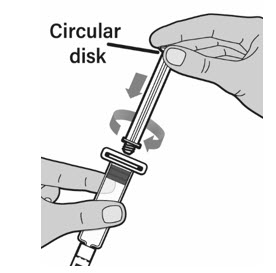
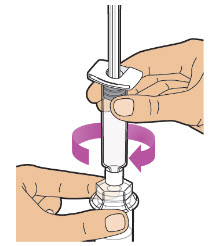
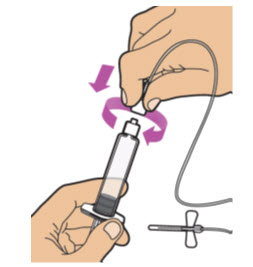
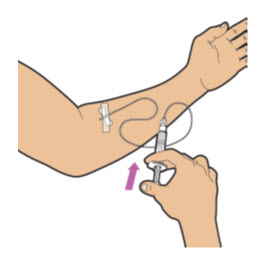
- Attach the syringe to the connector end of the infusion set tubing by turning it to the right until it is securely attached.
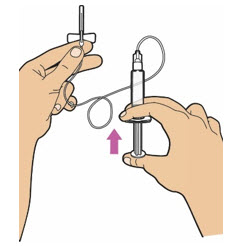
- Push the plunger rod until all air is removed from the syringe and ALTUVIIIO has filled the infusion set needle. Do not push ALTUVIIIO solution through the needle.
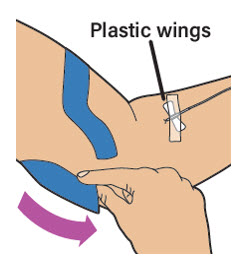
- Remove the protective needle cover from the infusion set needle.
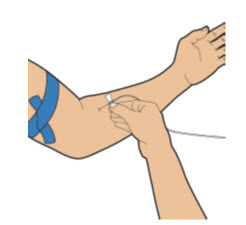
- Perform intravenous injection. The rate of administration should be determined by the patient's comfort level and no faster than:
- For adults and adolescents: 1–2 minutes per vial.
- For children: 2–3 minutes per vial if body weight is greater than or equal to 20 kg; or 6 minutes per vial if body weight is less than 20 kg.
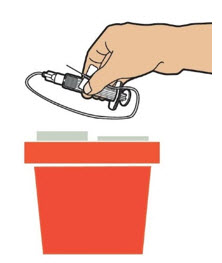
- After infusing ALTUVIIIO, remove and properly discard the infusion set.
Immunogenicity
All subjects were monitored for neutralizing antibodies (inhibitors) to Factor VIII in the clinical program. No subjects developed neutralizing antibodies to Factor VIII [see Immunogenicity (12.6)].
Risk Summary
There are no data with ALTUVIIIO use in pregnant women to inform a drug-associated risk. Animal developmental and reproductive studies have not been conducted with ALTUVIIIO. Therefore, it is not known whether ALTUVIIIO can affect reproductive capacity or cause fetal harm when given to pregnant women.
In the U.S. general population, the estimated background risk of major birth defects and miscarriage in clinically recognized pregnancies is 2–4% and 15–20%, respectively.
Risk Summary
There is no information regarding the presence of ALTUVIIIO in human milk, its effects on the breastfed infant, or its effects on milk production. The developmental and health benefits of breastfeeding should be considered along with the mother's clinical need for ALTUVIIIO and any potential adverse effects on the breastfed infant from ALTUVIIIO or from the underlying maternal condition.
Mechanism of Half-life Extension
ALTUVIIIO is a recombinant FVIII analogue fusion protein that is independent of endogenous VWF in order to overcome the half-life limit imposed by FVIII-VWF interactions. The D'D3 domain of VWF is the region that interacts with FVIII. Appending the D'D3 domain of VWF to a recombinant FVIII-Fc fusion protein provides protection and stability to FVIII, and prevents FVIII interaction with endogenous VWF, thus overcoming the limitation on FVIII half-life imposed by VWF clearance.
The Fc region of human immunoglobulin G1 (IgG1) binds to the neonatal Fc receptor (FcRn). FcRn is part of a naturally occurring pathway that delays lysosomal degradation of immunoglobulins by recycling them back into circulation, thus prolonging the plasma half-life of the fusion protein.
ALTUVIIIO contains 2 XTEN polypeptides, which alter the hydrodynamic radius of the fusion protein, thus reducing rates of clearance and degradation, and improving pharmacokinetic properties. In ALTUVIIIO, the natural FVIII B domain (except 5 amino acids) is replaced with the first XTEN, inserted in between FVIII N745 and E1649 amino acid residues; and the second XTEN is inserted in between the D'D3 domain and Fc.
Specific Populations
The following factors have no clinically meaningful effect on the pharmacokinetics of ALTUVIIIO: age (1.4 to 72 years), sex, race (White, Asian), VWF antigen activity (40 to 339 IU/dL), hematocrit level (28% to 57%), blood type, HCV status, or HIV status. Body weight (12.5 to 133 kg) is expected to alter weight normalized clearance (dL/h/kg) by 79% to -18% compared to a typical patient.
Routine Prophylaxis to Reduce Bleeding Episodes
Adult and Adolescent Study
The efficacy of weekly 50 IU/kg ALTUVIIIO as routine prophylaxis was evaluated as estimated by the mean annualized bleed rate (ABR) and by comparing the ABR during on-study prophylaxis vs. the ABR during pre-study FVIII prophylaxis. A total of 133 adults and adolescents, who were on pre-study FVIII prophylaxis, were assigned to receive ALTUVIIIO for routine prophylaxis at a dose of 50 IU/kg IV once weekly for 52 weeks (Arm A). An additional 26 subjects, who were on pre-study episodic (on-demand) treatment with FVIII, received episodic (on-demand) treatment with ALTUVIIIO at doses of 50 IU/kg IV for 26 weeks, followed by routine prophylaxis at a dose of 50 IU/kg IV once weekly for 26 weeks (Arm B). Overall, 115 subjects received at least a total number of 50 exposure days (EDs) in Arm A and 17 subjects completed at least 25 EDs of routine prophylaxis in Arm B.
The ABR in subjects evaluable for efficacy with at least 26 weeks of exposure are summarized in Table 6. Routine prophylaxis resulted in a mean ABR (95% CI) of 0.7 (0.5, 1.0), a median (Q1, Q3) ABR of 0 (0, 1.0), and a median (Q1, Q3) annualized joint bleeding rate of 0 (0, 1.0).
Table 6: Summary of Annualized Bleeding Rate (ABR) with ALTUVIIIO Prophylaxis, ALTUVIIIO On-demand Treatment, and After Switch to ALTUVIIIO Prophylaxis in Patients ≥12 Years of Age | Endpoint Reflects all bleeds reported by patients including those where no ALTUVIIIO was administered. | Arm A
ProphylaxisSubjects assigned to receive ALTUVIIIO prophylaxis for 52 weeks. | Arm B
On-demandSubjects assigned to receive ALTUVIIIO for 26 weeks. | Arm B
Prophylaxis |
|---|
| ABR = annualized bleed rate; CI = confidence interval; Q1= 25th percentile, Q3=75th percentile. |
| N = 128 | N = 26 | N = 26 |
| Treated bleeds |
| Mean ABR (95% CI) Based on negative binomial model. | 0.7 (0.5, 1.0) | 21.4 (18.8, 24.4) | 0.7 (0.3, 1.5) |
| Median ABR (Q1, Q3) | 0 (0, 1.0) | 21.1 (15.1, 27.1) | 0 (0, 0) |
| subjects with zero bleeds, n (%) | 82 (64.1) | 0 | 20 (76.9) |
| Treated spontaneous bleeds |
| Mean ABR (95% CI) | 0.3 (0.2, 0.4) | 15.8 (12.3, 20.4) | 0.4 (0.2, 1.2) |
| Median ABR (Q1, Q3) | 0 (0, 0) | 16.7 (8.6, 23.8) | 0 (0, 0) |
| % subjects with zero bleeds, n (%) | 103 (80.5) | 1 (3.8) | 22 (84.6) |
| Treated joint bleeds |
| Mean ABR (95% CI) | 0.5 (0.4, 0.7) | 17.5 (14.9, 20.5) | 0.6 (0.3, 1.5) |
| Median ABR (Q1, Q3) | 0 (0, 1.0) | 18.4 (10.8, 23.9) | 0 (0, 0) |
| % subjects with zero bleeds, n (%) | 92 (71.9) | 0 | 21 (80.8) |
| All Bleeds (treated and untreated) |
| Mean ABR (95% CI) | 1.1 (0.8, 1.5) | 22.2 (19.4, 25.4) | 0.9 (0.4, 1.8) |
| Median ABR (Q1, Q3) | 0 (0, 1.2) | 21.1 (16.8, 27.1) | 0 (0. 1.9) |
| % subjects with zero bleeds, n (%) | 71 (55.5) | 0 | 19 (73.1) |
An intra-subject comparison (N = 78) between mean ABR during on-study prophylaxis with ALTUVIIIO and that during pre-study FVIII prophylaxis yielded a 77% reduction in treated bleeds (95% CI: 58%, 87%).
All subjects with target joints at baseline (defined as ≥3 spontaneous bleeding episodes in a major joint which occurred in a consecutive 6-month period) achieved resolution of all target joints (45/45, 100%) with 12 months of prophylactic treatment with ALTUVIIIO (defined as ≤2 bleeding episodes in the target joint in 12 months).
Pediatric Study
The efficacy of weekly 50 IU/kg ALTUVIIIO as routine prophylaxis in children <12 years was evaluated as estimated by the mean annualized bleed rate (ABR). At the time of the interim analysis, a total of 67 children (31 children <6 years of age and 36 children 6 to <12 years of age) were enrolled to receive ALTUVIIIO for routine prophylaxis at a dose of 50 IU/kg IV once weekly for 52 weeks. In subjects with at least 26 weeks of exposure (N=23), routine prophylaxis resulted in a mean ABR (95% CI) of 0.5 (0.2, 1.3) and a median (Q1, Q3) ABR of 0 (0, 1.3) for treated bleeds. For all bleeds (treated and non treated), the mean ABR (95% CI) was 3.6 (1.6, 8.4) and the median (Q1, Q3) ABR was 0 (0, 4.5).
Efficacy in Control of Bleeding
In the adult and adolescent study, a total of 362 bleeding episodes were treated with ALTUVIIIO, most occurring during on-demand treatment in Arm B. Majority of bleeding episodes were localized in joints. Response to the first injection was assessed by subjects at least 8 hours after treatment. A 4-point rating scale of excellent, good, moderate, and no response was used to assess response. Bleeding was resolved with a single 50 IU/kg injection of ALTUVIIIO in 96.7% of bleeding episodes. The median (Q1; Q3) total dose to treat a bleeding episode was 50.9 IU/kg (50.0; 51.9). Control of bleeding episodes was similar across the treatment arms.
Perioperative Management of Bleeding
Perioperative hemostasis was assessed in 13 major surgeries in 12 subjects (11 adults and 1 child). Of the 13 major surgeries, 12 surgeries required a single pre-operative dose to maintain hemostasis during surgery; for 1 major surgery during routine prophylaxis no pre-operative loading dose was administered on the day of/or before surgery. The median dose per pre-operative injection was 49.96 IU/kg (range 12.7 – 61.9).
The clinical evaluation of hemostatic response during major surgery was assessed using a 4-point scale of excellent, good, moderate, or poor/none. The hemostatic effect of ALTUVIIIO was rated as "excellent" in 13 of 13 surgeries (100%). No surgery had an outcome rated as "poor/none" or "missing."
Types of major surgeries assessed include major orthopedic procedures such as joint arthroplasties (joint replacements of knee, hip, and elbow), joint revisions and ankle fusion. Other major surgeries included molar extractions and rhinoplasty/mentoplasty.
Perioperative hemostasis was assessed in 22 minor surgeries in 19 subjects (12 adults and 7 children). The hemostatic response was evaluated by the investigator/surgeon in 15 of these minor surgeries; an excellent response was reported in all (100%).
How Supplied
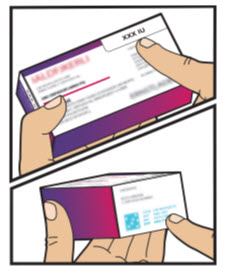
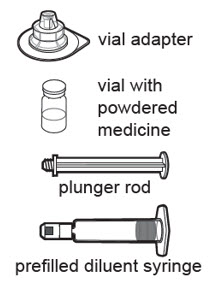
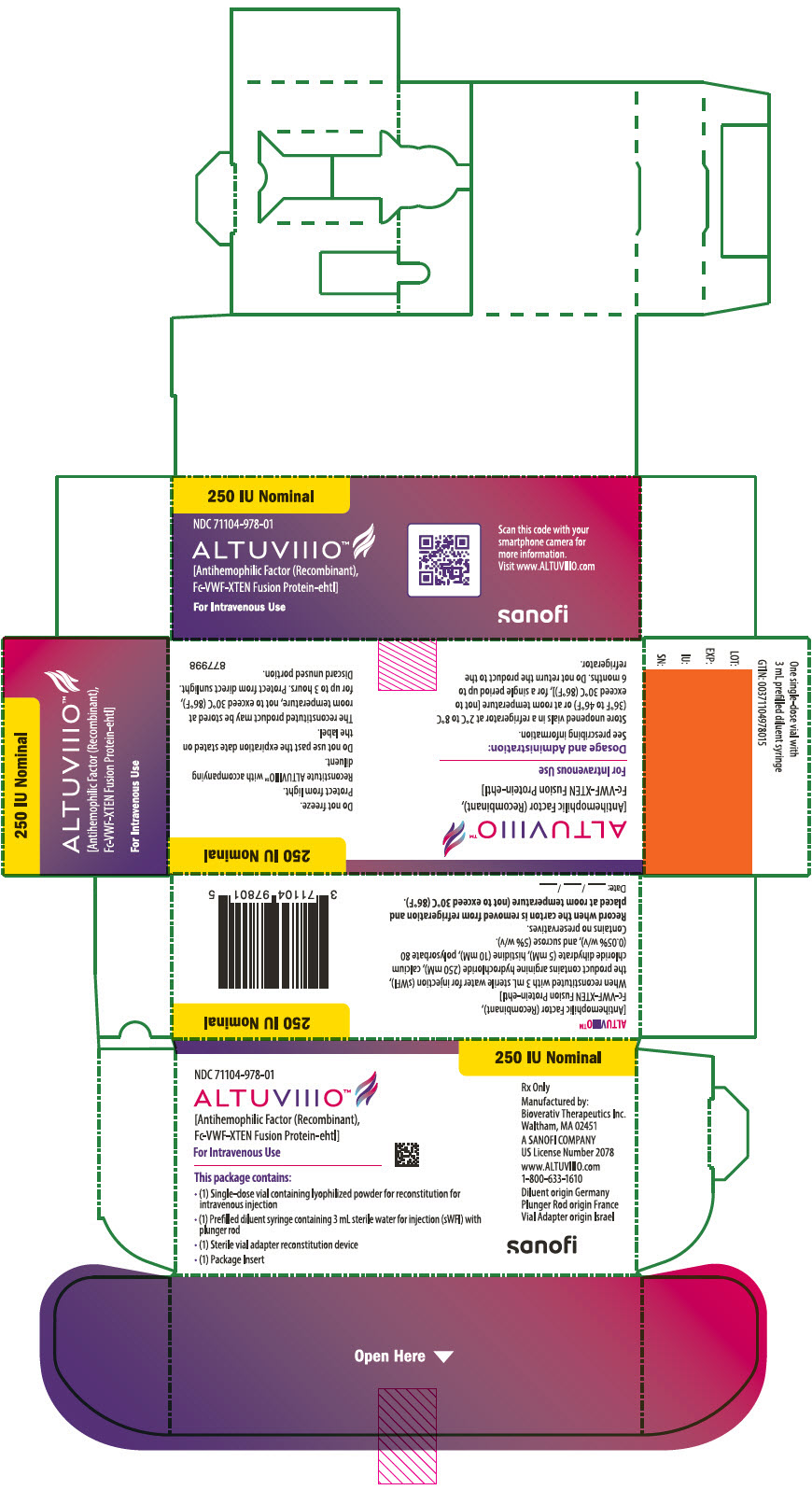
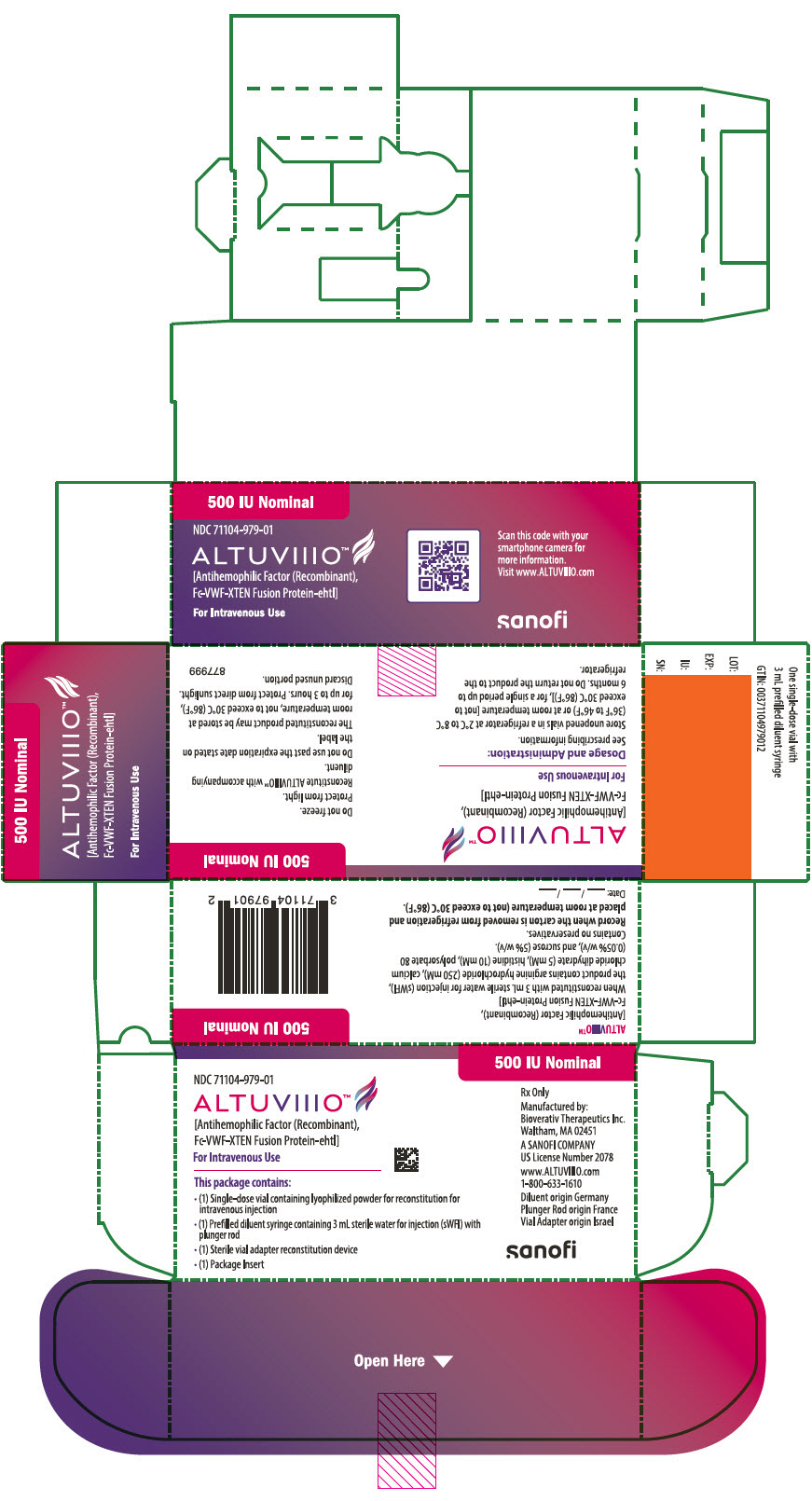
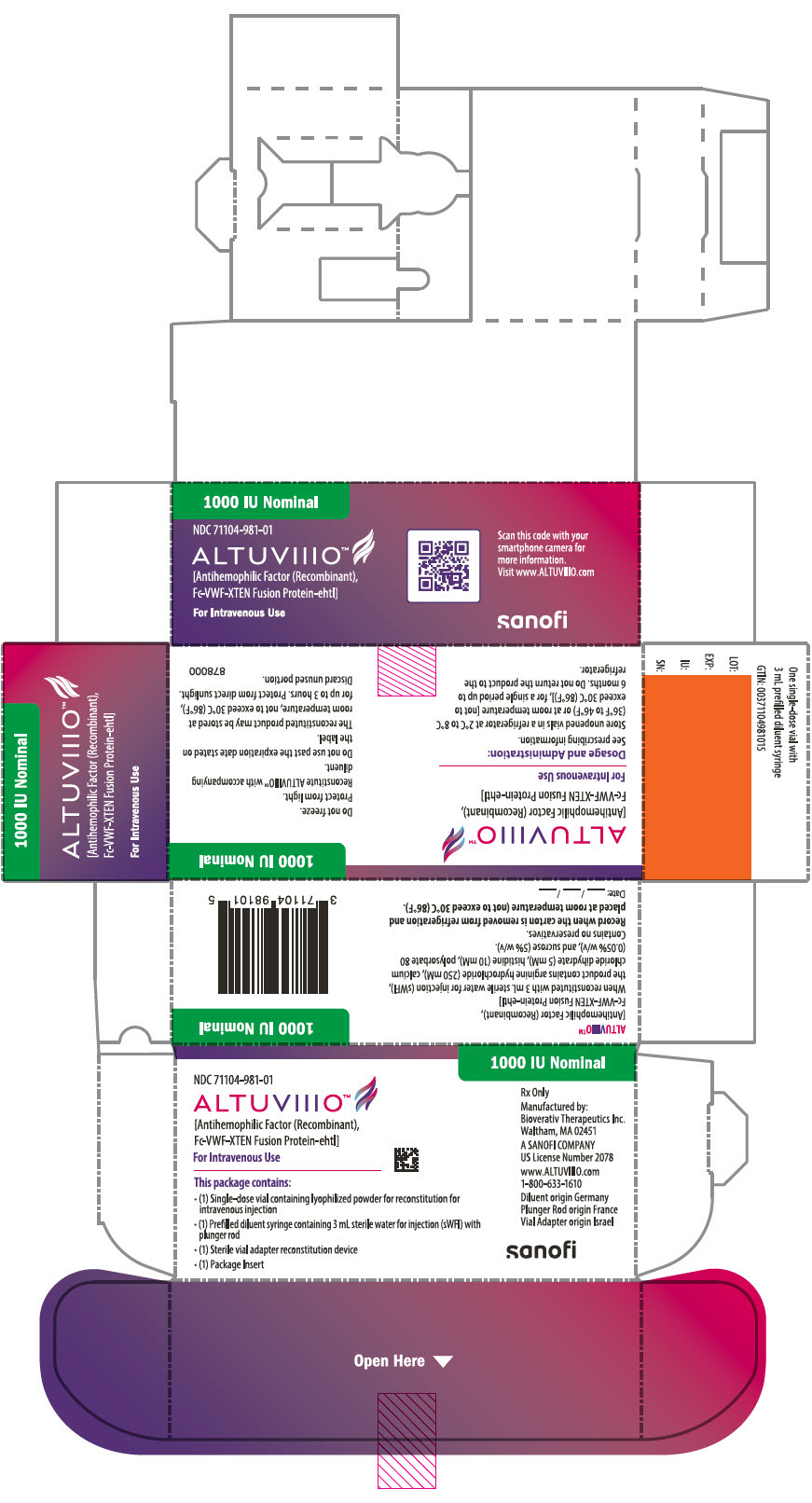
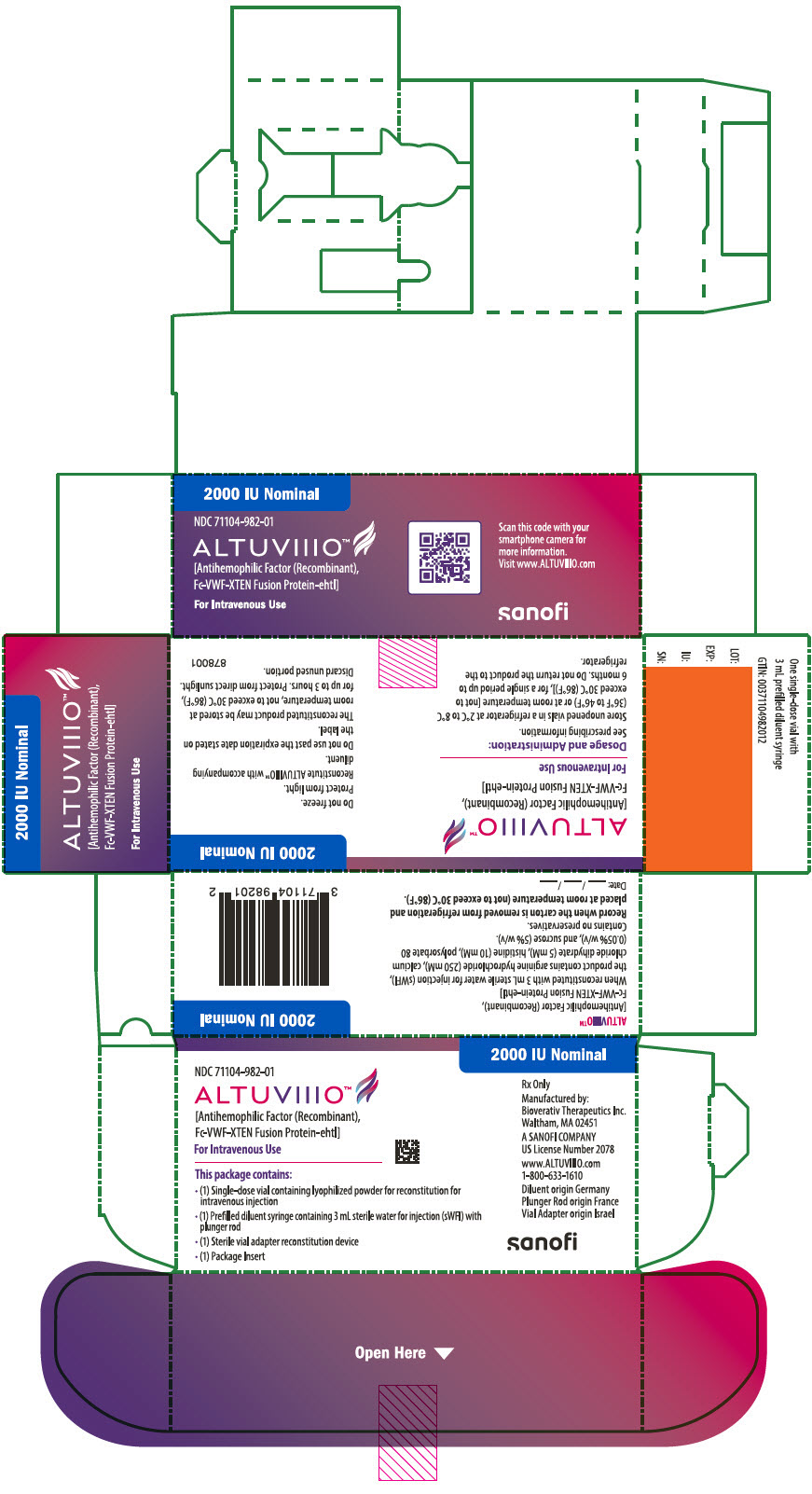
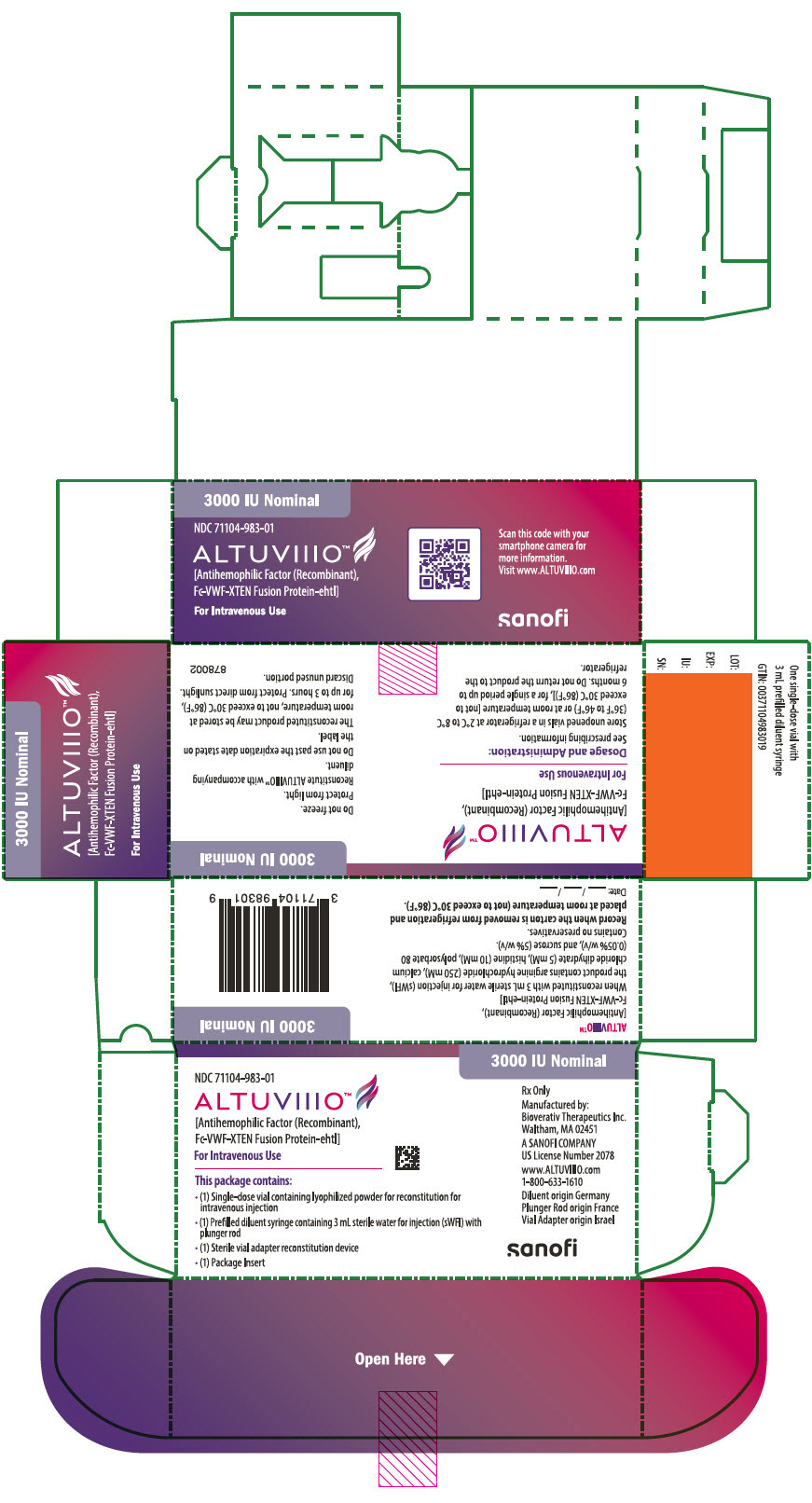
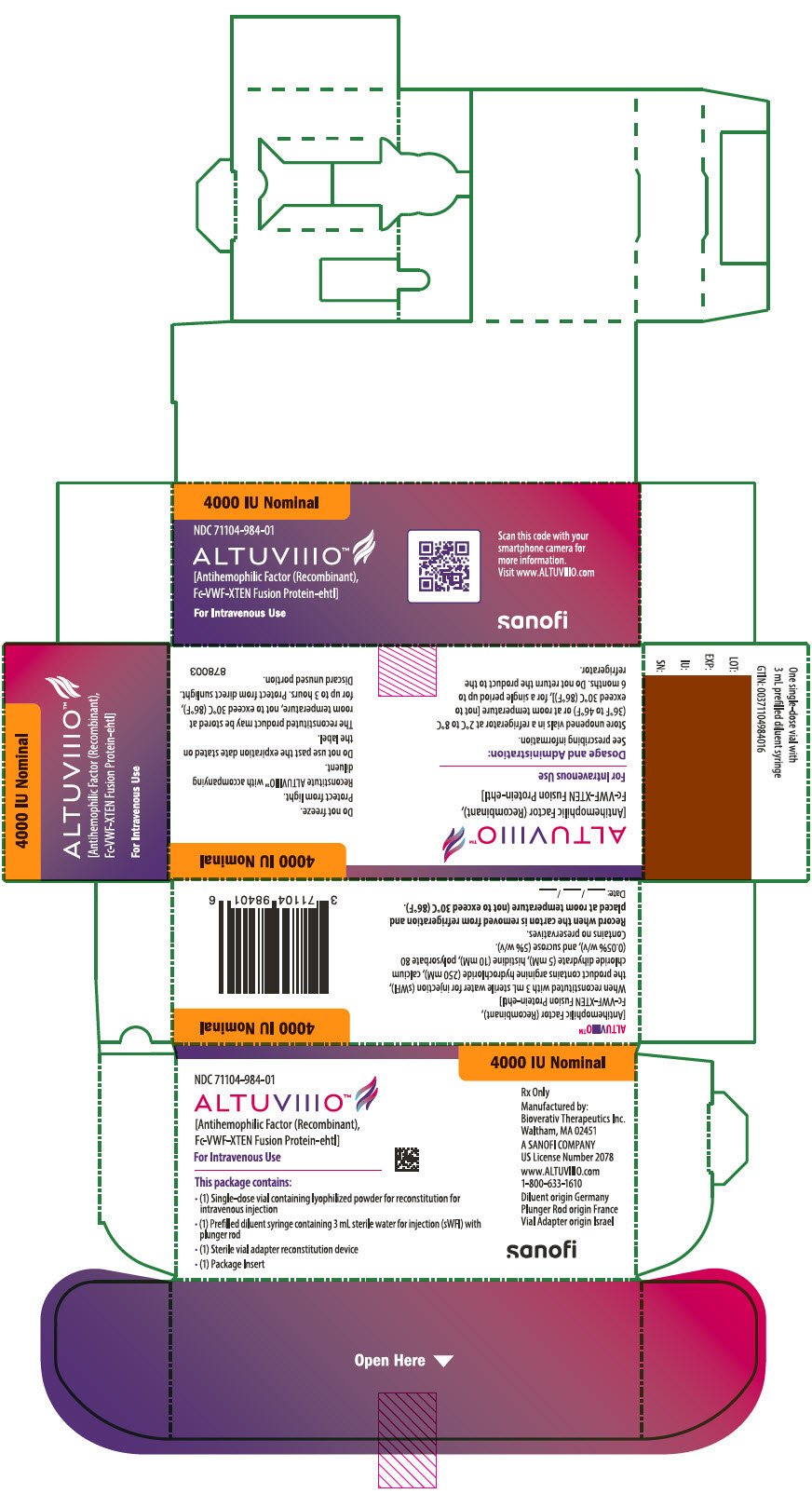
ALTUVIIIO is supplied in kits comprising a single-dose vial containing nominally, 250, 500, 750, 1000, 2000, 3000, or 4000 international units (IU) of Factor VIII potency, a prefilled syringe with 3 mL sterile water for injection, and a sterile vial adapter (reconstitution device). The actual amount of ALTUVIIIO in IU is stated on the label and carton of each vial.
Not made with natural rubber latex.
| Strength | Potency Color Code | Kit NDC Number |
|---|
| 250 IU | Yellow | 71104-978-01 |
| 500 IU | Red | 71104-979-01 |
| 750 IU | Garnet | 71104-980-01 |
| 1000 IU | Green | 71104-981-01 |
| 2000 IU | Royal Blue | 71104-982-01 |
| 3000 IU | Mist Grey | 71104-983-01 |
| 4000 IU | Orange | 71104-984-01 |
Not all pack sizes may be marketed.
Manufactured by:
Bioverativ Therapeutics Inc.
Waltham, MA 02451
A SANOFI COMPANY
US License Number 2078
©2023 Bioverativ Therapeutics Inc. All rights reserved.
For patent information: https://www.sanofi.us/en/products-and-resources/patents
ALTUVIIIO™ is a trademark of Bioverativ Therapeutics Inc.