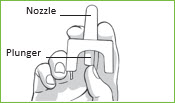
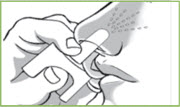
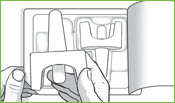
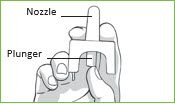
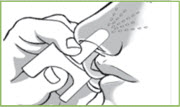
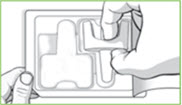
Second Dose (if needed): A second dose, when required, may be administered after at least 4 hours after the initial dose. If the second dose is to be administered, use a new blister pack of VALTOCO.
Maximum Dosage and Treatment Frequency: Do not use more than 2 doses of VALTOCO to treat a single episode.
Do not use VALTOCO to treat more than one episode every five days or more than five episodes per month.
Acute Withdrawal Reactions
The continued use of benzodiazepines may lead to clinically significant physical dependence. Although VALTOCO is indicated only for intermittent use [see Indications and Usage (1) and Dosage and Administration (2)], if used more frequently than recommended, abrupt discontinuation or rapid dosage reduction of VALTOCO, or administration of flumazenil (a benzodiazepine antagonist) may precipitate acute withdrawal reactions, which can be life-threatening (e.g., seizures) [see Drug Abuse and Dependence (9.3)].
Protracted Withdrawal Syndrome
In some cases, benzodiazepine users have developed a protracted withdrawal syndrome with withdrawal symptoms lasting weeks to more than 12 months [see Drug Abuse and Dependence (9.3)].
Diazepam Rectal Gel
In studies previously conducted with diazepam rectal gel, adverse event data were collected from double-blind, placebo-controlled studies and open-label studies. The majority of adverse events were mild to moderate in severity and transient in nature.
Two patients who received diazepam rectal gel died seven to 15 weeks following treatment; neither of these deaths was deemed related to diazepam rectal gel.
The most frequent adverse reactions (at least 4%) in the two double-blind, placebo-controlled studies were somnolence, headache, and diarrhea. Adverse events were usually mild or moderate in intensity.
Approximately 1.4% of the 573 patients who received diazepam rectal gel in clinical trials of epilepsy discontinued treatment because of an adverse event. The adverse reaction most frequently associated with discontinuation (occurring in three patients) was somnolence. Other adverse reactions most commonly associated with discontinuation and occurring in two patients were hypoventilation and rash. Adverse reactions associated with discontinuation occurring in one patient were asthenia, hyperkinesia, incoordination, vasodilatation, and urticaria.
In the two double-blind, placebo-controlled, parallel-group studies [see Clinical Studies (14)], the proportion of patients who discontinued treatment because of adverse events was 2% for the group treated with diazepam rectal gel, versus 2% for the placebo group. In the diazepam rectal gel group, one patient discontinued because of rash and one patient discontinued because of lethargy.
Table 4: Adverse Reactions That Occurred in Greater Than 1% Of Patients in Parallel-Group, Placebo-Controlled Trials with Diazepam Rectal Gel and More Common Than Placebo| Adverse Reaction | Diazepam Rectal Gel
N=101
% | Placebo
N=104
% |
|---|
| Somnolence | 23 | 8 |
| Headache | 5 | 4 |
| Diarrhea | 4 | <1 |
| Ataxia | 3 | <1 |
| Dizziness | 3 | 2 |
| Euphoria | 3 | 0 |
| Incoordination | 3 | 0 |
| Rash | 3 | 0 |
| | |
| Asthma | 2 | 0 |
| Vasodilation | 2 | 0 |
VALTOCO (Diazepam Nasal Spray)
Clinical studies of patients with epilepsy 2 years of age and older were conducted to support the safety and tolerability of VALTOCO for the treatment of acute repetitive seizures. A total of 255 patients 2 years of age and older received VALTOCO, of whom 143 received VALTOCO for at least 1 year. Other than adverse reactions related to local nasal administration, the adverse reactions reported in these studies were similar to those seen in the efficacy trials of diazepam rectal gel.
The most common local adverse reactions that occurred in at least 1% of VALTOCO-treated patients were nasal discomfort (5%), dysgeusia (2%), epistaxis (2%), and rhinorrhea (1%).
Other Adverse Reactions
Diazepam rectal gel has previously been administered to 573 patients with epilepsy during all clinical trials, only some of which were placebo-controlled. All of the events listed below occurred in at least 1% of the 573 individuals exposed to diazepam rectal gel.
Body as a Whole: Asthenia
Cardiovascular: Hypotension, vasodilatation
Nervous: Agitation, confusion, convulsion, dysarthria, emotional lability, speech disorder, thinking abnormal, vertigo
Respiratory: Hiccup
The following infrequent adverse events have been reported previously with diazepam use: depression, slurred speech, syncope, changes in libido, urinary retention, bradycardia, cardiovascular collapse, nystagmus, urticaria, neutropenia, and jaundice.
Paradoxical reactions such as acute hyperexcited states, anxiety, hallucinations, increased muscle spasticity, insomnia, rage, sleep disturbances and stimulation have been reported with other diazepam products. If these events occur with the use of VALTOCO, the prescriber should consider discontinuation of use.
Inhibitors of CYP2C19 and CYP3A4
Inhibitors of CYP2C19 (e.g., cimetidine, quinidine, and tranylcypromine) and CYP3A4 (e.g., ketoconazole, troleandomycin, and clotrimazole) could decrease the rate of diazepam elimination; therefore, adverse reactions to VALTOCO may be increased.
Inducers of CYP2C19 and CYP3A4
Inducers of CYP2C19 (e.g., rifampin) and CYP3A4 (e.g., carbamazepine, phenytoin, dexamethasone, and phenobarbital) could increase the rate of diazepam elimination; therefore, efficacy of VALTOCO may be decreased.
Pregnancy Exposure Registry
There is a pregnancy exposure registry that monitors pregnancy outcomes in women exposed to antiepileptic drugs (AEDs), such as VALTOCO, during pregnancy. Healthcare providers are encouraged to recommend that pregnant women who are taking VALTOCO during pregnancy enroll in the North American Antiepileptic Drug (NAAED) Pregnancy Registry by calling 1-888-233-2334 or visiting http://www.aedpregnancyregistry.org.
Risk Summary
Neonates born to mothers using benzodiazepines late in pregnancy have been reported to experience symptoms of sedation and/or neonatal withdrawal [see Warnings and Precautions (5.7) and Clinical Considerations]. Available data from published observational studies of pregnant women exposed to benzodiazepines do not report a clear association with benzodiazepines and major birth defects (see Human Data).
In animal studies, administration of diazepam during the organogenesis period of pregnancy resulted in increased incidences of fetal malformations at doses greater than those used clinically. Data for diazepam and other benzodiazepines suggest the possibility of increased neuronal cell death and long-term effects on neurobehavioral and immunological function based on findings in animals following prenatal or early postnatal exposure at clinically relevant doses (see Animal Data).
The background risk of major birth defects and miscarriage for the indicated population is unknown. All pregnancies have a background risk of birth defect, loss, or other adverse outcomes. In the U.S. general population, the estimated background risk of major birth defects and miscarriage in clinically recognized pregnancies is 2% to 4% and 15% to 20%, respectively.
Clinical Considerations
Fetal/Neonatal Adverse Reactions
Benzodiazepines cross the placenta and may produce respiratory depression, hypotonia, and sedation in neonates. Monitor neonates exposed to VALTOCO during pregnancy or labor for signs of sedation, respiratory depression, hypotonia, and feeding problems. Monitor neonates exposed to VALTOCO during pregnancy for signs of withdrawal. Manage these neonates accordingly [see Warnings and Precautions (5.7)].
Data
Human Data
Published data from observational studies on the use of benzodiazepines during pregnancy do not report a clear association with benzodiazepines and major birth defects.
Although early studies reported an increased risk of congenital malformations with diazepam and chlordiazepoxide, there was no consistent pattern noted. In addition, the majority of more recent case-control and cohort studies of benzodiazepine use during pregnancy, which were adjusted for confounding exposures to alcohol, tobacco, and other medications, have not confirmed these findings.
Animal Data
Diazepam has been shown to produce increased incidences of fetal malformations in mice and hamsters when given orally at single doses of 100 mg/kg or greater (approximately 13 times the maximum recommended human dose [MRHD = 0.6mg/kg/day] or greater on a mg/m2 basis). Cleft palate and exencephaly are the most common and consistently reported malformations produced in these species by administration of high, maternally-toxic doses of diazepam during organogenesis.
In published animal studies, administration of benzodiazepines or other drugs that enhance GABAergic inhibition to neonatal rats has been reported to result in widespread apoptotic neurodegeneration in the developing brain at plasma concentrations relevant for seizure control in humans. The window of vulnerability to these changes in rats (postnatal days 0-14) includes a period of brain development that takes place during the third trimester of pregnancy in humans.
Risk Summary
Diazepam is excreted in human milk.
There are reports of sedation, poor feeding, and poor weight gain in infants exposed to benzodiazepines through breast milk. There are no data to assess the effects of diazepam and/or its active metabolite(s) on milk production.
The developmental and health benefits of breastfeeding should be considered along with the mother's clinical need for VALTOCO nasal spray and any potential adverse effects on the breastfed infant from VALTOCO or from the underlying maternal condition.
Clinical Considerations
Infants exposed to VALTOCO through breast milk should be monitored for sedation, poor feeding and poor weight gain.
Physical Dependence After Use of VALTOCO More Frequently Than Recommended
VALTOCO may produce physical dependence if used more frequently than recommended. Physical dependence is a state that develops as a result of physiological adaptation in response to repeated drug use, manifested by withdrawal signs and symptoms after abrupt discontinuation or a significant dose reduction of a drug. Although VALTOCO is indicated only for intermittent use [see Indications and Usage (1) and Dosage and Administration (2)], if used more frequently than recommended, abrupt discontinuation or rapid dosage reduction or administration of flumazenil, a benzodiazepine antagonist, may precipitate acute withdrawal reactions, including seizures, which can be life-threatening. Patients at an increased risk of withdrawal adverse reactions after benzodiazepine discontinuation or rapid dosage reduction include those who take higher dosages (i.e., higher and/or more frequent doses) and those who have had longer durations of use [see Warnings and Precautions (5.3)]. For patients using VALTOCO more frequently than recommended, to reduce the risk of withdrawal reactions, use a gradual taper to discontinue VALTOCO [see Warnings and Precautions (5.3)].
Acute Withdrawal Signs and Symptoms
Acute withdrawal signs and symptoms associated with benzodiazepines have included abnormal involuntary movements, anxiety, blurred vision, depersonalization, depression, derealization, dizziness, fatigue, gastrointestinal adverse reactions (e.g., nausea, vomiting, diarrhea, weight loss, decreased appetite), headache, hyperacusis, hypertension, irritability, insomnia, memory impairment, muscle pain and stiffness, panic attacks, photophobia, restlessness, tachycardia, and tremor. More severe acute withdrawal signs and symptoms, including life-threatening reactions, have included catatonia, convulsions, delirium tremens, depression, hallucinations, mania, psychosis, seizures, and suicidality.
Protracted Withdrawal Syndrome
Protracted withdrawal syndrome associated with benzodiazepines is characterized by anxiety, cognitive impairment, depression, insomnia, formication, motor symptoms (e.g., weakness, tremor, muscle twitches), paresthesia, and tinnitus that persists beyond 4 to 6 weeks after initial benzodiazepine withdrawal. Protracted withdrawal symptoms may last weeks to more than 12 months. As a result, there may be difficulty in differentiating withdrawal symptoms from potential re-emergence or continuation of symptoms for which the benzodiazepine was being used.
Tolerance
Tolerance to VALTOCO may develop after use more frequently than recommended. Tolerance is a physiological state characterized by a reduced response to a drug after repeated administration (i.e., a higher dose of a drug is required to produce the same effect that was once obtained at a lower dose). Tolerance to the therapeutic effect of benzodiazepines may develop; however, little tolerance develops to the amnestic reactions and other cognitive impairments caused by benzodiazepines.
It is recommended that patients be treated with VALTOCO no more frequently than every five days and no more than five times per month.
VALTOCO is not recommended for chronic, daily use as an anticonvulsant. Chronic daily use of diazepam may increase the frequency and/or severity of tonic clonic seizures, requiring an increase in the dosage of standard anticonvulsant medication. In such cases, abrupt withdrawal of chronic diazepam may also be associated with a temporary increase in the frequency and/or severity of seizures.
Absorption
In a pharmacokinetic study in healthy adult subjects, the highest plasma diazepam concentrations after nasal administration of VALTOCO was reached in 1.5 hours. The estimated volume of distribution of diazepam at steady-state is 0.8 to 1.0 L/kg. The absolute bioavailability of VALTOCO relative to intravenous diazepam was 97%. The mean elimination half-life of diazepam following administration of a 10 mg dose of VALTOCO was found to be about 49.2 hours. In another pharmacokinetic study in healthy adult subjects, diazepam plasma exposures (Cmax and AUC) increased approximately proportional to dose from 5 mg to 20 mg.
In a relative bioavailability study in healthy adult subjects, diazepam exposure (Cmax and AUCs) was evaluated following administration of 15 and 20 mg of VALTOCO nasal spray and diazepam rectal gel. The diazepam PK parameters were 2 to 4-fold less variable for VALTOCO and within the range of those seen with diazepam rectal gel.
In a pharmacokinetic study in patients with epilepsy, pharmacokinetic parameters were similar between seizure versus non-seizure states.
Distribution
Both diazepam and its major active metabolite desmethyldiazepam bind extensively to plasma proteins (95-98%).
Metabolism and Elimination
In vitro studies using human liver preparations suggest that CYP2C19 and CYP3A4 are the principal isozymes involved in the initial oxidative metabolism of diazepam. It has been reported in the literature that diazepam is extensively metabolized to one major active metabolite, desmethyldiazepam, and two minor active metabolites, 3- hydroxydiazepam (temazepam) and 3-hydroxy-N-diazepam (oxazepam), in plasma. At therapeutic doses, desmethyldiazepam is found in plasma at concentrations equivalent to those of diazepam while oxazepam and temazepam are not usually detectable. The metabolism of diazepam is primarily hepatic and involves demethylation (involving primarily CYP2C19 and CYP3A4) and 3-hydroxylation (involving primarily CYP3A4), followed by glucuronidation. The marked inter-individual variability in the clearance of diazepam reported in the literature is probably attributable to variability of CYP2C19 (which is known to exhibit genetic polymorphism; about 3-5% of Caucasians have little or no activity and are "poor metabolizers") and CYP3A4. No inhibition was demonstrated in the presence of inhibitors selective for CYP2A6, CYP2C9, CYP2D6, CYP2E1, or CYP1A2, indicating that these enzymes are not significantly involved in metabolism of diazepam.
Specific Populations
Geriatric Patients
A study of single dose IV administration of diazepam (0.1 mg/kg) indicates that the elimination half-life of diazepam increases linearly with age, ranging from about 15 hours at 18 years (healthy young adults) to about 100 hours at 95 years (healthy elderly) with a corresponding decrease in clearance of free diazepam [see Use in Specific Populations (8.5)].
Pediatric Patients
Literature review indicates that following IV administration (0.33 mg/kg), diazepam has a half-life in pediatric patients 6 to 12 years of age of approximately 15-21 hours. Based on simulation studies, in pediatric patients 2 to 5 years of age, median maximum plasma concentration (Cmax) and median area under the plasma concentration curve (AUC0-t) of diazepam following a single administration of VALTOCO are approximately 2-times greater than in adults. In pediatric patients 6 to 11 years of age, median Cmax and median AUC0-t of diazepam following a single administration of VALTOCO are approximately 1.4-times greater than in adults.
Patients with Renal Impairment
The pharmacokinetics of diazepam have not been studied in subjects with renal impairment.
Patients with Hepatic Impairment
No pharmacokinetic studies were conducted with VALTOCO in subjects with hepatic impairment. Literature review indicates that following administration of 0.1 to 0.15 mg/kg of diazepam intravenously, the half-life of diazepam was prolonged by two to five-fold in subjects with alcoholic cirrhosis (n=24) compared to age-matched control subjects (n=37) with a corresponding decrease in clearance by half. However, the exact degree of hepatic impairment in these subjects was not characterized in this literature.
Effect of Gender, Race, and Cigarette Smoking
No targeted pharmacokinetic studies have been conducted to evaluate the effect of gender, race, and cigarette smoking on the pharmacokinetics of diazepam. However, covariate analysis of a population of treated patients following administration of diazepam rectal gel, indicated that neither gender nor cigarette smoking had any effect on the pharmacokinetics of diazepam.
Carcinogenesis
The carcinogenic potential of diazepam delivered by the intranasal route of administration has not been evaluated. In studies in which mice and rats were administered diazepam orally in the diet at a dose of 75 mg/kg/day (approximately 10 and 20 times, respectively, the maximum recommended human dose [MRHD=0.6 mg/kg/day] on a mg/m2 basis) for 80 and 104 weeks, respectively, an increased incidence of liver tumors was observed in males of both species.
Mutagenesis
The data currently available are inadequate to determine the mutagenic potential of diazepam.
Impairment of Fertility
Reproduction studies with orally administered diazepam in rats showed decreases in the number of pregnancies and in the number of surviving offspring following administration of an oral dose of 100 mg/kg/day (approximately 27 times the MRHD on a mg/m2 basis) prior to and during mating and throughout gestation and lactation. No adverse effects on fertility or offspring viability were noted at a dose of 80 mg/kg/day (approximately 22 times the MRHD on a mg/m2 basis).
Concomitant use with Opioids
Concomitant use of benzodiazepines, including VALTOCO, and opioids may result in profound sedation, respiratory depression, coma, and death. Do not use such drugs concomitantly unless supervised by a health care provider [see Warnings and Precautions (5.1)].
Abuse, Misuse, and Addiction
Inform patients that the use of VALTOCO more frequently than recommended, even at recommended dosages, exposes users to risks of abuse, misuse, and addiction, which can lead to overdose and death, especially when used in combination with other medications (e.g., opioid analgesics), alcohol, and/or illicit substances. Inform patients about the signs and symptoms of benzodiazepine abuse, misuse, and addiction; to seek medical help if they develop these signs and/or symptoms; and on the proper disposal of unused drug [see Warnings and Precautions (5.2) and Drug Abuse and Dependence (9.2)].
Withdrawal Reactions
Inform patients that use of VALTOCO more frequently than recommended may lead to clinically significant physical dependence and that abrupt discontinuation or rapid dosage reduction of VALTOCO may precipitate acute withdrawal reactions, which can be life-threatening. Inform patients that in some cases, patients taking benzodiazepines have developed a protracted withdrawal syndrome with withdrawal symptoms lasting weeks to more than 12 months [see Warnings and Precautions (5.3) and Drug Abuse and Dependence (9.3)].
Important Treatment Instructions
Instruct patients and caregivers on what is and is not an intermittent and stereotypic episode of increased seizure activity (i.e., seizure cluster) that is appropriate for treatment, and the timing of administration in relation to the onset of the episode.
Instruct patients and caregivers on what to observe following administration, and what would constitute an outcome requiring immediate medical attention.
Instruct patients and caregivers not to administer a second dose of VALTOCO if they are concerned by the patient's breathing, the patient requires emergency rescue treatment with assisted breathing or intubation, or there is excessive sedation [see Use in Specific Populations (8.6)].
Advise patients and caregivers on how frequently they can treat successive seizure cluster episodes over time.
Pregnancy
Advise pregnant females that the use of VALTOCO late in pregnancy can result in sedation (respiratory depression, lethargy, hypotonia) and/or withdrawal symptoms (hyperreflexia, irritability, restlessness, tremors, inconsolable crying, and feeding difficulties) in newborns [see Warnings and Precautions (5.7) and Use in Specific Populations (8.1)]. Instruct patients to inform their healthcare provider if they are pregnant. Encourage patients to enroll in the North American Antiepileptic Drug (NAAED) Pregnancy Registry if they become pregnant while taking VALTOCO. The registry is collecting information about the safety of antiepileptic drugs during pregnancy [see Use in Specific Populations (8.1)].
Lactation
Counsel patients that diazepam, the active ingredient in VALTOCO, is excreted in breast milk. Instruct patients to inform their healthcare provider if they are breastfeeding or intend to breastfeed. Instruct breastfeeding patients who take VALTOCO to monitor their infants for excessive sedation, poor feeding and poor weight gain, and to seek medical attention if they notice these signs [see Use in Specific Populations (8.2)].
NEURELIS, VALTOCO and the NEURELIS and VALTOCO logos are registered trademarks of Neurelis, Inc.
Distributed by: Neurelis, Inc. San Diego, CA 92121 USA
© 2025 Neurelis, Inc. All rights reserved.
Neurelis Rev. 06/2025 US-PRC-25-00099-v2