Adult Patients at Increased Risk for CV Events
Trial 1 (FOURIER, NCT01764633) was a double-blind, randomized, placebo-controlled, event-driven trial in 27,564 (13,784 REPATHA, 13,780 placebo) adult patients with established cardiovascular disease (CVD) and with LDL-C ≥ 70 mg/dL and/or non-HDL-C ≥ 100 mg/dL despite high- or moderate-intensity statin therapy. Patients were randomly assigned 1:1 to receive either subcutaneous injections of REPATHA (140 mg every 2 weeks or 420 mg once monthly) or placebo; 86% used the every-2-week regimen throughout the trial. The median follow-up duration was 26 months. Overall, 99% of patients were followed until the end of the trial or death.
The mean (SD) age at baseline was 63 (9) years, with 45% being at least 65 years old; 25% were female. The trial population was 85% White, 10% Asian, and 2% Black or African American; 8% identified as Hispanic or Latino ethnicity. Regarding prior diagnoses of CVD, 81% had prior myocardial infarction, 19% prior non-hemorrhagic stroke, and 13% had symptomatic peripheral arterial disease. Selected additional baseline risk factors included hypertension (80%), diabetes mellitus (1% type 1; 36% type 2), current daily cigarette smoking (28%), New York Heart Association class I or II congestive heart failure (23%), and eGFR < 60 mL/min per 1.73 m2 (6%). Most patients were on a high- (69%) or moderate-intensity (30%) statin therapy at baseline, and 5% were also taking ezetimibe. Most patients were taking at least one other CV medication including anti-platelet agents (93%), beta blockers (76%), angiotensin-converting enzyme (ACE) inhibitors (56%), or angiotensin receptor blockers (23%). On stable background lipid-lowering therapy, the median [Q1, Q3] LDL-C at baseline was 92 [80, 109] mg/dL; the mean (SD) was 98 (28) mg/dL.
REPATHA significantly reduced the risk for the primary composite endpoint (time to first occurrence of CV death, myocardial infarction, stroke, hospitalization for unstable angina, or coronary revascularization; p < 0.0001) and the key secondary composite endpoint (time to first occurrence of cardiovascular death, myocardial infarction, or stroke; p < 0.0001). The Kaplan-Meier estimates of the cumulative incidence of the primary and key secondary composite endpoints over time are shown in Figure 1 and Figure 2 below.
The results of primary and secondary efficacy endpoints are shown in Table 3 below.
Table 3. Effect of REPATHA on CV Events in Patients with Established CVD in FOURIER | Placebo | REPATHA | REPATHA vs. Placebo |
|---|
| N = 13,780
n (%) | Incidence Rate (per 100 patient years) | N = 13,784
n (%) | Incidence Rate (per 100 patient years) | Hazard Ratio
(95% CI) |
|---|
| Primary composite endpoint |
| Time to first occurrence of CV death, myocardial infarction, stroke, coronary revascularization, hospitalization for unstable angina | 1,563 (11.3) | 5.2 | 1,344 (9.8) | 4.5 | 0.85
(0.79, 0.92) |
| Key secondary composite endpoint |
| Time to first occurrence of CV death, myocardial infarction, stroke | 1,013 (7.4) | 3.4 | 816 (5.9) | 2.7 | 0.80
(0.73, 0.88) |
| Other secondary endpoints |
| Time to CV death | 240 (1.7) | 0.8 | 251 (1.8) | 0.8 | 1.05
(0.88, 1.25) |
| Time to death by any cause Time to death by any cause is not a component of either the primary composite endpoint or key secondary composite endpoint. | 426 (3.1) | 1.4 | 444 (3.2) | 1.5 | 1.04
(0.91, 1.19) |
| Time to first fatal or non-fatal myocardial infarction | 639 (4.6) | 2.1 | 468 (3.4) | 1.6 | 0.73
(0.65, 0.82) |
| Time to first fatal or non-fatal stroke | 262 (1.9) | 0.9 | 207 (1.5) | 0.7 | 0.79
(0.66, 0.95) |
| Time to first coronary revascularization | 965 (7.0) | 3.2 | 759 (5.5) | 2.5 | 0.78
(0.71, 0.86) |
| Time to first hospitalization for unstable angina Not a prespecified endpoint; an ad hoc analysis was performed to ensure results are provided for each individual component of the primary endpoint. | 239 (1.7) | 0.8 | 236 (1.7) | 0.8 | 0.99
(0.82, 1.18) |
| Figure 1. Estimated Cumulative Incidence of Primary Composite Endpoint Over 3 Years in FOURIER |
|---|
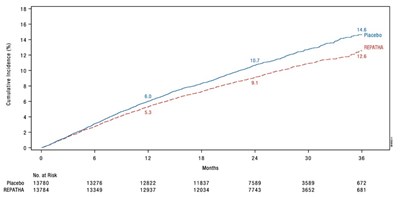 Figure 1 (Repatha Amgenusa 01) |
| Figure 2. Estimated Cumulative Incidence of Key Secondary Composite Endpoint Over 3 Years in FOURIER |
|---|
 Figure 2 (Repatha Amgenusa 02) |
The difference between REPATHA and placebo in mean percent change in LDL-C from baseline to Week 12 was −63% (95% CI: −63%, −62%) and from baseline to Week 72 was −57% (95% CI: −58%, −56%). At Week 48, the median [Q1, Q3] LDL-C was 26 [15, 46] mg/dL in the REPATHA group, with 47% of patients having LDL-C < 25 mg/dL.
In EBBINGHAUS (NCT02207634), a substudy of 1,974 patients enrolled in the FOURIER trial, REPATHA was non-inferior to placebo on selected cognitive function domains as assessed with the use of neuropsychological function tests over a median follow-up of 19 months.
Trial 2 (VESALIUS-CV, NCT03872401) was a multicenter, double-blind, randomized, placebo-controlled, parallel-group, cardiovascular outcomes trial to evaluate the effects of REPATHA in 12,206 adult patients (6,106 REPATHA, 6,100 placebo) at high CV risk, including those with ASCVD or diabetes mellitus (defined in the trial as diabetes of 10 or more years’ duration, treated with daily insulin, or complicated by microvascular disease), who have not had a prior myocardial infarction or stroke. Patients had to have an LDL-C ≥ 90 mg/dL or non-HDL-C ≥ 120 mg/dL or apolipoprotein B (ApoB) ≥ 80 mg/dL on stable, lipid-lowering background therapy. Patients were randomly assigned 1:1 to receive either subcutaneous injections of REPATHA (140 mg every 2 weeks) or placebo every 2 weeks. The median follow-up duration was 55 months. Overall, 98% of patients were followed until the end of the trial or death.
The mean (SD) age at baseline was 65 (7) years, with 56% being at least 65 years old; 43% were female. The study population was 93% White, 4% Asian, 2% Black or African American, 0.4% American Indian or Alaska Native, and < 0.1% Native Hawaiian or Other Pacific Islander; 17% identified as Hispanic or Latino ethnicity. Regarding prior diagnoses of cardiovascular disease, 45% had significant coronary artery disease, 10% had significant atherosclerotic cerebrovascular disease, 17% had significant peripheral arterial disease, and 58% had diabetes mellitus (57% type 2 diabetes) with 32% having diabetes mellitus without evidence of atherosclerotic cardiovascular disease.
Participants were also required to have at least one additional baseline risk factor including, but not limited to, hypertension (87%), current tobacco use (28%), increased lipoproteins (LDL-C ≥ 130 mg/dL, non-HDL-C ≥ 160 mg/dL, or ApoB ≥ 120 mg/dL) (51%), a history of both ASCVD and diabetes (25%), or elevated CAC score (> 300) (5%). At baseline, any statin use was reported for 87% (68% on high-intensity statin therapy), ezetimibe use was reported for 20%, and 8% of patients were not on any LDL-C lowering therapy. Most patients were taking at least one other cardiovascular medication, including anti-platelet agents (67%), anticoagulants (12%), beta blockers (55%), angiotensin-converting enzyme (ACE) inhibitors, angiotensin receptor-neprilysin inhibitors (ARNi) or angiotensin receptor blockers (75%), sodium-glucose cotransporter 2 (SGLT2) inhibitors (10%), or glucagon-like peptide-1 (GLP-1) receptor agonists (6%). The median (Q1, Q3) LDL-C at baseline was 122 (104, 149) mg/dL; the mean (SD) was 130 (37) mg/dL.
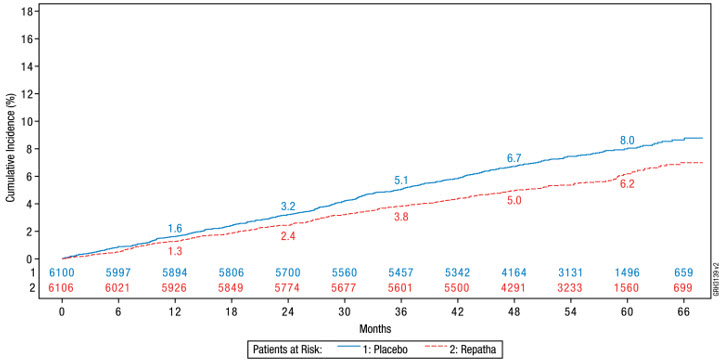
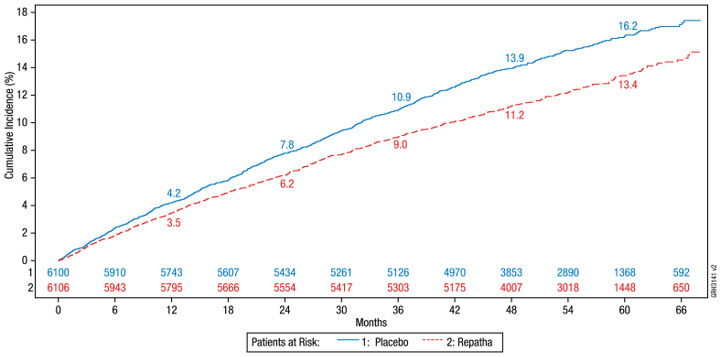
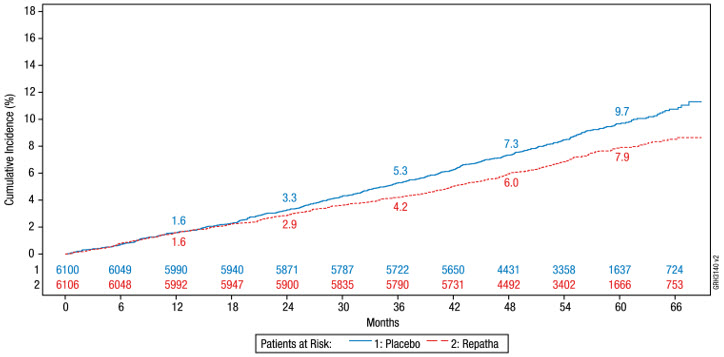
REPATHA significantly reduced the risk for the primary composite endpoint (MACE-3: time to first occurrence of coronary heart disease death, myocardial infarction, or ischemic stroke, p < 0.001) and the other primary composite endpoint (MACE-4: time to first occurrence of coronary heart disease death, myocardial infarction, ischemic stroke, or any ischemia-driven arterial revascularization, p < 0.001). The results of the primary efficacy endpoints and secondary endpoints are shown in Table 4 below. The Kaplan-Meier estimates of cumulative incidence over time for the primary composite endpoints and one secondary endpoint are shown in Figures 3 to 5.
Table 4. Effect of REPATHA on Cardiovascular Events in Patients at Increased Risk for Cardiovascular Events in VESALIUS-CV | Placebo
(N = 6,100)
n (%) | REPATHA
(N = 6,106)
n (%) | Hazard Ratio Cox-proportional hazards model with treatment as a factor and stratified by the randomization stratification factors.
(95% CI) |
|---|
| Primary MACE-3 composite endpoint |
| Time to CHD death, myocardial infarction, or ischemic stroke, whichever occurred first Statistically significant, p-value <0.001. | 442 (7.3) | 336 (5.5) | 0.75 (0.65, 0.86) |
| Primary MACE-4 composite endpoint |
| Time to CHD death, myocardial infarction, ischemic stroke, or any ischemia-driven arterial revascularization, whichever occurred first | 905 (14.8) | 746 (12.2) | 0.81 (0.73, 0.89) |
| Secondary endpoints |
| Time to MI, ischemic stroke, or any ischemia-driven arterial revascularization | 833 (13.7) | 673 (11.0) | 0.79 (0.71, 0.88) |
| Time to CHD death, MI, or any ischemia-driven arterial revascularization | 817 (13.4) | 663 (10.9) | 0.79 (0.72, 0.88) |
| Time to cardiovascular death, MI, or ischemic stroke | 502 (8.2) | 374 (6.1) | 0.73 (0.64, 0.84) |
| Time to CHD death or MI | 312 (5.1) | 232 (3.8) | 0.73 (0.62, 0.87) |
| Time to MI, First occurrence of specified event at any time; patients may have experienced more than one adjudicated event. | 229 (3.8) | 149 (2.4) | 0.64 (0.52, 0.79) |
| Time to any ischemia-driven arterial revascularization,, Post-hoc analysis: The observed number of patients with coronary ischemia-driven arterial revascularization was REPATHA 365 [6.0%] versus placebo 503 [8.3%]. The observed number of patients with non-coronary ischemia-driven arterial revascularization was REPATHA 222 [3.6%] versus placebo 232 [3.8%]. | 698 (11.4) | 560 (9.2) | 0.79 (0.70, 0.88) |
| Time to CHD death Did not meet statistical significance according to the prespecified hierarchical testing procedure. , | 116 (1.9) | 105 (1.7) | 0.90 (0.69, 1.17) |
| Time to cardiovascular death, | 194 (3.2) | 156 (2.6) | 0.80 (0.65, 0.98) |
| Time to all cause of death | 538 (8.8) | 432 (7.1) | 0.80 (0.70, 0.90) |
| Time to ischemic stroke, | 144 (2.4) | 115 (1.9) | 0.79 (0.62, 1.01) |
| Figure 3. Estimated Cumulative Incidence of the Primary MACE-3 Composite Endpoint (CHD Death, Myocardial Infarction, or Ischemic Stroke) Over 5.5 Years in VESALIUS-CV |
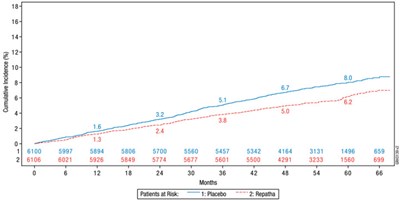 Figure 3 (Repatha Amgenusa 02a) |
| Figure 4. Estimated Cumulative Incidence of the Primary MACE-4 Composite Endpoint (CHD Death, Myocardial Infarction, Ischemic Stroke, or Any Ischemia-driven Arterial Revascularization) Over 5.5 Years in VESALIUS-CV |
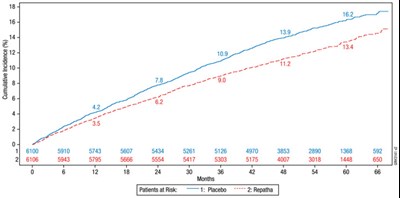 Figure 4 (Repatha Amgenusa 02b) |
| Figure 5. Estimated Cumulative Incidence of All-cause Death |
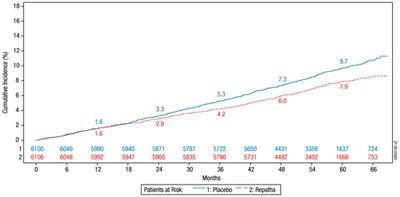 Figure 5 (Repatha Amgenusa 02c) |
Serial assessment of lipid panels was conducted for a subset of patients (n = 2,014) from randomly selected sites and patients. The difference between REPATHA and placebo in mean percent change in LDL-C from baseline to Week 48 was -53% (95% CI: -56%, -49%) and from baseline to Week 96 was -46% (95% CI: -50%, -43%). The resultant LDL-C values achieved at Week 48 were a median (Q1, Q3) of 45 (26, 73) mg/dL and 109 (86, 144) mg/dL in the REPATHA and placebo arms, respectively.
Primary Hypercholesterolemia
Trial 3 (LAPLACE-2, NCT01763866) was a multicenter, double-blind, randomized controlled 12-week trial in which patients were initially randomized to an open-label specific statin regimen for a 4-week lipid stabilization period followed by random assignment to subcutaneous injections of REPATHA 140 mg every 2 weeks, REPATHA 420 mg once monthly, or placebo for 12 weeks. The trial included 1896 patients with hypercholesterolemia who received REPATHA, placebo, or ezetimibe as add-on therapy to daily doses of statins (atorvastatin, rosuvastatin, or simvastatin). Ezetimibe was also included as an active control only among those assigned to background atorvastatin. Overall, the mean age at baseline was 60 years (range: 20 to 80 years), 35% were ≥ 65 years old, 46% female, 94% White, 4% were Black or African American, and 1% Asian; 5% identified as Hispanic or Latino ethnicity. After 4 weeks of background statin therapy, the mean baseline LDL-C ranged between 77 and 127 mg/dL across the five background therapy arms.
The difference between REPATHA and placebo in mean percent change in LDL-C from baseline to Week 12 was −71% (95% CI: −74%, −67%; p < 0.0001) and −63% (95% CI: −68%, −57%; p ˂ 0.0001) for the 140 mg every 2 weeks and 420 mg once monthly dosages, respectively. The difference between REPATHA and ezetimibe in mean percent change in LDL-C from baseline to Week 12 was −45% (95% CI: −52%, −39%; p < 0.0001) and −41% (95% CI: −47%, −35%; p ˂ 0.0001) for the 140 mg every 2 weeks and 420 mg once monthly dosages, respectively. For additional results, see Table 5 and Figure 6.
Table 5. Effect of REPATHA on Lipid Parameters in Patients with Hypercholesterolemia on Background Statin Regimens (Mean % Change from Baseline to Week 12 in LAPLACE-2)| Treatment Group | LDL-C | Non-HDL-C | Apo B | Total Cholesterol |
|---|
| Estimates based on a multiple imputation model that accounts for treatment adherence |
REPATHA every 2 weeks vs. Placebo every 2 weeks
(Background statin: atorvastatin 10 mg or 80 mg; rosuvastatin 5 mg or 40 mg; simvastatin 40 mg) |
Placebo every 2 weeks
(n = 281) | 8 | 6 | 5 | 4 |
| REPATHA 140 mg every 2 weeks 140 mg every 2 weeks or 420 mg once monthly yield similar reductions in LDL-C
(n = 555) | -63 | -53 | -49 | -36 |
Mean difference from placebo
(95% CI) | -71
(-74, -67) | -59
(-62, -55) | -55
(-58, -52) | -40
(-43, -38) |
REPATHA once monthly vs. Placebo once monthly
(Background statin: atorvastatin 10 mg or 80 mg; rosuvastatin 5 mg or 40 mg; simvastatin 40 mg) |
Placebo once monthly
(n = 277) | 4 | 5 | 3 | 2 |
REPATHA 420 mg once monthly
(n = 562) | -59 | -50 | -46 | -34 |
Mean difference from placebo
(95% CI) | -63
(-68, -57) | -54
(-58, -50) | -50
(-53, -47) | -36
(-39, -33) |
REPATHA every 2 weeks vs. Ezetimibe 10 mg daily
(Background statin: atorvastatin 10 mg or 80 mg) |
Ezetimibe 10 mg daily
(n = 112) | -17 | -16 | -14 | -12 |
REPATHA 140 mg every 2 weeks
(n = 219) | -63 | -52 | -49 | -36 |
Mean difference from Ezetimibe
(95% CI) | -45
(-52, -39) | -36
(-41, -31) | -35
(-40, -31) | -24
(-28, -20) |
REPATHA once monthly vs. Ezetimibe 10 mg daily
(Background statin: atorvastatin 10 mg or 80 mg) |
Ezetimibe 10 mg daily
(n = 109) | -19 | -16 | -11 | -12 |
REPATHA 420 mg once monthly
(n = 220) | -59 | -50 | -46 | -34 |
Mean difference from Ezetimibe
(95% CI) | -41
(-47, -35) | -35
(-40, -29) | -34
(-39, -30) | -22
(-26, -19) |
| Figure 6. Effect of REPATHA on LDL-C in Patients with Hypercholesterolemia when Combined with Statins (Mean % Change from Baseline to Week 12 in LAPLACE-2) |
|---|
| Estimates based on a multiple imputation model that accounts for treatment adherence |
| Error bars indicate 95% confidence intervals |
 Figure 6 (Repatha Amgenusa 03) |
Trial 4 (DESCARTES, NCT01516879) was a multicenter, double-blind, randomized, placebo-controlled, 52-week trial that included 901 patients with hypercholesterolemia who received protocol-determined background lipid-lowering therapy of a cholesterol-lowering diet either alone or in addition to atorvastatin (10 mg or 80 mg daily) or the combination of atorvastatin 80 mg daily with ezetimibe. After stabilization on background therapy, patients were randomly assigned to the addition of placebo or REPATHA 420 mg administered subcutaneously once monthly. Overall, the mean age at baseline was 56 years (range: 25 to 75 years), 23% were ≥ 65 years, 52% female, 80% White, 8% Black or African American, and 6% Asian; 6% identified as Hispanic or Latino ethnicity. After stabilization on the assigned background therapy, the mean baseline LDL-C ranged between 90 and 117 mg/dL across the four background therapy groups.
In these patients with hypercholesterolemia on a protocol-determined background therapy, the difference between REPATHA 420 mg once monthly and placebo in mean percent change in LDL-C from baseline to Week 52 was −55% (95% CI: −60%, −50%; p < 0.0001) (Table 6 and Figure 7). For additional results, see Table 6.
Table 6. Effect of REPATHA on Lipid Parameters in Patients with HypercholesterolemiaPrior to randomization, patients were stabilized on background therapy consisting of a cholesterol-lowering diet either alone or in addition to atorvastatin (10 mg or 80 mg daily) or the combination of atorvastatin 80 mg daily with ezetimibe.
(Mean% Change from Baseline to Week 52 in DESCARTES)| Treatment Group | LDL-C | Non-HDL-C | Apo B | Total Cholesterol |
|---|
| Estimates based on a multiple imputation model that accounts for treatment adherence |
Placebo once monthly
(n = 302) | 8 | 8 | 2 | 5 |
REPATHA 420 mg once monthly
(n = 599) | -47 | -39 | -38 | -26 |
Mean difference from placebo
(95% CI) | -55
(-60, -50) | -46
(-50, -42) | -40
(-44, -37) | -31
(-34, -28) |
| Figure 7. Effect of REPATHA 420 mg Once Monthly on LDL-C in Patients with Hypercholesterolemia in DESCARTES |
|---|
| Estimates based on a multiple imputation model that accounts for treatment adherence |
| Error bars indicate 95% confidence intervals |
 Figure 7 (Repatha Amgenusa 04) |
Trial 5 (MENDEL-2, NCT01763827) was a multicenter, double-blind, randomized, placebo- and active-controlled, 12-week trial that included 614 patients with hypercholesterolemia who were not taking lipid-lowering therapy at baseline. Patients were randomly assigned to receive subcutaneous injections of REPATHA 140 mg every 2 weeks, REPATHA 420 mg once monthly, or placebo for 12 weeks. Blinded administration of ezetimibe was also included as an active control. Overall, the mean age at baseline was 53 years (range: 20 to 80 years), 18% were ≥ 65 years old, 66% were female, 83% White, 7% Black or African American, and 9% Asian; 11% identified as Hispanic or Latino ethnicity. The mean baseline LDL-C was 143 mg/dL.
The difference between REPATHA and placebo in mean percent change in LDL-C from baseline to Week 12 was −55% (95% CI: −60%, −50%; p < 0.0001) and −57% (95% CI: −61%, −52%; p ˂ 0.0001) for the 140 mg every 2 weeks and 420 mg once monthly dosages, respectively. The difference between REPATHA and ezetimibe in mean percent change in LDL-C from baseline to Week 12 was −37% (95% CI: −42%, −32%; p < 0.0001) and −38% (95% CI: −42%, −34%; p ˂ 0.0001) for the 140 mg every 2 weeks and 420 mg once monthly dosages, respectively. For additional results, see Table 7.
Table 7. Effect of REPATHA on Lipid Parameters in Patients with Hypercholesterolemia (Mean % Change from Baseline to Week 12 in MENDEL-2)| Treatment Group | LDL-C | Non-HDL-C | Apo B | Total Cholesterol |
|---|
| Estimates based on a multiple imputation model that accounts for treatment adherence |
Placebo every 2 weeks
(n = 76) | 1 | 0 | 1 | 0 |
Ezetimibe 10 mg daily
(n = 77) | -17 | -14 | -13 | -10 |
| REPATHA 140 mg every 2 weeks 140 mg every 2 weeks or 420 mg once monthly yield similar reductions in LDL-C
(n = 153) | -54 | -47 | -44 | -34 |
Mean difference from placebo
(95% CI) | -55
(-60, -50) | -47
(-52, -43) | -45
(-50, -41) | -34
(-37, -30) |
Mean difference from Ezetimibe
(95% CI) | -37
(-42, -32) | -33
(-37, -29) | -32
(-36, -27) | -23
(-27, -20) |
| |
Placebo once monthly
(n = 78) | 1 | 2 | 2 | 0 |
Ezetimibe 10 mg daily
(n = 77) | -18 | -16 | -13 | -12 |
REPATHA 420 mg once monthly
(n = 153) | -56 | -49 | -46 | -35 |
Mean difference from placebo
(95% CI) | -57
(-61, -52) | -51
(-54, -47) | -48
(-52, -44) | -35
(-38, -32) |
Mean difference from Ezetimibe
(95% CI) | -38
(-42, -34) | -32
(-36, -29) | -33
(-36, -29) | -23
(-26, -20) |
Trial 6 (RUTHERFORD-2, NCT01763918) was a multicenter, double-blind, randomized, placebo-controlled, 12-week trial in 329 patients with HeFH on statins with or without other lipid-lowering therapies. Patients were randomized to receive subcutaneous injections of REPATHA 140 mg every two weeks, 420 mg once monthly, or placebo. HeFH was diagnosed by the Simon Broome criteria (1991). In Trial 6, 38% of patients had clinical atherosclerotic CVD. The mean age at baseline was 51 years (range: 19 to 79 years), 15% of the patients were ≥ 65 years old, 42% were female, 90% were White, 5% were Asian, and 1% were Black or African American. The average LDL-C at baseline was 156 mg/dL with 76% of the patients on high-intensity statin therapy.
The difference between REPATHA and placebo in mean percent change in LDL-C from baseline to Week 12 was −61% (95% CI: −67%, −55%; p < 0.0001) and −60% (95% CI: −68%, −52%; p < 0.0001) for the 140 mg every 2 weeks and 420 mg once monthly dosages, respectively. For additional results, see Table 8 and Figure 8.
Table 8. Effect of REPATHA on Lipid Parameters in Patients with HeFH (Mean % Change from Baseline to Week 12 in RUTHERFORD-2)| Treatment Group | LDL-C | Non-HDL-C | Apo B | Total Cholesterol |
|---|
| Estimates based on a multiple imputation model that accounts for treatment adherence |
Placebo every 2 weeks
(n = 54) | -1 | -1 | -1 | -2 |
| REPATHA 140 mg every 2 weeks 140 mg every 2 weeks or 420 mg once monthly yield similar reductions in LDL-C
(n = 110) | -62 | -56 | -49 | -42 |
Mean difference from placebo
(95% CI) | -61
(-67, -55) | -54
(-60, -49) | -49
(-54, -43) | -40
(-45, -36) |
| |
Placebo once monthly
(n = 55) | 4 | 4 | 4 | 2 |
REPATHA 420 mg once monthly
(n = 110) | -56 | -49 | -44 | -37 |
Mean difference from placebo
(95% CI) | -60
(-68, -52) | -53
(-60, -46) | -48
(-55, -41) | -39
(-45, -33) |
| Figure 8. Effect of REPATHA on LDL-C in Patients with HeFH (Mean % Change from Baseline to Week 12 in RUTHERFORD-2) |
|---|
| N = number of patients randomized and dosed in the full analysis set |
| Estimates based on a multiple imputation model that accounts for treatment adherence |
| Error bars indicate 95% confidence intervals |
 Figure 8 (Repatha Amgenusa 05) |
Pediatric Patients with HeFH
Trial 7 (HAUSER-RCT, NCT02392559) was a randomized, multicenter, placebo-controlled, double-blind, 24-week trial in 157 pediatric patients aged 10 to 17 years with HeFH [see Use in Specific Populations (8.4)]. HeFH was diagnosed by diagnostic criteria for HeFH [Simon Broome Register Group (1991), the Dutch Lipid Clinic Network (1999), MEDPED (1993)] or by genetic testing. Patients were required to be on a low-fat diet and optimized background lipid-lowering therapy. Patients were randomly assigned 2:1 to receive 24 weeks of subcutaneous once monthly 420 mg REPATHA or placebo; 104 patients received REPATHA and 53 patients received placebo. The mean age was 14 years (range: 10 to 17 years), 56% were female, 85% White, 1% Black or African American, 1% Asian, 13% Other, and 8% Hispanic or Latino ethnicity. The mean LDL-C at baseline was 184 mg/dL; 17% of patients were on high-intensity statin, 62% on moderate-intensity statin, and 13% on ezetimibe.
The difference between REPATHA and placebo in mean percent change in LDL-C from baseline to Week 24 was −38% (95% CI: −45%, −31%; p < 0.0001). For additional results, see Figure 9 and Table 9.
| Figure 9. Effect of REPATHA on LDL-C in Pediatric Patients with HeFH (Mean % Change from Baseline in HAUSER-RCT) |
|---|
| EvoMab = evolocumab; LDL-C = low-density lipoprotein cholesterol; QM = monthly (subcutaneous) |
N = number of patients randomized and dosed in the full analysis set.
Vertical lines represent the standard error around the mean. Plot is based on observed data and no imputation is used for missing values. |
 Figure 9 (Repatha Amgenusa 06) |
Table 9. Effect of REPATHA on Lipid Parameters in Pediatric Patients with HeFH (Mean % Change from Baseline to Week 24 in HAUSER-RCT)| Treatment Group | LDL-C | Non-HDL-C | Apo B | Total Cholesterol |
|---|
| All adjusted p-values < 0.0001. |
| n = number of patients randomized and dosed in the full analysis set. |
Placebo once monthly
(n = 53) | -6 | -6 | -2 | -5 |
REPATHA 420 mg once monthly
(n = 104) | -44 | -41 | -35 | -32 |
Mean difference from placebo
(95% CI) | -38
(-45, -31) | -35
(-42, -28) | -32
(-39, -26) | -27
(-32, -21) |
Adults and Pediatric Patients with HoFH
Trial 8 (TESLA, NCT01588496) was a multicenter, double-blind, randomized, placebo-controlled, 12-week trial in 49 patients (not on lipid-apheresis therapy) with HoFH. In this trial, 33 patients received subcutaneous injections of 420 mg of REPATHA once monthly and 16 patients received placebo as an adjunct to other lipid-lowering therapies (e.g., statins, ezetimibe). The mean age at baseline was 31 years, 49% were female, 90% White, 4% were Asian, and 6% other. The trial included 10 adolescents (ages 13 to 17 years), 7 of whom received REPATHA. The mean LDL-C at baseline was 349 mg/dL with all patients on statins (atorvastatin or rosuvastatin) and 92% on ezetimibe. The diagnosis of HoFH was made by genetic confirmation or a clinical diagnosis based on a history of an untreated LDL-C concentration > 500 mg/dL together with either xanthoma before 10 years of age or evidence of HeFH in both parents.
The difference between REPATHA and placebo in mean percent change in LDL-C from baseline to Week 12 was −31% (95% CI: −44%, −18%; p < 0.0001). For additional results, see Table 10.
Patients known to have two LDL-receptor negative alleles (little to no residual function) did not respond to REPATHA.
Table 10. Effect of REPATHA on Lipid Parameters in Patients with HoFH (Mean % Change from Baseline to Week 12 in TESLA)| Treatment Group | LDL-C | Non-HDL-C | Apo B | Total Cholesterol |
|---|
| Estimates based on a multiple imputation model that accounts for treatment adherence |
Placebo once monthly
(n = 16) | 9 | 8 | 4 | 8 |
REPATHA 420 mg once monthly
(n = 33) | -22 | -20 | -17 | -17 |
Mean difference from placebo
(95% CI) | -31
(-44, -18) | -28
(-41, -16) | -21
(-33, -9) | -25
(-36, -14) |
Trial 9 (TAUSSIG, NCT01624142) was a multicenter, open-label 5-year extension study with REPATHA in 106 patients with HoFH, who were treated with REPATHA as an adjunct to other lipid-lowering therapies. The study included 14 pediatric patients (ages 13 to 17 years). All patients in the study were initially treated with REPATHA 420 mg once monthly except for those receiving lipid apheresis at enrollment, who began with REPATHA 420 mg every 2 weeks. Dose frequency in non-apheresis patients could be titrated up to 420 mg once every 2 weeks based on LDL-C response and PCSK9 levels.
A total of 48 patients with HoFH received REPATHA 420 mg once monthly for at least 12 weeks in Trial 9 followed by REPATHA 420 mg every 2 weeks for at least 12 weeks. Mean percent change from baseline in LDL-C were −20% at Week 12 of 420 mg once monthly treatment and −30% at Week 12 of 420 mg every 2 weeks treatment, based on available data.
Trial 10 (HAUSER-OLE, NCT02624869) was an open-label, single-arm, multicenter, 80-week study to evaluate the safety, tolerability, and efficacy of REPATHA for LDL-C reduction in pediatric patients aged 10 to 17 years with HoFH [see Use in Specific Populations (8.4)]. Patients were on a low-fat diet and receiving background lipid-lowering therapy. Overall, 12 patients with HoFH received 420 mg REPATHA subcutaneously once monthly. The mean age was 12 years (range: 11 to 17 years), 17% were female, 75% White, 17% Asian, and 8% Other. Median (Q1, Q3) LDL-C at baseline was 398 (343, 475) mg/dL, and all patients were on statins (atorvastatin or rosuvastatin) and ezetimibe. No patients were receiving lipid apheresis. The diagnosis of HoFH was made by genetic confirmation in all patients but enrollment by a clinical diagnosis was permitted. The median (Q1, Q3) percent change in LDL-C from baseline to Week 80 was −14% (−41, 4). Two of the 3 subjects with < 5% LDLR activity responded to evolocumab treatment.