Imcivree Solution
Product Images NDC 72829-010

34 FDA label images from Rhythm Pharmaceuticals, Inc · Packaging, Regulatory Labels, and Product Appearance

Product Visual Gallery

This gallery contains 34 technical images submitted to the FDA as part of the official labeling for Imcivree (NDC 72829-010). Unlike standard consumer photos, these assets often include clinical data figures, molecular chemical structures, and official manufacturer packaging layouts.

As provided by Rhythm Pharmaceuticals, Inc, these visuals offer a comprehensive scientific overview of the product's physical and chemical identity, aiding pharmacists and researchers in product verification and study.

FDA Label Image

Image Description (Table 1)
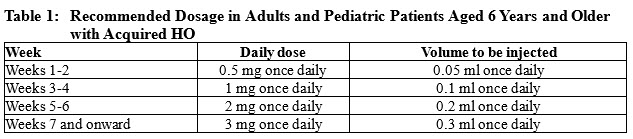
Image Description (Table 1)
A dosage recommendation table for Imcivree (setmelanotide) solution, showing daily dose and injection volume for patients aged 6 years and older with acquired HO. The table outlines doses from 0.5 mg to 3 mg daily over various weeks with corresponding injection volumes from 0.05 mL to 0.3 mL subcutaneously.*
FDA Label Image

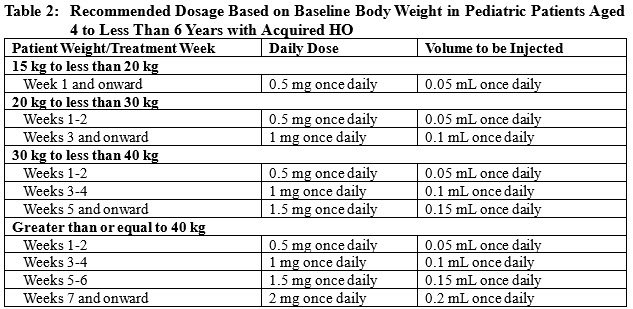
Image Description (Table 2)

Image Description (Table 2)
A data table showing recommended dosage of Imcivree (setmelanotide) solution for pediatric patients aged 4 to less than 6 years with acquired HO, based on baseline body weight categories (15 to less than 20 kg, 20 to less than 30 kg, 30 to less than 40 kg, and greater or equal to 40 kg). The table specifies weekly dose adjustments and corresponding injection volumes, with dosing frequencies of once daily.*
FDA Label Image

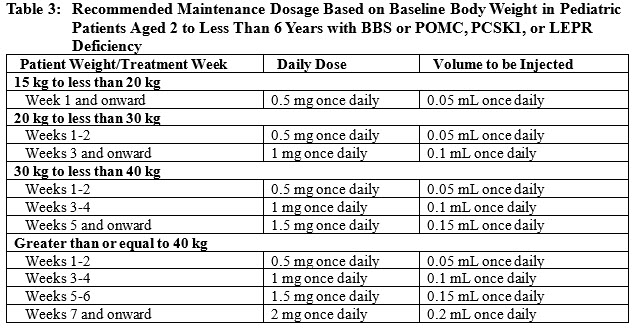
Image Description (Table 3)

Image Description (Table 3)
A data table titled 'Recommended Maintenance Dosage Based on Baseline Body Weight in Pediatric Patients Age 2 to Less Than 6 Years with BBS or POMC, PCSK1, or LEPR Deficiency.' It details daily dosage and injection volume of Imcivree (setmelanotide) solution by body weight categories ranging from 15 kg to greater than or equal to 40 kg, with dosing schedules specified per treatment weeks.*
FDA Label Image

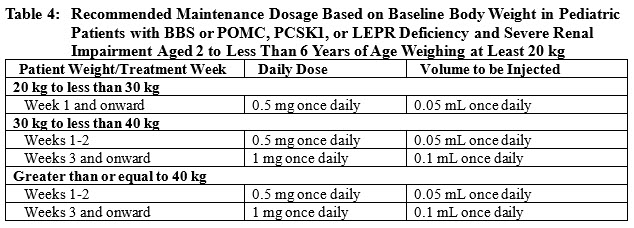
Image Description (Table 4)

Image Description (Table 4)
A dosage table titled 'Recommended Maintenance Dosage Based on Baseline Body Weight in Pediatric Patients with BBS or POMC, PCSK1, or LEPR Deficiency and Severe Renal Impairment Aged 2 to Less Than 6 Years of Age Weighing at Least 20 kg.' It details daily dose and injection volume by patient weight category for specific treatment weeks.*
FDA Label Image

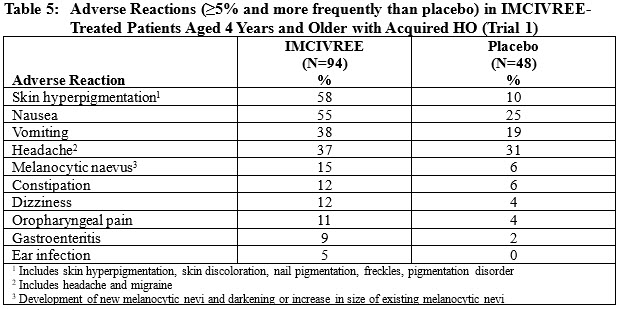
Image Description (Table 5)

Image Description (Table 5)
Table 5 showing adverse reactions with 5% or greater incidence and more frequent than placebo in IMCIVREE-treated patients aged 4 years and older in Trial 1. It lists specific reactions such as skin hyperpigmentation, nausea, vomiting, headache, melanocytic naevus, constipation, dizziness, oropharyngeal pain, gastroenteritis, and ear infection, with corresponding percentages for both IMCIVREE and placebo groups.*
FDA Label Image

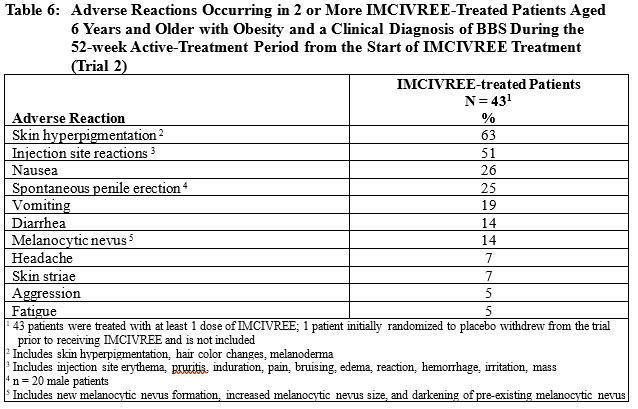
Image Description (Table 6)

Image Description (Table 6)
A data table listing adverse reactions occurring in 2 or more patients treated with Imcivree (setmelanotide) during a 52-week period in a clinical trial of patients aged 6 years and older with obesity and Bardet-Biedl Syndrome (BBS). The table details adverse reaction types and the percentage of patients experiencing each, including skin hyperpigmentation (63%), injection site reactions (51%), nausea (26%), spontaneous penile erection (25%), vomiting (19%), diarrhea (14%), melanocytic nevus (14%), headache (7%), skin striae (7%), aggression (5%), and fatigue (5%).*
FDA Label Image

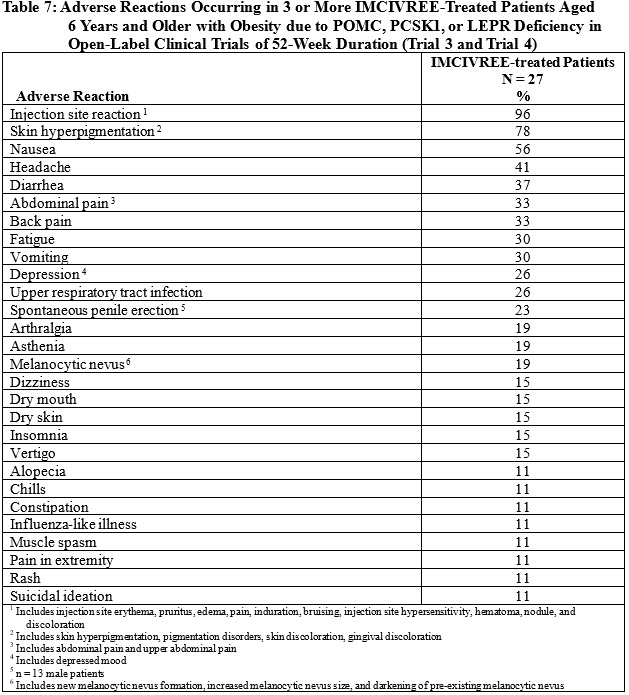
Image Description (Table 7)

Image Description (Table 7)
A data table listing adverse reactions occurring in 3 or more patients treated with Imcivree (setmelanotide) in clinical trials lasting 52 weeks. The table shows the percentage of 27 patients aged 6 years and older with obesity due to POMC, PCSK1, or LEPR deficiency who experienced various adverse reactions, with injection site reaction at 96% and skin hyperpigmentation at 78% as the most frequent.*
FDA Label Image

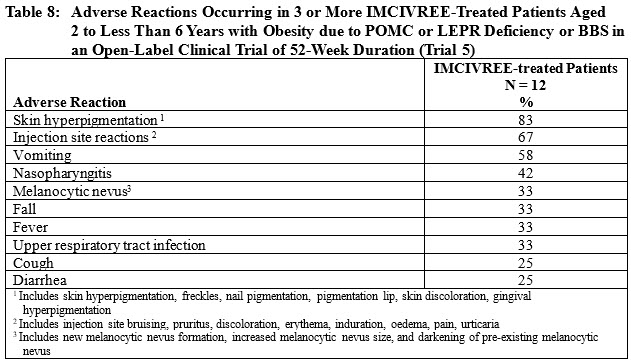
Image Description (Table 8)

Image Description (Table 8)
A data table titled 'Adverse Reactions Occurring in 3 or More IMCIVREE-Treated Patients Aged 2 to Less Than 6 Years' from a 52-week open-label clinical trial. It lists adverse reactions in 12 patients receiving IMCIVREE (setmelanotide), including skin hyperpigmentation (83%), injection site reactions (67%), vomiting (58%), nasopharyngitis (42%), melanocytic nevus (33%), fall (33%), fever (33%), upper respiratory tract infection (33%), cough (25%), and diarrhea (25%). Footnotes clarify specific reaction details.*
FDA Label Image

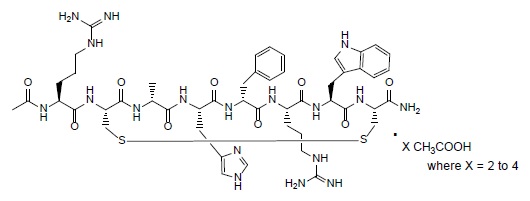
Chemical-structures (Imcivree 01)

Chemical-structures (Imcivree 01)
Chemical structure diagram of setmelanotide, the active ingredient in Imcivree. The diagram shows the molecule with amino acid residues, peptide bonds, and functional groups, along with a note indicating association with acetic acid (CH3COOH) where X equals 2 to 4.*
FDA Label Image

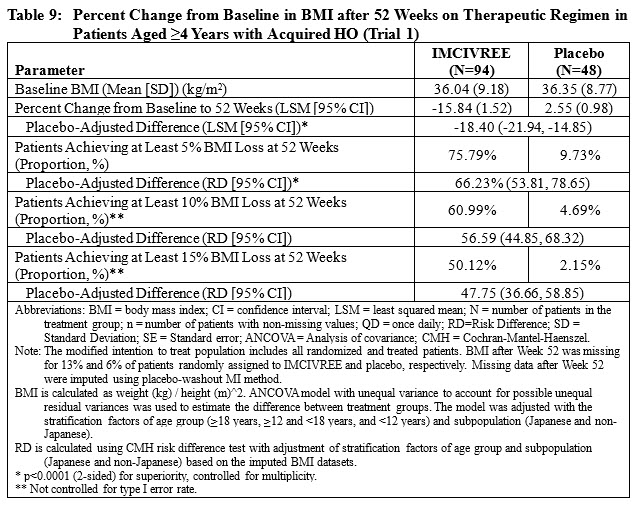
Image Description (Table 9)

Image Description (Table 9)
Data table titled 'Percent Change from Baseline in BMI after 52 Weeks on Therapeutic Regimen in Patients Aged ≥4 Years with Acquired HO (Trial 1)' comparing Imcivree (setmelanotide) 10 mg/mL solution versus placebo. It presents baseline BMI, percent change from baseline to 52 weeks, and proportions of patients achieving at least 5%, 10%, and 15% BMI loss, including placebo-adjusted differences and confidence intervals.*
FDA Label Image

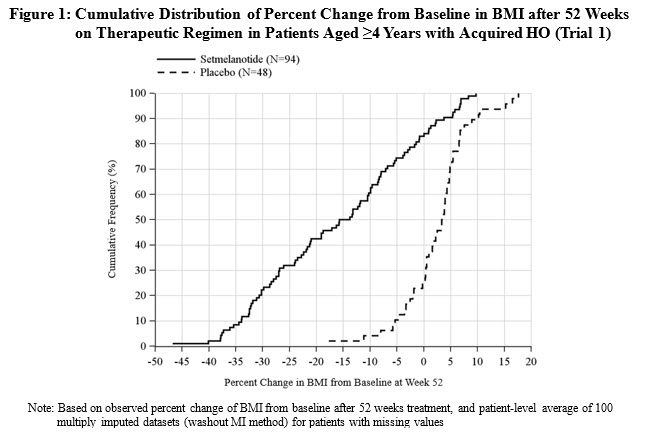
Image Description (Figure 1)

Image Description (Figure 1)
A cumulative distribution graph comparing percent change in BMI from baseline after 52 weeks of treatment in patients aged 4 years and older with acquired HO. The graph displays two lines, one for Setmelanotide (N=94) and one for placebo (N=48), plotted against cumulative frequency percentage on the y-axis and percent change in BMI on the x-axis.*
FDA Label Image

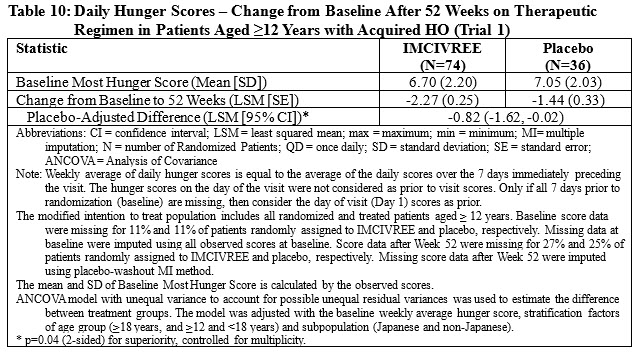
Image Description (Table 10)

Image Description (Table 10)
A data table titled 'Daily Hunger Scores – Change from Baseline After 52 Weeks on Therapeutic Regimen in Patients Aged ≥12 Years with Acquired HO (Trial 1)'. It compares baseline hunger scores and score changes over 52 weeks between Imcivree (setmelanotide) treated patients and placebo, including statistical analysis notes and abbreviations. The data includes means, standard deviations, least squared means, and confidence intervals for hunger scores.*
FDA Label Image

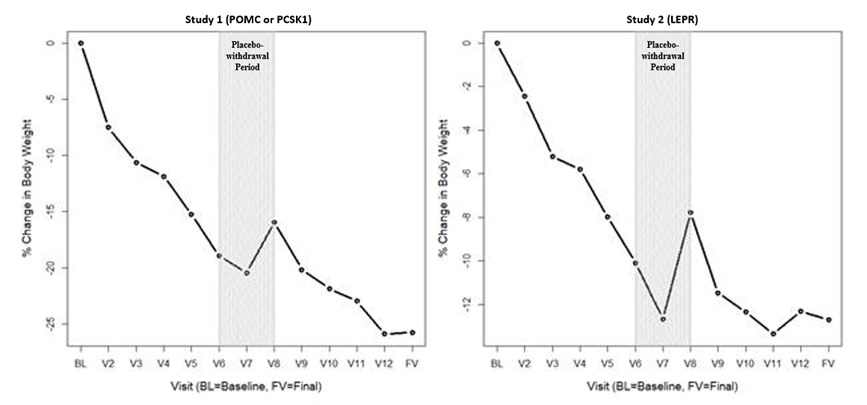
Figure 1 (Imcivree 02)

Figure 1 (Imcivree 02)
Two line graphs showing percent change in body weight over multiple visits, with a highlighted placebo-withdrawal period. The left graph is titled Study 1 (POMC or PCSK1), the right graph is Study 2 (LEPR). Both display a general downward trend in body weight change from baseline (BL) to final visit (FV), with a brief increase during the placebo-withdrawal period around visit 7-8.*
FDA Label Image

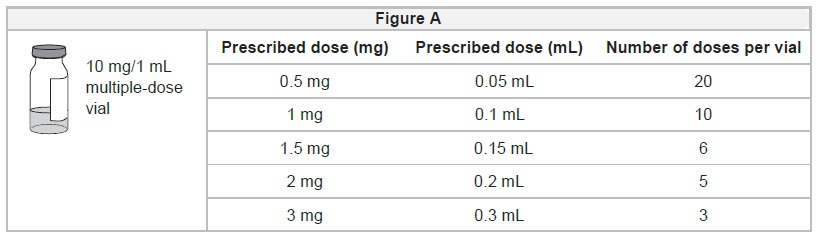
Figure A (Imcivree 03)

Figure A (Imcivree 03)
A data table titled Figure A displays dosing information for Imcivree (setmelanotide) 10 mg/mL solution multiple-dose vial. It lists prescribed doses in mg and mL along with the corresponding number of doses per vial, ranging from 0.5 mg (0.05 mL) with 20 doses to 3 mg (0.3 mL) with 3 doses per vial.*
FDA Label Image

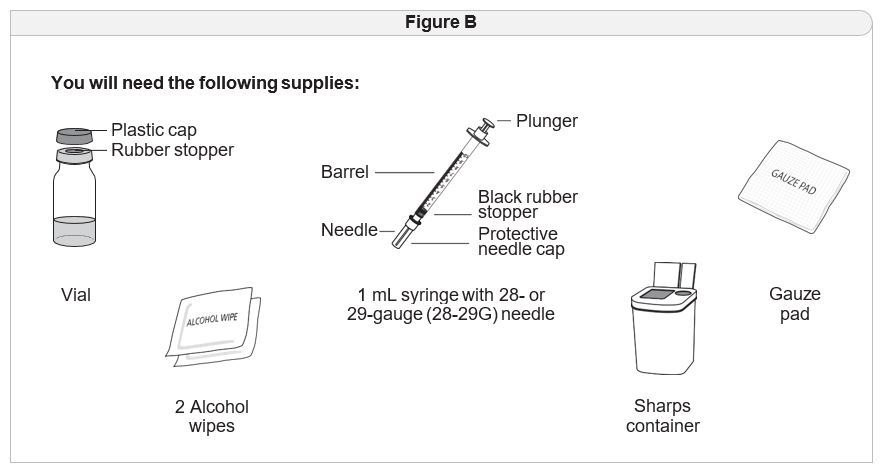
Figure B (Imcivree 04)

Figure B (Imcivree 04)
An instructional diagram labeled Figure B showing supplies needed for injection: a vial with a plastic cap and rubber stopper, two alcohol wipes, a 1 mL syringe with a 28- or 29-gauge needle detailing its parts (plunger, barrel, needle, black rubber stopper, protective needle cap), a gauze pad, and a sharps container.*
FDA Label Image

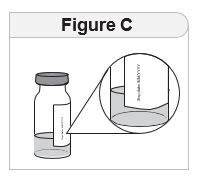
Figure C (Imcivree 05)

Figure C (Imcivree 05)
An instructional illustration labeled Figure C showing a vial with a close-up inset highlighting the bottom area of the vial, possibly to show a detail or feature of the vial appearance or contents. The vial appears to be intended for injectable solution.*
FDA Label Image

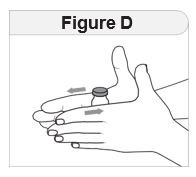
Figure D (Imcivree 06)

Figure D (Imcivree 06)
An instructional diagram labeled "Figure D" showing a hand with arrows indicating a rolling or massaging motion using the thumb over the back of the other hand. The image appears to demonstrate a manual technique, possibly related to application or preparation of a subcutaneous solution.*
FDA Label Image

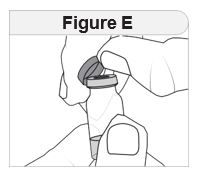
Figure E (Imcivree 07)

Figure E (Imcivree 07)
An instructional illustration showing a close-up of hands opening or removing the cap from a small vial, likely part of a medication preparation or administration process.*
FDA Label Image

Figure F (Imcivree 08)

Figure F (Imcivree 08)
An instructional illustration labeled Figure F showing a vial with a flip-off cap and a square alcohol prep pad positioned with an arrow indicating the action of wiping or cleaning the vial's rubber stopper prior to use.*
FDA Label Image

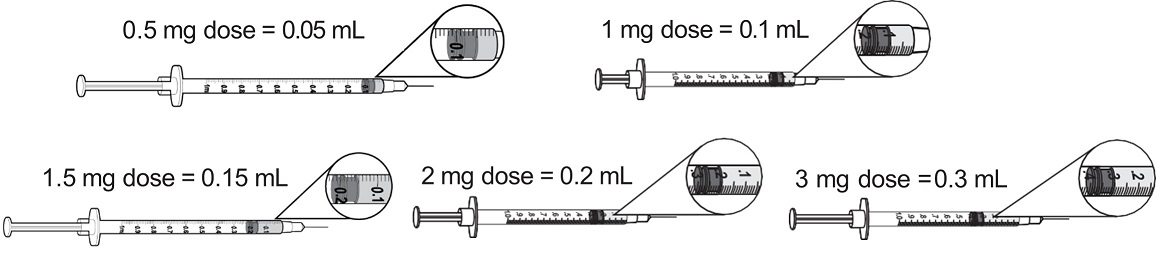
Figure G (Imcivree 09)

Figure G (Imcivree 09)
An instructional illustration showing syringes filled with different volumes of solution corresponding to doses of 0.5 mg, 1 mg, 1.5 mg, 2 mg, and 3 mg. Each syringe has a magnified view highlighting the measurement markings for precise dosing.*
FDA Label Image

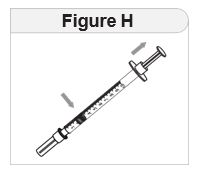
Figure H (Imcivree 10)

Figure H (Imcivree 10)
Illustration labeled Figure H showing a syringe with measurement markings. The diagram includes arrows indicating the direction of plunger movement, likely demonstrating how to use or prepare the syringe for injection.*
FDA Label Image

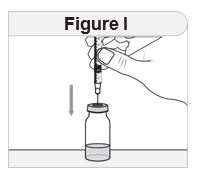
Figure I (Imcivree 11)

Figure I (Imcivree 11)
An instructional illustration labeled Figure I showing a hand drawing liquid from a vial into a syringe. The image is part of usage instructions for a subcutaneous solution product.*
FDA Label Image

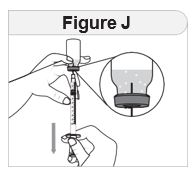
Figure J (Imcivree 12)

Figure J (Imcivree 12)
An instructional diagram titled Figure J showing hands preparing a subcutaneous injection using a syringe and vial. The illustration emphasizes drawing solution from the vial into the syringe, with a close-up inset highlighting the vial's stopper.*
FDA Label Image

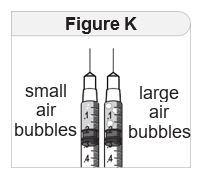
Figure K (Imcivree 13)

Figure K (Imcivree 13)
An illustration labeled Figure K showing two syringes with different sized air bubbles. One syringe has small air bubbles and the other has large air bubbles, highlighting the difference in bubble size within the syringes.*
FDA Label Image

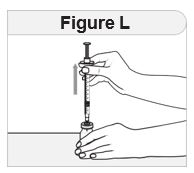
Figure L (Imcivree 14)

Figure L (Imcivree 14)
An instructional illustration labeled Figure L depicts a hand using a syringe to withdraw solution from a vial. The image shows one hand holding the vial steady and the other hand pulling the syringe plunger to draw liquid from the vial, indicating a subcutaneous injection preparation step.*
FDA Label Image

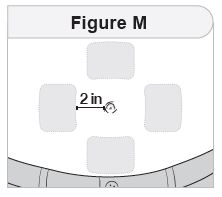
Figure M (Imcivree 15)

Figure M (Imcivree 15)
An illustration labeled Figure M showing a center reference scale with a labeled length of 2 inches, seemingly part of a calibration or sizing guide within a larger instructional diagram.*
FDA Label Image

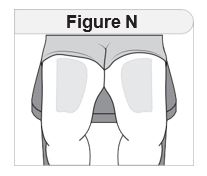
Figure N (Imcivree 16)

Figure N (Imcivree 16)
An illustration labeled 'Figure N' showing the back of the upper legs and buttocks of a seated person, highlighting two shaded areas on the outer upper thighs indicative of possible injection sites for a subcutaneous solution.*
FDA Label Image

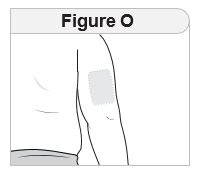
Figure O (Imcivree 17)

Figure O (Imcivree 17)
Illustration labeled Figure O showing the upper arm of a person with a shaded rectangular area on the outer side, indicating a site for subcutaneous injection.*
FDA Label Image

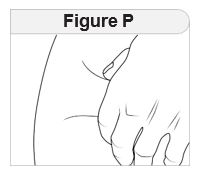
Figure P (Imcivree 18)

Figure P (Imcivree 18)
An instructional illustration labeled "Figure P" depicting a hand pinching a fold of skin, likely demonstrating a technique for subcutaneous injection administration.*
FDA Label Image

Figure Q (Imcivree 19)

Figure Q (Imcivree 19)
An instructional illustration titled 'Figure Q,' showing a hand holding a syringe at a 90-degree angle as part of a subcutaneous injection technique.*
FDA Label Image

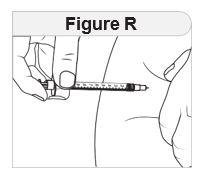
Figure R (Imcivree 20)

Figure R (Imcivree 20)
Instructional illustration labeled Figure R shows a person administering a subcutaneous injection, demonstrating the proper technique for injecting the solution, likely of Imcivree (setmelanotide) 10 mg/mL, into the abdominal area.*
FDA Label Image

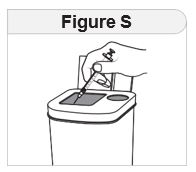
Figure S (Imcivree 21)

Figure S (Imcivree 21)
An instructional illustration labeled 'Figure S' showing a hand using a dosing device or applicator to insert or handle an object into a container with an open lid.*
FDA Label Image

Carton Label (Imcivree 26)

Carton Label (Imcivree 26)
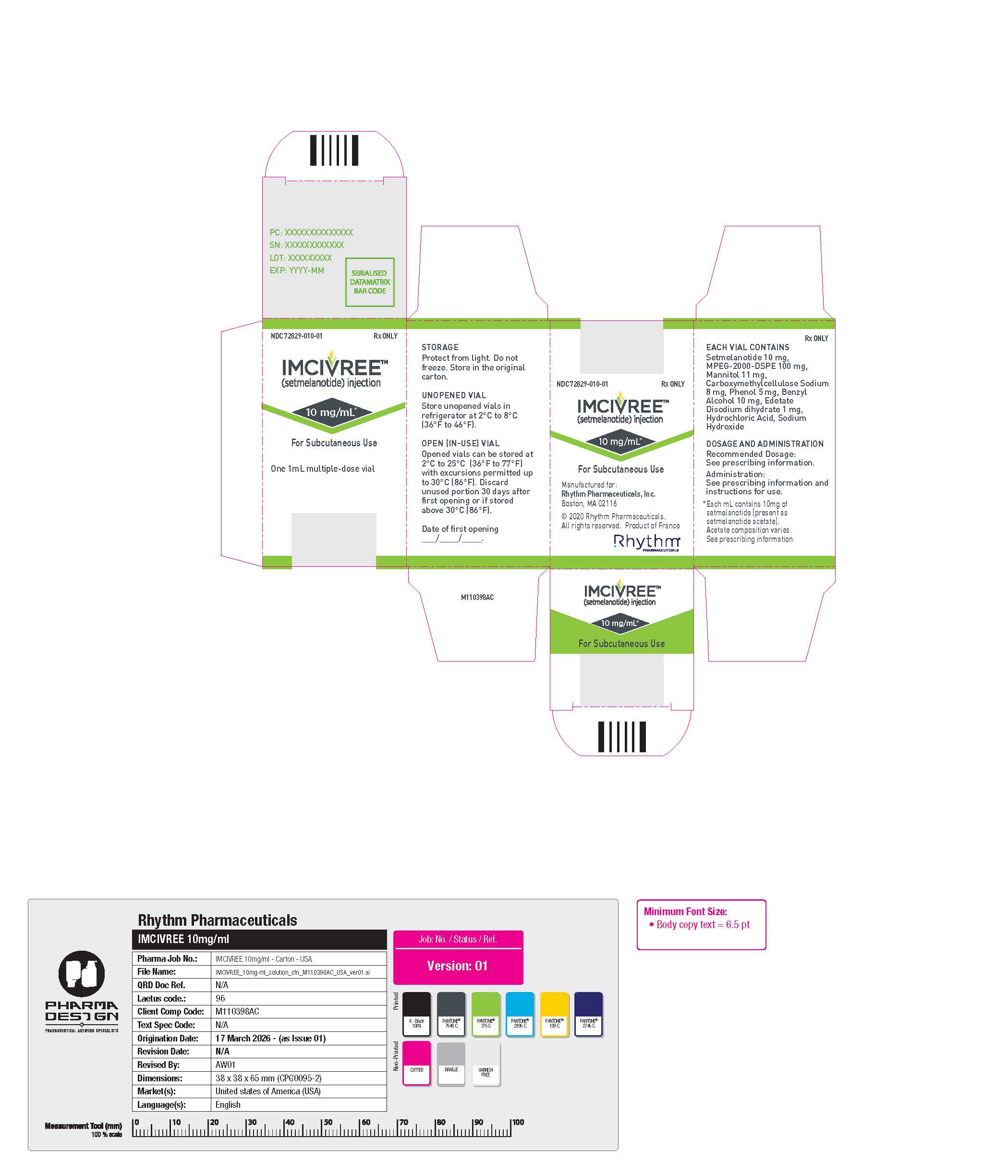
Carton label for Imcivree (setmelanotide) injection, 10 mg/mL solution for subcutaneous use. The label features storage instructions, vial contents including active and inactive ingredients, and dosage administration information. It is manufactured by Rhythm Pharmaceuticals, Inc and includes NDC 72829-010-01 with batch and expiration placeholders. The packaging design includes green and gray color elements with regulatory and serial barcode areas.*
FDA Label Image

Vial Label (Imcivree 23)

Vial Label (Imcivree 23)
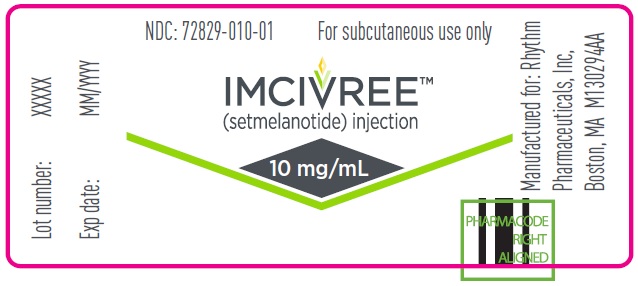
Label for Imcivree (setmelanotide) injection, 10 mg/mL solution for subcutaneous use. The label includes the NDC 72829-010-01 and shows it is manufactured by Rhythm Pharmaceuticals, Inc, Boston, MA. It also has spaces for lot number and expiration date.*

* About these descriptions: Image descriptions on this page are generated by automated AI analysis of the product label images from the manufacturer's FDA label submission (SPL). They are provided for reference only and may contain errors or omissions. Always rely on the printed label itself and the official FDA labeling, and consult a pharmacist or healthcare professional with any questions about this product.