Pain Relief Cream
Product Images NDC 73672-987

View Photos of Packaging, Regulatory Labels, and Product Appearance

Product Visual Gallery

This gallery contains 2 technical images submitted to the FDA as part of the official labeling for Pain Relief Cream (NDC 73672-987). Unlike standard consumer photos, these assets often include clinical data figures, molecular chemical structures, and official manufacturer packaging layouts.

As provided by Hempfusion, Inc., these visuals offer a comprehensive scientific overview of the product's physical and chemical identity, aiding pharmacists and researchers in product verification and study.

FDA Label Image

Box (Hf Painrelief Cream Box V1.4 Page 001)
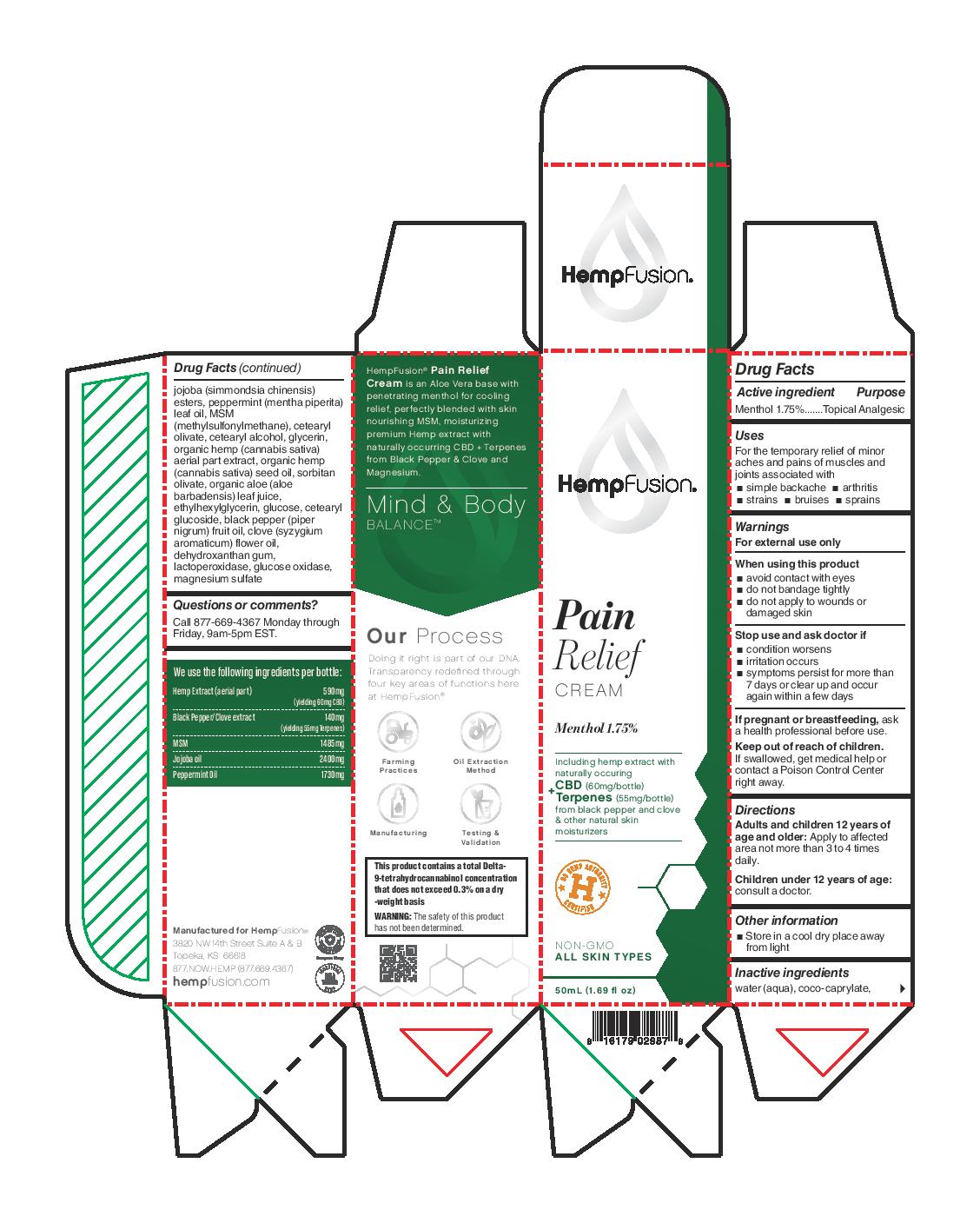
Box (Hf  Painrelief  Cream Box  V1.4 Page 001)
This is a description of a Pain Relief product containing hemp extract with naturally occurring CBD, menthol, black pepper, and clove. It also includes aloe vera, jojoba, and peppermint. The product is suitable for all skin types and contains 60mg per bottle. The text provides warnings and directions of use, including storage and inactive ingredients. Contact information for any questions or comments is also provided.*
FDA Label Image

Label (Hf Painrelief Cream Label V1.1 Pantone Page 001)

Label (Hf  Painrelief  Cream Label  V1.1  Pantone Page 001)
Hempfusion Pain Relief Cream is an external topical analgesic used for temporary relief from minor joint and muscle aches and pains, strains, bruises, sprains, arthritis and simple backache. The cream contains 1.75% menthol as the active ingredient and has a non-psychoactive THC concentration of 0.3% or less. It is recommended not to apply to damaged skin and avoid contact with eyes. The cream is manufactured by Hemp-somal in a 3.25" tube and comprises of other inactive ingredients including organic hemp extracts, MSM, black pepper, and clove. For dosage, adults and children 12 years and older can apply the cream not more than three to four times daily while less than 12 years should consult a doctor.*

* These product label images have been analyzed using experimental machine learning. Please verify findings with the primary label text.