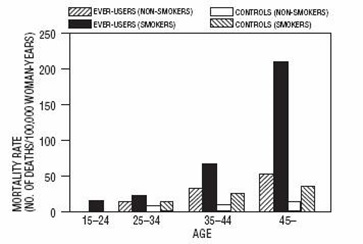
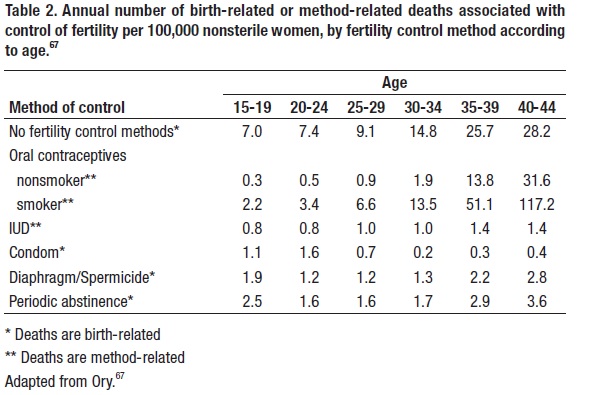
Other
Patients should be counseled that this product does not protect against HIV infection (AIDS) and other sexually transmitted diseases.
BRIEF SUMMARY OF PATIENT WARNINGS
This product (like all oral contraceptives) is intended to prevent pregnancy. It does not protect against HIV infection (AIDS) and other sexually transmitted diseases.

7 (Image 07)
In the detailed leaflet, "What You Should Know About Oral Contraceptives," which you havereceived, the risks and benefits of oral contraceptives are discussed in much more detail. That leaflet also provides information on other forms of contraception. Please take time to read it carefully for it may have been recently revised.
If you have any questions or problems regarding this information, contact your doctor.
Oral contraceptives, also known as "birth control pills" or "the pill," are taken to prevent pregnancy and, when taken correctly, have a failure rate of about 1% per year when used without missing any pills. The typical failure rate of large numbers of pill users is less than 3% per year when women who miss pills are included. However, forgetting to take pills considerably increases the chances of pregnancy.
For most women, oral contraceptives are free of serious or unpleasant side effects. However, oral contraceptive use is associated with certain serious diseases or conditions that can cause severe disability or death, though rarely. There are some women who are at high risk of developing certain serious diseases that can be life-threatening or may cause temporary or permanent disability. The risks associated with taking oral contraceptives increase significantly if you:
● smoke, or
● have high blood pressure, diabetes, high cholesterol, or are overweight, or
● have or have had clotting disorders, heart attack, stroke, angina pectoris (chest pains on exertion), cancer of the breast or sex organs, jaundice (yellowing of the skin or whites of the eyes), or malignant (cancerous) or benign (noncancerous) liver tumors.
Women should not use oral contraceptives if they suspect they are pregnant or if they have unexplained vaginal bleeding.
Most side effects of the pill are not serious. The most common effects are nausea, vomiting, bleeding between menstrual periods, weight gain, breast tenderness, and difficulty wearing contact lenses. These side effects, especially nausea and vomiting, may subside within the first three months of use.
Proper use of oral contraceptives requires that they be taken under your doctor's continuing supervision, because they can be associated with serious side effects. The serious side effects of the pill occur very infrequently, especially if you are in good health and are young. However, you should know that the following medical conditions have been associated with or made worse by the pill, and that certain of the risks may persist after use of the pill has been discontinued:
1. Blood clots in the legs, arms, lungs, heart (heart attack), eyes, abdomen, or elsewhere in the body. As mentioned above, smoking increases the risk of heart attacks and strokes and subsequent serious medical consequences.
2. Stroke, due to a blood clot, or to bleeding in the brain (hemorrhage) as a result of bursting of a blood vessel. Stroke can lead to paralysis in all or part of the body, or to death.
3. Liver tumors, which may rupture and cause severe bleeding and death. A possible, but not definite, association has also been found with the pill and liver cancer. However, with or without use of the pill, liver cancers are extremely rare in the United States.
4. High blood pressure, although blood pressure ordinarily, but not always, returns to original levels when the pill is stopped.
5. Gallbladder disease, which might require surgery.
The symptoms associated with these serious side effects are discussed in the detailed leaflet given to you with your supply of pills. Notify your doctor or health care provider if you notice any unusual physical disturbances while taking the pill. In addition, you should be aware that drugs such as antiepileptics, antibiotics (especially rifampin), as well as certain other drugs, may decrease oral contraceptive effectiveness.
There is a conflict among studies regarding breast cancer and oral contraceptive use. Some studies have reported an increase in the risk of developing breast cancer, particularly at a younger age. This increased risk appears to be related to duration of use. The majority of studies have found no overall increase in the risk of developing breast cancer. Some studies have found an increase in the incidence of cancer of the cervix in women who use oral contraceptives. However, this finding may be related to factors other than the use of oral contraceptives. There is insufficient evidence to rule out the possibility that pills may cause such cancers.
Taking the pill may provide some important non-contraceptive benefits. These include less painful menstruation, less menstrual blood loss and anemia, less risk of fibroids, pelvic infections, and noncancerous breast disease, and less risk of cancer of the ovary and of the lining of the uterus (womb).
Be sure to discuss any medical condition you may have with your health care provider. He or she will take a medical and family history before prescribing oral contraceptives and will also examine you. The physical examination may be delayed to another time if you request it and the health care provider believes that it is a good medical practice to postpone it. You should be re-examined at least once a year while taking oral contraceptives. The detailed patient information leaflet gives you further information that you should read and discuss with your health care provider.
DETAILED PATIENT LABELING:
WHAT YOU SHOULD KNOW ABOUT ORAL CONTRACEPTIVES
This product (like all oral contraceptives) is intended to prevent pregnancy. It does not protect against HIV infection (AIDS) and other sexually transmitted diseases.
INTRODUCTION
It is important that any woman who considers using an oral contraceptive understand the risks involved. Although the oral contraceptives have important advantages over other methods of contraception, they have certain risks that no other method has. Only you and your physician can decide whether the advantages are worth these risks. This leaflet will tell you about the most important risks. It will explain how you can help your doctor prescribe the pill as safely as possible by telling him/her about yourself and being alert for the earliest signs of trouble. And it will tell you how to use the pill properly so that it will be as effective as possible. THERE IS MORE DETAILED INFORMATION AVAILABLE IN THE LEAFLET PREPARED FOR DOCTORS. Your pharmacist can show you a copy; you may need your doctor's help in understanding parts of it.
This leaflet is not a replacement for a careful discussion between you and your health care provider. You should discuss the information provided in this leaflet with him or her, both when you first start taking the pill and during your revisits. You should also follow your health care provider's advice with regard to regular check-ups while you are on the pill.
If you do not have any of the conditions listed below and are thinking about using oral contraceptives, to help you decide, you need information about the advantages and risks of oral contraceptives and of other contraceptive methods as well. This leaflet describes the advantages and risks of oral contraceptives. Except for sterilization, the intrauterine device (IUD), and abortion, which have their own specific risks, the only risks of other methods are those due to pregnancy should the method fail. Your doctor can answer questions you may have with respect to other methods of contraception, and further questions you may have on oral contraceptives after reading this leaflet.
WHAT ARE ORAL CONTRACEPTIVES?
The most common type of oral contraceptive, often simply called "the pill," is a combination of estrogen and progestogen, the two kinds of female hormones. The amount of estrogen and progestogen can vary, but the amount of estrogen is more important because both the effectiveness and some of the dangers of the pill have been related to the amount of estrogen. The pill works principally by preventing release of an egg from the ovary during the cycle in which the pills are taken.
EFFECTIVENESS OF ORAL CONTRACEPTIVES
The pill is one of the most effective methods of birth control. When they are taken correctly, without missing any pills, the chance of becoming pregnant is less than 1% (1 pregnancy per 100 women per year of use) when used perfectly, without missing any pills. Typical failure rates are actually about 3% per year. The chance of becoming pregnant increases with each missed pill during a menstrual cycle.
In comparison, typical failure rates for other methods of birth control during the first year of use are as follows:
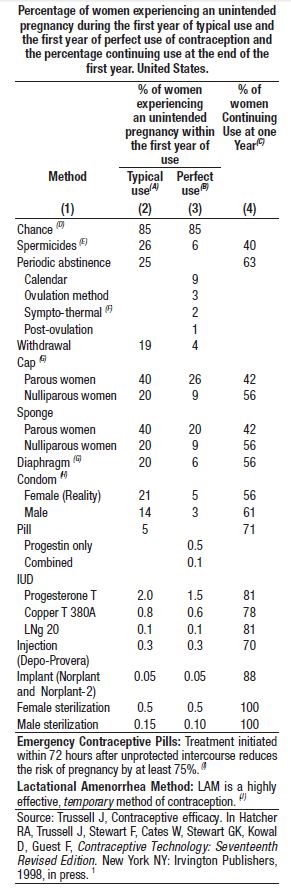
15 (Image 08)
(A) Among typical couples who initiate use of a method (not necessarily for the first time), the percentage who experience an accidental pregnancy during the first year if they do not stop use for any other reason.
(B) Among couples who initiate use of a method (not necessarily for the first time) and who use it perfectly (both consistently and correctly), the percentage who experience an accidental pregnancy during the first year if they do not stop use for any other reason.
(C) Among couples attempting to avoid pregnancy, the percentage who continue to use a method for one year.
(D) The percents becoming pregnant in columns (2) and (3) are based on data from populations where contraception is not used and from women who cease using contraception in order to become pregnant. Among such populations, about 89% become pregnant within one year. This estimate was lowered slightly (to 85%) to represent the percent who would become pregnant within one year among women now relying on reversible methods of contraception if they abandoned contraception altogether.
(E) Foams, creams, gels, vaginal suppositories, and vaginal film.
(F) Cervical mucus (ovulation) method supplemented by calendar in the pre-ovulatory and basal body temperature in the post-ovulatory phases.
(G) With spermicidal cream or jelly.
(H) Without spermicides.
(I) The treatment schedule is one dose within 72 hours after unprotected intercourse and a second dose 12 hours after the first dose. The Food and Drug Administration has declared the following brands of oral contraceptives to be safe and effective for emergency contraception: Ovral (1 dose is 2 white pills), Alesse (1 dose is 5 pink pills), Nordette or Levlen (1 dose is 2 light-orange pills), Lo/Ovral (1 dose is 4 white pills), Triphasil or Tri-Levlen (1 dose is 4 yellow pills).
(J) However, to maintain effective protection against pregnancy, another method of contraception must be used as soon as menstruation resumes, the frequency or duration of breastfeeds is reduced, bottle feeds are introduced, or the baby reaches six months of age.
WHO SHOULD NOT TAKE ORAL CONTRACEPTIVES

8 (Image 09)
Some women should not use the pill. For example, you should not take the pill if you are pregnant or think you may be pregnant. You should also not use the pill if you have any of the following conditions:
● Heart attack or stroke (blood clot or hemorrhage in the brain), currently or in the past.
● Blood clots in the legs (thrombophlebitis), lungs (pulmonary embolism), eyes, or elsewhere in the body, currently or in the past.
● Chest pain (angina pectoris), currently or in the past.
● Known or suspected breast cancer or cancer of the lining of the uterus (womb), cervix, or vagina, currently or in the past.
● Unexplained vaginal bleeding (until a diagnosis is reached by your doctor).
● Yellowing of the whites of the eyes or of the skin (jaundice) during pregnancy or during previous use of the pill.
● Liver tumor (whether cancerous or not), currently or in the past.
● Take any Hepatitis C drug combination containing obitasvir/paritaprevir/ritonavir with or without dasabuvir. This may increase levels of the liver enzyme "alanine aminotransferase" (ALT) in the blood.
● Known or suspected pregnancy (one or more menstrual periods missed).
Tell your health care provider if you have ever had any of these conditions. He or she can recommend a safer method of birth control.
OTHER CONSIDERATIONS BEFORE TAKING ORAL CONTRACEPTIVES
Tell your health care provider if you have or have had any of the following conditions, as he or she will want to watch them closely or they might cause him or her to suggest using another method of contraception:
● Breast nodules (lumps), fibrocystic disease (breast cysts), abnormal mammograms (x-ray pictures of the breast), or abnormal Pap smears
● Diabetes
● High blood pressure
● High blood cholesterol or triglycerides
● Migraine or other headaches or epilepsy
● Mental depression
● Gallbladder, heart, or kidney disease
● History of scanty or irregular menstrual periods
● Problems during a prior pregnancy
● Fibroid tumors of the womb
● History of jaundice (yellowing of the whites of the eyes or of the skin)
● Varicose veins
● Tuberculosis
● Plans for elective surgery
Women with any of these conditions should be checked often by their health care provider if they choose to use oral contraceptives.
Also, be sure to tell your doctor if you smoke or are on any medications.