Nitouch Alcohol Gel Hand Sanitizer
Product Images NDC 80437-003

View Photos of Packaging, Regulatory Labels, and Product Appearance

Product Visual Gallery

This gallery contains 3 technical images submitted to the FDA as part of the official labeling for Nitouch Alcohol Gel Hand Sanitizer (NDC 80437-003). Unlike standard consumer photos, these assets often include clinical data figures, molecular chemical structures, and official manufacturer packaging layouts.

As provided by Kasa Trading, Llc, these visuals offer a comprehensive scientific overview of the product's physical and chemical identity, aiding pharmacists and researchers in product verification and study.

FDA Label Image

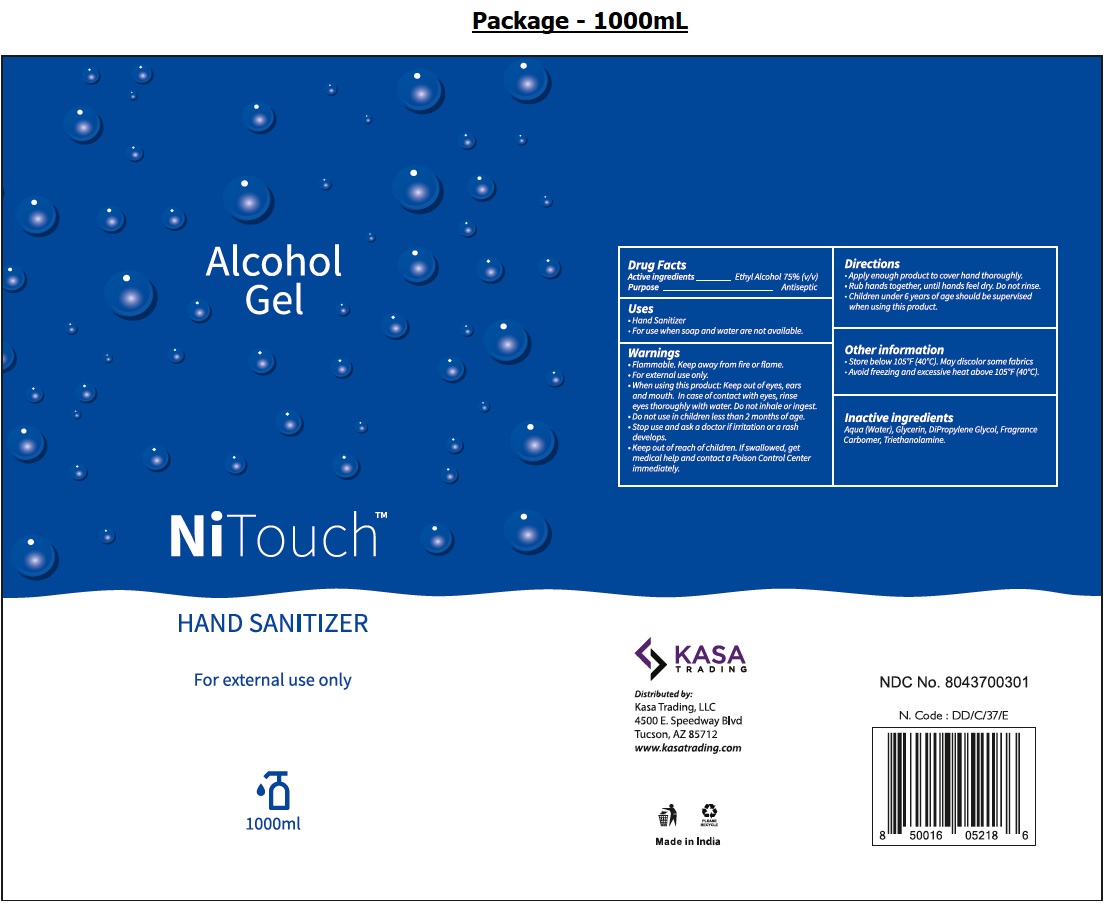
Image (8043700301)

Image (8043700301)
This is a label for a bottle of hand sanitizer, with a 1000mL capacity, named "Gel". Its active ingredient is Etyacona 756, and it is for external use only. The product must be kept out of eyes, mouth, and reach of children. The inactive ingredients are Carbomer and Tretanaimie. The label also includes the directions for use: "apply enough product on your hands and rub them together until dry". There are also warnings to not use the product on sensitive skin, to not use it for more than two months, and to store it below 05 40 degrees Celsius. The label shows NDC No. 8043700301 and N. Code : DDIC/3T/E.*
FDA Label Image

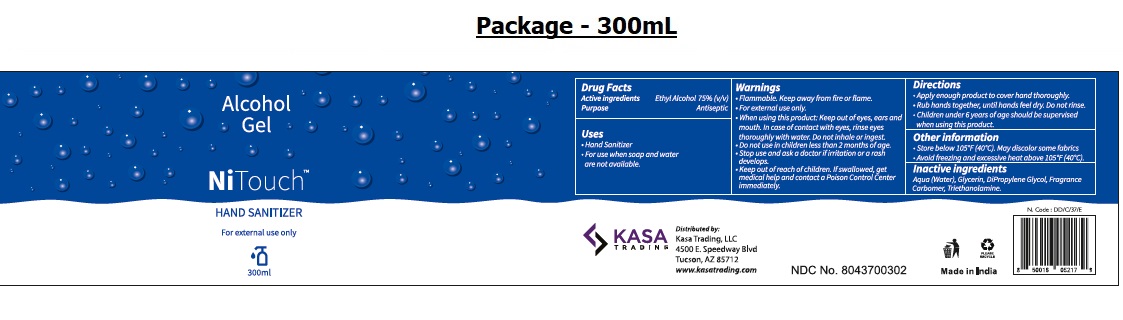
Image (8043700302)

FDA Label Image

Image (8043700303)

Image (8043700303)
NiTouch hand sanitizer is an antiseptic solution containing 75% ethyl alcohol for external use only. It is recommended for use when soap and water are not available to clean hands. Users are advised not to inhale or ingest the solution and not to use it on children under 2 months of age. The product can be flammable, and users must keep it away from fire or flame. If the product comes into contact with eyes, rinse thoroughly with water. If swallowed, seek medical help immediately. The manufacturers recommend rubbing the product on dry hands and not to rinse them.*

* These product label images have been analyzed using experimental machine learning. Please verify findings with the primary label text.