Monotherapy: Over 4,300 male subjects with BPH were randomly assigned to receive placebo or 0.5-mg daily doses of dutasteride in 3 identical 2-year, placebo-controlled, double-blind, Phase 3 treatment trials, each followed by a 2-year open-label extension. During the double-blind treatment period, 2,167 male subjects were exposed to dutasteride, including 1,772 exposed for 1 year and 1,510 exposed for 2 years. When including the open-label extensions, 1,009 male subjects were exposed to dutasteride for 3 years and 812 were exposed for 4 years. The population was aged 47 to 94 years (mean age: 66 years) and greater than 90% were Caucasian. Table 1 summarizes clinical adverse reactions reported in at least 1% of subjects receiving dutasteride and at a higher incidence than subjects receiving placebo.
Table 1. Adverse Reactions Reported in ≥1% of Subjects Over a 24-Month Period and More Frequently in the Group Receiving Dutasteride Than the Placebo Group (Randomized, Double-Blind, Placebo-Controlled Trials Pooled) by Time of OnsetAdverse Reaction Dutasteride (n)
Placebo (n) | Adverse Reaction Time of Onset |
|---|
Months 0-6
(n = 2,167)
(n = 2,158) | Months 7-12
(n = 1,901)
(n = 1,922) | Months 13-18
(n = 1,725)
(n = 1,714) | Months 19-24
(n = 1,605)
(n = 1,555) |
|---|
| Impotence These sexual adverse reactions are associated with dutasteride treatment (including monotherapy and combination with tamsulosin). These adverse reactions may persist after treatment discontinuation. The role of dutasteride in this persistence is unknown. | | | | |
| Dutasteride | 4.7% | 1.4% | 1.0% | 0.8% |
| Placebo | 1.7% | 1.5% | 0.5% | 0.9% |
| Decreased libido | | | | |
| Dutasteride | 3.0% | 0.7% | 0.3% | 0.3% |
| Placebo | 1.4% | 0.6% | 0.2% | 0.1% |
| Ejaculation disorders | | | | |
| Dutasteride | 1.4% | 0.5% | 0.5% | 0.1% |
| Placebo | 0.5% | 0.3% | 0.1% | 0.0% |
| Breast disorders Includes breast tenderness and breast enlargement. | | | | |
| Dutasteride | 0.5% | 0.8% | 1.1% | 0.6% |
| Placebo | 0.2% | 0.3% | 0.3% | 0.1% |
Long-Term Treatment (Up to 4 Years):
High-Grade Prostate Cancer: The REDUCE trial was a randomized, double-blind, placebo-controlled trial that enrolled 8,231 men aged 50 to 75 years with a serum PSA of 2.5 ng/mL to 10 ng/mL and a negative prostate biopsy within the previous 6 months. Subjects were randomized to receive placebo (N = 4,126) or 0.5-mg daily doses of dutasteride (N = 4,105) for up to 4 years. The mean age was 63 years and 91% were Caucasian. Subjects underwent protocol-mandated scheduled prostate biopsies at 2 and 4 years of treatment or had "for-cause biopsies" at non-scheduled times if clinically indicated. There was a higher incidence of Gleason score 8-10 prostate cancer in men receiving dutasteride (1.0%) compared with men on placebo (0.5%) [see Indications and Usage (1.3), Warnings and Precautions (5.2)]. In a 7-year placebo-controlled clinical trial with another 5 alpha-reductase inhibitor (finasteride 5 mg), similar results for Gleason score 8-10 prostate cancer were observed (finasteride 1.8% versus placebo 1.1%).
No clinical benefit has been demonstrated in patients with prostate cancer treated with dutasteride.
Reproductive and Breast Disorders: In the 3 pivotal placebo-controlled BPH trials with dutasteride, each 4 years in duration, there was no evidence of increased sexual adverse reactions (impotence, decreased libido, and ejaculation disorder) or breast disorders with increased duration of treatment. Among these 3 trials, there was 1 case of breast cancer in the dutasteride group and 1 case in the placebo group. No cases of breast cancer were reported in any treatment group in the 4-year CombAT trial or the 4-year REDUCE trial.
The relationship between long-term use of dutasteride and male breast neoplasia is currently unknown.
Combination With Alpha-Blocker Therapy (CombAT): Over 4,800 male subjects with BPH were randomly assigned to receive 0.5-mg dutasteride, 0.4-mg tamsulosin, or combination therapy (0.5-mg dutasteride plus 0.4-mg tamsulosin) administered once daily in a 4-year double-blind trial. Overall, 1,623 subjects received monotherapy with dutasteride; 1,611 subjects received monotherapy with tamsulosin; and 1,610 subjects received combination therapy. The population was aged 49 to 88 years (mean age: 66 years) and 88% were Caucasian. Table 2 summarizes adverse reactions reported in at least 1% of subjects in the combination group and at a higher incidence than subjects receiving monotherapy with dutasteride or tamsulosin.
Table 2. Adverse Reactions Reported Over a 48-Month Period in ≥1% of Subjects and More Frequently in the Coadministration Therapy Group Than the Groups Receiving Monotherapy With Dutasteride or Tamsulosin (CombAT) by Time of Onset| Adverse Reaction | Adverse Reaction Time of Onset |
|---|
| Year 1 | Year 2 | Year 3 | Year 4 |
|---|
| Months 0-6 | Months 7-12 |
|---|
| Combination Combination = Dutasteride 0.5 mg once daily plus tamsulosin 0.4 mg once daily. | (n = 1,610) | (n = 1,527) | (n = 1,428) | (n = 1,283) | (n = 1,200) |
|---|
| Dutasteride | (n = 1,623) | (n = 1,548) | (n = 1,464) | (n = 1,325) | (n = 1,200) |
|---|
| Tamsulosin | (n = 1,611) | (n = 1,545) | (n = 1,468) | (n = 1,281) | (n = 1,112) |
|---|
| Ejaculation disorders Includes anorgasmia, retrograde ejaculation, semen volume decreased, orgasmic sensation decreased, orgasm abnormal, ejaculation delayed, ejaculation disorder, ejaculation failure, and premature ejaculation. ,These sexual adverse reactions are associated with dutasteride treatment (including monotherapy and combination with tamsulosin). These adverse reactions may persist after treatment discontinuation. The role of dutasteride in this persistence is unknown. | | | | | |
| Combination | 7.8% | 1.6% | 1.0% | 0.5% | <0.1% |
| Dutasteride | 1.0% | 0.5% | 0.5% | 0.2% | 0.3% |
| Tamsulosin | 2.2% | 0.5% | 0.5% | 0.2% | 0.3% |
| Impotence, Includes erectile dysfunction and disturbance in sexual arousal. | | | | | |
| Combination | 5.4% | 1.1% | 1.8% | 0.9% | 0.4% |
| Dutasteride | 4.0% | 1.1% | 1.6% | 0.6% | 0.3% |
| Tamsulosin | 2.6% | 0.8% | 1.0% | 0.6% | 1.1% |
| Decreased libido, Includes libido decreased, libido disorder, loss of libido, sexual dysfunction, and male sexual dysfunction. | | | | | |
| Combination | 4.5% | 0.9% | 0.8% | 0.2% | 0.0% |
| Dutasteride | 3.1% | 0.7% | 1.0% | 0.2% | 0.0% |
| Tamsulosin | 2.0% | 0.6% | 0.7% | 0.2% | <0.1% |
| Breast disorders Includes breast enlargement, gynecomastia, breast swelling, breast pain, breast tenderness, nipple pain, and nipple swelling. | | | | | |
| Combination | 1.1% | 1.1% | 0.8% | 0.9% | 0.6% |
| Dutasteride | 0.9% | 0.9% | 1.2% | 0.5% | 0.7% |
| Tamsulosin | 0.4% | 0.4% | 0.4% | 0.2% | 0.0% |
| Dizziness | | | | | |
| Combination | 1.1% | 0.4% | 0.1% | <0.1% | 0.2% |
| Dutasteride | 0.5% | 0.3% | 0.1% | <0.1% | <0.1% |
| Tamsulosin | 0.9% | 0.5% | 0.4% | <0.1% | 0.0% |
Cardiac Failure: In CombAT, after 4 years of treatment, the incidence of the composite term cardiac failure in the combination therapy group (12/1,610; 0.7%) was higher than in either monotherapy group: Dutasteride, 2/1,623 (0.1%) and tamsulosin, 9/1,611 (0.6%). Composite cardiac failure was also examined in a separate 4-year placebo-controlled trial evaluating dutasteride in men at risk for development of prostate cancer. The incidence of cardiac failure in subjects taking dutasteride was 0.6% (26/4,105) compared with 0.4% (15/4,126) in subjects on placebo. A majority of subjects with cardiac failure in both trials had comorbidities associated with an increased risk of cardiac failure. Therefore, the clinical significance of the numerical imbalances in cardiac failure is unknown. No causal relationship between dutasteride alone or in combination with tamsulosin and cardiac failure has been established. No imbalance was observed in the incidence of overall cardiovascular adverse events in either trial.
Pregnancy Category X. Dutasteride is contraindicated for use in women of childbearing potential and during pregnancy. Dutasteride is a 5 alpha-reductase inhibitor that prevents conversion of testosterone to dihydrotestosterone (DHT), a hormone necessary for normal development of male genitalia. In animal reproduction and developmental toxicity trials, dutasteride inhibited normal development of external genitalia in male fetuses. Therefore, dutasteride may cause fetal harm when administered to a pregnant woman. If dutasteride is used during pregnancy or if the patient becomes pregnant while taking dutasteride, the patient should be apprised of the potential hazard to the fetus.
Abnormalities in the genitalia of male fetuses is an expected physiological consequence of inhibition of the conversion of testosterone to DHT by 5 alpha-reductase inhibitors. These results are similar to observations in male infants with genetic 5 alpha-reductase deficiency. Dutasteride is absorbed through the skin. To avoid potential fetal exposure, women who are pregnant or could become pregnant should not handle dutasteride capsules. If contact is made with leaking capsules, the contact area should be washed immediately with soap and water [see Warnings and Precautions (5.4)]. Dutasteride is secreted into semen. The highest measured semen concentration of dutasteride in treated men was 14 ng/mL. Assuming exposure of a 50-kg woman to 5 mL of semen and 100% absorption, the woman's dutasteride concentration would be about 0.0175 ng/mL. This concentration is more than 100 times less than concentrations producing abnormalities of male genitalia in animal trials. Dutasteride is highly protein bound in human semen (greater than 96%), which may reduce the amount of dutasteride available for vaginal absorption.
In an embryo-fetal development trial in female rats, oral administration of dutasteride at doses 10 times less than the maximum recommended human dose (MRHD) of 0.5 mg daily resulted in abnormalities of male genitalia in the fetus (decreased anogenital distance at 0.05 mg/kg/day), nipple development, hypospadias, and distended preputial glands in male offspring (at all doses of 0.05, 2.5, 12.5, and 30 mg/kg/day). An increase in stillborn pups was observed at 111 times the MRHD, and reduced fetal body weight was observed at doses of about 15 times the MRHD (animal dose of 2.5 mg/kg/day). Increased incidences of skeletal variations considered to be delays in ossification associated with reduced body weight were observed at doses about 56 times the MRHD (animal dose of 12.5 mg/kg/day).
In a rabbit embryo-fetal trial, doses 28- to 93-fold the MRHD (animal doses of 30, 100, and 200 mg/kg/day) were administered orally during the period of major organogenesis (gestation days 7 to 29) to encompass the late period of external genitalia development. Histological evaluation of the genital papilla of fetuses revealed evidence of feminization of the male fetus at all doses. A second embryo-fetal trial in rabbits at 0.3- to 53-fold the expected clinical exposure (animal doses of 0.05, 0.4, 3.0, and 30 mg/kg/day) also produced evidence of feminization of the genitalia in male fetuses at all doses.
In an oral pre- and post-natal development trial in rats, dutasteride doses of 0.05, 2.5, 12.5, or 30 mg/kg/day were administered. Unequivocal evidence of feminization of the genitalia (i.e., decreased anogenital distance, increased incidence of hypospadias, nipple development) of male offspring occurred at 14- to 90-fold the MRHD (animal doses of 2.5 mg/kg/day or greater). At 0.05-fold the expected clinical exposure (animal dose of 0.05 mg/kg/day), evidence of feminization was limited to a small, but statistically significant, decrease in anogenital distance. Animal doses of 2.5 to 30 mg/kg/day resulted in prolonged gestation in the parental females and a decrease in time to vaginal patency for female offspring and a decrease in prostate and seminal vesicle weights in male offspring. Effects on newborn startle response were noted at doses greater than or equal to 12.5 mg/kg/day. Increased stillbirths were noted at 30 mg/kg/day.
In an embryo-fetal development trial, pregnant rhesus monkeys were exposed intravenously to a dutasteride blood level comparable to the dutasteride concentration found in human semen. Dutasteride was administered on gestation days 20 to 100 at doses of 400, 780, 1,325, or 2,010 ng/day (12 monkeys/group). The development of male external genitalia of monkey offspring was not adversely affected. Reduction of fetal adrenal weights, reduction in fetal prostate weights, and increases in fetal ovarian and testis weights were observed at the highest dose tested in monkeys. Based on the highest measured semen concentration of dutasteride in treated men (14 ng/mL), these doses represent 0.8 to 16 times the potential maximum exposure of a 50-kg human female to 5 mL semen daily from a dutasteride-treated man, assuming 100% absorption. (These calculations are based on blood levels of parent drug which are achieved at 32 to 186 times the daily doses administered to pregnant monkeys on a ng/kg basis). Dutasteride is highly bound to proteins in human semen (greater than 96%), potentially reducing the amount of dutasteride available for vaginal absorption. It is not known whether rabbits or rhesus monkeys produce any of the major human metabolites.
Estimates of exposure multiples comparing animal trials to the MRHD for dutasteride are based on clinical serum concentration at steady state.
Effect on 5 Alpha-Dihydrotestosterone and Testosterone: The maximum effect of daily doses of dutasteride on the reduction of DHT is dose dependent and is observed within 1 to 2 weeks. After 1 and 2 weeks of daily dosing with dutasteride 0.5 mg, median serum DHT concentrations were reduced by 85% and 90%, respectively. In patients with BPH treated with dutasteride 0.5 mg/day for 4 years, the median decrease in serum DHT was 94% at 1 year, 93% at 2 years, and 95% at both 3 and 4 years. The median increase in serum testosterone was 19% at both 1 and 2 years, 26% at 3 years, and 22% at 4 years, but the mean and median levels remained within the physiologic range.
In patients with BPH treated with 5 mg/day of dutasteride or placebo for up to 12 weeks prior to transurethral resection of the prostate, mean DHT concentrations in prostatic tissue were significantly lower in the dutasteride group compared with placebo (784 and 5,793 pg/g, respectively, P<0.001). Mean prostatic tissue concentrations of testosterone were significantly higher in the dutasteride group compared with placebo (2,073 and 93 pg/g, respectively, P<0.001).
Adult males with genetically inherited type 2 5 alpha-reductase deficiency also have decreased DHT levels. These 5 alpha-reductase-deficient males have a small prostate gland throughout life and do not develop BPH. Except for the associated urogenital defects present at birth, no other clinical abnormalities related to 5 alpha-reductase deficiency have been observed in these individuals.
Effects on Other Hormones: In healthy volunteers, 52 weeks of treatment with dutasteride 0.5 mg/day (n = 26) resulted in no clinically significant change compared with placebo (n = 23) in sex hormone-binding globulin, estradiol, luteinizing hormone, follicle-stimulating hormone, thyroxine (free T4), and dehydroepiandrosterone. Statistically significant, baseline-adjusted mean increases compared with placebo were observed for total testosterone at 8 weeks (97.1 ng/dL, P<0.003) and thyroid-stimulating hormone at 52 weeks (0.4 mcIU/mL, P<0.05). The median percentage changes from baseline within the dutasteride group were 17.9% for testosterone at 8 weeks and 12.4% for thyroid-stimulating hormone at 52 weeks. After stopping dutasteride for 24 weeks, the mean levels of testosterone and thyroid-stimulating hormone had returned to baseline in the group of subjects with available data at the visit. In subjects with BPH treated with dutasteride in a large randomized, double-blind, placebo-controlled trial, there was a median percent increase in luteinizing hormone of 12% at 6 months and 19% at both 12 and 24 months.
Other Effects: Plasma lipid panel and bone mineral density were evaluated following 52 weeks of dutasteride 0.5 mg once daily in healthy volunteers. There was no change in bone mineral density as measured by dual energy x-ray absorptiometry compared with either placebo or baseline. In addition, the plasma lipid profile (i.e., total cholesterol, low density lipoproteins, high density lipoproteins, and triglycerides) was unaffected by dutasteride. No clinically significant changes in adrenal hormone responses to adrenocorticotropic hormone (ACTH) stimulation were observed in a subset population (n = 13) of the 1-year healthy volunteer trial.
Absorption: Following administration of a single 0.5-mg dose of a soft gelatin capsule, time to peak serum concentrations (Tmax) of dutasteride occurs within 2 to 3 hours. Absolute bioavailability in 5 healthy subjects is approximately 60% (range: 40% to 94%). When the drug is administered with food, the maximum serum concentrations were reduced by 10% to 15%. This reduction is of no clinical significance.
Distribution: Pharmacokinetic data following single and repeat oral doses show that dutasteride has a large volume of distribution (300 to 500 L). Dutasteride is highly bound to plasma albumin (99.0%) and alpha-1 acid glycoprotein (96.6%).
In a trial of healthy subjects (n = 26) receiving dutasteride 0.5 mg/day for 12 months, semen dutasteride concentrations averaged 3.4 ng/mL (range: 0.4 to 14 ng/mL) at 12 months and, similar to serum, achieved steady-state concentrations at 6 months. On average, at 12 months 11.5% of serum dutasteride concentrations partitioned into semen.
Metabolism and Elimination: Dutasteride is extensively metabolized in humans. In vitro trials showed that dutasteride is metabolized by the CYP3A4 and CYP3A5 isoenzymes. Both of these isoenzymes produced the 4′-hydroxydutasteride, 6-hydroxydutasteride, and the 6,4′-dihydroxydutasteride metabolites. In addition, the 15-hydroxydutasteride metabolite was formed by CYP3A4. Dutasteride is not metabolized in vitro by human cytochrome P450 isoenzymes CYP1A2, CYP2A6, CYP2B6, CYP2C8, CYP2C9, CYP2C19, CYP2D6, and CYP2E1. In human serum following dosing to steady state, unchanged dutasteride, 3 major metabolites (4′-hydroxydutasteride, 1,2-dihydrodutasteride, and 6-hydroxydutasteride), and 2 minor metabolites (6,4′-dihydroxydutasteride and 15-hydroxydutasteride), as assessed by mass spectrometric response, have been detected. The absolute stereochemistry of the hydroxyl additions in the 6 and 15 positions is not known. In vitro, the 4′-hydroxydutasteride and 1,2-dihydrodutasteride metabolites are much less potent than dutasteride against both isoforms of human 5 alpha-reductase. The activity of 6β-hydroxydutasteride is comparable to that of dutasteride.
Dutasteride and its metabolites were excreted mainly in feces. As a percent of dose, there was approximately 5% unchanged dutasteride (~1% to ~15%) and 40% as dutasteride-related metabolites (~2% to ~90%). Only trace amounts of unchanged dutasteride were found in urine (<1%). Therefore, on average, the dose unaccounted for approximated 55% (range: 5% to 97%).
The terminal elimination half-life of dutasteride is approximately 5 weeks at steady state. The average steady-state serum dutasteride concentration was 40 ng/mL following 0.5 mg/day for 1 year. Following daily dosing, dutasteride serum concentrations achieve 65% of steady-state concentration after 1 month and approximately 90% after 3 months. Due to the long half-life of dutasteride, serum concentrations remain detectable (greater than 0.1 ng/mL) for up to 4 to 6 months after discontinuation of treatment.
Specific Populations:
Pediatric: Dutasteride pharmacokinetics have not been investigated in subjects younger than 18 years.
Geriatric: No dose adjustment is necessary in the elderly. The pharmacokinetics and pharmacodynamics of dutasteride were evaluated in 36 healthy male subjects aged between 24 and 87 years following administration of a single 5-mg dose of dutasteride. In this single-dose trial, dutasteride half-life increased with age (approximately 170 hours in men aged 20 to 49 years, approximately 260 hours in men aged 50 to 69 years, and approximately 300 hours in men older than 70 years). Of 2,167 men treated with dutasteride in the 3 pivotal trials, 60% were age 65 and over and 15% were age 75 and over. No overall differences in safety or efficacy were observed between these patients and younger patients.
Gender: Dutasteride is contraindicated in pregnancy and women of childbearing potential and is not indicated for use in other women [see Contraindications (4), Warnings and Precautions (5.1)]. The pharmacokinetics of dutasteride in women have not been studied.
Race: The effect of race on dutasteride pharmacokinetics has not been studied.
Renal Impairment: The effect of renal impairment on dutasteride pharmacokinetics has not been studied. However, less than 0.1% of a steady-state 0.5-mg dose of dutasteride is recovered in human urine, so no adjustment in dosage is anticipated for patients with renal impairment.
Hepatic Impairment: The effect of hepatic impairment on dutasteride pharmacokinetics has not been studied. Because dutasteride is extensively metabolized, exposure could be higher in hepatically impaired patients.
Drug Interactions:
Cytochrome P450 Inhibitors: No clinical drug interaction trials have been performed to evaluate the impact of CYP3A enzyme inhibitors on dutasteride pharmacokinetics. However, based on in vitro data, blood concentrations of dutasteride may increase in the presence of inhibitors of CYP3A4/5 such as ritonavir, ketoconazole, verapamil, diltiazem, cimetidine, troleandomycin, and ciprofloxacin.
Dutasteride does not inhibit the in vitro metabolism of model substrates for the major human cytochrome P450 isoenzymes (CYP1A2, CYP2C9, CYP2C19, CYP2D6, and CYP3A4) at a concentration of 1,000 ng/mL, 25 times greater than steady-state serum concentrations in humans.
Alpha Adrenergic Antagonists: In a single-sequence, crossover trial in healthy volunteers, the administration of tamsulosin or terazosin in combination with dutasteride had no effect on the steady-state pharmacokinetics of either alpha adrenergic antagonist. Although the effect of administration of tamsulosin or terazosin on dutasteride pharmacokinetic parameters was not evaluated, the percent change in DHT concentrations was similar for dutasteride alone compared with the combination treatment.
Calcium Channel Antagonists: In a population pharmacokinetics analysis, a decrease in clearance of dutasteride was noted when coadministered with the CYP3A4 inhibitors verapamil (-37%, n = 6) and diltiazem (-44%, n = 5). In contrast, no decrease in clearance was seen when amlodipine, another calcium channel antagonist that is not a CYP3A4 inhibitor, was coadministered with dutasteride (+7%, n = 4).
The decrease in clearance and subsequent increase in exposure to dutasteride in the presence of verapamil and diltiazem is not considered to be clinically significant. No dose adjustment is recommended.
Cholestyramine: Administration of a single 5-mg dose of dutasteride followed 1 hour later by 12 g cholestyramine did not affect the relative bioavailability of dutasteride in 12 normal volunteers.
Digoxin: In a trial of 20 healthy volunteers, dutasteride did not alter the steady-state pharmacokinetics of digoxin when administered concomitantly at a dose of 0.5 mg/day for 3 weeks.
Warfarin: In a trial of 23 healthy volunteers, 3 weeks of treatment with dutasteride 0.5 mg/day did not alter the steady-state pharmacokinetics of the S- or R-warfarin isomers or alter the effect of warfarin on prothrombin time when administered with warfarin.
Other Concomitant Therapy: Although specific interaction trials were not performed with other compounds, approximately 90% of the subjects in the 3 randomized, double-blind, placebo-controlled safety and efficacy trials receiving dutasteride were taking other medications concomitantly. No clinically significant adverse interactions could be attributed to the combination of dutasteride and concurrent therapy when dutasteride was coadministered with anti-hyperlipidemics, angiotensin-converting enzyme (ACE) inhibitors, beta-adrenergic blocking agents, calcium channel blockers, corticosteroids, diuretics, nonsteroidal anti-inflammatory drugs (NSAIDs), phosphodiesterase Type V inhibitors, and quinolone antibiotics.
Carcinogenesis: A 2-year carcinogenicity trial was conducted in B6C3F1 mice at doses of 3, 35, 250, and 500 mg/kg/day for males and 3, 35, and 250 mg/kg/day for females; an increased incidence of benign hepatocellular adenomas was noted at 250 mg/kg/day (290-fold the MRHD of a 0.5-mg daily dose) in female mice only. Two of the 3 major human metabolites have been detected in mice. The exposure to these metabolites in mice is either lower than in humans or is not known.
In a 2-year carcinogenicity trial in Han Wistar rats, at doses of 1.5, 7.5, and 53 mg/kg/day in males and 0.8, 6.3, and 15 mg/kg/day in females, there was an increase in Leydig cell adenomas in the testes at 135-fold the MRHD (53 mg/kg/day and greater). An increased incidence of Leydig cell hyperplasia was present at 52-fold the MRHD (male rat doses of 7.5 mg/kg/day and greater). A positive correlation between proliferative changes in the Leydig cells and an increase in circulating luteinizing hormone levels has been demonstrated with 5 alpha-reductase inhibitors and is consistent with an effect on the hypothalamic-pituitary-testicular axis following 5 alpha-reductase inhibition. At tumorigenic doses, luteinizing hormone levels in rats were increased by 167%. In this trial, the major human metabolites were tested for carcinogenicity at approximately 1 to 3 times the expected clinical exposure.
Mutagenesis: Dutasteride was tested for genotoxicity in a bacterial mutagenesis assay (Ames test), a chromosomal aberration assay in CHO cells, and a micronucleus assay in rats. The results did not indicate any genotoxic potential of the parent drug. Two major human metabolites were also negative in either the Ames test or an abbreviated Ames test.
Impairment of Fertility: Treatment of sexually mature male rats with dutasteride at 0.1- to 110-fold the MRHD (animal doses of 0.05, 10, 50, and 500 mg/kg/day for up to 31 weeks) resulted in dose- and time-dependent decreases in fertility; reduced cauda epididymal (absolute) sperm counts but not sperm concentration (at 50 and 500 mg/kg/day); reduced weights of the epididymis, prostate, and seminal vesicles; and microscopic changes in the male reproductive organs. The fertility effects were reversed by recovery week 6 at all doses, and sperm counts were normal at the end of a 14-week recovery period. The 5 alpha-reductase–related changes consisted of cytoplasmic vacuolation of tubular epithelium in the epididymides and decreased cytoplasmic content of epithelium, consistent with decreased secretory activity in the prostate and seminal vesicles. The microscopic changes were no longer present at recovery week 14 in the low-dose group and were partly recovered in the remaining treatment groups. Low levels of dutasteride (0.6 to 17 ng/mL) were detected in the serum of untreated female rats mated to males dosed at 10, 50, or 500 mg/kg/day for 29 to 30 weeks.
In a fertility trial in female rats, oral administration of dutasteride at doses of 0.05, 2.5, 12.5, and 30 mg/kg/day resulted in reduced litter size, increased embryo resorption, and feminization of male fetuses (decreased anogenital distance) at 2- to 10-fold the MRHD (animal doses of 2.5 mg/kg/day or greater). Fetal body weights were also reduced at less than 0.02-fold the MRHD in rats (0.5 mg/kg/day).
Central Nervous System Toxicology Trials: In rats and dogs, repeated oral administration of dutasteride resulted in some animals showing signs of non-specific, reversible, centrally-mediated toxicity without associated histopathological changes at exposures 425- and 315-fold the expected clinical exposure (of parent drug), respectively.
Effect on Symptom Scores: Symptoms were quantified using the AUA-SI, a questionnaire that evaluates urinary symptoms (incomplete emptying, frequency, intermittency, urgency, weak stream, straining, and nocturia) by rating on a 0 to 5 scale for a total possible score of 35, with higher numerical total symptom scores representing greater severity of symptoms. The baseline AUA-SI score across the 3 trials was approximately 17 units in both treatment groups.
Subjects receiving dutasteride achieved statistically significant improvement in symptoms versus placebo by Month 3 in 1 trial and by Month 12 in the other 2 pivotal trials. At Month 12, the mean decrease from baseline in AUA-SI total symptom scores across the 3 trials pooled was -3.3 units for dutasteride and -2.0 units for placebo with a mean difference between the 2 treatment groups of -1.3 (range: -1.1 to -1.5 units in each of the 3 trials, P<0.001) and was consistent across the 3 trials. At Month 24, the mean decrease from baseline was -3.8 units for dutasteride and -1.7 units for placebo with a mean difference of -2.1 (range: -1.9 to -2.2 units in each of the 3 trials, P<0.001). See Figure 1. The improvement in BPH symptoms seen during the first 2 years of double-blind treatment was maintained throughout an additional 2 years of open-label extension trials.
These trials were prospectively designed to evaluate effects on symptoms based on prostate size at baseline. In men with prostate volumes ≥40 cc, the mean decrease was -3.8 units for dutasteride and -1.6 units for placebo, with a mean difference between the 2 treatment groups of -2.2 at Month 24. In men with prostate volumes <40 cc, the mean decrease was -3.7 units for dutasteride and -2.2 units for placebo, with a mean difference between the 2 treatment groups of -1.5 at Month 24.
| Figure 1. AUA-SI Score* Change From Baseline (Randomized, Double-Blind, Placebo-Controlled Trials Pooled) |
 Figure 1 (Dutasteride 02) |
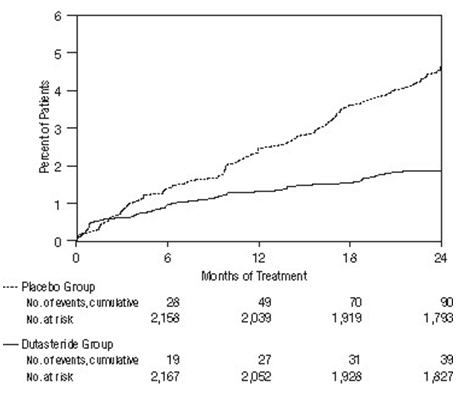
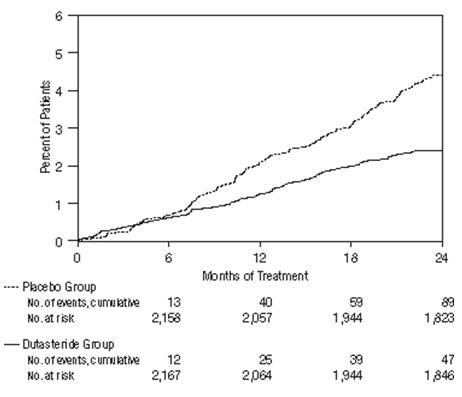
Effect on Acute Urinary Retention and the Need for BPH-Related Surgery: Efficacy was also assessed after 2 years of treatment by the incidence of AUR requiring catheterization and BPH-related urological surgical intervention. Compared with placebo, dutasteride was associated with a statistically significantly lower incidence of AUR (1.8% for dutasteride versus 4.2% for placebo, P<0.001; 57% reduction in risk, [95% CI: 38% to 71%]) and with a statistically significantly lower incidence of surgery (2.2% for dutasteride versus 4.1% for placebo, P<0.001; 48% reduction in risk, [95% CI: 26% to 63%]). See Figures 2 and 3.
| Figure 2. Percent of Subjects Developing Acute Urinary Retention Over a 24-Month Period (Randomized, Double-Blind, Placebo-Controlled Trials Pooled) |
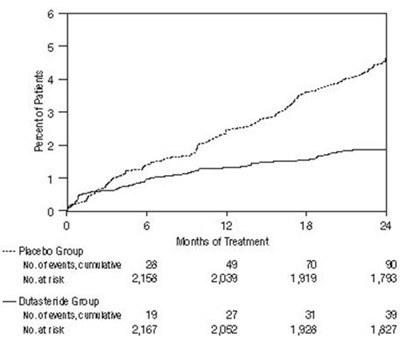 Figure 2 (Dutasteride 03) |
| Figure 3. Percent of Subjects Having Surgery for Benign Prostatic Hyperplasia Over a 24-Month Period (Randomized, Double-Blind, Placebo-Controlled Trials Pooled) |
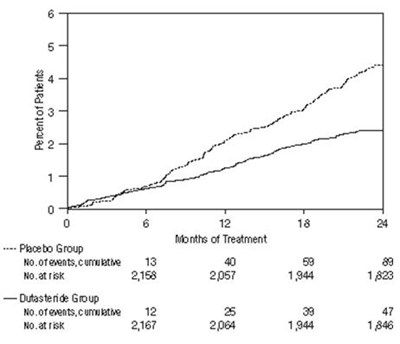 Figure 3 (Dutasteride 04) |
Effect on Prostate Volume: A prostate volume of at least 30 cc measured by transrectal ultrasound was required for trial entry. The mean prostate volume at trial entry was approximately 54 cc.
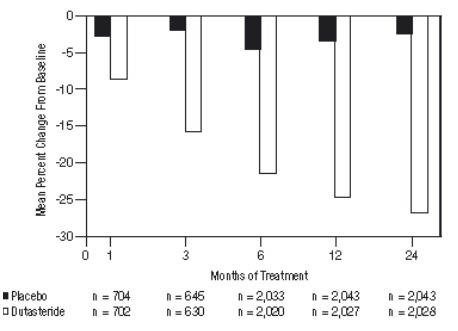
Statistically significant differences (dutasteride versus placebo) were noted at the earliest post-treatment prostate volume measurement in each trial (Month 1, Month 3, or Month 6) and continued through Month 24. At Month 12, the mean percent change in prostate volume across the 3 trials pooled was -24.7% for dutasteride and -3.4% for placebo; the mean difference (dutasteride minus placebo) was -21.3% (range: -21.0% to -21.6% in each of the 3 trials, P<0.001). At Month 24, the mean percent change in prostate volume across the 3 trials pooled was -26.7% for dutasteride and -2.2% for placebo with a mean difference of -24.5% (range: -24.0% to -25.1% in each of the 3 trials, P<0.001). See Figure 4. The reduction in prostate volume seen during the first 2 years of double-blind treatment was maintained throughout an additional 2 years of open-label extension trials.
| Figure 4. Prostate Volume Percent Change From Baseline (Randomized, Double-Blind, Placebo-Controlled Trials Pooled) |
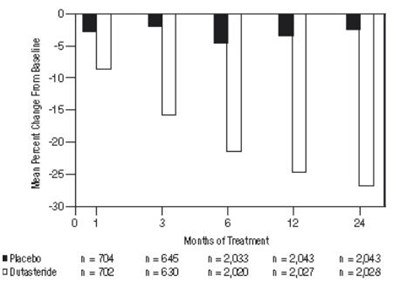 Figure 4 (Dutasteride 05) |
Effect on Maximum Urine Flow Rate: A mean peak urine flow rate (Qmax) of ≤15 mL/sec was required for trial entry. Qmax was approximately 10 mL/sec at baseline across the 3 pivotal trials.
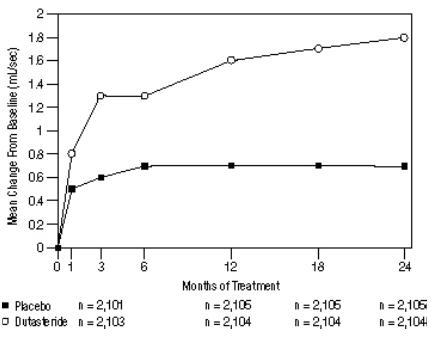
Differences between the 2 groups were statistically significant from baseline at Month 3 in all 3 trials and were maintained through Month 12. At Month 12, the mean increase in Qmax across the 3 trials pooled was 1.6 mL/sec for dutasteride and 0.7 mL/sec for placebo; the mean difference (dutasteride minus placebo) was 0.8 mL/sec (range: 0.7 to 1.0 mL/sec in each of the 3 trials, P<0.001). At Month 24, the mean increase in Qmax was 1.8 mL/sec for dutasteride and 0.7 mL/sec for placebo, with a mean difference of 1.1 mL/sec (range: 1.0 to 1.2 mL/sec in each of the 3 trials, P<0.001). See Figure 5. The increase in maximum urine flow rate seen during the first 2 years of double-blind treatment was maintained throughout an additional 2 years of open-label extension trials.
| Figure 5. Qmax Change From Baseline (Randomized, Double-Blind, Placebo-Controlled Trials Pooled) |
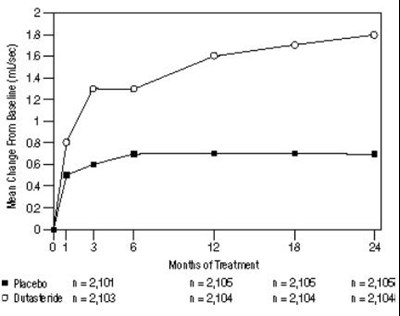 Figure 5 (Dutasteride 06) |
Summary of Clinical Trials: Data from 3 large, well-controlled efficacy trials demonstrate that treatment with dutasteride (0.5 mg once daily) reduces the risk of both AUR and BPH-related surgical intervention relative to placebo, improves BPH-related symptoms, decreases prostate volume, and increases maximum urinary flow rates. These data suggest that dutasteride arrests the disease process of BPH in men with an enlarged prostate.
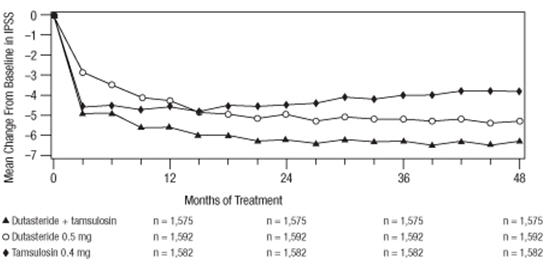
Effect on Symptom Score: Symptoms were quantified using the first 7 questions of the International Prostate Symptom Score (IPSS) (identical to the AUA-SI). The baseline score was approximately 16.4 units for each treatment group. Combination therapy was statistically superior to each of the monotherapy treatments in decreasing symptom score at Month 24, the primary time point for this endpoint. At Month 24 the mean changes from baseline (±SD) in IPSS total symptom scores were -6.2 (±7.14) for combination, -4.9 (±6.81) for dutasteride, and -4.3 (±7.01) for tamsulosin, with a mean difference between combination and dutasteride of -1.3 units (P<0.001; [95% CI: -1.69, -0.86]), and between combination and tamsulosin of -1.8 units (P<0.001; [95% CI: -2.23, -1.40]). A significant difference was seen by Month 9 and continued through Month 48. At Month 48 the mean changes from baseline (±SD) in IPSS total symptom scores were -6.3 (±7.40) for combination, -5.3 (±7.14) for dutasteride, and -3.8 (±7.74) for tamsulosin, with a mean difference between combination and dutasteride of -0.96 units (P<0.001; [95% CI: -1.40, -0.52]), and between combination and tamsulosin of -2.5 units (P<0.001; [95% CI: -2.96, -2.07]). See Figure 6.
| Figure 6. International Prostate Symptom Score Change From Baseline Over a 48-Month Period (Randomized, Double-Blind, Parallel Group Trial [CombAT Trial]) |
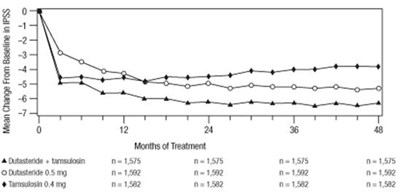 Figure 6 (Dutasteride 07) |
Effect on Acute Urinary Retention or the Need for BPH-Related Surgery: After 4 years of treatment, combination therapy with dutasteride and tamsulosin did not provide benefit over monotherapy with dutasteride in reducing the incidence of AUR or BPH-related surgery.
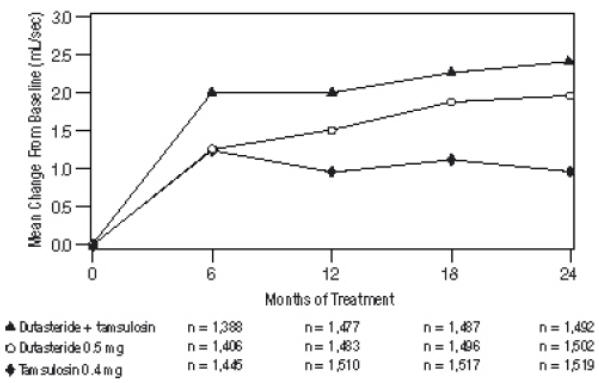
Effect on Maximum Urine Flow Rate: The baseline Qmax was approximately 10.7 mL/sec for each treatment group. Combination therapy was statistically superior to each of the monotherapy treatments in increasing Qmax at Month 24, the primary time point for this endpoint. At Month 24, the mean increases from baseline (±SD) in Qmax were 2.4 (±5.26) mL/sec for combination, 1.9 (±5.10) mL/sec for dutasteride, and 0.9 (±4.57) mL/sec for tamsulosin, with a mean difference between combination and dutasteride of 0.5 mL/sec (P = 0.003; [95% CI: 0.17, 0.84]), and between combination and tamsulosin of 1.5 mL/sec (P<0.001; [95% CI: 1.19, 1.86]). This difference was seen by Month 6 and continued through Month 24. See Figure 7.
The additional improvement in Qmax of combination therapy over monotherapy with dutasteride was no longer statistically significant at Month 48.
| Figure 7. Qmax Change From Baseline Over a 24-Month Period (Randomized, Double-Blind, Parallel Group Trial [CombAT Trial]) |
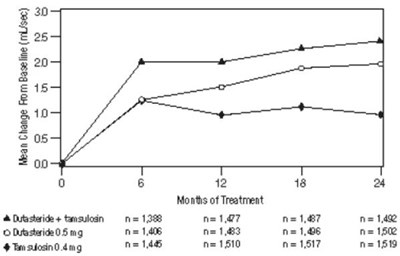 Figure 7 (Dutasteride 08) |
Effect on Prostate Volume: The mean prostate volume at trial entry was approximately 55 cc. At Month 24, the primary time point for this endpoint, the mean percent changes from baseline (±SD) in prostate volume were -26.9% (±22.57) for combination therapy, -28.0% (±24.88) for dutasteride, and 0% (±31.14) for tamsulosin, with a mean difference between combination and dutasteride of 1.1% (P = NS; [95% CI: -0.6, 2.8]), and between combination and tamsulosin of -26.9% (P<0.001; [95% CI: -28.9, -24.9]). Similar changes were seen at Month 48: -27.3% (±24.91) for combination therapy, -28.0% (±25.74) for dutasteride, and +4.6% (±35.45) for tamsulosin.
Distributed by:Banyan Pharma LLCHoboken, NJ, 07030
Manufacturered by:
Esjay Pharma Pvt. Ltd.
Made in India
Revised: 12/2025
| PHARMACIST—DETACH HERE AND GIVE INSTRUCTIONS TO PATIENT |