Because clinical trials are conducted under widely varying conditions, the adverse reaction rates observed in the clinical trials of a drug cannot be directly compared to rates in the clinical trials of another drug and may not reflect the rates observed in clinical practice.
BOTOX and BOTOX Cosmetic contain the same active ingredient in the same formulation, but with different labeled Indications and Usage. Therefore, adverse reactions observed with the use of BOTOX Cosmetic also have the potential to be observed with the use of BOTOX.
In general, adverse reactions occur within the first week following injection of BOTOX and, while generally transient, may have a duration of several months or longer. Localized pain, infection, inflammation, tenderness, swelling, erythema, and/or bleeding/bruising may be associated with the injection. Symptoms associated with flu-like symptoms (e.g., nausea, fever, myalgia) have been reported after treatment. Needle-related pain and/or anxiety may result in vasovagal responses (including syncope, hypotension), which may require appropriate medical therapy.
Local weakness of the injected muscle(s) represents the expected pharmacological action of botulinum toxin. However, weakness of nearby muscles may also occur due to spread of toxin
[see Warnings and Precautions (5.1)].
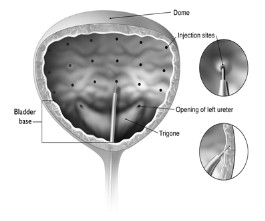
Overactive Bladder
Table 14 presents the most frequently reported adverse reactions in double-blind, placebo-controlled clinical trials for overactive bladder occurring within 12 weeks of the first BOTOX treatment.
Table 14: Adverse Reactions Reported by ≥2% of BOTOX Treated Patients and More Often than in Placebo-Treated Patients Within the First 12 Weeks after Intradetrusor Injection, in Double-Blind, Placebo-Controlled Clinical Trials in Patients with OAB| Adverse Reactions | BOTOX
100 Units
(N=552)
% | Placebo
(N=542)
% |
Urinary tract infection
Dysuria
Urinary retention
Bacteriuria
Residual urine volume*
| 18
9
6
4
3
| 6
7
0
2
0
|
*Elevated PVR not requiring catheterization. Catheterization was required for PVR ≥350 mL regardless of symptoms, and for PVR ≥200 mL to <350 mL with symptoms (e.g., voiding difficulty).
A higher incidence of urinary tract infection was observed in patients with diabetes mellitus treated with BOTOX 100 Units and placebo than in patients without diabetes, as shown in Table 15.
Table 15: Proportion of Patients Experiencing Urinary Tract Infection Following an Injection in Double-Blind, Placebo-Controlled Clinical Trials in OAB According to History of Diabetes Mellitus | Patients withDiabetes | Patients without Diabetes |
| BOTOX100 Units
(N=81)
% | Placebo
(N=69)
% | BOTOX100 Units (N=526)
% | Placebo
(N=516)
% |
| Urinary tract infection (UTI) | 31 | 12 | 26 | 10 |
The incidence of UTI increased in patients who experienced a maximum post-void residual (PVR) urine volume ≥200 mL following BOTOX injection compared to those with a maximum PVR <200 mL following BOTOX injection, 44% versus 23%, respectively.
No change was observed in the overall safety profile with repeat dosing during an open-label, uncontrolled extension trial.
AdultDetrusor Overactivity associated with a Neurologic Condition
Table 16 presents the most frequently reported adverse reactions in the double-blind, placebo-controlled studies within 12 weeks of injection for patients with detrusor overactivity associated with a neurologic condition treated with BOTOX 200 Units.
Table 16: Adverse Reactions Reported by ≥2% of BOTOX-Treated Patients and More Frequent than in Placebo-Treated Patients Within the First 12 Weeks after Intradetrusor Injection in Double-Blind, Placebo-Controlled Clinical Trials| Adverse Reactions | BOTOX 200 Units
(N=262)
% | Placebo
(N=272)
% |
Urinary tract infection
Urinary retention
Hematuria
| 24
17
4
| 17
3
3
|
The following adverse reactions with BOTOX 200 Units were reported at any time following initial injection and prior to re-injection or study exit (median duration of exposure was 44 weeks): urinary tract infections (49%), urinary retention (17%), constipation (4%), muscular weakness (4%), dysuria (4%), fall (3%), gait disturbance (3%), and muscle spasm (2%).
In the Multiple Sclerosis (MS) patients enrolled in the double-blind, placebo-controlled trials, the MS exacerbation annualized rate (i.e., number of MS exacerbation events per patient-year) was 0.23 for BOTOX and 0.20 for placebo.
No change was observed in the overall safety profile with repeat dosing.
Table 17 presents the most frequently reported adverse reactions in a placebo-controlled, double-blind post-approval 52 week study with BOTOX 100 Units (Study NDO-3) conducted in MS patients with urinary incontinence due to detrusor overactivity associated with a neurologic condition. These patients were not adequately managed with at least one anticholinergic agent and not catheterized at baseline. The table below presents the most frequently reported adverse reactions within 12 weeks of injection.
Table 17: Adverse Reactions Reported in a Post Approval Study (NDO-3) by >2% of BOTOX Treated Patients and More Frequent than in Placebo-Treated Patients Within the First 12 Weeks after Intradetrusor Injection| Adverse Reactions | BOTOX
100 Units
(N=66)
% | Placebo
(N=78)
% |
Urinary tract infection
Bacteriuria
Urinary retention
Dysuria
Residual urine volume*
| 26
9
15
5
17
| 6
5
1
1
1
|
* Elevated PVR not requiring catheterization. Catheterization was required for PVR ≥350 mL regardless of symptoms, and for PVR ≥200 mL to <350 mL with symptoms (e.g., voiding difficulty).
The following adverse events with BOTOX 100 Units were reported at any time following initial injection and prior to re-injection or study exit (median duration of exposure was 51 weeks): urinary tract infections (39%), bacteriuria (18%), urinary retention (17%), residual urine volume* (17%), dysuria (9%), and hematuria (5%).
No difference in the MS exacerbation annualized rate (i.e., number of MS exacerbating events per patient-year) was observed (BOTOX =0, placebo =0.07).
Pediatric Detrusor Overactivity associated with a Neurologic Condition
Table 18 presents the most frequently reported adverse reactions in Study 191622-120, a double-blind, parallel-group study conducted in pediatric patients with detrusor overactivity associated with a neurologic condition. These patients were not adequately managed with at least one anticholinergic agent and were using clean intermittent catheterization at baseline
[see Clinical Studies(14.3)].The table below presents the most frequently reported adverse reactions during the 12 weeks following intradetrusor administration of BOTOX 200 Units.
Table 18: Adverse Reactions Reported by ≥ 3% of BOTOX Treated Pediatric Patients within the First 12 Weeks after Intradetrusor Injection, Study 191622-120| Adverse Reactions | BOTOX 200 Unit
(N=30) |
| Urinary tract infection | 2 (7%) |
| Bacteriuria | 6 (20%) |
| Leukocyturia | 2 (7%) |
| Hematuria | 1 (3%) |
No change was observed in the overall safety profile with repeat dosing.
The most common adverse reactions in patients who received BOTOX 6 U/kg and less than a total dose of 200 U in Study 191622-120 were urinary tract infection (UTI), bacteriuria and hematuria.
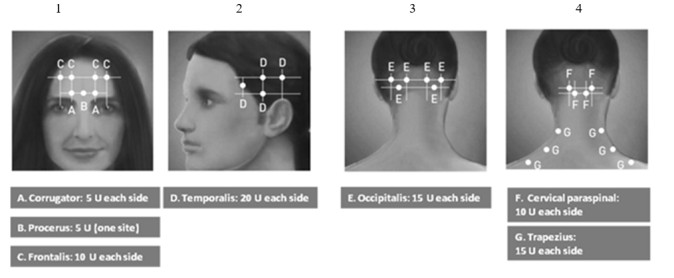
Chronic Migraine
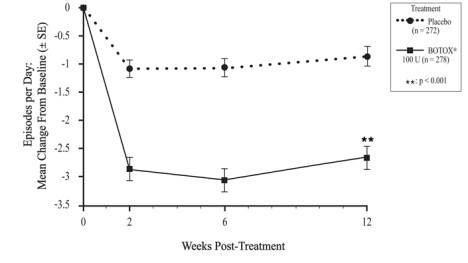
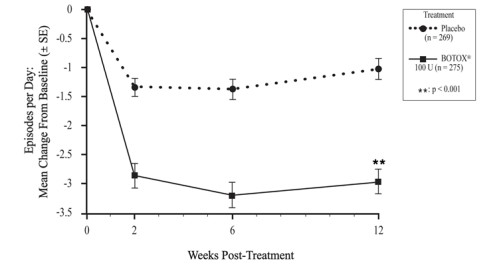
In double-blind, placebo-controlled chronic migraine efficacy trials (Study 1 and Study 2), the discontinuation rate was 12% in the BOTOX treated group and 10% in the placebo-treated group. Discontinuations due to an adverse event were 4% in the BOTOX group and 1% in the placebo group. The most frequent adverse events leading to discontinuation in the BOTOX group were neck pain, headache, worsening migraine, muscular weakness and eyelid ptosis.
The most frequently reported adverse reactions following injection of BOTOX for chronic migraine appear in Table 19.
Table 19: Adverse Reactions Reported by ≥2% of BOTOX Treated Patients and More Frequent than in Placebo-Treated Patients in Two Chronic Migraine Double-Blind, Placebo-Controlled Clinical Trials| Adverse Reactions | BOTOX
155 Units-195 Units
(N=687)
% | | Placebo
(N=692)
% |
Nervous system disorders
Headache
Migraine
Facial paresis
|
5
4
2
| |
3
3
0
|
Eye disorders
Eyelid ptosis
|
4
| |
<1
|
Infections and Infestations
Bronchitis
|
3
| |
2
|
Musculoskeletal and connective tissue disorders
Neck pain
Musculoskeletal stiffness
Muscular weakness
Myalgia
Musculoskeletal pain
Muscle spasms
|
9
4
4
3
3
2
| |
3
1
<1
1
1
1
|
General disorders and administration site conditions
Injection site pain
|
3
| |
2
|
Vascular Disorders
Hypertension
|
2
| |
1
|
Other adverse reactions that occurred more frequently in the BOTOX group compared to the placebo group at a frequency less than 1% and potentially BOTOX related include: vertigo, dry eye, eyelid edema, dysphagia, eye infection, and jaw pain. Severe worsening of migraine requiring hospitalization occurred in approximately 1% of BOTOX treated patients in Study 1 and Study 2, usually within the first week after treatment, compared to 0.3% of placebo-treated patients.
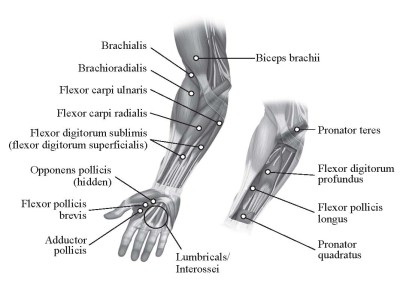
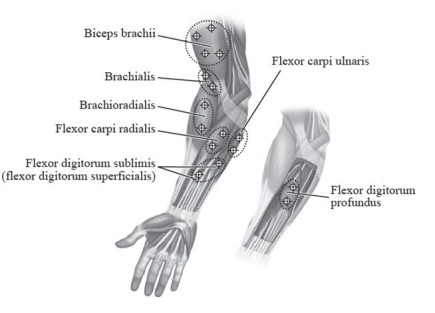
AdultUpper Limb Spasticity
The most frequently reported adverse reactions following injection of BOTOX for adult upper limb spasticity appear in Table 20.
Table 20: Adverse Reactions Reported by ≥2% of BOTOX Treated Patients and More Frequent than in Placebo-Treated Patients in Adult Upper Limb Spasticity Double-Blind, Placebo-Controlled Clinical Trials| Adverse Reactions | BOTOX
251 Units- 360 Units
(N=115)
% | BOTOX
150 Units- 250 Units
(N=188)
% | BOTOX
<150 Units
(N=54)
% | Placebo
(N=182)
%
|
Gastrointestinal disorder
Nausea
| 3 | 2 | 2 | 1 |
General disorders and administration site conditions
Fatigue
| 3 | 2 | 2 | 0 |
Infections and infestations
Bronchitis
| 3 | 2 | 0 | 1 |
Musculoskeletal and connective tissue disorders
Pain in extremity
Muscular weakness
| 6
0
| 5
4
| 9
2
| 4
1
|
Twenty-two adult patients, enrolled in double-blind placebo controlled studies, received 400 Units or higher of BOTOX for treatment of upper limb spasticity. In addition, 44 adults received 400 Units of BOTOX or higher for four consecutive treatments over approximately one year for treatment of upper limb spasticity. The type and frequency of adverse reactions observed in patients treated with 400 Units of BOTOX were similar to those reported in patients treated for upper limb spasticity with 360 Units of BOTOX.
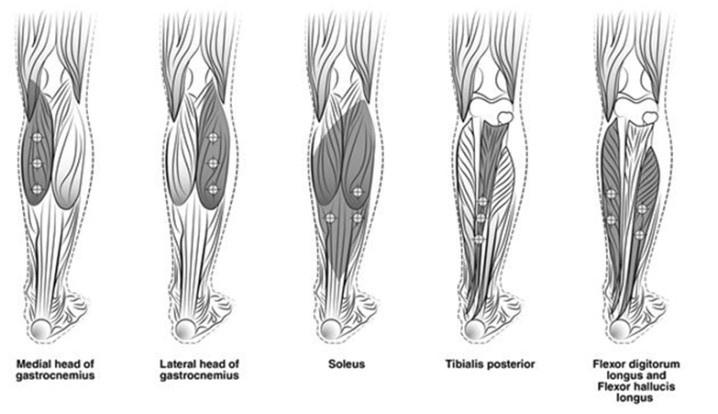
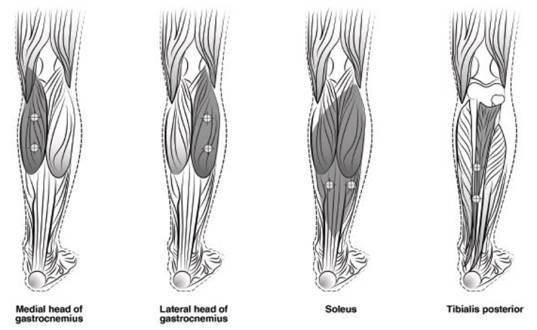
AdultLower LimbSpasticity
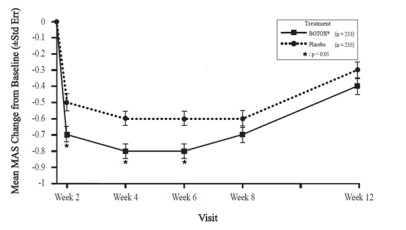
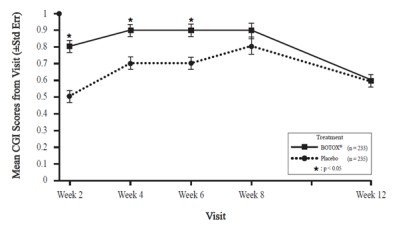
The most frequently reported adverse reactions following injection of BOTOX for adult lower limb spasticity appear in Table 21. Two hundred thirty-one patients enrolled in a double-blind placebo controlled study (Study 7) received 300 Units to 400 Units of BOTOX, and were compared with 233 patients who received placebo. Patients were followed for an average of 91 days after injection.
Table 21: Adverse Reactions Reported by ≥2% of BOTOX Treated Patients and More Frequent than in Placebo-Treated Patients in Adult Lower Limb Spasticity Double-Blind, Placebo-Controlled Clinical Trial (Study 7)| Adverse Reactions | BOTOX
(N=231)
% | Placebo
(N=233)
% |
Musculoskeletal and connective tissue disorders
Arthralgia
Back pain
Myalgia
| 3
3
2
| 1
2
1
|
Infections and infestations
Upper respiratory tract infection
| 2 | 1 |
General disorders and administration site conditions
Injection site pain
| 2 | 1 |
Pediatric Upper Limb Spasticity
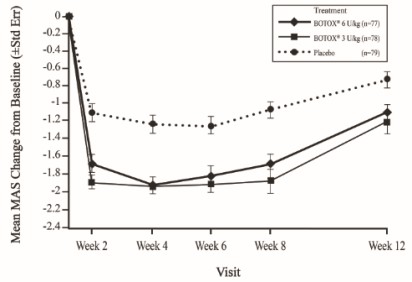
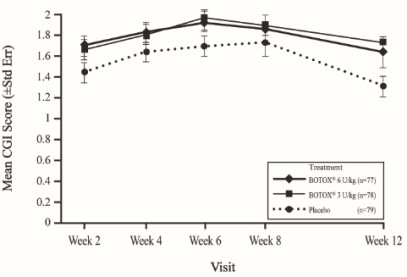
The most frequently reported adverse reactions following injection of BOTOX in pediatric patients 2 to 17 years of age with upper limb spasticity appear in Table 22. In a double-blind, placebo-controlled trial (Study 1), 78 patients were treated with 3 Units/kg of BOTOX, and 77 patients received 6 Units/kg to a maximum dose of 200 Units of BOTOX, and were compared to 79 patients who received placebo
[see Clinical Studies (14.6)].Patients were followed for an average of 91 days after injection.
Table 22: Adverse Reactions Reported by ≥2% of BOTOX 6 Units/kg Treated Patients and More Frequent than in Placebo-Treated Patients in Pediatric Upper Limb Spasticity Double-Blind, Placebo-Controlled Clinical Trial (Study 1)| Adverse Reactions | BOTOX6Units/kg
(N=77)
% | BOTOX3Units/kg
(N=78)
% | Placebo
(N=79)
% |
Infections and infestations
Upper respiratory tract infection
* | 17 | 10 | 9 |
General disorders and administration site conditions
Injection site pain
| 4 | 3 | 1 |
Gastrointestinal disorders
Nausea
Constipation
| 4
3
| 0
0
| 0
1
|
Respiratory, thoracic and mediastinal disorders
Rhinorrhea
Nasal congestion
| 4
3
| 0
0
| 1
1
|
Nervous system disorders
Seizure
** | 5 | 1 | 0 |
*Includes upper respiratory tract infection and viral upper respiratory tract infection
**Includes seizure and partial seizure
Pediatric Lower Limb Spasticity
The most frequently reported adverse reactions following injection of BOTOX in pediatric patients 2 to 17 years of age with lower limb spasticity appear in Table 23. In a double-blind, placebo-controlled trial (Study 2), 126 patients were treated with 4 Units/kg of BOTOX, and 128 patients received 8 Units/kg to a maximum dose of 300 Units of BOTOX, and were compared to 128 patients who received placebo
[see Clinical Studies (14.6)]. Patients were followed for an average of 89 days after injection.
Table 23: Adverse Reactions Reported by ≥2% of BOTOX 8 Units/kg Treated Patients and More Frequent than in Placebo-Treated Patients in Pediatric Lower Limb Spasticity Double-Blind, Placebo-Controlled Clinical Trial (Study 2)| Adverse Reactions | BOTOX
8 Units/kg
(N=128)
% | BOTOX
4 Units/kg
(N=126)
% | Placebo
(N=128)
% |
General disorders and administration site conditions
Injection site erythema
Injection site pain
| 2
2
| 0
2
| 0
0
|
Respiratory, thoracic and mediastinal disorders
Oropharyngeal pain
| 2 | 0 | 1 |
Injury, poisoning and procedural complications
Ligament sprain
Skin abrasion
| 2
2
| 1
0
| 0
0
|
Metabolism and nutrition disorders
Decreased appetite
| 2 | 0 | 0 |
CervicalDystonia
In cervical dystonia patients evaluated for safety in double-blind and open-label studies following injection of BOTOX, the most frequently reported adverse reactions were dysphagia (19%), upper respiratory infection (12%), neck pain (11%), and headache (11%).
Other events reported in 2-10% of patients in any one study in decreasing order of incidence include: increased cough, flu syndrome, back pain, rhinitis, dizziness, hypertonia, soreness at injection site, asthenia, oral dryness, speech disorder, fever, nausea, and drowsiness. Stiffness, numbness, diplopia, ptosis, and dyspnea have been reported.
Dysphagia and symptomatic general weakness may be attributable to an extension of the pharmacology of BOTOX resulting from the spread of the toxin outside the injected muscles
[see Warnings and Precautions (5.1,5.6)].
The most common severe adverse reaction associated with the use of BOTOX injection in patients with cervical dystonia is dysphagia with about 20% of these cases also reporting dyspnea
[see Warnings and Precautions (5.1,5.6)]. Most dysphagia is reported as mild or moderate in severity. However, it may be associated with more severe signs and symptoms
[see Warnings and Precautions (5.6)].
Additionally, reports in the literature include a case of a female patient who developed brachial plexopathy two days after injection of 120 Units of BOTOX for the treatment of cervical dystonia, and reports of dysphonia in patients who have been treated for cervical dystonia.
Primary Axillary Hyperhidrosis
The most frequently reported adverse reactions (3-10% of adult patients) following injection of BOTOX in double-blind studies included injection site pain and hemorrhage, non-axillary sweating, infection, pharyngitis, flu syndrome, headache, fever, neck or back pain, pruritus, and anxiety.
The data reflect 346 patients exposed to BOTOX 50 Units and 110 patients exposed to BOTOX 75 Units in each axilla.
Blepharospasm
In a study of blepharospasm patients who received an average dose per eye of 33 Units (injected at 3 to 5 sites) of the currently manufactured BOTOX, the most frequently reported adverse reactions were ptosis (21%), superficial punctate keratitis (6%), and eye dryness (6%).
Other events reported in prior clinical studies in decreasing order of incidence include: irritation, tearing, lagophthalmos, photophobia, ectropion, keratitis, diplopia, entropion, diffuse skin rash, and local swelling of the eyelid skin lasting for several days following eyelid injection.
In two cases of VII nerve disorder, reduced blinking from BOTOX injection of the orbicularis muscle led to serious corneal exposure, persistent epithelial defect, corneal ulceration and a case of corneal perforation. Focal facial paralysis, syncope, and exacerbation of myasthenia gravis have also been reported after treatment of blepharospasm.
Strabismus
Extraocular muscles adjacent to the injection site can be affected, causing vertical deviation, especially with higher doses of BOTOX. The incidence rates of these adverse effects in 2058 adults who received a total of 3650 injections for horizontal strabismus was 17%.
The incidence of ptosis has been reported to be dependent on the location of the injected muscles, 1% after inferior rectus injections, 16% after horizontal rectus injections and 38% after superior rectus injections.
In a series of 5587 injections, retrobulbar hemorrhage occurred in 0.3% of cases.