1 Indications And Usage
Lofexidine tablets are indicated for mitigation of opioid withdrawal symptoms to facilitate abrupt opioid discontinuation in adults.
The following Structured Product Label (SPL) was submitted to the FDA by Biocorrx Pharmaceuticals Inc for the product Lofexidine (NDC 85789-901). This document serves as the official prescribing information, containing essential scientific data and clinical materials required for healthcare providers and patients.
This specific version of the label includes detailed information regarding 1 indications and usage, 2.1 dosing information, 2.2 dosage recommendations for patients with hepatic impairment, 2.3 dosage recommendations for patients with renal impairment, 3 dosage forms and strengths, 4 contraindications, other, 5.3 increased risk of central nervous system depression with concomitant use of cns depressant drugs, and other regulatory disclosures. Use the navigation below to review specific sections of the FDA submission.
Lofexidine tablets are indicated for mitigation of opioid withdrawal symptoms to facilitate abrupt opioid discontinuation in adults.
The usual Lofexidine tablets starting dosage is three 0.18 mg tablets taken orally 4 times daily during the period of peak withdrawal symptoms (generally the first 5 to 7 days following last use of opioid) with dosing guided by symptoms and side effects. There should be 5 to 6 hours between each dose. The total daily dosage of Lofexidine tablets should not exceed 2.88 mg (16 tablets) and no single dose should exceed 0.72 mg (4 tablets).
Lofexidine tablets treatment may be continued for up to 14 days with dosing guided by symptoms.
Discontinue Lofexidine tablets with a gradual dose reduction over a 2- to 4-day period to mitigate Lofexidine tablets withdrawal symptoms (e.g., reducing by 1 tablet per dose every 1 to 2 days) [see Warnings & Precautions (5.5)]. The Lofexidine tablets dose should be reduced, held, or discontinued for individuals who demonstrate a greater sensitivity to Lofexidine tablets side effects [see Warnings and Precautions (5.1), Adverse Reactions (6.1)]. Lower doses may be appropriate as opioid withdrawal symptoms wane.
Lofexidine tablets can be administered in the presence or absence of food.
Recommended dosage adjustments based on the degree of hepatic impairment are shown in Table 1. [see Use in Specific Populations (8.6), Clinical Pharmacology (12.3)].
| Mild Impairment | Moderate Impairment | Severe Impairment | |
|---|---|---|---|
| Child-Pugh score | 5-6 | 7-9 | > 9 |
| Recommended dose | 3 tablets 4 times daily (2.16 mg per day) | 2 tablets 4 times daily (1.44 mg per day) | 1 tablet 4 times daily (0.72 mg per day) |
Recommended dosage adjustments based on the degree of renal impairment are shown in Table 2. Lofexidine tablets may be administered without regard to the timing of dialysis [see Use in Specific Populations (8.7), Clinical Pharmacology (12.3)].
| Moderate Impairment | Severe Impairment, End-Stage Renal Disease, or on Dialysis | |
|---|---|---|
| Estimated GFR, mL/min/1.73 m2 | 30-89.9 | < 30 |
| Recommended dose | 2 tablets 4 times daily (1.44 mg per day) | 1 tablet 4 times daily (0.72 mg per day) |
Lofexidine tablets are available as round, peach-colored, film-coated tablets, imprinted with “LFX” on one side and “18” on the other side. Each tablet contains 0.18 mg lofexidine (equivalent to 0.2 mg of lofexidine hydrochloride).
None.
Lofexidine tablets can cause a decrease in blood pressure, a decrease in pulse, and syncope [see Adverse Reactions (6.1), Clinical Pharmacology (12.2)]. Monitor vital signs before dosing. Monitor symptoms related to bradycardia and orthostasis.
Patients being given Lofexidine tablets in an outpatient setting should be capable of and instructed on self-monitoring for hypotension, orthostasis, bradycardia, and associated symptoms. If clinically significant or symptomatic hypotension and/or bradycardia occur, the next dose of Lofexidine tablets should be reduced in amount, delayed, or skipped.
Inform patients that Lofexidine tablets may cause hypotension and that patients moving from a supine to an upright position may be at increased risk for hypotension and orthostatic effects. Instruct patients to stay hydrated, on how to recognize symptoms of low blood pressure, and on how to reduce the risk of serious consequences should hypotension occur (e.g., sit or lie down, carefully rise from a sitting or lying position). Instruct outpatients to withhold Lofexidine tablets doses when experiencing symptoms of hypotension or bradycardia and to contact their healthcare provider for guidance on how to adjust dosing.
Avoid using Lofexidine tablets in patients with severe coronary insufficiency, recent myocardial infarction, cerebrovascular disease, chronic renal failure, and in patients with marked bradycardia.
Avoid using Lofexidine tablets in combination with medications that decrease pulse or blood pressure to avoid the risk of excessive bradycardia and hypotension.
Lofexidine tablets prolong the QT interval.
Avoid using Lofexidine tablets in patients with congenital long QT syndrome.
Monitor ECG in patients with congestive heart failure, bradyarrhythmias, hepatic impairment, renal impairment, or patients taking other medicinal products that lead to QT prolongation (e.g., methadone). In patients with electrolyte abnormalities (e.g., hypokalemia or hypomagnesemia), correct these abnormalities first, and monitor ECG upon initiation of Lofexidine tablets [see Dosing and Administration (2.1), Adverse Reactions (6.1), Special Populations (8.6, 8.7), Clinical Pharmacology (12.2)].
Risk Summary
The safety of Lofexidine tablets in pregnant women has not been established. In animal reproduction studies, oral administration of lofexidine tablets during organogenesis to pregnant rats and rabbits caused a reduction in fetal weights, increases in fetal resorptions, and litter loss at exposures below that in humans. When oral lofexidine tablets were administered from the beginning of organogenesis through lactation, increased stillbirths and litter loss were noted along with decreased viability and lactation indices. The offspring exhibited delays in sexual maturation, auditory startle, and surface righting. These effects occurred at exposures below that in humans [see Animal Data].
The background risk of major birth defects and miscarriage for the indicated population is unknown. All pregnancies carry some risk of birth defect, loss, or other adverse outcomes. The background risk of major birth defects in the U.S. general population is 2% to 4% and of miscarriage is 15% to 20% of clinically recognized pregnancies.
Data
Animal Data
Increased incidence of resorptions, decreased number of implantations, and a concomitant reduction in the number of fetuses were observed when pregnant rabbits were orally administered lofexidine hydrochloride during organogenesis (from gestation day [GD] 7 to 19) at a daily dose of 5.0 mg/kg/day (approximately 0.08 times the maximum recommended human dose [MRHD] of 2.88 mg lofexidine base on an AUC basis). Maternal toxicity evidenced by increased mortality was noted at the highest tested dose of 15 mg/kg/day (approximately 0.4 times the MRHD on an AUC basis).
Decreased implantations per dam and decreased mean fetal weights were noted in a study in which pregnant rats were treated with oral lofexidine hydrochloride during organogenesis (from GD 7 to 16) at a daily dose of 3.0 mg/kg/day (approximately 0.9 times the MRHD on an AUC basis). This dose was associated with maternal toxicity (decreased body weight gain and mortality). No malformations or evidence of developmental toxicity were evident at 1.0 mg/kg/day (approximately 0.2 times the MRHD on an AUC basis).
A dose-dependent increase in pup mortality was noted in all doses of lofexidine hydrochloride administered orally to pregnant rats from GD 6 through lactation at an exposure less than the human exposure based on AUC comparisons. Doses higher than 1.0 mg/kg/day (approximately 0.2 times the MRHD on an AUC basis) resulted in incidences of total litter loss and maternal toxicity (piloerection and decreased body weight gain). At the highest dose tested of 2.0 mg/kg/day (approximately 0.6 times the MRHD on an AUC basis), increased stillbirths as well as decreased viability and lactation indices were reported. Surviving offspring exhibited lower body weights, developmental delays, and increased delays in auditory startle at doses of 1.0 mg/kg/ day or higher. Sexual maturation was delayed in male offspring (preputial separation) at 2.0 mg/kg/day and in female offspring (vaginal opening) at 1.0 mg/kg/day or higher.
Risk Summary
There is no information regarding the presence of Lofexidine tablets or its metabolites in human milk, the effects on the breastfed infant, or the effects on milk production. Caution should be exercised when Lofexidine tablets is administered to a nursing woman.
The developmental and health benefits should be considered along with the mother’s clinical need for Lofexidine tablets and any other potential adverse effects on breastfed children from Lofexidine tablets or from the underlying maternal condition.
Cardiac Electrophysiology
Single Lofexidine tablets doses of 1.44 mg to 1.8 mg produced maximum mean change from baseline in QTcF (ΔQTcF) of 14.4 msec (upper two-sided 90% CI: 22.3 msec) and 13.6 msec (17.4 msec) for 1.44 mg and 1.8 mg respectively in healthy normal volunteers.
In a Phase 3 placebo-controlled, dose response study in opioid dependent subjects, Lofexidine tablets were associated with a maximum mean prolongation of the QTcF interval 7.3 (8.8) msec and 9.3 (10.9) msec at doses of 2.16 mg/day and 2.88 mg/ day, respectively.
Patients with hepatic impairment
Administration of Lofexidine tablets to subjects with hepatic impairment was associated with prolongation of the QTc interval, which was more pronounced in subjects with severe hepatic impairment [see Use in Specific Populations (8.6)].
Patients with renal impairment
Administration of Lofexidine tablets to subjects with renal impairment was associated with prolongation of the QTc interval, which was more pronounced in subjects with severe renal impairment [see Use in Specific Populations (8.7)].
Lofexidine tablets coadministered with methadone
Lofexidine tablets (2.88 mg/day) coadministered with methadone in 18 methadone-maintained patients (80 to 120 mg/day) resulted in a maximum mean increase from methadone-alone baseline in QTcF of 9.1 (14.2) msec.
Lofexidine tablets coadministered with buprenorphine
Lofexidine tablets (2.88 mg/day) coadministered with buprenorphine in 21 buprenorphine-maintained patients (16 to 24 mg/ day) resulted in a maximum mean QTcF increase of 1.5 (5.6) msec compared to a buprenorphine-alone baseline.
In Vitro Binding
Lofexidine tablets exhibits in vitro binding affinity and functional agonist activity with alpha-2A and alpha-2C adrenoreceptors at concentrations within clinical exposure plasma levels (Ki values of approximately 7.2 nM and 12 nM, and EC50 values of 4.9 nM and 0.9 nM, respectively).
Absorption
Lofexidine tablets are well absorbed and achieves peak plasma concentration 3 to 5 hours after administration of a single dose.
Lofexidine tablets show approximately dose-proportional pharmacokinetics. Administration of Lofexidine tablets with food does not alter its pharmacokinetics.
The absolute bioavailability of a single oral Lofexidine tablets dose (0.36 mg in solution) compared with an intravenous infusion (0.2 mg infused for 200 minutes) was 72%. Mean Lofexidine tablets Cmax after the oral dose and intravenous infusion was 0.82 ng/mL (at median Tmax of 3 hours) and 0.64 ng/mL (at median Tmax of 4 hours), respectively. Mean estimates of overall systemic exposure (AUCinf) were 14.9 ng•h/mL and 12.0 ng•h/mL, respectively.
Distribution
Mean Lofexidine tablets apparent volume of distribution and volume of distribution values following the administration of an oral dose and an intravenous dose were 480.0 L and 297.9 L, respectively, which are appreciably greater than total body volume, suggesting extensive Lofexidine tablets distribution into body tissue.
Lofexidine tablets protein binding is approximately 55%.
Lofexidine tablets are not preferentially taken up by blood cells. In a study comparing Lofexidine tablets concentrations in plasma and whole blood at the time of peak Lofexidine tablets concentrations in human volunteers, it was determined that red blood cells contain approximately 27% the Lofexidine tablets concentration of the plasma.
Elimination
Metabolism
From absolute bioavailability results, approximately 30% of the administered Lofexidine tablets dose is converted to inactive metabolites during the first pass effect associated with drug absorption from the gut.
Lofexidine tablets and its major metabolites did not induce or inhibit any CYP450 isoforms, with the exception of a slight inhibition of CYP2D6 by Lofexidine tablets, with an IC50 of 4551 nM (approximately 225 times the steady-state Cmax for Lofexidine tablets with 0.72 mg 4 times daily dosing). Any Lofexidine tablets interaction with CYP2D6 substrates is not expected to be clinically significant
Lofexidine tablets are metabolized when incubated in vitro with human liver microsomes, the major contributor to the hepatic metabolism of Lofexidine tablets is CYP2D6, with CYP1A2 and CYP2C19 also capable of metabolizing Lofexidine tablets.
Excretion
The elimination half-life is approximately 12 hours and mean clearance is 17.6 L/h following an IV infusion.
Lofexidine tablets have a terminal half-life of approximately 11 to 13 hours following the first dose. At steady-state, the terminal half- life is approximately 17 to 22 hours. Accumulation occurs up to 4 days with repeat dosing, following the recommended dosing regimen.
A mass balance study of Lofexidine tablets showed nearly complete recovery of radiolabel in urine (93.5%) over 144 hours postdose, with an additional 0.92% recovered in the feces over 216 hours postdose. Thus, it appears that all, or nearly all, of the dose was absorbed, and that the primary route of elimination of the parent drug and its metabolites is via the kidney. Renal elimination of unchanged drug accounts for approximately 15% to 20% of the administered dose.
Specific Populations
Hepatic Impairment
Hepatic impairment slows the elimination of Lofexidine tablets but exhibits less effect on the peak plasma concentration following a single dose. In a study comparing the pharmacokinetics of Lofexidine tablets (0.36 mg) in mild, moderate, and severe hepatically impaired subjects to subjects with normal hepatic function (6 subjects in each hepatic function group), mean Cmax values were similar for subjects with normal, mild, and moderate hepatic impairment as shown in Table 6.
| Normal | Mild Impairment | Moderate Impairment | Severe Impairment | |
| Child-Pugh Class & Score | Normal Function | Class A 5-6 | Class B 7-9 | Class C 10-15 |
| Cmax % of normal | 100 | 114 | 117 | 166 |
| AUClast % of normal | 100 | 127 | 190 | 304 |
| AUC∞ % of normal | 100 | 117 | 185 | 260 |
| t1/2 % of normal | 100 | 139 | 281 | 401 |
Renal Impairment
Renal impairment slows the elimination of Lofexidine tablets but exhibits less effect on the peak plasma concentration following a single dose. In a study comparing the pharmacokinetics of Lofexidine tablets (0.36 mg) in 8 end-stage renal disease subjects on 3 times weekly hemodialysis to 8 subjects with normal renal function matched for sex, age, and body mass index, mean Cmax values were similar for end-stage renal disease and normal renal function subjects, indicating no change in maximum Lofexidine tablets exposure with renal impairment as shown in Table 7.
The impact of dialysis on the overall pharmacokinetics of Lofexidine tablets during a typical 4-hour dialysis was minimal; the drop in Lofexidine tablets plasma concentrations produced during the dialysis session was transient, with a rebound to nearly predialysis concentrations after re-equilibration within a few hours following completion of the dialysis cycle [see Dosage and Administration (2.3), Use in Specific Populations (8.7)].
In a study comparing the pharmacokinetics of Lofexidine tablets (0.36 mg) in 6 subjects each with normal renal function, mild renal impairment, and moderate renal impairment as well as 5 subjects with severe renal impairment but not requiring dialysis, there were similar increases in mean Cmax values in subjects with mild and moderate renal impairment in comparison to subjects with normal renal function, with additional increases in mean Cmax values in subjects with severe renal impairment. Mean AUClast, AUC∞, and t1/2 increased with severity of renal impairment as shown in Table 7.
| Normal | Mild Impairment | Moderate Impairment | Severe Impairment | ESRD or on dialysis | |
| eGFR (mL/min/1.73 m2) | ≥ 90 | 60-89 | 30-59 | 15-29 | < 15 |
| Cmax % of normal | 100 | 124 | 117 | 154 | 104 |
| AUClast % of normal | 100 | 157 | 187 | 272 | 181 |
| AUC∞ % of normal | 100 | 144 | 173 | 243 | 171 |
| t1/2 % of normal | 100 | 111 | 145 | 157 | 137 |
Drug Interaction Studies
Lofexidine tablets coadministered with methadone
In a double-blind placebo-controlled study of 23 patients maintained on methadone (80 to 120 mg/day) concomitantly administered Lofexidine tablets up to 2.88 mg/day, Lofexidine tablets did not alter the pharmacokinetics of methadone. Lofexidine tablets concentrations may be slightly increased when coadministered with methadone; however, the increase at concentrations expected with recommended dosing is not clinically meaningful [see Drug Interactions (7.1)].
Lofexidine tablets coadministered with buprenorphine
In a double-blind placebo-controlled study of 30 subjects maintained on buprenorphine (16 to 24 mg/day) concomitantly administered Lofexidine tablets up to 2.88 mg/day, no pharmacokinetic or pharmacodynamic interactions between Lofexidine tablets and buprenorphine were seen.
Lofexidine tablets coadministered with oral naltrexone
In an open-label, single-arm study of 24 healthy subjects, oral naltrexone (50 mg/day) did not significantly alter the single-dose pharmacokinetics of Lofexidine tablets (0.36 mg). The alteration in steady-state pharmacokinetics of oral naltrexone was statistically significant in the presence of Lofexidine tablets. The Tmax was delayed for both naltrexone and 6ß-naltrexol (2 to 3 hours), and overall exposure was slightly reduced when naltrexone was administered with Lofexidine tablets [see Drug Interactions (7.2)].
Lofexidine tablets coadministered with paroxetine
In an open-label, single-sequence study of 24 healthy subjects, the strong CYP2D6 inhibitor paroxetine (40 mg/day) increased Lofexidine tablets (0.36 mg) Cmax and AUC∞ by approximately 11% and 28%, respectively [see Drug Interactions (7.4)].
Study 1, NCT01863186
Study 1 was a 2-part efficacy, safety, and dose-response study conducted in the United States in patients meeting DSM-IV criteria for opioid dependence who were physically dependent on short-acting opioids (e.g., heroin, hydrocodone, oxycodone). The first part of the study was an inpatient, randomized, double-blind, placebo-controlled design consisting of 7 days of inpatient treatment (Days 1 – 7) with Lofexidine tablets 2.16 mg total daily dose (0.54 mg 4 times daily) (n=229), Lofexidine tablets 2.88 mg total daily dose (0.72 mg 4 times daily) (n=222), or matching placebo (n=151). Patients also had access to a variety of support medications for withdrawal symptoms (guaifenesin, antacids, dioctyl sodium sulfosuccinate, psyllium hydrocolloid suspension, bismuth sulfate, acetaminophen, and zolpidem). The second part of the study (Days 8 – 14) was an open-label design where all patients who successfully completed Days 1 – 7 were eligible to receive open-label treatment with variable dose Lofexidine tablets treatment (as determined by the investigator, but not to exceed 2.88 mg total daily dose) for up to an additional 7 days (Days 8 – 14) in either an inpatient or outpatient setting as determined by the investigator and the patient. No patient received Lofexidine tablets for more than 14 days.
The two endpoints to support efficacy were the mean Short Opiate Withdrawal Scale of Gossop (SOWS-Gossop) total score on Days 1 – 7 of treatment and the proportion of patients who completed 7 days of treatment. The SOWS-Gossop, a patient-reported outcome (PRO) instrument, evaluates the following opioid withdrawal symptoms: feeling sick, stomach cramps, muscle spasms/twitching, feeling of coldness, heart pounding, muscular tension, aches and pains, yawning, runny eyes and insomnia/problems sleeping. For each opioid withdrawal symptom, patients are asked to rate their symptom severity using four response options (none, mild, moderate, and severe). The SOWS-Gossop total score ranges from 0 to 30, where a higher score indicates greater withdrawal symptom severity. The SOWS-Gossop was administered at baseline and once daily 3.5 hours after the first morning dose on Days 1 – 7.
Of the randomized and treated patients, 28% of placebo patients, 41% of Lofexidine tablets 2.16 mg and 40% of Lofexidine tablets 2.88 mg patients completed 7 days of treatment. The difference in proportion in both Lofexidine tablets groups was significant compared to placebo. See Figure 1. Patients in the placebo group were more likely to drop out of the study prematurely due to lack of efficacy than patients treated with Lofexidine tablets.
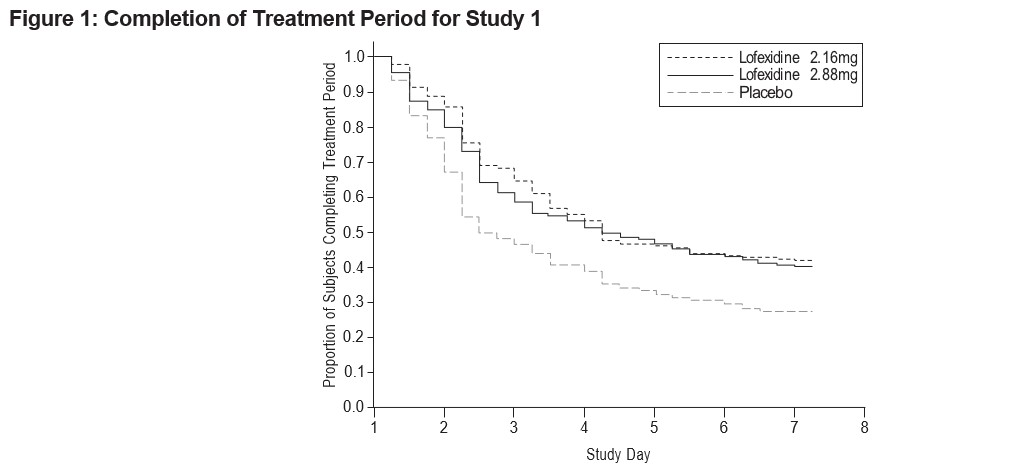
Figure 1 (Figure1)
The mean SOWS-Gossop scores for Days 1 – 7 were 8.8, 6.5, and 6.1 for placebo, Lofexidine tablets 2.16 mg and Lofexidine tablets 2.88 mg, respectively. Results are shown in Figure 2. The mean difference between Lofexidine tablets 2.16 mg and placebo was -2.3 with a 95% CI of (-3.4, -1.2). The mean difference between Lofexidine tablets 2.88 mg and placebo was -2.7 with a 95% CI of (-3.9, -1.6). They were both significant. Symptoms assessed on the SOWS-Gossop were recorded as absent or mild for almost all patients remaining to the end of the assessment period.
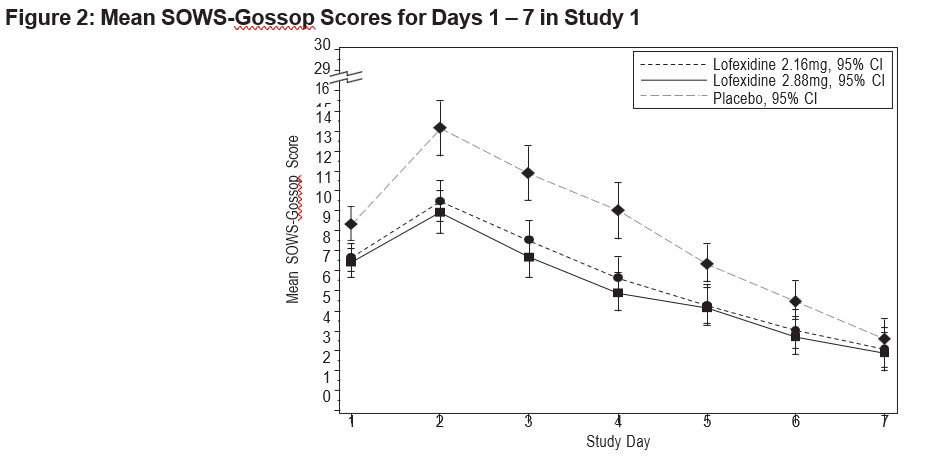
Figure 2 (Figure2)
Study 2, NCT00235729
Study 2 was an inpatient, randomized, multicenter, double-blind, placebo-controlled study carried out in the United States in patients meeting DSM-IV criteria for opioid dependence who were physically dependent on short-acting opioids (e.g., heroin, hydrocodone, oxycodone). Patients were treated with Lofexidine tablets (2.88 mg/day [0.72 mg 4 times daily]) or matching placebo for 5 days (Days 1 – 5). Patients also had access to a variety of support medications for withdrawal symptoms (guaifenesin, antacids, dioctyl sodium sulfosuccinate, psyllium hydrocolloid suspension, bismuth sulfate, acetaminophen, and zolpidem). All patients then received placebo on Days 6 and 7 and were discharged on Day 8.
The two endpoints to support efficacy were the mean SOWS-Gossop total score on Days 1 – 5 of treatment and the proportion of patients who completed 5 days of treatment. The SOWS-Gossop was administered at baseline and once daily 3.5 hours after the first morning dose on Days 1 – 5.
A total of 264 patients were randomized into the study. Of these, 134 patients were randomized to Lofexidine tablets 2.88 mg/ day and 130 patients to placebo.
Of the randomized and treated patients, 33% of placebo patients and 49% of Lofexidine tablets patients completed 5 days of treatment. The difference in proportion between the two groups was significant. See Figure 3. Patients in the placebo group were more likely to drop out of the study prematurely due to lack of efficacy than patients treated with Lofexidine tablets.
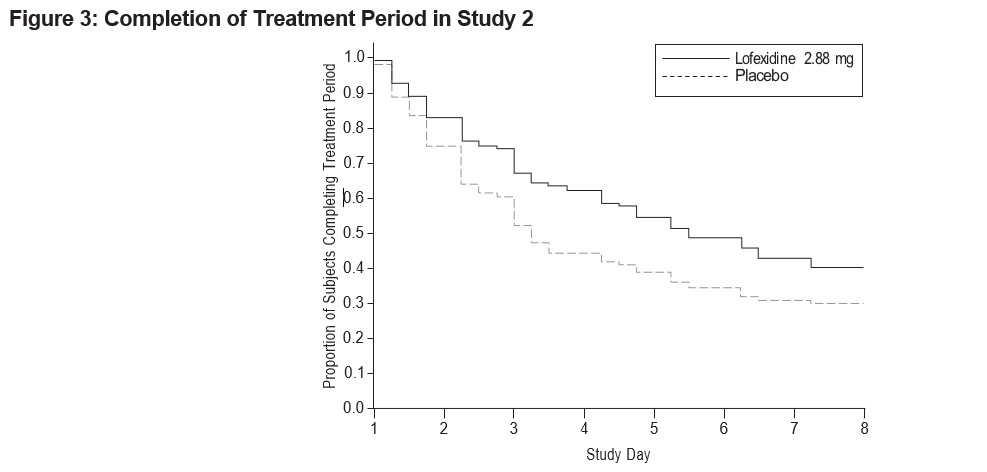
Figure 3 (Figure3)
The mean SOWS-Gossop scores for Days 1 – 5 were 8.9 and 7.0 for placebo and Lofexidine tablets 2.88 mg, respectively. Results are shown in Figure 4. The mean difference was -1.9 with a 95% CI of (-3.2, -0.6) and was statistically significant.
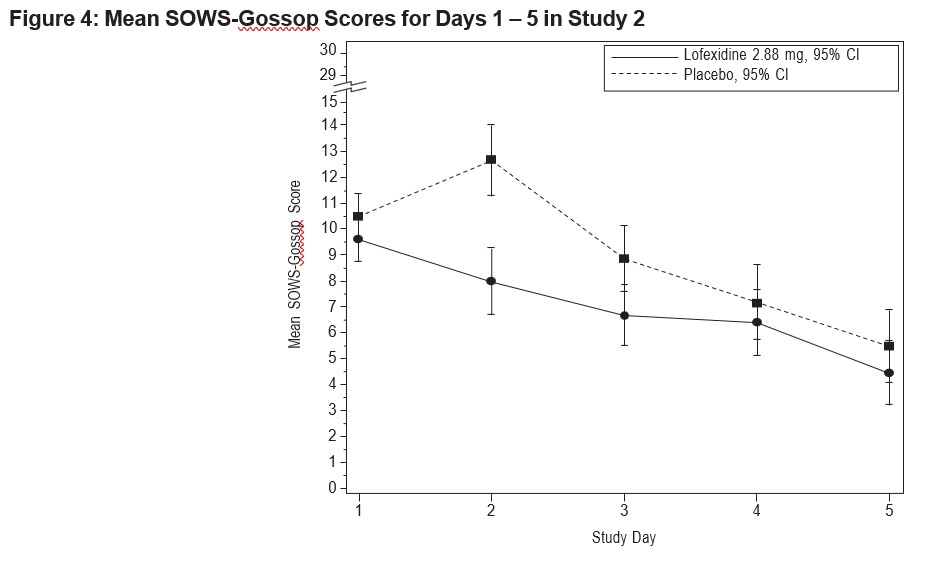
Figure 4 (Figure4)
Hypotension and Bradycardia
Inform patients to be alert for any symptoms of low blood pressure or pulse (e.g., dizziness, lightheadedness, or feelings of faintness at rest or upon abruptly standing). Advise patients on how to reduce the risk of serious consequences should hypotension occur (sit or lie down, carefully rise from a sitting or lying position).
Patients being given Lofexidine tablets in an outpatient setting should be capable of and instructed on self-monitoring for hypotension, orthostasis, and bradycardia and advised to withhold Lofexidine tablets doses and contact their healthcare provider for instructions if they experience these signs or related symptoms [see Warnings and Precautions (5.1)].
Advise patients to avoid becoming dehydrated or overheated, which may potentially increase the risks of hypotension and syncope [see Warnings and Precautions (5.1)].
Concomitant Medications
Review with patients all concomitant medications being taken and request that they immediately inform their healthcare provider of any changes in concomitant medications, including any other medications that may be used to treat individual symptoms of withdrawal.
Increased Risk of CNS Depression with Concomitant use of CNS Depressant Drugs
Inform patients of the increased risk of CNS depression with concomitant use of benzodiazepines, alcohol, barbiturates, or other sedating drugs [see Warnings and Precautions (5.3)].
Advise patients using Lofexidine tablets in an outpatient setting that, until they learn how they respond to Lofexidine tablets, they should be careful or avoid doing activities such as driving or operating heavy machinery.
Sudden Discontinuation of Lofexidine tablets
Inform patients not to discontinue Lofexidine tablets without consulting their healthcare provider [see Warnings and Precautions (5.5)].
Risk of Opioid Overdose After Discontinuation of Opioids
Advise patients that after a period of not using opioid drugs, they may be more sensitive to the effects of opioids and at greater risk of overdosing [see Warnings and Precautions (5.4)].
This product’s Prescribing Information may have been updated. For current full Prescribing Information, please visit www.lucemyra.com.

Logo (Logo)
Manufactured for:
BioCorRx Pharmaceuticals Inc 2390 E. Orangewood Ave. Suite 570 Anaheim, CA 92806
BioCorRx Pharmaceuticals Inc is the exclusive licensee and distributor of Lofexidine tablets in the United States and its territories.
000000
Lofexidine tablets potentiates the CNS depressive effects of benzodiazepines and can also be expected to potentiate the CNS depressive effects of alcohol, barbiturates, and other sedating drugs. Advise patients to inform their healthcare provider of other medications they are taking, including alcohol.
Advise patients using Lofexidine tablets in an outpatient setting that, until they learn how they respond to Lofexidine tablets, they should be careful or avoid doing activities such as driving or operating heavy machinery.
Lofexidine tablets are not a treatment for opioid use disorder. Patients who complete opioid discontinuation are likely to have a reduced tolerance to opioids and are at increased risk of fatal overdose should they resume opioid use. Use Lofexidine tablets in patients with opioid use disorder only in conjunction with a comprehensive management program for the treatment of opioid use disorder and inform patients and caregivers of this increased risk of overdose.
Stopping Lofexidine tablets abruptly can cause a marked rise in blood pressure. Symptoms including diarrhea, insomnia, anxiety, chills, hyperhidrosis, and extremity pain have also been observed with Lofexidine tablets discontinuation. Instruct patients not to discontinue therapy without consulting their healthcare provider. When discontinuing therapy with Lofexidine tablets, gradually reduce the dose [see Dosing and Administration (2.1)].
Symptoms related to discontinuation can be managed by administration of the previous Lofexidine tablets dose and subsequent taper.
The following serious adverse reactions are described elsewhere in labeling:
Because clinical trials are conducted under widely varying conditions, adverse reaction rates observed in the clinical trials of a drug cannot be directly compared to adverse reaction rates observed for another drug and may not reflect the rates observed in practice.
The safety of Lofexidine tablets was supported by three randomized, double-blind, placebo-controlled clinical trials, an open-label study, and clinical pharmacology studies with concomitant administration of either methadone, buprenorphine, or naltrexone.
The three randomized, double-blind, placebo-controlled clinical trials enrolled 935 subjects dependent on short-acting opioids undergoing abrupt opioid withdrawal. Patients were monitored before each dose in an inpatient setting.
Table 3 presents the incidence, rounded to the nearest percent, of adverse events that occurred in at least 10% of subjects treated with Lofexidine tablets and for which the incidence in patients treated with Lofexidine tablets was greater than the incidence in subjects treated with placebo in a study that tested two doses of Lofexidine tablets, 2.16 mg per day and 2.88 mg per day, and placebo. The overall safety profile in the combined dataset was similar.
Orthostatic hypotension, bradycardia, hypotension, dizziness, somnolence, sedation, and dry mouth were notably more common in subjects treated with Lofexidine tablets than subjects treated with placebo.
| AdverseReaction | Lofexidine tablets 2.16 mg1 (%) N=229 | Lofexidine tablets 2.88 mg1 (%) N=222 | Placebo (%) N=151 |
| Insomnia | 51 | 55 | 48 |
| Orthostatic Hypotension | 29 | 42 | 5 |
| Bradycardia | 24 | 32 | 5 |
| Hypotension | 30 | 30 | 1 |
| Dizziness | 19 | 23 | 3 |
| Somnolence | 11 | 13 | 5 |
| Sedation | 13 | 12 | 5 |
| Dry Mouth | 10 | 11 | 0 |
| 1 Assigned dose; mean average daily dose received was 79% of assigned dose due to dose-holds for out-of-range vital signs. | |||
Other notable adverse reactions associated with the use of Lofexidine tablets but reported in <10% of patients in the Lofexidine tablets group included:
Blood pressure changes and adverse reactions after Lofexidine tablets cessation
Elevations in blood pressure above normal values (≥140 mmHg systolic) and above a subject’s pre-treatment baseline are associated with discontinuing Lofexidine tablets, and peaked on the second day after discontinuation, as shown in Table 4. Blood pressure values were evaluated for 3 days following the last dose of a 5-day course of Lofexidine tablets 2.88 mg/day.
| Abrupt Lofexidine tablets Discontinuation 2.88 mg (N = 134) | Placebo (N = 129) | |||
| N at risk | n (%) | N at risk | n (%) | |
| Systolic Blood Pressure on Day 2 after Discontinuation | ||||
| ≥ 140 mmHg and ≥ 20 mmHg increase from baseline | 58 | 23 (39.7) | 37 | 6 (16.2) |
| ≥ 170 mmHg and ≥ 20 mmHg increase from baseline | 58 | 5 (8.6) | 37 | 0 |
Blood pressure elevations of a similar magnitude and incidence were observed in a small number of patients (N=10) that had a one-day, 50% dose reduction prior to discontinuation.
After stopping treatment, subjects who were taking Lofexidine tablets also had a higher incidence of diarrhea, insomnia, anxiety, chills, hyperhidrosis, and extremity pain compared to subjects who were taking placebo.
Sex-specific adverse event findings
Four out of 101 females (4%) had serious cardiovascular adverse events compared to 3 out of 289 (1%) males assigned to receive Lofexidine tablets 2.88 mg/day.
Discontinuations and dose-holds due to bradycardia and orthostatic hypotension, which are the most common adverse reactions associated with Lofexidine tablets, occurred with a greater incidence in females assigned to receive the highest studied dose of Lofexidine tablets, 2.88 mg/day as shown in Table 5.
| Lofexidine tablets 2.16mg | Lofexidine tablets 2.88mg | |
| Male | 22/162 (14%) | 29/158 (18%) |
| Female | 9/67 (13%) | 20/64 (31%) |
Lofexidine tablets are marketed in other countries for relief of opioid withdrawal symptoms. The following events have been identified during postmarketing use of lofexidine tablets. Because these reactions are reported voluntarily from a population of uncertain size, it is not always possible to reliably estimate their frequency or establish a causal relationship to drug exposure.
Since lofexidine tablets’ initial market introduction in 1992, the most frequently reported postmarketing adverse event with lofexidine tablets has been hypotension [see Warnings and Precautions (5.1)]. There has been one report of QT prolongation, bradycardia, torsades de pointes, and cardiac arrest with successful resuscitation in a patient who received lofexidine tablets, and three reports of clinically significant QT prolongation in subjects concurrently receiving methadone with lofexidine tablets.
Lofexidine tablets and methadone both prolong the QT interval. ECG monitoring is recommended in patients receiving methadone and Lofexidine tablets concomitantly [see Warnings and Precautions (5.2), Clinical Pharmacology (12.3)].
Coadministration of Lofexidine tablets and oral naltrexone resulted in statistically significant differences in the steady-state pharmacokinetics of naltrexone. It is possible that oral naltrexone efficacy may be reduced if used concomitantly within 2 hours of Lofexidine tablets. This interaction is not expected if naltrexone is administered by non-oral routes [see Clinical Pharmacology (12.3)].
Lofexidine tablets potentiates the CNS depressant effects of benzodiazepines and may potentiate the CNS depressant effects of alcohol, barbiturates, and other sedating drugs. Advise patients to inform their healthcare provider of other medications they are taking, including alcohol [see Warnings and Precautions (5.3)].
Coadministration of Lofexidine tablets and paroxetine resulted in a 28% increase in the extent of absorption of Lofexidine tablets. Monitor for orthostatic hypotension and bradycardia when an inhibitor of CYP2D6 is used concomitantly with Lofexidine tablets [see Clinical Pharmacology (12.3)].
In animal studies that included some fertility endpoints, lofexidine tablets decreased breeding rate and increased resorptions at exposures below human exposures. The impact of lofexidine tablets on male fertility has not been adequately characterized in animal studies [see Impairment of Fertility (13.1)].
The safety and effectiveness of Lofexidine tablets have not been established in pediatric patients.
No studies have been performed to characterize the pharmacokinetics of Lofexidine tablets or to establish its safety and effectiveness in geriatric patients. Caution should be exercised when Lofexidine tablets are administered to patients over 65 years of age. Dosing adjustments similar to those recommended in patients with renal impairment should be considered [see Dosage and Administration (2.3), Use in Specific Populations (8.7)].
Hepatic impairment slows the elimination of Lofexidine tablets but exhibits less effect on the peak plasma concentration than on AUC values following a single dose. Dosage adjustments are recommended based on the degree of hepatic impairment. [see Dosage and Administration (2.2), Clinical Pharmacology (12.3)].
Clinically relevant QT prolongation may occur in subjects with hepatic impairment [see Warnings and Precautions (5.2), Clinical Pharmacology (12.2)].
Renal impairment slows the elimination of Lofexidine tablets but exhibits less effect on the peak plasma concentration than on AUC values following a single dose. Dosage adjustments are recommended based on the degree of renal impairment [see Dosage and Administration (2.3), Clinical Pharmacology (12.3)].
Only a negligible fraction of the Lofexidine tablets dose is removed during a typical dialysis session, so no additional dose needs to be administered after a dialysis session; Lofexidine tablets may be administered without regard to the timing of dialysis [see Dosage and Administration (2.3), Clinical Pharmacology (12.3)].
Clinically relevant QT prolongation may occur in subjects with renal impairment [see Warnings and Precautions (5.2), Clinical Pharmacology (12.2)].
Although the pharmacokinetics of Lofexidine tablets have not been systematically evaluated in patients who do not express the drug metabolizing enzyme CYP2D6, it is likely that the exposure to Lofexidine tablets would be increased similarly to taking strong CYP2D6 inhibitors (approximately 28%). Monitor adverse events such as orthostatic hypotension and bradycardia in known CYP2D6 poor metabolizers. Approximately 8% of Caucasians and 3 to 8% of Black/African Americans cannot metabolize CYP2D6 substrates and are classified as poor metabolizers (PM) [see Clinical Pharmacology (12.3)].
Overdose with Lofexidine tablets may manifest as hypotension, bradycardia, and sedation. In the event of acute overdose, perform gastric lavage where appropriate. Dialysis will not remove a substantial portion of the drug. Initiate general symptomatic and supportive measures in cases of overdosage.
Lofexidine tablets contain lofexidine, a central alpha-2 adrenergic agonist, as the hydrochloride salt. Lofexidine hydrochloride is chemically designated as 2-[1-(2,6-dichlorophenoxy)ethyl]-4,5 dihydro-1H- imidazole monohydrochloride with a molecular formula of C11H12Cl2N2O•HCl. Its molecular weight is 295.6 g/mole and its structural formula is:
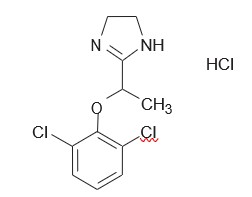
Chemical Structure (Chemicalstructure)
Lofexidine hydrochloride is a white to off-white crystalline powder freely soluble in water, methanol, and ethanol. It is slightly soluble in chloroform and practically insoluble in n-hexane and benzene.
Lofexidine tablets are available as round, convex-shaped, peach-colored, film-coated tablets for oral administration. Each tablet contains 0.18 lofexidine, equivalent to 0.2 mg of lofexidine hydrochloride, and the following inactive ingredients: 92.6 mg lactose, 12.3 mg citric acid, 1.1 mg povidone, 5.7 mg microcrystalline cellulose, 1.4 mg calcium stearate, 0.7 mg sodium lauryl sulphate, and Opadry OY S 9480 (contains indigo carmine and sunset yellow).
Lofexidine tablets are a central alpha-2 adrenergic agonist that binds to receptors on adrenergic neurons. This reduces the release of norepinephrine and decreases sympathetic tone.
Carcinogenesis
No adequate long-term animal studies have been completed to evaluate the carcinogenic potential of lofexidine tablets.
Mutagenesis
Lofexidine tablets tested positive in the in vitro mouse lymphoma assay. Lofexidine tablets tested negative in the in vitro bacterial reverse mutation assay (Ames assay) and in the in vivo rat micronucleus assay.
Impairment of Fertility
In a female fertility study in rabbits, fertility was not adversely impacted by administration of lofexidine hydrochloride up to 6.4 mg/ kg/day (approximately 0.1 times the MRHD of 2.88 mg on an AUC basis) when administered orally starting 2 weeks prior to mating and through gestation and lactation. However, decreased breeding rate and higher post- implantation loss was observed at this dose, which correlated with higher resorptions and reduced litter size. Maternal toxicity, which included increased mortality rate, reduced body weight gain, and moderate sedation was observed at 6.4 mg/kg/day. The NOAEL for female fertility was 6.4 mg/kg/ day and the NOAEL for female-mediated developmental parameters was 0.4 mg/kg/day (approximately 0.005 times the MRHD on an AUC basis).
In a fertility study in rats, fertility was unaffected by administration of lofexidine tablets up to 0.88 mg/kg/day (approximately 0.2 times the MRHD on an AUC basis) via diet to male and female rats prior to mating and to the dams through gestation and lactation. No evidence of maternal toxicity was observed. However, no assessment of sperm or reproductive organs were performed in this study.
Reduced testes, epididymis, and seminiferous tubule weights, as well as delayed sexual maturation of males and females and decreases in the number of corpora lutea and implantations after mating, were noted in offspring of pregnant rats administered lofexidine hydrochloride orally from GD 6 through lactation at exposures less than the human exposure based on AUC comparisons.
Two randomized, double-blind, placebo-controlled trials supported the efficacy of Lofexidine tablets.
How Supplied
Available as 0.18 mg round, convex-shaped, peach colored, film-coated tablets, imprinted with “LFX” on one side and “18” on the other side; approximately 7 mm in diameter.
Bottles of 36 tablets................................................................................................................................... NDC 85789-901-36
Bottles of 96 tablets................................................................................................................................... NDC 85789-901-96
Storage
Store in original container at controlled room temperature, 25°C (77°F); with excursions permitted between 15°C to 30°C (59°F to 86°F) [see USP Controlled Room Temperature]. Keep Lofexidine tablets away from excess heat and moisture both in the pharmacy and after dispensing. Do not remove desiccant packs from bottles until all tablets are used. Keep Lofexidine tablets and all medicines out of the reach of children.
Advise patients to read the FDA-approved patient labeling (Patient Information).
Lofexidine tablets may mitigate, but not completely prevent, the symptoms associated with opioid withdrawal syndrome, which may include feeling sick, stomach cramps, muscle spasms or twitching, feeling of cold, heart pounding, muscular tension, aches and pains, yawning, runny eyes and sleep problems (insomnia). Patients should be advised that withdrawal will not be easy. Additional supportive measures should be clearly advised, as needed.
Rx Only NDC 85789-901-96
Lofexidine Tablets
0.18 mg
Keep out of reach of children.
Store and dispense in original container.
Protect from heat and moisture.
Do not remove desiccants.
Keep the bottle tightly closed. 96 Tablets
Each tablet contains: Lofexidine...0.18 mg
(equivalent to 0.2 mg lofexidine
hydrochloride)
Store at 25°C (77°F); excursions permitted
between 15°C to 30°C (59°F to 86°F).
[see USP Controlled Room Temperature].
Keep away from heat and moisture.
Recommended Dosage: see Prescribing Information.
Manufactured for:
BioCorRx Pharmaceuticals Inc.
Anaheim, CA 92806
Rev. 04/2026 000000
GTIN: 00000000000000
Serial: 00000000000000
Lot: BNNNNNN
EXP: YYYY-MM
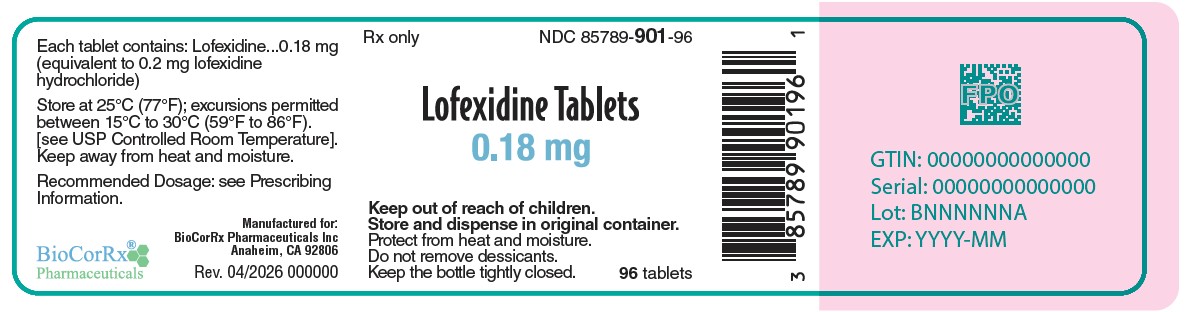
Bottle Label (Bottlelabel96)
* Please review the disclaimer below.
